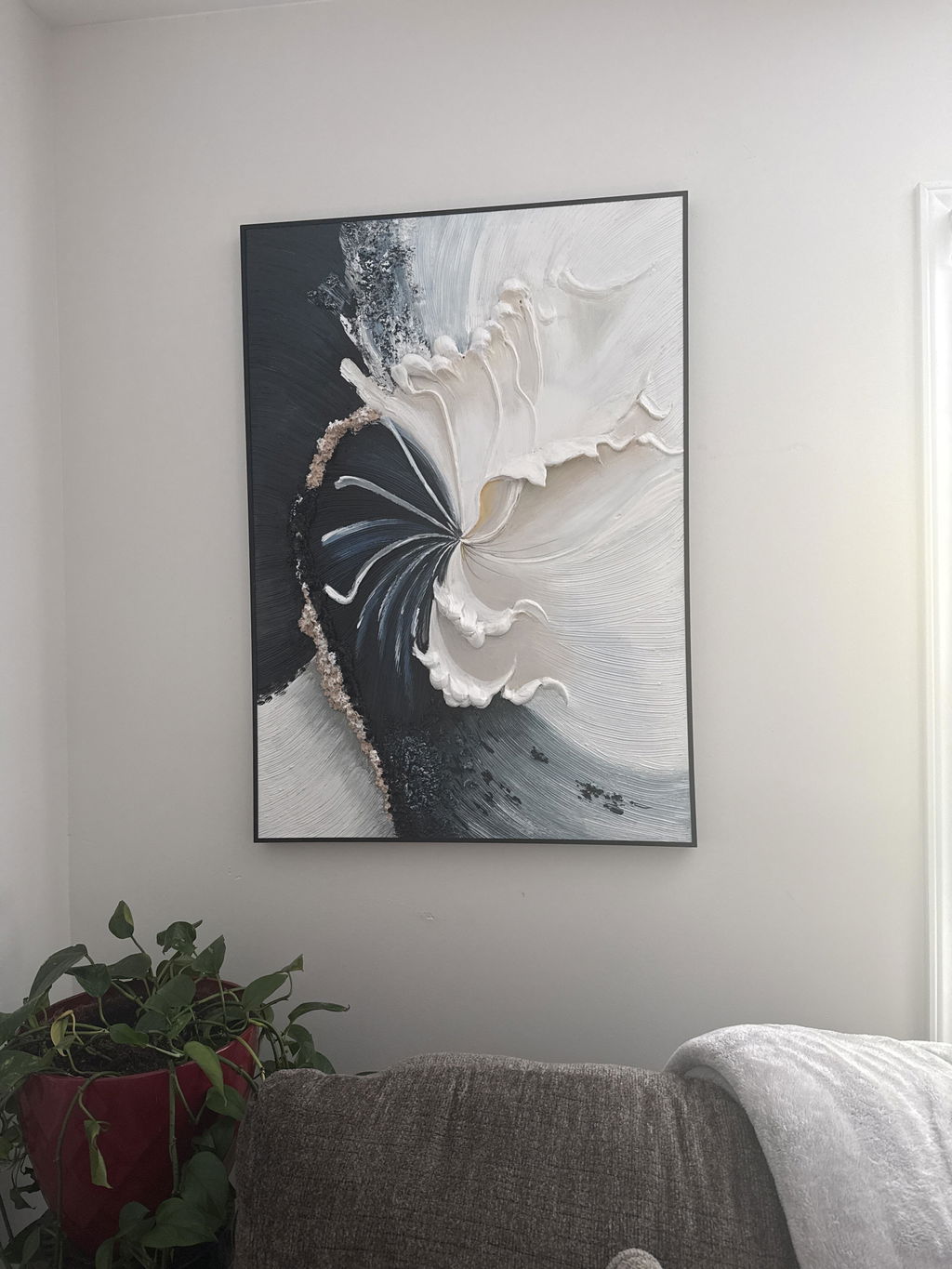
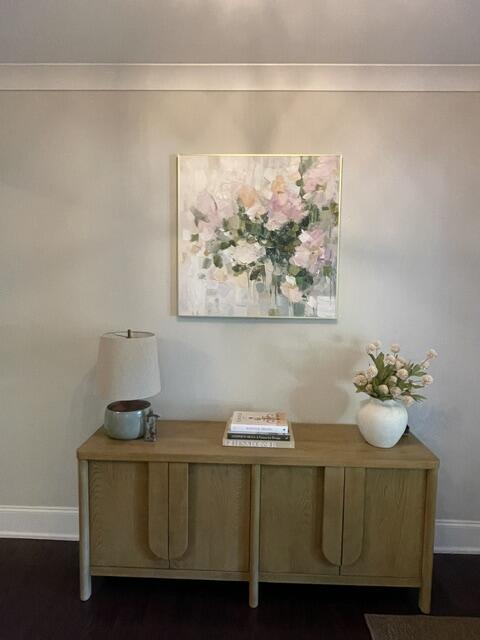
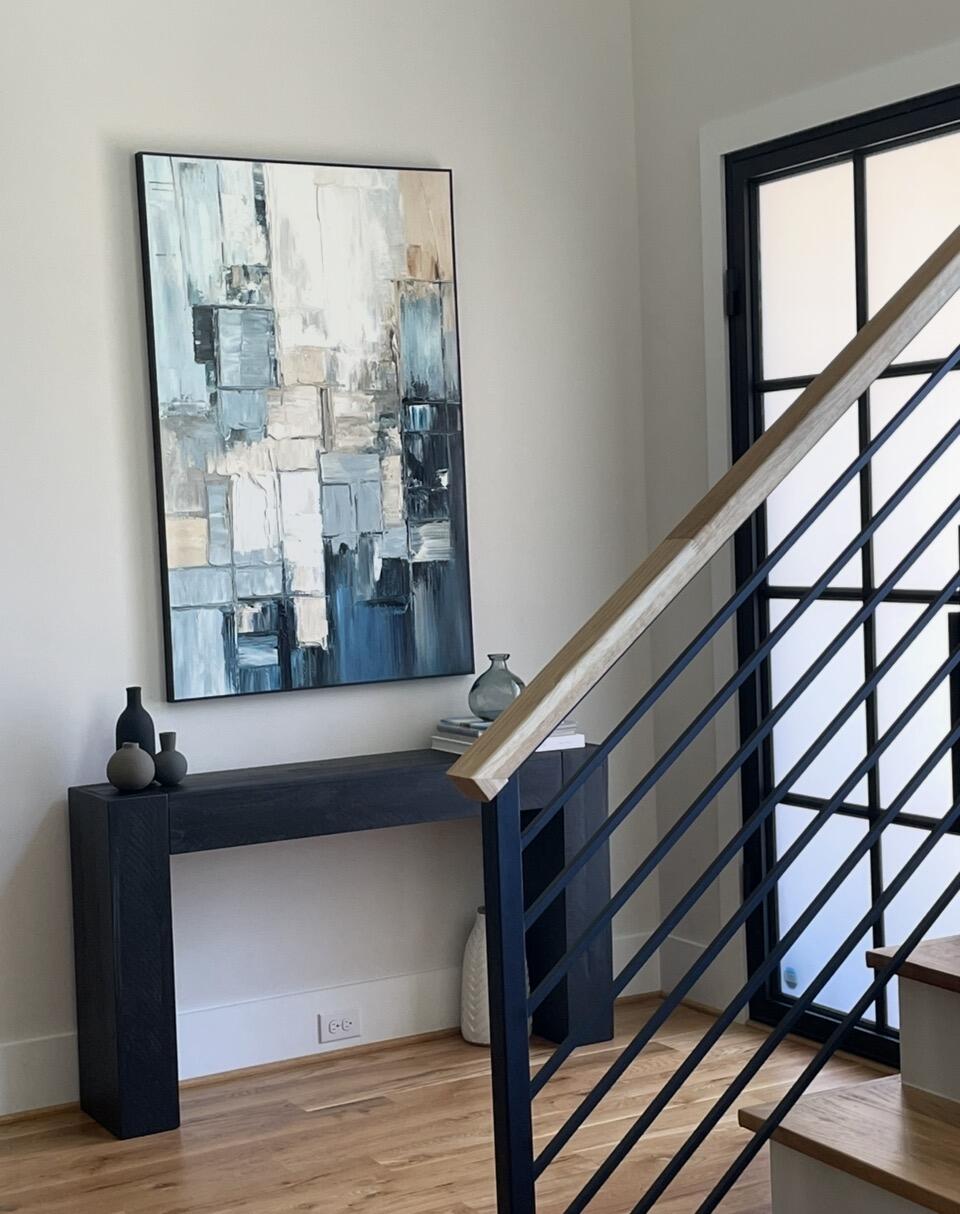
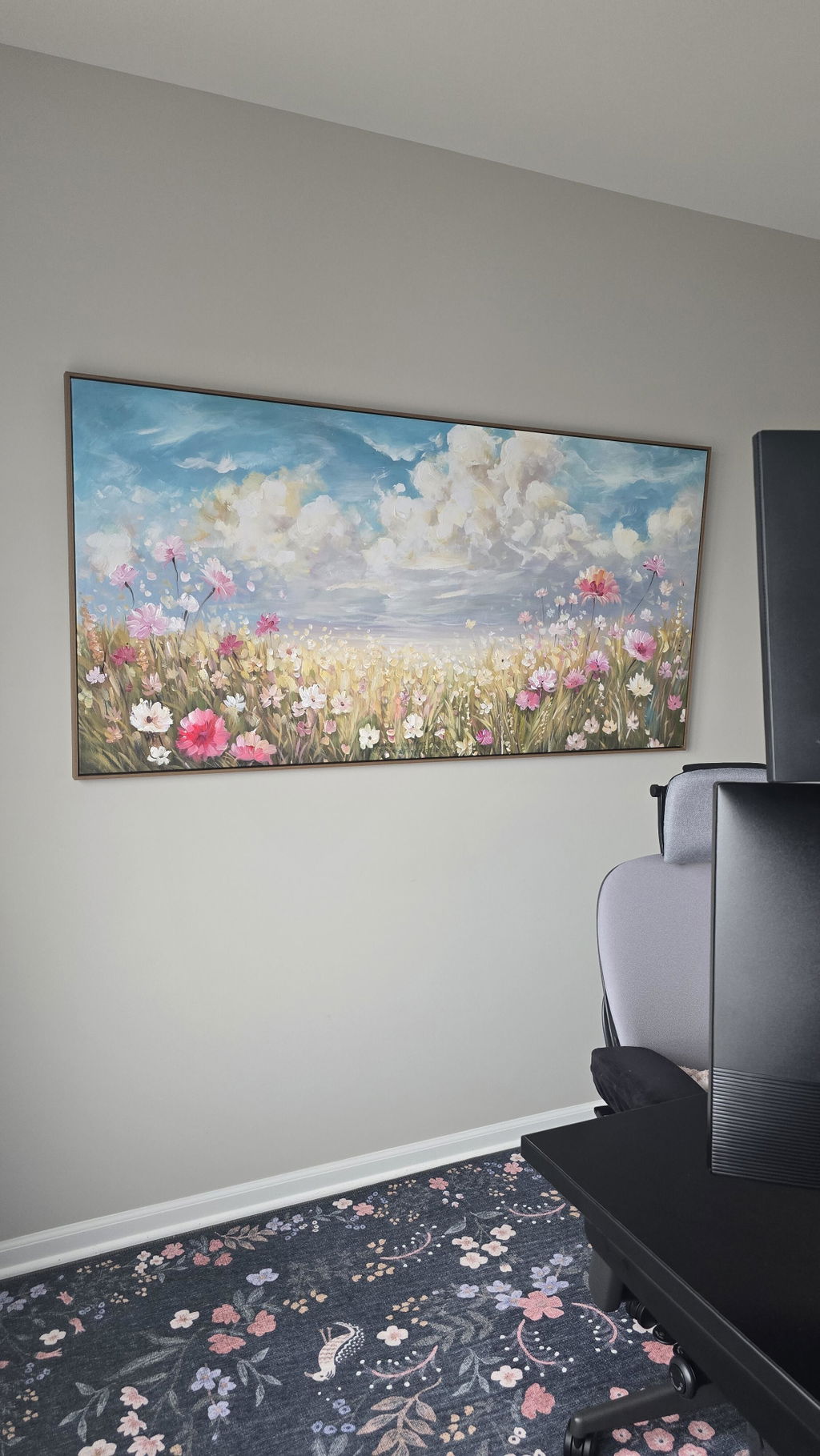
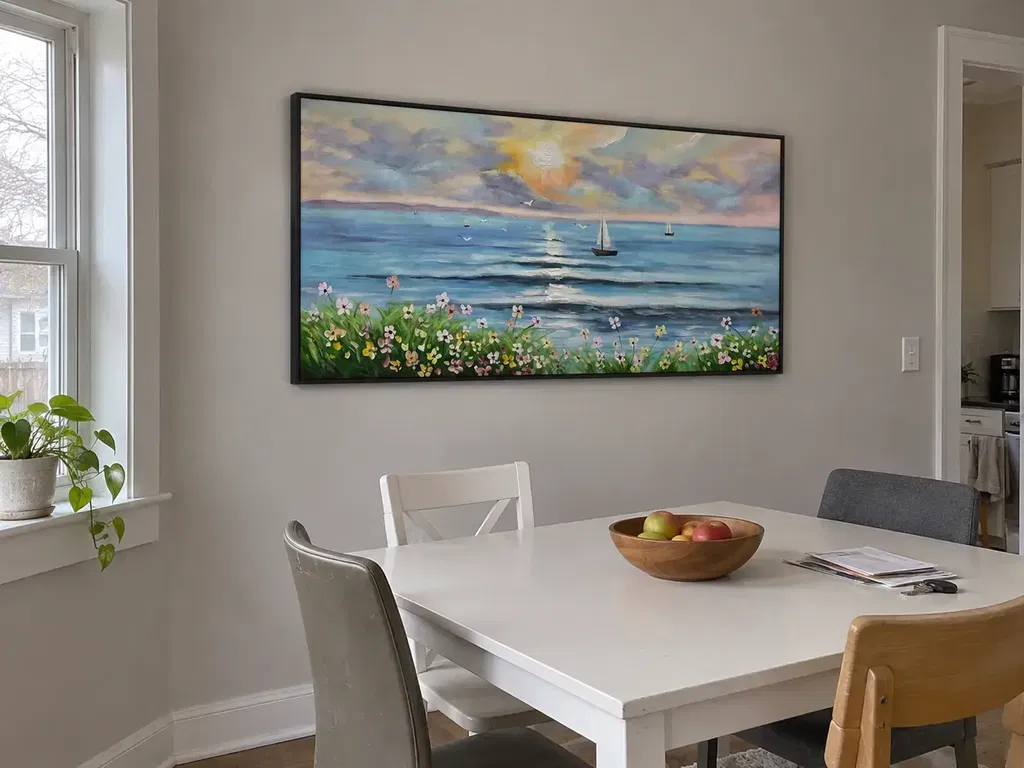
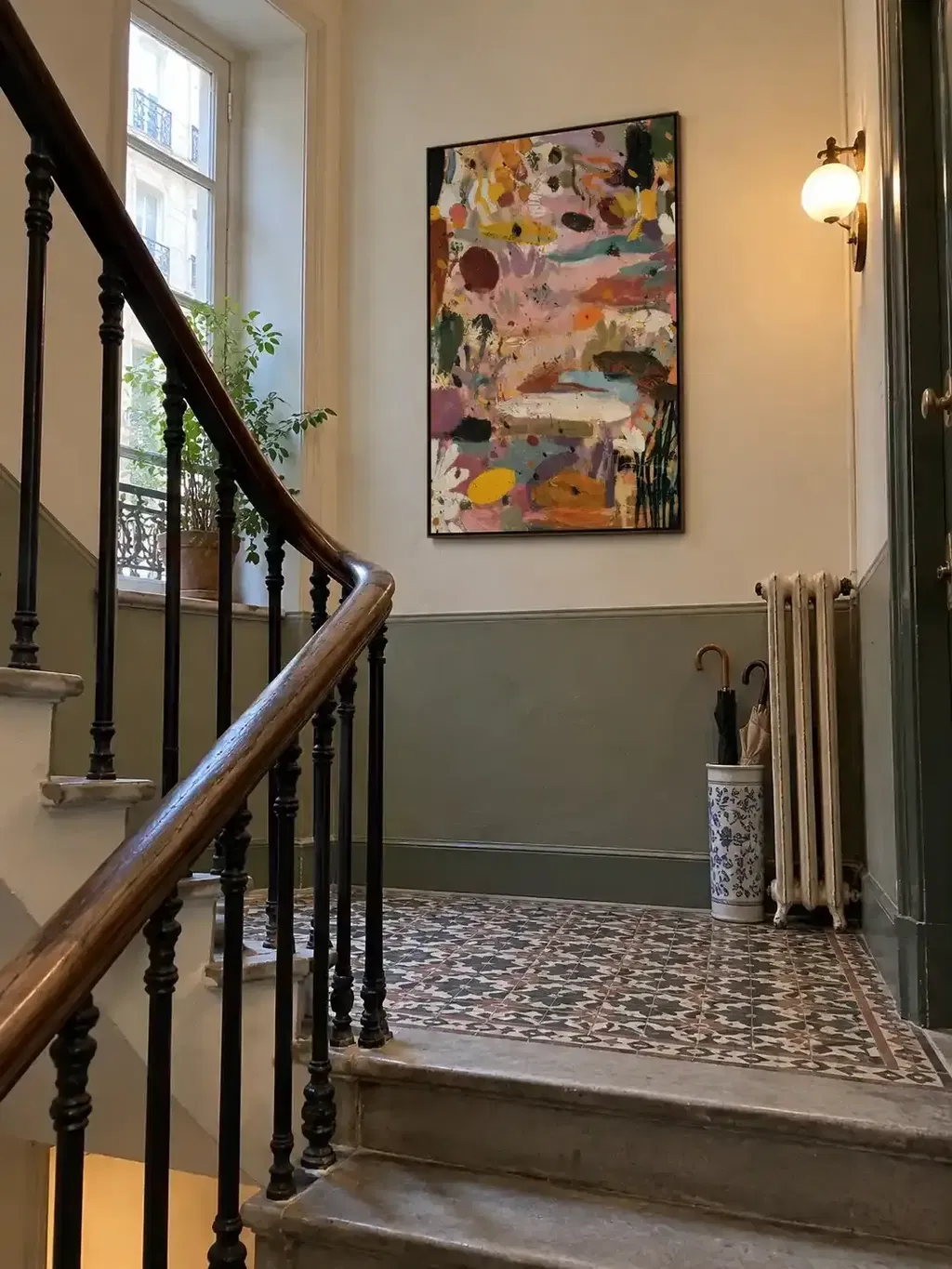
Dining room wall art sets the mood for memorable meals, adding warmth, style, and inviting conversation to your space with every gathering.

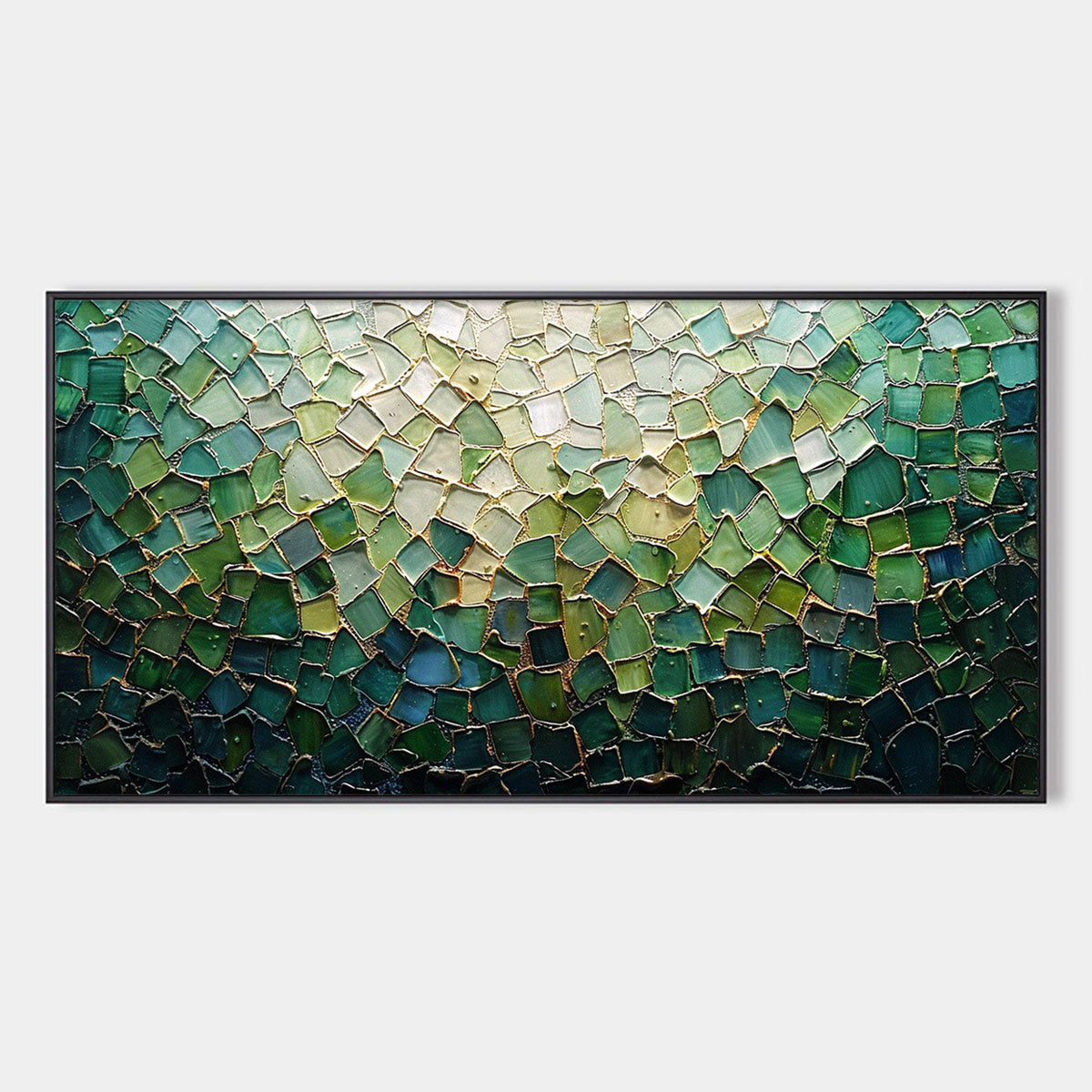
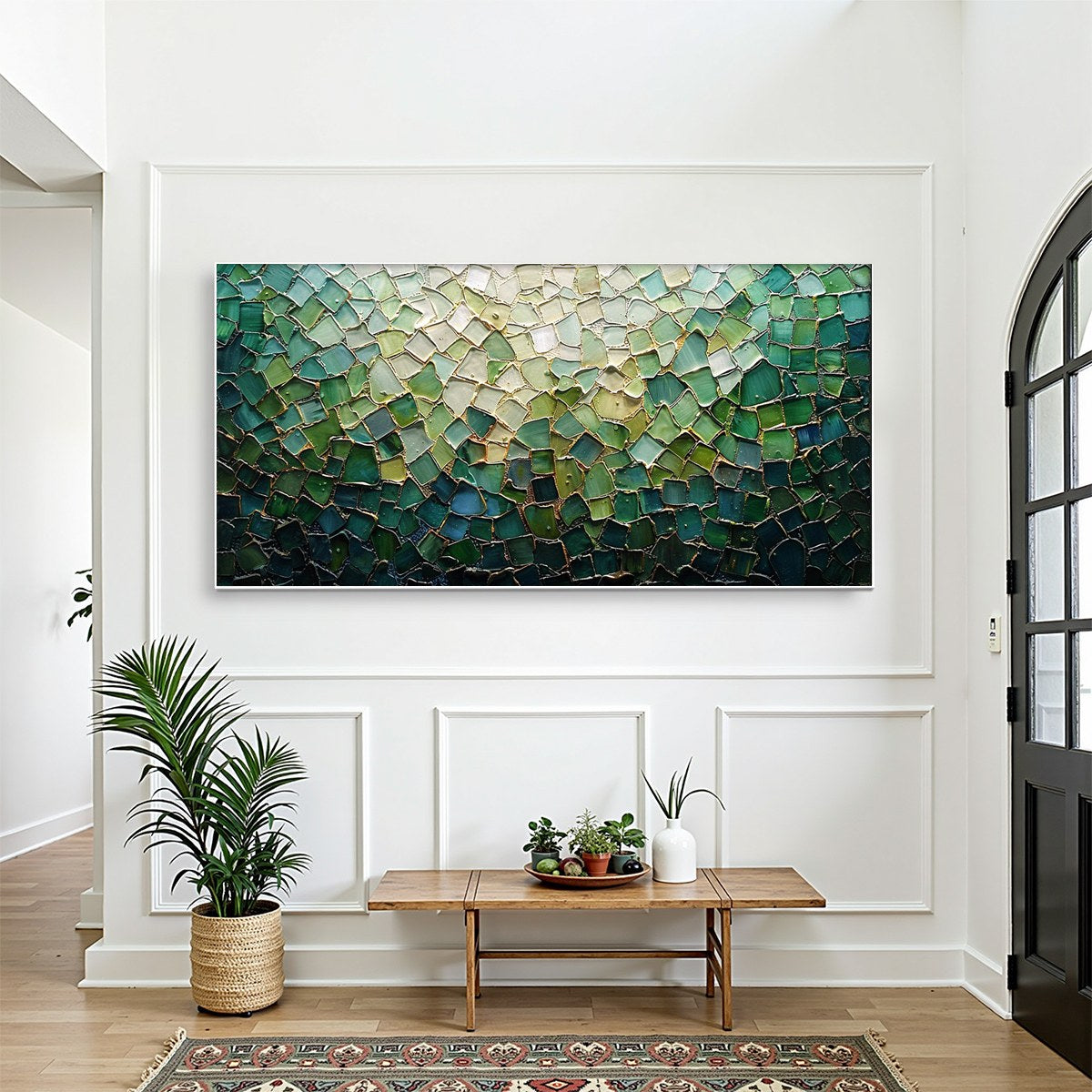
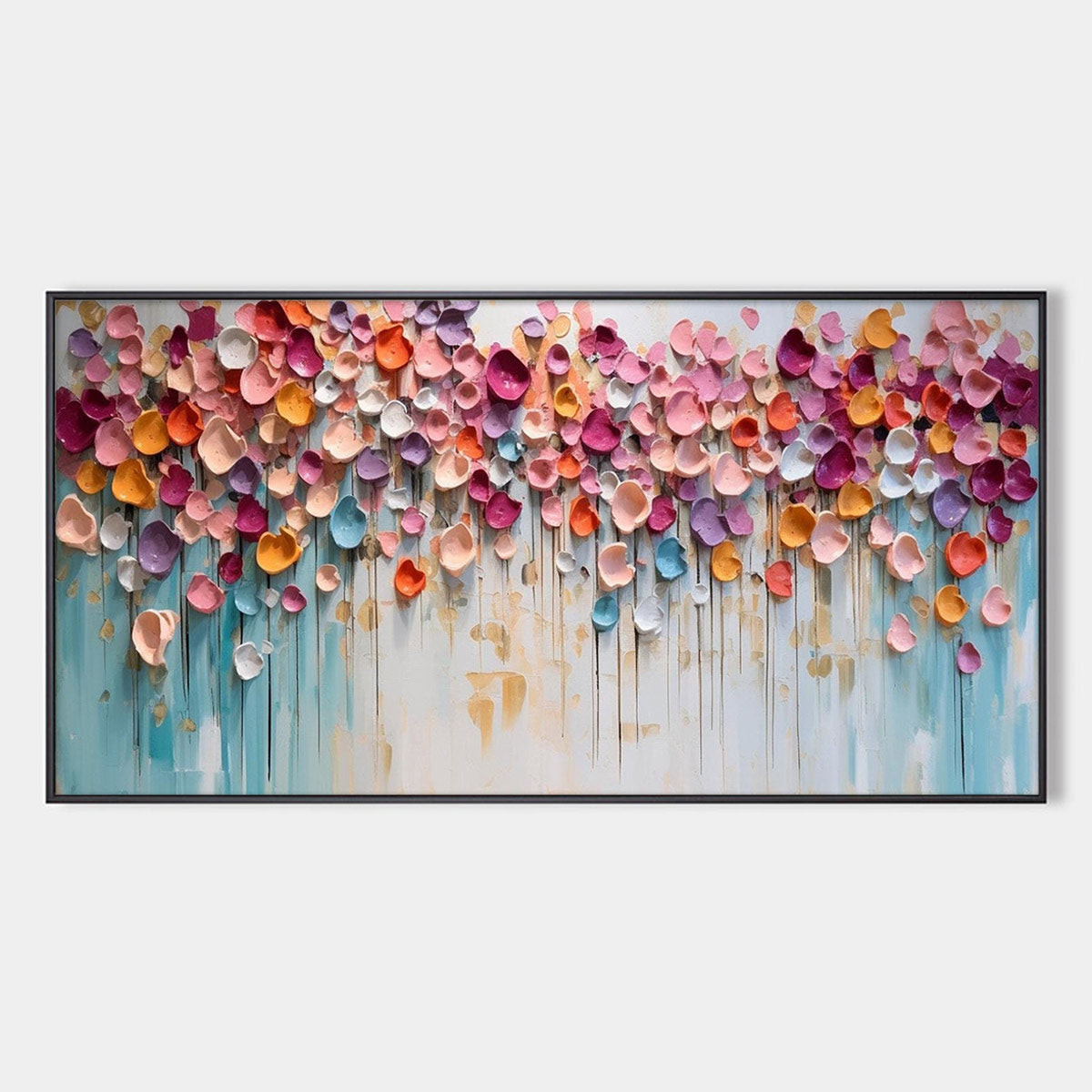
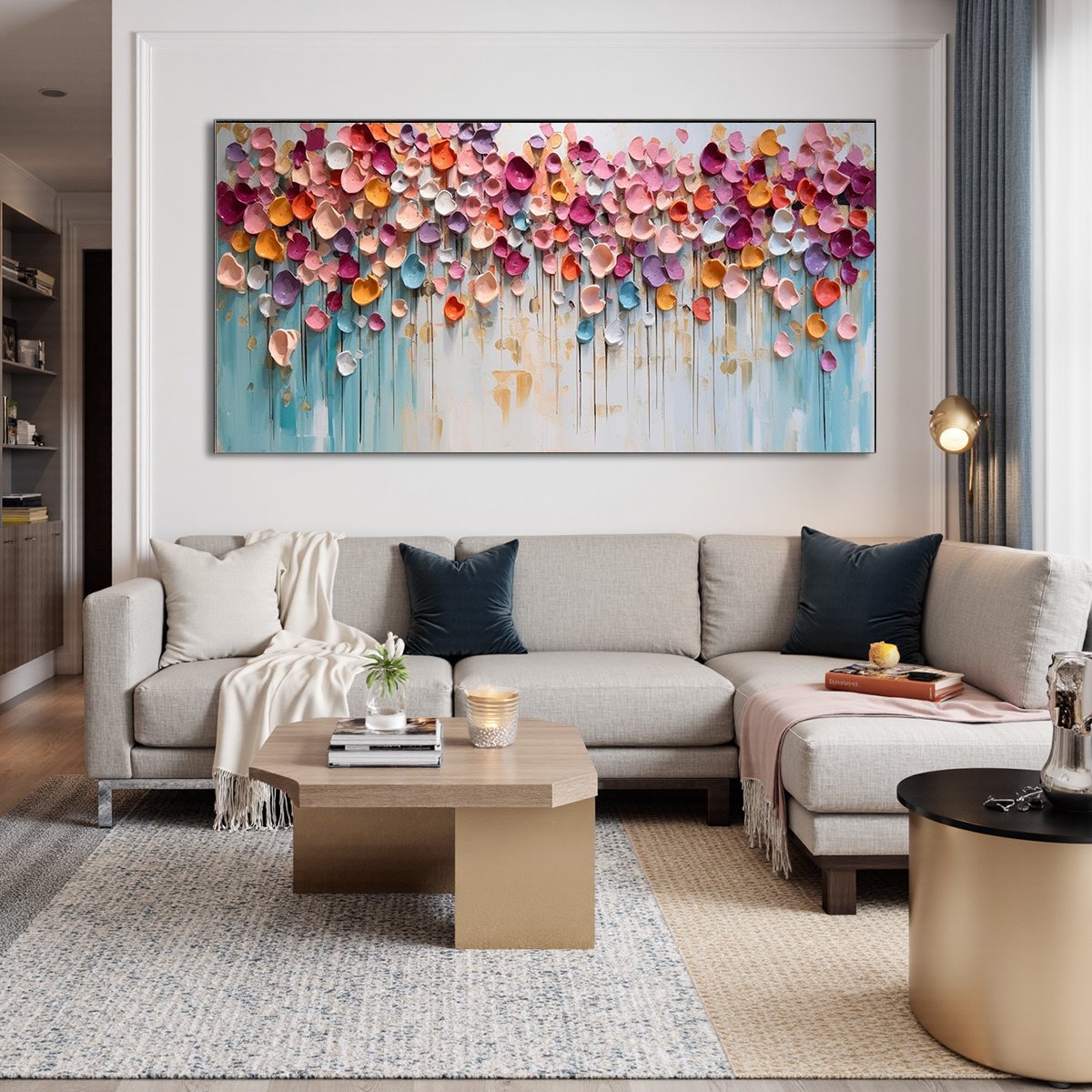
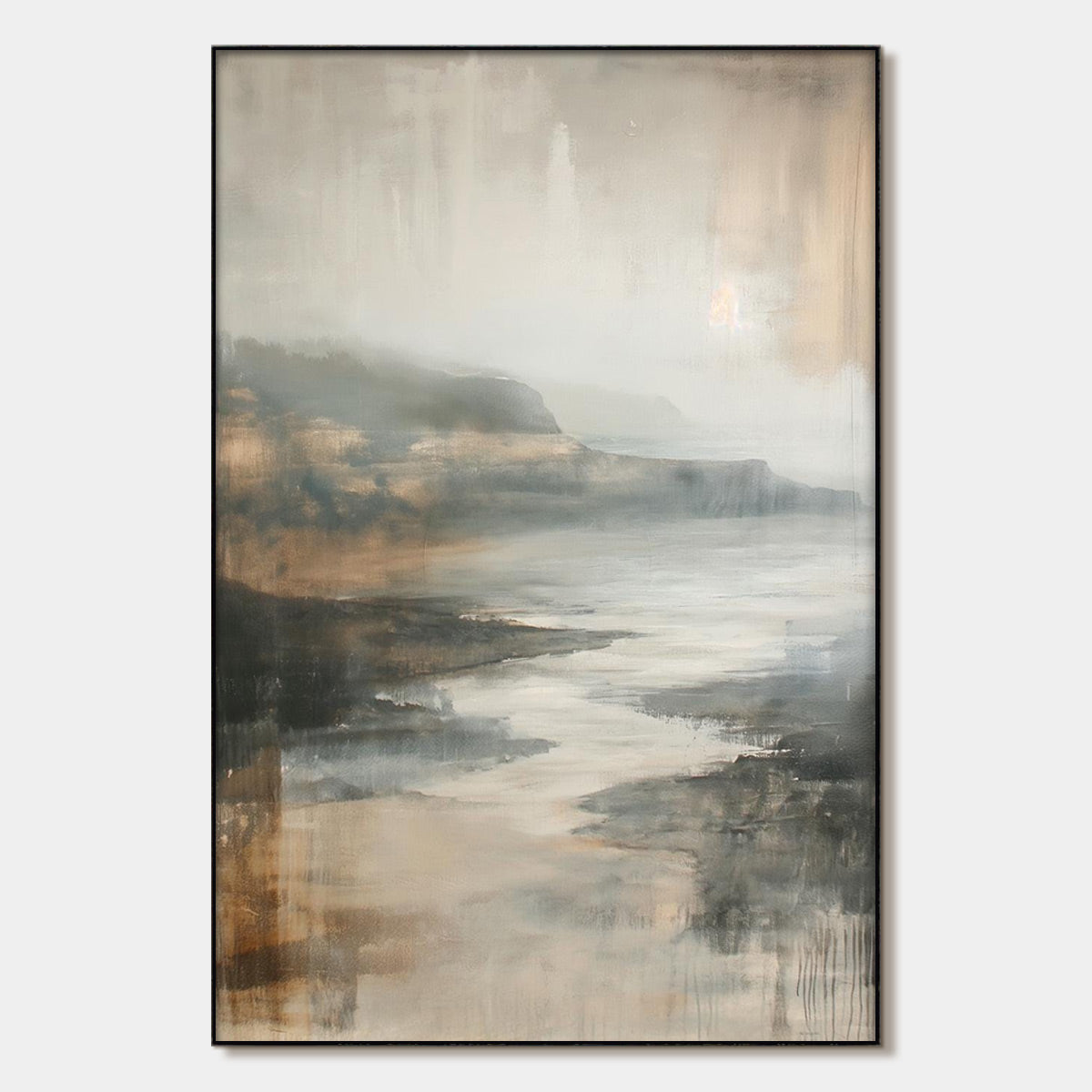
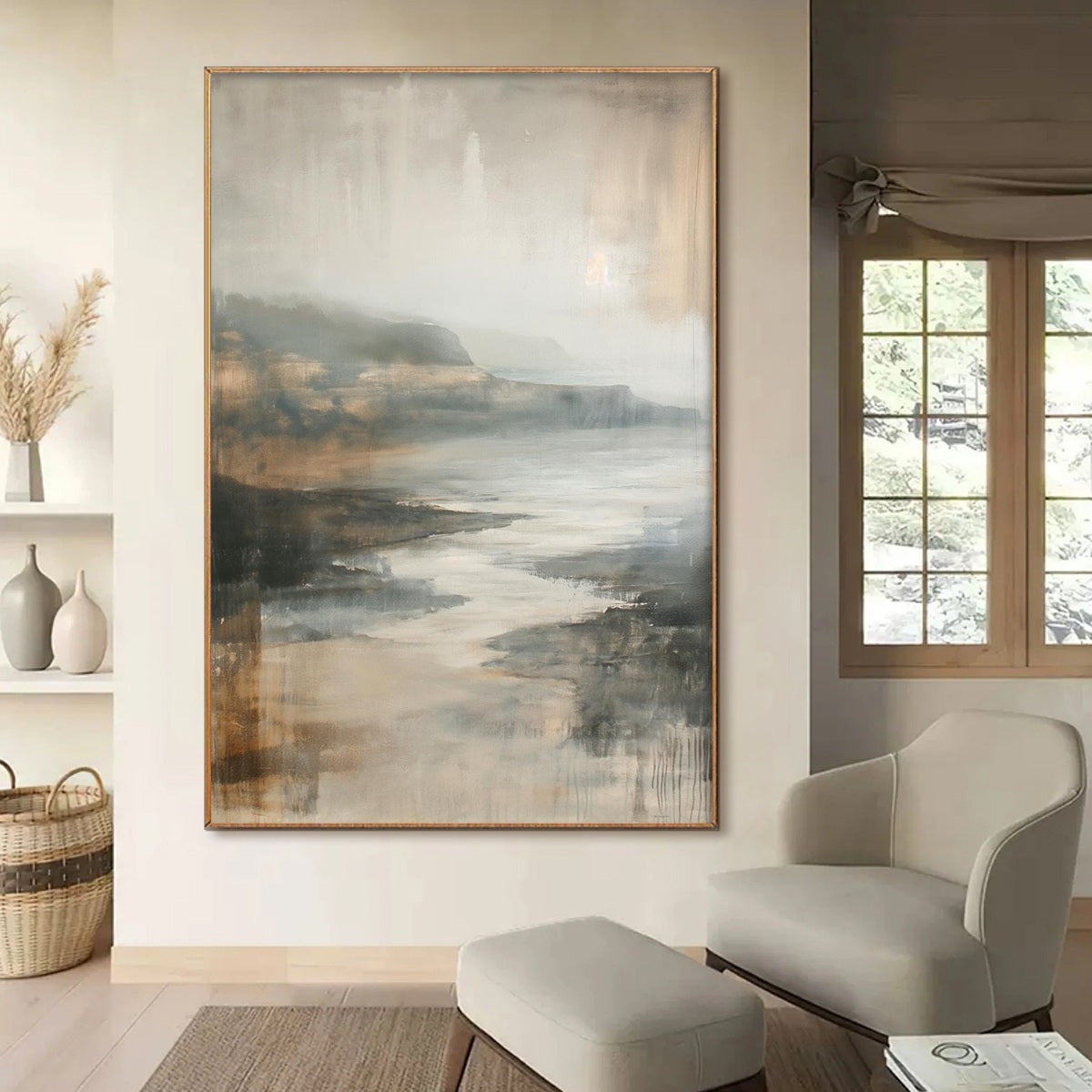
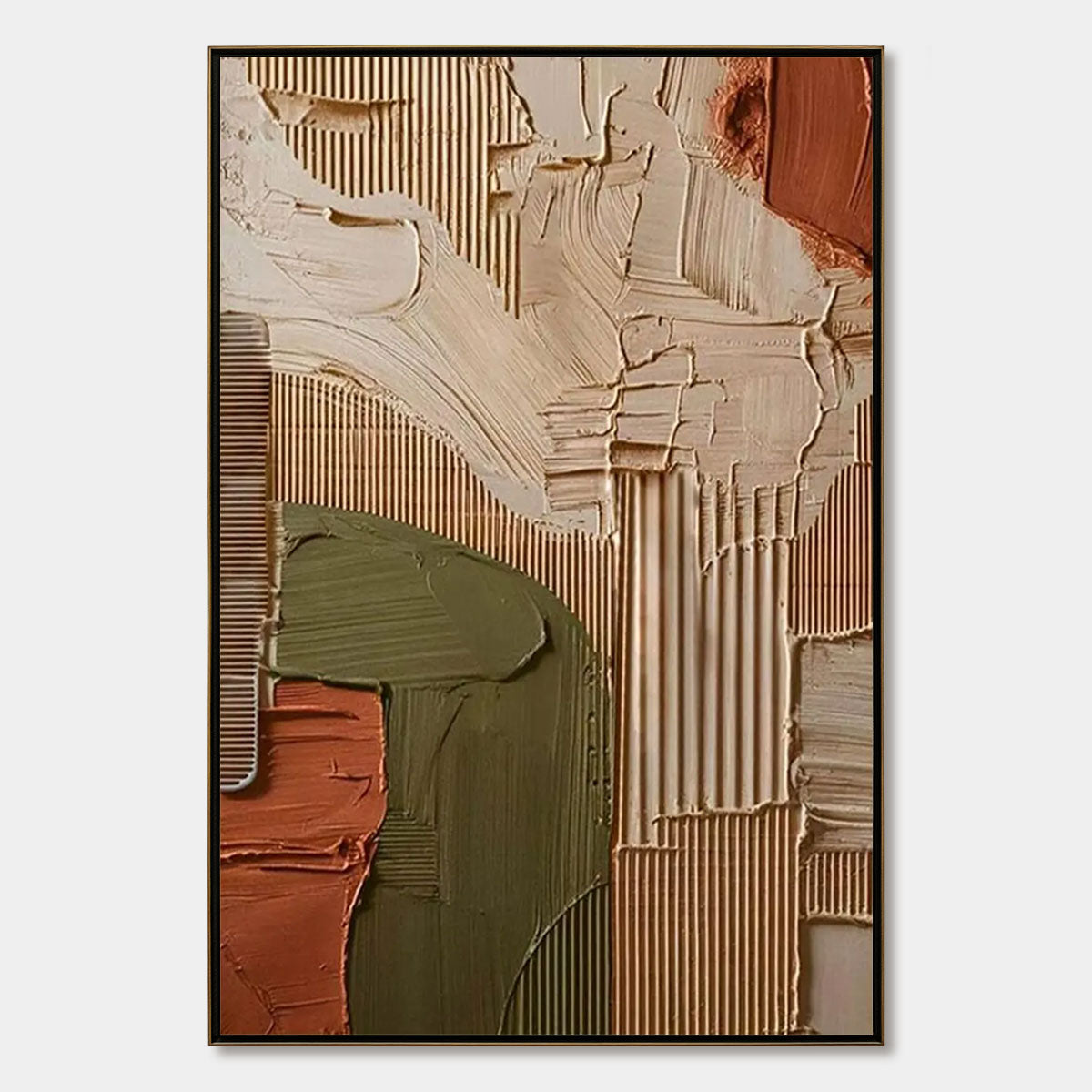
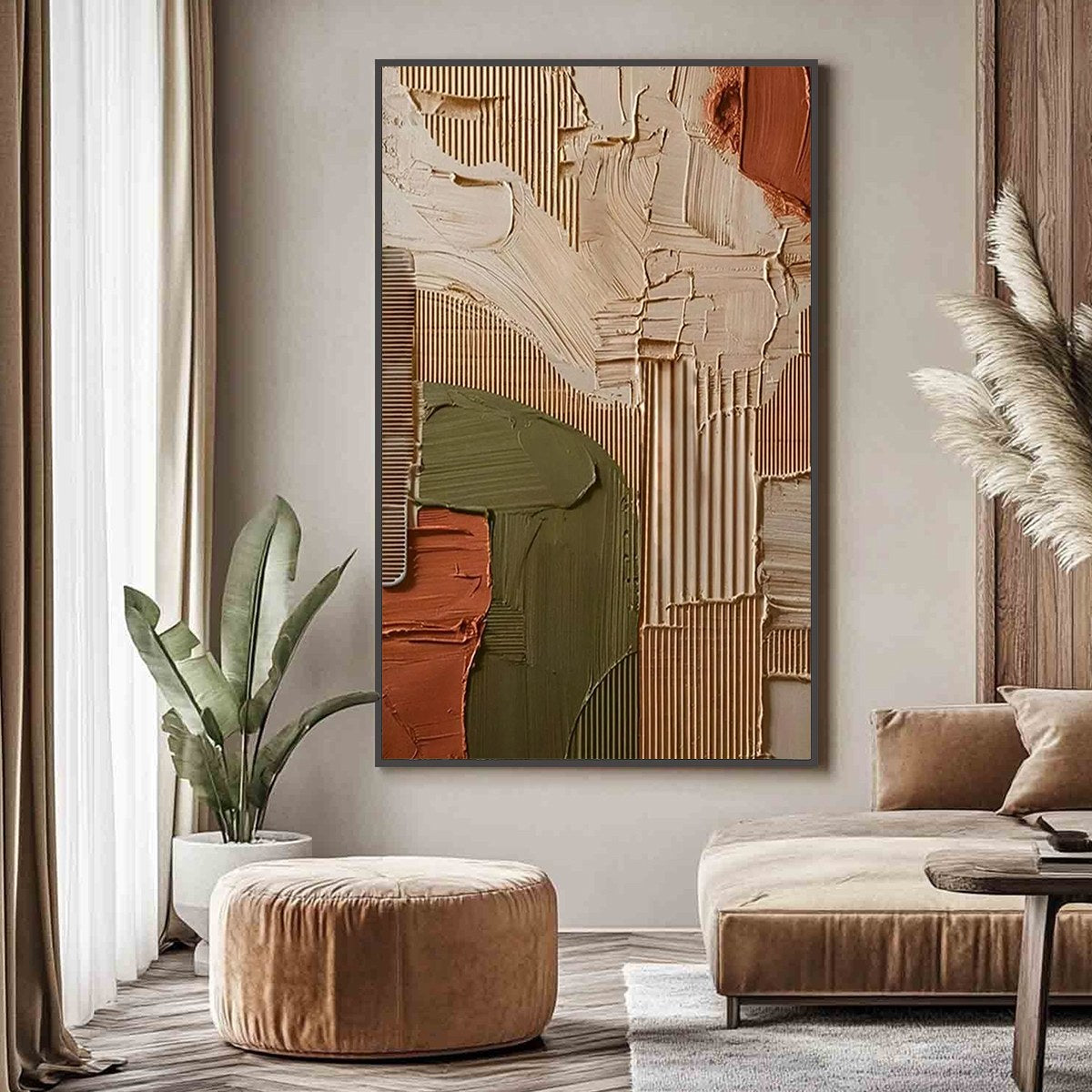




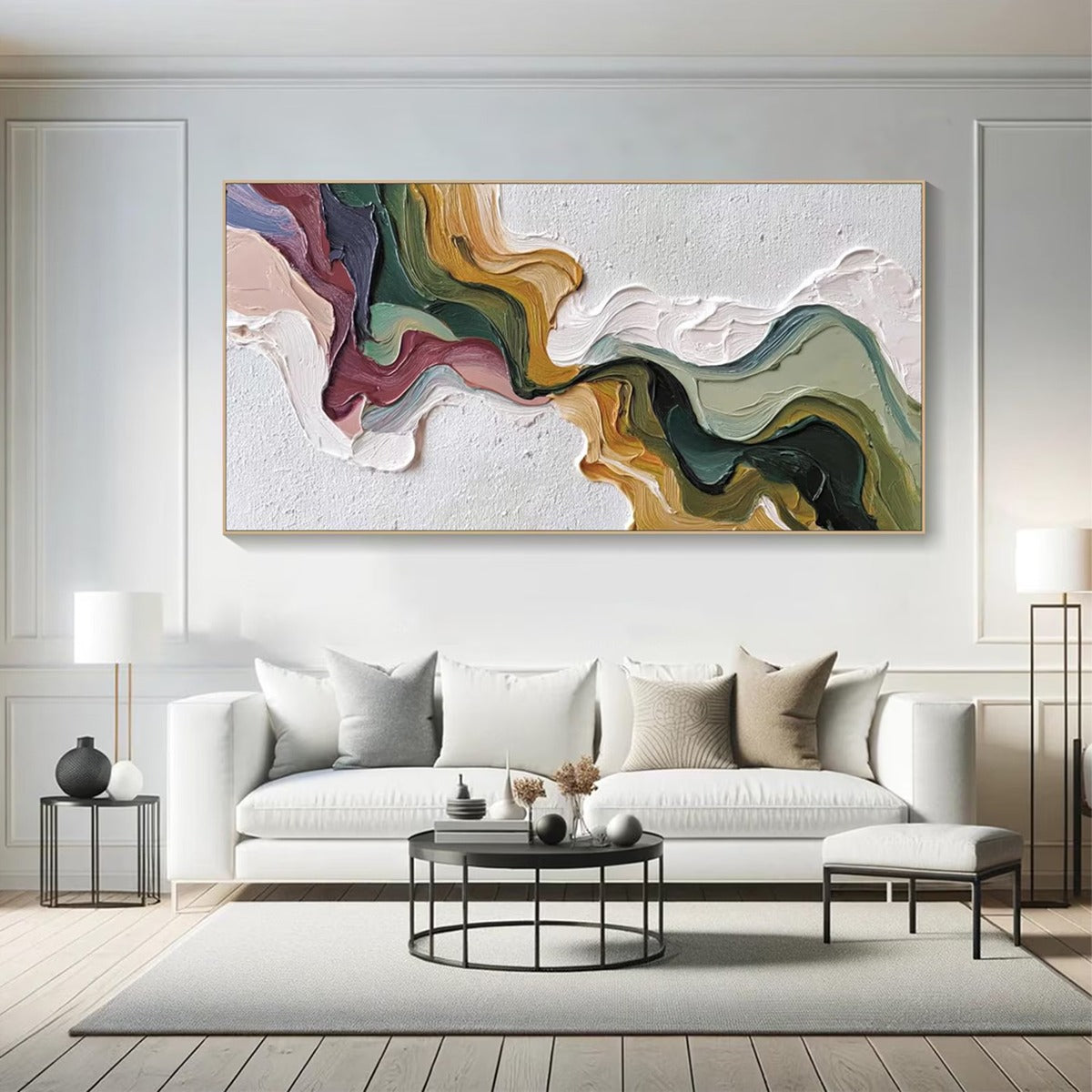




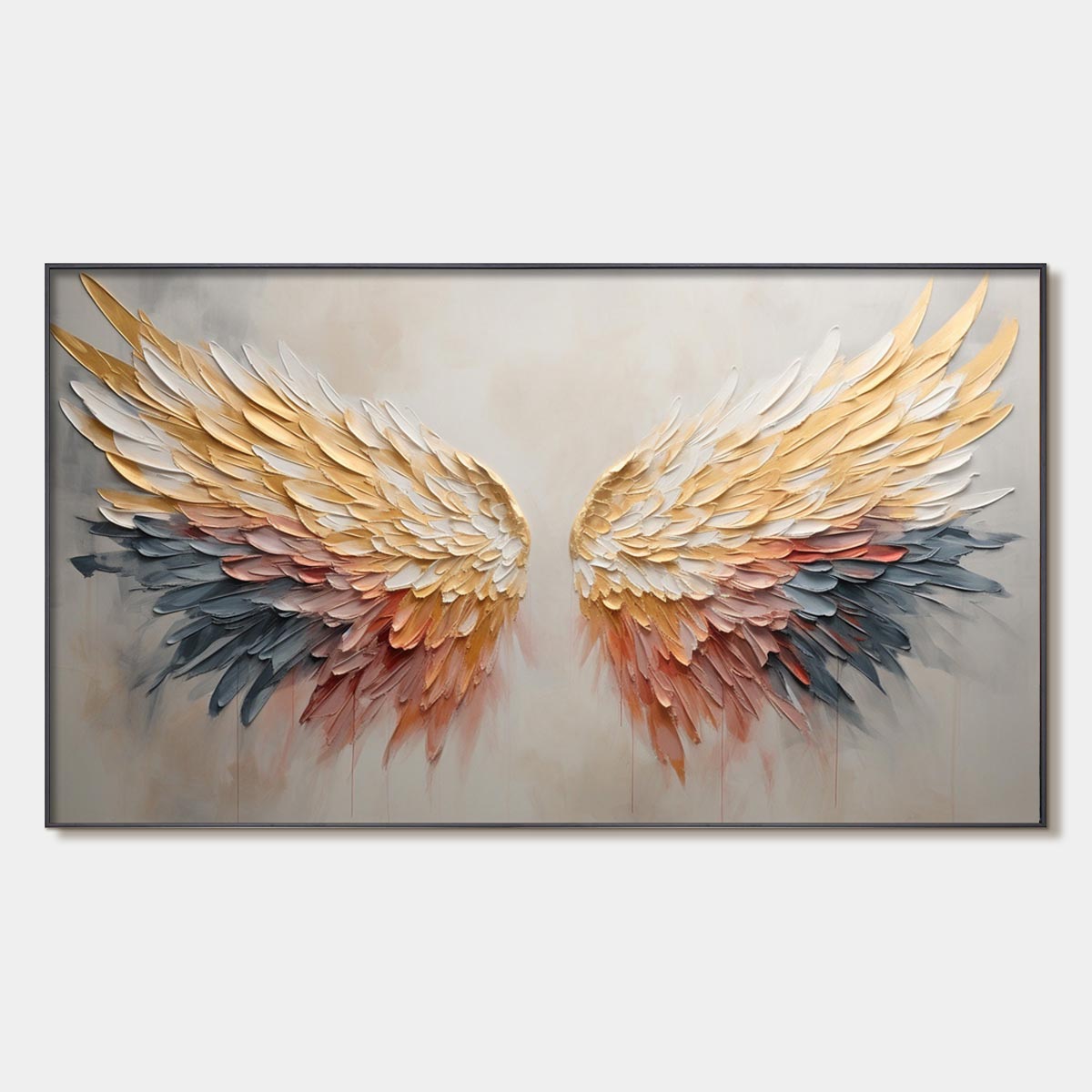
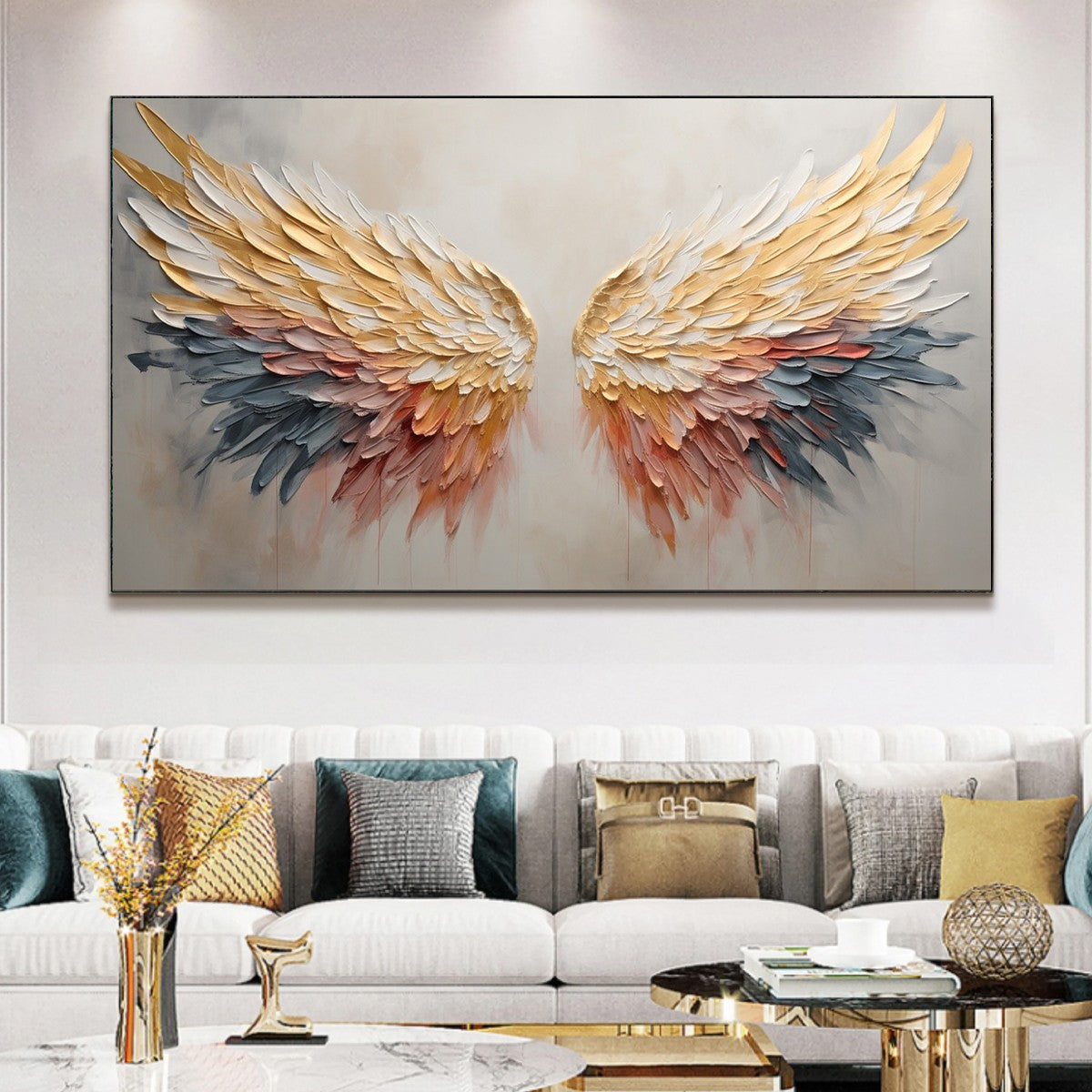
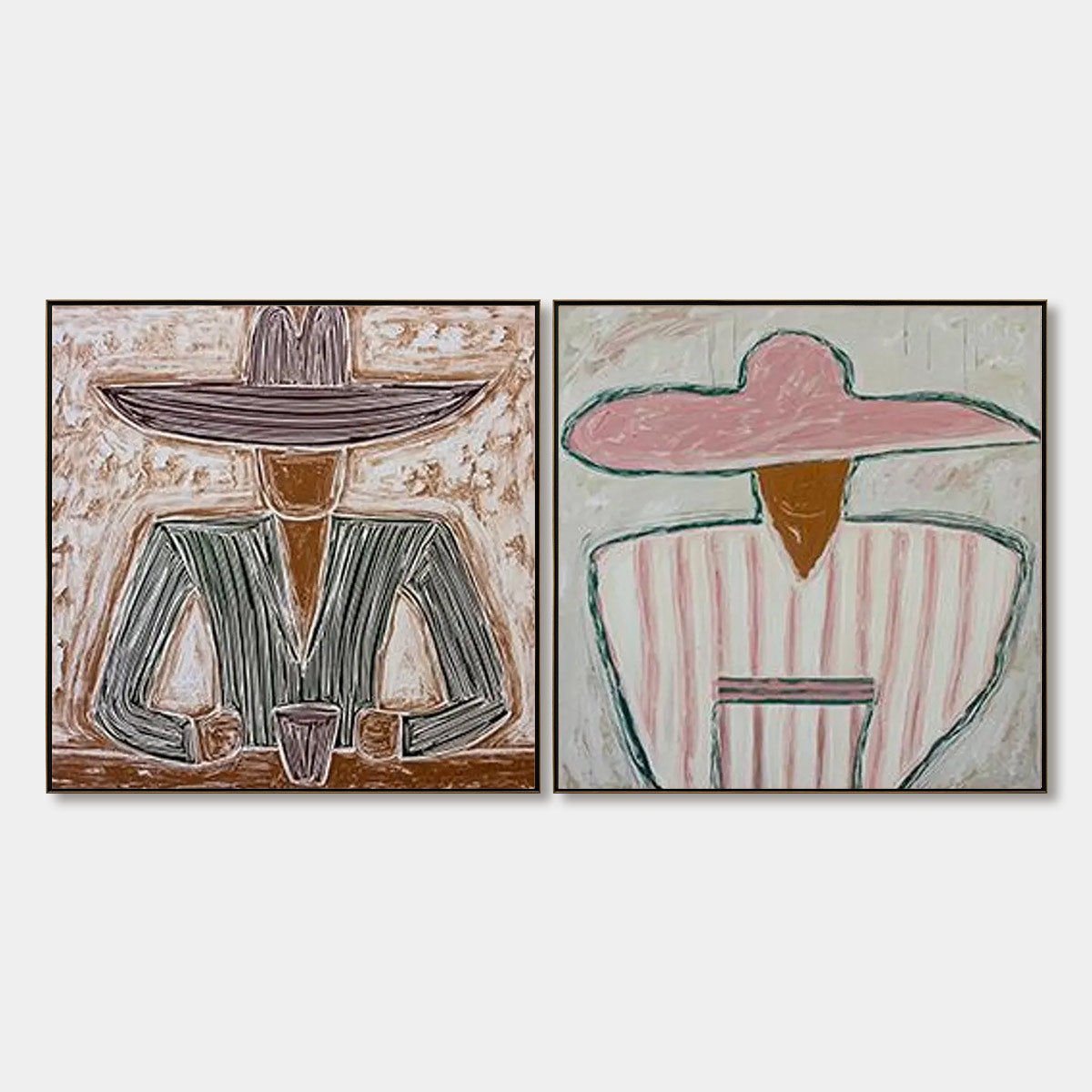
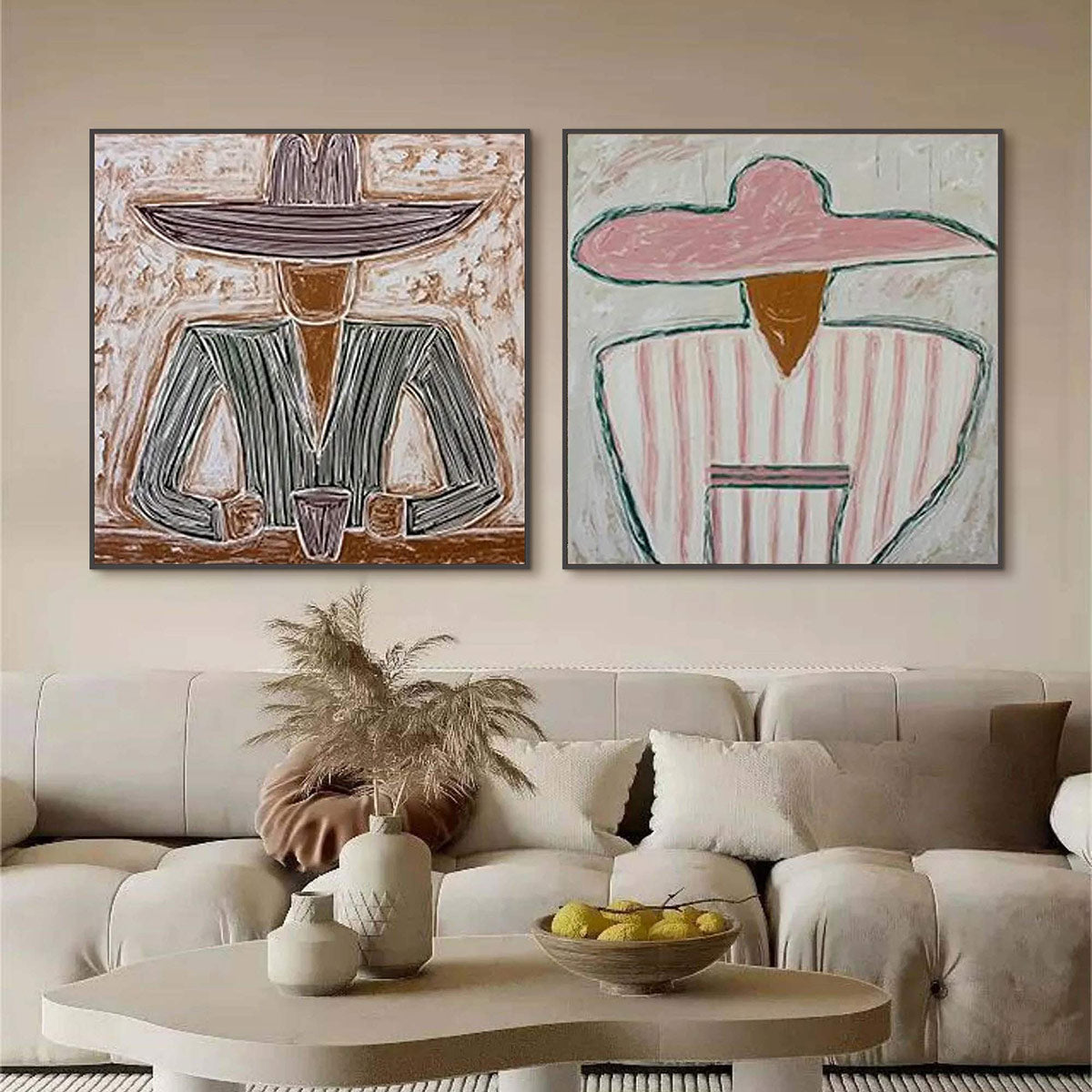



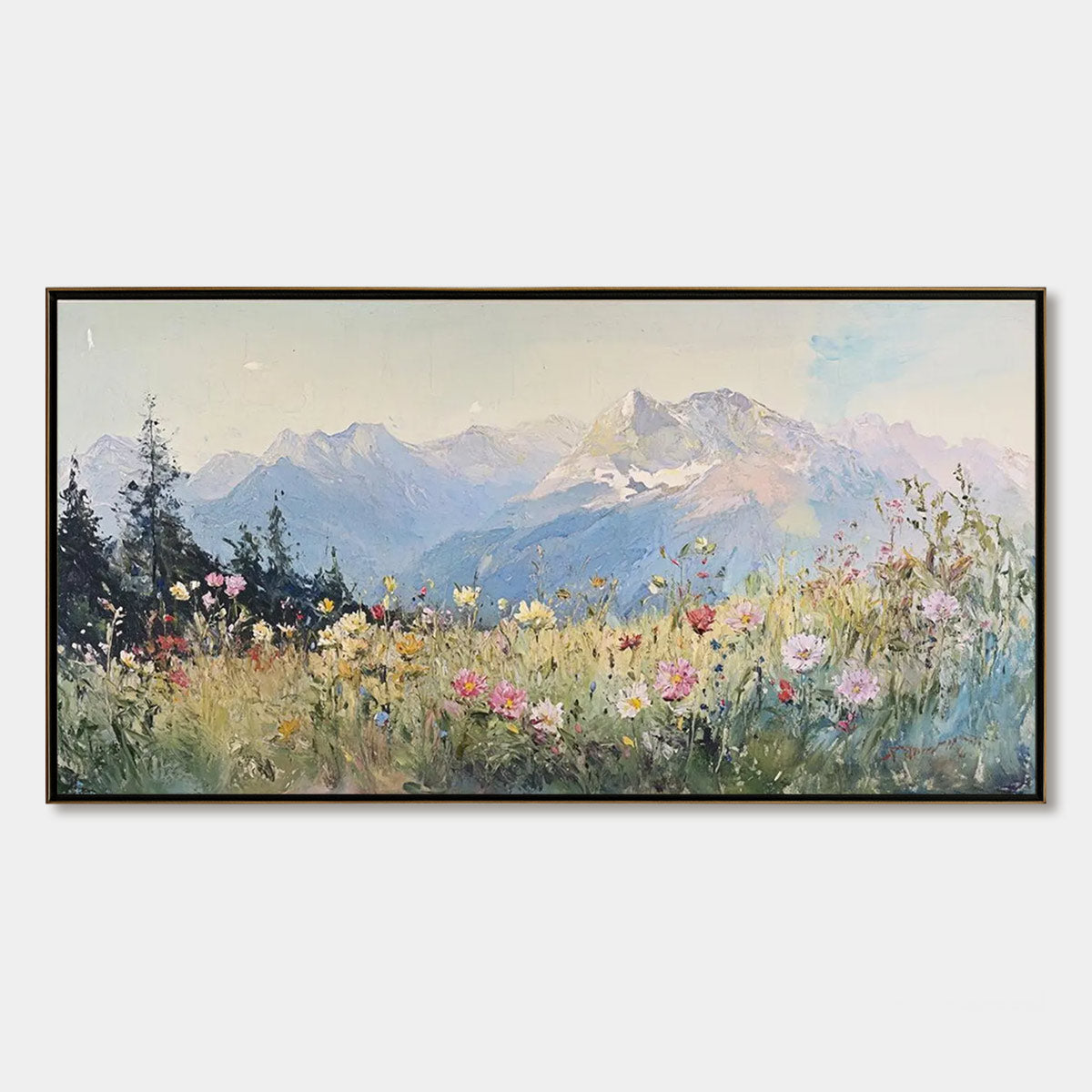
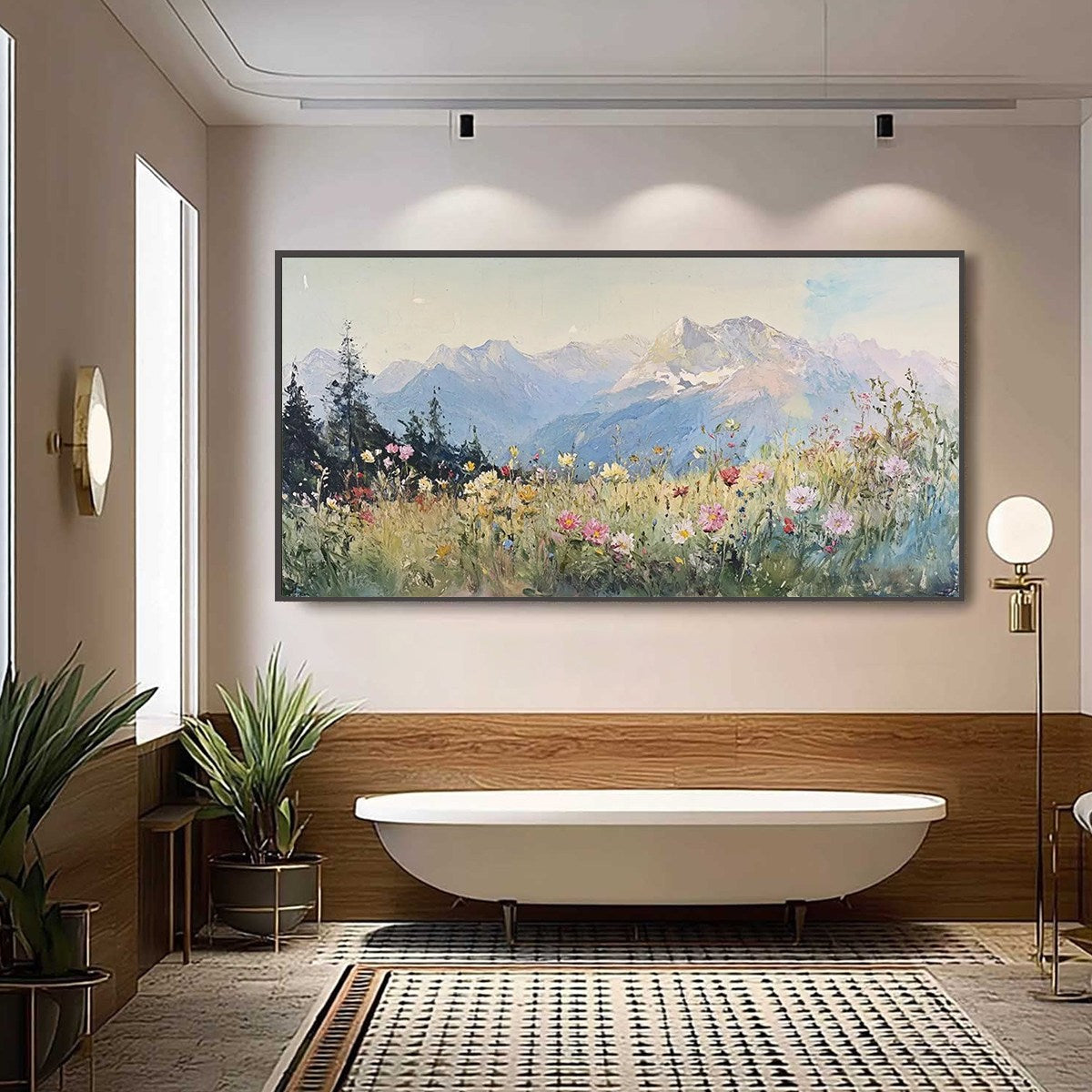




Dining Room Wall Art: Original Hand-Painted Oil Paintings
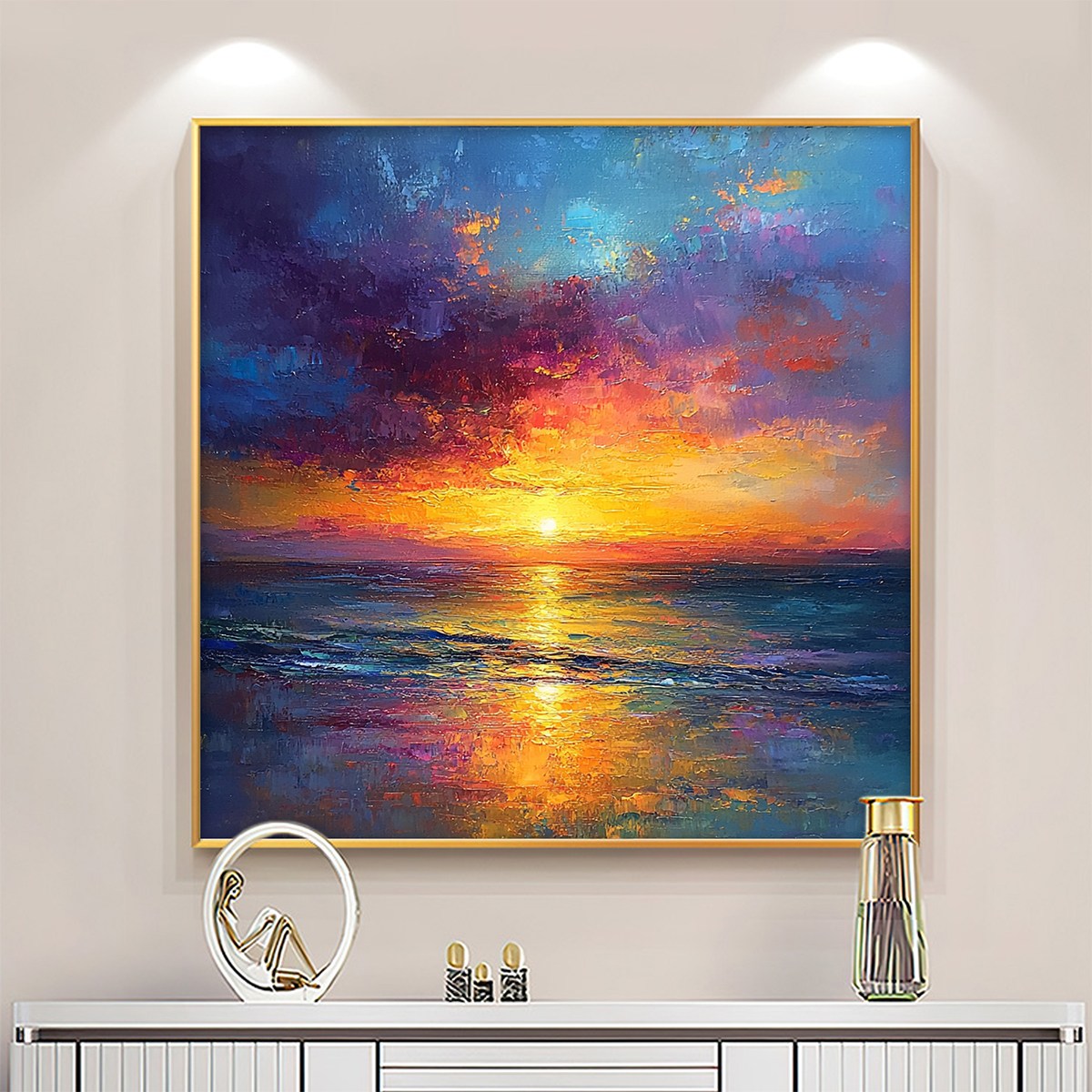
A dining room is looked at from a chair far more than from the doorway, and that single fact changes what belongs on the wall. Art here is seen for the length of a meal, at seated eye level, often under warm evening light. This collection gathers original oil paintings chosen with that in mind — textured seascapes, quiet landscapes and warm figurative work, each one painted by hand and credited to the artist who made it.
Start with the wall, not the picture
Most dining rooms only offer two or three places where art can go, and each one wants a different shape. Deciding which wall you are filling narrows the format faster than browsing by style does.
| The wall you are filling | What tends to work |
|---|---|
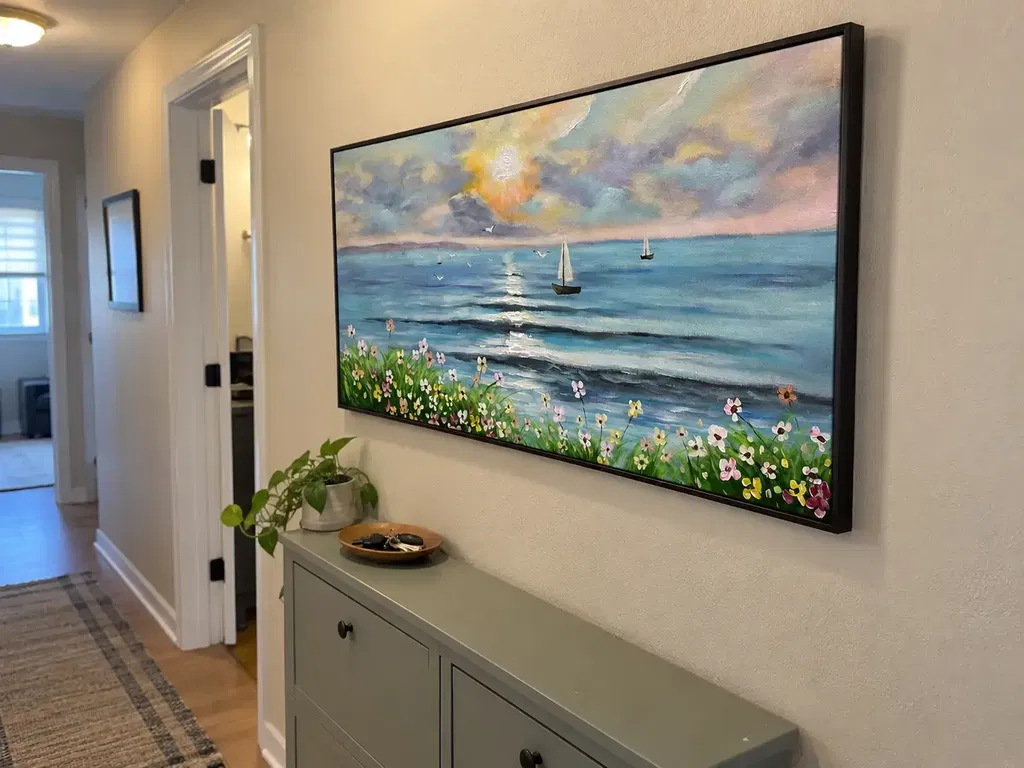
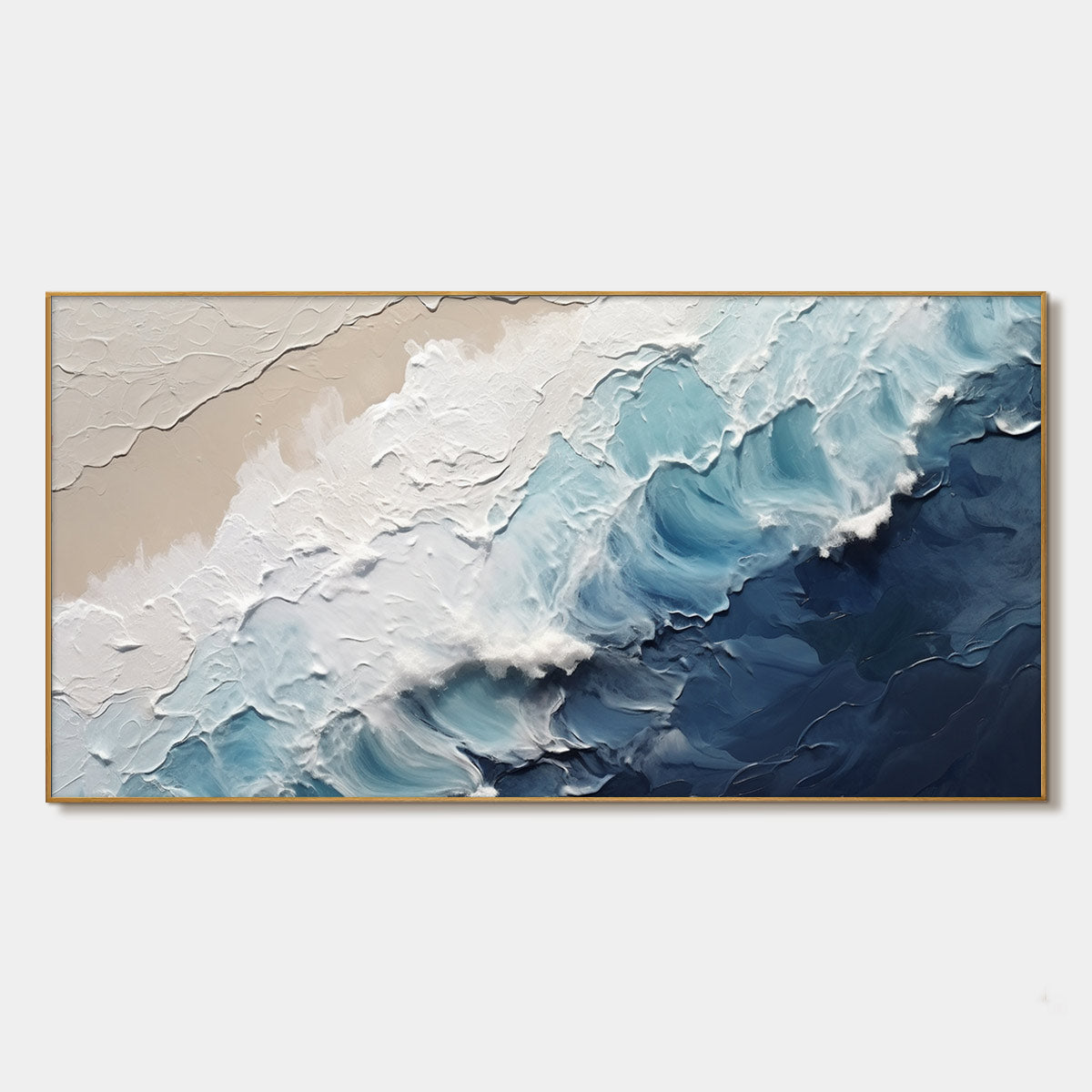
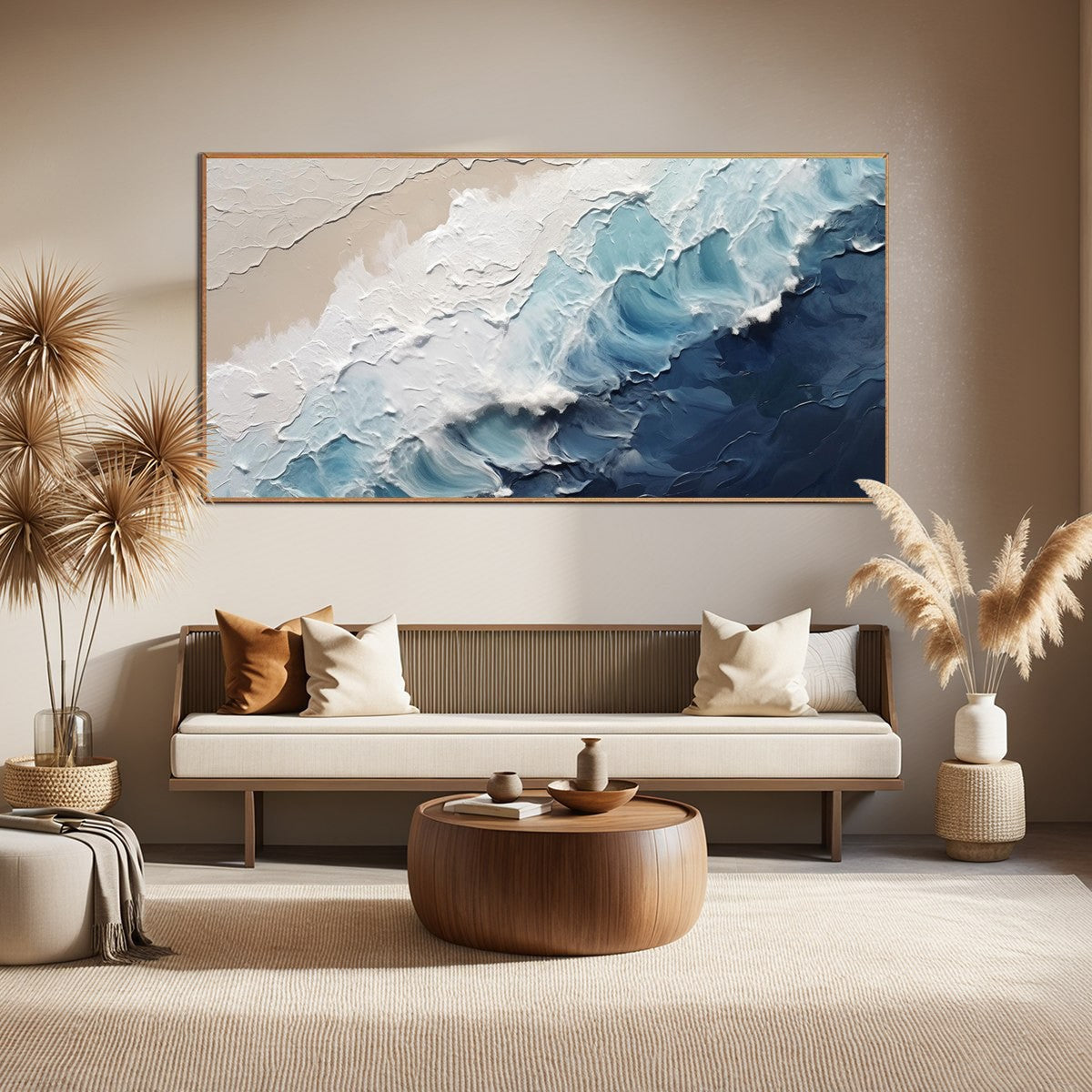
| Above a long sideboard or buffet | A horizontal format that echoes the furniture line, hung near standing eye level |
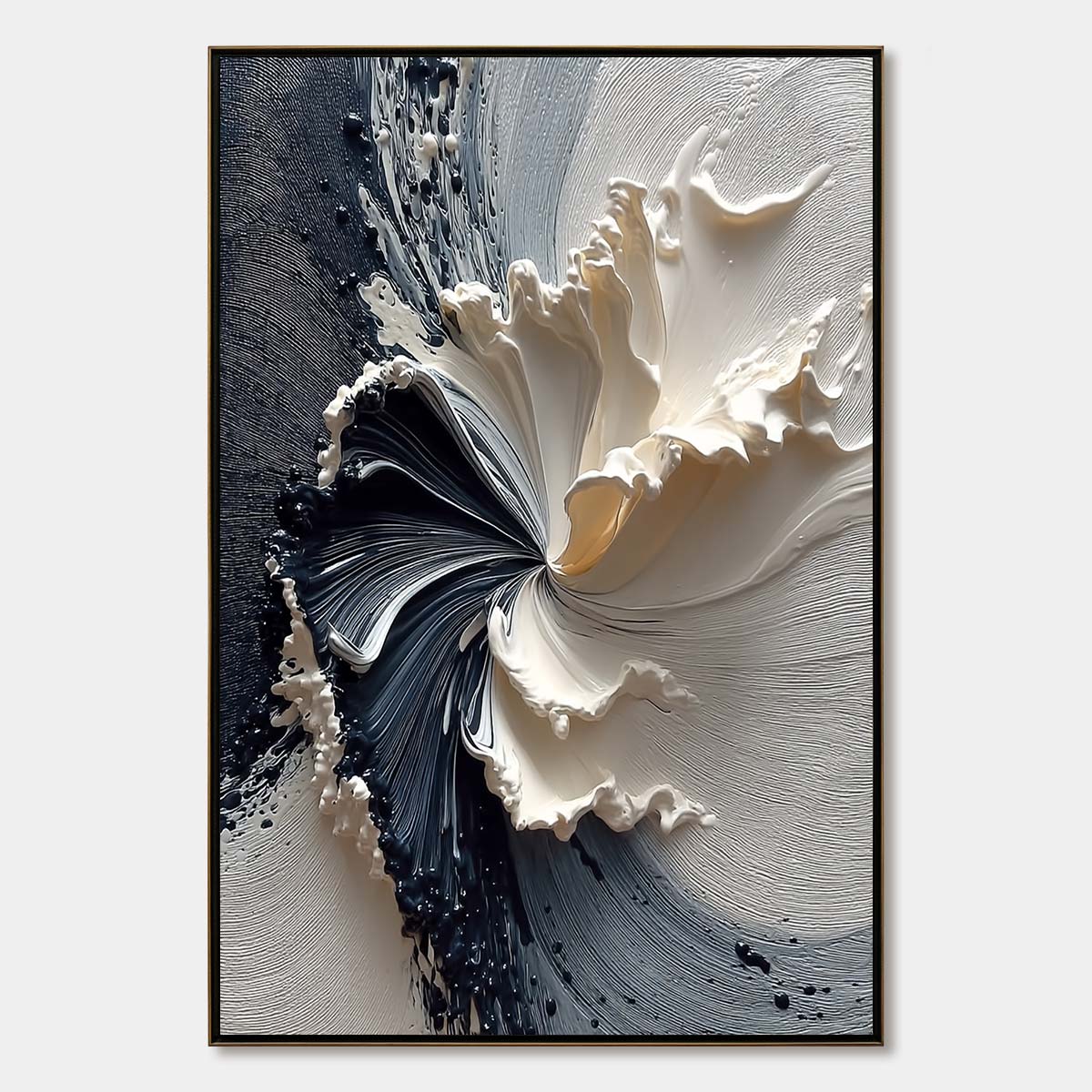
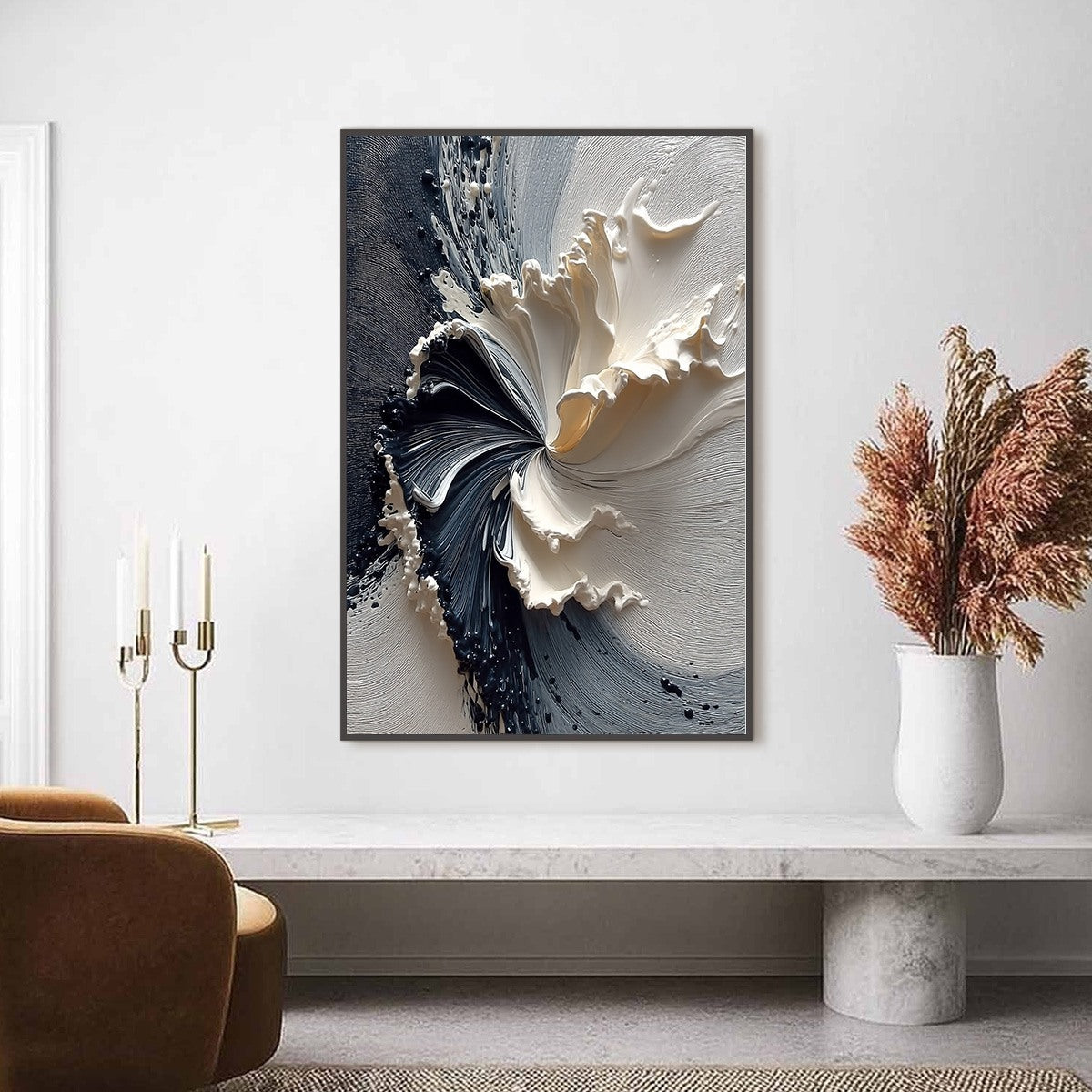
| A narrow strip between windows or beside a doorway | A vertical format, which fits the proportion without crowding the trim |
| A breakfast nook or home bar corner | Smaller work with some personality, rather than an atmospheric piece |
| Behind the dining table | Calmer subjects, hung lower than usual, clearing the chair backs |
Horizontal seascapes above a sideboard or buffet
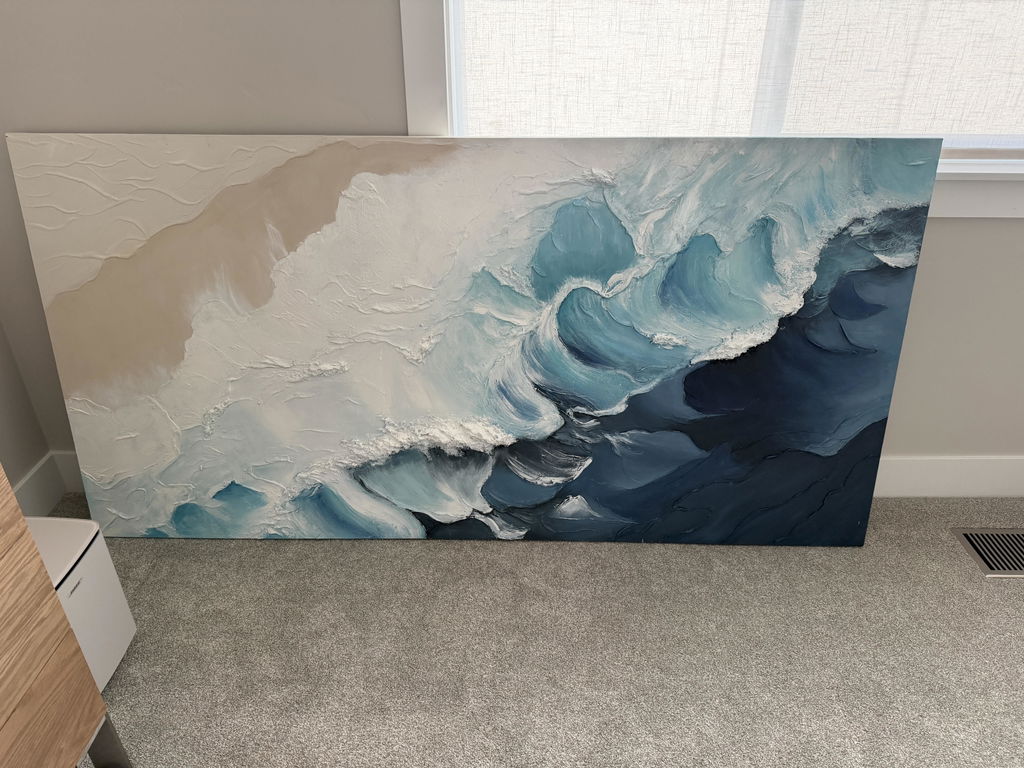
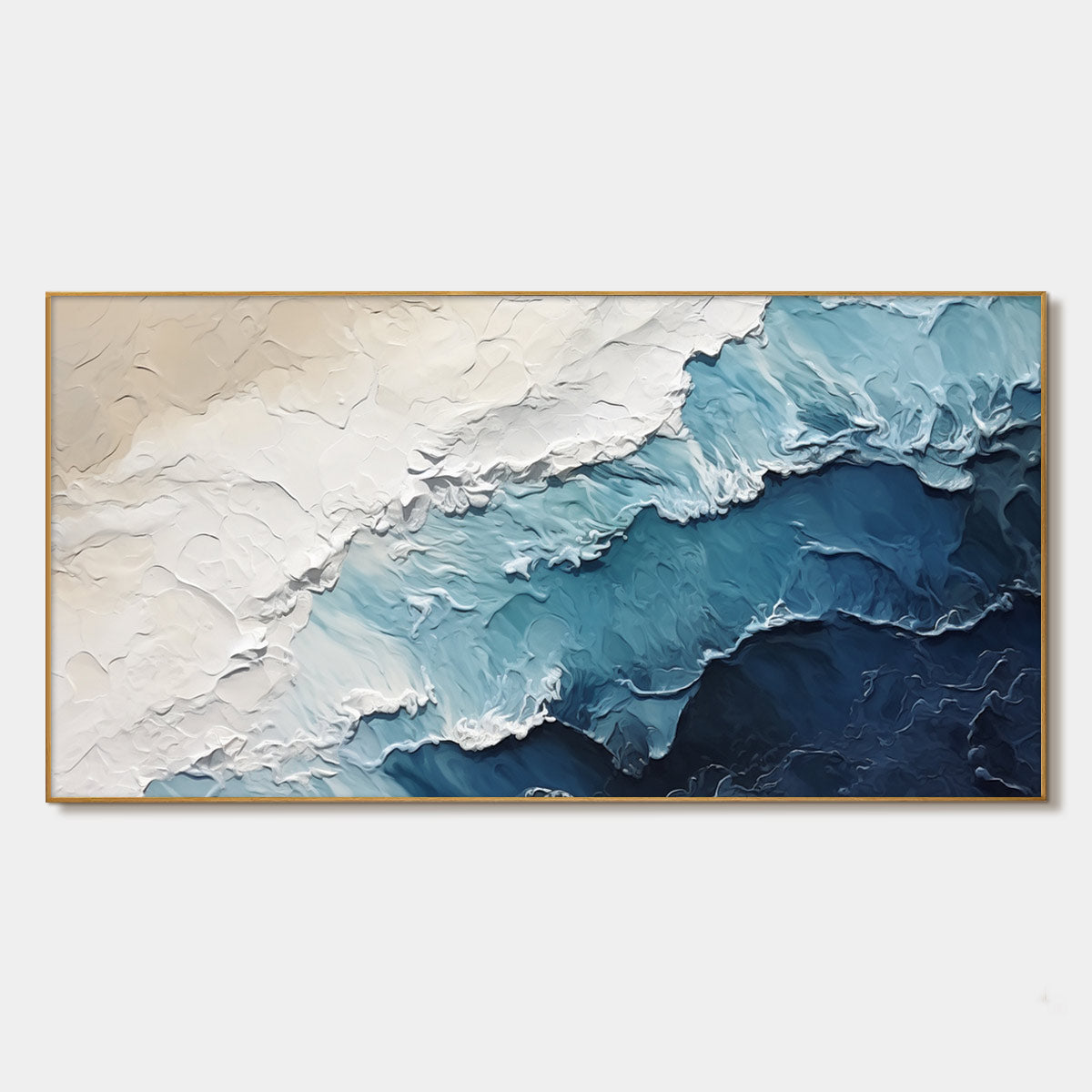
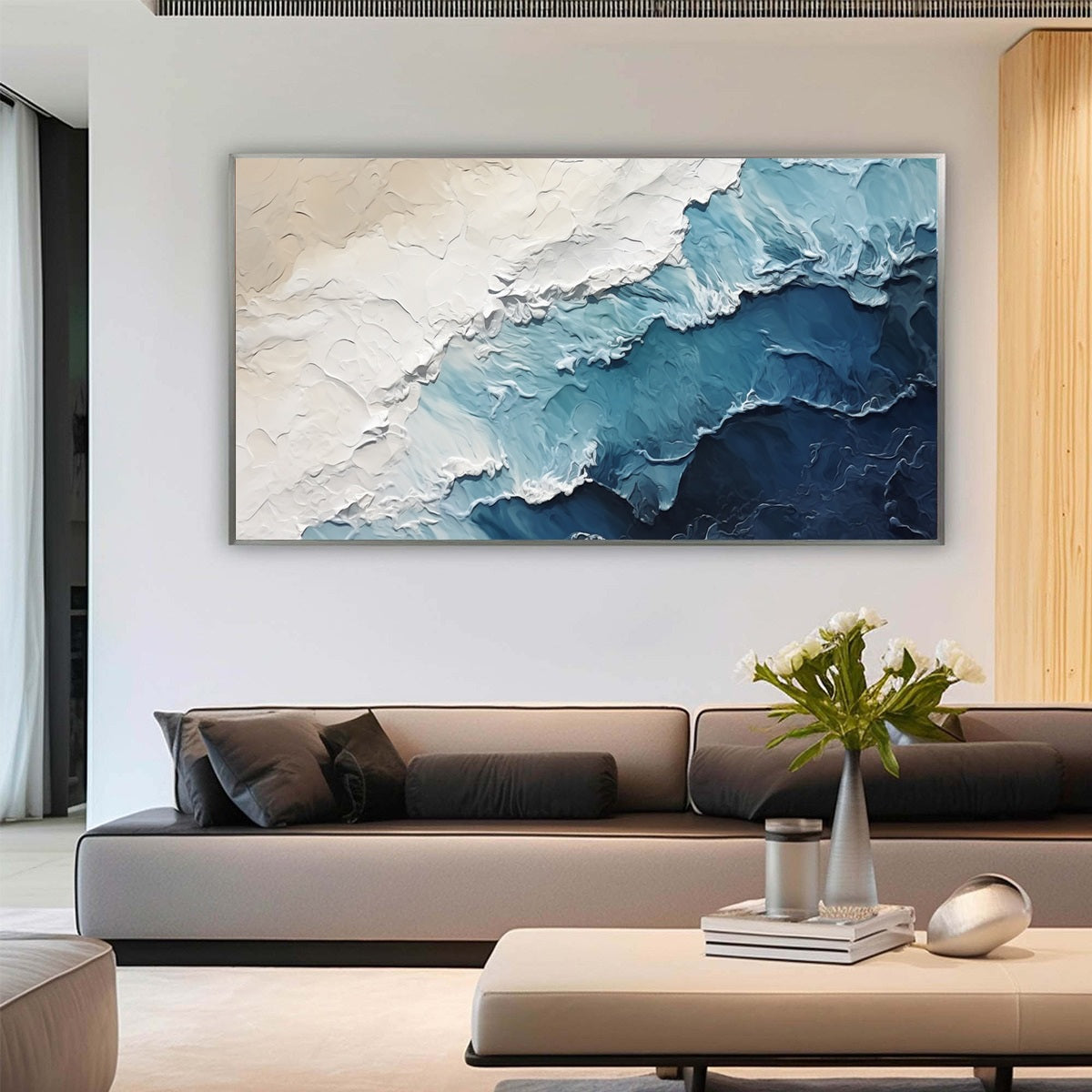
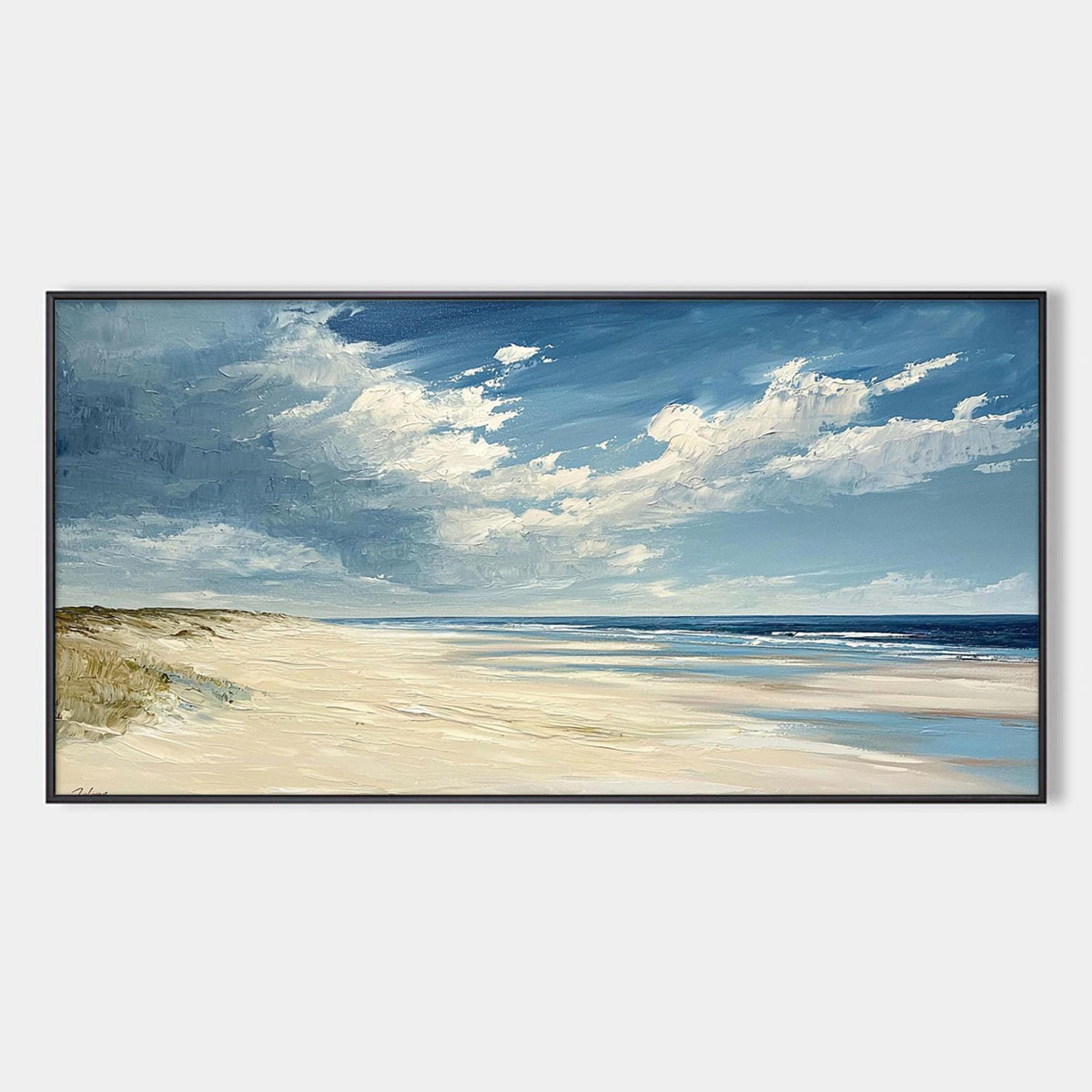
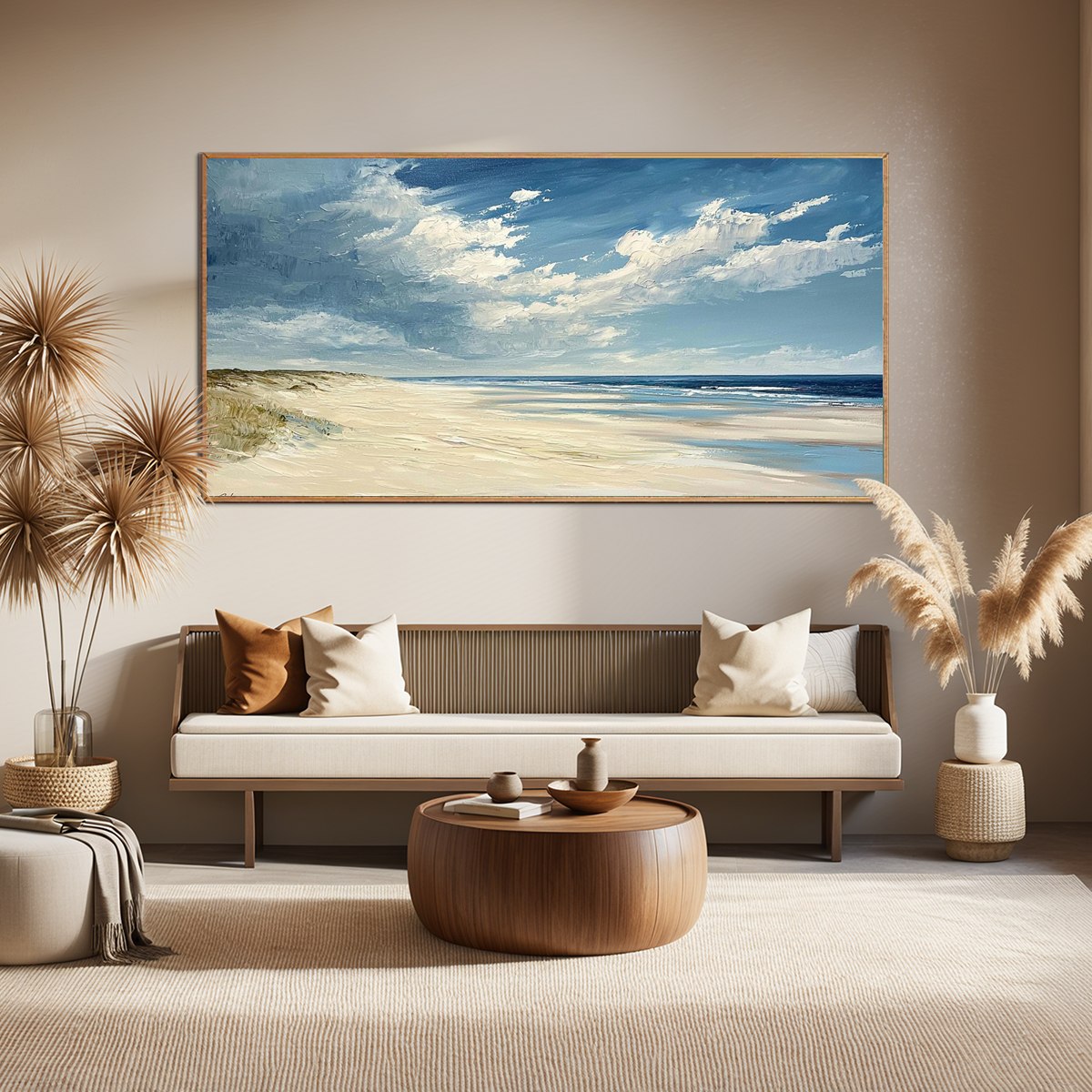
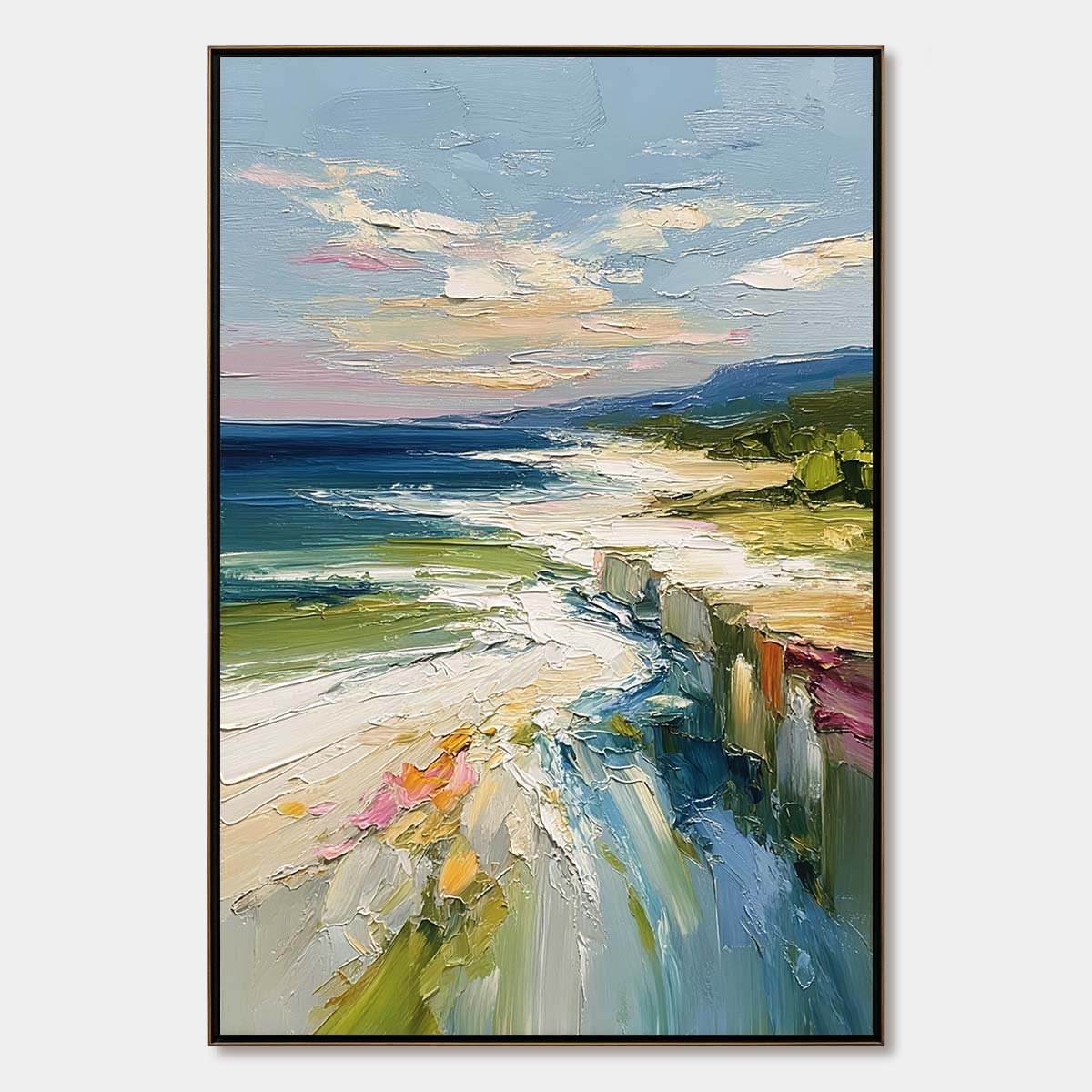
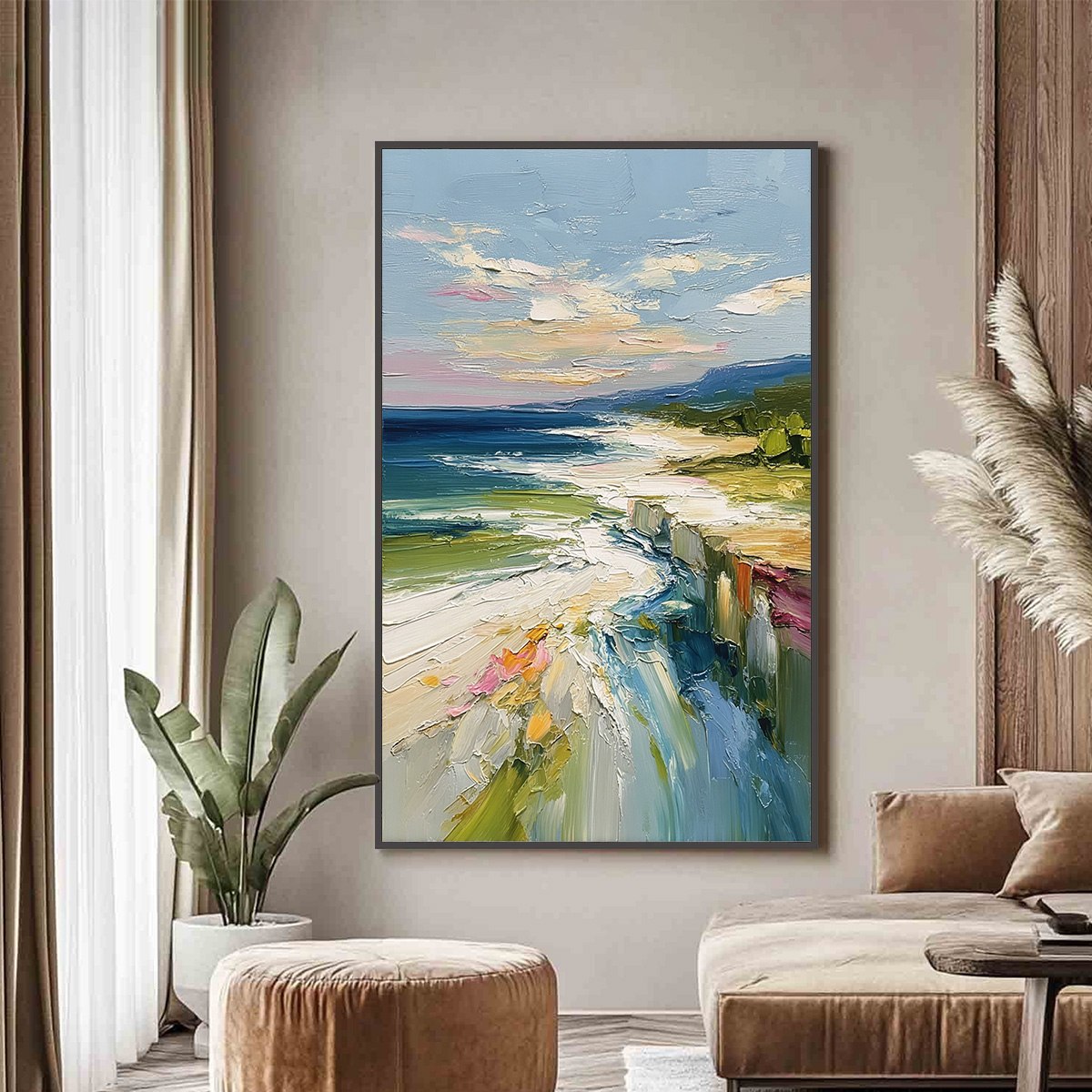
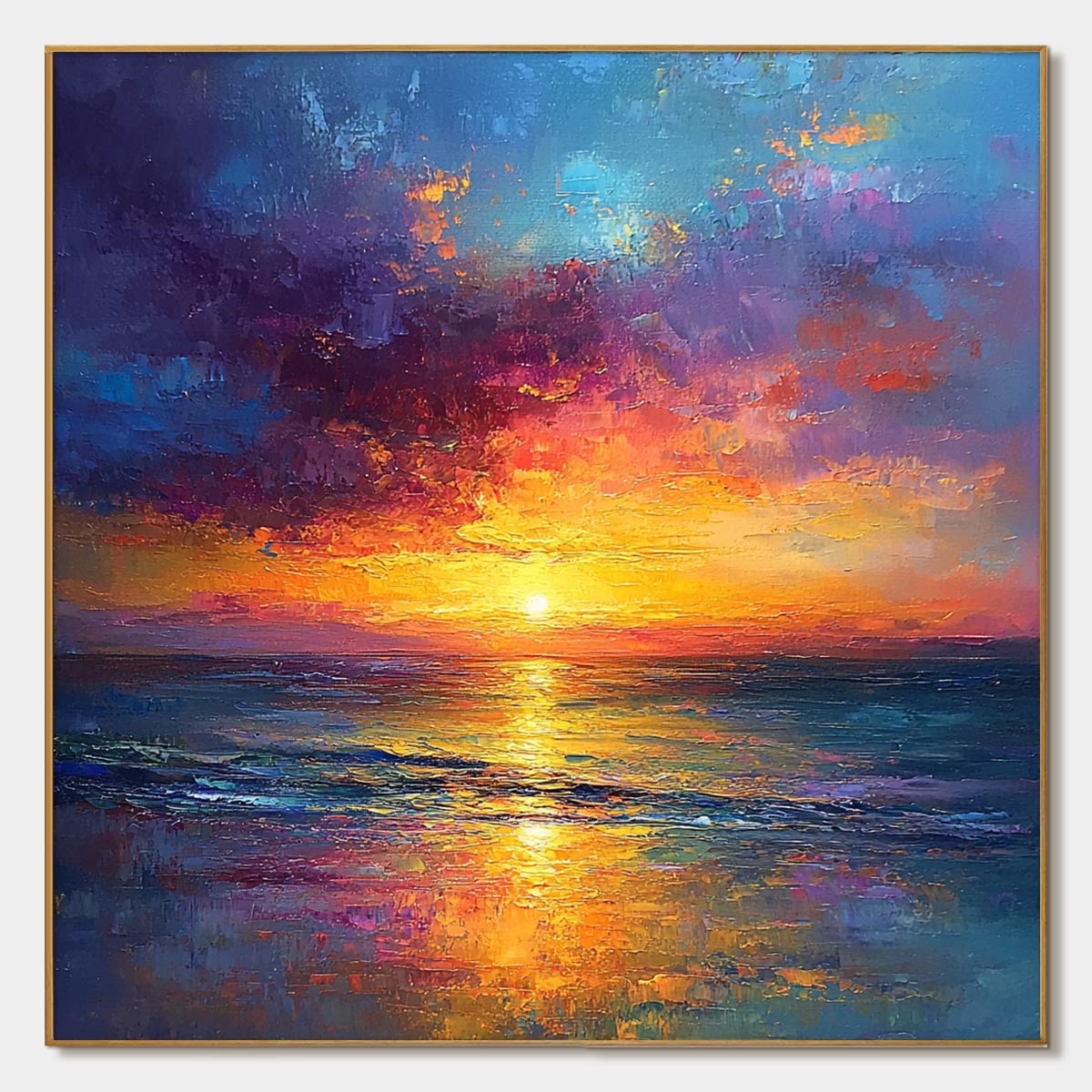
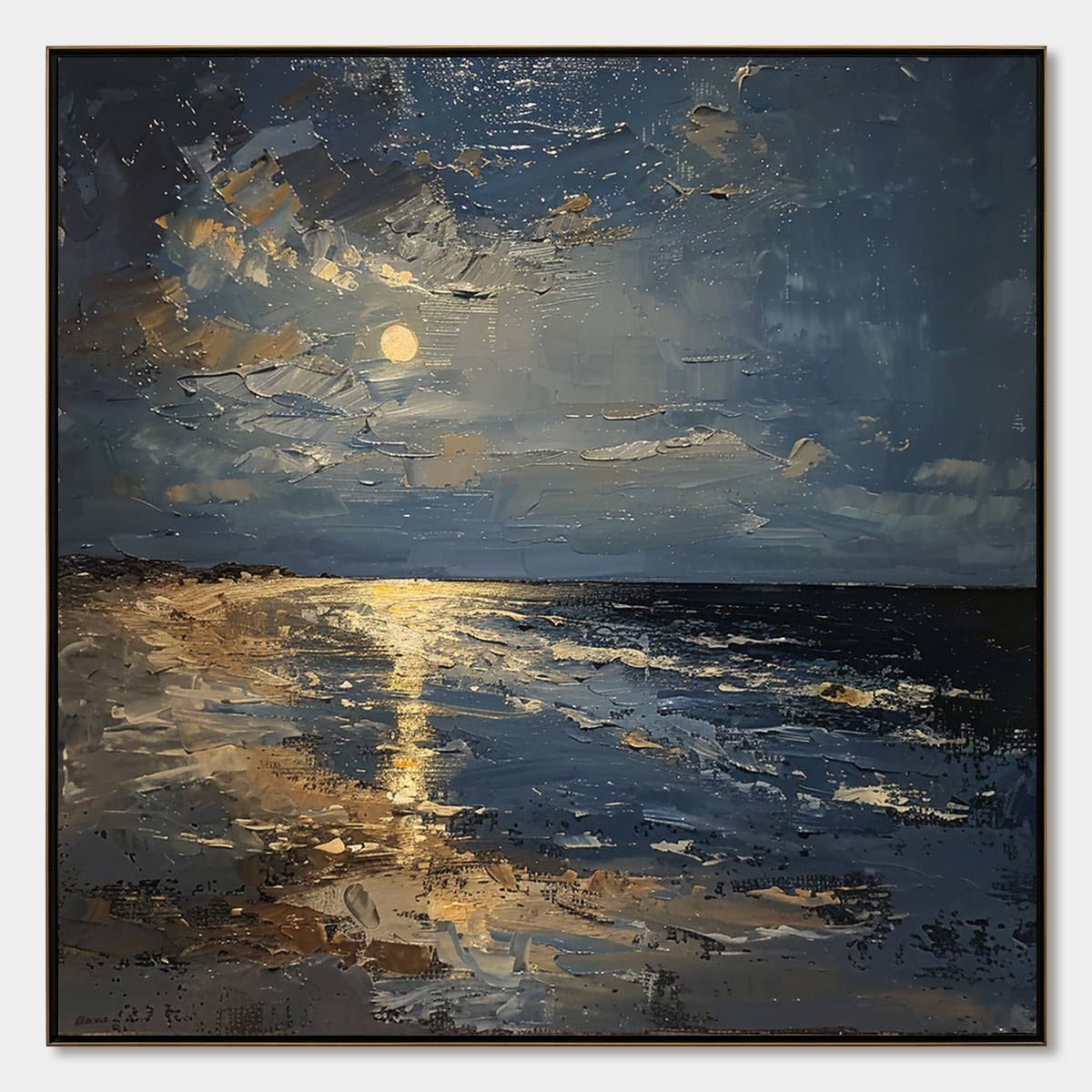
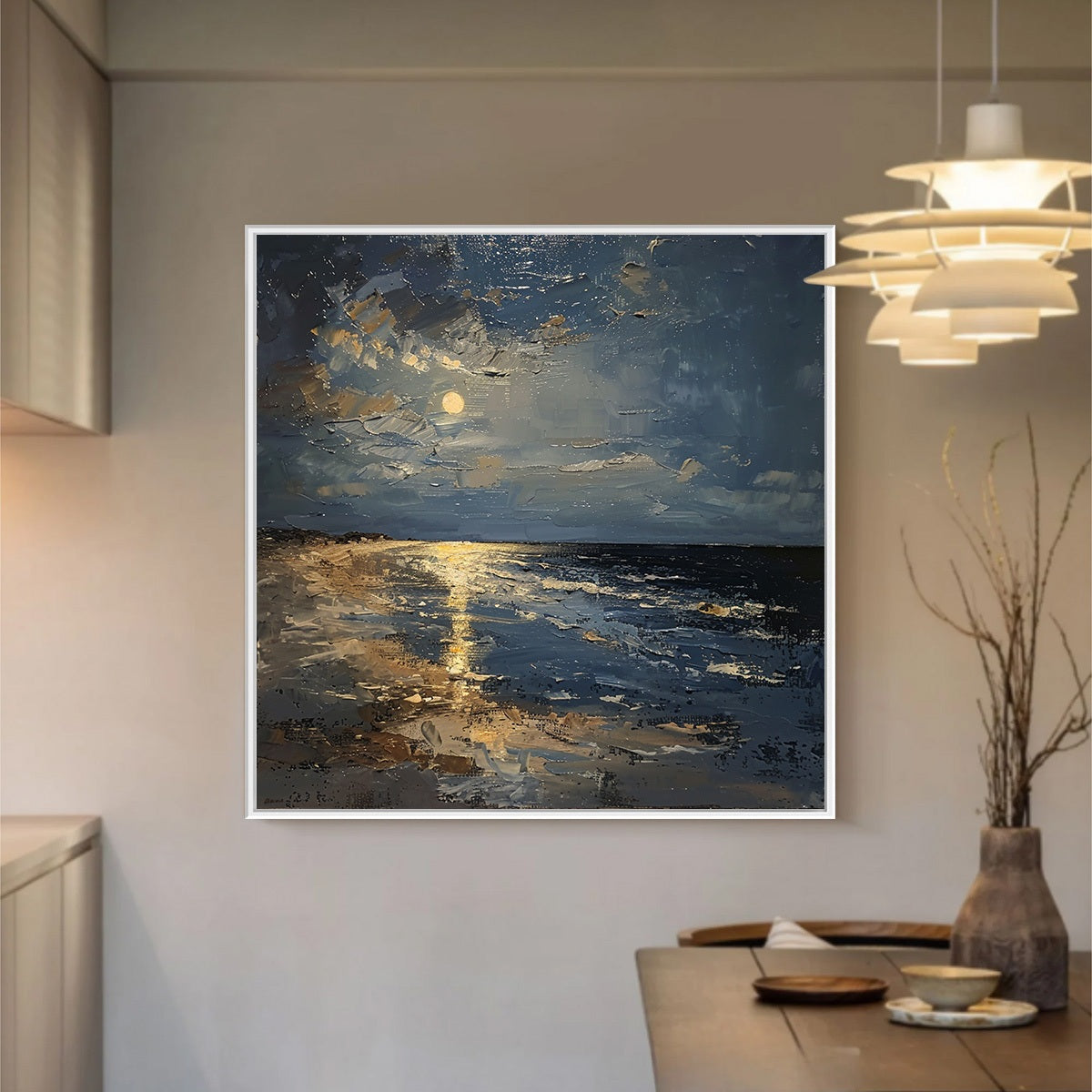
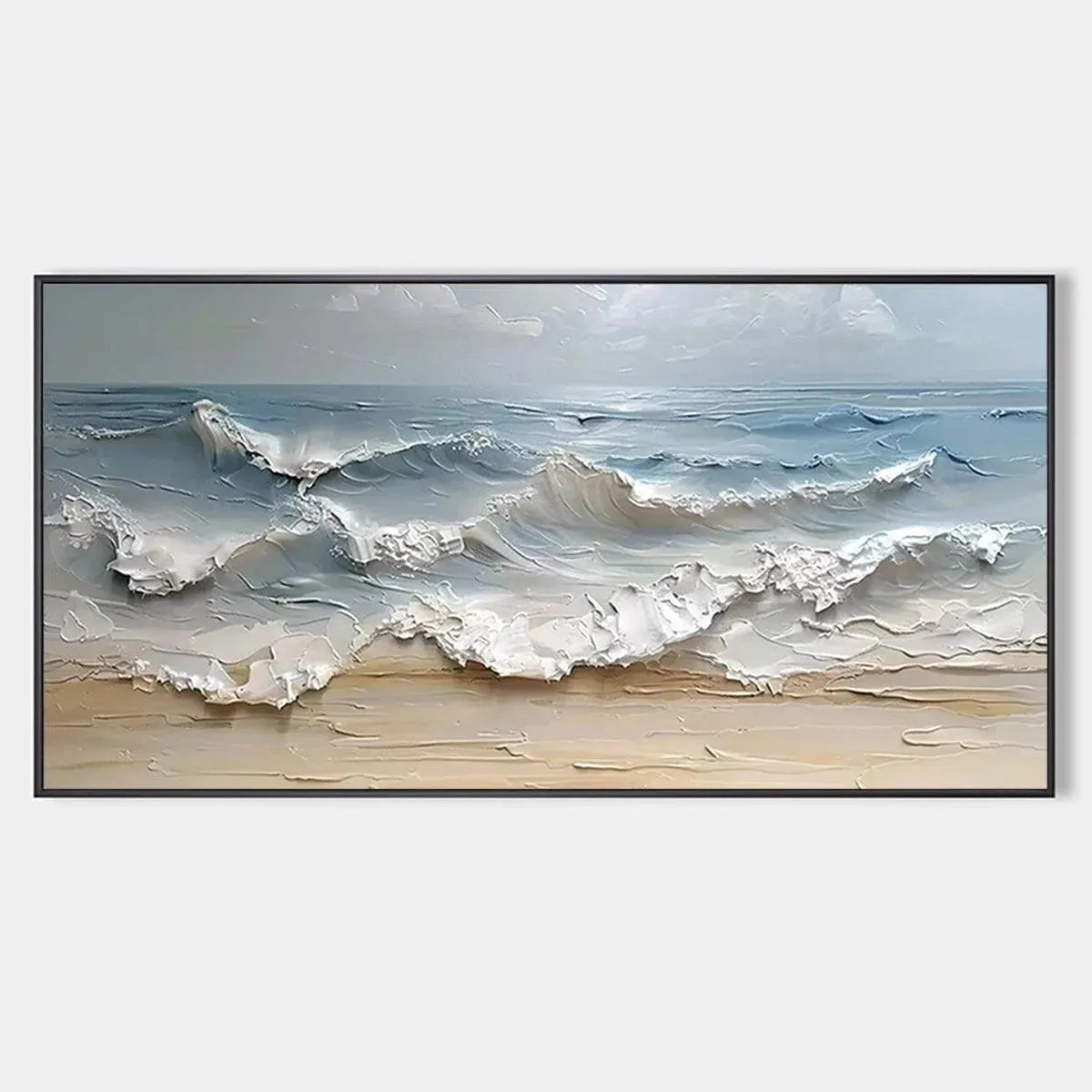
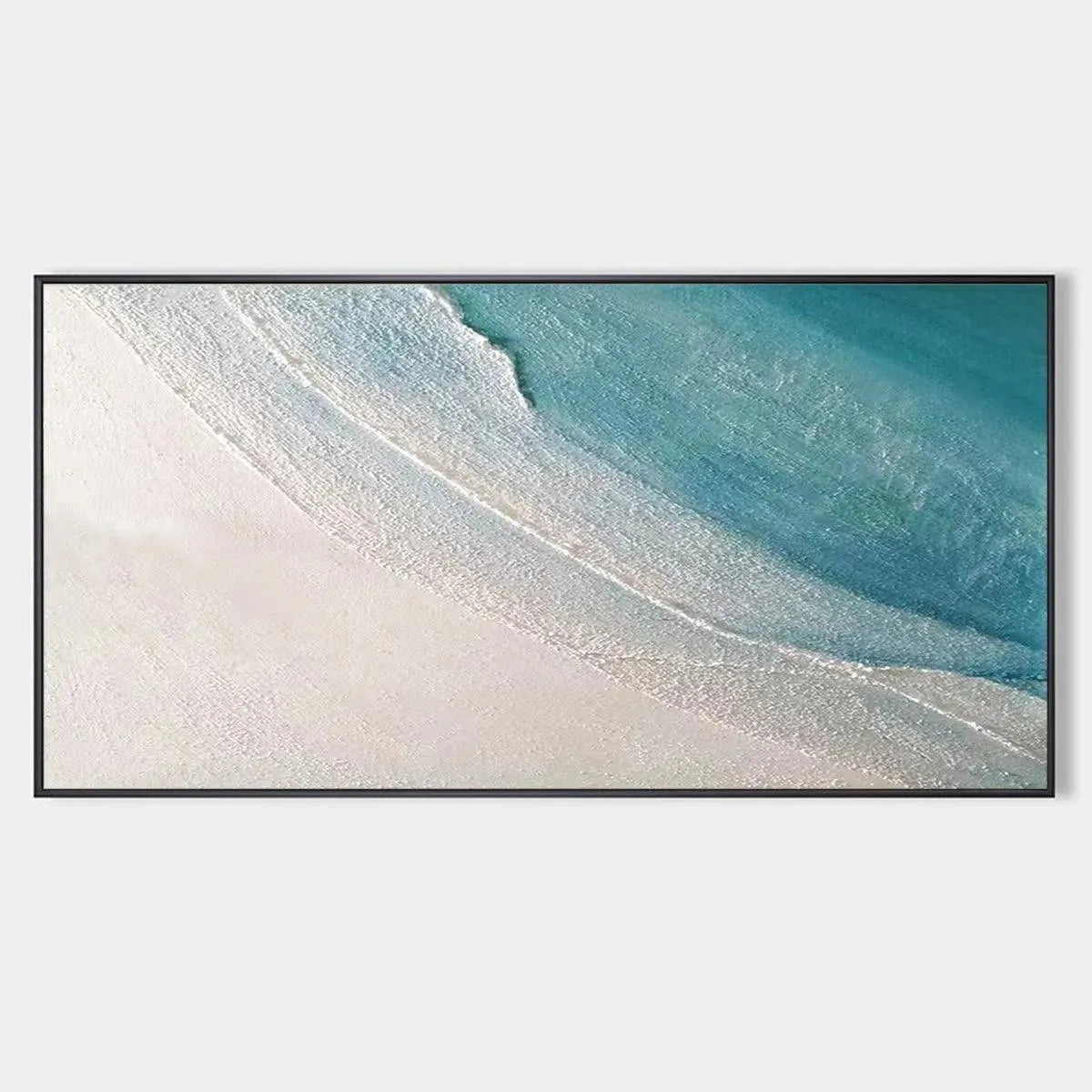
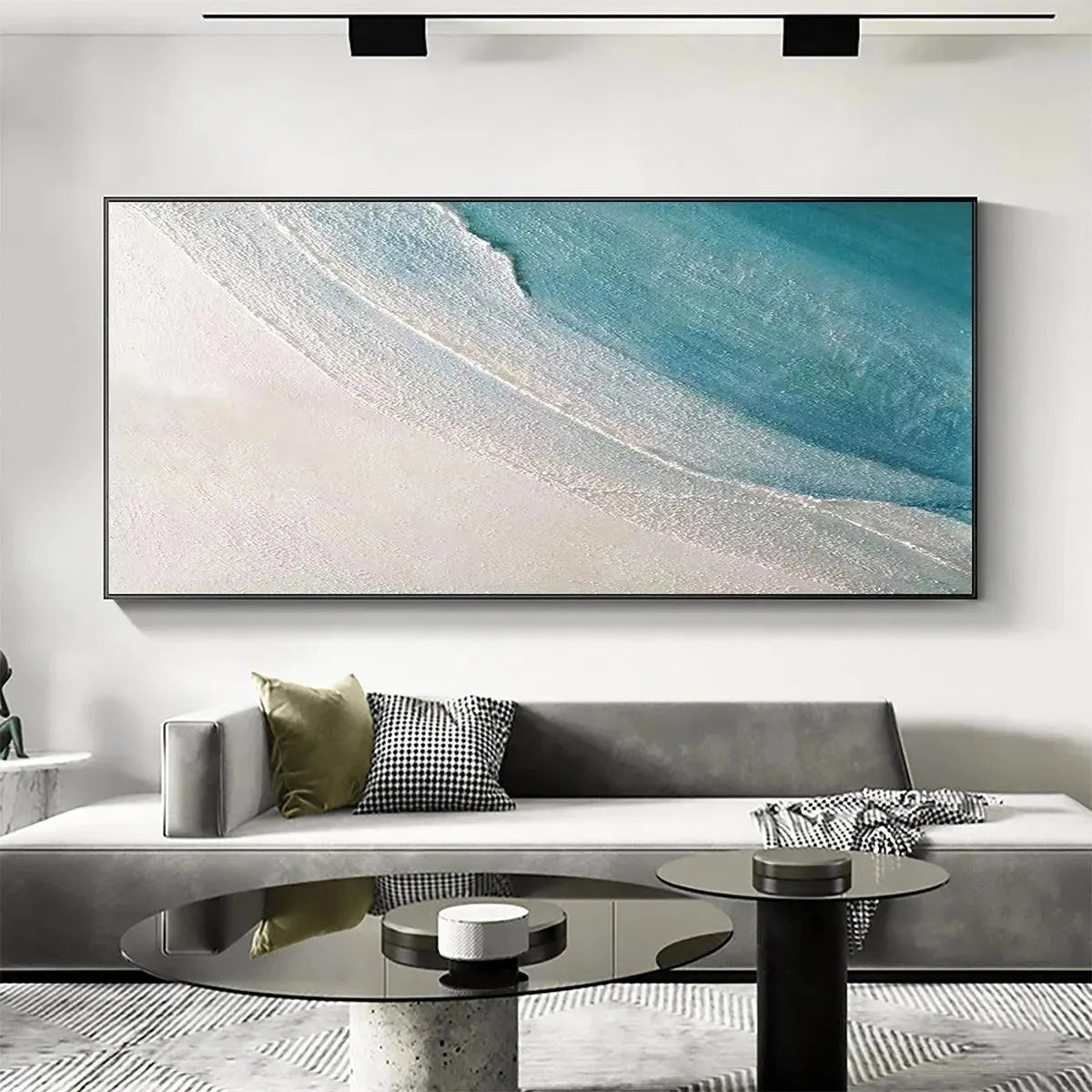
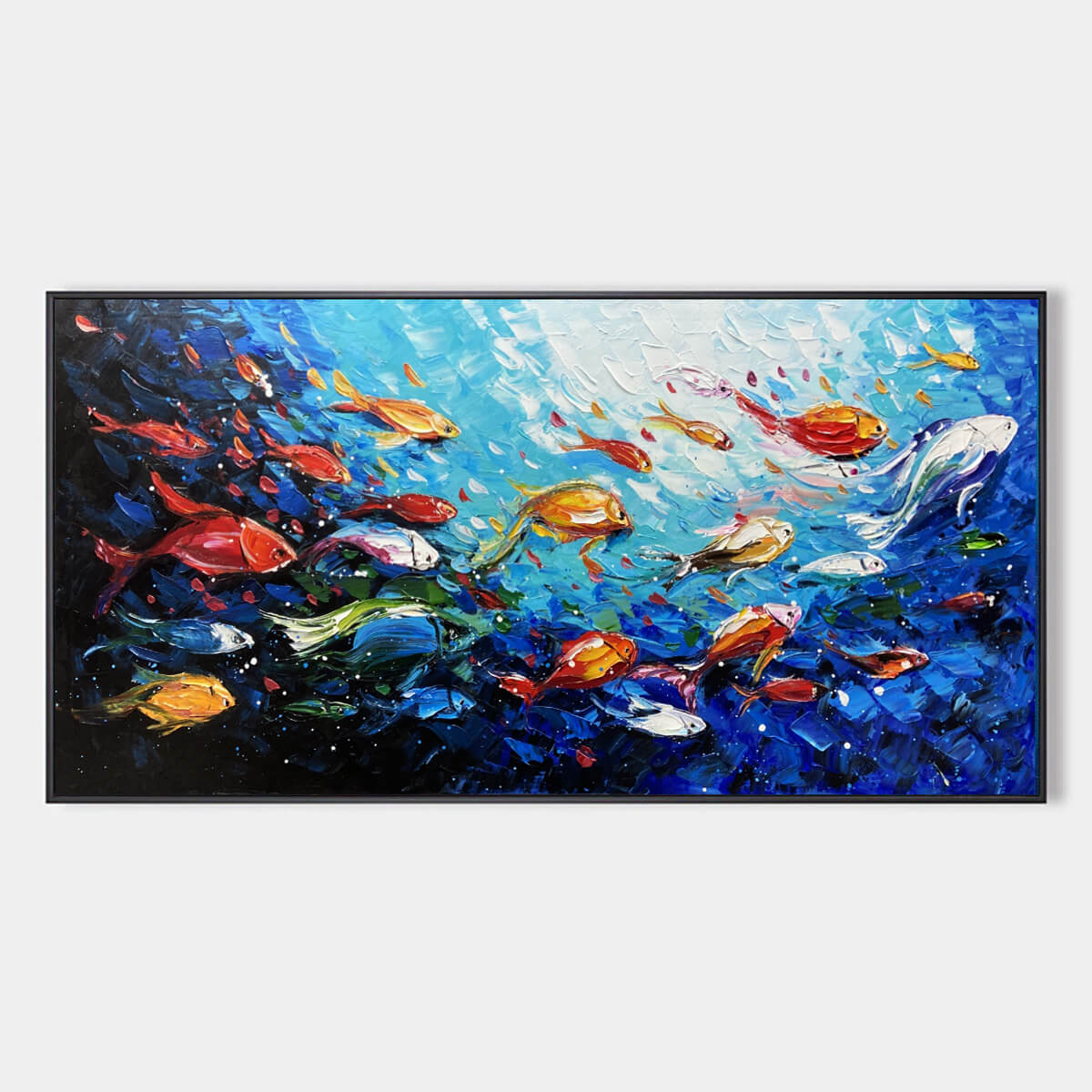
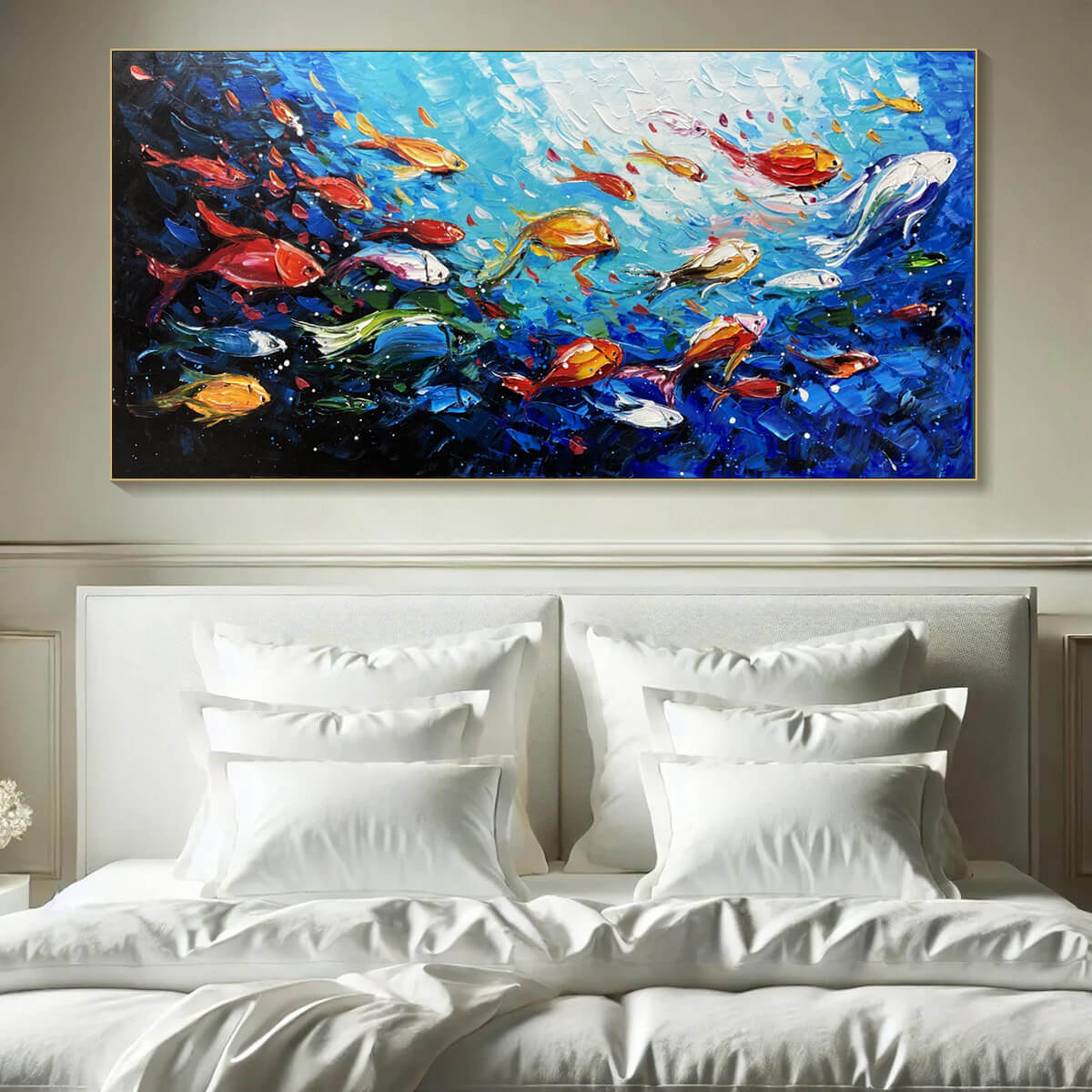
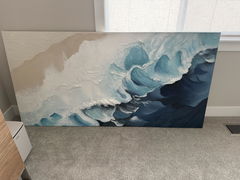
A long, low piece of furniture reads better with a painting that follows its line. Going too small above a sideboard is the most common mistake in this room — the art ends up floating, and the wall looks emptier than before. Coastal Embrace is built for that proportion, with impasto ridges that catch low evening light rather than flattening under it. It is the work of Isabella Rossi, who paints the Mediterranean coast with a palette knife.
Hang so the center of the painting sits near standing eye level. That keeps it working when people are moving through the room, not only when they are seated.
Vertical formats for narrow walls and doorways
Many dining rooms have a strip of wall between two windows, or a slice beside a doorway, where nothing horizontal will fit without crowding the trim. This is where a vertical format earns its place, and where most people give up and leave the wall bare.
Coastal Embrace in vertical format covers the same coastal subject in the opposite shape, by the same artist and in the same hand, which makes it straightforward to keep one visual language across a room that needs both orientations.
Breakfast nooks and home bar corners
Smaller, more relaxed corners carry a subject with some personality better than a purely atmospheric one. A breakfast nook is a short-stay space with a different mood from the formal table, and the art can be more direct without becoming the focal point of the whole room.
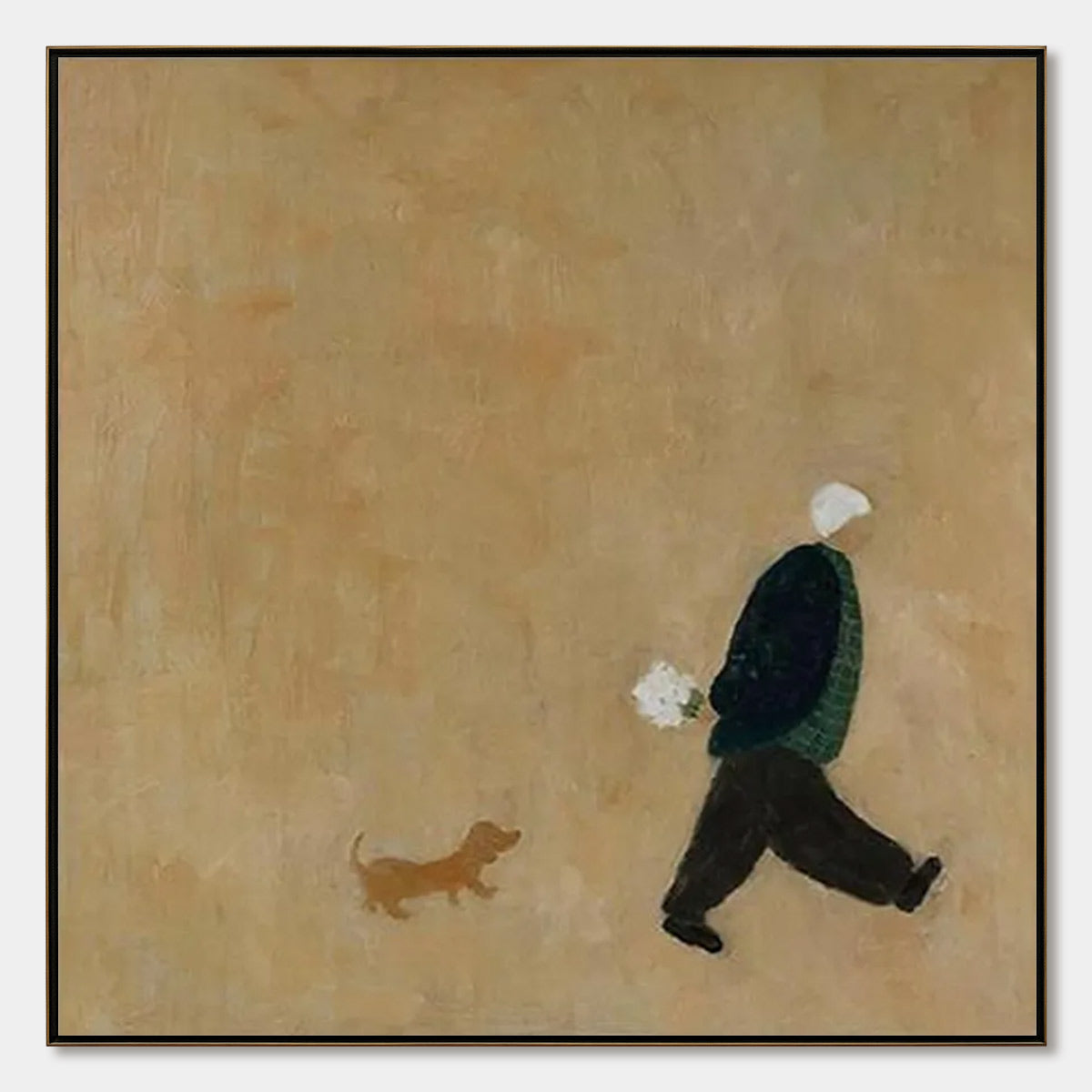
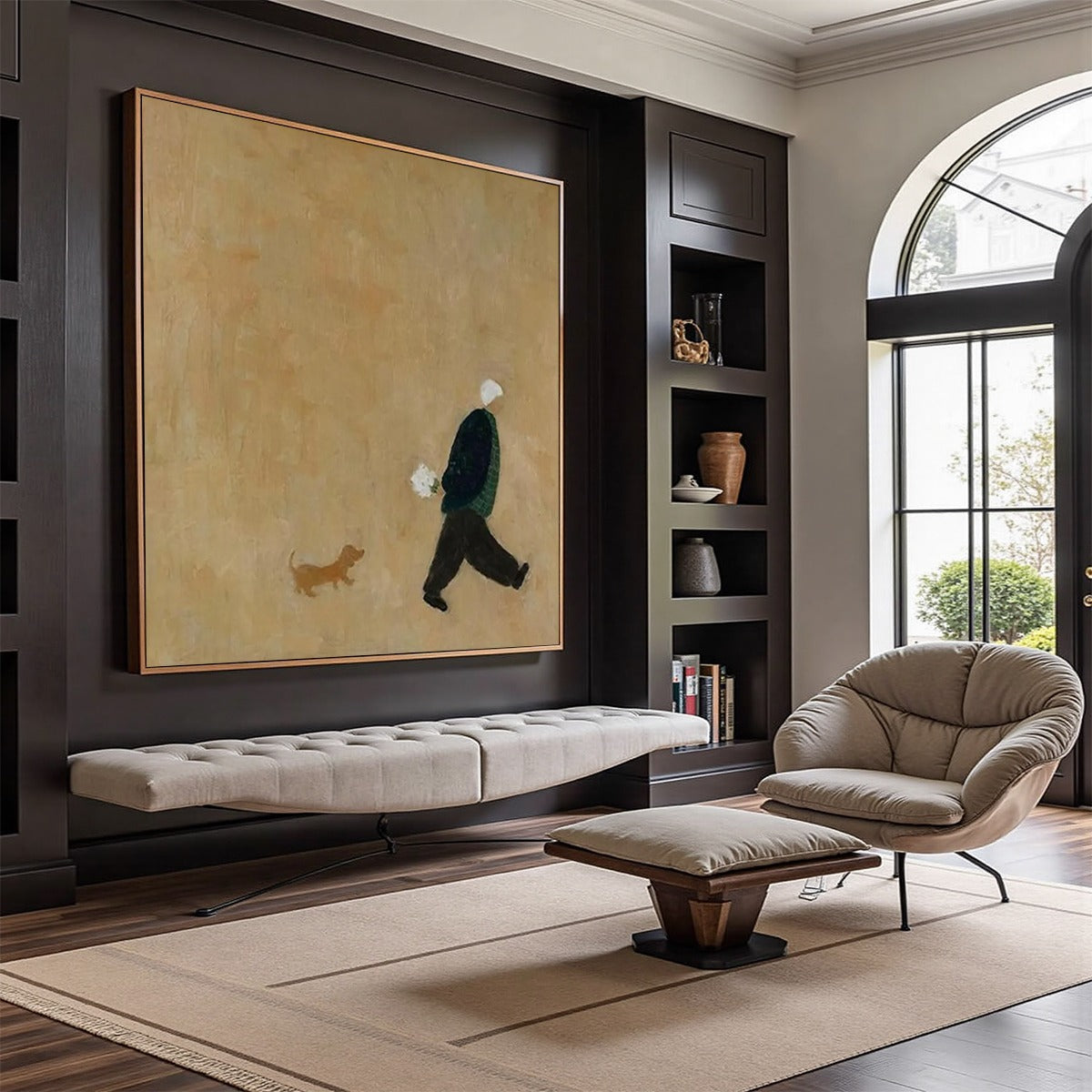
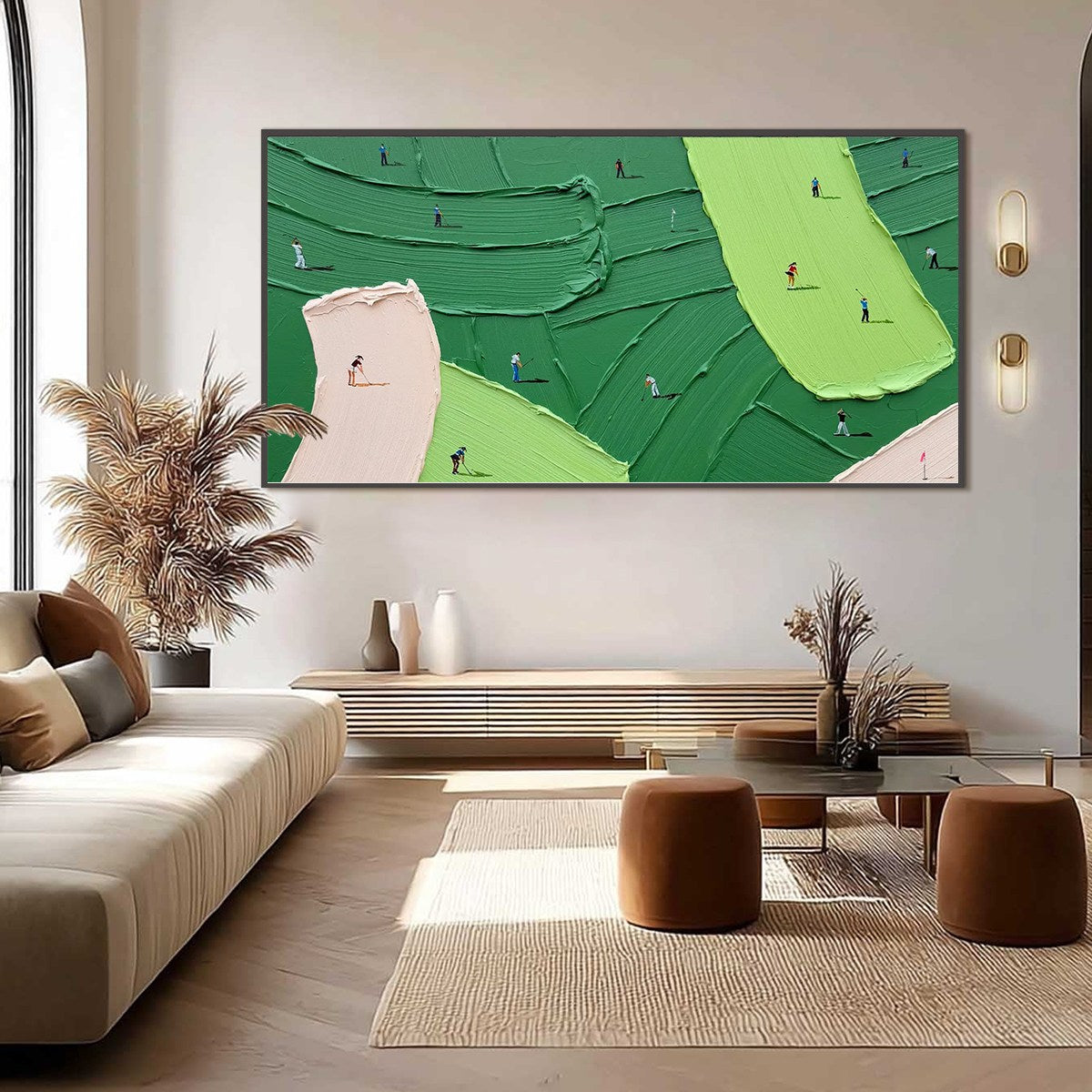
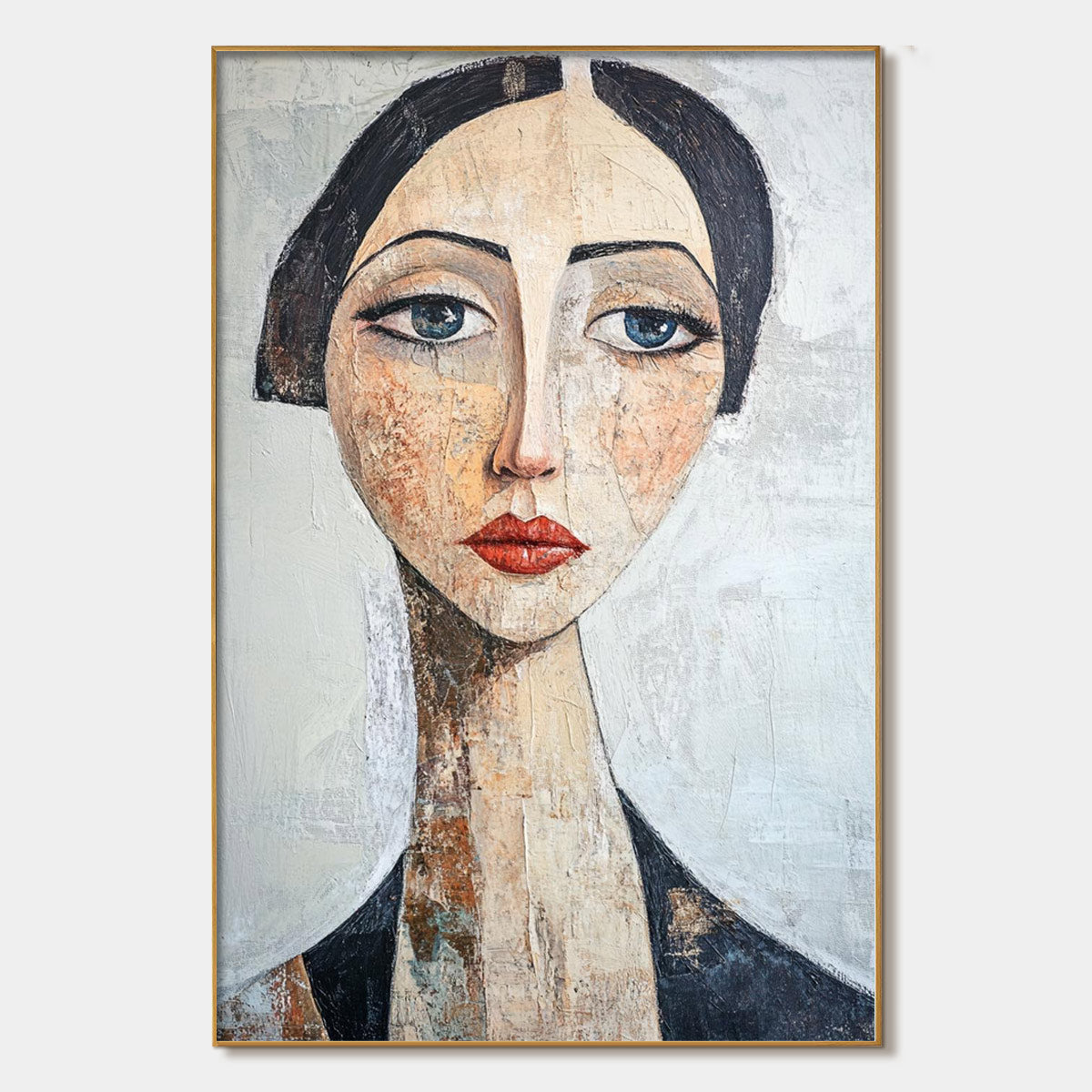
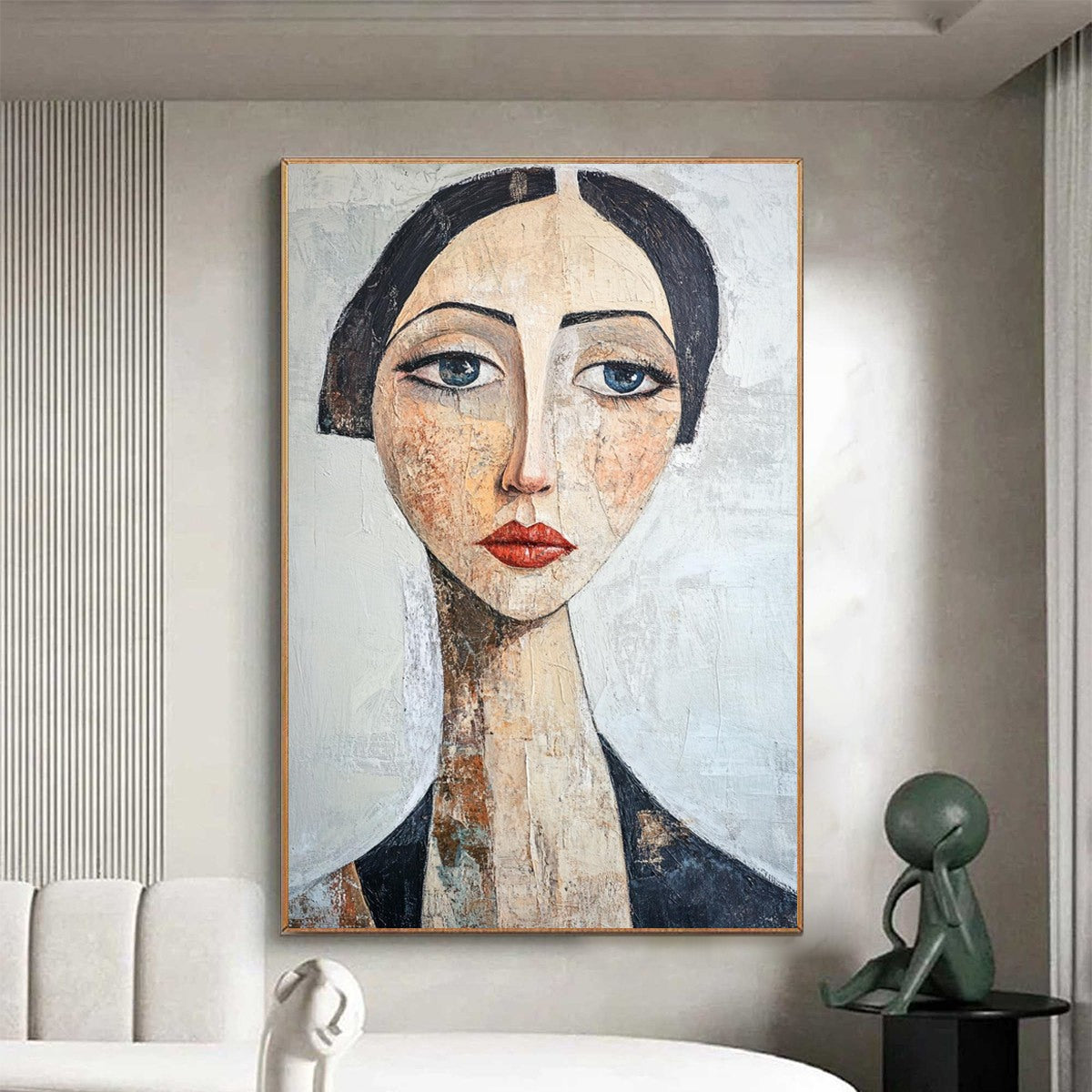
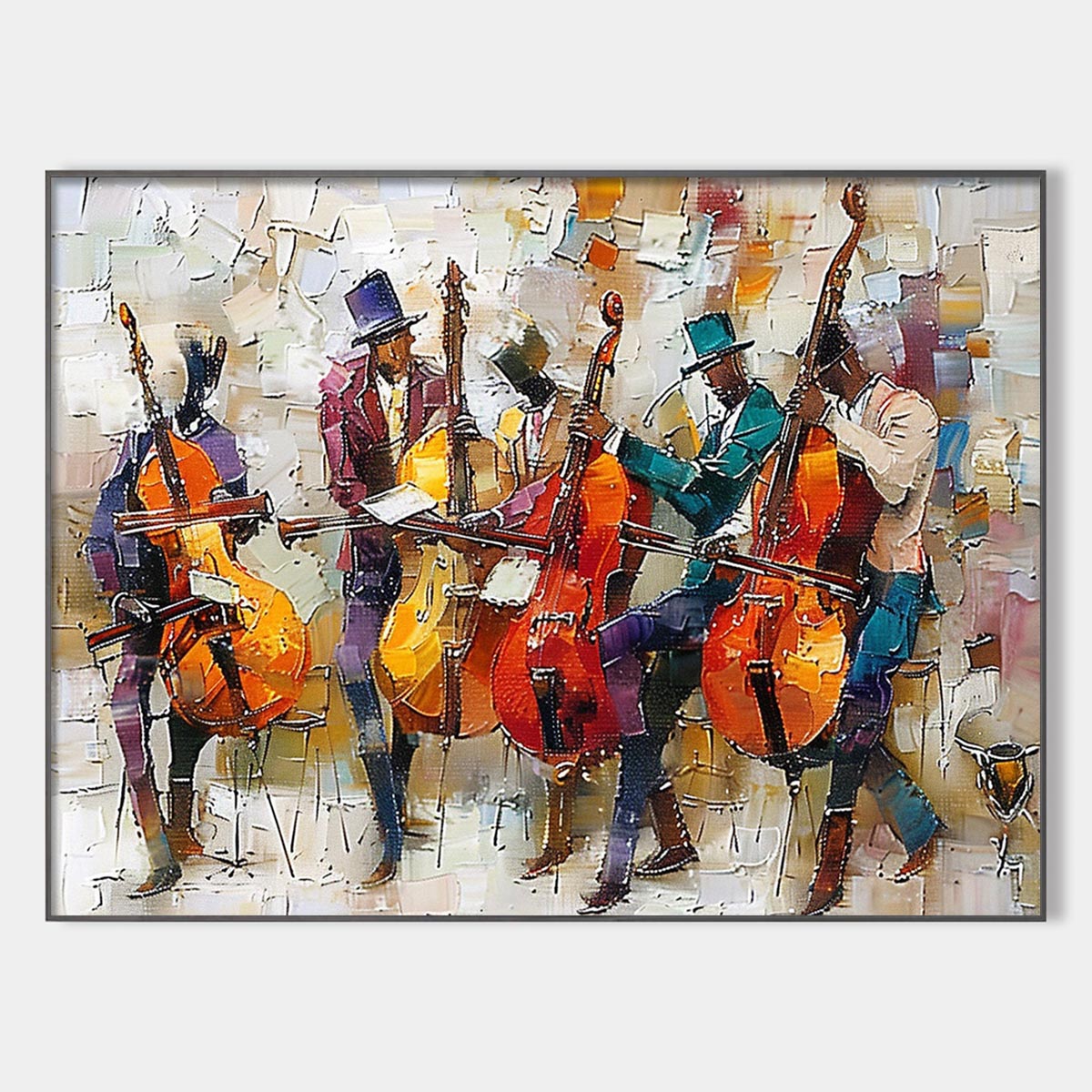
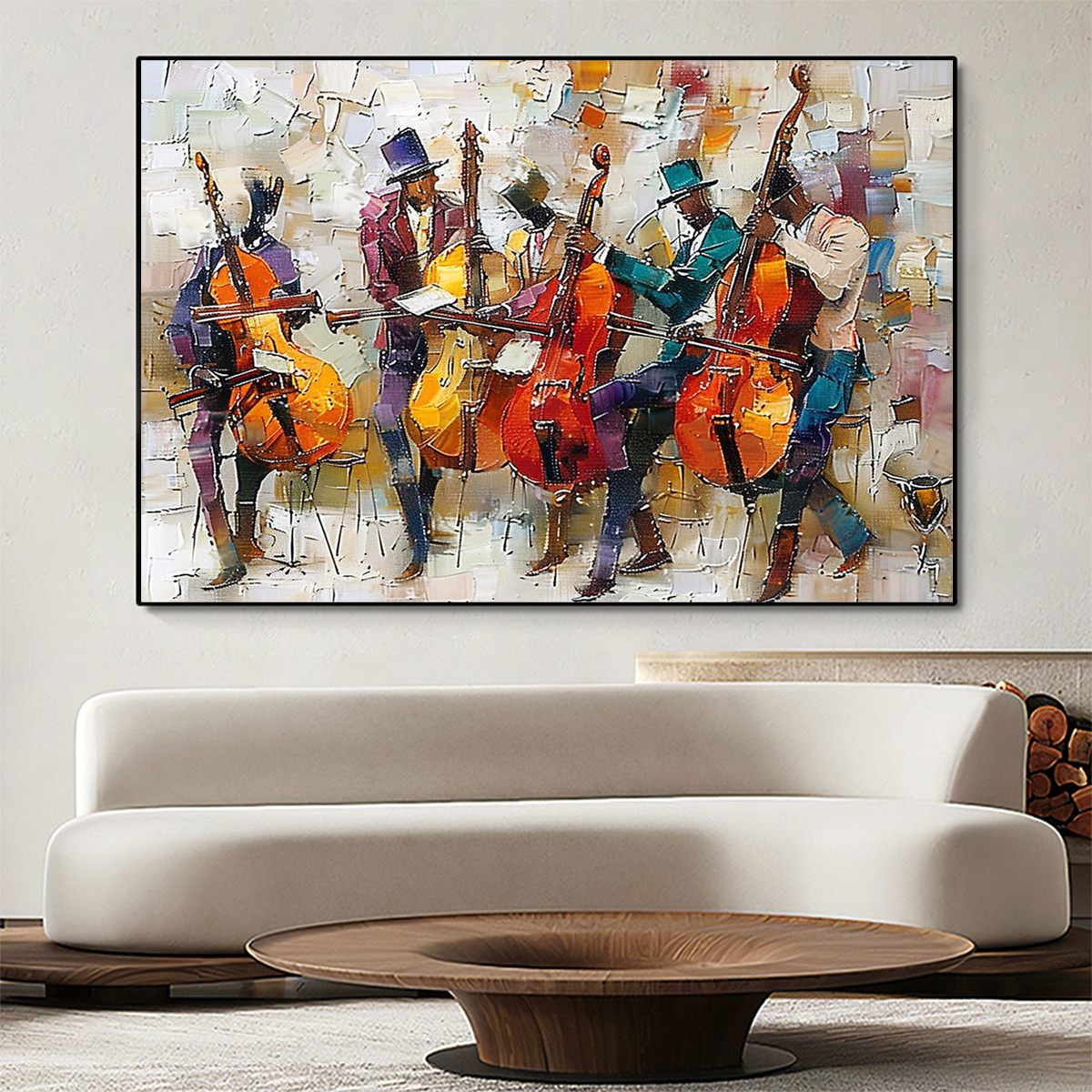
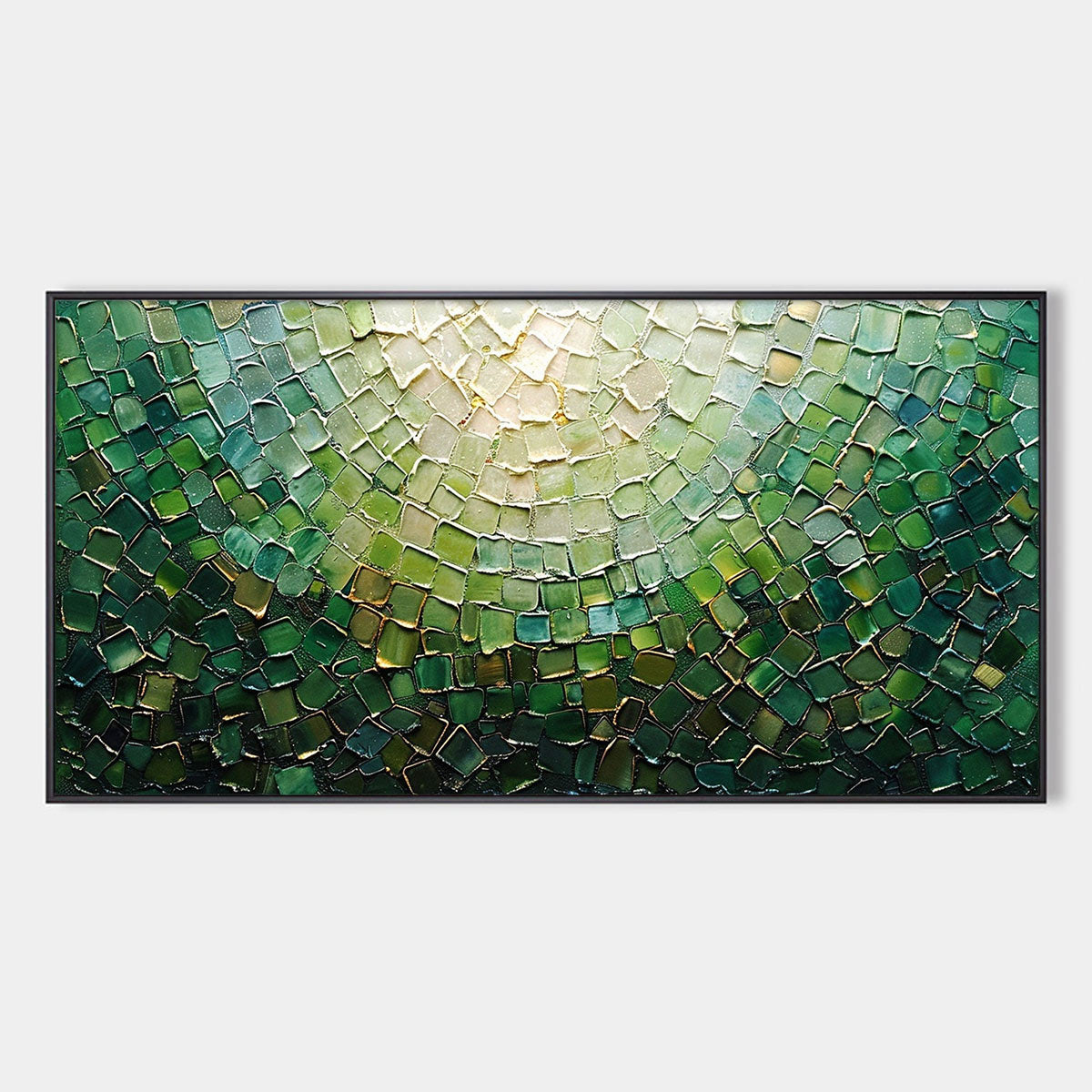
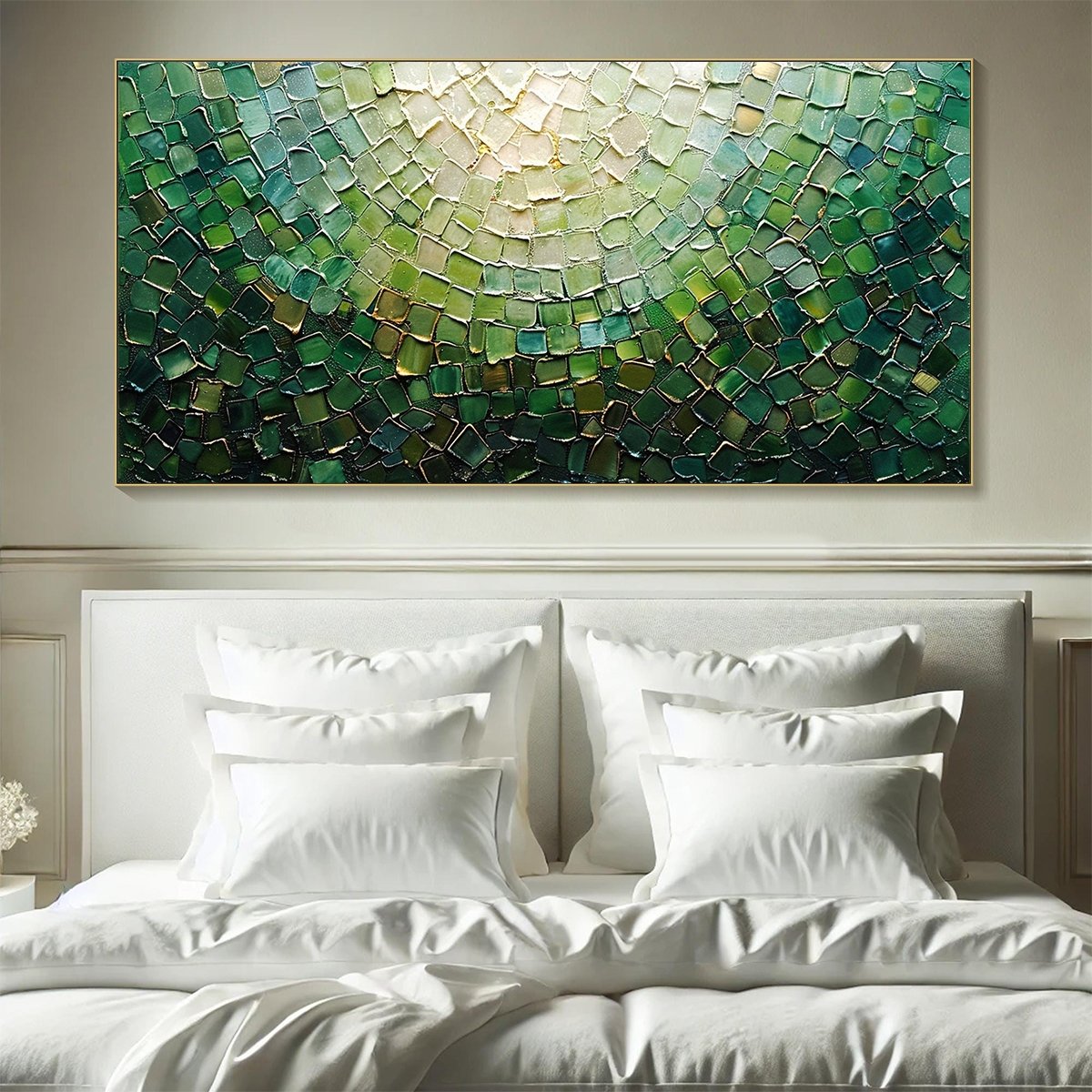
Green Swing brings deep greens and a figurative scene into that kind of corner without dominating the table it sits over. Chak Yu Lam paints sport, and that subject matter tends to start more conversations across a small table than an abstract does. The same logic applies above a home bar, where a piece with a clear subject usually beats an abstract.
Quieter subjects behind the dining table
The wall behind the table is seen almost entirely by seated guests, so it can be hung lower than you would hang anywhere else — leave clearance above the chair backs and stop there. Over a long meal, calmer subjects hold up better than very high-contrast work, which starts to demand attention after the first course.
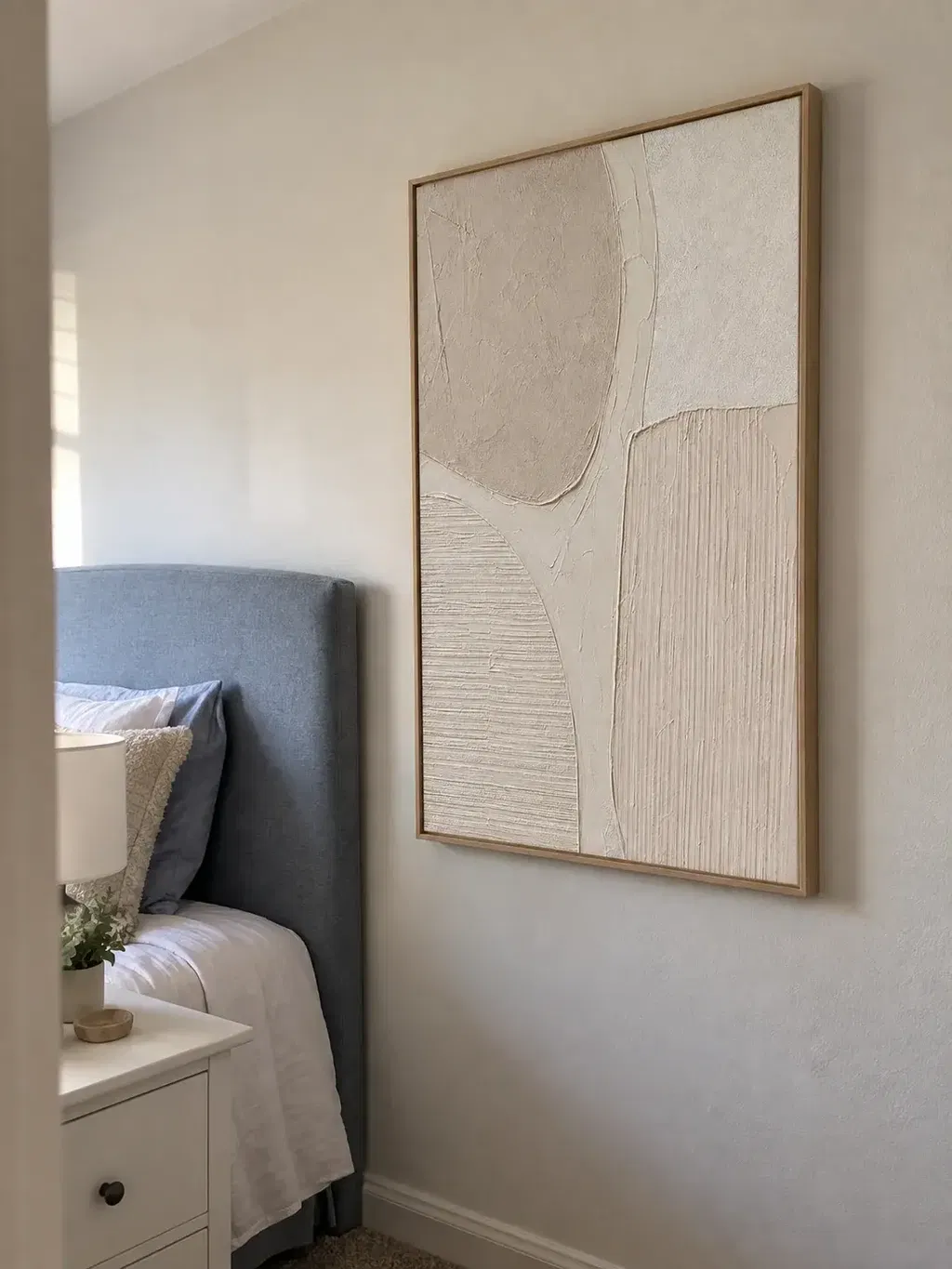
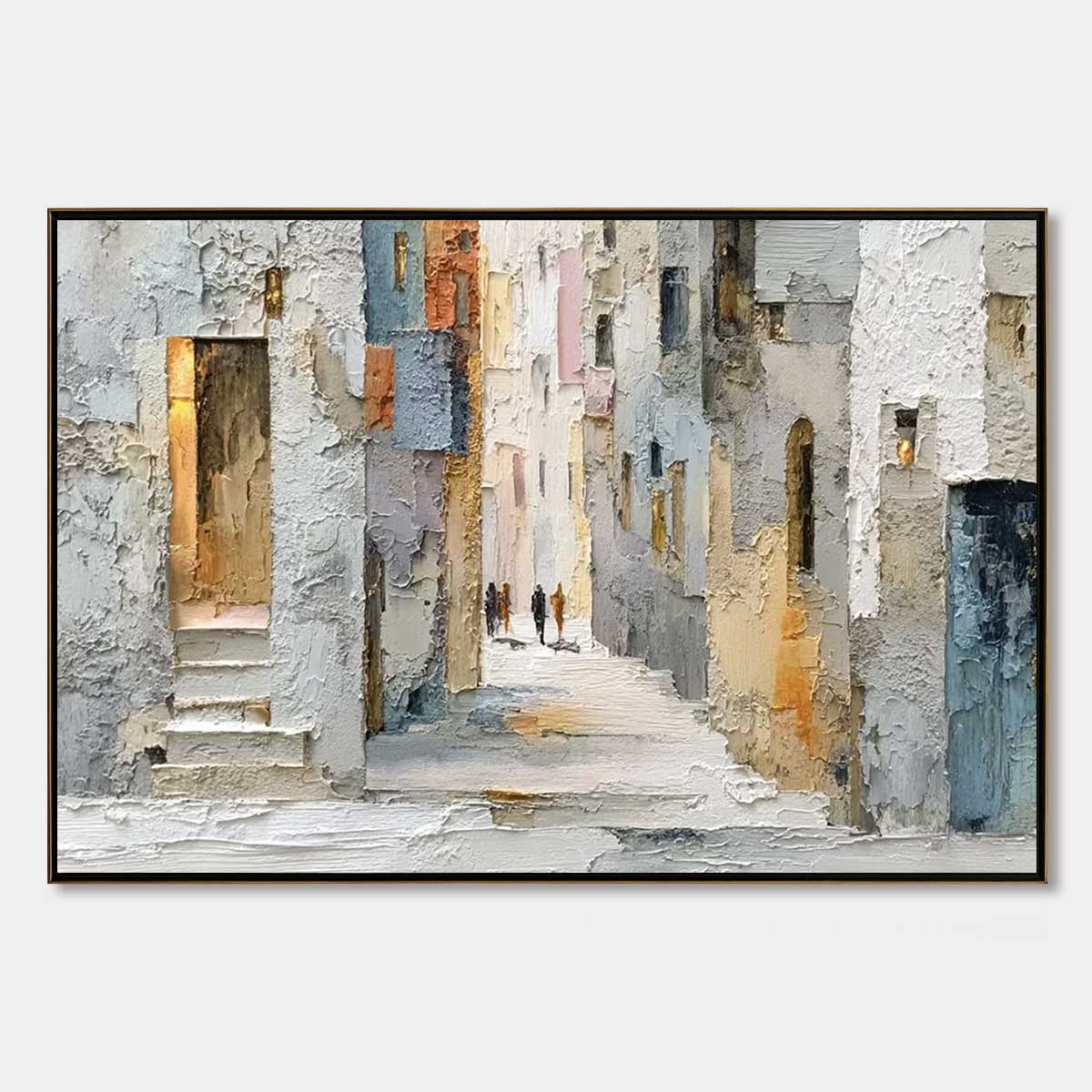
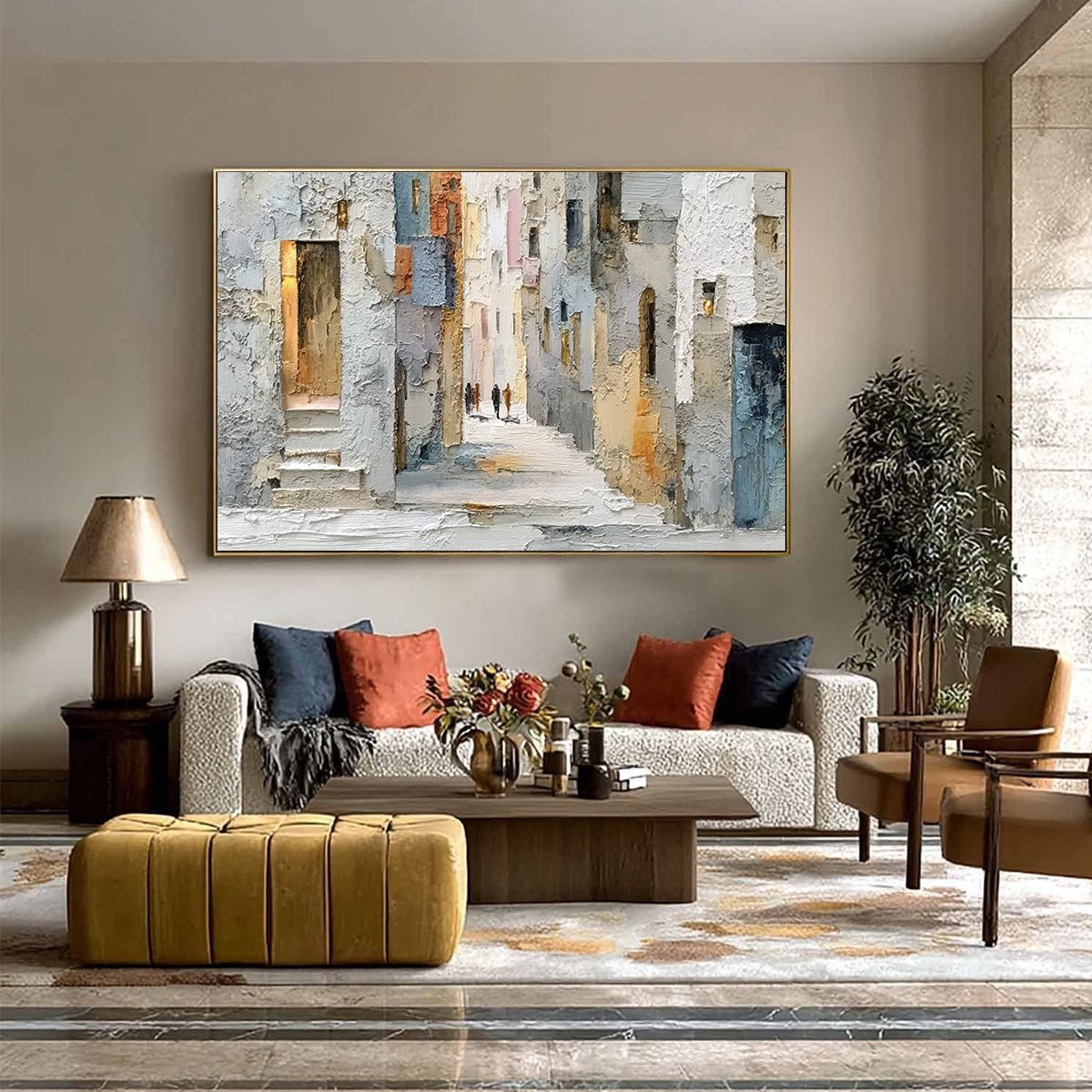
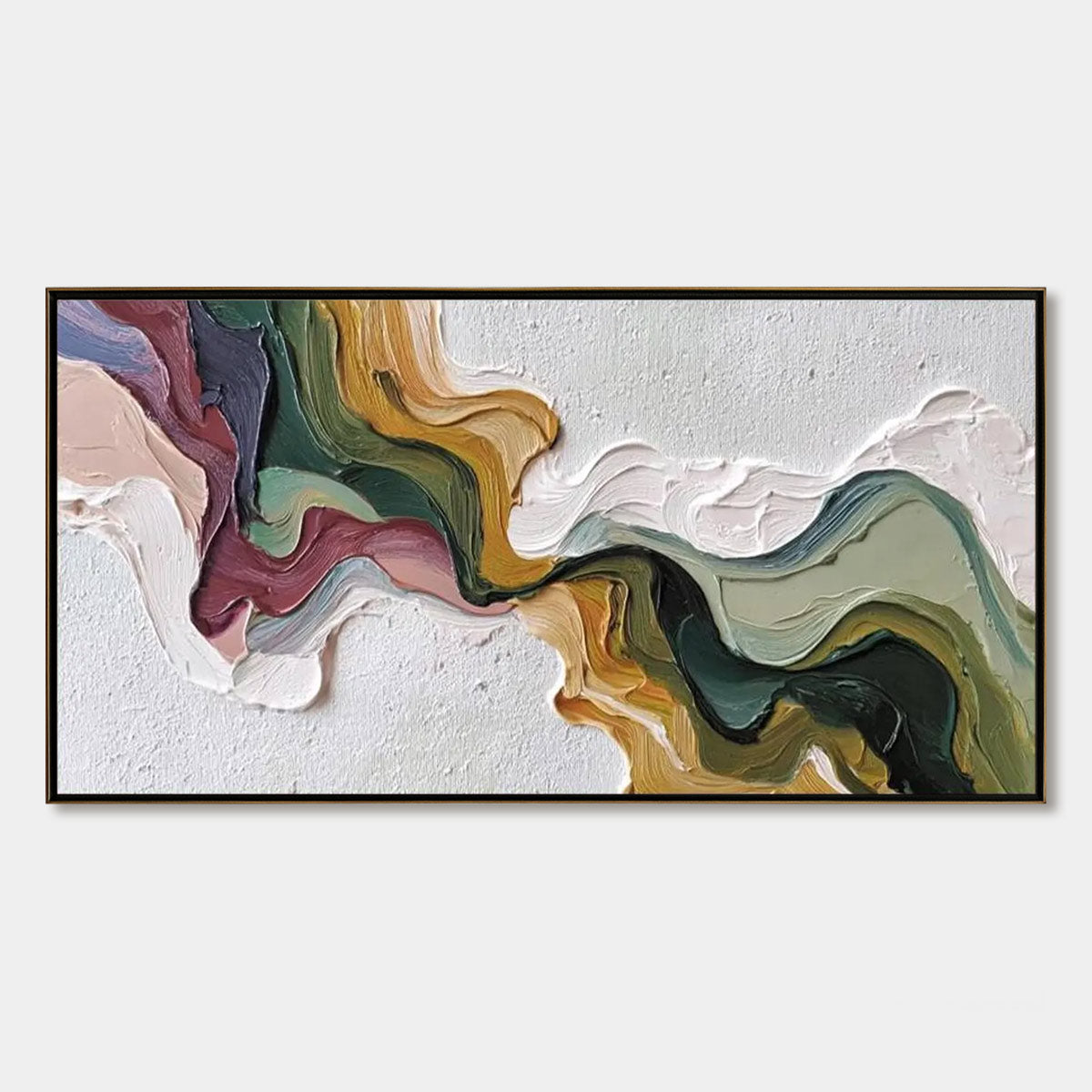
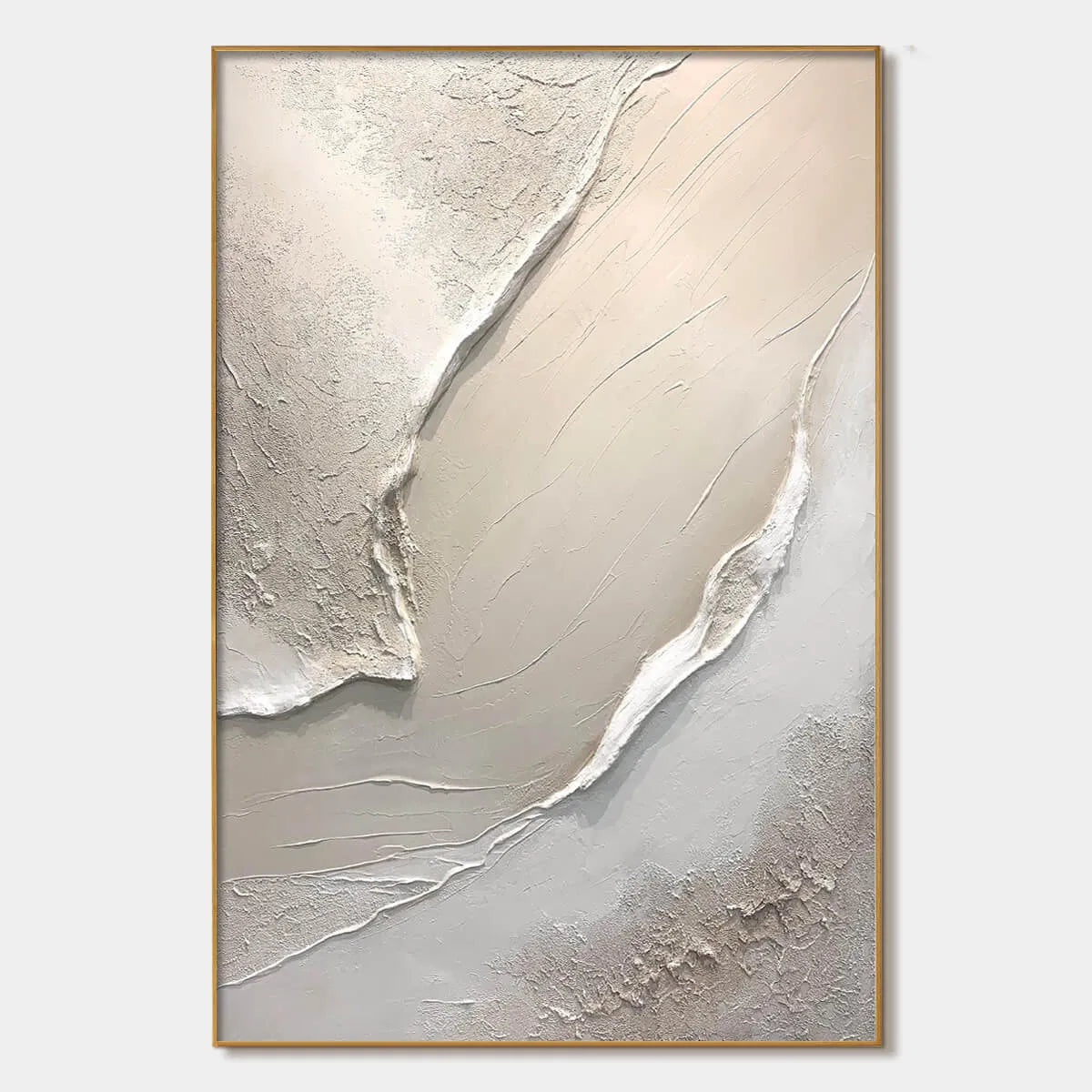
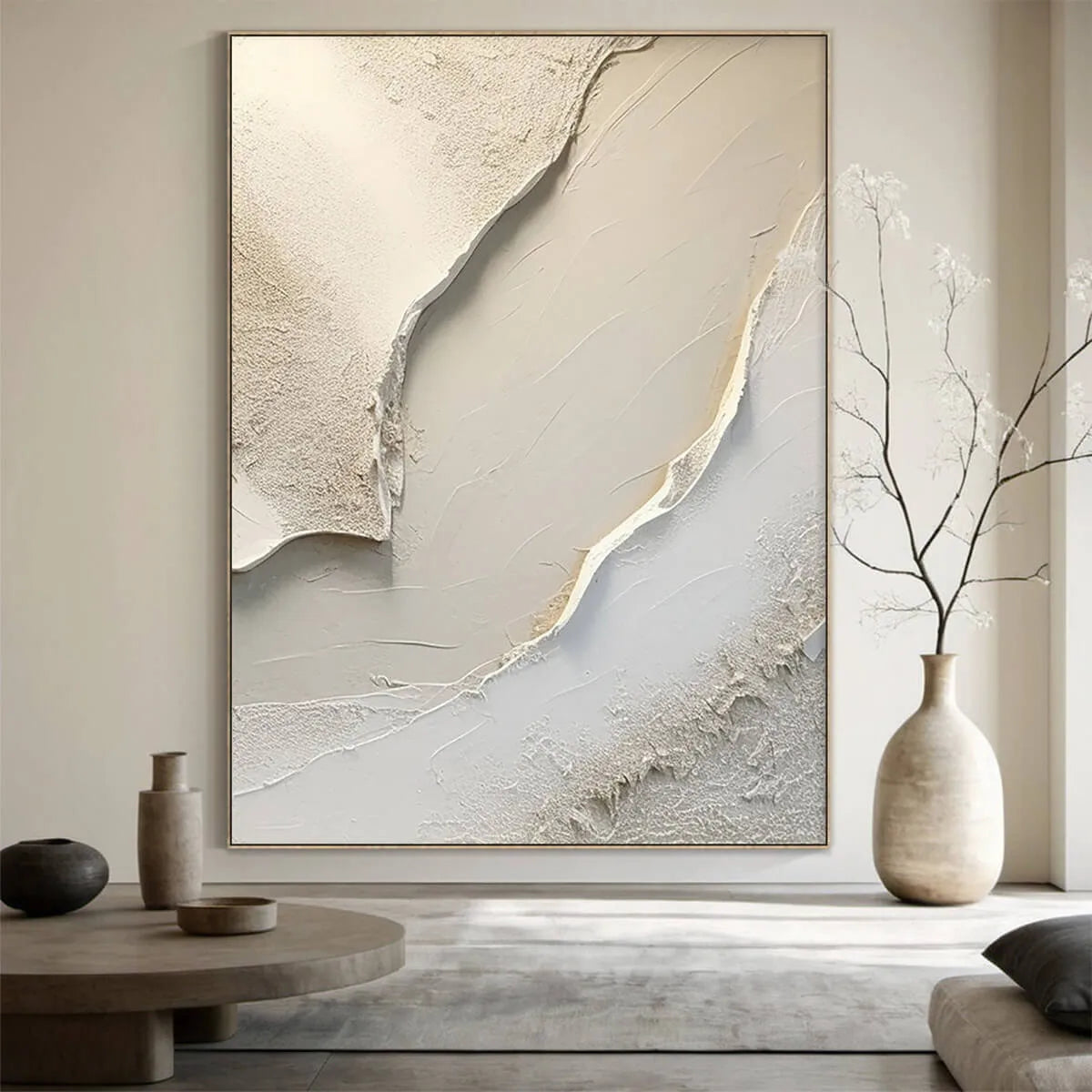
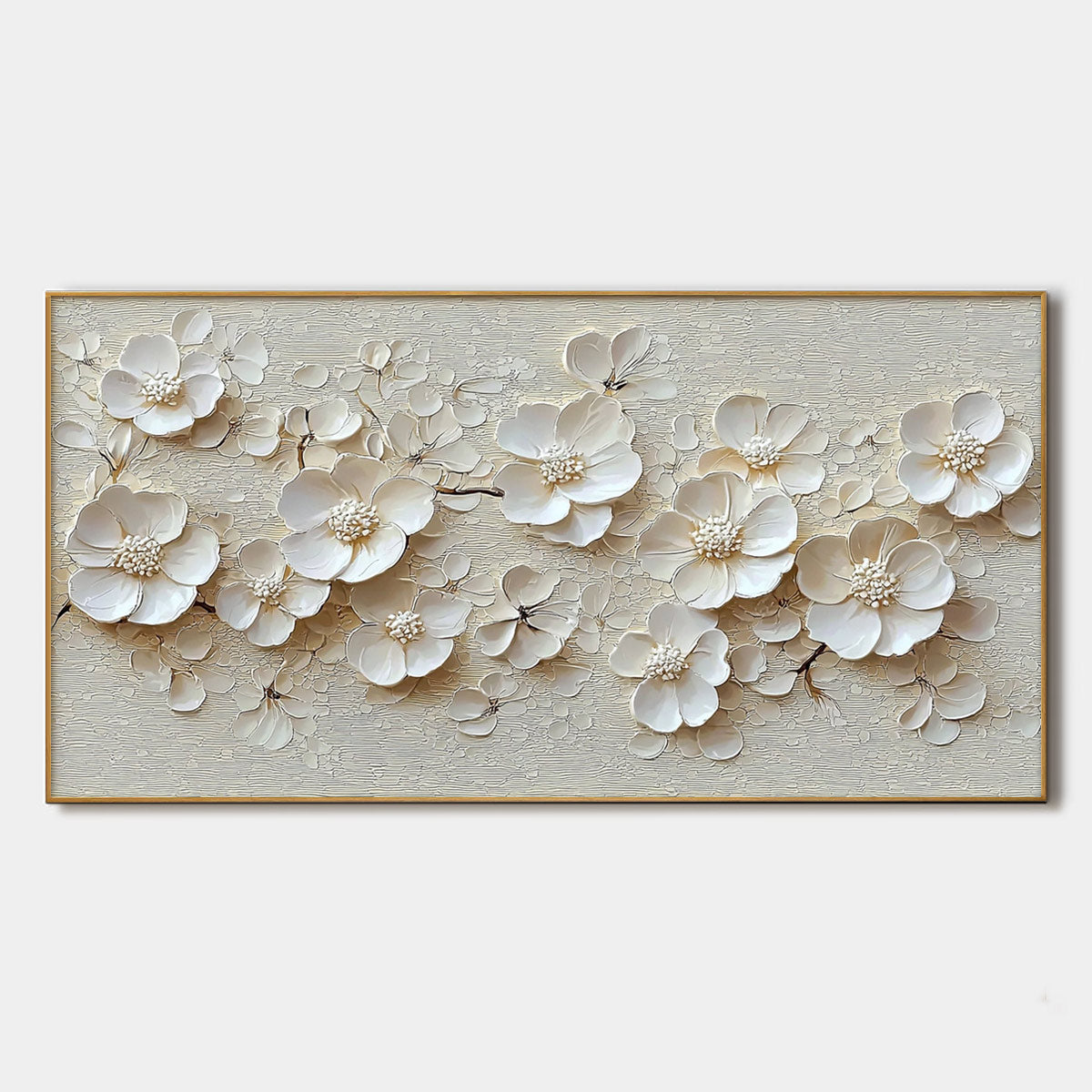
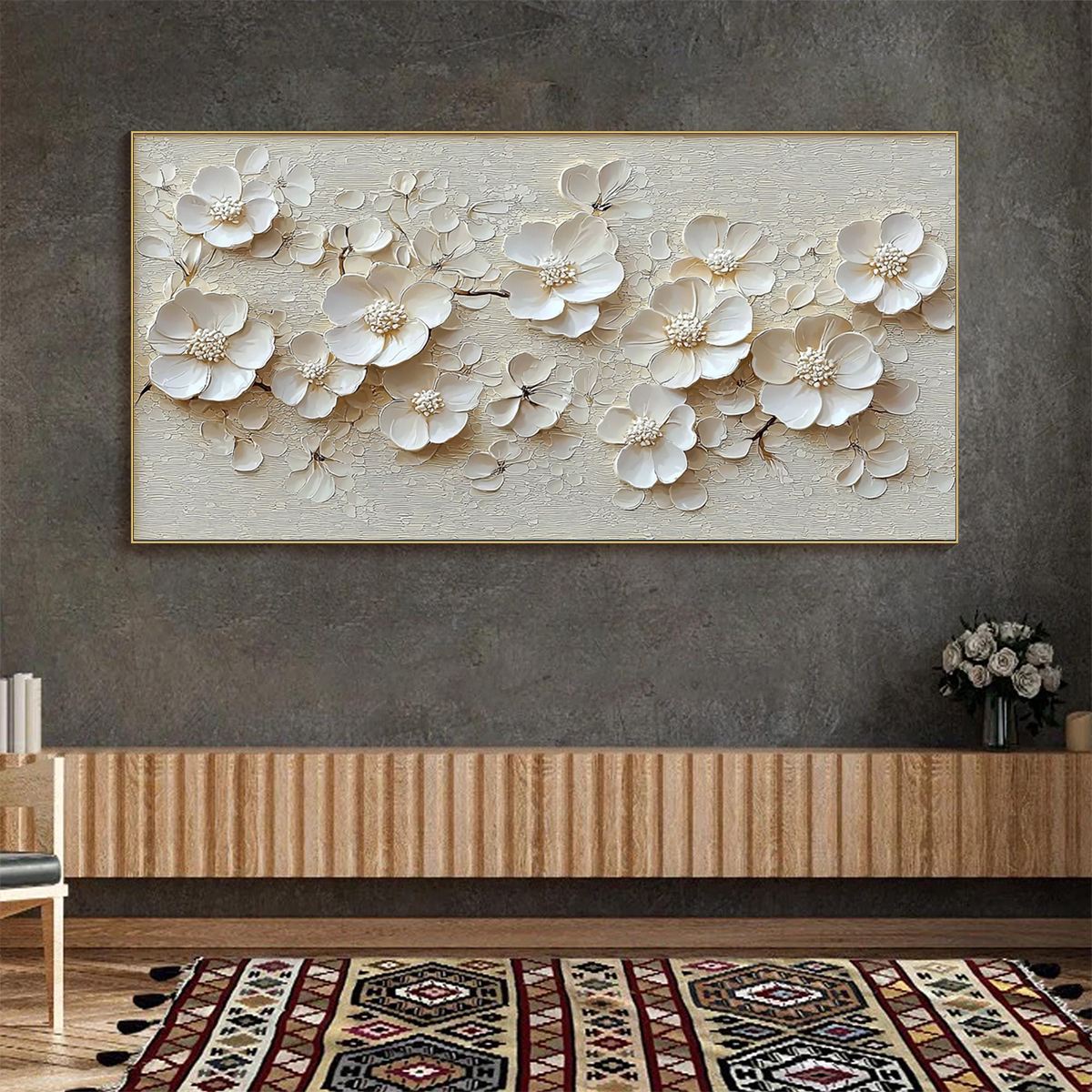
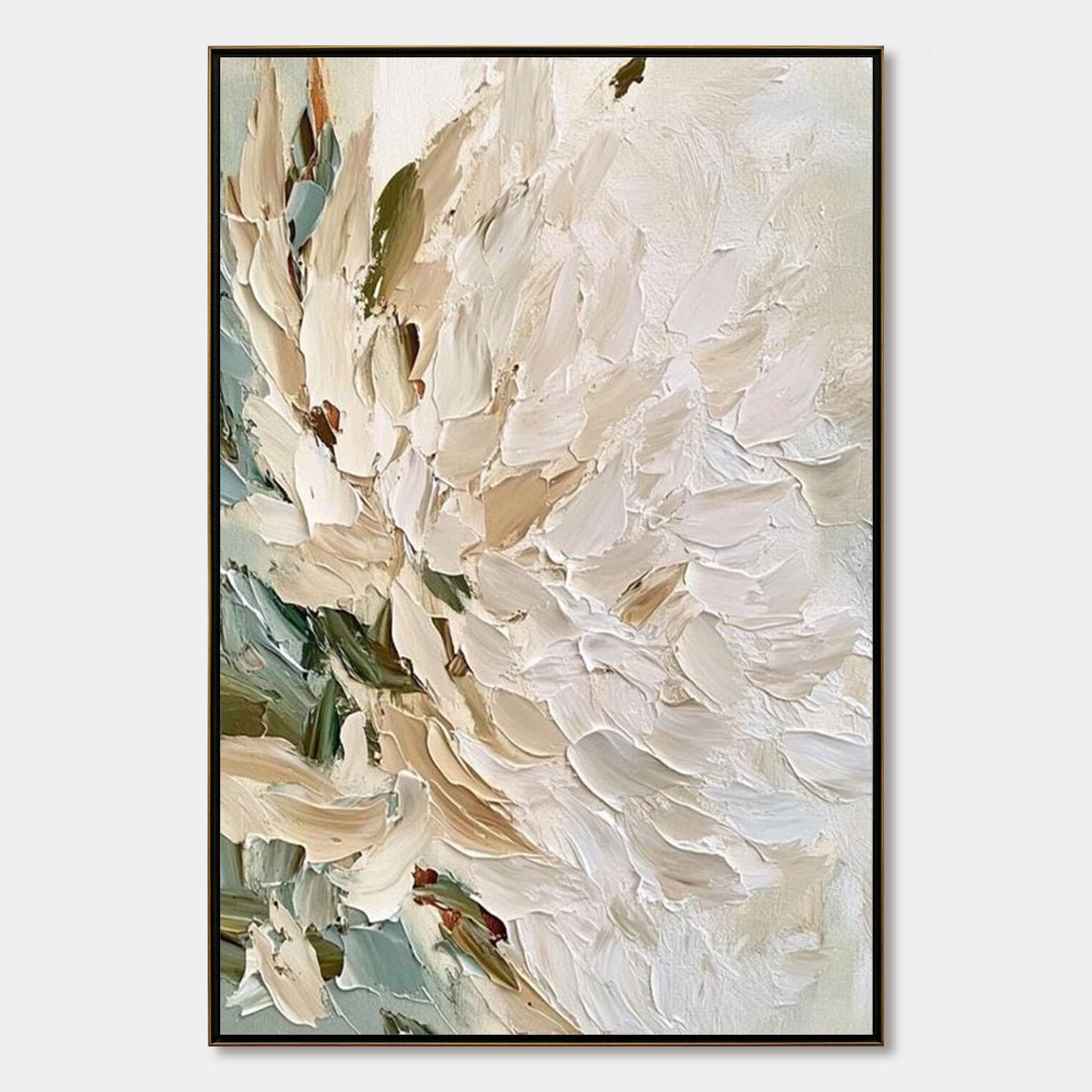
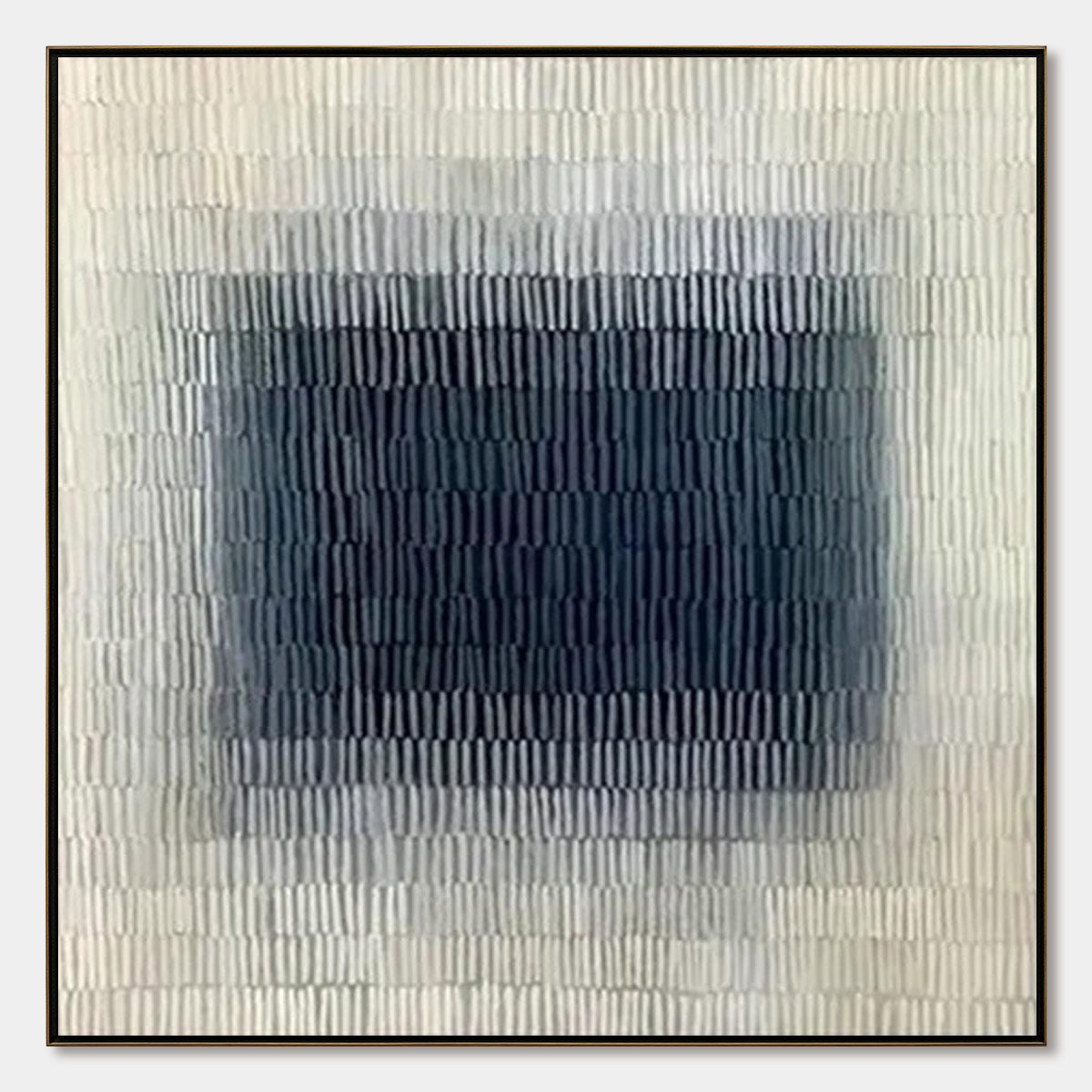
Serene Pathways sits at the quiet end of that range: minimal beige tones with enough palette-knife texture to stay interesting up close, which is exactly the distance this wall is viewed from. It is by Elodie Dubois, whose work leans light and unhurried.
Sizes, framing and what you are actually buying
Every piece in this collection is an original painting in oil on linen, painted by hand and credited to the artist who made it. No two are identical, and the texture you see in the photographs is real paint standing off the surface rather than a printed effect.
Practical points worth knowing before you choose:
- Formats run from 16″ × 32″ (40 × 80 cm) up to 48″ × 96″ (120 × 240 cm) on many works.
- Each piece is offered stretched and frameless, framed in black, white, gold, silver or wood, or unstretched as rolled canvas.
- Stretched and framed orders arrive ready to hang. Rolled canvas travels in an art tube, for you to stretch and frame in your own way.
- Paintings are unsigned by default, so the painted surface stays undisturbed. Ask before yours is started if you would like it signed, and a certificate of authenticity is available on request.
- Some subjects are also available as a two-panel set, which changes how much wall you can cover without moving up a size.
- Shipping is free worldwide, and every canvas carries a thirty-day return window from the day it arrives.
If nothing here is the right proportion for your wall, commissions and custom sizes are accepted — worth knowing before you settle for a format that only nearly fits.
More on choosing and hanging dining room art
If you want to go further before deciding, these guides cover the questions that come up most often in this room:
- Dining room wall art style guide
- The two-thirds rule for sizing art to furniture
- Sizing large art for small dining nooks
- How evening light and candlelight change color
- Why texture changes color perception in a dining room
- Symmetry and balance in formal dining rooms
- Keeping art consistent across an open-plan dining and living room
- Protecting art hung near a fireplace
Neighboring collections worth a look: horizontal formats, impasto texture, landscapes, and living room art.
FAQs
What size painting should I hang in a dining room?
As a starting point, aim for a piece that spans roughly two-thirds the width of the furniture beneath it. Above a long sideboard that usually means a wide horizontal format; on a bare wall behind the table you have more freedom, and going larger is the safer error.
Are these original paintings or prints?
Every piece in this collection is an original painting in oil on linen, painted by hand and credited to the artist. The texture in the photographs is real paint standing off the surface, not a printed finish. Paintings are unsigned by default so the surface stays undisturbed, though a signature can be arranged before yours is started.
The only free wall is behind the dining table. What should go there?
Hang lower than you would elsewhere, clearing the chair backs, since that wall is seen almost entirely by seated guests. Calmer subjects tend to hold up better over the length of a meal than very high-contrast work.
Can I hang a painting in a breakfast nook or above a home bar?
Yes, and these corners usually suit a smaller piece with a clear subject rather than an atmospheric one. They are short-stay spaces with a more relaxed mood, so the art can be more direct without competing with the main table.
Can I order a custom size, or commission a new painting?
Yes. Custom sizes and commissions are both accepted, and the custom art page is the place to start. One thing to know first: because a commissioned piece is made to your brief, it sits outside the standard thirty-day return window that covers everything else.
★ Reviews