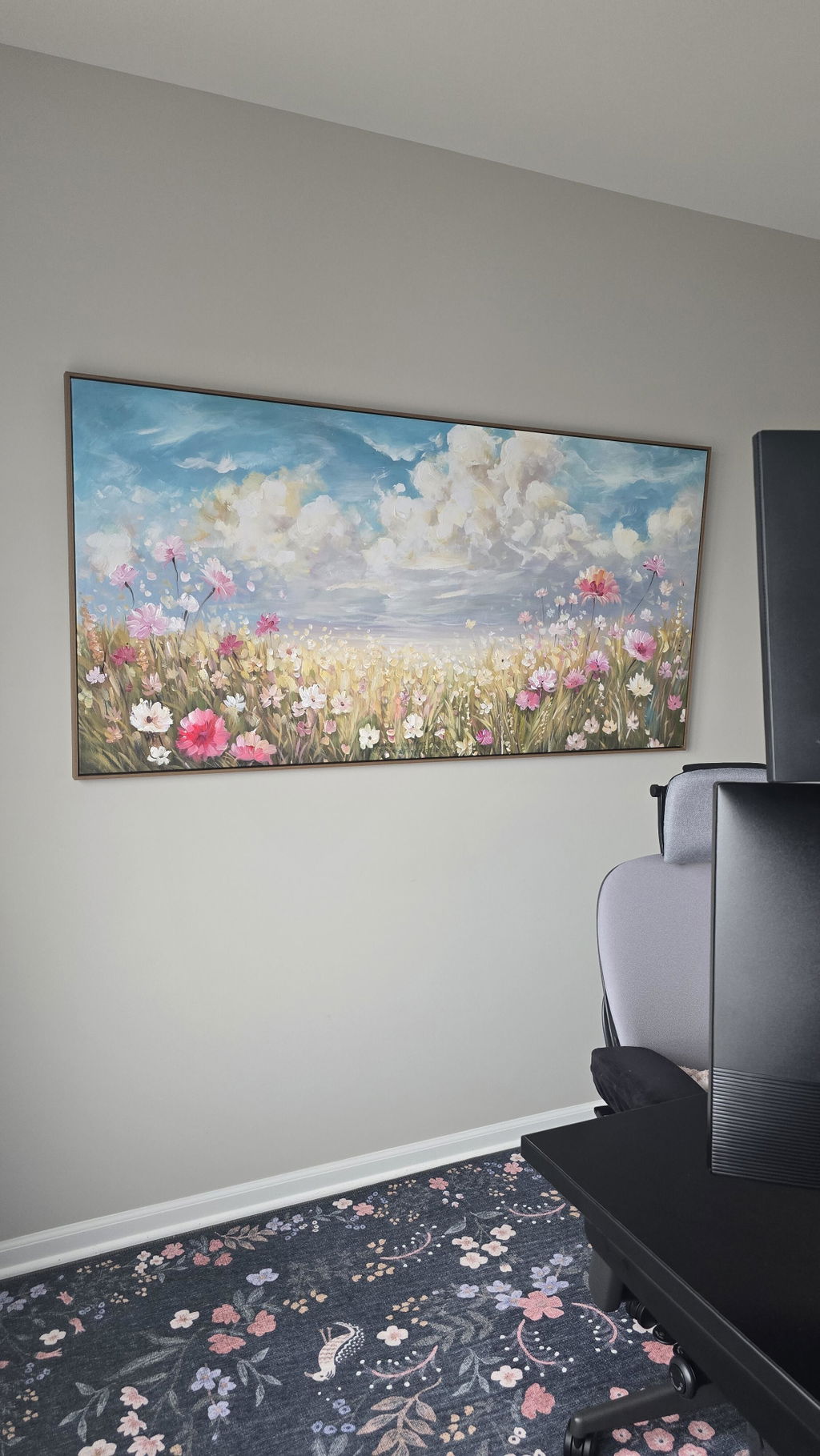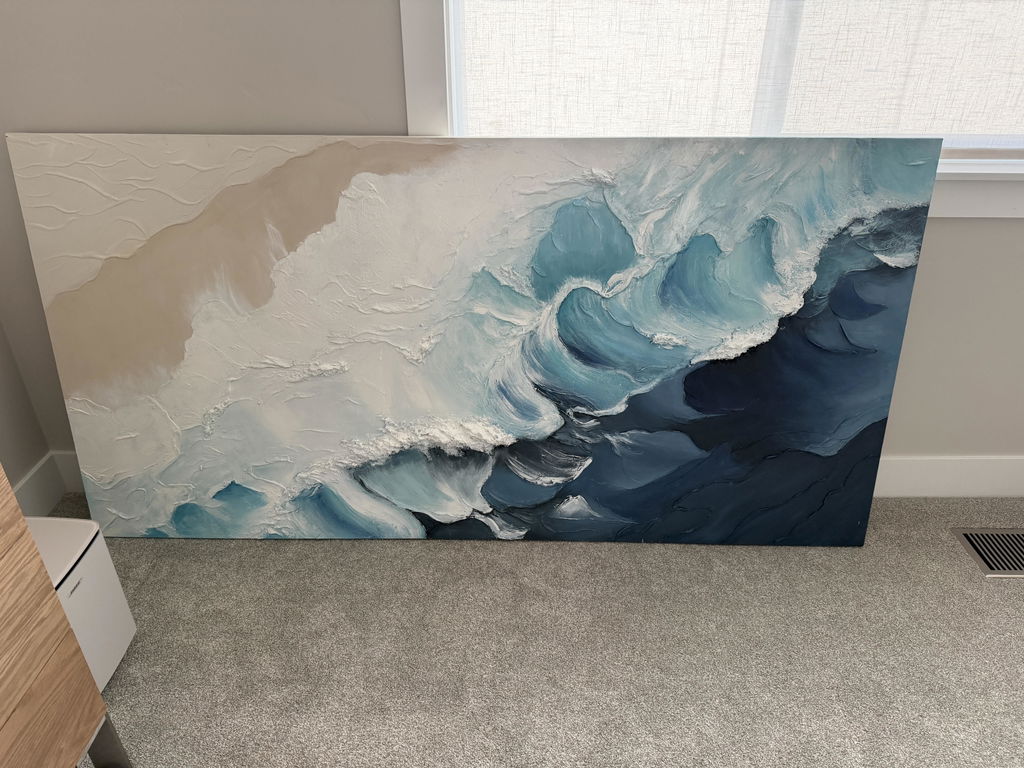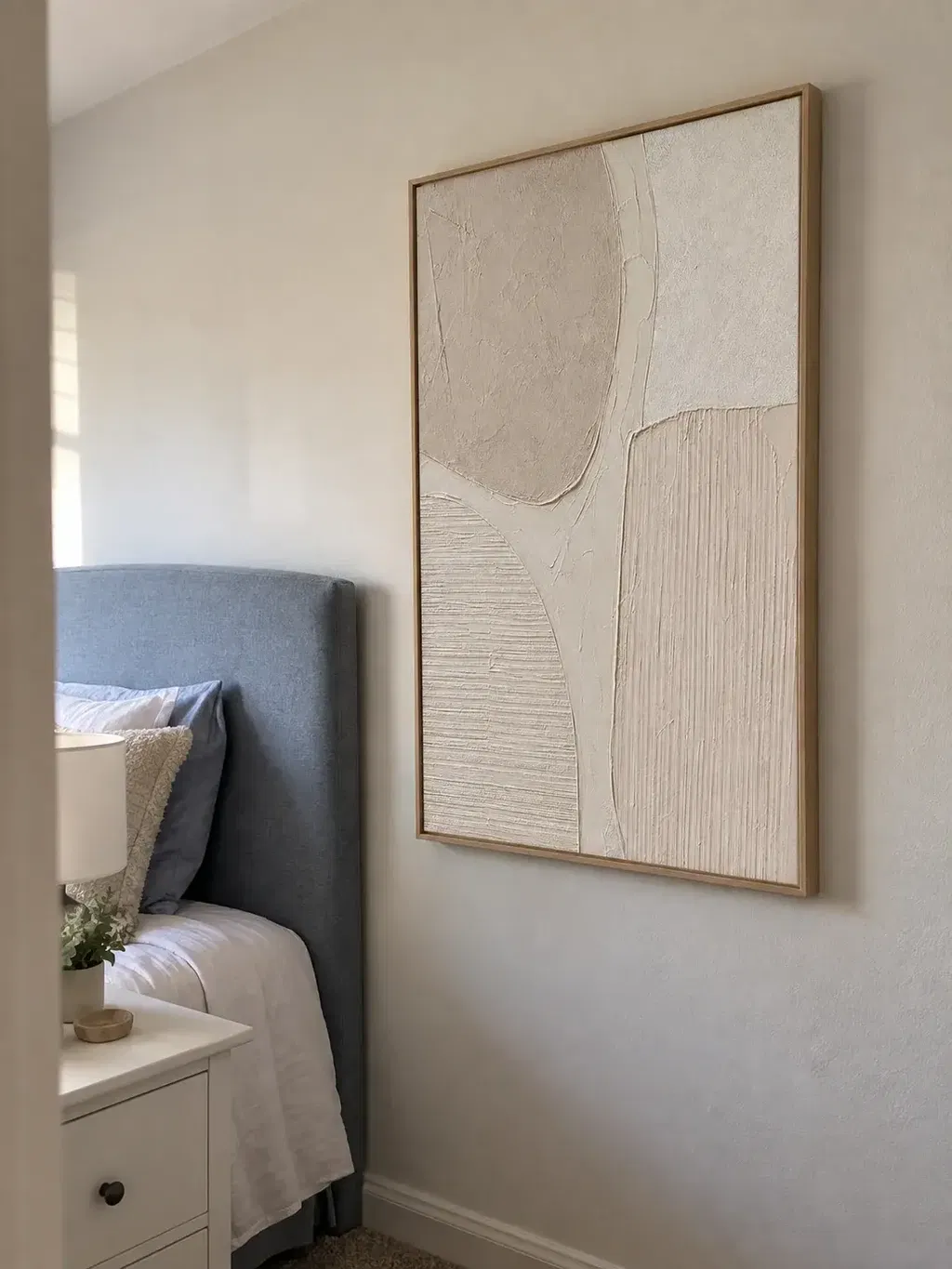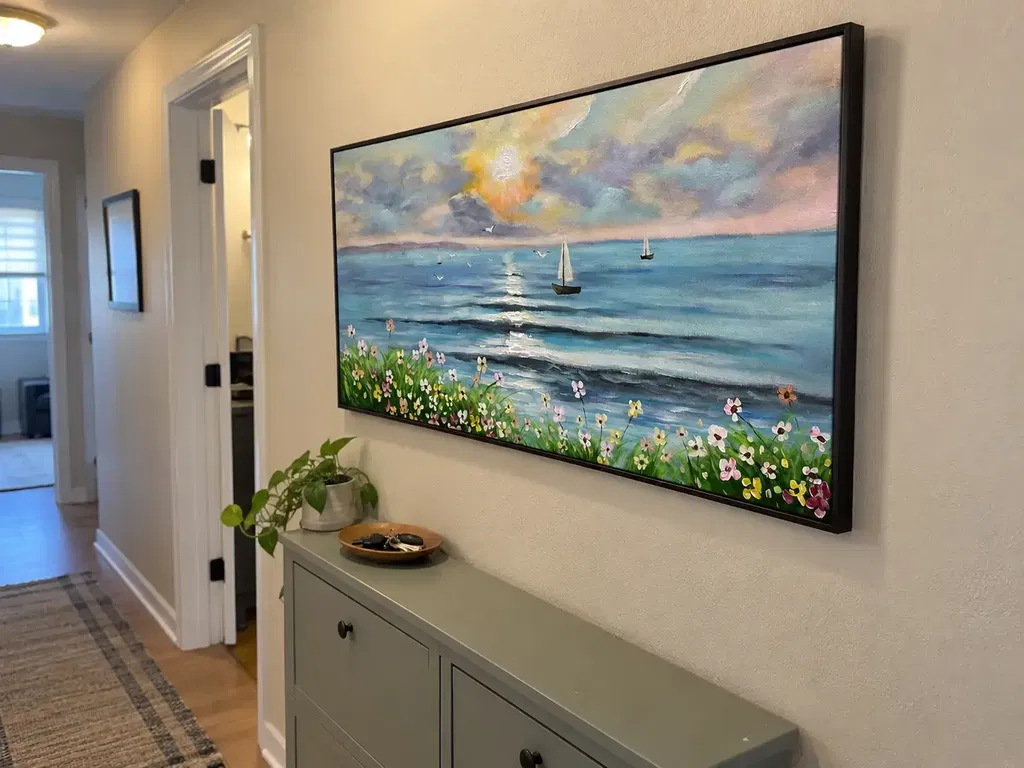
The Shift Toward Authentic Dining Art
The global art market is undergoing a profound structural transformation. While high-end auction sales for purely financial art assets plummeted 44% year-over-year in 2024, according to Marketplace, collectors are returning to "real application value." For the modern homeowner, this means investing in custom, hand-painted works that define a room’s soul rather than just its resale value.
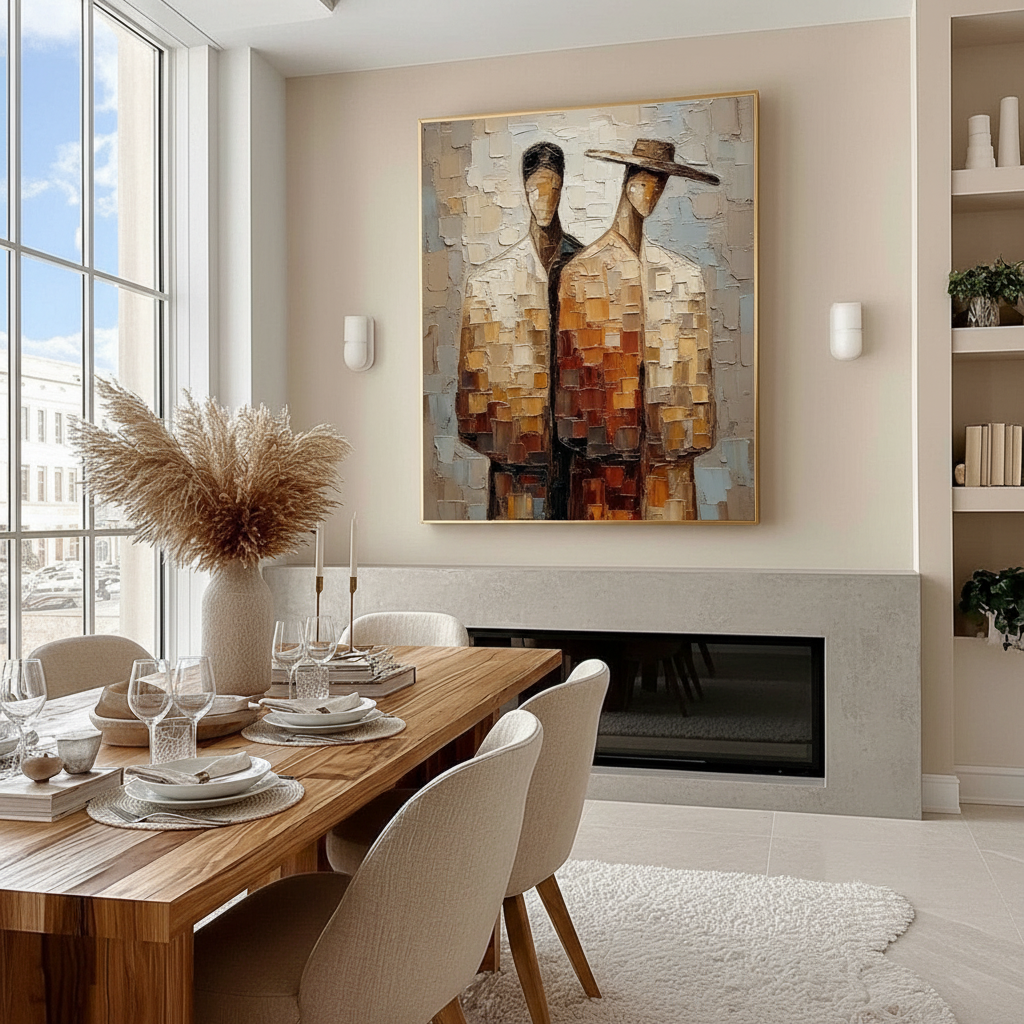
However, a significant psychological barrier remains: the fear of damaging these investments. Research from Columbia University suggests that consumers value art labeled "human-created" 62% higher than AI-generated alternatives. This premium is tied to what University of Chicago researchers call "essential identity"—the irreplicable soul of a hand-painted canvas. In a dining room, where fireplaces and candles create a "camera-ready" ambiance, this "essential identity" is under constant threat from soot and heat.
At MontCarta, we prioritize "decision safety." Protecting a hand-painted masterpiece in a culinary-adjacent space requires more than just careful hanging; it requires a protocol grounded in thermal physics and chemical conservation.
The Thermal Threat: Convection and Radiant Heat
The most common mistake we observe in high-end dining room curation is underestimating lateral heat spread. Homeowners frequently measure the straight-line distance from a fireplace to a painting, but they often overlook how radiant heat travels along wall surfaces.
Through our observational patterns in residential conservation, we have identified that a painting hung directly above a fireplace can experience temperatures 20–30°F higher than a piece hung the same distance to the side. This is primarily due to the "chimney effect"—a convection current that draws hot air upward along the wall surface, bathing the artwork in a constant stream of thermal energy.
Establishing Safe Thresholds
Based on general conservation heuristics, the safety of your art depends heavily on the fuel source of your fireplace:
- Wood-Burning Fireplaces: These produce the highest particulate matter and inconsistent heat spikes. We recommend a minimum 8–10 feet horizontal distance or a 4–6 feet vertical clearance above the mantel.
- Gas Fireplaces: These produce less particulate but more consistent radiant heat. You can typically reduce the wood-burning clearances by ~30%, though thermal monitoring is still advised.
- Electric/Decorative Fireplaces: These often produce zero soot, making the threat purely aesthetic or related to minor localized dry air.
Modeling Note (Thermal Displacement Scenario): This model assumes a standard residential ceiling height (9ft) and a medium-output wood fireplace. This is a scenario model, not a controlled lab study.
| Parameter | Value/Range | Unit | Rationale |
|---|---|---|---|
| Ambient Room Temp | 68–72 | °F | Standard HVAC setting |
| Mantel Surface Temp | 110–145 | °F | Convection/Radiant mix |
| Art Substrate Temp (at 4ft) | 88–95 | °F | Chimney effect convection |
| Relative Humidity (RH) Drop | 12–18 | % | Localized desiccation |
| Thermal Cycle Frequency | 2–4 | Hours/Event | Typical dining duration |
The Carbon Conundrum: Soot and Paraffin
While heat causes physical expansion and contraction (thermal cycling), soot causes irreversible chemical bonding. Fireplace soot has a complex particle size distribution (PSD). Research published in ResearchGate indicates that standard measurement methods often fail to characterize the finest soot particles (0.1–1 μm). These microscopic particles are the most dangerous because they adhere most strongly to the porous surface of a canvas.
The Hidden Danger of Candles
Decorative candles are often viewed as "safe" compared to a roaring hearth, but paraffin wax combustion is particularly problematic for oil paintings. Over a period of 6–12 months, paraffin creates microscopic oily particles that bond chemically with oil paint mediums. This creates a yellowed, sticky haze that standard cleaning cannot remove without risking the underlying pigment.
The "White Index Card" Diagnostic
To verify if your dining room environment is "hostile" to art, we recommend a simple first-party test: Tape a clean, white index card near the artwork for 48 hours during your normal fireplace or candle use. If you observe any visible gray residue or a slight oily sheen, your particulate levels are high enough to require intervention.

Advanced Preservation Protocols
When placing art in culinary-adjacent spaces, you must account for cooking vapors and heat. We suggest the following "Expert Protocols" to ensure longevity.
1. Museum-Grade Glazing
For any piece within 10 feet of a heat source, we recommend museum-grade acrylic rather than standard glass. According to the Getty Conservation Institute, physical differences in surface refractive indices and material properties make acrylic a superior thermal insulator. It is lighter, safer if a frame falls due to wall expansion, and provides a barrier against the "Support Induced Discoloration" (SID) often seen in acrylic works.
2. Managing the SID Phenomenon
A common technical issue we see in high-end dining rooms involves white canvases turning yellow or brown. As Golden Artist Colors notes, water-soluble impurities in cotton or linen substrates can be drawn out when painters apply thick mediums. In a dining room, the heat from a fireplace accelerates this "Support Induced Discoloration," effectively "cooking" the impurities into the paint film. Ensuring your art is properly primed and protected from localized heat spikes is the only way to prevent this.
3. Cleaning and Surfactant Migration
There is a persistent myth that art should never be touched with water. However, the Tate Modern Paints Project confirmed that gently wiping acrylic surfaces with water-based cotton swabs can actually remove free surfactants. These surfactants (PEG-type molecules) often migrate to the surface in high-humidity dining environments, forming water-soluble microcrystals that cause a "hazy" appearance. Removing them early prevents soot from bonding to the sticky surfactant layer.
The Macro Value of Hand-Painted Art
Beyond aesthetics, investing in hand-painted murals and canvases offers significant economic and psychological returns. A study by the Royal Society found that neighborhoods with higher "art" geo-tags saw greater relative house price gains. For a homeowner, a well-preserved mural or large-scale canvas acts as a "permanent physical billboard" for the home’s value.
Furthermore, the health benefits are quantifiable. A University of Pennsylvania review noted that 73% of patients reported significant mood improvements when exposed to environmental artworks. In a dining setting—the heart of social validation and relaxation—this "biophilic effect" reduces stress and optimizes emotional regulation circuits in the brain.
Safety and Non-Toxic Pigments
When commissioning art for dining spaces, it is vital to ensure the materials are safe for a food-adjacent environment. Historically, pigments like Lead White were standard, but modern Titanium Dioxide now dominates 90% of the market due to its chemical inertness and safety.
We strictly advise against using "dry" art materials like pastels in dining rooms. The EPA warns that dry drawing materials produce dust loaded with fine toxic particles. Water-based acrylics or properly cured oil paints are the "gold standard" for safety in residential social spaces.
Summary of Placement Protocols
To help you navigate these risks, we have summarized our internal curation heuristics into a skimmable reference table.
| Risk Factor | Recommended Action | Scientific Basis |
|---|---|---|
| Direct Heat | 4–6ft Vertical Clearance | Convection/Chimney Effect |
| Soot/Particulates | Museum Acrylic Glazing | PSD Adhesion Prevention |
| Candle Vapors | Use Oily-Residue Test | Paraffin Chemical Bonding |
| UV/Light Fade | ASTM D4303 Rated Pigments | Lightfastness Standards |
| Canvas Aging | Avoid SID via Priming | Support Induced Discoloration |
Investing in Cultural Heritage
When you purchase a hand-painted work, you are not just buying decor; you are investing in a cultural heritage asset. Unlike mass-produced prints, which Columbia University research shows lose value rapidly, hand-painted canvases retain their "essential identity" and market resilience.
By following these preservation protocols, you ensure that your dining room remains a "camera-ready" sanctuary where art and atmosphere coexist without compromise. Whether you are curating art for a bright space or balancing textures in a minimalist room, the key to longevity is understanding the invisible chemistry of your environment.
Disclaimer: This article is for informational purposes only and does not constitute professional conservation, architectural, or fire safety advice. Always consult with a certified art conservator and follow local fire codes when installing artwork near heat sources. Individual results may vary based on specific paint formulations and fireplace efficiency.