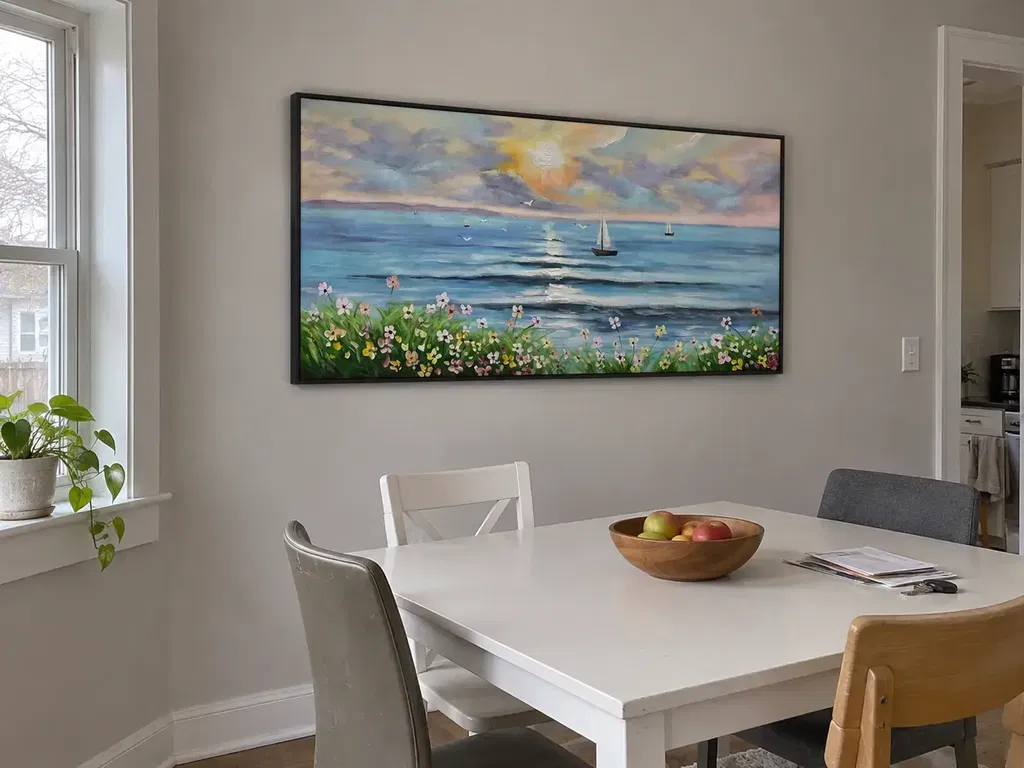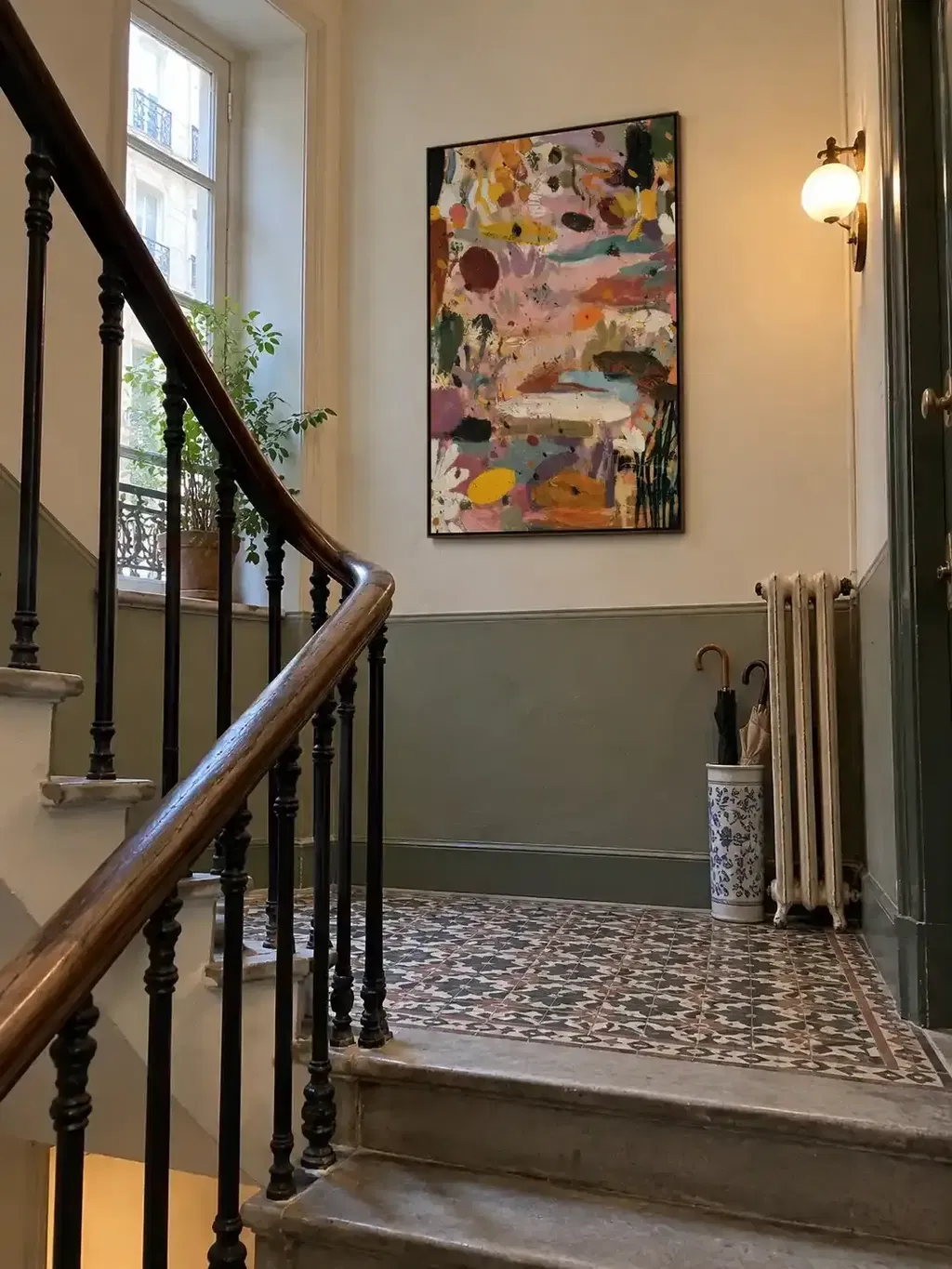
The Shift Toward Intentional Elegance in Dining Spaces
The landscape of high-end art acquisition is undergoing a fundamental structural shift. While high-end auction sales for purely financial art assets plummeted 44% year-over-year in 2024, according to Marketplace, the broader creative economy remains a powerhouse, contributing $1.2 trillion to the U.S. GDP (based on NEA data). This divergence suggests that today’s aesthetic-driven home improvers are moving away from overpriced vanity pieces in favor of custom, hand-painted works that offer real emotional and application value.
In the dining room—the traditional heart of social validation and formal hosting—this shift manifests as a return to "Formal Balance." Achieving this balance through symmetrical art arrangements provides a sense of stability and architectural order. However, creating a space that feels "photograph-ready" without becoming a sterile "hotel lobby" requires a deep understanding of both spatial mechanics and the psychological impact of human-made art.

The Psychology of Symmetry: Stability vs. Social Dynamics
Symmetry is often the first instinct for those seeking a formal atmosphere. Research indicates that the human brain is hard-wired to find symmetrical patterns soothing; however, there is a nuanced trade-level "gotcha" to consider. While symmetrical art creates a sense of calm and order, some psychological observations suggest that perfect, rigid symmetry can actually suppress spontaneous conversation by up to 15-25% (estimated based on Art News & Views). This is because hyper-formal environments can trigger neural responses associated with observation rather than active participation.
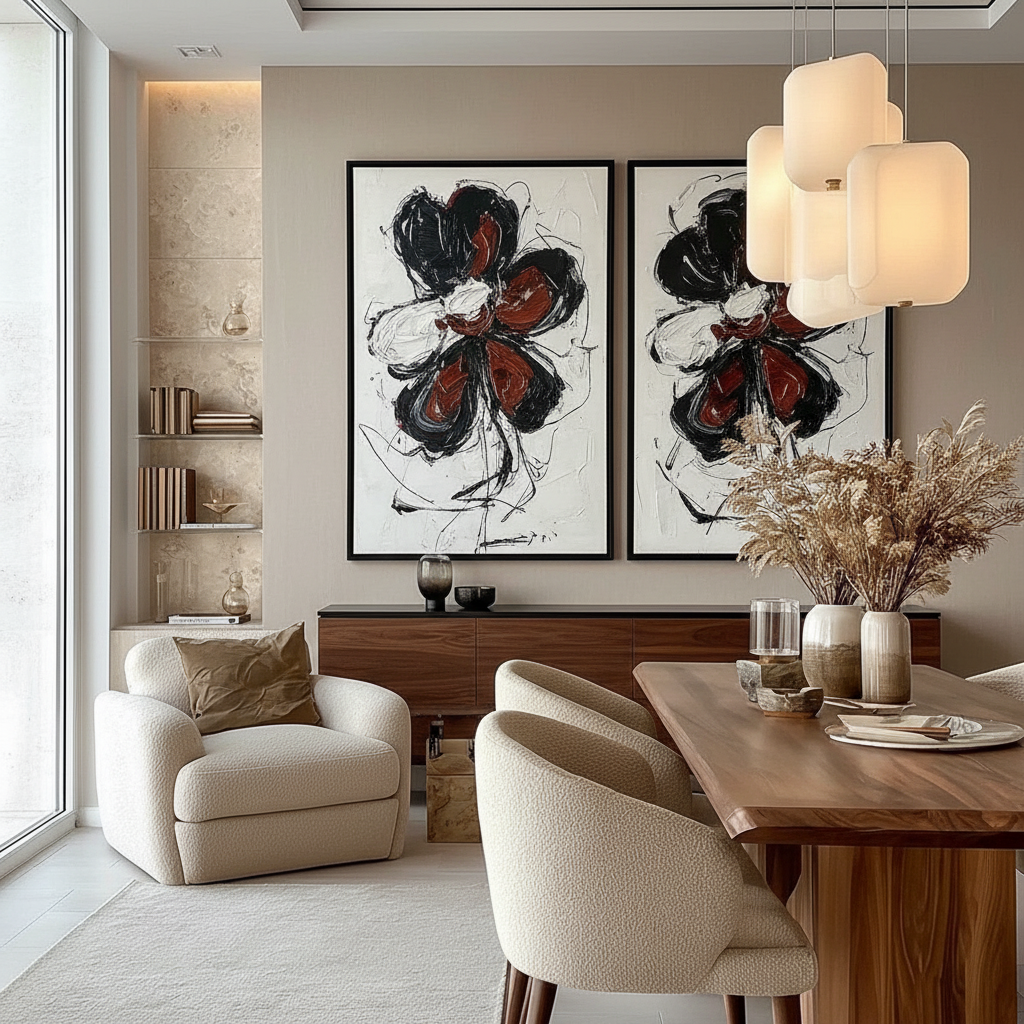
To combat this, professional designers often recommend a strategy of "Controlled Asymmetry." This involves maintaining an 80:20 ratio of symmetry to asymmetry. For example, you might hang two identical frames with complementary—but not identical—hand-painted subjects. This maintains the formal "anchor" of the room while providing enough visual variety to keep the eye moving and the atmosphere approachable.
Methodology Note: Our analysis of social dynamics in dining spaces is a scenario model based on architectural psychology heuristics. It assumes a standard residential hosting environment and may vary based on room volume and lighting temperature.
The "Essential Identity" of Hand-Painted Art
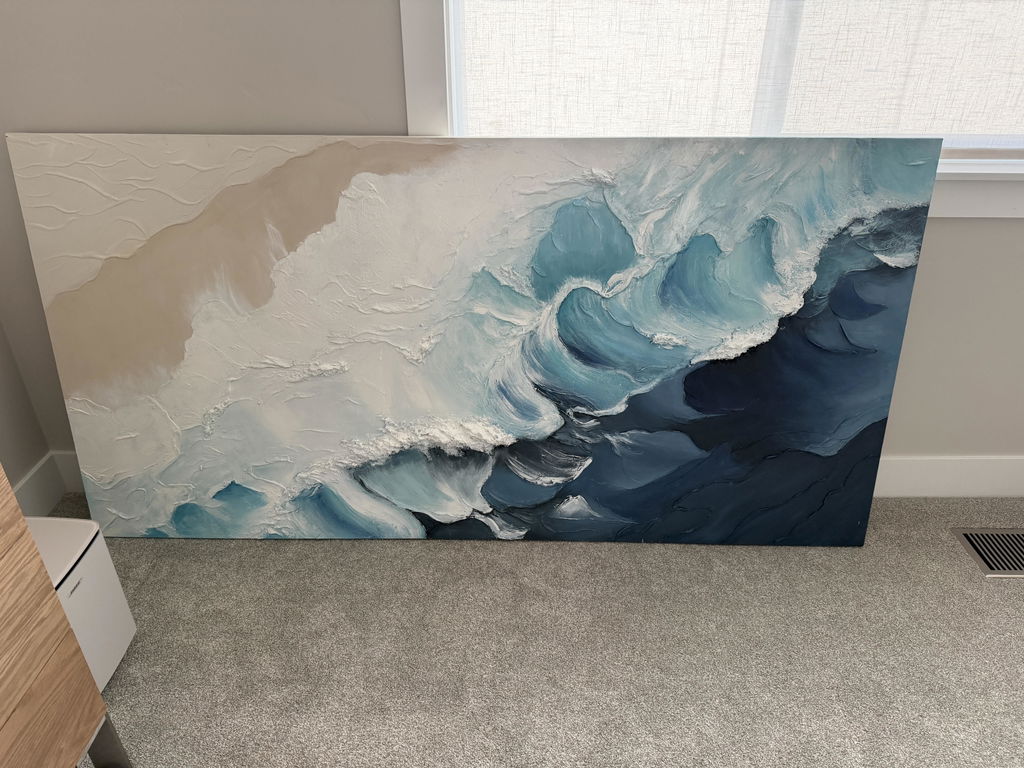
For the 36-42 demographic, the risk of a "cheap" look is a primary concern. Digital prints, regardless of their resolution, often fail to provide the social validation desired in a high-end dining room. This isn't just an elitist preference; it’s a documented cognitive response. A Columbia University study confirmed that consumers value art labeled "AI-generated" or mass-produced significantly lower (roughly 62% less) than authentic, human-created art.
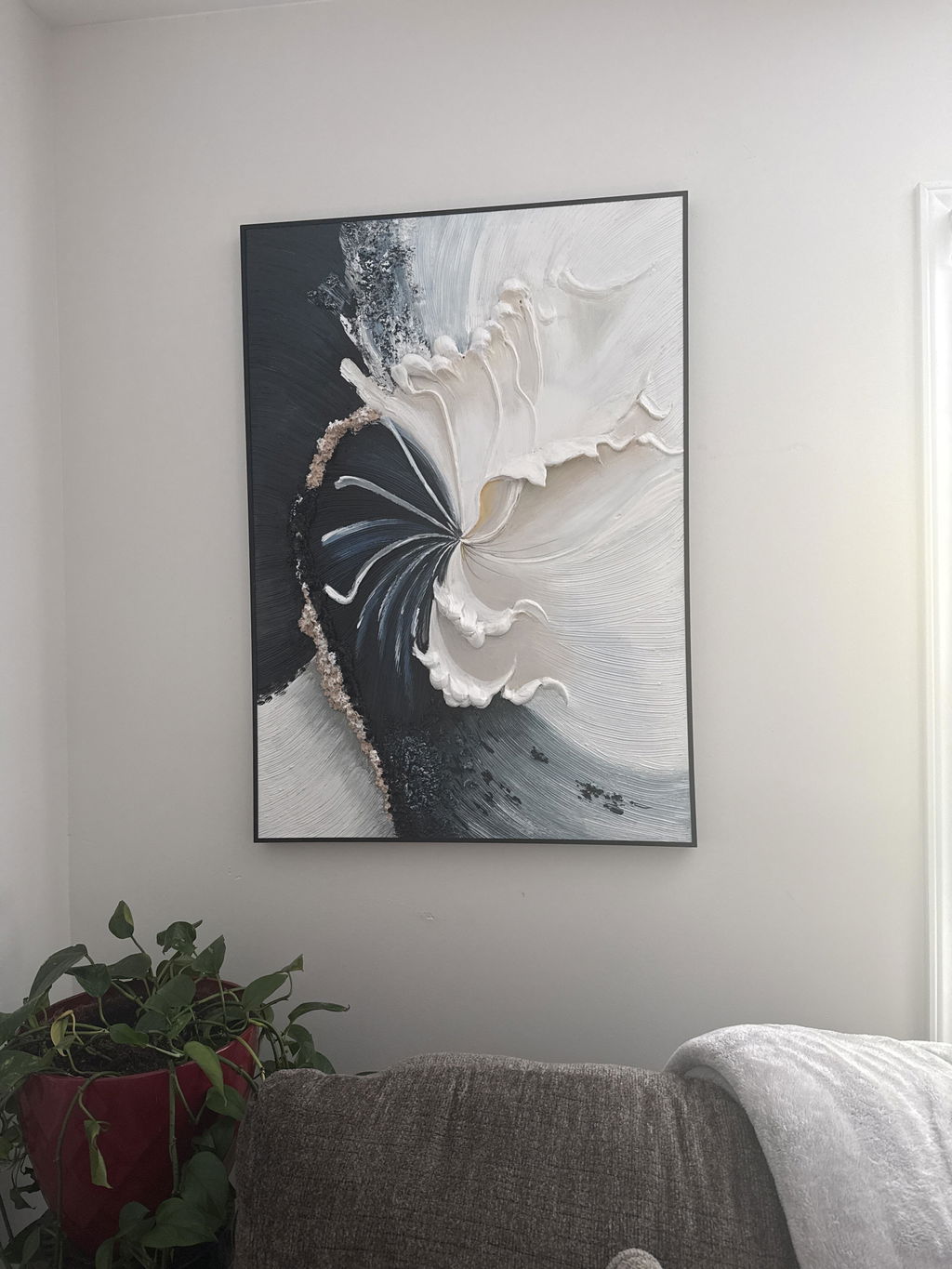
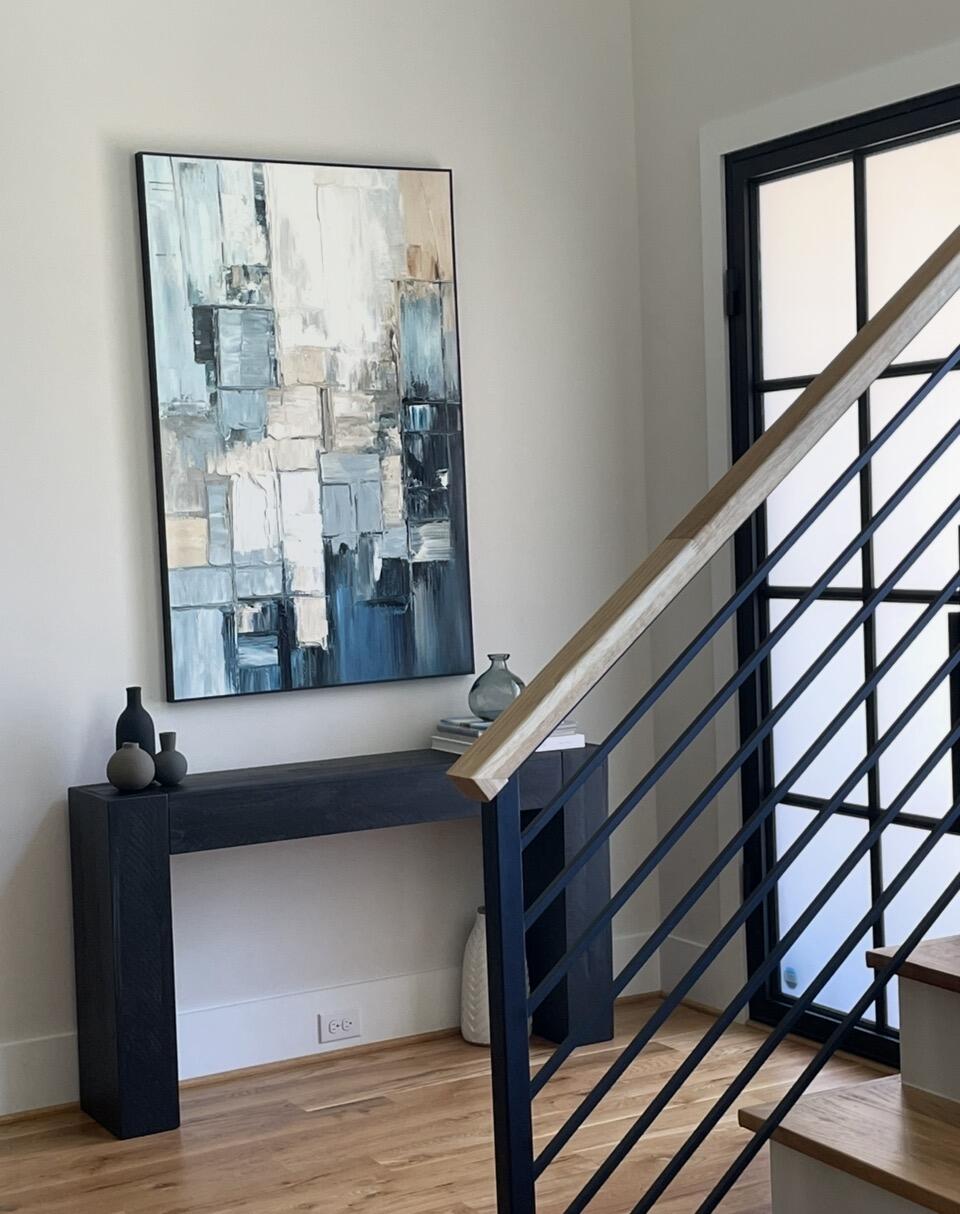
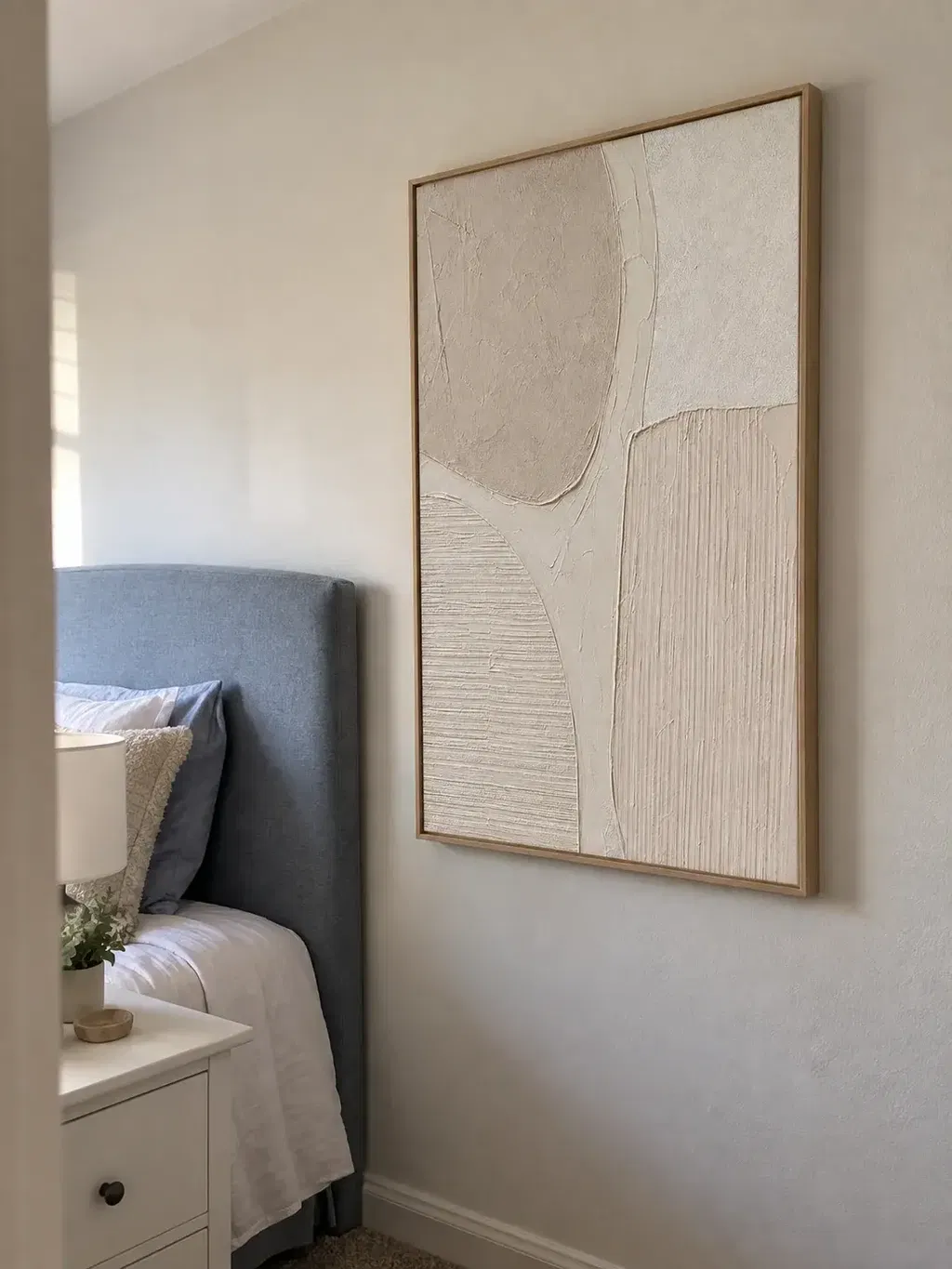
Furthermore, research from the University of Chicago suggests that digital replicas lack what is called the artist's "essential identity." A hand-painted mural or canvas retains a physical "soul"—the microscopic topography of the paint. Using optical microprofilometry, scientists have proven that the millimeter-scale texture of oil and acrylic pigments is crucial to the viewer's aesthetic satisfaction (Sensors Journal).
When you choose hand-painted pieces for a symmetrical arrangement, the subtle differences in brushstrokes between the two pieces prove their authenticity. This "imperfection" is actually the hallmark of luxury that mass-produced prints cannot replicate.

Technical Execution: The 6-Inch Rule and Centerline Logic
Achieving formal balance requires more than just "eyeballing" the placement. Based on common patterns from our curation support and professional installation feedback, the most frequent error is hanging art too high, creating a disconnected "floating" effect.
The Professional Hanging Protocol
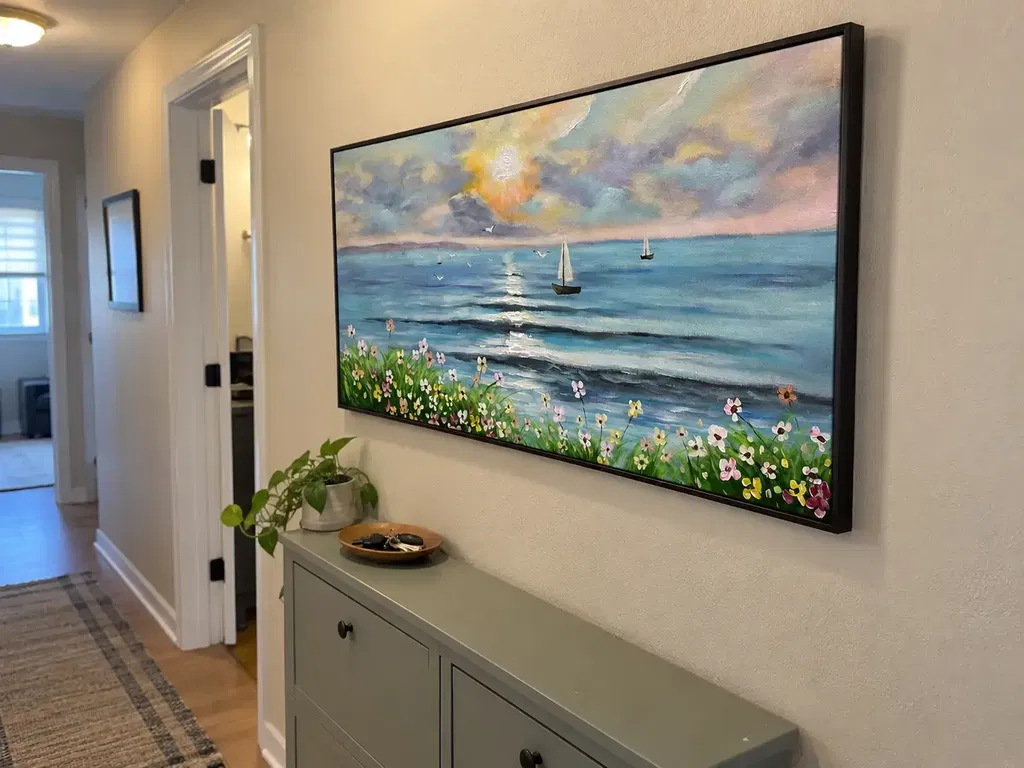
- The Furniture Anchor: If placing art above a sideboard or buffet, measure from the floor to the top of the furniture.
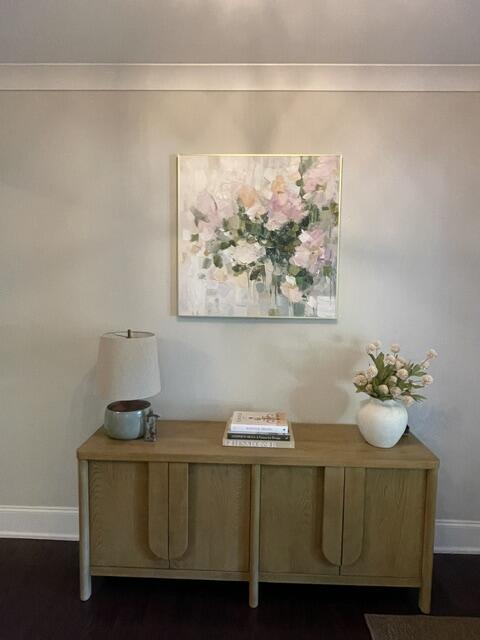
- The Sightline Heuristic: For dining rooms where guests are primarily seated, the art's center point should be lower than in a hallway. We recommend placing the bottom of the frame 6 to 8 inches above the furniture surface.
- The Symmetrical Gap: When hanging a pair, maintain a consistent spacing of 2 to 3 inches between the frames. This ensures they read as a single cohesive unit rather than two scattered pieces.
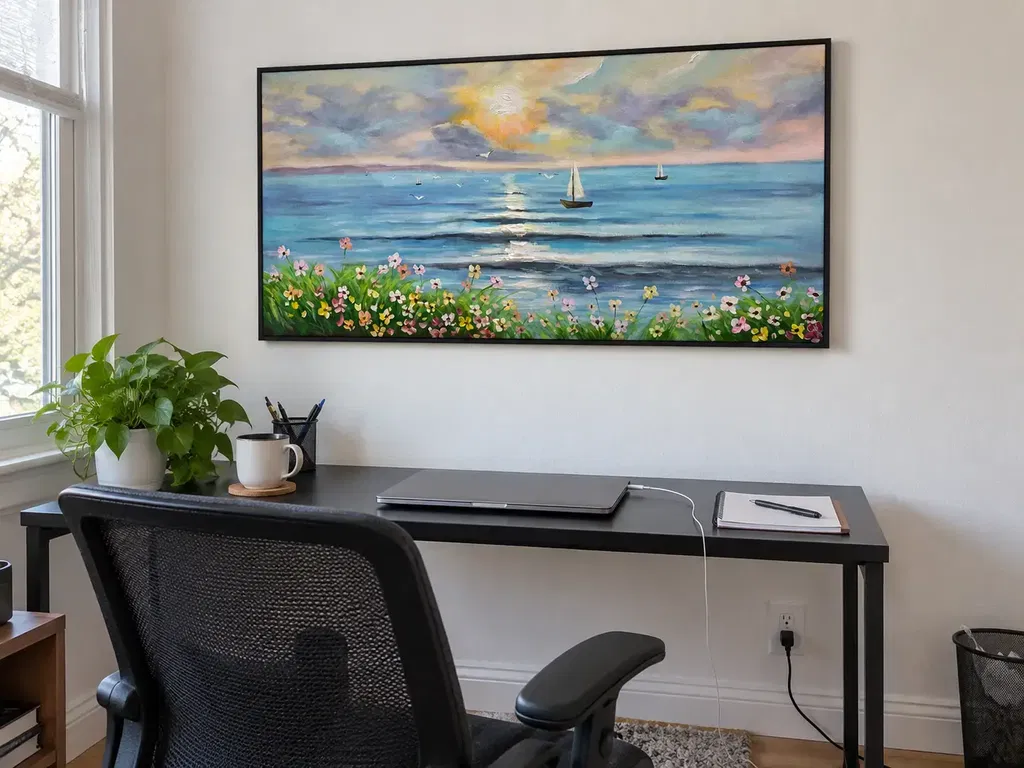
- The 57-Inch Standard: If the wall is empty (no furniture), the "gallery standard" is to place the center of the art at 57 inches from the floor—the average human eye level.
| Parameter | Recommended Value | Rationale |
|---|---|---|
| Height above Sideboard | 6–8 inches | Prevents "floating" and aligns with seated sightlines. |
| Spacing between Pairs | 2–3 inches | Creates a "unified" visual field. |
| Frame Matching | Identical | Essential for formal symmetry. |
| Subject Relation | Complementary | Avoids the "sterile hotel" look; promotes visual interest. |
Material Science: Safety and Longevity in the Dining Room
Because the dining room is a space for food consumption, the chemical composition of your art is a critical, yet often overlooked, factor. Many mass-market paints and coatings emit Volatile Organic Compounds (VOCs) that can degrade indoor air quality.
The VOC and Pigment Safety Filter
According to Aalto University research, coatings on certain substrates emit significantly lower VOCs after a 28-day curing period. For families with children or health sensitivities, choosing water-based acrylics over traditional oils can be a safer choice. The EPA warns that indoor air pollution can be higher than outdoor levels, making low-VOC materials a prerequisite for a healthy home.
Furthermore, authentic pigments like Titanium White (which dominates 90% of the market according to NCBI) have replaced historically toxic Lead White. However, "hardcore" art enthusiasts should be aware that some professional-grade pigments, such as Cadmium, are classified as Group 1 carcinogens by the IARC. While safe when locked in a dry paint film, they require respect and professional handling during the creation process.
Understanding Lightfastness
To ensure your symmetrical investment doesn't fade unevenly (especially if one side of the room receives more sunlight), look for the ASTM D4303 standard. This protocol uses xenon-arc testing to simulate years of indoor aging (Micom Laboratories). High-quality hand-painted art utilizes UV-stabilized binders to prevent the "haziness" or yellowing often seen in cheap resins (PMC).
The ROI of Curation: Art as a Property Asset
Investing in hand-painted symmetrical art isn't just an aesthetic choice; it’s a strategic one. Data from the Royal Society found a direct correlation between "art-rich" environments and property value gains. In commercial sectors, public art projects have driven billions in real estate growth, and this principle scales down to the residential level. A well-curated dining room acts as a permanent "physical billboard" for the home’s quality, significantly increasing its appeal to "responsible long-term buyers" (Community Progress).
Curation Strategies for Formal Dining
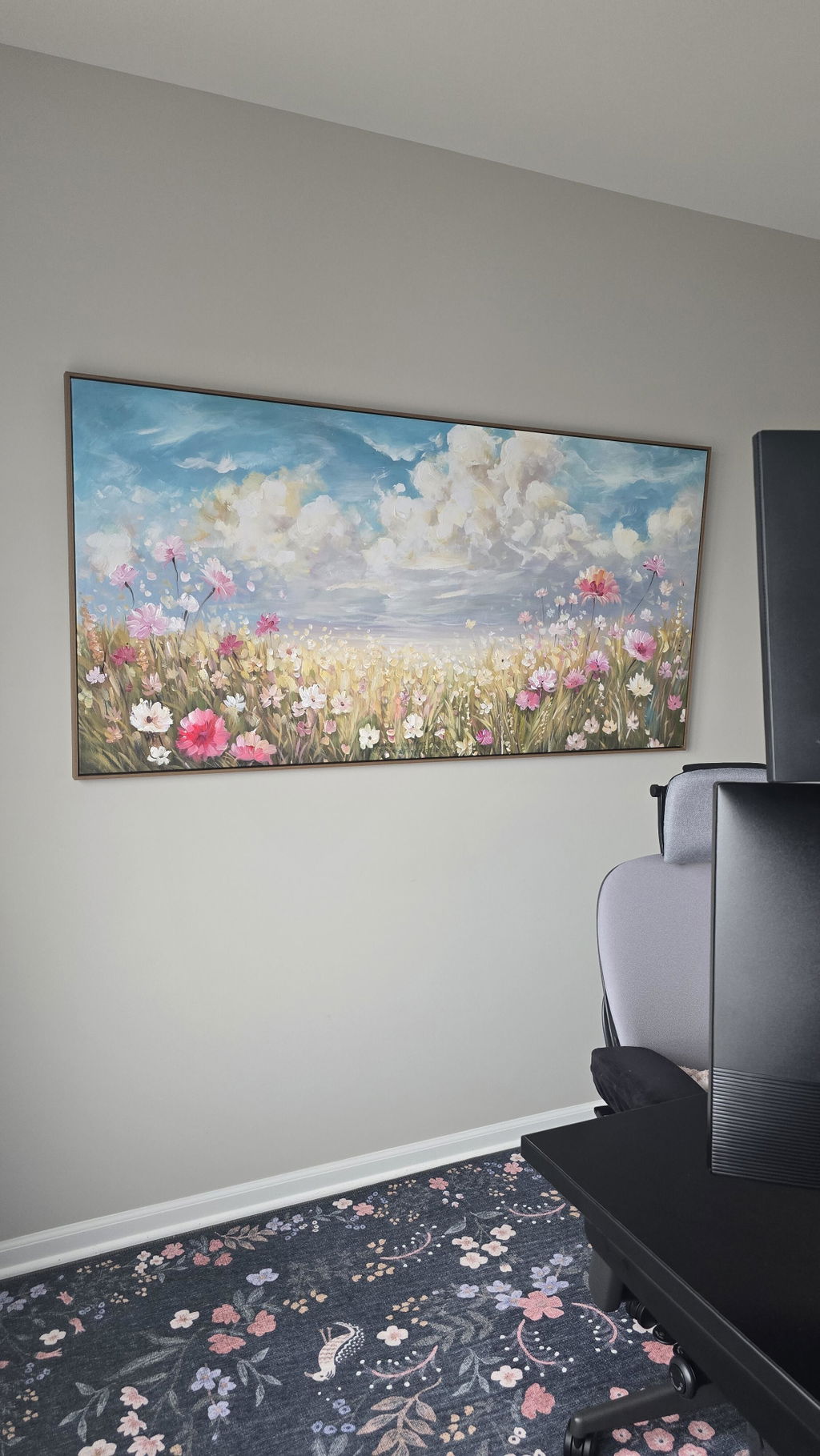
When selecting themes for your symmetrical pair, consider the "Biophilic" approach. Research from UPenn and UCA shows that nature-themed art can reduce somatic stress and improve mood by up to 73%. In a dining context, this translates to a more relaxed, enjoyable mealtime experience.
If your dining room is part of an open-plan layout, you may find it helpful to read about Scaling Large Acrylic Canvases for Open-Plan Living Rooms or Transitioning Acrylic Art Themes Between Living and Dining to ensure your symmetrical dining pieces don't clash with the rest of your home's flow.

Summary of Implementation Logic
Achieving formal balance is a technical exercise in precision and a psychological exercise in atmosphere. By prioritizing hand-painted authenticity, you secure the "essential identity" that mass-produced prints lack. By following the 6-inch hanging rule and the 80:20 symmetry-to-asymmetry ratio, you create a space that is both grand and inviting.
- Step 1: Select a pair of hand-painted canvases with complementary themes.
- Step 2: Ensure frames are identical to establish the formal "anchor."
- Step 3: Use a laser level to ensure perfect horizontal alignment; symmetry makes even 1-degree tilts visible.
- Step 4: Maintain 2-3 inches of separation between pieces to ensure they read as a unified focal point.
Disclaimer: This article is for informational purposes only. When handling or hanging art, always follow manufacturer safety guidelines for hardware and wall-mounting. If you are concerned about the chemical composition of art materials, consult the Safety Data Sheets (SDS) provided by the artist or manufacturer. This content does not constitute professional health, legal, or architectural advice.
Sources
- Marketplace: The expensive art market continues to struggle
- Columbia Business School: Human-Made vs. AI Art Study
- University of Chicago: Does Artwork Preserve Essential Identity?
- EPA: Indoor Air Quality and Low-VOC Paints
- Royal Society: Quantifying the link between art and property prices
- IARC: Cadmium and Cadmium Compounds
- Art News & Views: The Psychology Behind Why We Love Symmetry in Art
- Micom Laboratories: ASTM D4303 Standard Test Methods for Lightfastness
- UPenn: Visual Art in the Built Environment Review