My house is pretty much perfect, but the bathroom is still a little plain. That got me thinking, and now I really want to hang an oil painting in the bathroom. I love the idea of enjoying some art even while I'm bathing. But... with all the steam, is that realistic? Can you even hang oil paintings in a bathroom?
The Short Answer: Yes, but with Major Precautions
We'll be direct: hanging an oil painting in a bathroom is a high-risk, high-reward design choice. While the answer is technically "yes," it's not a room you can simply hang a canvas in and forget about it.
The bathroom is, by nature, the most hostile environment in your home for fine art. The constant, rapid changes in humidity and temperature are the primary enemies of organic materials. Success depends entirely on how you do it, where you hang it, and what kind of painting you choose. Failure to take the right precautions can lead to irreversible damage.
How Humidity and Steam Wreak Havoc on Oil Paintings
To understand the risk, you need to know what you're up against. Oil paintings are typically made of organic materials—canvas, wood, and oil-based pigments—that react physically to moisture.
● The Canvas: The canvas (usually linen or cotton) acts like a sponge. When steam fills the room, the fibers absorb moisture and swell. When the air dries out, they contract. This constant swelling and shrinking puts immense stress on the paint layer, causing it to stretch and pull. Over time, this leads to cracking, flaking, and "cupping," where the paint chips lift off the surface.
● The Paint and Varnish: The oil paint itself, especially if it's older, is brittle. When the canvas beneath it moves, the inflexible paint layer cracks. Furthermore, moisture can seep into the varnish (the clear protective topcoat), causing it to look cloudy or "bloom."
● The Wooden Frame: The wooden stretcher bars behind the canvas will also absorb moisture. As wood gets damp, it warps and twists. A warped stretcher will pull the canvas unevenly, causing ripples, sagging, or even tears.
● The Hidden Enemy: Mold: The darkest threat is mold and mildew. The organic materials of the canvas and the stretcher bars are a perfect food source. Once mold takes root in a painting, it is incredibly difficult and expensive to remove. This is why knowing how to clean an oil painting is complex; prevention is always the better strategy.

How to Safely Hang Art in a Bathroom: 5 Essential Rules
If you're determined to add oil painting decor to your bathroom, you must follow these rules to give your art a fighting chance. This is how to display paintings in a high-humidity zone.
1. Ventilation is Non-Negotiable
This is the most important rule. You must have a high-powered, properly-sized bathroom exhaust fan. Run it every single time you shower or bathe, and leave it running for at least 30-40 minutes after you're done to vent all humid air. If you have a window, opening it to create a cross-breeze is even better. Without excellent ventilation, don't even try it.
2. Location, Location, Location
Where you hang the painting matters immensely.
- Avoid the "Splash Zone": Never hang art where it can be directly splashed by the shower, tub, or sink.
- Avoid the "Steam Zone": Hot steam rises. Don't hang the painting high on the wall directly above the shower or tub.
- Find the Safest Spot: The best location is on the wall furthest from the steam source, often in a larger master bathroom or a separate toilet enclosure (water closet).
3. Frame it for Battle
A standard frame is not enough; you need to create a sealed environment.
- Use Acrylic, Not Glass: Ask a professional framer to use museum-grade UV-protective acrylic (like Plexiglas). Glass can trap condensation between itself and the art, creating a mini-greenhouse for mold. Acrylic is more resistant to this.
- Seal the Back: This is the most critical step. The back of the canvas is the most vulnerable. A professional framer must create a sealed backing using a moisture-proof barrier like Coroplast (corrugated plastic) or acid-free foam core. This "dust cover" must be completely sealed around the edges of the frame to stop humidity from getting in from behind.
4. Choose Your Painting Wisely
The bathroom is not the place for your great-grandmother's priceless heirloom or a valuable, one-of-a-kind investment piece. Choose a painting that you love, but one that you are emotionally and financially prepared to risk. A modern, well-varnished painting is a better candidate than an antique, brittle one.
5. Inspect it Regularly
This is not a "set it and forget it" situation. Every few months, take the painting down from the wall. Inspect the back of the frame, the wall behind it, and the painting's surface. Look for any signs of dampness, dark spots (mildew), warping in the frame, or cloudiness in the varnish. At the first sign of trouble, remove the painting permanently.

What Kind of Art is Safe for a Bathroom? The Best & Worst Materials
If you're committed to hanging art in your bathroom, choosing the right material is far more important than choosing the right frame. This decision directly impacts how long your artwork will survive. Let's break down the options.
1. The High-Risk Zone: Works on Paper and Oil Paintings
- Works on Paper: This is an absolute "no." Any watercolors, drawings, or art prints on paper will be quickly destroyed. Humidity causes the paper to ripple, warp, and develop "foxing"—the small, brown mold spots that cause permanent damage.
- Oil Paintings: As we've detailed, oil paintings are a high-risk choice. The canvas, wooden stretcher bars, and oil-based pigments are all organic materials that absorb moisture, leading to cracks, mold, and warping. If you must hang an oil painting in a bathroom, it must be a piece you are emotionally and financially prepared to lose, and it will require expensive, professional sealing.
2. The Ideal Choice: Acrylic Paintings
If you crave the textured look of an original, hand-painted piece, an acrylic painting is your best and safest bet.
This is the definitive answer to the oil paint vs acrylic debate in a bathroom setting: Acrylic wins.
Acrylic paint is essentially a plastic polymer. Once dry, it is highly water-resistant and flexible. It won't become brittle or crack from humidity changes the way oil paint will, and it is far less susceptible to mold. While the canvas backing still demands good ventilation, the paint surface itself is dramatically more durable.
3. Safer Alternatives & Creative Ideas
If the risk of hanging an original is too high, you can still achieve a stunning look with these humidity-proof options:
Sealed Canvas Prints: A high-quality Giclée or canvas print can be made waterproof. You (or a professional) can apply several coats of a clear, waterproof matte or satin varnish (like a marine varnish used for boats) to completely seal the surface and edges.
Metal or Acrylic Prints: How to display paintings in a more modern way? These are your best choices. The art is printed directly onto a sheet of aluminum or acrylic. These materials are 100% waterproof, impervious to humidity, and incredibly easy to clean.
Creating the Vibe: You can still use these safer options to get the exact style you want.
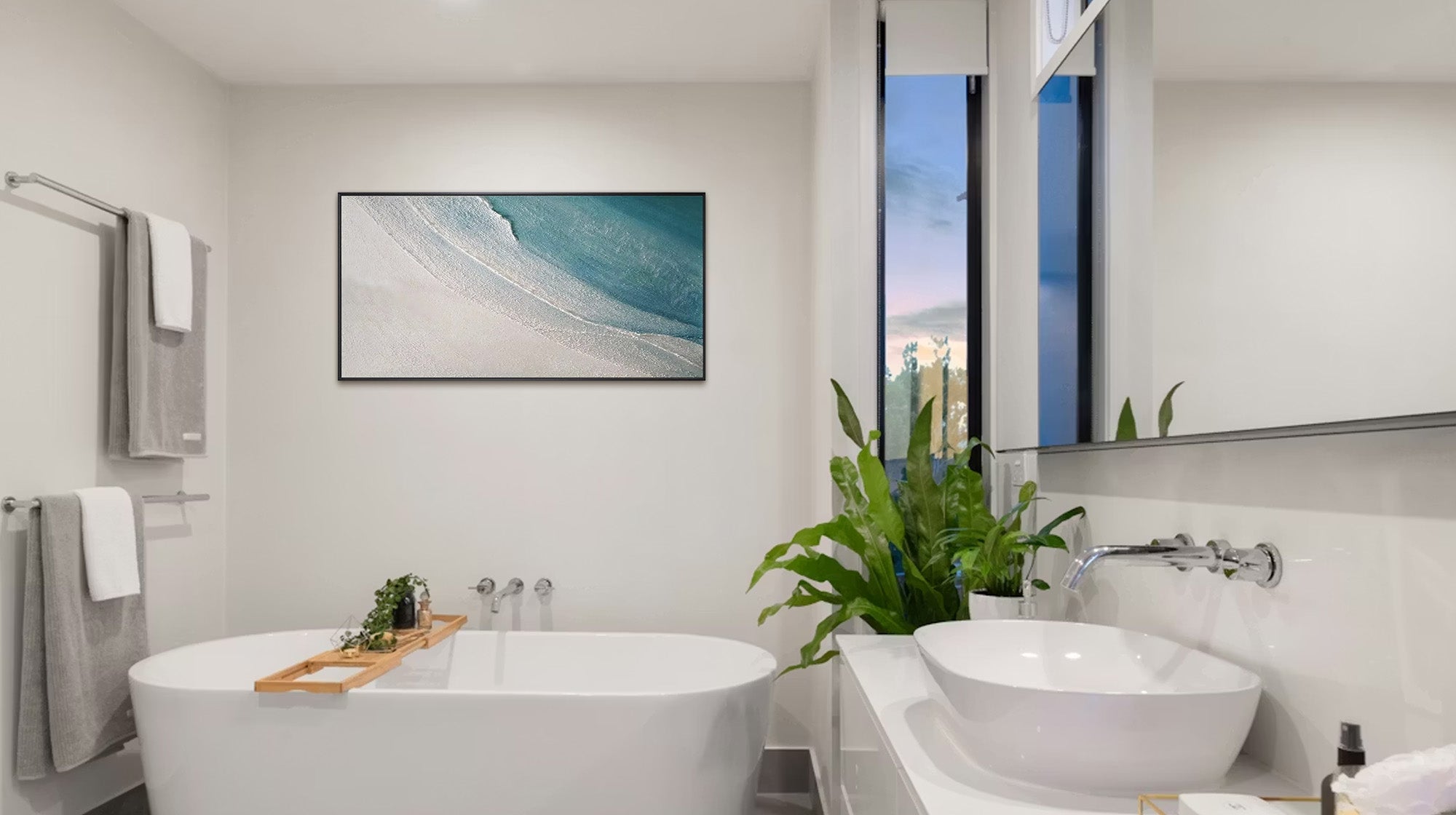
- Spa-Like Serenity: Choose a calming coastal scene. You could look for an acrylic painting or a print with the serene feel of Montcarta's Misty Shores.
- Bold & Boho: The bathroom is a great place to be bold! Imagine a vibrant abstract print against a wall painted with deep boho bathroom paint colors like terracotta, navy blue, or forest green. It creates a stunning focal point.
FAQs About Art Placement & Safety
Q1: What might damage an oil painting?
The leading causes are high moisture (development of mold, warping, and flaking), exposure to sunlight (fading colors), and sudden and extreme temperature fluctuations (cracking of paint layers). Other sources of damage are smoke, grease, and, conversely, inappropriate cleaning. Learning appropriate oil painting cleaning techniques is, indeed, a professional's expertise.
Q2: Where is the best place to hang an oil painting?
The best place is in an environment with constant temperature and humidity (preferably 40-50%). The living room, dining room, bedroom, and corridor are all very suitable. But always place it on the inside wall (not on the outer wall, as it is colder) and as far as possible out of direct sunlight.
Q3: What other locations are not suitable for oil painting display?
In addition to the high-humidity bathroom, other locations where you should never display your oil painting collection include above a working fireplace (soot, extreme heat), the kitchen (grease, moisture, extreme temperatures), the damp basement (molds), as well as any uninsulated areas, for example, the attic or entryway (extreme temperatures).
Q4: Can I hang an oil painting if my bathroom is small?
It is highly discouraged. The concentration of steam and moisture is much higher in a small bathroom with very limited air to dilute it, even with the use of a fan. The risk of damage is much higher and much sooner. It is only remotely plausible in a large, well-ventilated master bathroom.
The Right Art for the Right Room: A Final Takeaway
So, this dream of viewing your artwork from the bathtub isn't entirely out of reach, but it's a job for those with foresight and preparation. More likely, the best thing for your artwork is simply to provide it with a secure habitat. Instead, your exquisite acrylic piece will look much better inside the bathroom, and your prized oil painting collection will turn the right side of the bathroom into the ultimate retreat as you enter the master bedroom. Ready to discover your masterpiece and get your creative juices flowing? Your collection awaits within the gallery of original, artist's hand-painted artwork on Montcarta.