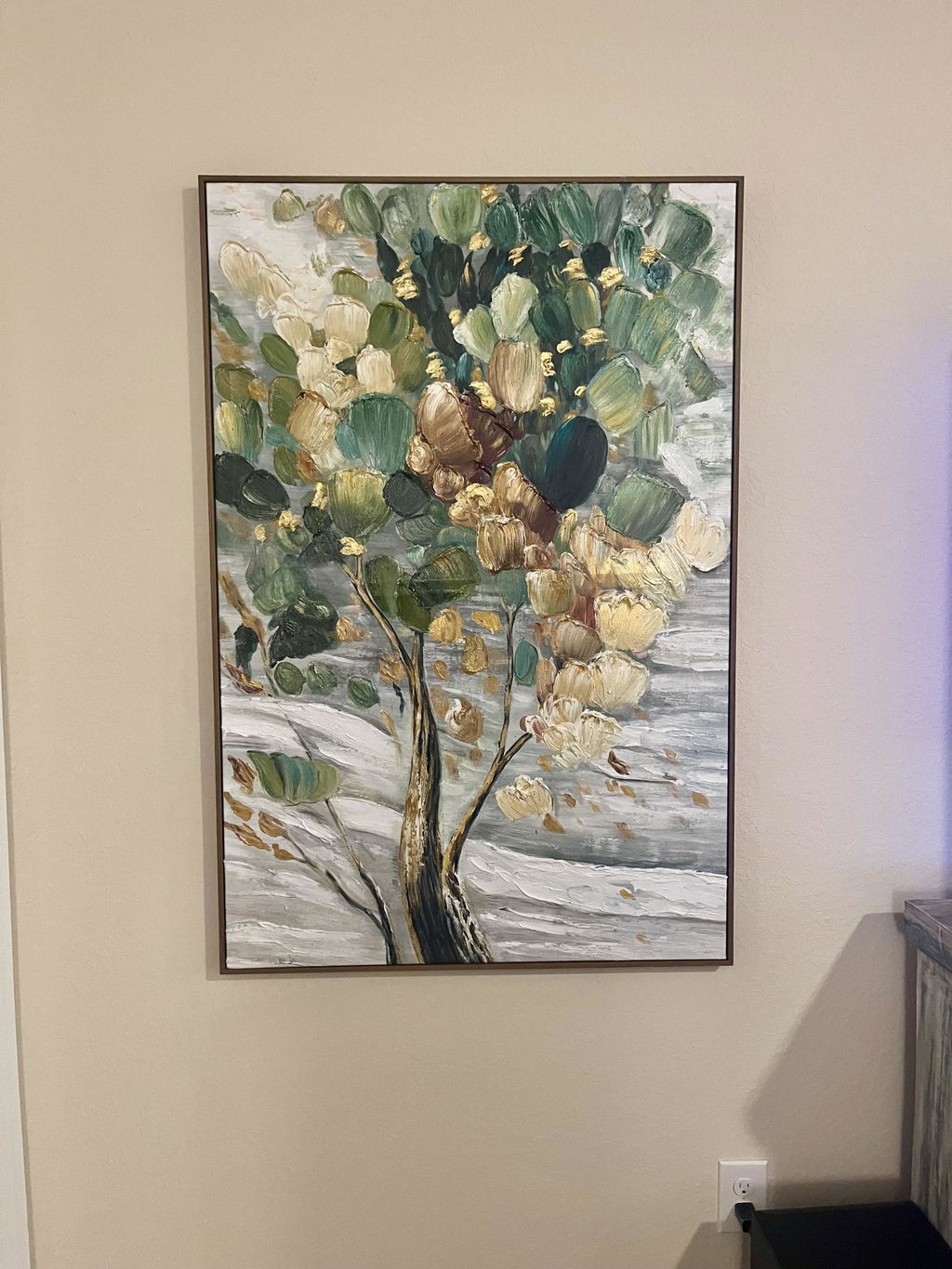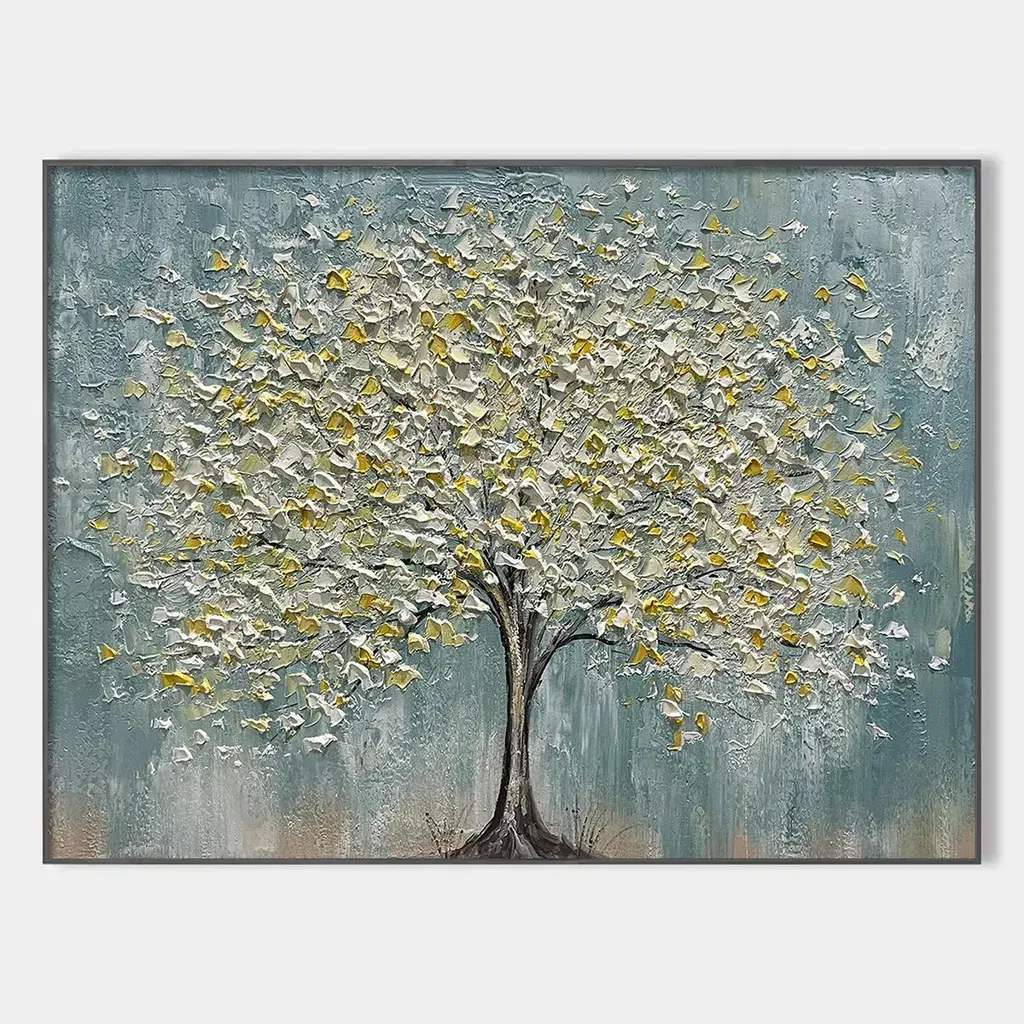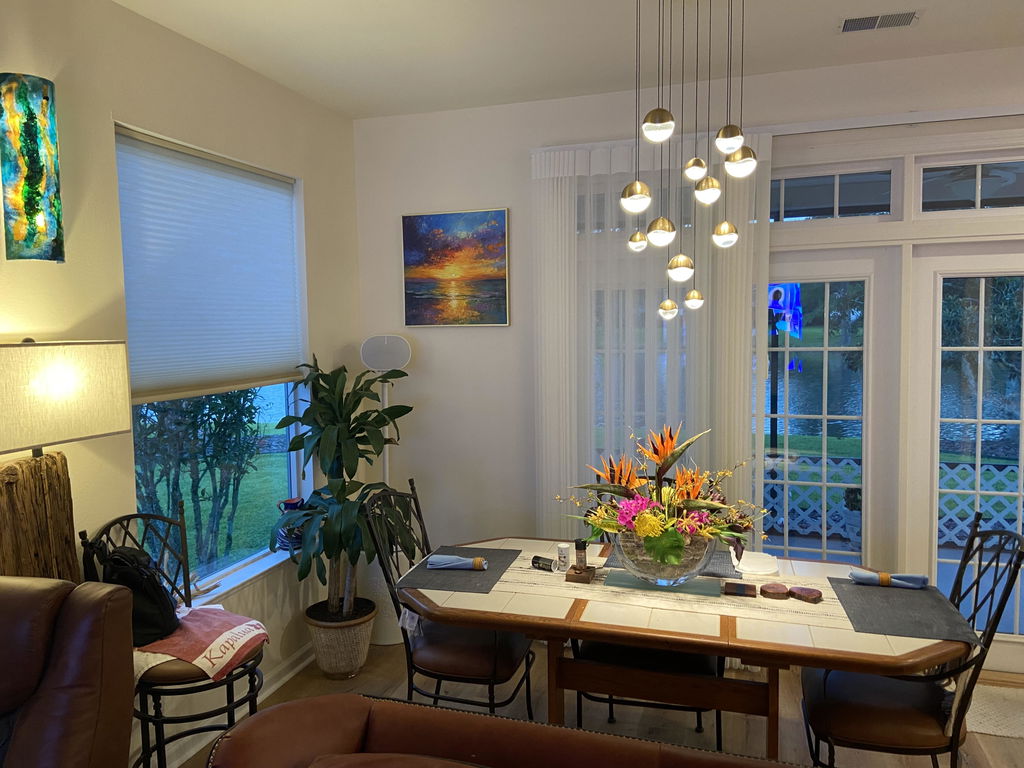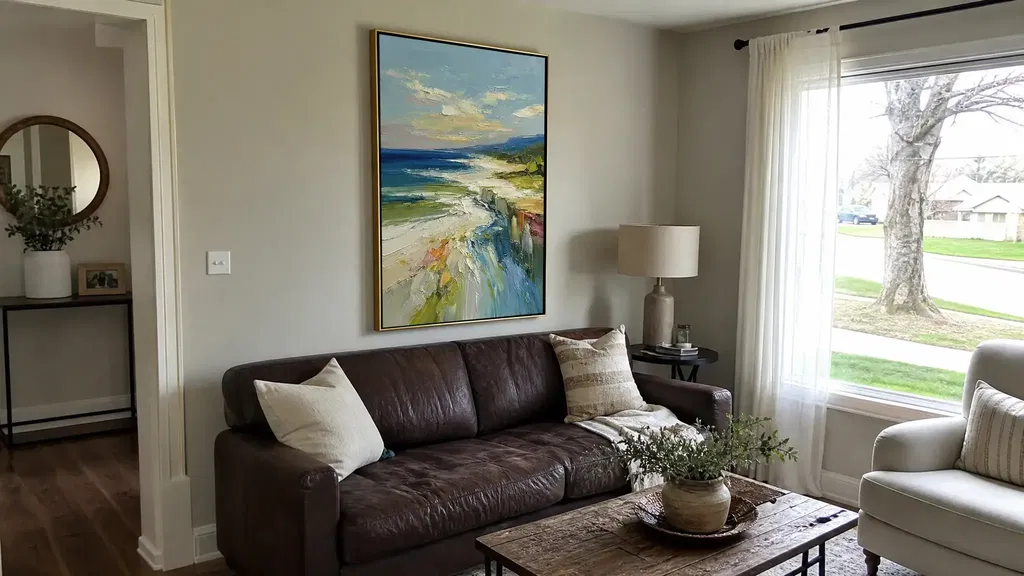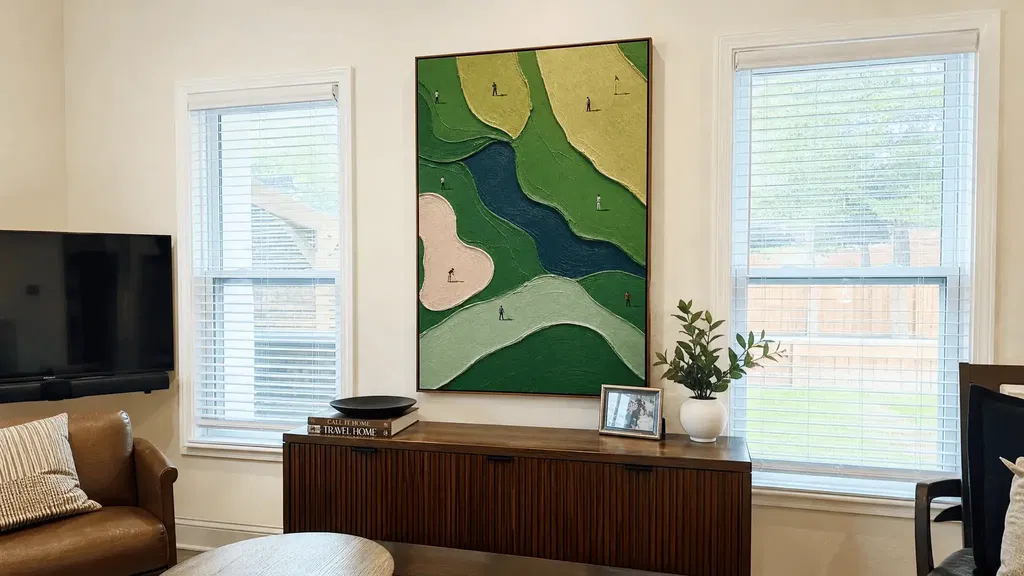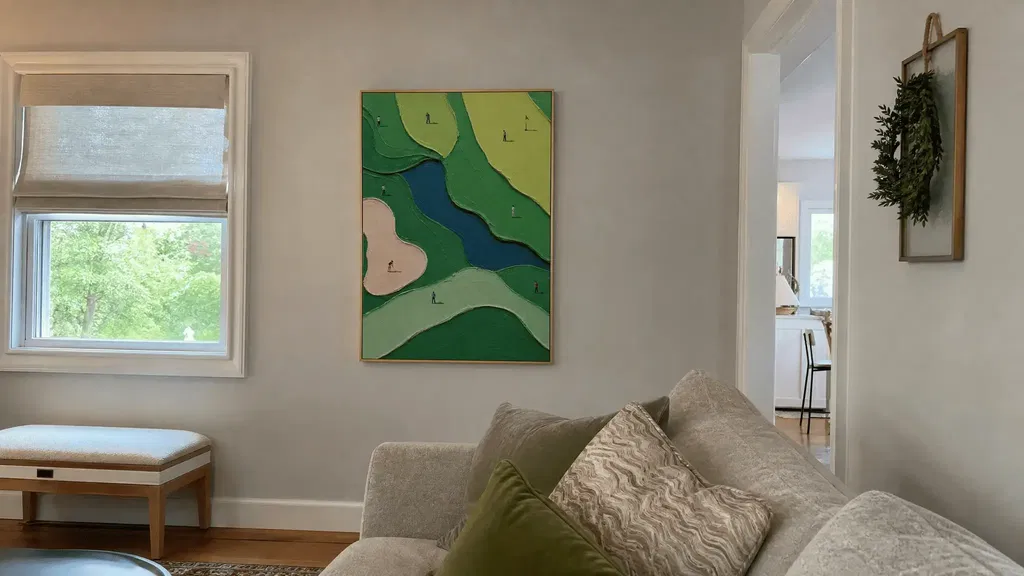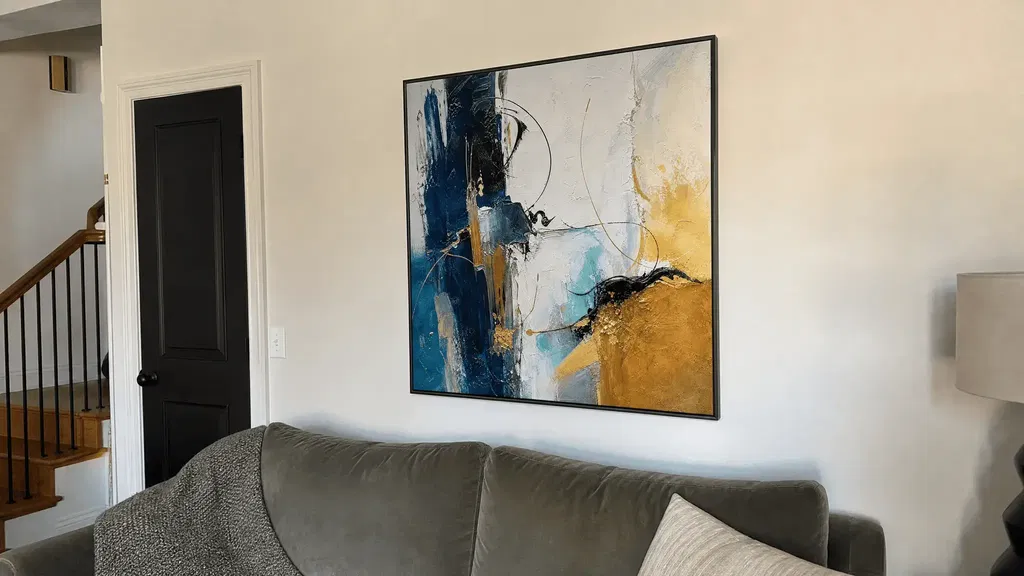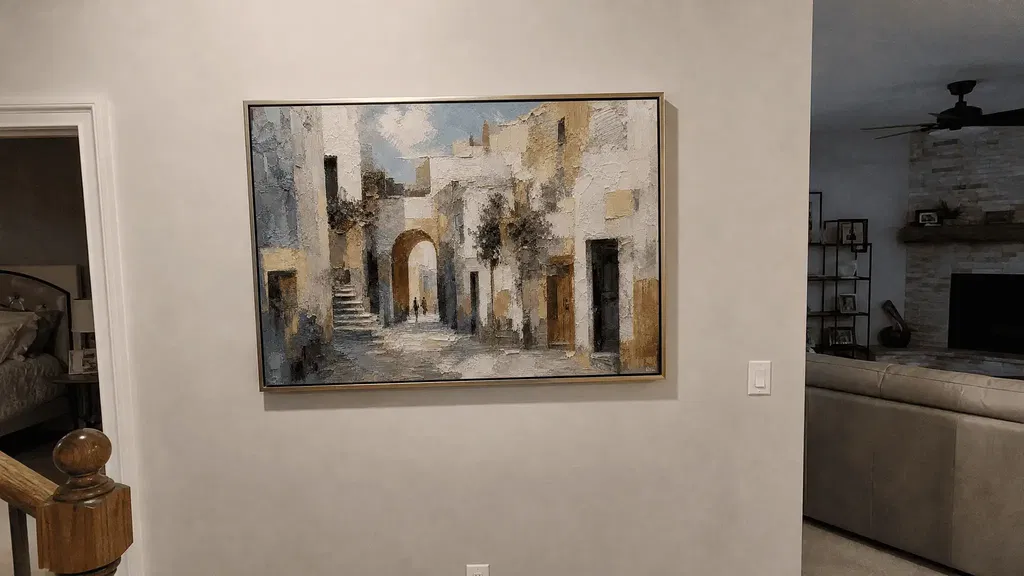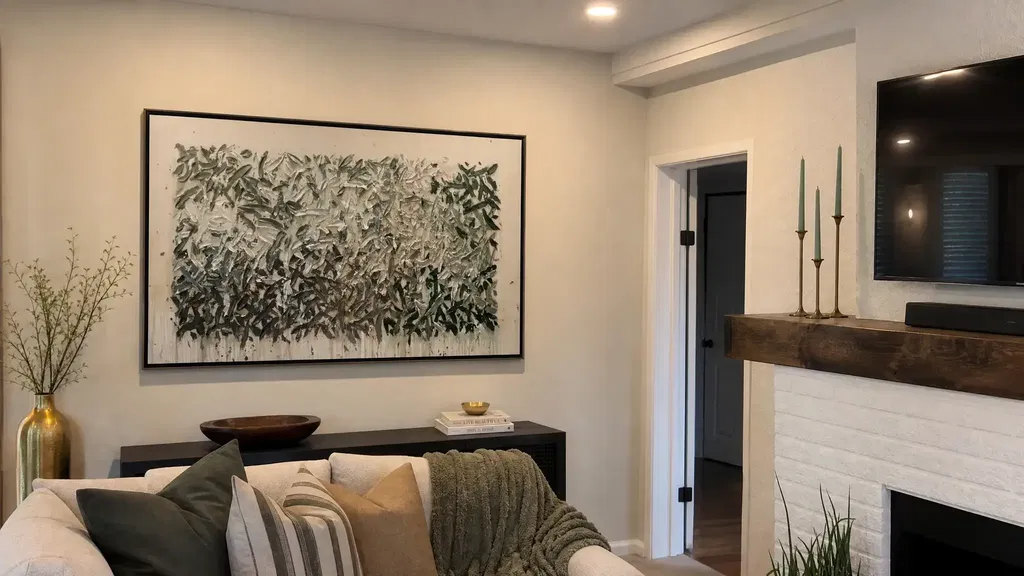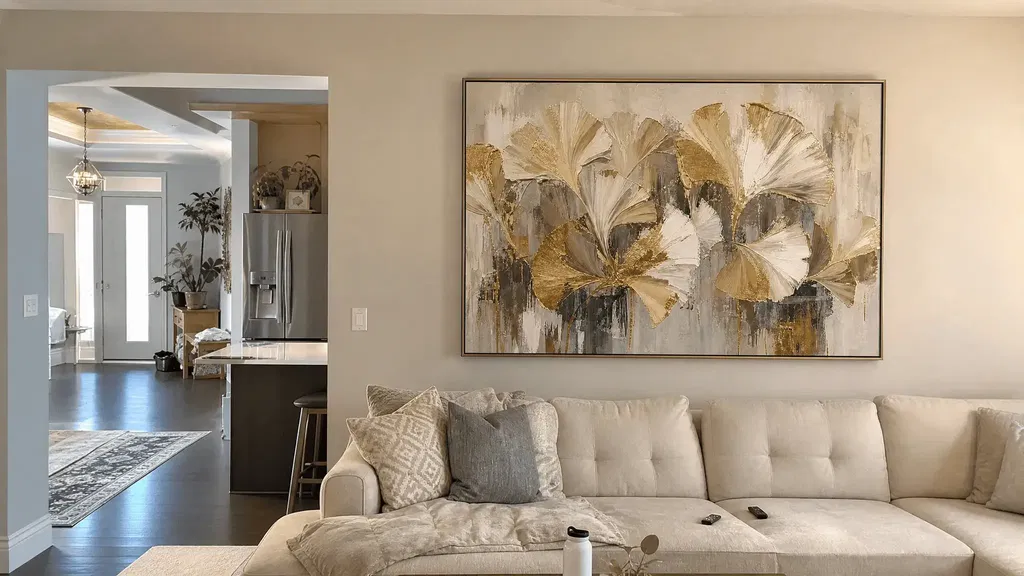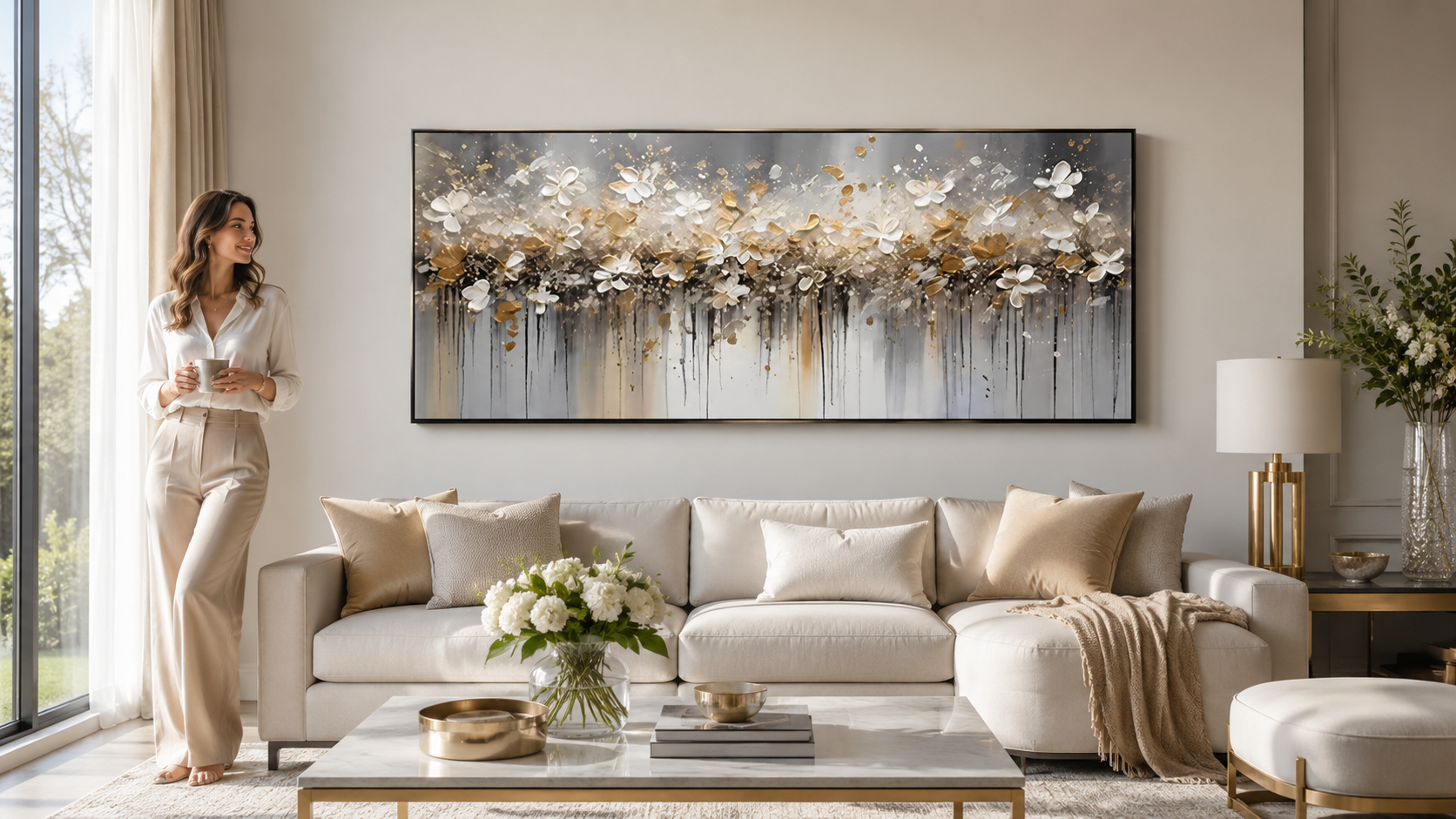
The size of your wall art is the silent architect of your interior design. While color and subject matter capture initial attention, the physical dimensions of a piece dictate the spatial flow and emotional weight of a room. Choosing the wrong size can make a spacious living area feel disjointed or a cozy bedroom feel claustrophobic. By mastering scale, you can manipulate the perceived height of your ceilings, create intimate discovery points, or establish a sense of grand sophistication.
How Scale and Proportions Affect Room Perception
Wall art size changes the feeling of a room by controlling the viewer’s eye and establishing a dominant focal point. In interior design, a focal point is the first place a person looks when entering a space. When art is sized correctly, it acts as a visual anchor, grounding the surrounding furniture and architectural features. If a piece is too small, the eye wanders, making the room feel unfinished or cluttered. If it is too large for its environment, it can overwhelm the senses and make the walls feel like they are closing in.
Scale is fundamentally about the relationship between objects. In a large room, oversized pieces create a sense of drama and openness. This happens because a singular large focal point reduces visual noise. Conversely, small pieces invite intimacy. They require the viewer to step closer, changing the physical relationship between the person and the wall. This shift in distance fosters a quiet, personal atmosphere, which is why smaller works are often preferred for personal nooks or hallways.
Recent studies in environmental psychology suggest that our brains process spatial harmony through balanced proportions. For example, nature-themed art has been shown to lower systolic blood pressure and improve perceived restoration, but these benefits are most pronounced when the art is integrated naturally into the space's scale rather than feeling like a misplaced afterthought.
Designing with Large Modern Wall Art for Drama and Openness
Using a single piece of large abstract wall art is one of the most effective ways to simplify a room’s aesthetic. Many homeowners mistakenly believe that small rooms require small art to avoid "crowding" the space. However, the opposite is often true. A single, large-scale canvas can actually declutter a small room by replacing the need for multiple smaller decorative items that create a "busy" look. This is often referred to as the "sophistication factor"; an oversized work suggests confidence and intentionality in design.
Large pieces establish a sense of permanence. Because they occupy a significant portion of the visual field, they dictate the room's color palette and energy. For instance, a landscape canvas wall art piece that spans five feet across a wall can bring the expansive feeling of the outdoors inside, effectively pushing the walls back and making the room feel wider.
When handling such significant works, however, structural safety becomes a primary concern. The Smithsonian Museum Conservation Institute notes that large panels or canvases should always be carried by two or more people to prevent structural damage. Similarly, the weight of a large modern wall art piece requires robust hanging hardware. The Canadian Conservation Institute (CCI) warns that falling damage often results from wall-attachment failure or worn wires, which can lead to irreversible canvas tears or frame damage. Ensuring that large art is not only visually balanced but also physically secure is essential for long-term enjoyment.
The Emotional Impact of Small Scale Art and Gallery Groupings
While large art creates a "wow" factor, small art pieces offer "rhythmic energy." Smaller works are tools of discovery; they work best in areas where people linger, such as next to a reading chair or along a staircase. The psychology of small art is rooted in the concept of the "intimate gaze." By forcing a viewer to stand within two or three feet to see the details, the art creates a private moment within a public room.
If you have several small pieces but want to avoid a cluttered look, you must group them for cohesion. This creates a collective visual weight that mimics a larger piece while maintaining the interest of individual works.
Checklist for Grouping Small Art Pieces
- Define a Boundary: Use painter's tape to mark a large rectangle on the wall and keep all small pieces within that frame.
- Maintain Consistent Spacing: Aim for 2 to 3 inches between frames to ensure they look like a single unit rather than a scattered collection.
- Balance Visual Weight: Place the "heaviest" piece (the one with the darkest colors or thickest frame) in the center or the bottom-left to ground the arrangement.
- Use Matting: Adding a large mat to a small piece of framed abstract wall art can increase its perceived size and give it more "breathing room."
- Coordinate Frames: Using similar frame materials, even if the sizes vary, provides a thread of visual logic that ties the group together.

Vertical vs. Horizontal: Using Orientation to Reshape Your Space
The orientation of your art is just as important as its total square footage. Orientation acts as a set of directional arrows for the human eye, guiding the viewer to look either up and down or side to side. This can be used to "correct" architectural limitations like low ceilings or narrow corridors.
| Orientation | Visual Effect | Best Use Case |
|---|---|---|
| Vertical (Portrait) | Draws the eye upward; creates the illusion of height. | Rooms with low ceilings; narrow wall sections between windows. |
| Horizontal (Landscape) | Draws the eye outward; creates the illusion of width. | Over sofas, beds, or in long, narrow hallways to make them feel wider. |
| Square | Balanced and stable; feels modern and geometric. | Symmetrical rooms; used in grids of 4 or 9 for a gallery effect. |
Vertical pieces are particularly effective in entryways or rooms where you want to emphasize a sense of grandeur. By pulling the eye toward the ceiling, the art makes the vertical volume of the room feel more significant. On the other hand, horizontal landscape canvas wall art is the standard for living rooms because it mimics our natural field of vision, promoting a sense of calm and stability. Calculations for narrow rooms often suggest that horizontal art should cover roughly 60% of the wall width to prevent the room from feeling like a "tunnel."
Applying the Two-Thirds Rule for Professional Furniture Placement
One of the most common reasons a room feels "off" is a lack of connection between the art and the furniture. Art should never look like it is floating in space; it must be tethered to the items below it. Interior designers use the "Two-Thirds Rule" to ensure a balanced relationship between art and furniture.
The Rule: Your wall art (or the total width of a gallery grouping) should be approximately 2/3 to 3/4 the width of the furniture it hangs above.
Step-by-Step Guide to Measuring for Art
- Measure the Furniture: Use a tape measure to find the total width of your sofa, bed, or console table.
- Calculate the Target Width: Multiply that width by 0.66 (for the 2/3 mark) and 0.75 (for the 3/4 mark). This is your "Goldilocks" zone for art width.
- Check the Height: Ensure the bottom of the frame hangs 6 to 8 inches above the top of the furniture. If you hang it too high, you break the visual connection, creating a "disconnected" feeling.
- Consider the Eye Level: The center of the piece should generally be 57 to 60 inches from the floor, which is the standard gallery eye level.
For example, if you have a standard 84-inch sofa, your luxury modern wall art should be between 56 and 63 inches wide. If you choose a piece that is only 30 inches wide, it will look like a "postage stamp" and make the sofa appear awkwardly large and unsupported.
Troubleshooting Common Art Scaling and Hanging Mistakes
Even with the best intentions, scaling errors happen. The most frequent mistake is the "Postage Stamp Effect," where a single small piece is placed on a massive, open wall. This makes the art look lonely and the room feel cold.
How to fix art that is too small:
- Reframe it: Move the art into a much larger frame with a wide mat. This increases the total "footprint" of the piece on the wall.
- Add Companions: Turn the single piece into a gallery wall by adding two or three surrounding works.
- Relocate: Move the smaller piece to a more appropriate space, such as a bathroom or a narrow column of wall between doors.
Another common issue is ignoring environmental factors that affect how art is perceived over time. Large canvases are susceptible to physical changes from their environment. The CCI notes that all canvas paintings should have backing boards to protect against dust, vibration, and relative-humidity fluctuations. Humidity can cause the support and the paint layer to expand and contract at different rates, leading to cracking—a risk that is magnified in larger pieces due to their greater surface area.
Furthermore, avoid hanging large, valuable works in direct sunlight. The Library of Congress explains that light damage is cumulative and irreversible, causing fading and yellowing that can ruin the visual balance you worked so hard to achieve.

Final Thoughts: Why Wall Art Size Changes the Feeling of a Room
Understanding why wall art size changes the feeling of a room is the key to transitioning from a house that looks decorated to a home that feels designed. By respecting the rules of scale—whether you are choosing a massive large abstract wall art focal point to create drama or grouping small sketches to build rhythmic energy—you take control of your environment's psychological impact.
Art size is more than a measurement; it is a tool for spatial manipulation. It can lift a low ceiling, widen a narrow hall, and provide the essential "anchor" for your furniture. When you match the scale of your art to the scale of your life, you create a space that feels balanced, intentional, and harmonious. Remember that while rules like the Two-Thirds Rule provide a helpful foundation, the ultimate goal is to create a room that reflects your personal perspective on comfort and style.
FAQs
Can I put a large piece of art in a small room?
Yes, a single large piece can actually make a small room feel larger by reducing visual clutter and creating one strong focal point rather than many small, distracting ones.
Should my wall art be wider than my sofa?
Generally, no. To maintain balance, your art should be between two-thirds and three-quarters the width of the sofa or furniture piece below it.
What is the best height to hang wall art?
The center of the piece should be at eye level, which is typically 57 to 60 inches from the floor. When hanging above furniture, leave 6 to 8 inches between the bottom of the frame and the top of the furniture.