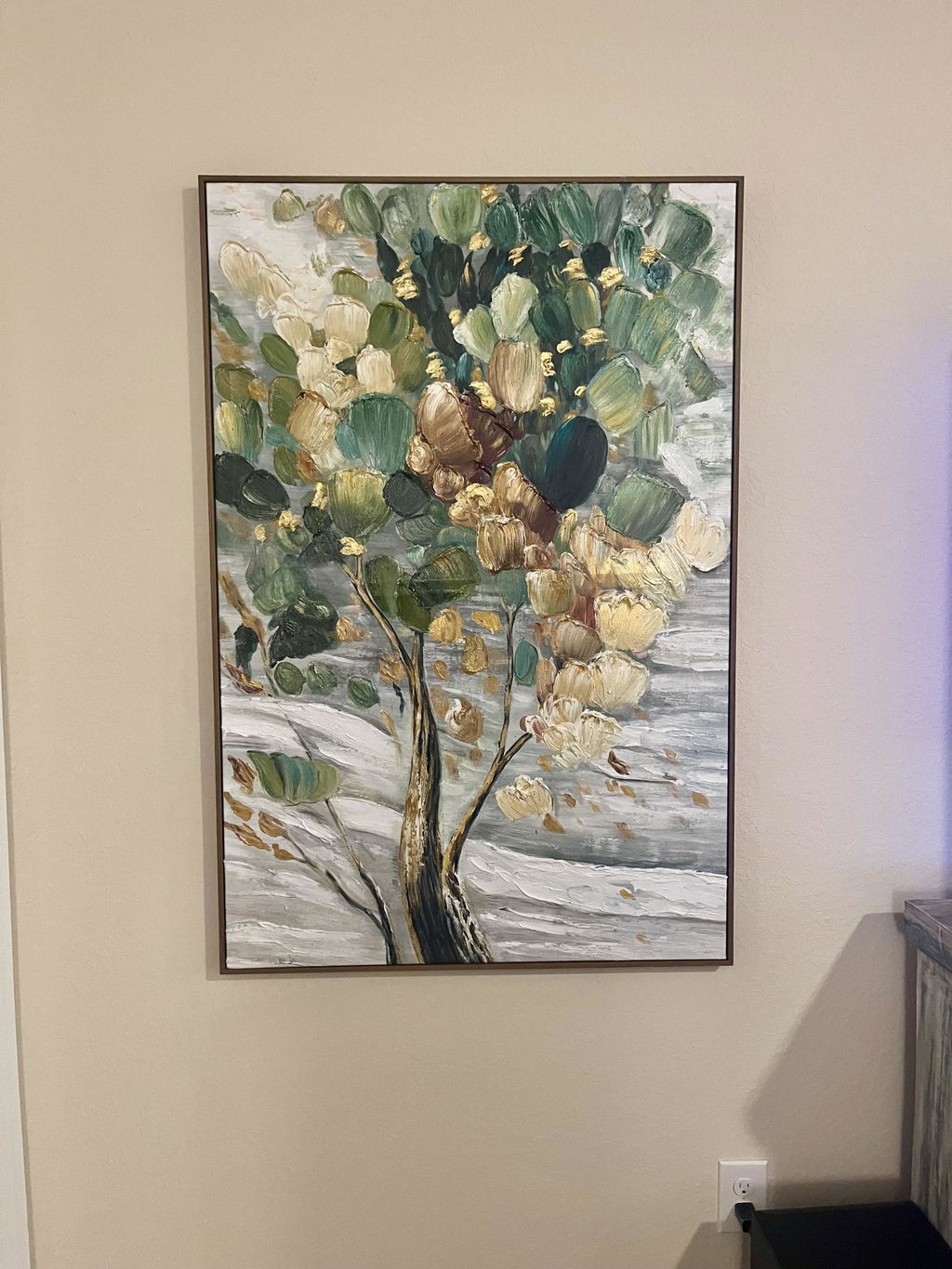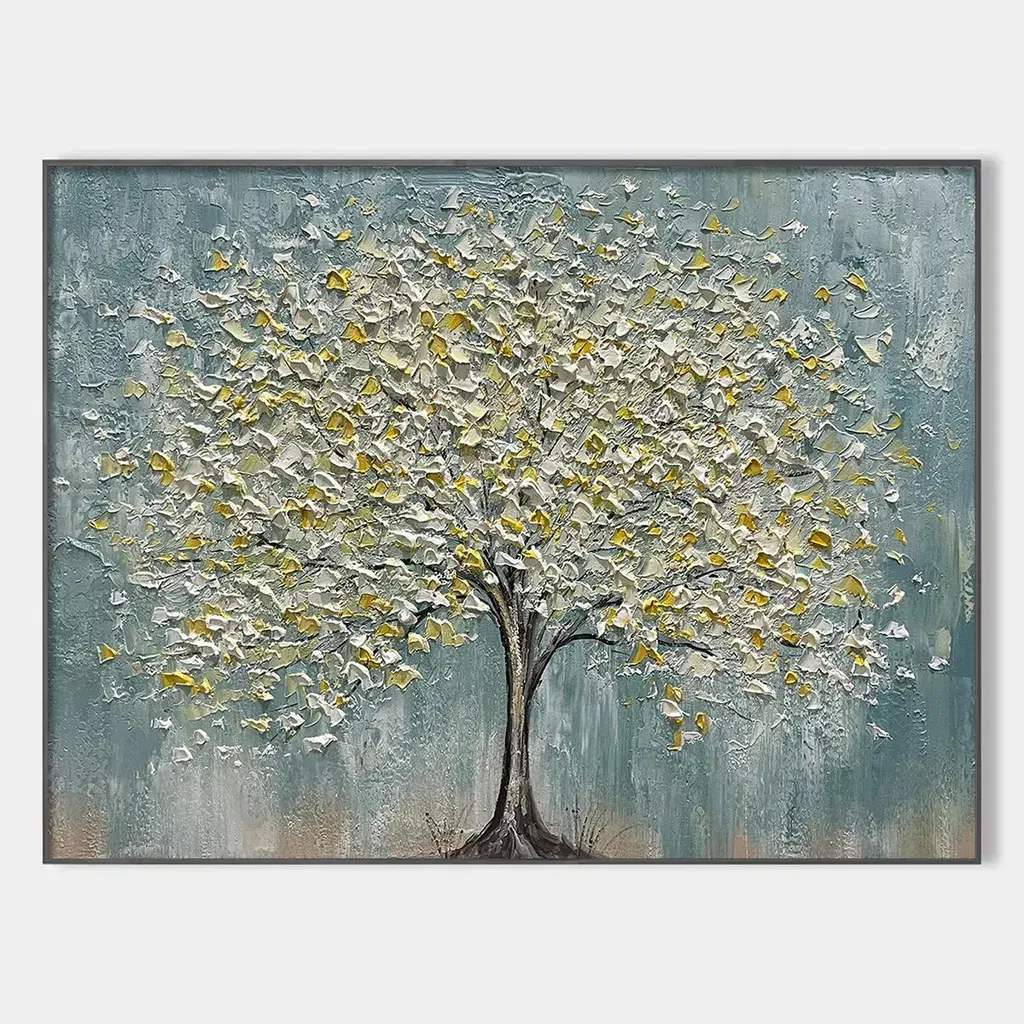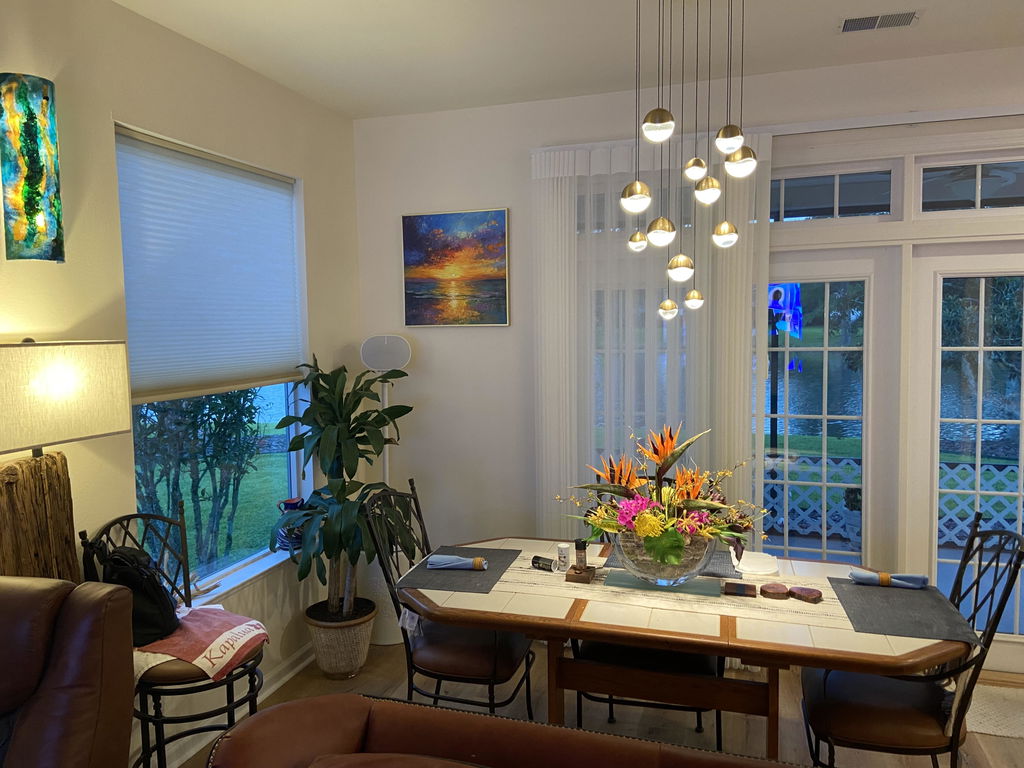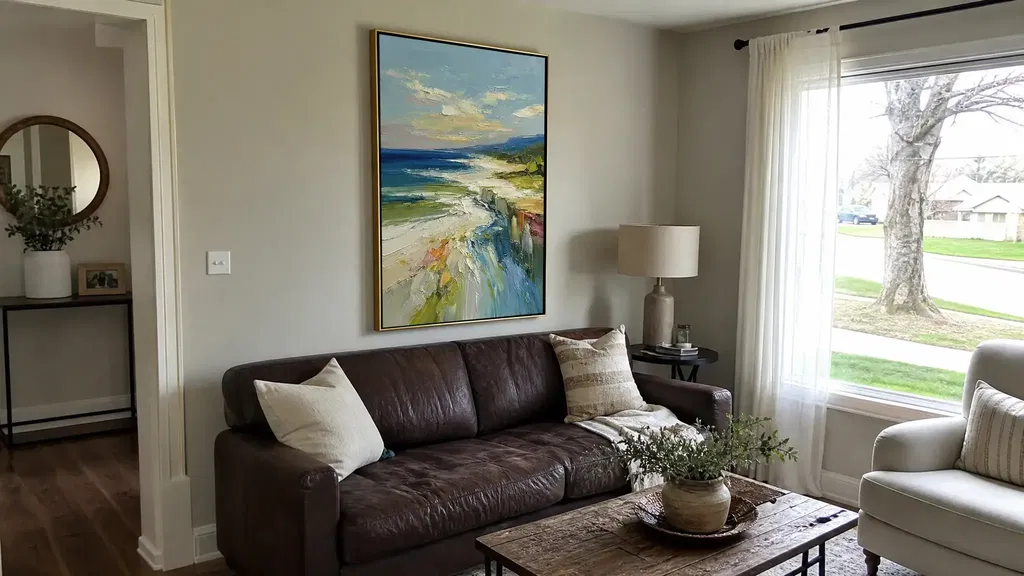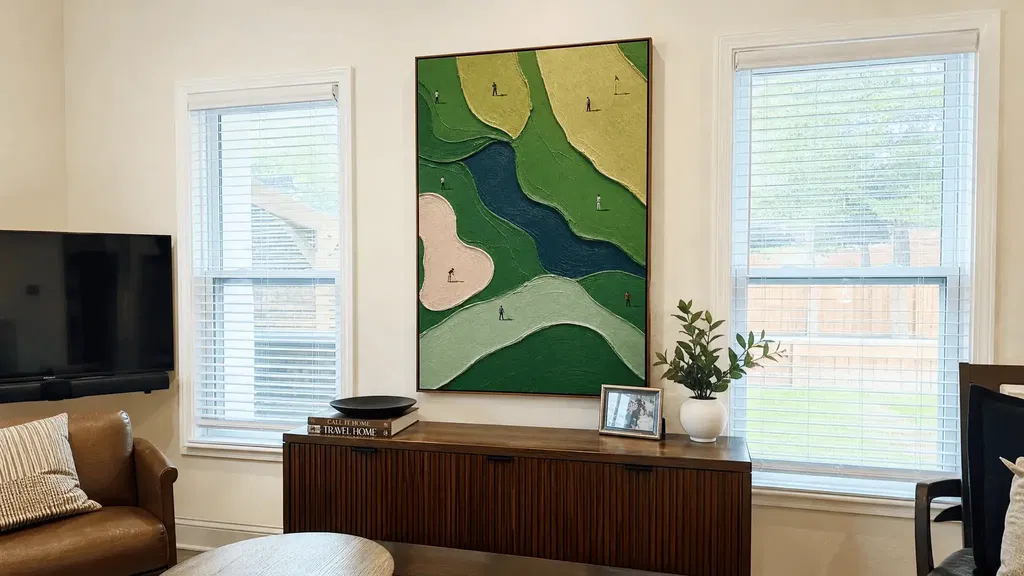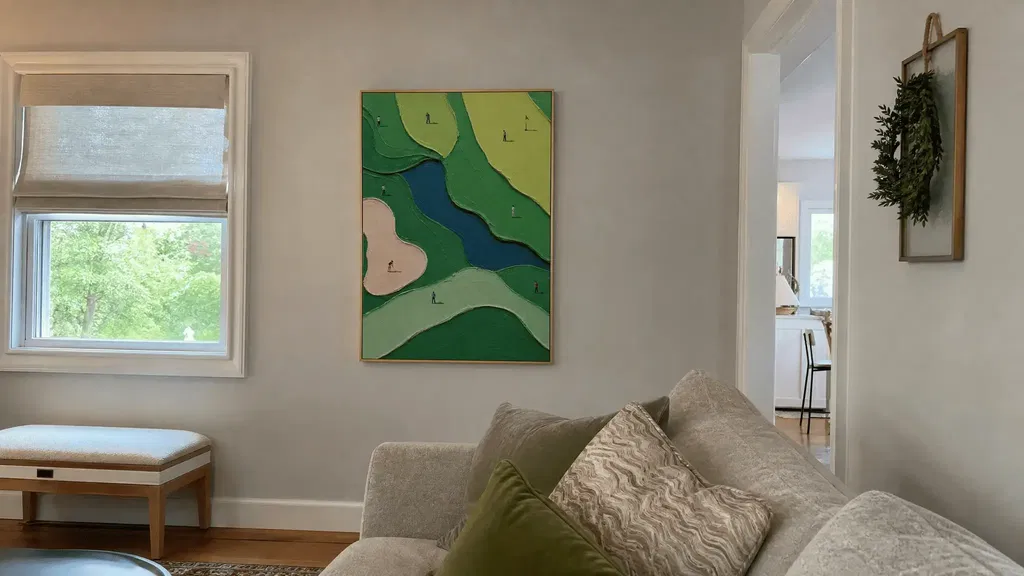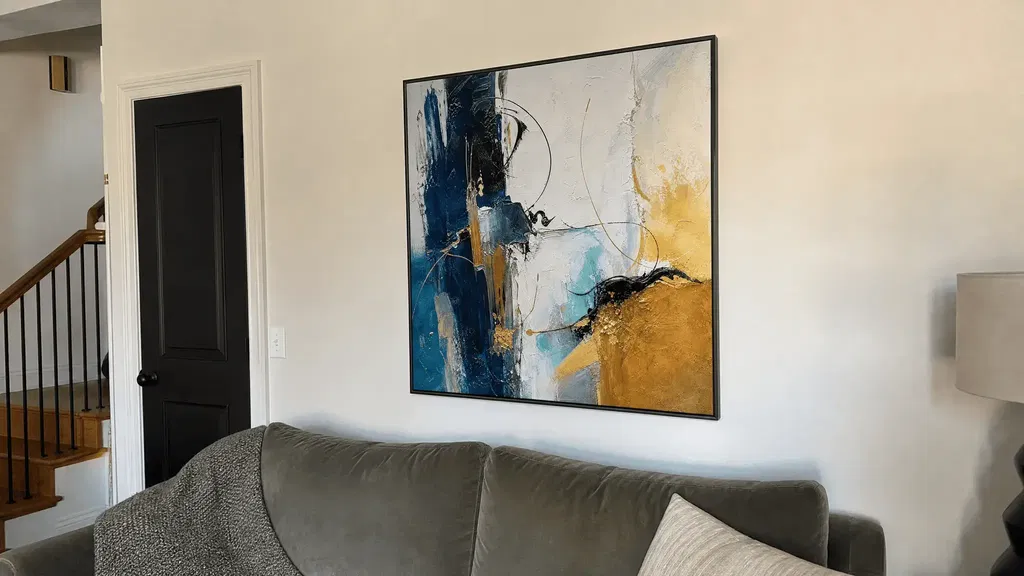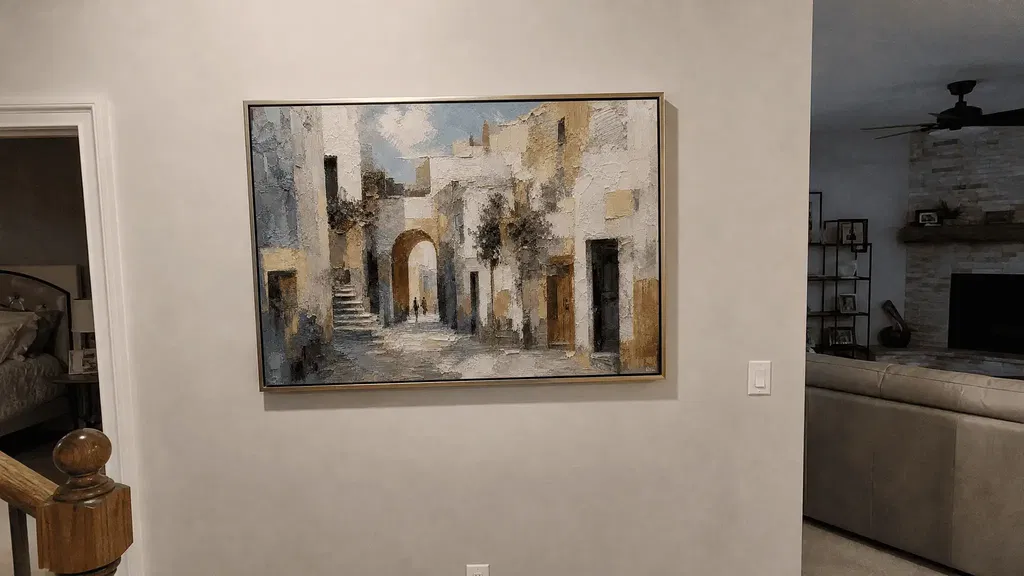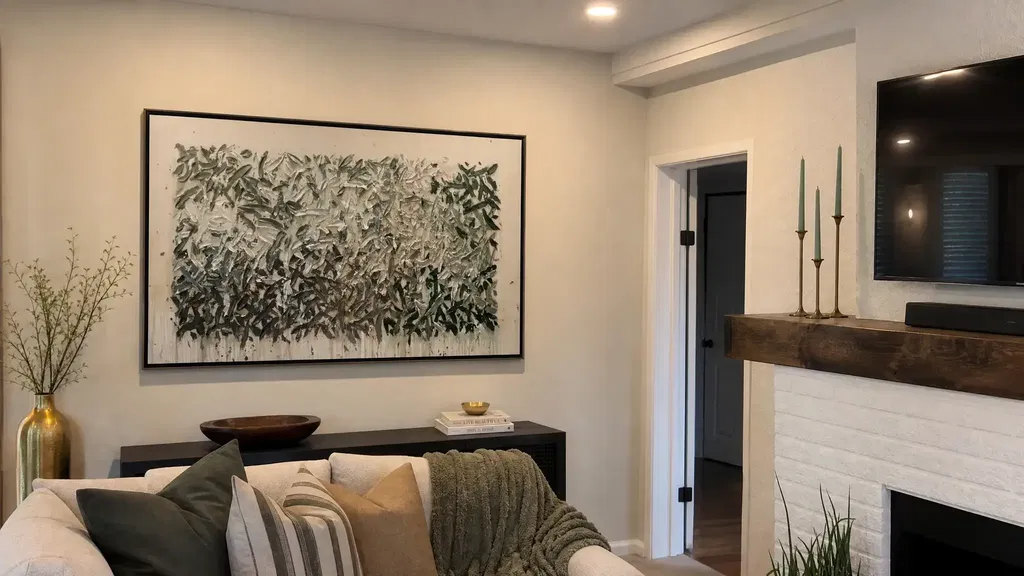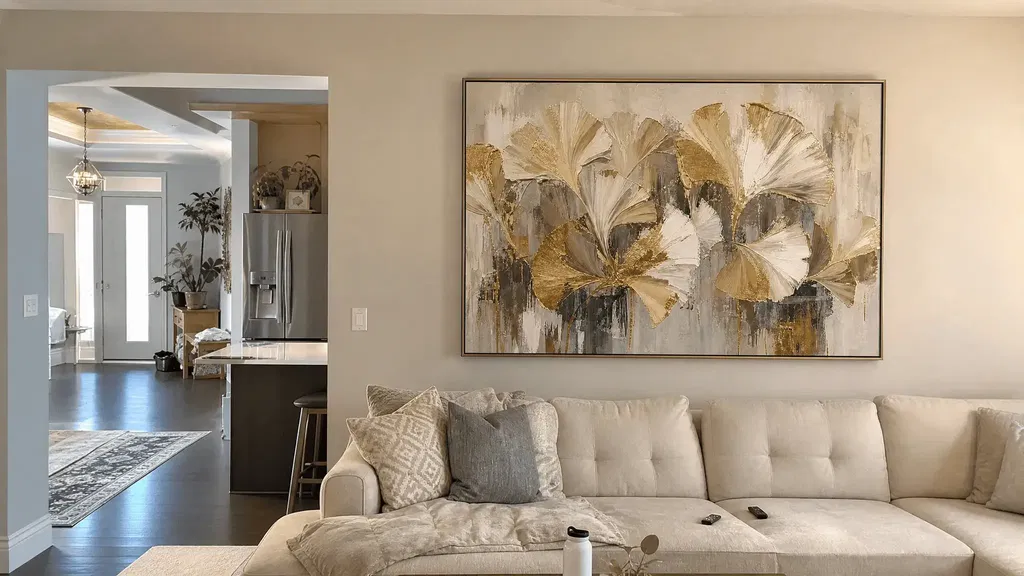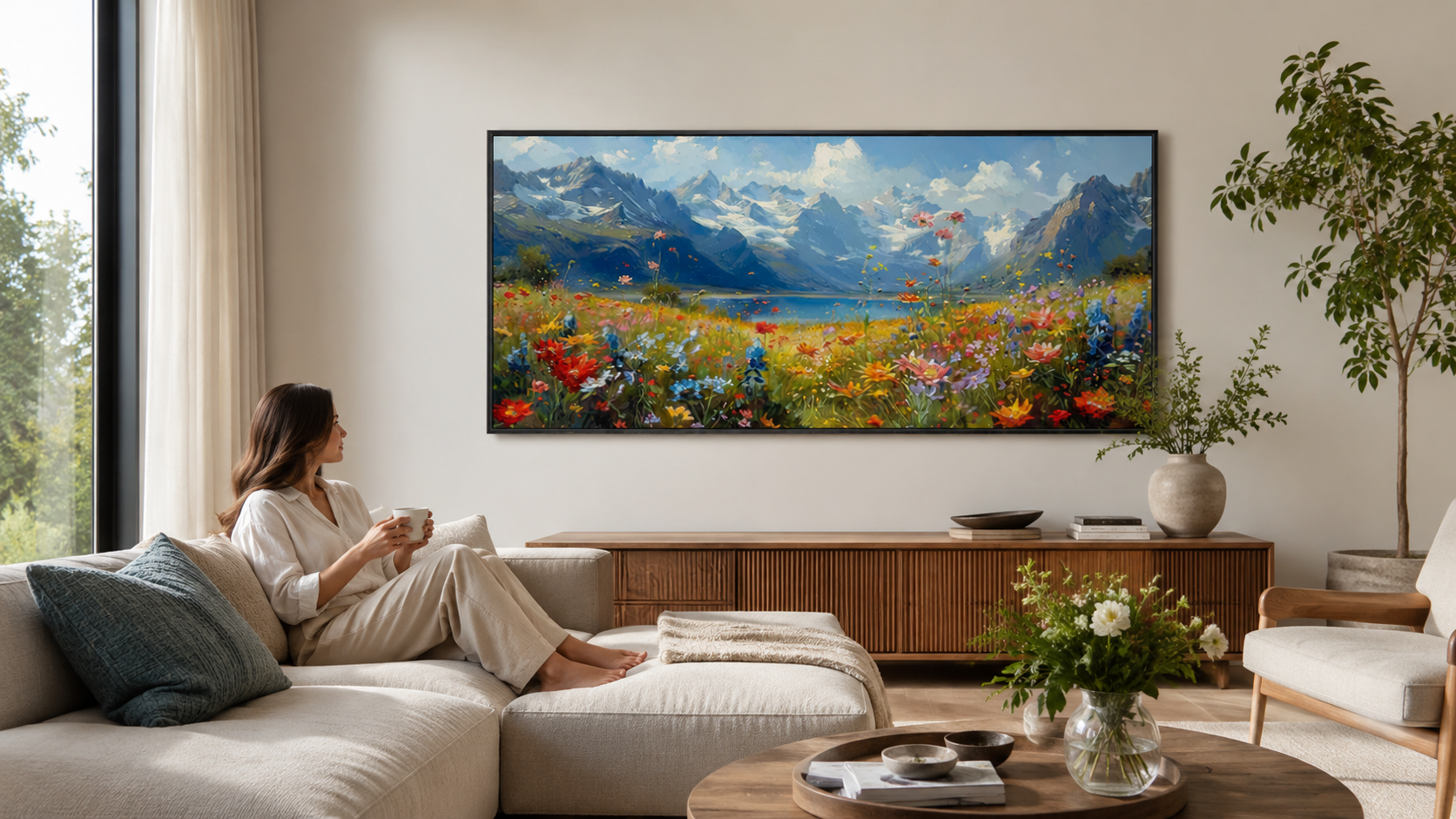
The fundamental choice between a single piece of large wall art and a collection of small paintings often defines the entire atmosphere of a room. While a massive canvas creates an instant focal point and anchors a room with bold confidence, smaller works offer a sense of discovery and intimacy.
For most homeowners, the decision comes down to the dimensions of the available wall, the proximity of the viewer to the piece, and the desired psychological impact. To provide the core answer early: choose a large-scale piece if you want to simplify a room and make it feel more expansive; choose a set of smaller paintings if you want to draw the viewer in for a closer look or if you are decorating narrow, high-traffic areas like hallways.
Comparison: Large Wall Art vs. Small Paintings
Choosing the right scale involves balancing visual weight with the practicalities of the room's layout. Below is a high-level comparison of how these two formats function in an interior environment.
| Feature | Large Wall Art | Small Paintings |
|---|---|---|
| Visual Impact | Bold, dramatic focal point | Intimate, detailed, and layered |
| Perceived Value | Often viewed as a high-value investment | Accessible, allows for collection over time |
| Room Size Impact | Makes small rooms feel larger and grander | Best for narrow nooks or gallery walls |
| Cost | Generally higher per single unit | Lower per unit, but adds up in a set |
| Installation | Requires heavy-duty hardware/multiple people | Easier to hang; often uses standard nails |
| Best Use Case | Above sofas, beds, or in entryways | Hallways, staircases, and reading nooks |
Large blocks of color in large wall art have a profound psychological impact, often providing a sense of calm by reducing visual noise. Conversely, small paintings allow for intricate patterns and a diversity of styles, which is ideal for an abstract gallery wall where the collective narrative of the pieces is more important than any single work.
Making Rooms Feel Larger with Oversized Art
It is a common misconception that small rooms require small art. In fact, professional designers often use oversized pieces to create an optical illusion of grandeur. When you hang one substantial piece of large abstract wall art in a compact room, you simplify the visual field. Instead of the eye jumping between five or six small objects, it rests on one singular point. This reduction in "visual clutter" makes the boundaries of the room feel wider.
Establishing a Focal Point
A large piece serves as the anchor for the rest of your decor. It provides a color palette and a stylistic direction that the furniture can follow. By establishing a clear focal point, you give the room a sense of purpose and hierarchy. This is particularly effective in living rooms where the sofa acts as the secondary focal point; a large canvas placed above it provides a sense of vertical height that balances the horizontal weight of the furniture.
The Psychology of Scale
Scale impacts how we feel in a space. Massive landscapes or canvas wall art with open, airy compositions can mimic the effect of a window, providing a sense of psychological "release." Research suggests that nature-themed art, specifically realistic imagery, can even be associated with stress reduction and positive environmental ratings. Large-scale works dominate the viewer's peripheral vision, effectively immersing them in the scene and creating a more powerful emotional response than a small, isolated frame could achieve.

Using Small Paintings for Intimacy and Gallery Walls
While large art commands attention, small paintings invite conversation. These pieces are intended to be viewed from a distance of three to five feet, making them perfect for areas where people dwell or pass closely by. A collection of small works allows a homeowner to showcase a broader range of interests, from traditional wall paintings to modern prints.
Checklist for a Curated Gallery Wall
- Select a Theme: Whether it is a color family (e.g., blue and green) or a specific medium (e.g., oil paintings), a common thread prevents the wall from looking like a random assortment.
- Balance Frame Styles: You can mix vintage and modern frames, but try to keep the "weight" of the frames balanced across the layout.
- Maintain Consistent Spacing: Aim for 2 to 3 inches between frames. If the gaps are too wide, the pieces look disconnected; if they are too small, they feel cramped.
- Mind the White Space: Ensure there is enough empty wall space around the entire grouping to let the "cluster" breathe.
- Trace and Tape: Trace your frames onto kraft paper and tape them to the wall first. This allows you to visualize the layout without making unnecessary holes.
Small art is also the practical choice for narrow hallways and stairwells. Because these spaces are physically tight, a large piece could feel oppressive or be easily bumped. Smaller frames allow for a rhythmic progression as a person walks through the space.
Applying the Two-Thirds Rule for Balanced Decor
To achieve professional-level balance, interior designers use the "Two-Thirds Rule." This rule dictates that the width of your art (or your grouping of art) should be approximately 60% to 75% of the width of the furniture it sits above.
Measuring Furniture for Art Placement
- Measure the Base: Measure the total width of your sofa, console table, or headboard.
- Calculate the Range: Multiply that width by 0.60 and 0.75 to find your ideal art width. For example, a 90-inch sofa works best with a piece of art (or a set) between 54 and 67 inches wide.
- Check the Height: Ensure the bottom of the frame hangs 6 to 10 inches above the top of the furniture. Hanging art too high is the most common decorating mistake.
If you have a very long wall and a relatively small sofa, using the two-thirds rule helps prevent the furniture from looking "lost" on the vast surface. In this scenario, a wide horizontal piece or a series of three vertical wall paintings can provide the necessary visual weight.
Selecting Art for Specific Furniture and Layouts
Different zones in the home require different scaling strategies. What works in a sprawling living room may not function in a bedroom or a transitional space.
Above the Bed
In the bedroom, the goal is often serenity. A single piece of large wall art is usually preferred over a busy gallery wall to maintain a calm environment. For a king-size bed, a horizontal piece that follows the two-thirds rule creates a sense of stability. Avoid pieces that are too heavy or have aggressive, sharp-angled frames for safety and aesthetic reasons.
Narrow Hallways and Nooks
Vertical orientation is your best friend in narrow spaces. A tall, thin painting can draw the eye upward, making a low-ceilinged hallway feel more spacious. This is also where small, intricate works shine, as viewers are physically closer to the wall and can appreciate the fine details of the brushwork.

Mounting and Hardware for Different Art Sizes
Logistics are where the choice between sizes becomes a technical matter. Large pieces, particularly framed canvases or panels, can be exceptionally heavy. Falling damage is a significant risk for paintings, often resulting from aged hardware or wall-attachment failure.
Installation Safety
- Large Art: Oversized pieces should ideally be anchored into wall studs. If a stud is not available, use heavy-duty toggle bolts. Large canvases also require two or more people to carry and hang safely to prevent structural damage or injury.
- Small Art: Most small paintings can be hung with simple picture nails or even high-quality adhesive strips if the frame is lightweight.
- Protection: Regardless of size, adding a protective backing board to framed works can reduce the risk of damage from vibration and dust.
Large panels and oversized canvases also create unique structural and handling challenges that smaller works do not. For instance, the tension on a massive canvas can change with the seasons, requiring more frequent checks.
Choosing the Best Format: Large Wall Art vs. Small Paintings
Ultimately, the choice between large wall art and small paintings depends on your room's dimensions and the emotional tone you wish to set. Large art is the superior choice for creating a grand, simplified focal point that can actually make a small room feel larger. Small art is the perfect solution for adding layers of detail, filling narrow transitions, and allowing for a collection that grows over time. By following the 2/3 rule and ensuring you use the correct mounting hardware, you can transform any blank wall into a professionally curated space that balances scale, safety, and style.
FAQs
Can I mix large art and small paintings in the same room?
Yes. A common designer technique is to use one large statement piece as a focal point on a main wall and a smaller gallery grouping on an adjacent wall to provide balance.
Is one large painting more expensive than a gallery wall?
Not necessarily. While a single large canvas has a higher upfront cost, purchasing 6 to 10 high-quality small paintings along with professional framing can often exceed the price of one oversized piece.
How high should I hang a large statement piece?
Follow the 'eye level' rule: the center of the image should be about 57 to 60 inches from the floor. If hanging over furniture, leave a 6 to 10-inch gap between the bottom of the frame and the top of the furniture.