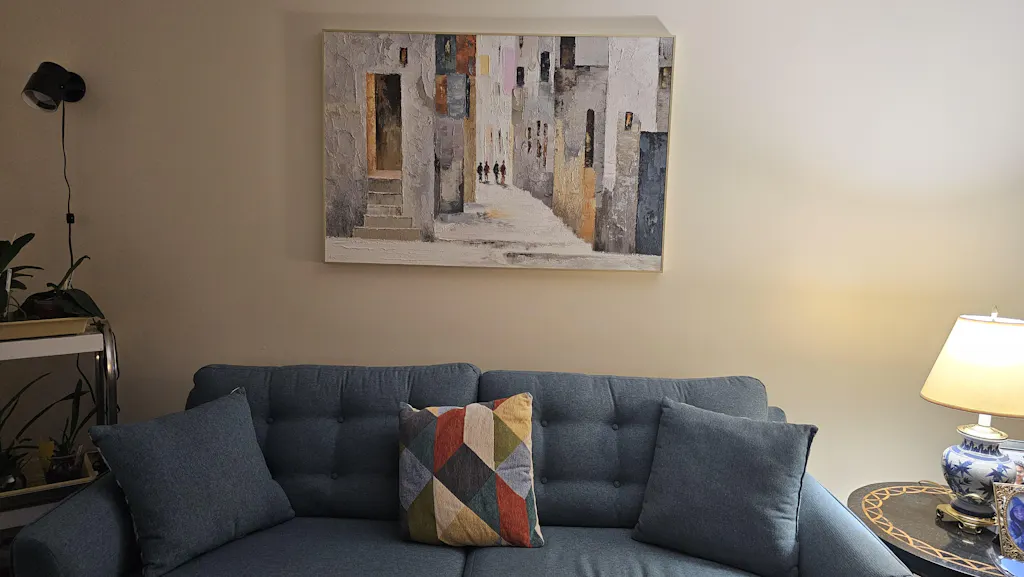
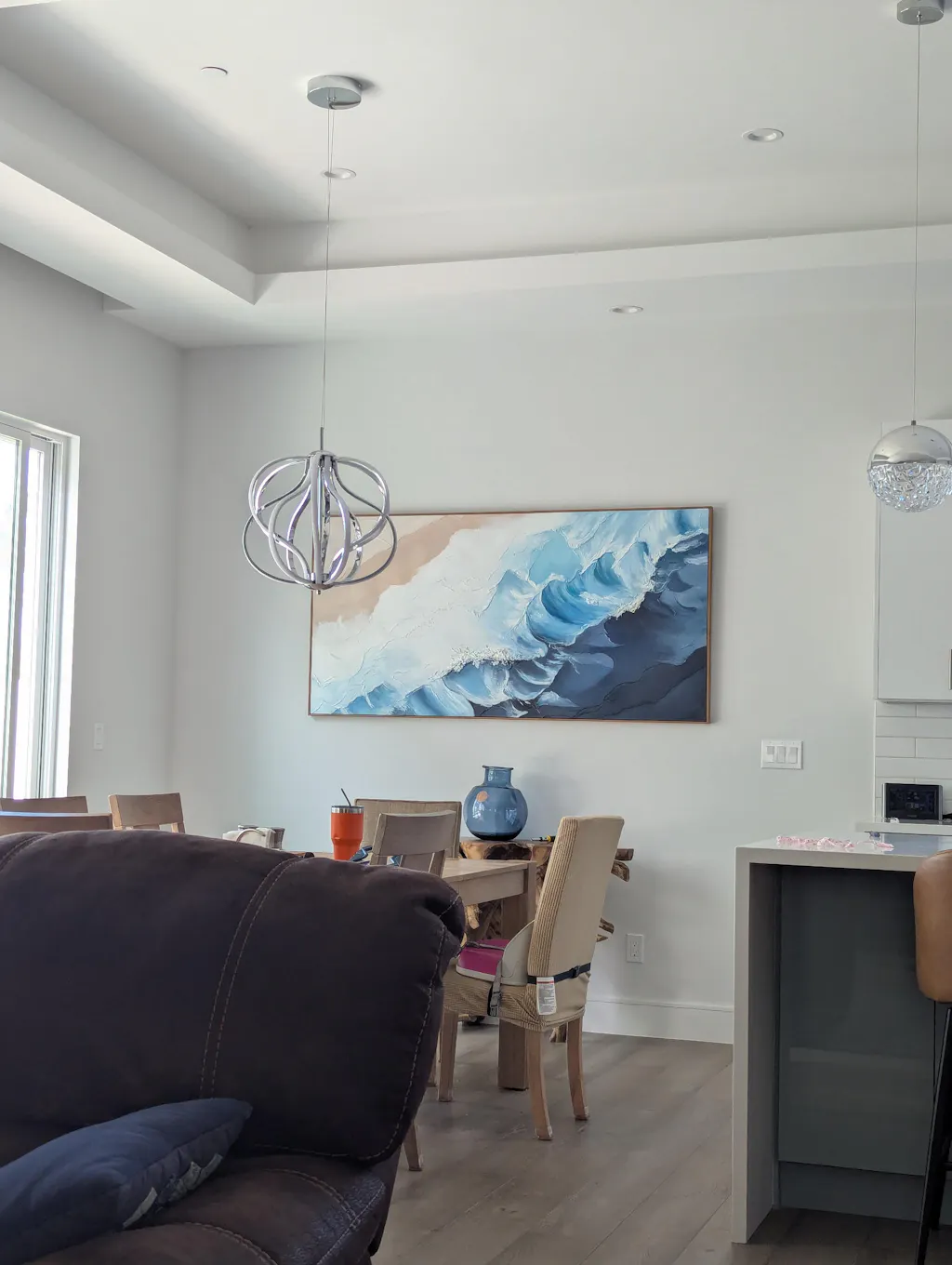
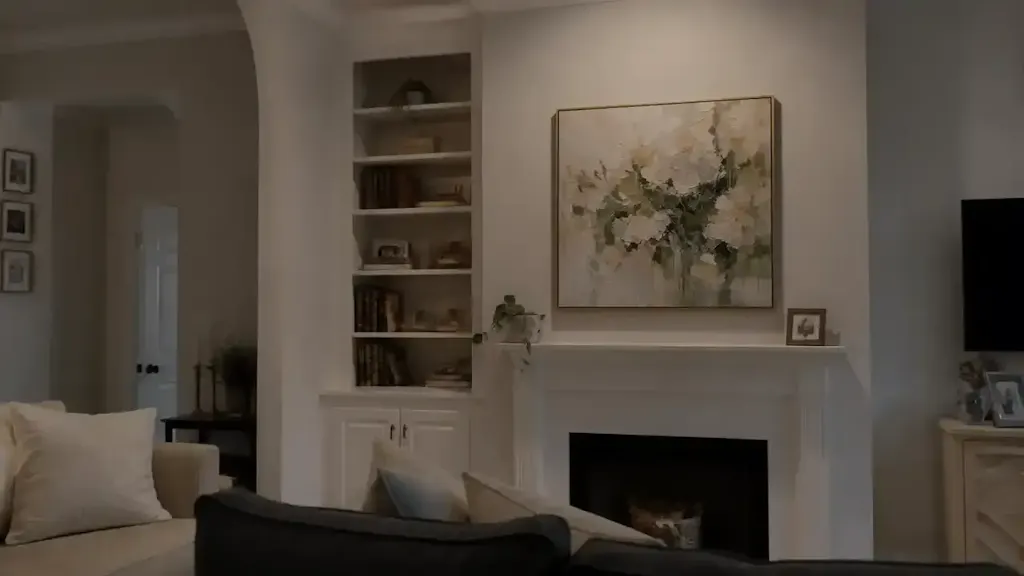
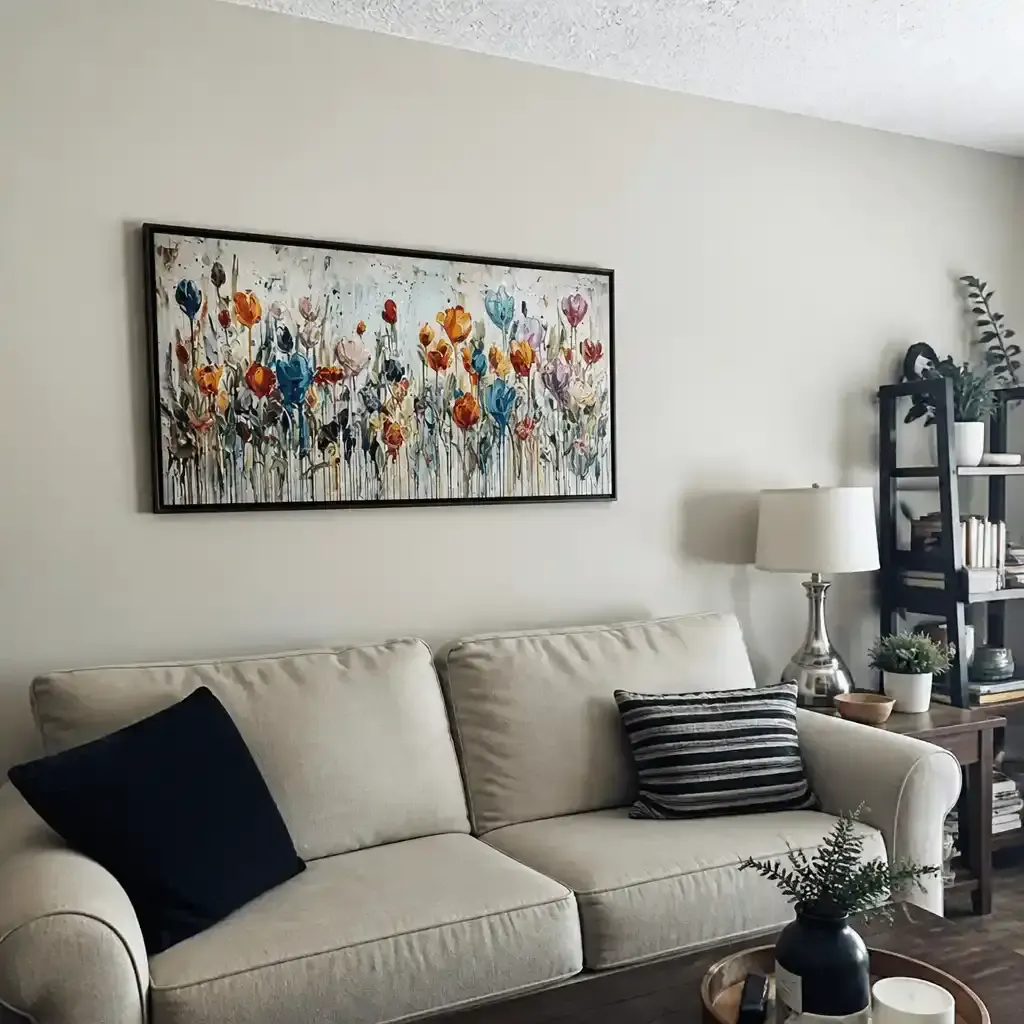
Structural Blocking: The Architectural Blueprint of Hand-Painted Art
In an era where high-end auction sales for "vanity" art assets have plummeted—with sales over $10 million dropping 44% year-over-year in 2024—the market is witnessing a profound shift. According to Marketplace, buyers are retreating from speculative assets and returning to works with real application value. For the aesthetic-driven home improver or the commercial developer, this means moving away from mass-produced prints and toward original, large-scale hand-painted art.
However, the primary barrier to commissioning large-scale work is often "proportion anxiety." How can a client be sure that a piece spanning three meters will maintain its structural integrity and visual balance? The answer lies in a technical phase known as structural blocking.
Structural blocking is not merely sketching an outline; it is the establishment of a painting’s "skeleton." It is the architectural blueprint that defines shapes, light sources, and spatial relationships before a single drop of heavy pigment is applied. For MontCarta, this stage is the cornerstone of our "hand-painted with precision" positioning, serving as the ultimate risk-reduction mechanism for our clients.

The Technical Rigor of the 1:10 Ratio
One of the most common mistakes we see in amateur large-scale work is starting with detailed rendering before the composition is "locked." This almost inevitably leads to proportion drift—where a figure’s arm or a building’s perspective becomes distorted as the artist moves across the vast canvas.
To combat this, professional artists utilize a ratio-based approach. We establish key relationships—often governed by the golden ratio or the rule of thirds—at a 1:10 scale before scaling up to the final canvas. This allows the artist to resolve complex spatial puzzles on a manageable scale where the eye can perceive the entire composition at once.
Logic Summary: Our analysis of the 1:10 ratio for large-scale blocking assumes a standard canvas height of 2 meters. This heuristic allows for visual translation without the parallax errors common in direct-to-canvas detailed sketching. By resolving the "energy" of the piece at 20cm, we ensure the 200cm version remains structurally sound.
The "Step-Back" Protocol
In our studios, the "step-back" protocol is mandatory. Because the human eye loses perspective when standing 50cm from a large surface, artists must regularly retreat 3-4 meters to check overall balance. This practice is essential when working on oversized pieces where minor errors in the blocking phase become magnified by the time the work is finished.
The "Nuclear Weapon" Against AI: Why Hand-Painted Matters
As AI-generated imagery floods the market, the value of the human touch has reached a premium. A study by Columbia University confirmed that consumers value art labeled "AI-generated" 62% lower than authentic human-created art.
Psychologically, this is explained by the concept of "essential identity." Research from the University of Chicago suggests that digital replicas and NFTs lack the artist’s "soul" or essential identity. A hand-painted canvas retains an irreplicable physical history. Every brushstroke in the blocking phase is a record of human decision-making, a biochemical crystallization of apex human visual attention.
Microtopography and the Physics of Saturation
The irreplaceability of hand-painted art is also rooted in physics. According to the Getty Conservation Institute, pigment reflection is dominated by absorption and scattering coefficients (the Kubelka-Munk equation).
Unlike flat digital prints, hand-painted pigments possess microtopography—millimeter-scale textures that interact with room lighting. Optical microprofilometry proves that this physical relief is crucial to aesthetics; it creates a depth of color and "geometric metamerism" (where the color changes slightly based on your viewing angle) that no printer can replicate.

Health, Safety, and the Indoor Environment (YMYL)
For clients installing large-scale art in homes or healthcare facilities, the "smell of paint" is a significant concern. However, not all pigments are created equal. We prioritize low-VOC (Volatile Organic Compound) materials, a strict prerequisite for large healthcare facilities seeking LEED or WELL certification.
The VOC Reality Check
A 28-day chamber experiment by Aalto University proved that coatings on moisture-controlled substrates emit significantly lower toxic VOCs than dry wood, with emissions plummeting during the curing process. By using water-based acrylics and non-toxic binders like walnut oil, we ensure that the "Indoor Air Quality (IAQ) Promise" is met.
| Hazard Category | Material Concern | Risk Level | Mitigation Strategy |
|---|---|---|---|
| Heavy Metals | Cadmium/Lead Pigments | High (Group 1 Carcinogen) | Substitution with Titanium White & Organic Synthetics |
| Volatile Compounds | Turpentine/Mineral Spirits | Moderate (Respiratory) | Use of water-based mediums or odorless solvents |
| Microplastics | Acrylic Polymer Shedding | Emerging (Ecological) | Proper studio filtration and waste management |
| Dust Inhalation | Dry Powder Pigments | High (Lung Damage) | Wet-medium blocking only; NO dry sanding |
Methodology Note: These safety benchmarks are derived from EPA and WHO guidelines. We estimate that using low-VOC alternatives reduces the immediate post-installation VOC concentration by ~70% compared to traditional alkyd-based mural paints.
Economic Impact: Art as a Value Driver
For commercial developers and B2B clients, a large-scale mural is more than decor—it is a financial lever. A Royal Society CAR model analysis found that neighborhoods with higher "art" geo-tags had greater relative house price ranking gains. Furthermore, UCincinnati regression analysis of over 300 murals shows a direct correlation with significant increases in pedestrian foot traffic.
The ROI of Public Art
- Property Valuation: In Chicago’s Millennium Park, public art projects drove $1.4 billion in real estate-related growth.
- Crime Reduction: According to the "Busy Streets Theory" from the University of Michigan, transforming unkempt spaces with murals can reduce neighborhood assaults and violent crimes by up to 40%.
- Fiscal Leverage: Government tax investments in the arts yield a staggering 7:1 ROI, according to Americans for the Arts.
Biophilic Design and Healing Environments
The blocking phase often establishes the "biophilic" elements of a piece—natural forms and landscapes that have a measurable impact on human health. A University of Pennsylvania review noted that 73% of patients in clinical environments reported significant mood improvements when exposed to environmental artworks.
In high-density corporate environments, such as those in Tokyo, nature-based biophilic design has been shown to effectively intervene in employee cognitive fatigue and burnout. By integrating these elements during the structural blocking phase, we transform a wall into a "public health infrastructure."
Addressing the "Art Block" and Premature Commitment
While structural blocking is a powerful tool, it is not without pitfalls. A common counter-consensus in the industry is that rigid mathematical approaches (like the "7.5 equal segments" method) can stifle artistic intuition. Over-reliance on digital projections can also strip a piece of its "energy."
At MontCarta, we use digital tools for precision but insist that the final manual blocking phase remains irreplaceable. This ensures the "flow" of the painting remains organic and responsive to the specific light conditions of the client's space.
Ethics and the Artisan Economy
We believe that the technical quality of a painting is inextricably linked to the well-being of the artist. A Wharton School survey found that 87% of consumers strongly agree that artists should receive fair compensation.
Furthermore, data from the National Museum of Women in the Arts reveals a persistent gender pay gap in the art world. We explicitly support female hand-painters with equal pay, ensuring that the "absolute authenticity" of our work is backed by ethical labor practices. This narrative resonates deeply with socially conscious millennial and Gen Z buyers who value transparency in the creative supply chain.

Longevity: From Decor to Cultural Heritage
A frequent question from clients is: "Will this last?" The longevity of a painting is determined during the foundational layering. While oil paintings offer unmatched blending mastery, they are susceptible to heat. Conversely, acrylics are more flexible but can be sensitive to moisture.
One critical technical insight we share with clients is the risk of Support Induced Discoloration (SID). As noted by Golden Artist Colors, water-soluble impurities in cotton or linen canvases can be drawn into transparent acrylic layers, causing a yellow tint. We prevent this by using high-quality primers and barrier coats during the initial blocking and underpainting stages.
The Final Word on Scale
Whether you are an interior designer planning for a hospitality project or a homeowner looking to balance textured art with minimalist decor, understanding the structural blocking phase removes the fear of the "big empty canvas."
By treating the first layers of a painting with the same technical rigor as a building's foundation, we ensure that every custom piece is not just a decoration, but a durable, high-value asset that enhances both the environment and the soul.
Disclaimer: This article is for informational purposes only and does not constitute professional medical, legal, or financial advice. The health-related data regarding VOCs and heavy metals is based on current environmental standards; however, individuals with specific sensitivities or pre-existing conditions should consult with an environmental health professional before installing large-scale artworks in confined spaces.
References
- The Art Basel and UBS Art Market Report 2024
- WHO Scoping Review on Arts and Health
- EPA: Indoor Air Quality and Low-VOC Paints
- Columbia Business School: Human-Made vs. AI Art Study
- Royal Society: Quantifying the link between art and property prices
- Aalto University: VOC Emissions from Painted Wood
- Golden Artist Colors: Support Induced Discoloration (SID)
- The Tate: Conservation Concerns for Acrylic Emulsion Paints