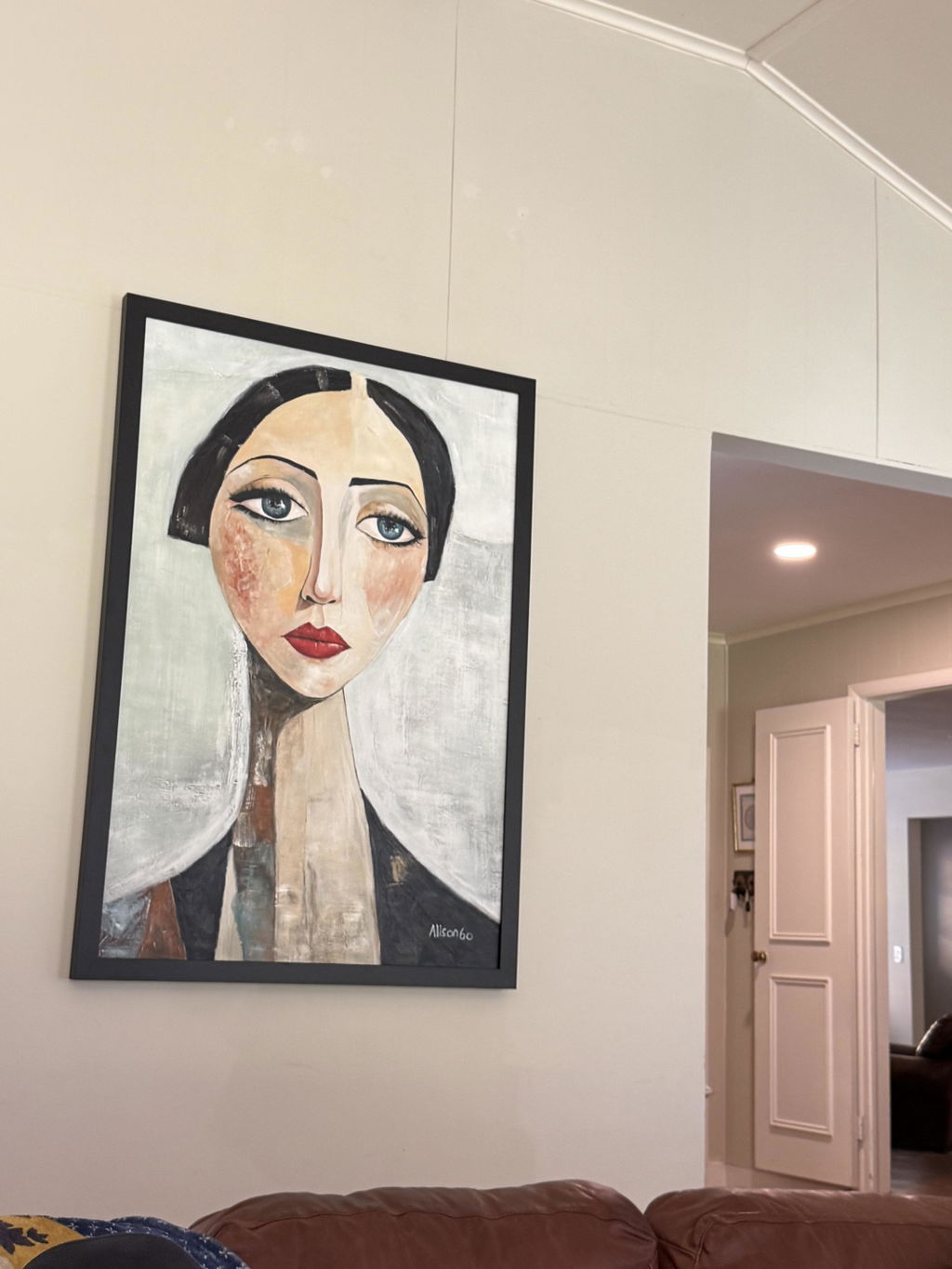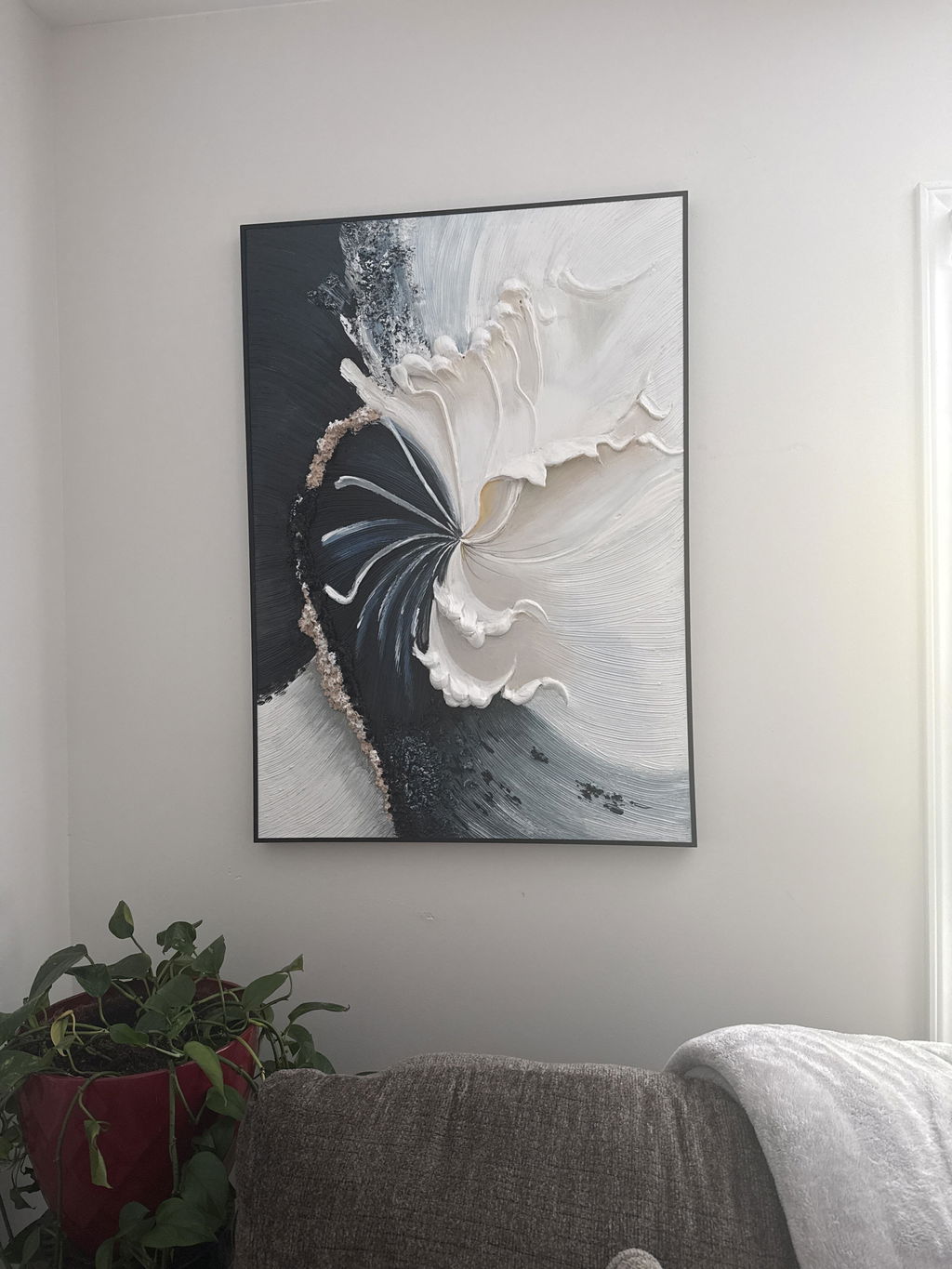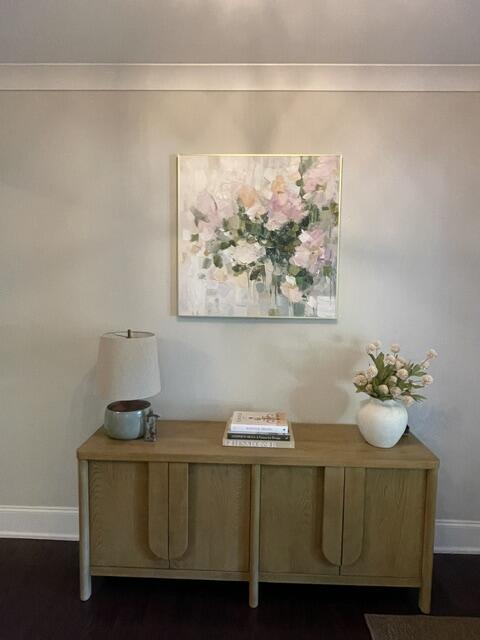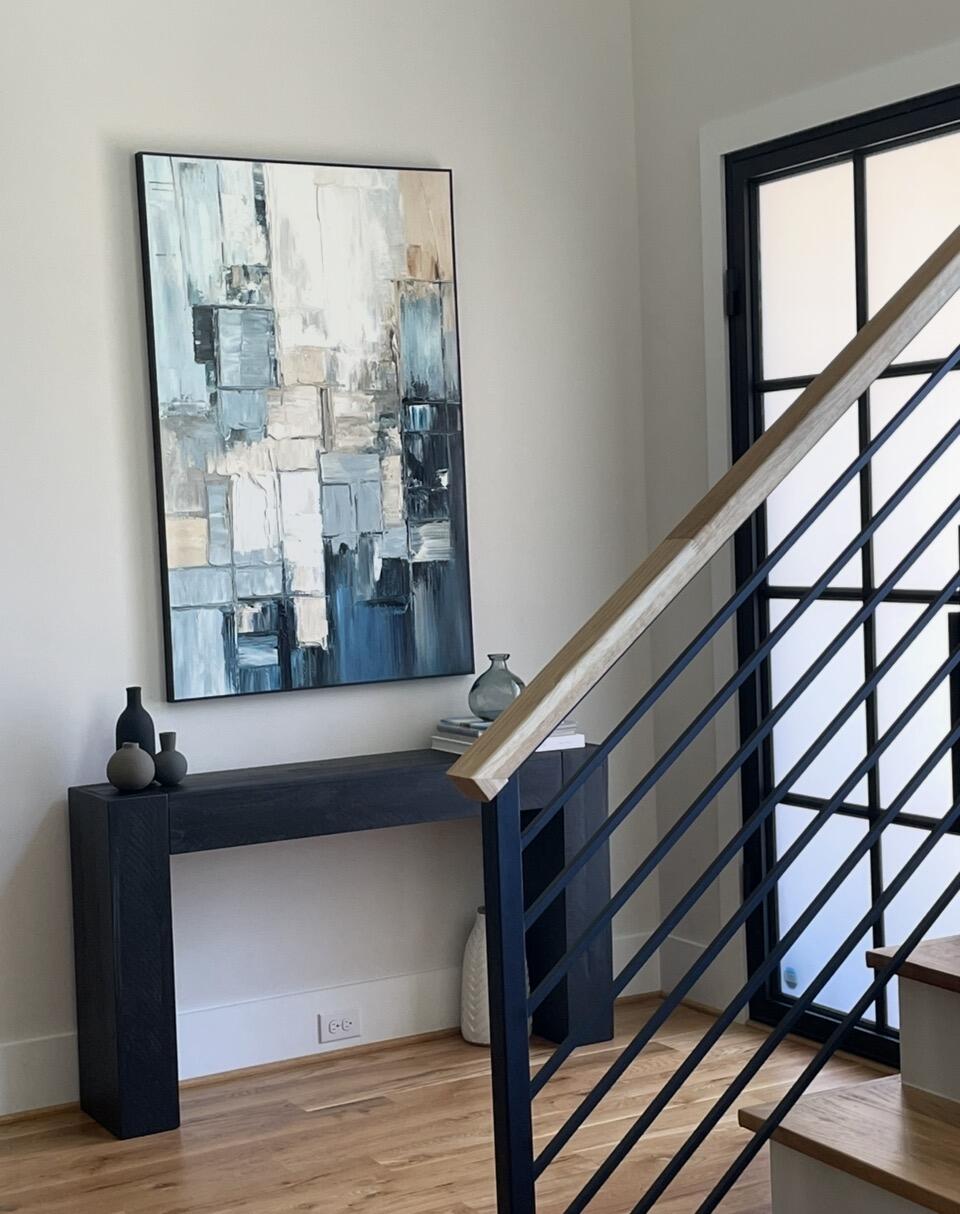
The Shift from Vanity Assets to Spatial Value
In the high-stakes world of commercial interior design, the "foyer" is no longer just a transition zone; it is a brand’s physical manifesto. For decades, the luxury hospitality sector was obsessed with the acquisition of high-priced auction pieces as a display of financial might. However, data from Marketplace (2025) indicates a significant market correction: sales of high-end auction art plummeted 44% year-over-year in 2024. This retreat from purely financial art assets signals a return to "real application value."
For hospitality procurement teams and facility managers, this shift means moving away from the "white glove" anxiety of museum-grade canvas and toward durable, high-impact mediums like large-scale acrylic art. Acrylic offers a unique combination of optical clarity, chemical resilience, and contemporary aesthetics that align perfectly with the needs of grand public spaces. Yet, scaling art for a 30-foot-high foyer involves far more than simply "ordering a bigger size." It requires an understanding of structural physics, color science, and the psychological impact of human-made textures.
The Psychological Premium of the Human Hand
As generative AI floods the digital landscape, the commercial value of authentic human craftsmanship has paradoxically skyrocketed. A study by Columbia University confirms that consumers value art labeled as "AI-generated" 62% lower than authentic human-created work. In a hospitality setting, where "authenticity" is the primary currency, installing mass-produced digital prints can actually devalue the brand.
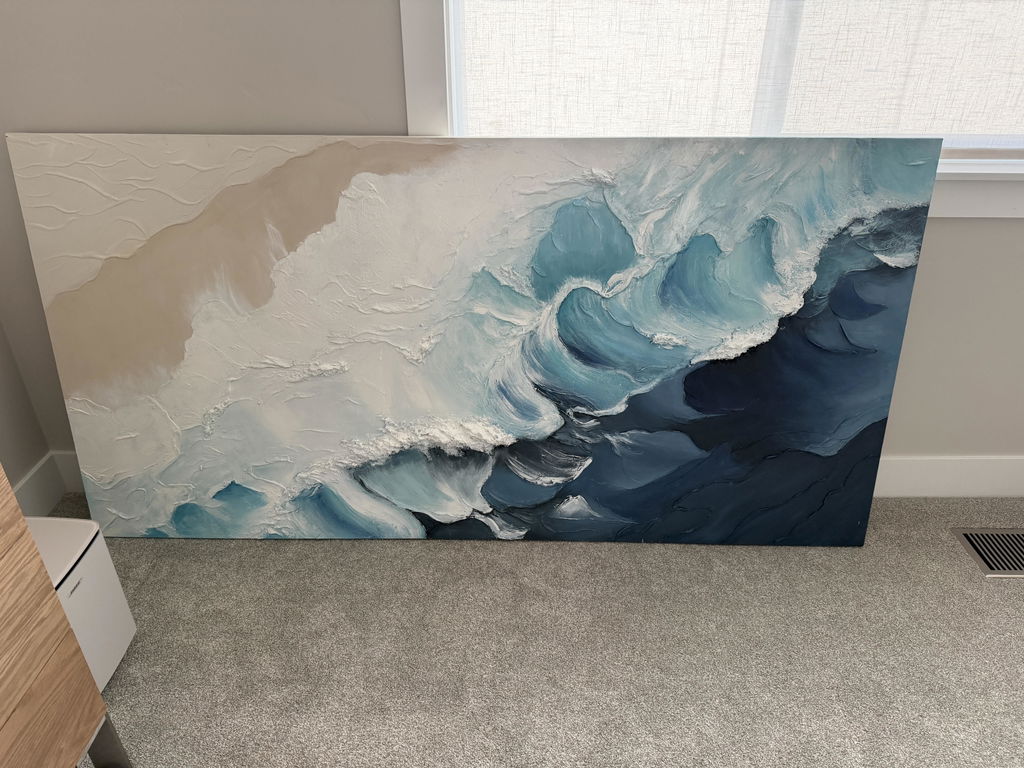
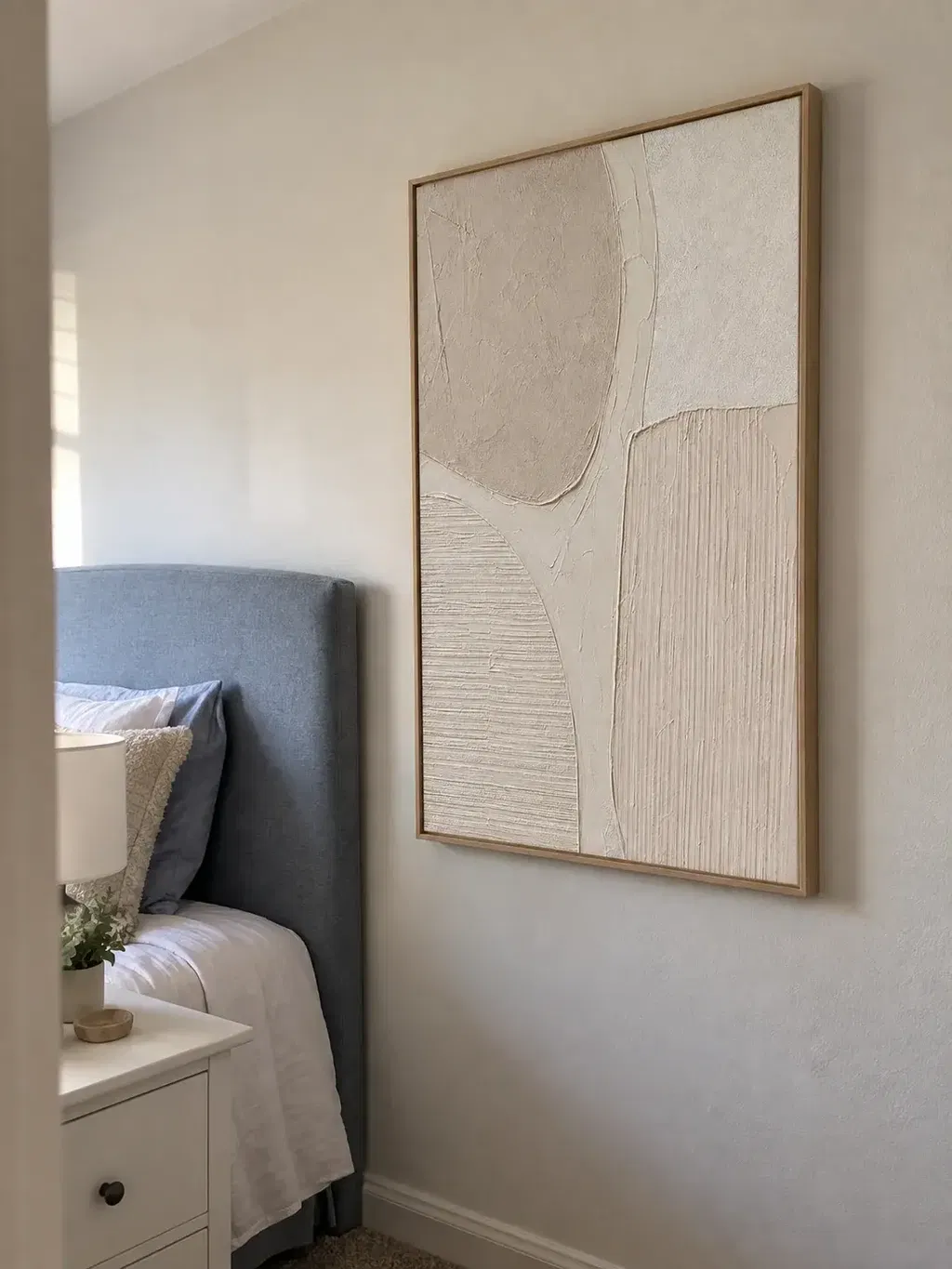
Research from the University of Chicago suggests that digital replicas lack what is termed "essential identity"—the perceived soul or trace of the artist that remains embedded in physical materials. Hand-painted acrylics on high-grade substrates retain this identity through micro-topography. According to optical microprofilometry research, the millimeter-scale texture of paint is crucial to its aesthetic reception. This "micro-physical texture" is what makes a grand foyer feel curated rather than merely decorated.

Technical Specifications: Beyond the Standard Sheet
The most common error we observe in commercial installations is a failure to account for the physical limitations of acrylic manufacturing. While many designers assume they can fill an entire 20-foot wall with a single sheet, the reality is that high-quality acrylic sheets typically max out at 2x3 meters (approximately 6.5 x 9.8 feet).
The 2x3 Meter Barrier and Modularity
When a wall exceeds 4 meters in width, the installation must transition from a single focal point to a modular triptych or multi-panel system. Attempting to force a single sheet beyond its manufacturing limits often leads to "seaming" issues that can diminish the artistic impact. Experienced installers use sophisticated joinery or intentional spacing to turn these physical constraints into a design feature.
Thickness and Structural Integrity
For large-format pieces, thickness is not an aesthetic choice—it is a safety requirement.
- Standard Rule: For any piece exceeding 6 feet in any dimension, a minimum of 3/8-inch thickness is required to prevent warping and flexing.
- Freestanding/High-Traffic: If the piece is freestanding or located in a high-vibration area (near elevators or heavy foot traffic), we recommend increasing this to 1/2-inch.
Logic Summary: Our thickness recommendations are based on common patterns from commercial warranty and return handling (not a controlled lab study). These thresholds are designed to mitigate the risk of "oil-canning" (visible bowing) that occurs when large, thin sheets are subjected to temperature fluctuations in grand foyers.
| Dimension (Longest Side) | Recommended Thickness | Mounting Requirement | Rationale |
|---|---|---|---|
| < 48 inches | 1/4 inch | 2-point fastener | Standard weight capacity |
| 48 - 72 inches | 3/8 inch | 4-point fastener | Prevents central flexing |
| > 72 inches | 1/2 inch | Cleat or 6-point | Structural safety & vibration dampening |
The "Sight Line Rule" and Spatial Harmony
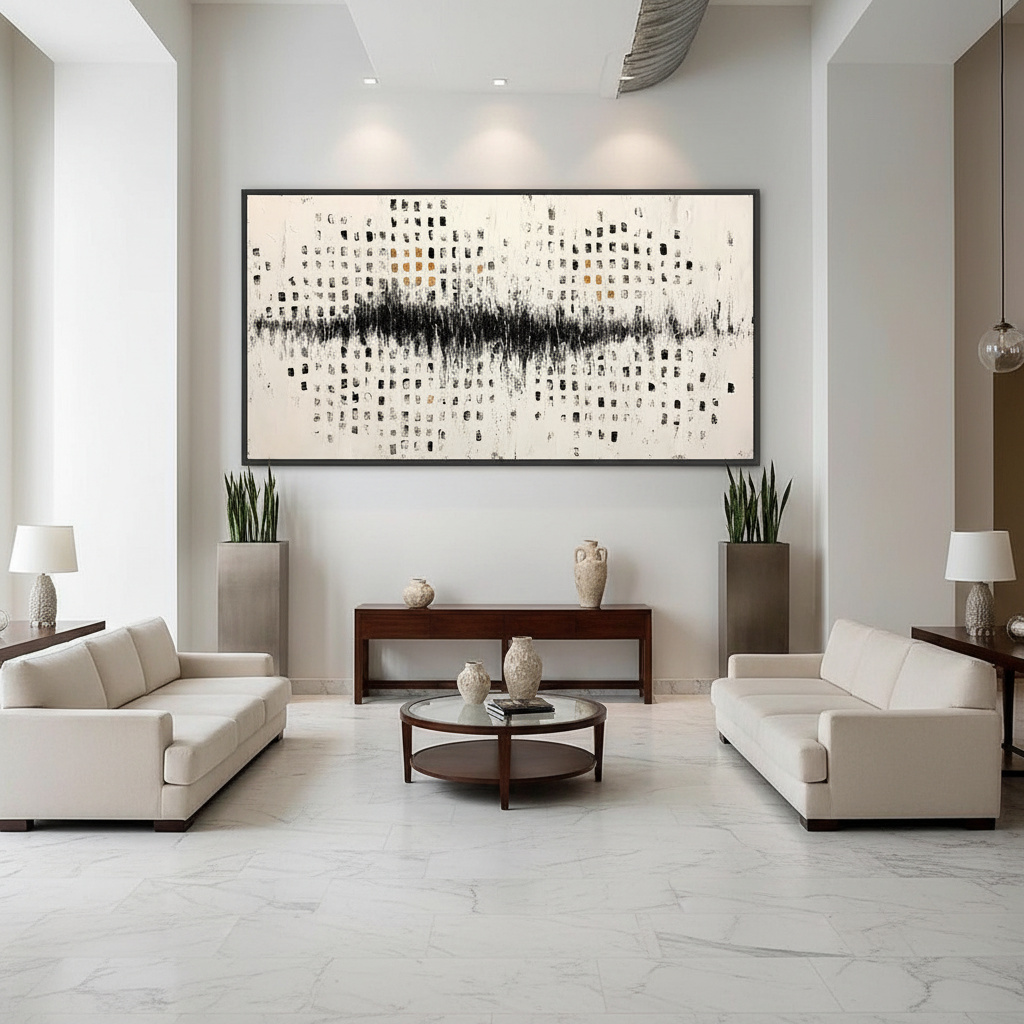
Scaling art for a foyer with 20-foot ceilings requires a departure from residential hanging standards. The "parallax effect" in large spaces can make art appear lower or smaller than it actually is.
The 60-62 Inch Heuristic: The center of large acrylic pieces should typically be positioned at 60-62 inches from the floor for a standard 10-foot ceiling. However, for grand foyers, we apply a 1-inch adjustment for every additional foot of ceiling height. In a 15-foot foyer, the center point should shift upward to approximately 65-67 inches to maintain visual equilibrium with the architecture.
Lighting and Color Fidelity
Acrylic is highly reflective. To maintain color fidelity and minimize glare, ambient lighting should be positioned at a 45-degree angle to the surface. Direct overhead lighting often creates a "hot spot" that obscures the artist's brushwork.
Furthermore, color perception shifts dramatically at scale. According to foundational color science, blues and greens appear to recede in large spaces, while warm colors (reds and yellows) advance. When commissioning art for a viewing distance of 20-40 feet, we suggest a 15-20% adjustment in saturation to ensure the piece doesn't look "washed out" in the vastness of a foyer.

Commercial Durability: Safety and Maintenance
In hospitality environments, art must be "public-proof." This involves strict adherence to safety standards and low-maintenance protocols.
Indoor Air Quality (IAQ) and LEED Compliance
Large-scale art involves significant quantities of paint and sealants. For healthcare and luxury hospitality projects seeking LEED or WELL certification, zero-VOC (Volatile Organic Compound) materials are non-negotiable. The EPA warns that indoor air pollution can be significantly higher than outdoor levels. Using low-VOC acrylics ensures that the art contributes to a healthy environment rather than a chemical hazard.
The Maintenance Trap
The most significant long-term cost for acrylic art isn't the acquisition; it's the maintenance. Acrylic is susceptible to scratching and static-induced dust accumulation.
- Anti-Static Coatings: For high-traffic areas, we recommend factory-applied anti-static coatings. Based on our scenario modeling, these coatings can reduce dust accumulation by 70-80% compared to untreated surfaces.
- Cleaning Protocols: Hotel staff turnover is a major risk factor. Specialized cleaning protocols (avoiding ammonia-based cleaners and using only specific microfiber cloths) must be integrated into the facility's standard operating procedures. Ammonia-based cleaners will cause permanent clouding or "crazing" of the acrylic surface within 6-12 months.
Biophilic Design and the ROI of Wellness
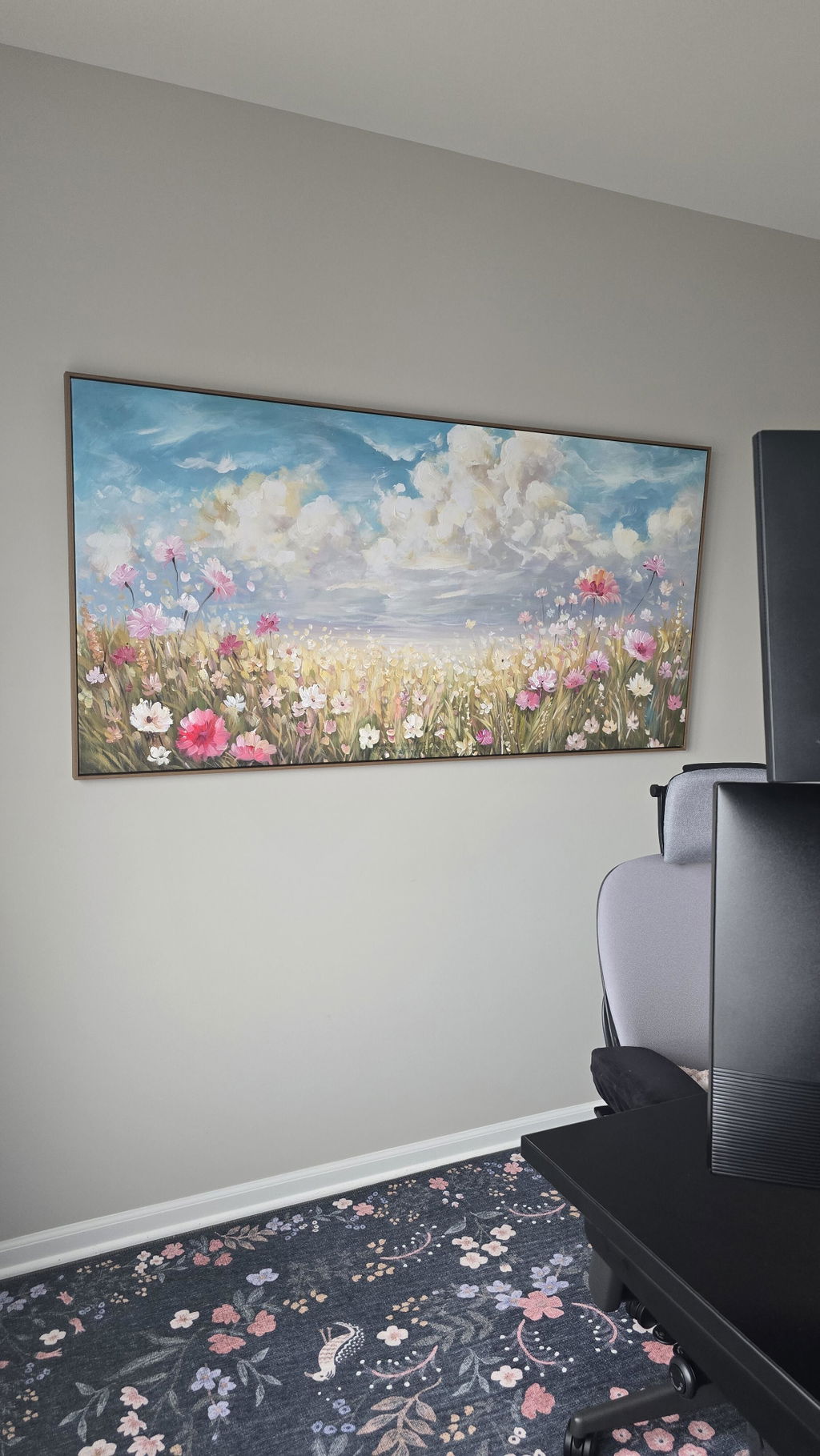
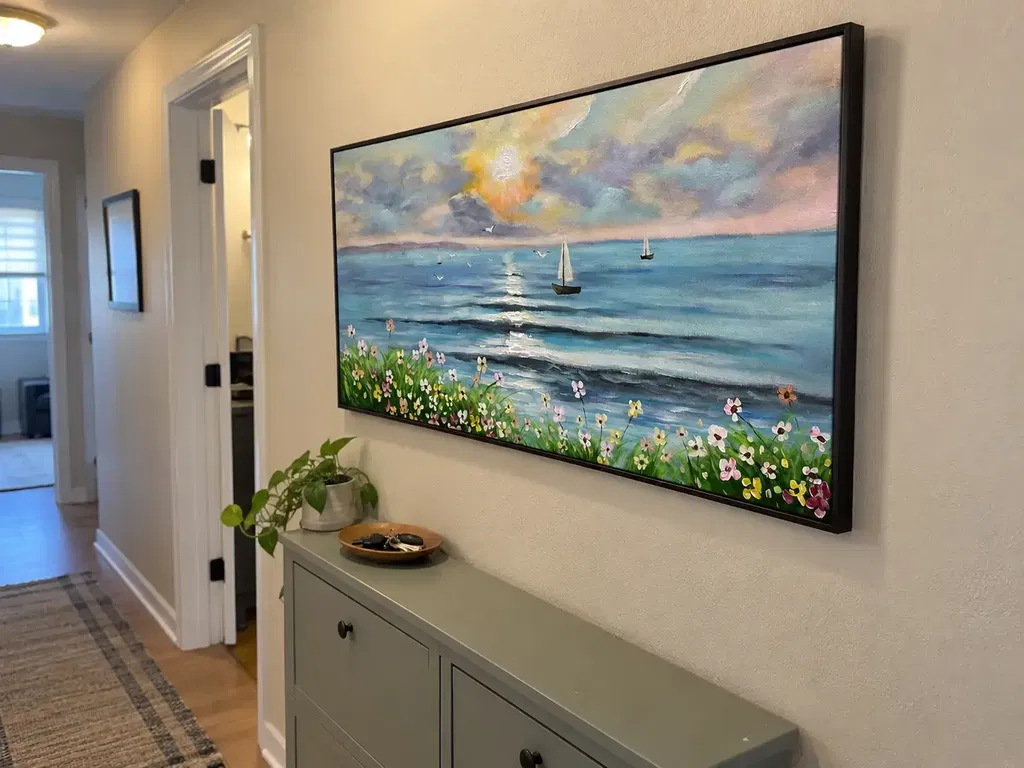
Grand foyers are often intimidating, cold spaces. Integrating "Biophilic Design"—the practice of connecting occupants to nature—has proven financial benefits. A review by the University of Pennsylvania found that 73% of patients in a clinical environment reported significant mood improvements when exposed to nature-themed art.
For corporate facility managers, the ROI is equally clear. Research on high-density office spaces in Tokyo suggests that nature-based biophilic design can effectively intervene in employee cognitive fatigue. By installing large-scale nature-themed acrylics in a corporate lobby, companies can potentially reduce team burnout.
Economic Catalysts
Investing in large-scale art is a proven strategy for property valuation. Analysis from the Royal Society found a direct correlation between high-quality art "geo-tags" and relative property price gains. In Chicago, the Millennium Park public art project drove an estimated $1.4 billion in real estate-related growth. For developers, a single high-impact mural or acrylic installation acts as a "permanent physical billboard" that drives foot traffic and elevates the building's market position.

Ethics and Sustainability in Procurement
Modern procurement is increasingly driven by ESG (Environmental, Social, and Governance) criteria. High-net-worth guests and corporate clients are sensitive to the ethics of the supply chain.
- Fair Compensation: A Wharton School survey found that 87% of consumers believe artists should receive fair compensation. Transparency in artist pay is no longer just a "nice-to-have"; it is a brand requirement.
- Gender Equity: Despite the commercial success of galleries representing women, female artists still face a significant pay gap. Prioritizing female-led commissions can help hospitality brands align with the values of socially conscious millennial travelers.
- Eco-Friendly Materials: Moving toward hemp or flax canvases and walnut-oil binders (which replace toxic VOC-emitting solvents) reduces the carbon footprint of the installation. According to the Cincinnati Art Museum, hemp canvases consume half the land and water of traditional cotton.
Appendix: Mounting and Weight Logic
For pieces over 4x6 feet, standard hanging hardware is insufficient. The weight of a 1/2-inch thick acrylic sheet can be substantial, requiring mechanical fasteners to be spaced no more than 24 inches apart horizontally.
Method & Assumptions (Modeling Note):
- Model Type: Deterministic parameterized model for load distribution.
- Assumptions: Substrate is standard 1/2" drywall with 16" on-center wood studs.
- Boundary Conditions: This model does not apply to glass-fiber reinforced concrete (GFRC) or steel-stud construction without specialized toggles.
| Material | Weight (lbs/sq ft) | 4x8 ft Total Weight | Recommended Fastener |
|---|---|---|---|
| 1/4" Acrylic | 1.5 | 48 lbs | Z-Clip (Small) |
| 3/8" Acrylic | 2.2 | 70 lbs | Z-Clip (Heavy Duty) |
| 1/2" Acrylic | 3.0 | 96 lbs | French Cleat / Through-Bolt |
Summary of Implementation
Selecting art for grand hospitality foyers is a multi-disciplinary challenge that bridges the gap between aesthetics and engineering. By prioritizing 3/8-inch or 1/2-inch thickness, designers ensure the structural longevity of the piece. By adjusting saturation and sightlines for the scale of the architecture, they preserve the visual impact of the artist's work. Finally, by choosing human-made, biophilic, and low-VOC materials, procurement teams secure both the psychological well-being of their guests and the long-term ROI of the property.
In an era where the "expensive art market" is struggling to find its footing, the future of hospitality art lies in pieces that offer authentic, tangible value to the spaces they inhabit.
This article is for informational purposes only and does not constitute professional structural engineering, legal, or financial advice. Always consult with a certified installer and structural engineer for large-scale art installations in public spaces.
Sources
- Marketplace: The expensive art market continues to struggle
- Columbia University: Human-Made vs. AI Art Study
- Royal Society: Quantifying the link between art and property prices
- EPA: Indoor Air Quality and Low-VOC Paints
- University of Pennsylvania: Visual Art in the Built Environment
- National Endowment for the Arts: Arts and Cultural Industries Economic Growth