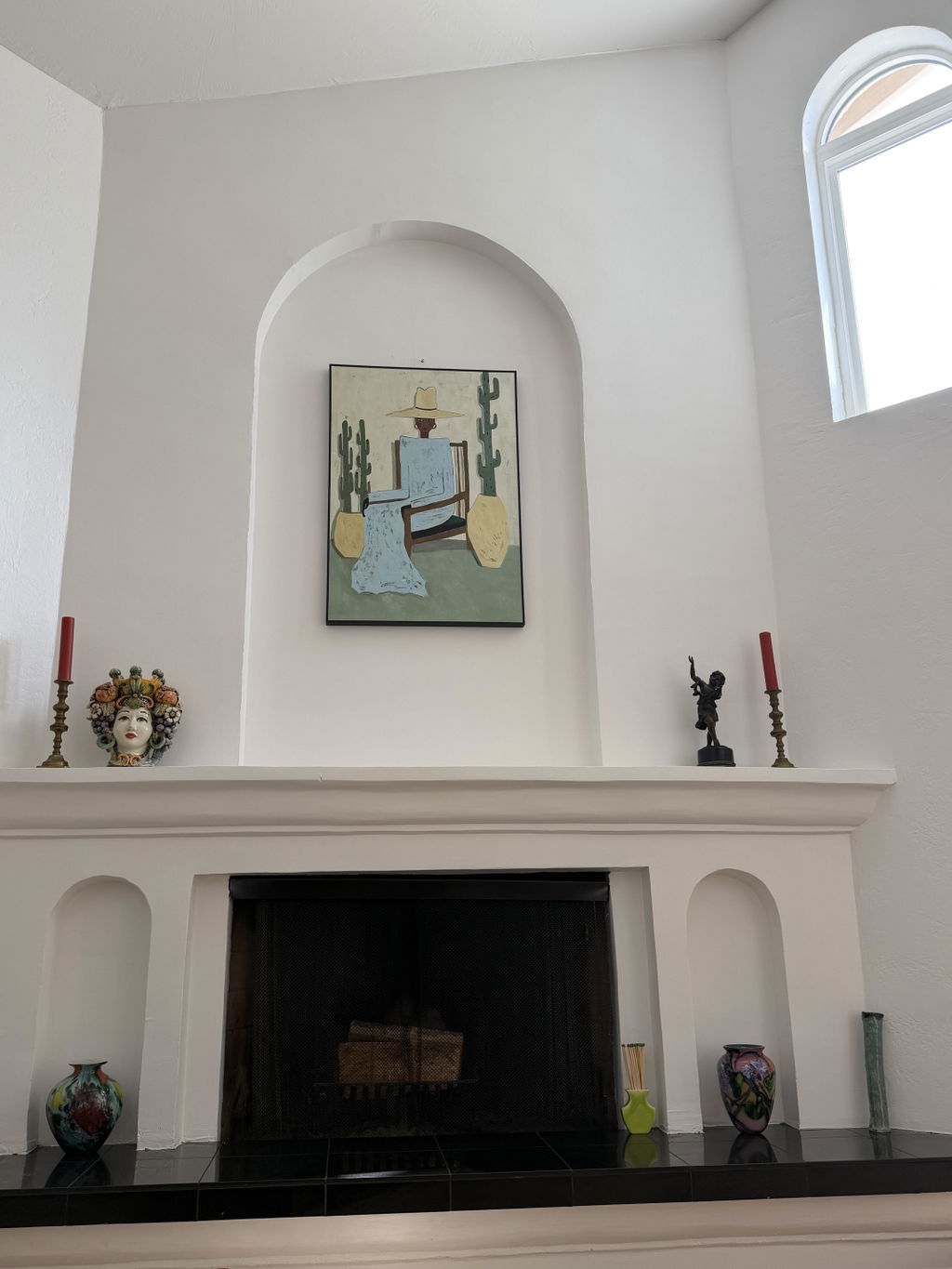
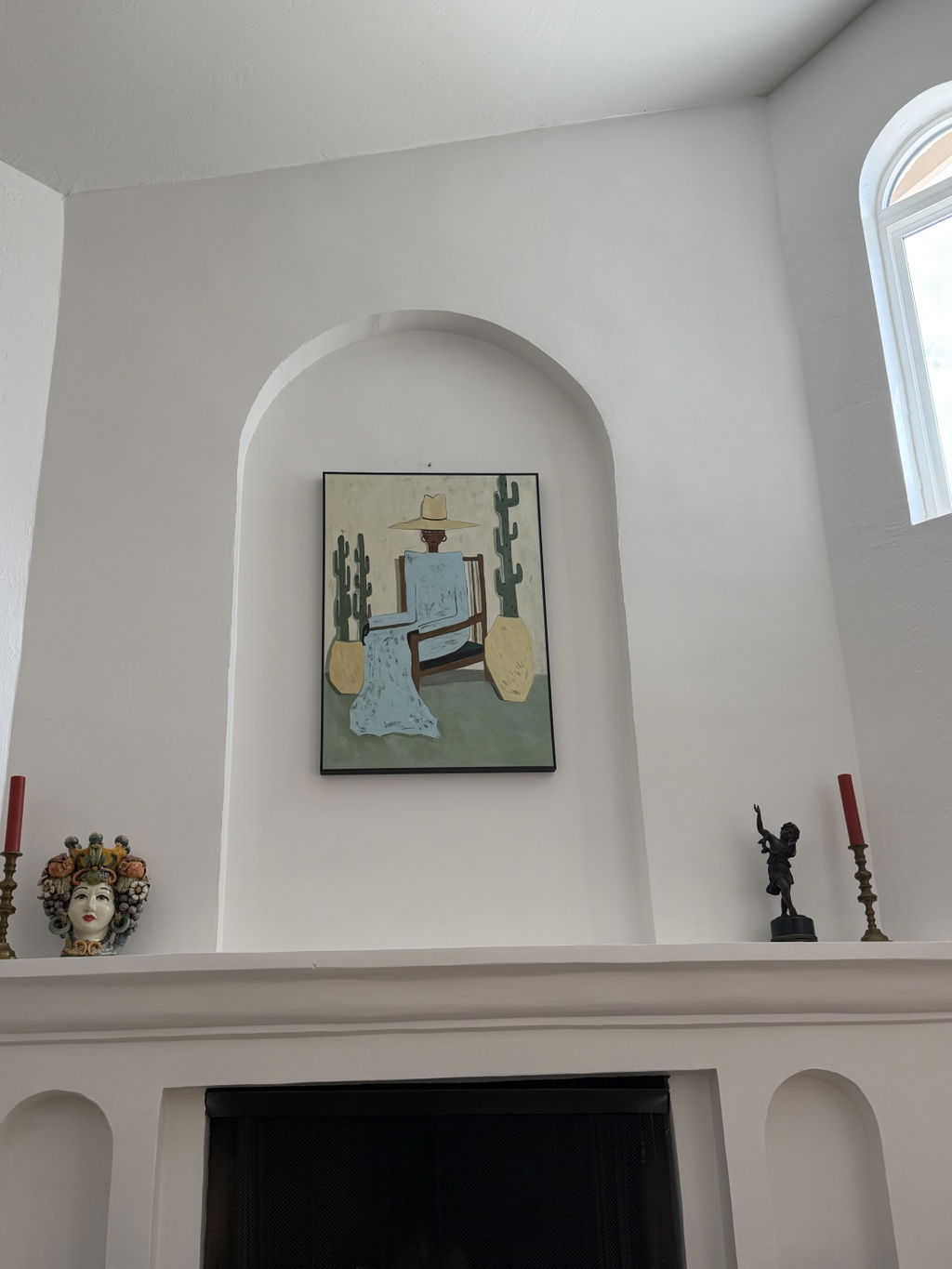
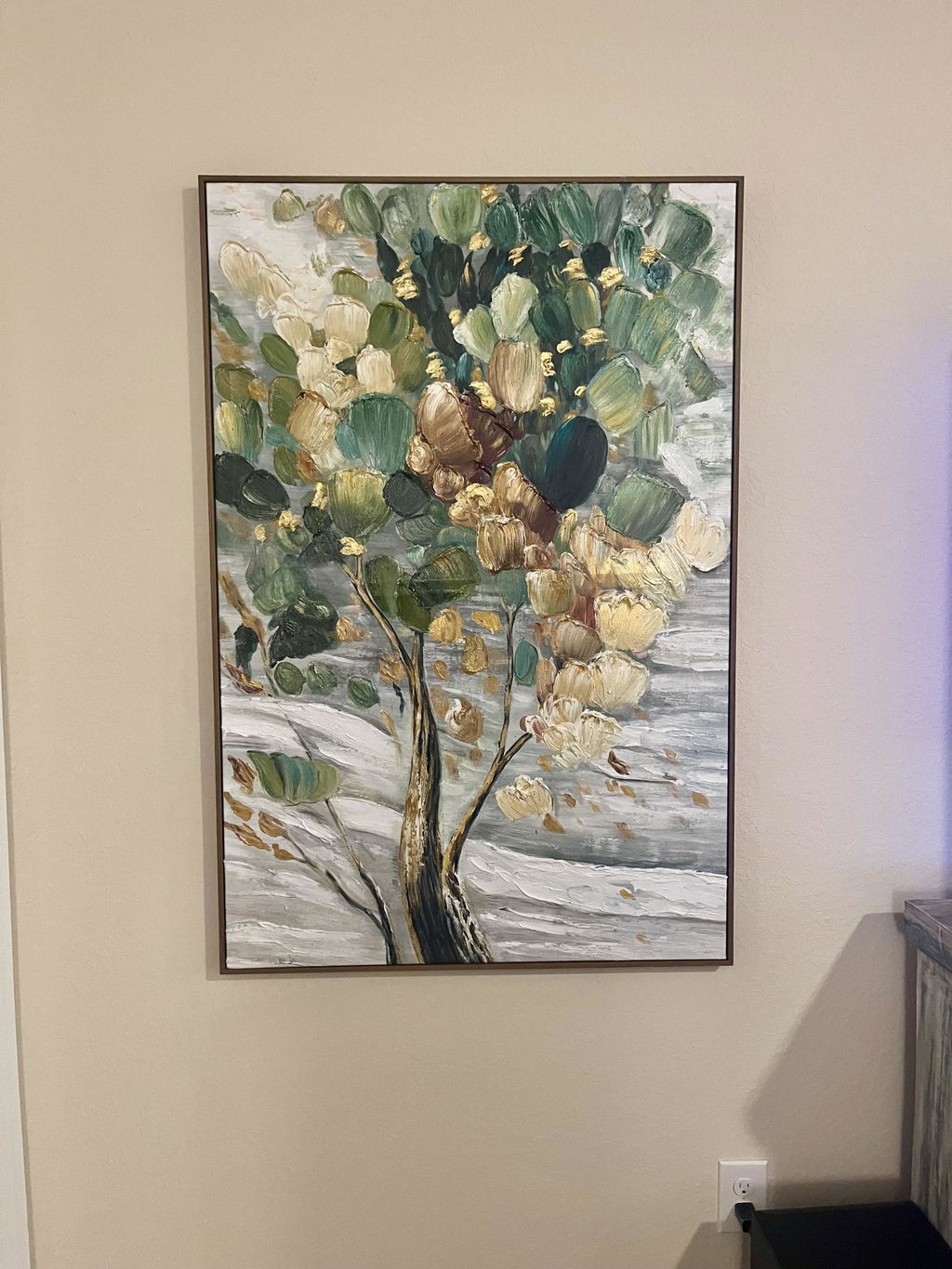
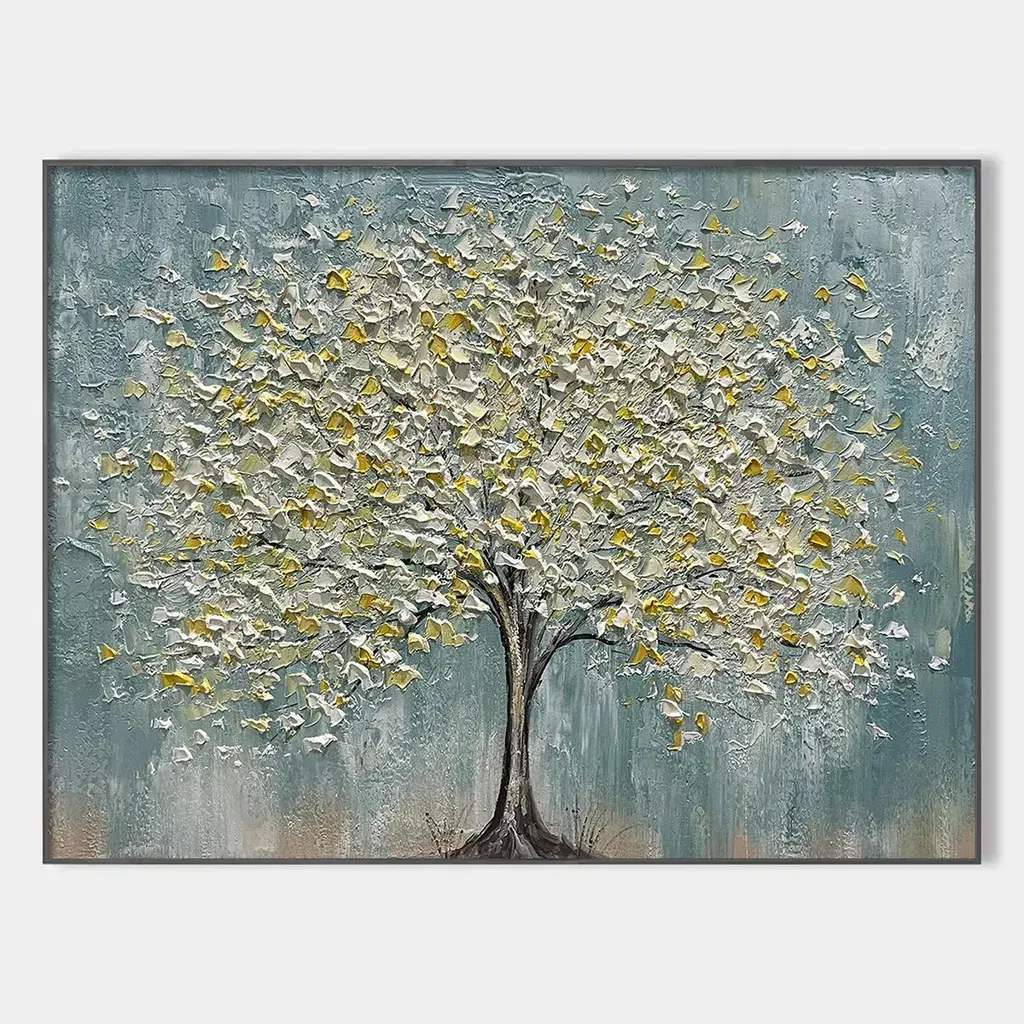
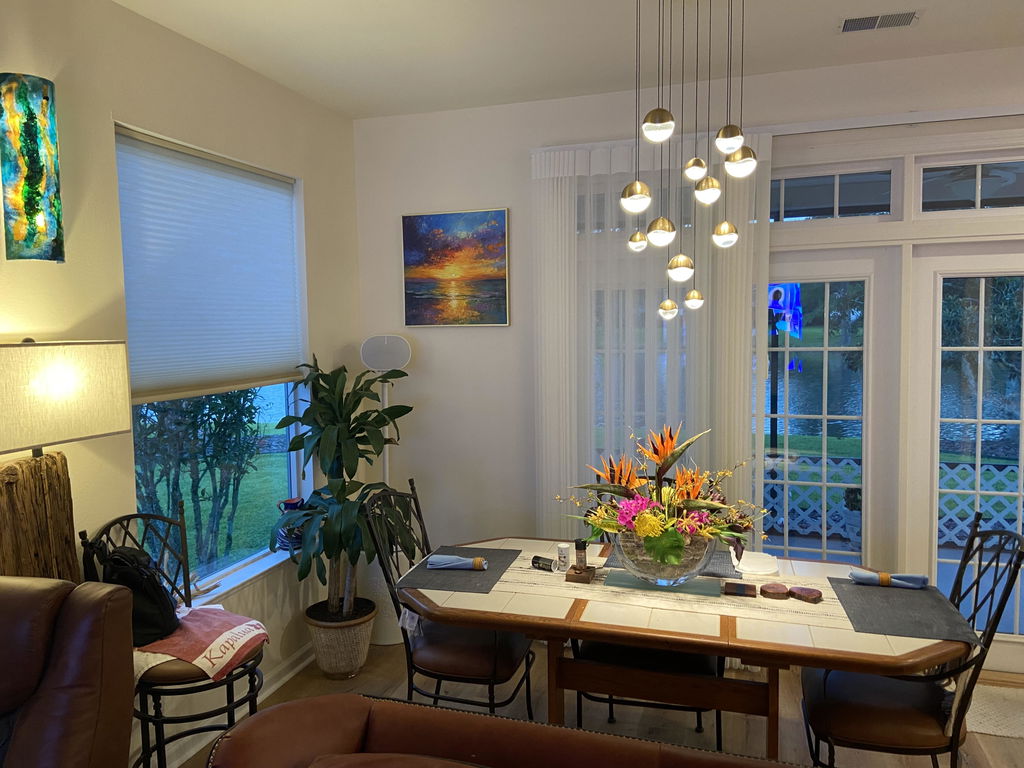
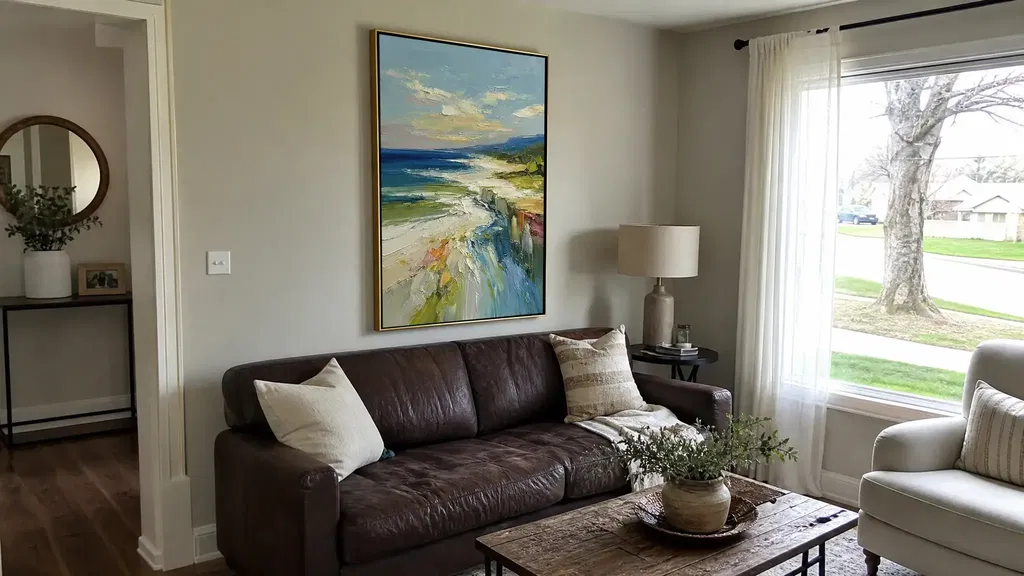
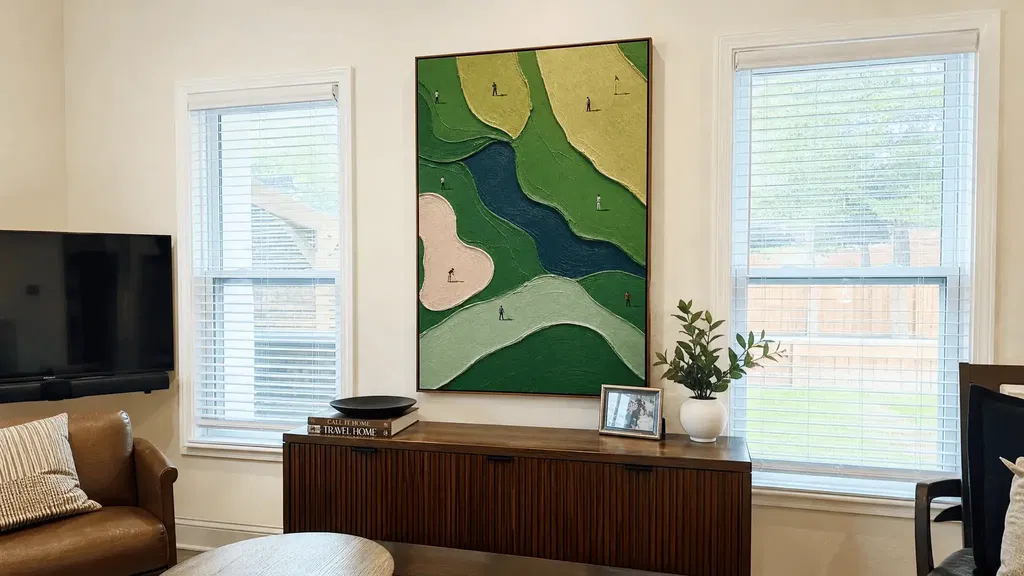
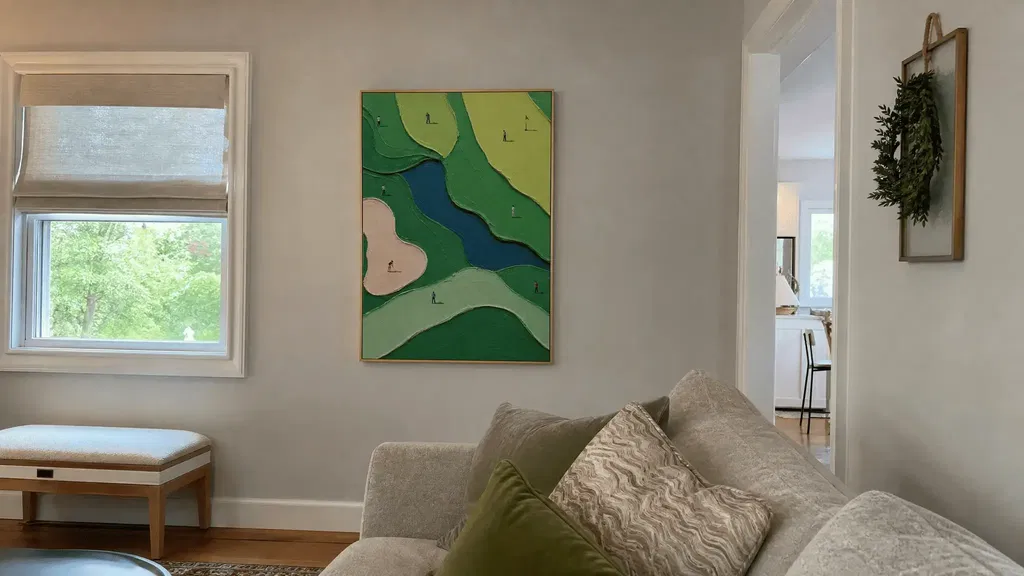
The Evolution of the Living Canvas: Why We Rotate
For decades, the "fine art" world was defined by static ownership—a single, massive investment meant to hang in the same spot for a lifetime. However, we are witnessing a tectonic shift in how we value art. According to recent market data from Marketplace, high-end auction sales plummeted 44% in 2024. This isn't just a financial retreat; it's a return to real application value. Homeowners are moving away from "vanity assets" and toward hand-painted, custom works that offer a genuine emotional connection.
In our experience helping clients curate camera-ready rooms, we’ve found that the most vibrant homes aren't those with the most expensive art, but those that evolve. A quarterly art rotation calendar isn't just a decor hack; it’s a strategy to keep your environment aligned with your internal rhythm. By treating your walls as a dynamic gallery rather than a fixed museum, you reduce the risk of "visual fatigue" and ensure your space remains a social highlight.
The Science of Space: Why Your Brain Craves Novelty
Why do we feel so refreshed when we swap a landscape for an abstract portrait? The answer lies in neuro-aesthetics. A systematic review published in PMC confirms that viewing art consistently activates the medial prefrontal cortex (mPFC) and the amygdala—the brain's headquarters for emotional regulation.
When art remains static for years, the brain eventually "filters it out" through a process called neural adaptation. By rotating your collection quarterly, you effectively "re-light" these neural pathways. This isn't just theory; research from the University of Pennsylvania found that 73% of individuals reported significant mood improvements when their environment featured varied, high-quality artwork.
Logic Summary: Our rotation strategy assumes that visual novelty triggers dopamine release and emotional regulation. This model is based on the "Busy Streets Theory" and neuro-aesthetic reviews which suggest that environmental changes directly impact cognitive fatigue.

The 70/30 Rotation Heuristic: Balancing Novelty and Comfort
One of the most common mistakes we see in home improvement is the "all-or-nothing" approach. Rotating every single piece in a house is a logistical nightmare that often leads to a loss of "home identity." To solve this, we recommend a 70/30 Heuristic.
- 70% Seasonal Theme: These are the pieces that change every three months to reflect the shifting light and energy of the season.
- 30% Personal Anchors: These are your "soul pieces"—the artworks that retain their spot year-round to provide a sense of continuity and "essential identity," a concept University of Chicago research identifies as the irreplicable spirit of hand-painted art.
Modeling Your Rotation Schedule
| Quarter | Core Theme | Visual Driver | Psychological Objective |
|---|---|---|---|
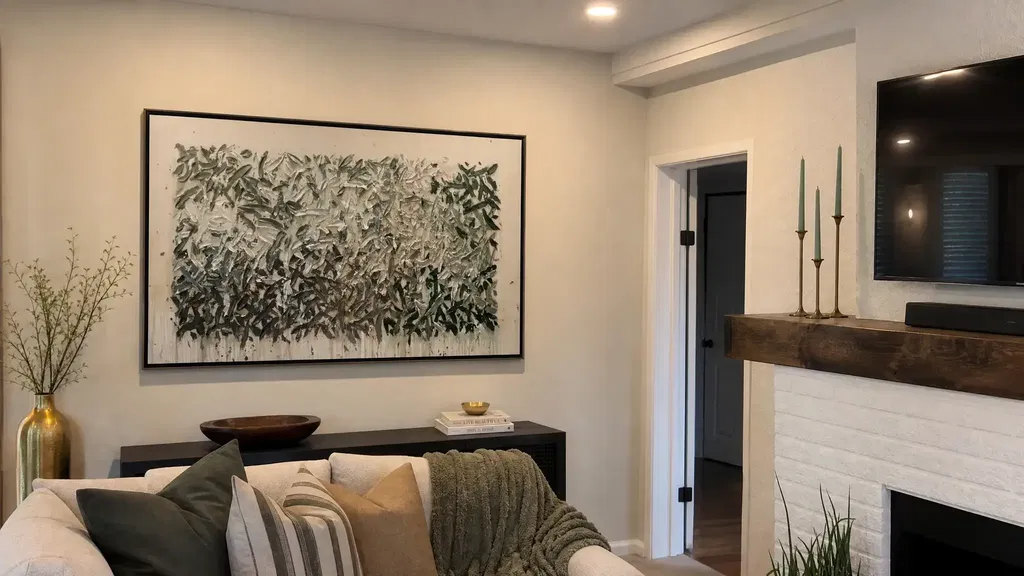
| Q1: Rebirth | Biophilic / Minimalist | Soft greens, raw textures | Combat post-holiday burnout |
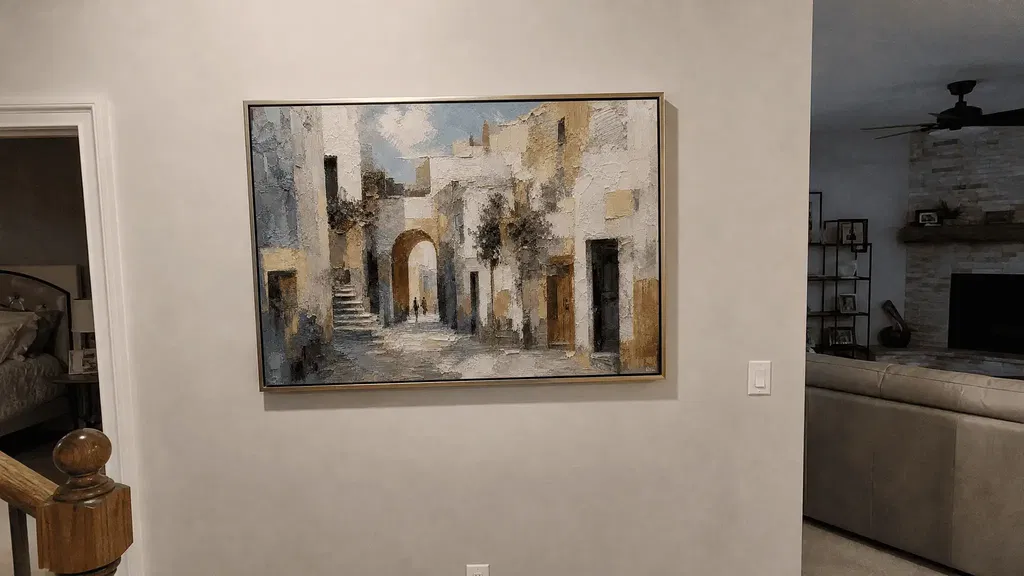
| Q2: Vitality | Abstract Figurative | Vibrant ochres, high energy | Spark creativity and social interaction |
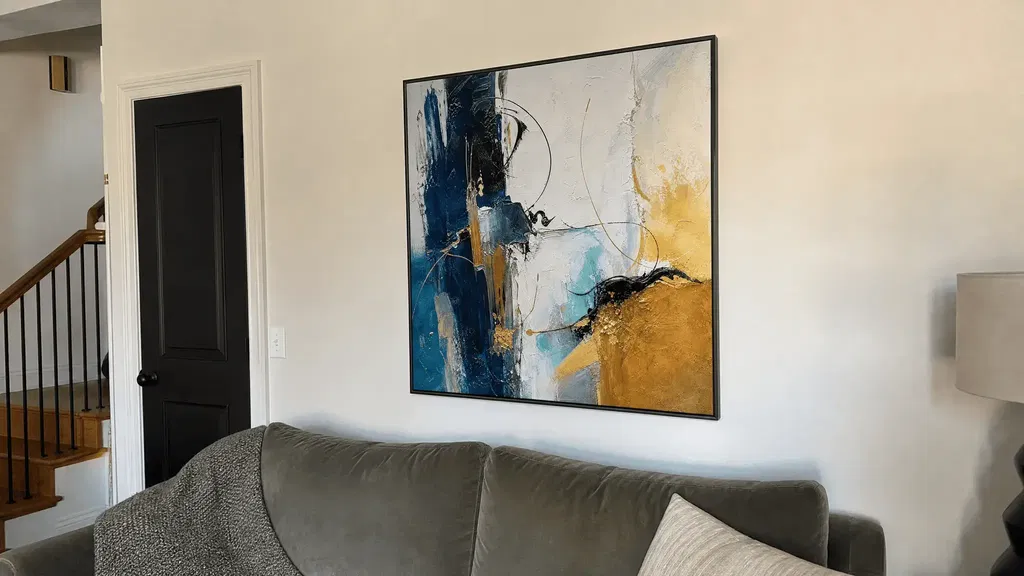
| Q3: Serenity | Surrealist / Cool Tones | Deep blues, expansive scales | Provide a "mental cooling" effect |
| Q4: Intimacy | Heavy Impasto / Warmth | Rust tones, thick textures | Foster "Hygge" and social cohesion |
Method & Assumptions:
- Modeling Type: Deterministic seasonal mood mapping.
- Boundary Conditions: This model assumes a four-season climate; for tropical regions, we recommend rotating based on "Wet vs. Dry" light cycles.
- Rationale: Based on NKBA 2025 trends emphasizing immersive "escapism" via wall-to-wall art.
Technical Integrity: Protecting Your Investment During Rotation
Rotating art requires more than just a hammer and a level. If you are investing in authentic hand-painted pieces, you must understand the chemistry of your materials.
The Humidity and Temperature Factor
Art is a living material. Research published on ResearchGate shows that under high humidity (83%+), acrylic pigments can swell by over 7% in mass. Conversely, oil paintings are notoriously sensitive to heat, which can cause binder separation.
When you rotate a piece out of your living room, where you store it matters. We recommend climate-controlled storage (50% relative humidity, 70°F) to prevent Support Induced Discoloration (SID). According to technical bulletins from Golden Artist Colors, transparent acrylic mediums can pull yellow impurities out of cotton canvases if stored in damp or poorly ventilated areas.

Safety and Air Quality (IAQ)
For families with children or pets, "authentic-looking" shouldn't mean "toxic." While historical pigments like lead white are now banned by EU REACH regulations, some modern pigments still carry risks. For instance, IARC classifies cadmium compounds as Group 1 carcinogens.
We always advise our clients to look for the ASTM D-4236 label, but with a caveat: this label only means the warning is compliant, not that the paint is 100% hazard-free. For indoor murals and large canvases, we prioritize low-VOC (Volatile Organic Compound) acrylics. The EPA warns that indoor air pollution can be higher than outdoor levels; using zero-VOC paints is a prerequisite for achieving LEED certification in modern builds.
Step-by-Step: Building Your Rotation Calendar
Phase 1: The Digital Inventory (Month 1)
Before moving a single frame, create a digital catalog. We use simple photo apps to create room mockups. This reduces "trial-and-error hanging," which preserves your drywall.
- Pro Tip: Take a photo of your wall at 10:00 AM and 4:00 PM. Art looks different under varying light temperatures. ASTM D4303 testing confirms that lightfastness—the ability of a pigment to resist fading—is entirely dependent on UV exposure.
Phase 2: The Lighting Audit (Quarterly)
Every time you rotate art, you must reassess your lighting. A heavy impasto oil painting requires "grazing light" (light hitting from a side angle) to highlight the physical relief of the brushstrokes. Studies at the MUNCH Museum confirm that interacting with these physical textures increases viewer satisfaction by providing a tactile dimension that digital prints lack.
Phase 3: The Ethical Choice (Ongoing)
Part of the "social validation" our clients seek comes from the story behind the art. Supporting local artists isn't just a moral choice; it’s an economic one. The Arts & Economic Prosperity 5 (AEP5) report proves that the arts industry supports 4.6 million jobs. By choosing hand-painted murals over AI-generated prints—which Columbia University studies show are valued 62% lower by consumers—you are investing in human "essential identity."

Managing the Logistics: Storage and Care
If you live in an urban apartment, storage is the biggest hurdle. We recommend vertical storage racks or under-bed climate-bags. Research shows that 73% of urban dwellers successfully implement art rotation using these modular solutions.
Rotation Checklist:
- Inspect: Check for "chalking" or "haziness." This is often caused by PEG-type surfactants migrating to the surface of acrylics, a phenomenon documented by Tate researchers. A gentle wipe with a damp cotton swab can often restore clarity.
- Protect: Use acid-free glassine paper between canvases to prevent "blocking" (paints sticking together).
- Catalog: Update your digital mockup app with the new location and date of rotation.
The Long-Term ROI of a Dynamic Home
Beyond the psychological benefits, there is a hard financial argument for high-quality art integration. A Royal Society analysis found that neighborhoods and homes with higher "art density" saw greater relative gains in property value. In the commercial sector, Chicago’s Millennium Park projects drove $1.4 billion in real estate growth.
When you treat your home as an evolving gallery, you aren't just decorating; you are managing a cultural asset. You are creating a space that doesn't just look good on camera—it feels good to live in. Whether it's a biophilic mural to reduce stress or a surrealist centerpiece to spark conversation, your quarterly rotation ensures your home remains as dynamic as you are.
Disclaimer: This article is for informational purposes only. The technical data regarding paint toxicity and VOC emissions are based on general industry standards and laboratory models. Always consult with a professional conservator or environmental health specialist when dealing with antique artworks or large-scale indoor painting projects, especially if you have pre-existing respiratory conditions.
Sources
- Marketplace: The expensive art market continues to struggle
- PMC: Neurological mechanisms of creative arts
- Columbia Business School: Human-Made vs. AI Art Study
- EPA: Indoor Air Quality and Low-VOC Paints
- Royal Society: Quantifying the link between art and property prices
- Tate: Conservation Concerns for Acrylic Emulsion Paints