Subject Focus: Where High Precision Matters Most in Art
In the evolving landscape of high-end home improvement, the definition of luxury is shifting. While the traditional auction market for multi-million dollar "vanity" pieces has seen a significant retreat—with sales over $10 million plummeting 44% in 2024—discerning buyers are returning to real application value. We are observing a move away from speculative assets toward custom, hand-painted works that provide deep emotional resonance and spatial transformation.
However, a common friction point in the commission process is the "precision paradox." Many buyers operate under the assumption that more detail everywhere equals higher quality. In our experience consulting with both artists and collectors, we’ve found that misallocating detail requests—focusing on peripheral background elements while neglecting foundational focal points—can actually diminish the artwork's overall impact.
To achieve a benchmark-level result, one must understand where high precision is non-negotiable and where abstraction serves the composition.

The 70-20-10 Rule: A Heuristic for Visual Impact
In the studio, we often utilize the "70-20-10 rule" to guide the allocation of artistic labor and viewer attention. This is not a rigid law but a professional heuristic derived from thousands of successful commissions. It suggests that approximately 70% of an artwork's emotional and visual impact is generated by the primary focal points.
| Detail Allocation | Component | Example | Precision Level |
|---|---|---|---|
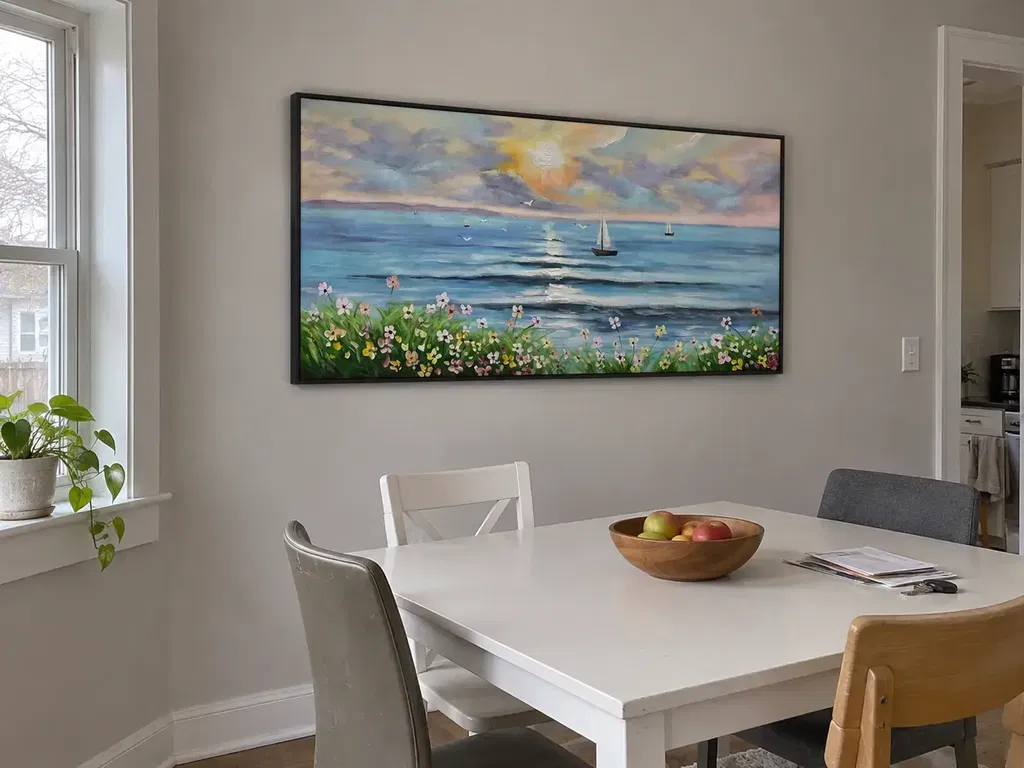
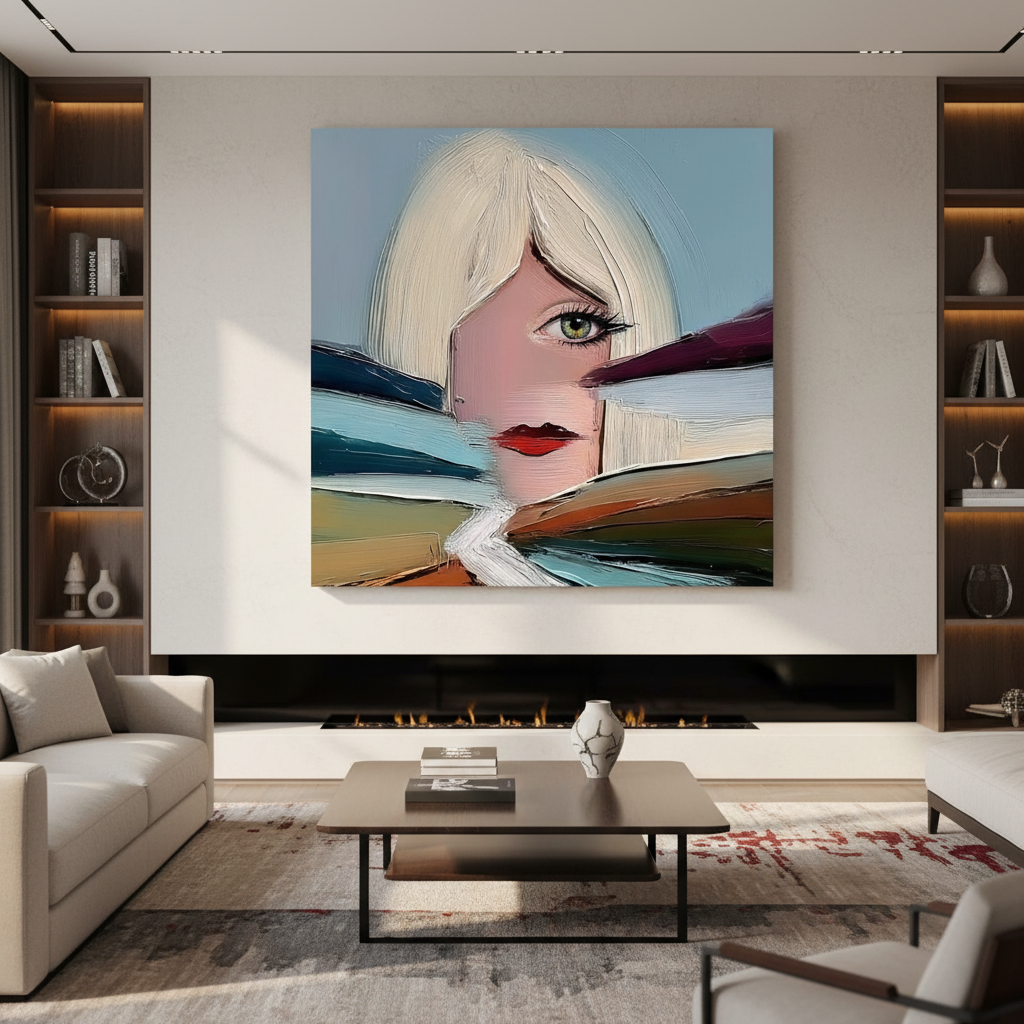
| 70% (Primary) | Focal Points | Eyes in portraits, horizon lines in landscapes | Ultra-High |
| 20% (Secondary) | Supporting Elements | Clothing texture, foreground foliage | Moderate |
| 10% (Tertiary) | Background | Atmosphere, distant clouds, shadows | Low/Abstract |
Logic Summary: This modeling of attention assumes that the human eye naturally seeks "anchors" in a composition. By concentrating precision in these anchors, the artist creates a hierarchy that prevents "visual noise"—a common issue where excessive detail in non-critical areas distracts from the intended emotional core.
When you demand "more detail everywhere," you risk flattening the composition. As noted in recent eye-tracking research, contextual information dominates viewer attention, meaning that ultra-precise execution in secondary areas is often perceptually irrelevant. A masterfully painted eye or a perfectly sharp horizon line does more to "sell" the reality of a piece than a thousand hyper-detailed leaves in the background.
The Neurological Basis for Selective Precision
Why does the human brain respond so differently to a hand-painted focal point compared to a digital print? The answer lies in our neurobiology. Systematic reviews of 85 records show that passive art viewing consistently activates the medial prefrontal cortex (mPFC) and amygdala, optimizing our emotional regulation circuits.
Furthermore, consumers perceive a significant "value gap" between human-made and AI-generated art. A Columbia University study confirmed that consumers value art labeled 'AI-generated' 62% lower than authentic human-created art. This is because a hand-painted canvas retains an "essential identity"—a soul that digital replicas cannot replicate.
When an artist applies high-precision brushwork to a focal point, they are not just moving pigment; they are suppressing "perceptual constancy illusions." Research from Stockton University reveals that top painters possess robust bottom-up neural control that allows them to see and render what is actually there, rather than what the brain expects to see. When you invest in high-precision focal points, you are essentially purchasing the biochemical crystallization of apex human visual attention.
Material Precision: The Science of Pigment and Safety
High precision isn't just about the artist's hand; it’s about the chemistry of the materials. The difference between a retail-grade print and a premium hand-painted mural often comes down to the "micro-physical texture."
The Physics of Light and Texture
Optical theory suggests that when pigment particle diameters approach half the wavelength of visible light, [optical scattering and opacity reach their theoretical extremes](https://opg.optica.org/abstract.cfm?uri=josa-31-8-521). This is why cheap tube paints often look dull; they lack the ultra-fine milling—verified via laser diffraction—that high-end pigments possess. Furthermore, [3D microprofilometry proves that the millimeter-scale texture](https://doi.org/10.3390/s21134311) of oil and acrylic is crucial to the aesthetic experience.
The Safety and Longevity Factor
When commissioning art for residential or healthcare environments, technical precision in material selection is a health requirement. Many traditional pigments contain IARC Group 1 carcinogens, such as [cadmium compounds](https://www.inchem.org/documents/iarc/vol58/mono58-2.html). We recommend prioritizing water-based acrylics or modern non-toxic oil alternatives.For commercial developers seeking LEED or WELL certification, the EPA warns that indoor air pollution can be significantly higher than outdoor levels. Using low-VOC (Volatile Organic Compound) paints is a strict prerequisite for large-scale medical or office projects. Aalto University experiments have shown that coatings on moisture-controlled wood emit significantly lower VOCs during the curing process, making them safer for immediate occupancy.
Commercial Application: Art as an Economic Catalyst
The decision to invest in high-precision murals extends beyond aesthetics; it is a calculated business move. In the commercial real estate (CRE) sector, public art is being used as a "marketing trump card" to lease up millions of square feet of office space.
Property Valuation and Foot Traffic
The Royal Society's CAR model analysis found that neighborhoods with higher "art" geo-tags had [greater relative house price ranking gains](https://royalsocietypublishing.org/rsos/article/3/4/160146/36585/). In Chicago, public art projects drove an estimated $1.4 billion in real estate-related growth. For shop owners, large-scale murals act as permanent physical billboards, with [regression analysis showing a direct correlation with increased pedestrian foot traffic](https://www.uc.edu/news/articles/2025/07/how-street-murals-impact-communities-a-study.html).Healing and Productivity
In healthcare, the impact is even more profound. A UPenn review noted that [73% of patients reported significant mood improvements](https://neuroaesthetics.med.upenn.edu/assets/user-content/documents/publications/buildings-15-01027.pdf) when exposed to environmental artwork. Similarly, biophilic design—featuring high-precision natural landscapes—has been shown in Tokyo office studies to effectively [intervene in employee cognitive fatigue and burnout](https://scholarspace.manoa.hawaii.edu/items/ea1a443b-7492-40a3-9c8b-27e47d313f84).Strategic Communication: How to Guide Your Artist
To avoid the "detail bloat" that ruins compositions, we recommend a more structured approach to commissioning. Instead of general requests for "more detail," use these tactical steps:
- Identify the Anchor: Explicitly state, "I want the highest precision in the eyes and facial expression."
- Embrace the Gradient: Allow the background to remain impressionistic. This creates surface depth and visual weight.
- Annotate Reference Images: Rather than providing a broad mood board, circle specific areas where you want the brushwork to be tight vs. loose.
- Consider the Viewing Distance: Remember that what looks intricate at 12 inches may become a "muddled mess" at 6 feet. Scale dictates the necessary level of precision.
Modeling Note (Reproducible Parameters): Our recommendations for viewing distance are based on a standard visual acuity model (1 arcminute of resolution).
Viewing Distance Recommended Detail Level Brushstroke Width (approx) 1–2 Feet Fine Realism < 1mm 5–10 Feet Broad Realism 2–5mm 15+ Feet Impressionistic > 10mm
Building a Legacy of Authenticity
As the global creative economy reaches a record $1.4 trillion in exports, the value of "absolute authenticity" is at an all-time high. Consumers are increasingly socially conscious, with 87% agreeing that artists should receive fair compensation. By supporting real artists and demanding precision where it matters most, you are not just buying decor; you are investing in a non-renewable cultural heritage asset.
Whether you are a homeowner seeking a "whimsical" custom gallery wall—a trend that saw a 329% spike in searches recently—or a developer looking to revitalize a commercial district, the key to success is the same: focus on the focal point. Let the precision be purposeful, the materials be safe, and the impact be lasting.
Disclaimer: This article is for informational purposes only and does not constitute professional medical, legal, or financial advice. Art materials can contain toxic substances; always follow manufacturer safety guidelines and consult with an environmental health professional for large-scale indoor installations.