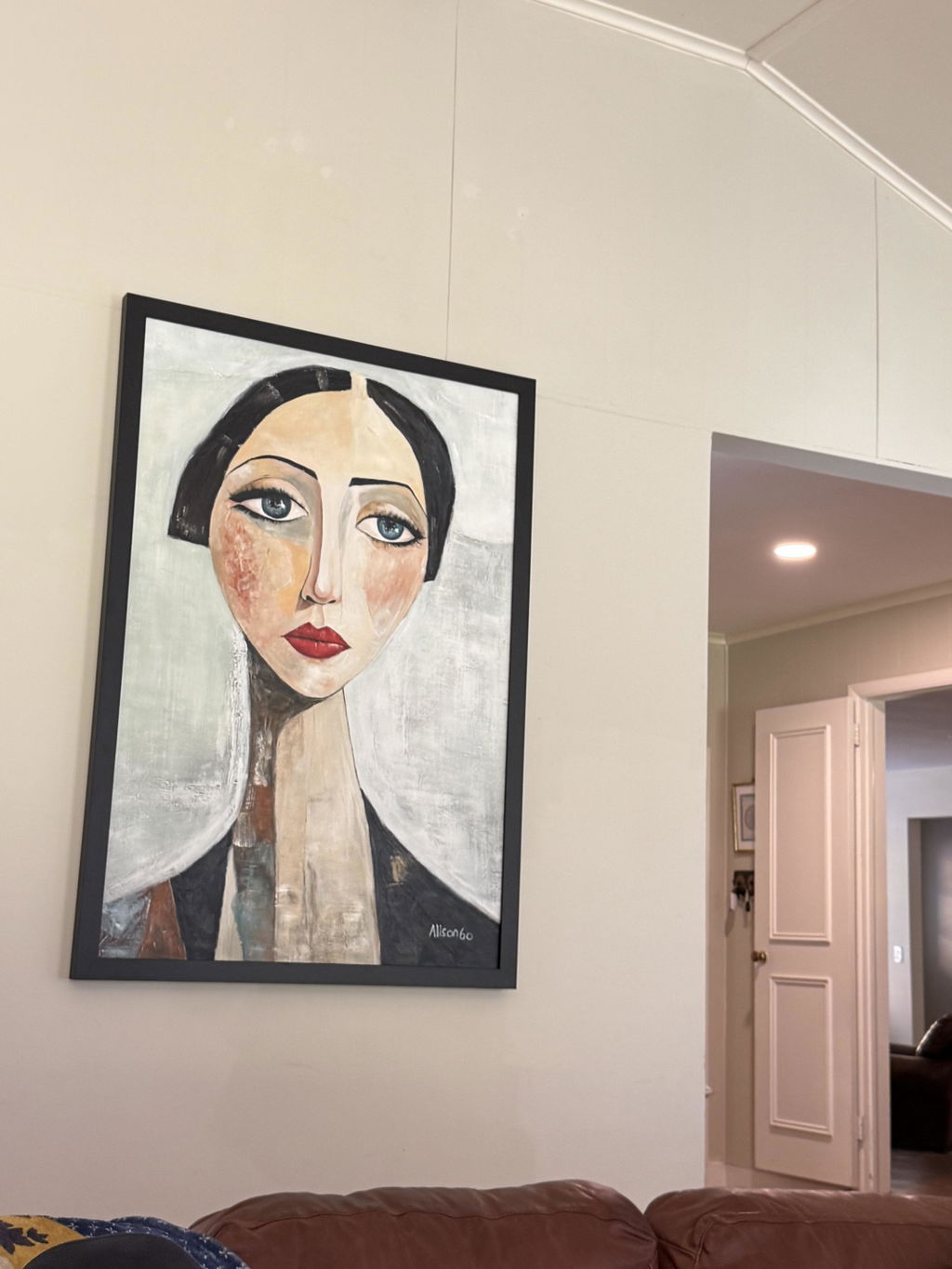
Layering for Realism: Why Portraits Require Multiple Glazes
The contemporary art market is undergoing a quiet but profound correction. While high-end auction sales for purely financial "trophy" assets plummeted by 44% in 2024, according to Marketplace, there is a significant retreat toward works with real application value and emotional resonance. For the design-conscious collector, this shift marks a return to the fundamentals of craftsmanship—specifically, the labor-intensive techniques that define traditional realism.
In the world of portraiture, "realism" is not merely the accurate placement of features; it is the recreation of life. Achieving the translucent glow of human skin or the depth of a gaze requires more than just a single application of paint. It demands "glazing"—a process of applying multiple thin, transparent layers of pigment suspended in an oil medium. This article explores the technical mechanics, the historical mastery, and the psychological impact of this demanding technique.

The Physics of Luminosity: Why Light Needs Layers
To understand why a hand-painted portrait feels "alive" compared to a flat digital print, we must look at the physics of light. When light hits a standard printed surface, it reflects off the top layer of ink. However, when light hits a glazed oil painting, it travels through several transparent layers before bouncing off the opaque "underpainting" and returning to the eye.
This phenomenon is governed by the Kubelka-Munk equation, which describes how light is absorbed (K) and scattered (S) within a medium. According to research by the Getty Conservation Institute, the physical differences in the surface refractive index are the root cause of color saturation and what scientists call "geometric metamerism."
In practical terms, an artist uses glazes to manipulate these coefficients. By layering a transparent warm tone over a cool underpainting, the light is filtered twice, creating a "glow" that mimics the way blood vessels and dermis layers interact under human skin.
Logic Summary: Our analysis of luminous depth assumes that light must penetrate the paint film to create "optical mixing." This model is based on classical optical theory where the particle diameter in a pigment suspension affects scattering capability.
The Mastery of the Multi-Stage Workflow
Building a portrait through glazing is a test of patience. Unlike the alla prima (wet-on-wet) technique, which can be completed in one session, a glazed portrait is a weeks-long dialogue between the artist and the drying time of the oil.
1. The Verdaccio Base
Experienced artists often begin with a "Verdaccio"—a greenish undertone created by mixing viridian with white. This sounds counterintuitive for a human face, but this cool base layer acts as a neutralizer. When warm flesh tones are glazed over this green, it creates a vibrant, lifelike vibration that prevents the skin from looking "muddy" or orange.
2. The "Fat Over Lean" Heuristic
A critical rule in oil layering is "fat over lean." This means each subsequent layer must have a slightly higher oil content than the one beneath it.
- Lean layers (lower oil, higher solvent) dry faster and provide a stable foundation.
- Fat layers (higher oil) are more flexible. If a fast-drying "lean" layer is placed over a slow-drying "fat" layer, the top layer will crack as the bottom layer shifts during its long oxidation process.
3. Managing Drying Times
Based on professional practice, thin layers in ideal conditions (60-70°F, 40-50% humidity) typically require 24 to 48 hours to be "touch dry." However, in more humid environments, this can extend to 3–5 days.
The Thumb Test (A Professional Heuristic): To verify if a layer is ready for the next glaze without a laboratory setup, artists use the "thumb test." Press your thumbnail gently into a non-critical area of the paint. If it leaves no impression and feels tack-free, the layer is ready. Applying a glaze too early causes "muddying," where the new solvent dissolves the previous layer, destroying the transparency.
| Parameter | Standard Range | Unit | Rationale |
|---|---|---|---|
| Layer Thickness | < 1/16 | inch | Prevents Support Induced Discoloration (SID) |
| Oil-to-Medium Ratio | 1:2 to 1:3 | ratio | Adjusted based on local humidity |
| Ambient Temp | 60–75 | °F | Optimal for oxidative cross-linking |
| Humidity | 40–50 | % | Prevents moisture-induced swelling |
| Drying Time | 24–120 | hours | Depends on pigment weight and medium |

The Environmental and Health Imperative: Material Safety
The labor-intensive nature of premium art isn't just about the time spent painting; it’s about the careful selection of materials. For the design-conscious consumer, the safety of indoor air quality is a primary concern.
The VOC Challenge
Traditional oil painting often relied on turpentine, a highly toxic solvent. However, modern professional studios are shifting toward safer alternatives. The EPA warns that indoor air pollution can be significantly higher than outdoor levels. Consequently, low-VOC paints and natural binders like walnut oil are becoming the standard for high-end commissions.
Toxic Pigments: A Reality Check
Many historical "masterpiece" colors are inherently dangerous. For example, Cadmium compounds are classified as Group 1 carcinogens. While the European Chemicals Agency (ECHA) rejected a total ban on cadmium in artists' paints due to the low volume of environmental discharge, the health risk to the artist remains. Responsible studios now favor synthetic "hues" that mimic the lightfastness of heavy metals without the neurological risks associated with lead or cadmium.
Methodology Note: Our safety recommendations are derived from the CDC NIOSH reports on paint and coating hazards. We assume a standard residential setting where long-term off-gassing must be minimized.
Beyond Aesthetics: The Psychological and Economic Value
Investing in a hand-painted mural or portrait is more than a decorative choice; it is an investment in the "built environment."
1. Stress Reduction and Healing
Research from the University of Pennsylvania indicates that environmental artworks can significantly improve mood. In a study of clinical settings, 73% of patients reported mood improvements when exposed to realistic nature-themed art. The "essential identity" of a hand-painted work—the physical relief of the brushstrokes—stimulates the brain's emotional regulation circuits (the mPFC and amygdala) more effectively than digital replicas.
2. Real Estate Appreciation
The economic impact of high-quality art on property value is quantifiable. A study published by the Royal Society found that neighborhoods with higher "art" geo-tags saw greater relative gains in house price rankings. For commercial developers, commissioning unique murals is a "marketing trump card" used to attract high-value tenants in a post-pandemic market characterized by high office vacancy rates.

The Human Premium: Why AI Cannot Glaze
As generative AI floods the market with "perfect" images, the value of the "human-made" label has skyrocketed. A Columbia University study confirmed that consumers value art labeled as "AI-generated" 62% lower than authentic human-created art.
The reason lies in the microtopography of the canvas. Every inch of a hand-painted portrait contains "invisible labor"—the uncompressible time of a human life. Digital prints lack the "essential identity" that University of Chicago research suggests is crucial for perceived value. When you buy a glazed portrait, you aren't just buying an image; you are buying the biochemical crystallization of apex human attention.
A Collector’s Guide to Evaluating Glazed Art
When commissioning or purchasing a portrait, look for these markers of authentic glazing:
- Optical Depth: Does the color seem to change slightly as you move? This is metamerism at work.
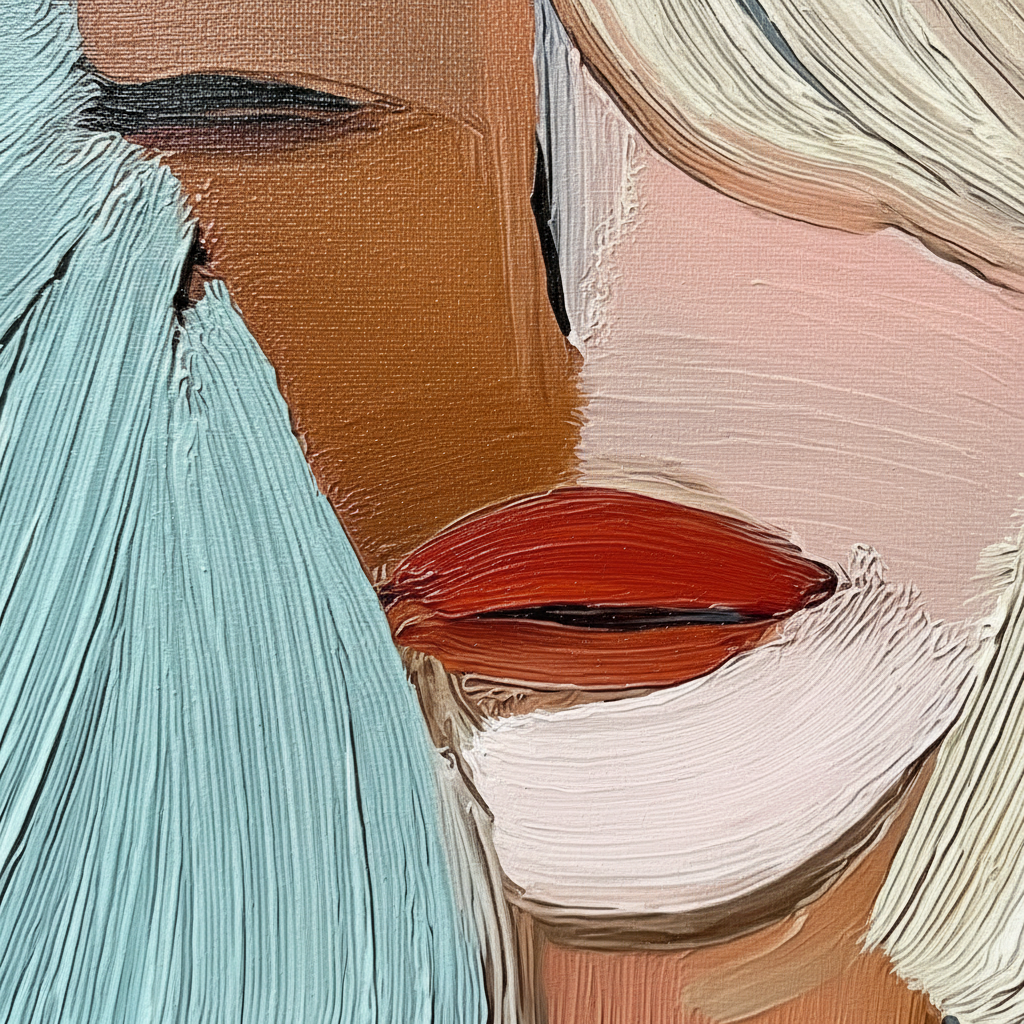
- Texture vs. Image: Is the texture independent of the image? In a print, the "texture" is often just a photograph of a canvas. In a glazed work, the physical relief of the oil paint (impasto) creates its own shadows.
- Support Integrity: Be wary of yellowing in white areas. This could be "Support Induced Discoloration" (SID), where impurities from the canvas are drawn into the paint. Professional artists prevent this by using high-quality primers and limiting the thickness of transparent mediums, according to Golden Artist Colors.
The Enduring Legacy of the Layer
The retreat from mass-produced "vanity" art toward hand-painted realism is a testament to our innate need for authenticity. A portrait built through multiple glazes is not a static object; it is a living thing that interacts with the light in your home, changing from morning to dusk.
By understanding the technical rigor involved—the chemical balancing of oils, the physics of light scattering, and the sheer patience required for drying—collectors can appreciate why these works command a premium. In an era of instant digital gratification, the slow, methodical application of a glaze remains the ultimate luxury.
Disclaimer: This article is for informational purposes only and does not constitute professional medical, legal, or financial advice. Pigment safety information is based on current environmental and health guidelines; always consult a certified industrial hygienist or a qualified professional when handling art materials in sensitive environments.
Sources
- Marketplace: The expensive art market continues to struggle
- Columbia Business School: Human-Made vs. AI Art Study
- Getty Conservation Institute: Color Science and Pigment Mixture
- Royal Society: Quantifying the link between art and property prices
- UPenn Neuroaesthetics: Visual Art in the Built Environment
- Golden Artist Colors: Support Induced Discoloration
- CDC NIOSH: Paint and Coating Hazards
- EPA: Indoor Air Quality and Low-VOC Paints