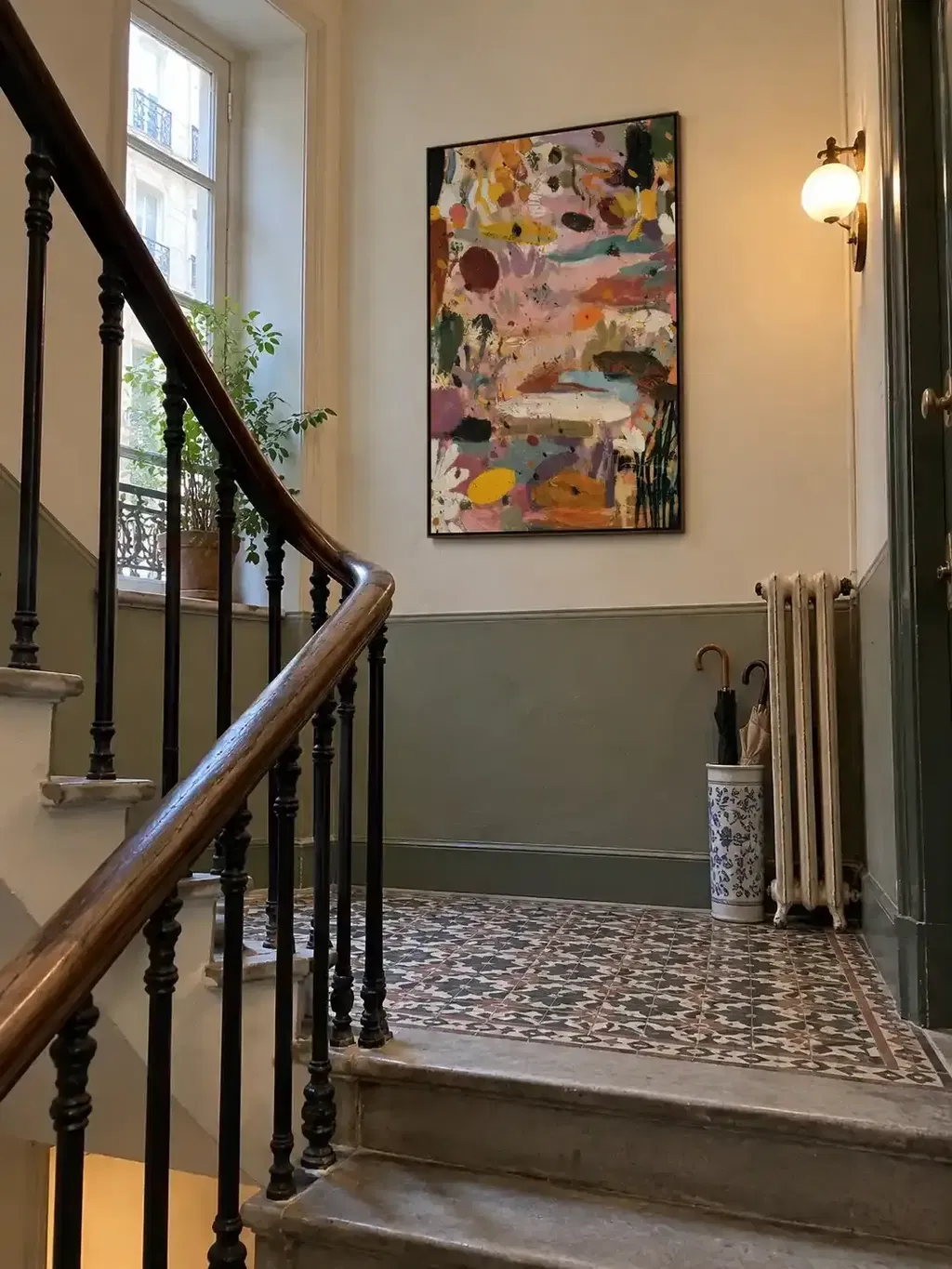
Oversized bedroom wall art works best when you size it to the bed and headboard first, not just the empty wall. For most rooms, bedroom wall art oversized feels balanced when it relates to the bed width, leaves breathing room around the furniture, and reads as one deliberate anchor instead of a last-minute fill-in. That is the main decision behind oversized bedroom wall art: proportion does more than style matching.
How Big Should Bedroom Art Be?
A good first pass is to make the art span about two-thirds of the bed or headboard width. That sizing rule is a practical starting point, not a hard standard, but it helps keep bedroom wall art oversized from looking too narrow on a wide wall or too heavy over a smaller bed. Interior design sizing guides commonly point to the two-thirds of the bed width heuristic because it keeps the composition tied to the furniture below.
For a queen or king bed, the question is not just "Can I fit something larger?" It is whether the art still feels related to the bed once the nightstands, lamps, and bedding are in view. If the room is visually quiet, a larger piece can work well. If the room already has a busy headboard or patterned bedding, the same size may feel crowded even when the measurements look fine.

The easiest self-check is to step back and ask whether the art still leaves visible wall around it on both sides and does not compete with the bed frame. If it does, the size is probably in the right zone. If it looks like the wall is filled only because the piece is large, the proportion is likely off.
Above-Bed Proportion Rules
Above-bed placement works when the artwork feels attached to the bed, not suspended above it. A common rule of thumb is to keep the bottom edge about 6 to 10 inches above the headboard and to place the center so the piece reads comfortably from standing view, with small room adjustments as needed. That keep the piece anchored above the headboard approach helps prevent the floating look that makes even a strong piece feel disconnected.
Sizing and spacing work together. If the art is wide enough but hangs too high, it can still feel awkward because the eye no longer reads it as part of the bed composition. If it sits too low, the wall can feel crowded and the headboard loses breathing room. In practice, the right height is the one that keeps the piece visually close to the bed without making the headboard feel compressed.

A single oversized textured work is often the cleanest choice when you want one focal point above the bed. It reduces decision clutter and can make the wall feel more intentional than a cluster of small pieces. That said, the one-piece approach works best when the artwork has enough width to hold the wall on its own and enough vertical clearance to avoid pressing into the bed zone.
If the piece feels too narrow, it usually disappears against the bed width. If it feels too tall, the room starts reading upward instead of resting on the bed line. If it feels too heavy, the problem is usually not the art alone, but the combination of size, placement, and what is already competing for attention around it.
What Changes in Smaller Bedrooms?
A compact bedroom does not automatically rule out oversized art, but it does make visual mass more important than style preference. A large piece can still work when the wall above the bed is relatively clear, the furniture is simple, and the art functions as the main anchor rather than one more object in a crowded room.
| Room Condition | What Usually Works | When Oversized Art Breaks Down |
|---|---|---|
| Compact bedroom or condo | One large piece with simpler surrounding décor | The wall already has many competing shapes, colors, or shelves |
| Standard primary bedroom | A wider piece that tracks the bed width and leaves side breathing room | The art is wide enough but hangs too high or too far from the headboard |
| Minimal furniture room | Strong texture and a single focal point can carry the wall | The piece is oversized in both width and visual weight |
The practical difference is this: in a smaller room, the question is not only how wide the art is, but how much visual weight it adds. If the room is sparse, bedroom wall art oversized can feel elegant and calm. If the room is already full, the same piece can make the bedroom feel tighter. In that case, a more restrained scale, or a simpler surface, usually gives you a better result.
If you are browsing options, extra large art or a broader big wall art selection can help you compare scale categories before you commit. The key is to keep the room condition in mind while you browse, not after checkout.
Why Texture Changes the Scale Read
Texture changes the way oversized bedroom wall art is perceived because it adds visual weight. In design terms, visual weight is the sense that an object is heavier or more important in the room, even when the measured size is unchanged. Raised surfaces, brush marks, and shadow lines pull the eye more strongly than a flat print, so a textured work can read larger and more present than the same dimensions in a smooth surface. A texture adds visual weight principle is why oversized textured pieces deserve a more careful scale check than flat art.
That does not mean texture is a problem. It means texture counts as part of the composition. A calming textured painting for bedroom use usually works best when the palette stays restrained and the surface detail has enough variation to feel rich without becoming busy. In other words, the piece can be bold in size and still feel soft in color.
Light also changes the read. Window light and lamp light can deepen the shadows in textured surfaces, which makes the piece feel more dimensional at some times of day than others. In a bedroom, that can be useful if you want presence without extra objects on the wall. It can also work against you if the texture is very active and the room already has strong patterns in bedding, rugs, or drapery.
Art in living spaces can support a calmer room mood, but that should be treated as a composition outcome, not a guarantee. The impact of art on health and well-being is better understood as background context for why many people prefer quieter walls in resting spaces. For this topic, the practical takeaway is simpler: the more texture you add, the more carefully you should control color, clutter, and lighting.
If you are comparing options, neutral wall art is often the easiest starting point for a bedroom because restrained color gives texture room to breathe. That is especially helpful when the art is large enough to become the room's focal point.
Common Bedroom Sizing Mistakes
- Picking width from the wall alone. If the piece ignores the bed width and headboard size, it can look accidental even when it seems large enough. The fix is to recheck the art against the furniture it sits above, not just the blank wall.
- Hanging it too high. When oversized art floats away from the headboard, the bed and artwork stop reading as one composition. Bring it closer so the wall still feels connected to the bed.
- Going large in both size and visual weight. A textured piece can feel more dominant than a flat one of the same dimensions. If the room is already busy, simplify the surrounding décor or choose a lighter-looking surface.
- Ignoring competing statement pieces. Multiple strong objects around the bed can dilute the impact of one oversized work. If the artwork is meant to be the anchor, let it own the wall.
- Choosing a piece that is technically big but still feels small. This usually happens on wide walls or with substantial furniture. The fix is to judge the art against the bed span, not against the delivery box.
A Bedroom Art Checklist Before You Buy
- Measure the bed or headboard width first, then compare the artwork to that span.
- Check for breathing room on both sides of the bed.
- Confirm the bottom edge can sit close enough to the headboard to feel connected.
- Look at the room's visual load: bedding, lamps, rug, and nightstands.
- Decide whether you want one anchor piece or a segmented wall.
If your room passes those checks, browse extra large artwork for a bigger anchor, or compare a neutral option like Serene Rift or Whispering Winds if that look already fits the room. Before you add anything to cart, confirm bed width, headboard height, and wall breathing room.
FAQs
How Big Should Art Be in a Bedroom?
Start with the bed and headboard, not the whole wall. A piece that spans about two-thirds of that width is often a balanced starting point for bedroom wall art oversized. If the room is busy, stay closer to that proportion; if the wall is sparse, you can usually go a little larger without losing calm.
What Size Wall Art Above a Bed Looks Balanced?
Balanced above-bed art usually feels connected to the headboard without crowding it. The practical check is whether the artwork leaves visible wall on both sides and sits close enough to the bed to read as part of the same composition. If it looks isolated, the gap or width is probably off.
Can Oversized Textured Art Work in a Small Bedroom?
Yes, if the wall is relatively clear and the room is not already visually crowded. In a small bedroom, the safest oversized choice is usually one piece that acts as the focal point. If you already have strong patterns, shelves, or a busy headboard, a slightly smaller or simpler surface is usually the better fit.
Why Does Texture Make a Large Bedroom Piece Feel Bigger?
Texture adds visual weight, which means the eye reads the piece as more substantial than a flat print of the same size. That matters most when the room already has a lot of competing detail. If you want texture to feel restful, keep the palette quiet and limit other high-contrast surfaces nearby.
Can a Single Oversized Piece Replace a Gallery Wall in the Bedroom?
Often, yes. One large work above the bed can simplify the room and create a clearer focal point than several smaller pieces. It works best when the goal is a calmer wall and the artwork has enough width to hold the bed visually. If the wall is long and very open, a gallery wall may spread the weight more evenly.