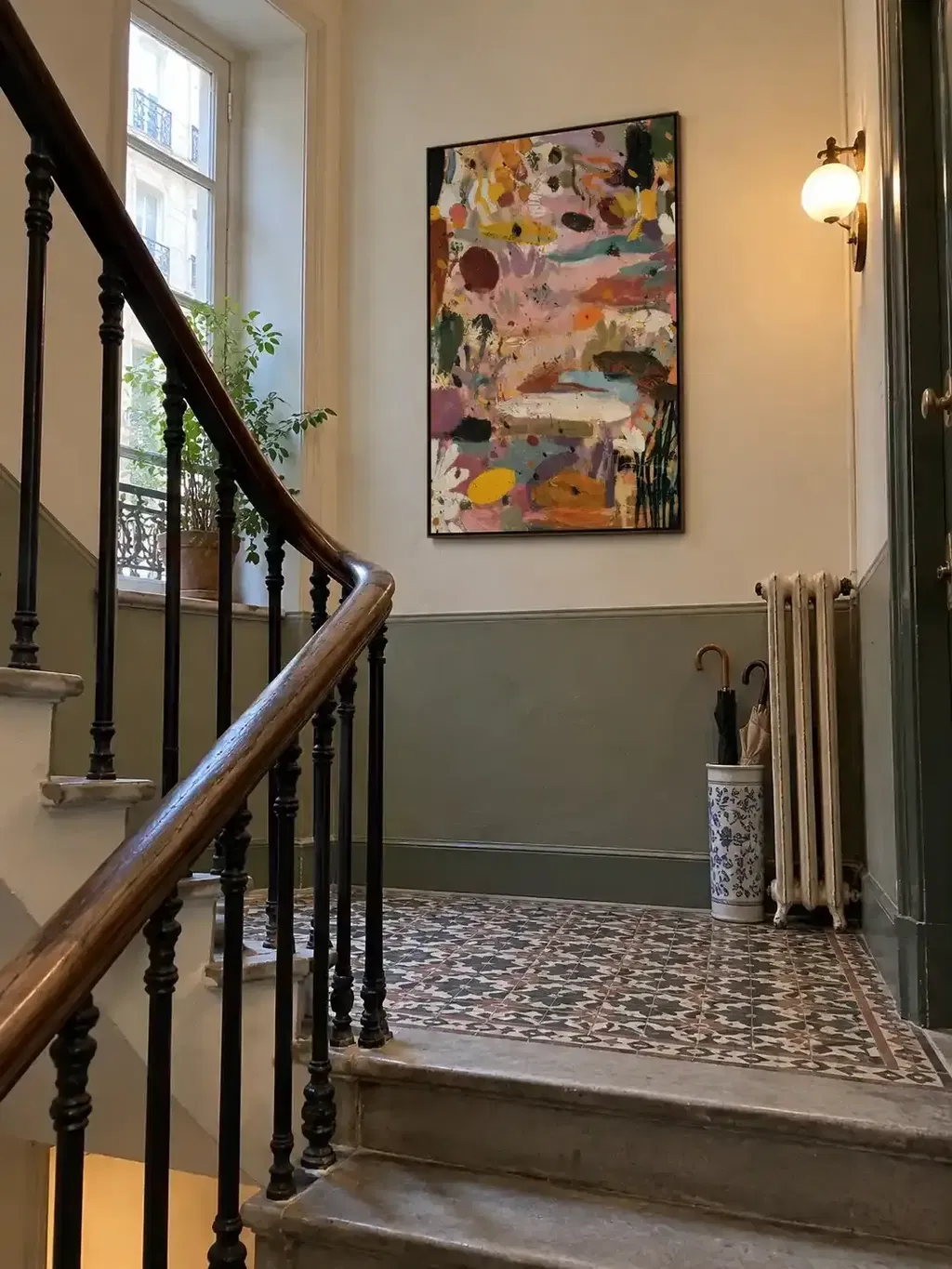
Original textured art gift choices work best when they feel personal, fit the room, and do not create extra work for the recipient. For shoppers considering an original oil painting, the question is not only whether it looks distinctive. It is whether the piece feels chosen, fits the wall, and is easy enough to live with after the move or milestone is over.
Why Original Textured Art Makes a Lasting Gift
Original textured art often lands better than a generic home accent because it feels chosen, not random. For many gift buyers, that is the real value: a piece with enough presence to stand out, but enough flexibility to live in a real home. In housewarming gifting, a thoughtful item can be something the recipient would not necessarily buy for themselves, which is why original art can feel especially fitting as an aspirational housewarming gift.
Texture also changes how a piece reads in a room. From the side, hand-applied marks, depth, and irregular surface detail can signal craftsmanship, but that is a buyer cue, not proof of authorship. If you are evaluating an original textured art gift, think in three filters: does it suit the person, does it suit the room, and can it be displayed without stress?

That is the safest way to treat a lasting gift. It should feel personal enough to matter, but broad enough to survive a move, a room refresh, or a change in taste.
Match the Artwork to the Recipient
The best original textured art gift starts with the recipient's home style, not with the most dramatic piece in the catalog. A calm, versatile work usually ages better than something that depends on a very specific trend or inside joke. For housewarming shoppers, the goal is to fit the recipient's existing space without making the gift feel generic.
Read the Room, Not Just the Mood Board
Look at the colors, finishes, and furniture the recipient already uses. Warm neutrals, matte black accents, light wood, brass, and soft fabrics all point toward different art choices. A textured piece should echo the room's tone, not fight it.
If you are unsure, use the home style as a filter before you use personal taste. A modern space may handle a quieter abstract well, while a more layered or eclectic room can carry stronger contrast. That kind of reading-the-room approach is a practical version of choosing original wall art with intent.

Choose Sentiment That Ages Well
Meaningful does not have to mean literal. A gift can feel personal through mood, color, or subject matter without being tied to one date, hobby, or in-joke. Calm, warmth, nature, and movement are safer emotional signals when you want the piece to last beyond one season.
This is where a thoughtful original textured art gift differs from novelty decor. The art should reflect the relationship or occasion, but it should still work if the recipient moves, redecorates, or changes the room later. That is why subtlety usually beats overcustomization.
Personalization Without Overdoing It
Subtle personalization is usually the sweet spot. A color family the recipient already likes, a subject that connects to a place or memory, or a texture style that feels aligned with their taste can be enough. You do not need to turn the artwork into a literal portrait of the occasion.
If the recipient has broad taste, keep the gift versatile. If the taste is tightly defined, be more specific. A heavily customized piece can feel thoughtful in the moment, but it can also become harder to place in future homes.
Get the Scale Right for the Space
Size is one of the easiest ways to miss with an original textured art gift. Too small, and the piece can disappear. Too large, and it can feel risky or awkward if the wall is not ready for it. When wall space is uncertain, conservative sizing is usually the safer move, and smaller or medium pieces are less likely to create placement regret.
| Size Band | Best Fit | Risk Level | What To Confirm |
|---|---|---|---|
| Small | Accent walls, shelves, tighter rooms, or gift situations with low wall-space certainty | Lower risk, but may feel understated | Confirm whether the recipient has a small wall, a bookshelf, or a layered gallery spot |
| Medium | Most housewarming gift scenarios, especially when the room layout is not fully known | Moderate risk, usually the safest balanced choice | Check the wall width, furniture placement, and whether the room needs a focal point |
| Large | Statement walls, open layouts, or recipients who already like bold decor | Higher risk if space is uncertain | Confirm the display wall and whether the piece will have enough visual breathing room |
The basic rule is simple: scale should match both the wall and the furniture below it. A piece above a sofa, console, or bed usually needs enough width and visual weight to feel intentional. If you do not know the final wall, a medium-sized gift is often easier to place than an oversized one.
If you want a category-level starting point, a room-focused browse like painting for living room options can help narrow the scale conversation before you buy.
Check Framing, Hanging, and Care Before You Gift
Display support matters as much as the artwork itself. A beautiful gift can still cause friction if the recipient has to source hardware, figure out framing, or guess how to handle the surface. For an original textured art gift, the pre-check should be practical, not decorative.
- Confirm whether the piece is ready to hang or needs framing, mounting, or extra hardware.
- Check the intended display location so you know whether the scale and orientation make sense.
- Ask whether the recipient is comfortable with occasional dry dusting and basic care.
- Make sure the delivery timing works if the gift needs to arrive before a move, party, or reveal.
- Treat transit protection as part of the gift, especially for heavier or highly textured work.
For handling, the clearest rule is authoritative: paintings should be carried with two hands from the sides of the frame or stretcher, never by the top, according to the Museum Conservation Institute's care guidance. That matters because textured surfaces can be more vulnerable to pressure, snagging, or awkward grip points.
Care should stay simple. If the recipient is likely to feel anxious about dust, moisture, or routine upkeep, textured art is a weaker fit than a flatter piece. A gift that looks easy to live with but turns into maintenance worry is less likely to feel lasting.
Use a Simple Gift Checklist Before Buying
Before you add an original textured art gift to cart, run through the same five checks every time: recipient style, occasion, size confidence, display support, and care tolerance. If any one of those feels shaky, the piece may still be beautiful, but it is not yet a confident gift fit.
- Does the style match the recipient's home, not just your own taste?
- Does the occasion call for a versatile piece or a more personal one?
- Do you know the wall size well enough to avoid a scale mismatch?
- Is the piece ready to display, or will it require extra setup?
- Would the recipient be fine with occasional dry dusting and basic handling care?
- Is the design flexible enough to work if the recipient moves or redecorates?
- Does the gift feel lasting, rather than tied to one short-lived trend?
If you can answer yes to most of those without hesitation, the piece is probably worth serious consideration. If not, choose a more versatile size or a less specific style. If you want to keep shopping within the category, start with original art or browse oil paintings for broader options that still feel gift-worthy.
Final Thoughts
The best original textured art gift is the one that fits the person first and the room second, with scale and care expectations checked before checkout. If the style feels right, the wall size is realistic, and the recipient will not mind simple upkeep, you are probably close to a lasting choice. Before you buy, confirm the display plan, then choose the piece that still feels right after a second look.
FAQs
How Do I Choose the Right Size Original Art as a Gift?
Choose the size based on how certain you are about the recipient's wall space. If the room is a guess, medium is usually safer than large, because it is easier to place and less likely to feel overwhelming. If you know the wall and furniture layout, you can be more confident about statement sizing.
Can I Personalize Original Textured Art Without Making It Too Specific?
Yes. The safest version of personalization is subtle: color, mood, subject, or texture style that connects to the recipient without locking the piece to one event or inside reference. That keeps the gift meaningful now and usable later in a different home or room.
Is Textured Art Harder to Hang Than Flat Wall Art?
Often, yes, but the real answer depends on the specific piece, its weight, and whether it comes framed or ready to hang. Check the setup details before gifting so the recipient is not surprised by extra hardware, framing, or placement needs.
What Styles of Original Art Make Good Housewarming Gifts?
Versatile styles tend to be the safest housewarming choices, especially calm abstracts, landscapes, florals, and neutral color palettes. The best style is still the one that fits the recipient's existing decor and does not depend on a trend to feel current.
How Can I Tell If a Painting Will Feel Meaningful as a Gift?
A painting feels meaningful when it connects the recipient, the occasion, and the room. The strongest gifts usually balance sentiment with flexibility, so the artwork feels personal without becoming hard to place or hard to keep over time.