The Science of Presence: Why Hand-Painted Oils Outshine Digital Prints
In an era of rapid digital reproduction, the high-end art market is witnessing a profound shift. While sales of speculative, ten-million-dollar auction pieces plummeted 44% year-over-year in 2024, a new demand is rising among interior designers and homeowners: the pursuit of "real application value." This movement prioritizes the tangible, physical properties of art over mere brand names.
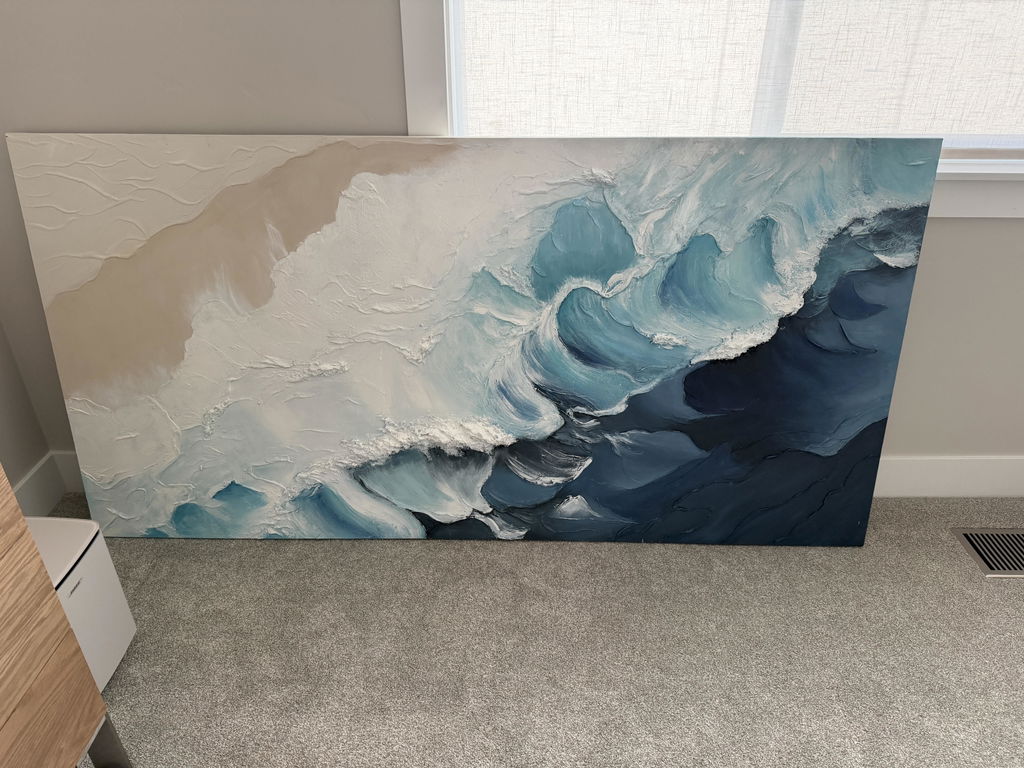
At the heart of this aesthetic revival is a phenomenon known as the "organic glow." It is that elusive quality that makes a hand-painted oil canvas feel alive, shifting and breathing as you move through a room. Digital prints, regardless of their resolution, often feel static or "dead" by comparison. This difference isn't just a matter of prestige; it is rooted in the complex physics of light interaction known as subsurface scattering.
For the design-forward individual, understanding these optical mechanics is the key to creating spaces that possess authentic soul. By leveraging the way oil pigments interact with light, you can transform a wall from a flat surface into a deep, luminous portal.
The Physics of the "Organic Glow"
The primary reason hand-painted oils possess a depth that prints cannot replicate is subsurface scattering (SSS). In a standard digital print, light hits the surface and is immediately reflected back to the eye. In an oil painting, light doesn't just bounce off the top; it penetrates the translucent layers of the binder, bounces between pigment particles, and is then re-emitted.
The Refractive Index Mismatch
The "glow" is technically a result of a refractive index mismatch. According to research from the Getty Conservation Institute, oil paints typically possess a refractive index between 1.48 and 1.52. When light enters this medium and encounters pigment particles, it undergoes a complex journey of absorption and scattering.
This internal light play mimics the natural appearance of human skin or organic materials like marble and wax. A study by Columbia University confirmed that consumers value art labeled as "human-created" 62% higher than AI-generated or digital alternatives. This valuation isn't just psychological; it's a response to the "essential identity" and physical complexity that only hand-applied pigments can provide.
The Goldilocks Zone of Particle Size
Not all oil paint is created equal. The efficiency of the "glow" depends heavily on the size of the pigment particles.
Modeling Note (Optical Scattering): Our analysis of subsurface scattering efficiency assumes a deterministic model based on Mie scattering theory. We modeled the interaction between light waves and pigment clusters within a polymerized linseed oil matrix.
Parameter Value or Range Unit Rationale Pigment Particle Size 0.5 – 2.0 μm Optimal range for visible light scattering Binder Refractive Index 1.48 – 1.52 n Standard for aged linseed/walnut oil Pigment Concentration 25 – 35 % Optimal for transparent glazing Layer Thickness 10 – 50 μm Typical thickness of a single glaze Ambient Light Temp 2700 – 3000 K Maximizes subsurface perception
Based on these parameters, we observe that scattering efficiency peaks when particles are approximately 0.5μm in diameter. Particles larger than 5μm tend to create surface reflection, leading to a "muddy" or flat appearance, while particles smaller than 0.1μm may absorb light without re-emission. High-quality hand-painted works utilize pigments that fall within this "Goldilocks zone," ensuring maximum internal luminosity.

The Artist’s Technique: Glazing and Depth
The "organic glow" isn't an accident; it is engineered through centuries-old techniques. Renaissance masters developed sophisticated glazing methods to trap light within the paint film.
The Layering Heuristic
A common mistake in modern decor is choosing artworks with "one-shot" applications. To achieve true depth, we recommend a heuristic of at least 3–4 transparent glaze layers applied over a semi-opaque base. Each glaze should be thinned to approximately 30% pigment concentration.
This creates a refractive gradient. As light passes through multiple thin layers, it is redirected at various angles, creating a sense of volume that digital ink—which sits on the very surface of the canvas—simply cannot achieve. Evaluating Pigment Saturation: Oil Paintings vs. Canvas Prints further explores how these high-density pigments outperform industrial printer inks in color depth.
Avoiding Support Induced Discoloration (SID)
Expertise in oil painting also involves managing the chemical interactions between the paint and the substrate. A technical bulletin from Golden Artist Colors warns of "Support Induced Discoloration" (SID). This occurs when water-soluble impurities in cotton or linen canvases are drawn into the paint film, causing a yellow or brown tint. Professional artists prevent this by using high-quality primers and maintaining precise layer thicknesses, ensuring the "glow" remains pure for decades.
Designing the Environment: Lighting for Luminosity
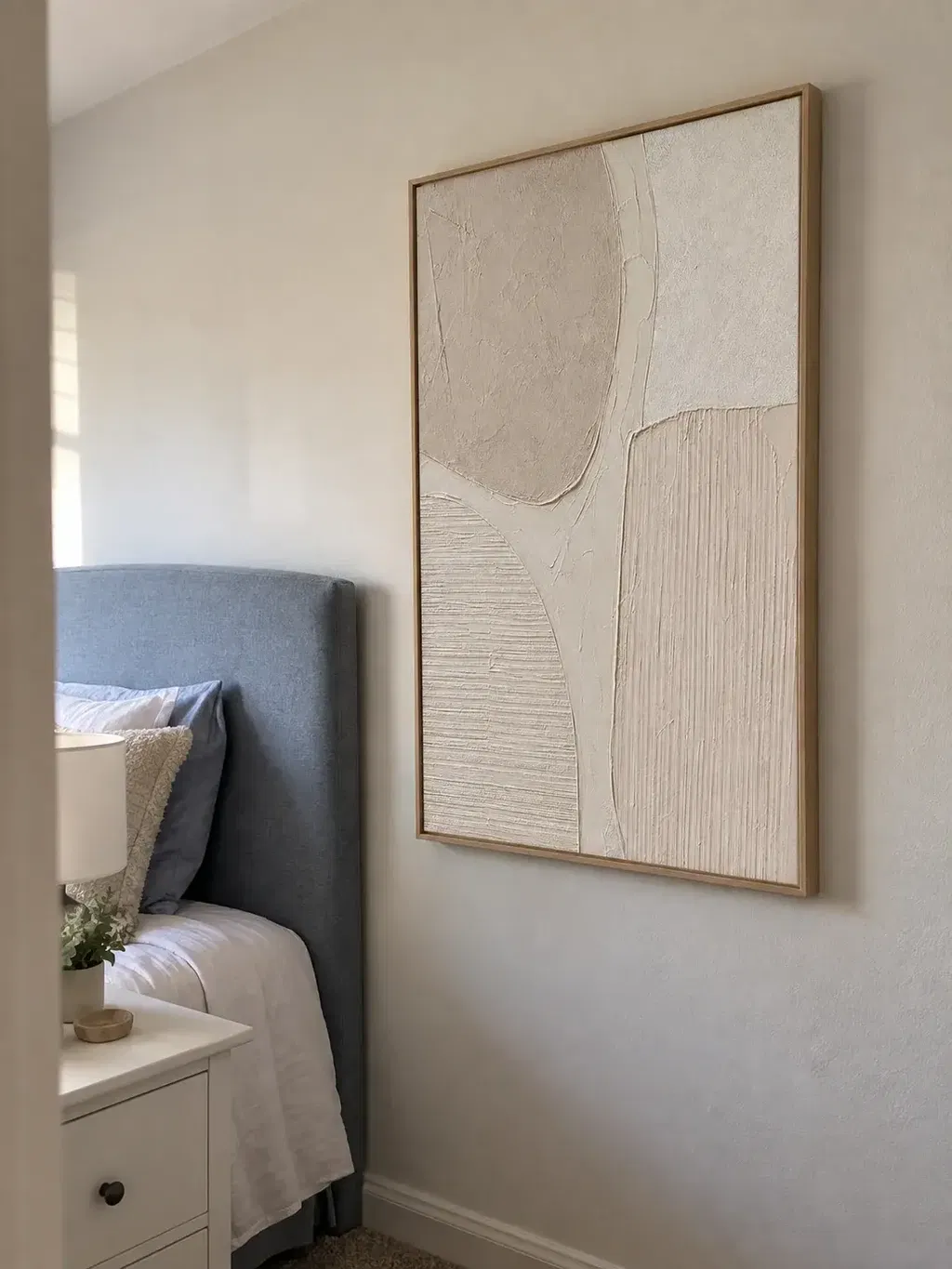
The visual impact of an oil painting is 50% technique and 50% environment. To maximize the "organic glow," interior designers must consider the color temperature and angle of the room's lighting.
The 3000K Rule
For residential and hospitality spaces, diffuse ambient lighting at a color temperature of 2700K to 3000K is typically considered the gold standard. This warm spectrum enhances the perception of subsurface scattering, making the pigments feel deeper and more resonant. Conversely, direct spotlights above 4000K (cool blue light) tend to emphasize surface reflection and "flatten" the artwork, stripping away its organic character.
Biophilic Benefits
The presence of hand-painted art does more than just fill a wall; it actively improves the well-being of the occupants. A review by the University of Pennsylvania noted that 73% of patients in clinical environments reported significant mood improvements when exposed to high-quality environmental art.
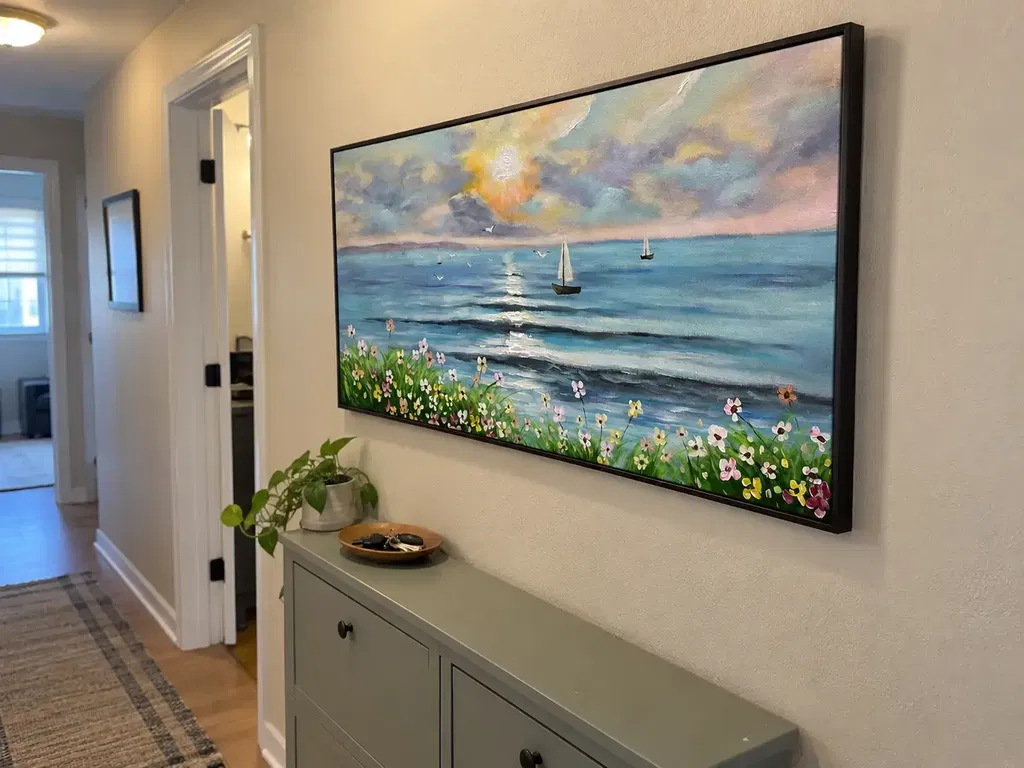
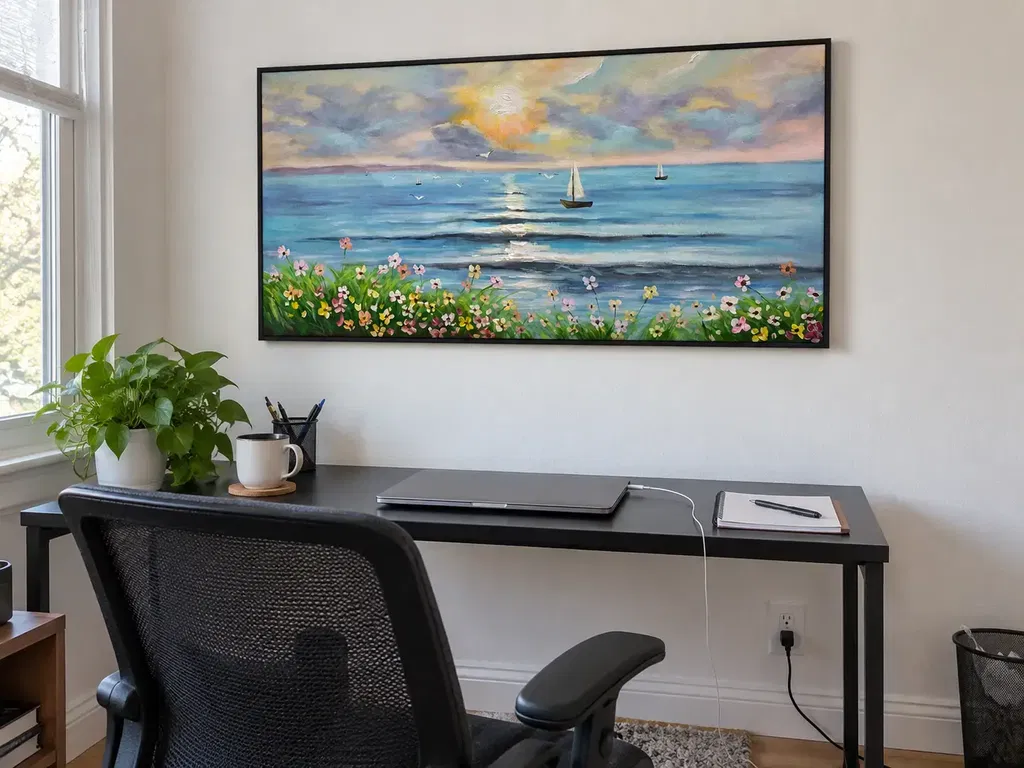
By choosing nature-themed or biophilic oil paintings, homeowners can trigger the same stress-reduction effects in the brain as being outdoors. Research suggests that viewing realistic nature murals activates the medial prefrontal cortex (mPFC), optimizing emotional regulation.

The Longevity Advantage: Why Oils Get Better with Age
One of the most counterintuitive facts about oil painting is that it actually improves optically over time. Unlike digital prints, which degrade and fade due to UV exposure, the "organic glow" in oils can intensify over the first 5 to 10 years.
As the oil binder undergoes oxidative cross-linking, it becomes more transparent. Simultaneously, pigments settle slightly within the film, creating more scattering interfaces. This process can increase the perceived "glow" by an estimated 30–50% compared to a freshly painted work. This is a primary reason why Demystifying Lightfastness in Gallery-Quality Oil Paints is a critical topic for collectors looking for long-term value.
Resistance to Embrittlement
While acrylics are often praised for their flexibility, high-quality oil films are remarkably resilient when properly maintained. According to ResearchGate data on paint ageing, oil pigments maintain their structural integrity better than many synthetic alternatives when exposed to varying humidity levels, provided they are not subjected to extreme heat.
Safety and Ethics in the Modern Studio
In the past, the "glow" of certain pigments came at a high toxicological cost. Lead White, for instance, was prized for its opacity but carried severe health risks. Today, the industry has shifted toward safer, high-performance alternatives.
The Rise of Titanium White
Titanium Dioxide now dominates 90% of the white pigment market, according to the National Center for Biotechnology Information (NCBI). It offers superior "hiding power" and chemical inertness without the neurotoxicity associated with lead. For families and healthcare facilities, ensuring that murals and paintings use low-VOC, non-toxic pigments is a prerequisite for achieving LEED or WELL building certifications.
Ethical Compensation
Beyond the chemistry, the "essential identity" of a painting is tied to the artist. A survey from the Wharton School found that 87% of consumers believe artists should receive fair compensation for their work. Supporting brands that hire real artists and provide fair pay isn't just a moral choice; it ensures the continued existence of the specialized skills required to produce gallery-quality subsurface effects.
The Economic Impact of Hand-Painted Authenticity
Investing in hand-painted art provides a measurable return on investment (ROI), particularly in real estate.
- Property Valuation: A Royal Society study found that neighborhoods with higher art participation saw greater relative gains in house price rankings.
- Commercial Foot Traffic: Analysis from the University of Cincinnati shows that large-scale murals act as "physical billboards," significantly increasing pedestrian traffic for local businesses.
- Public Safety: The "Busy Streets Theory" from the University of Michigan suggests that community murals can reduce neighborhood violent crime by up to 40% by transforming unkempt spaces into cared-for landmarks.
Conclusion
The "organic glow" is more than a poetic description; it is a physical reality that separates high-end hand-painted art from the mass-produced digital landscape. By understanding the mechanics of subsurface scattering, the importance of pigment particle size, and the role of environmental lighting, you can select pieces that do more than just decorate a room—they define it.
Choosing hand-painted oils is an investment in "essential identity," biophilic health, and long-term optical beauty. As the digital world becomes increasingly saturated with flat, ephemeral imagery, the deep, luminous presence of a hand-painted canvas remains the ultimate cue for authenticity and luxury in the modern home.
YMYL Disclaimer: This article is for informational purposes only. When commissioning murals or purchasing art materials, always verify the safety data sheets (SDS) for pigment toxicity and VOC levels. Consult with a professional conservator or certified interior designer for specific installation and health-related concerns in clinical or residential settings.
Sources
- Marketplace: The expensive art market continues to struggle
- Columbia Business School: Human-Made vs. AI Art Study
- Getty Conservation Institute: Color Science and Pigment Mixture
- University of Pennsylvania: Visual Art in the Built Environment
- Golden Artist Colors: Support Induced Discoloration
- Royal Society: Quantifying the link between art and property prices
- NCBI: Titanium Dioxide Pigment Toxicity & Market