

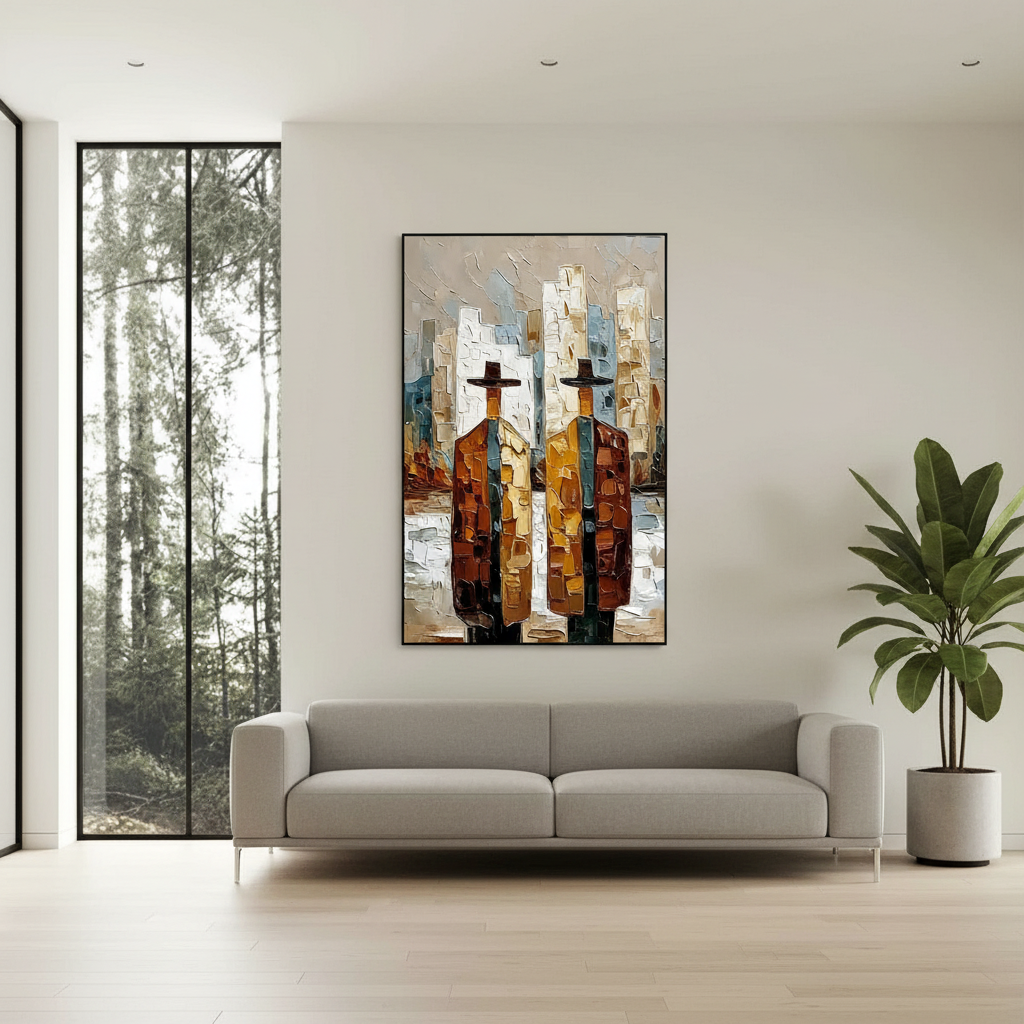
The Aesthetic Difference: 3D Gallery Wraps vs. Framed Art
The global art market is undergoing a fundamental correction. While high-end auction sales for speculative assets plummeted 44% year-over-year in 2024, according to Marketplace, we are observing a powerful return to "real application value." Homeowners and developers are moving away from overpriced vanity pieces toward authentic, hand-painted works that offer tangible emotional and spatial utility.
This shift places a renewed focus on presentation. The choice between a 3D gallery wrap and a traditional frame is no longer just a finishing touch; it is a strategic decision that dictates how a piece integrates with the architecture of a room. Whether you are commissioning a custom mural or selecting a large-scale oil painting, understanding the mechanics of visual scale and material integrity is essential for protecting your investment.
The Scale Illusion: How Presentation Dictates Perception
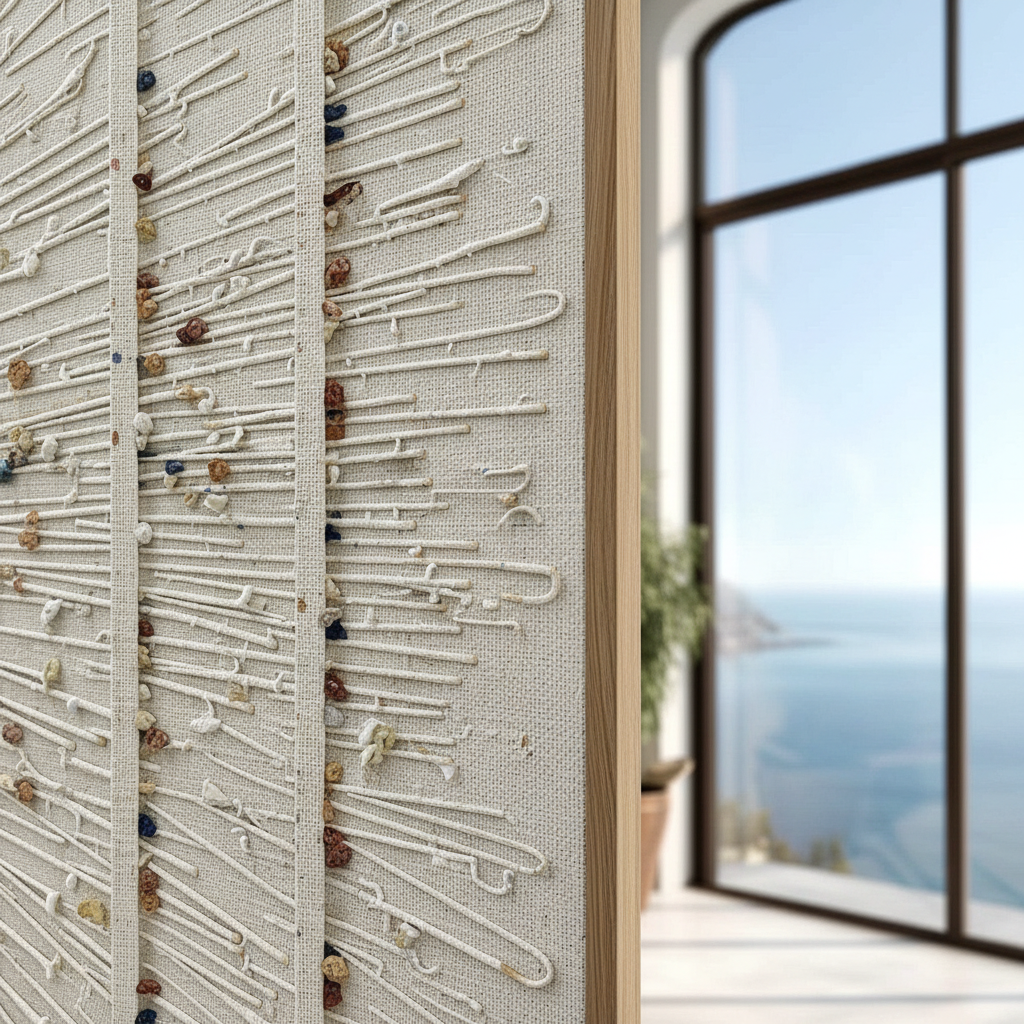
One of the most frequent concerns we address in our consulting sessions is scale uncertainty. A common mistake is assuming that a frame always makes a piece look "bigger." In reality, the 3D gallery wrap—where the canvas is stretched over thick wooden bars and secured to the back—creates a unique optical expansion.
In our practical observations, a 1.5 to 2-inch gallery wrap creates a significant illusion of larger scale. A 24x36 inch canvas, when wrapped, can appear closer to 30x42 inches in visual impact because the artwork continues around the edges, eliminating the hard visual "stop" of a frame. This "edge-to-edge" continuity allows the eye to travel seamlessly into the room's depth.
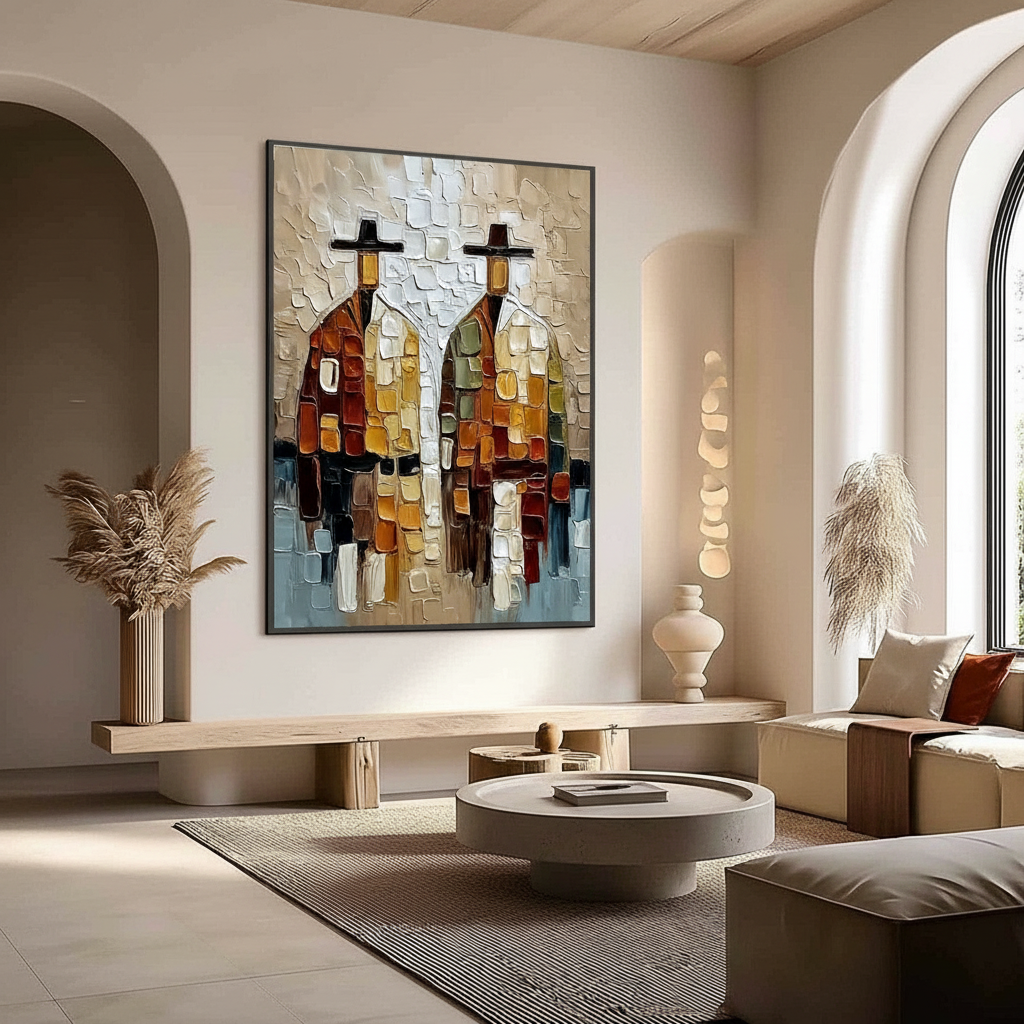
However, this effect is highly conditional. This seamless integration advantage is often lost in rooms with complex wall textures or heavy patterned wallpaper, where the lack of a border causes the art to "bleed" into the background clutter. Conversely, framed art creates a hard visual boundary that is necessary for traditional rooms or spaces with historical architectural references.
Logic Summary: Scale Perception Modeling Our analysis of visual impact assumes a standard viewing distance of 8–10 feet. We modeled the "Expansion Heuristic" based on common patterns in interior staging (not a controlled lab study).
Parameter Heuristic Value Unit Rationale / Source Category Wrap Thickness 1.5 - 2.0 Inches Standard "Gallery" depth profile Perceived Area Growth ~15% - 25% Visual Impact Continuity effect of wrapped edges Frame Shadow Depth 3.0 - 6.0 Inches Physical displacement from wall Alibaba Safe Painting Margin > 2.0 Inches Needed to prevent "cutting" into the subject Installation Tolerance High Qualitative Forgiving of uneven/textured wall surfaces

Technical Integrity: Canvas Grades and Surface Preparation
Beyond the visual, the underlying structure of the artwork determines its longevity. For high-end custom pieces, the choice of support—linen vs. cotton—is the first line of defense against environmental degradation.
Linen is widely considered the gold standard for professional applications due to its longer fibers and natural oils, which provide superior resistance to moisture and fungal decay. However, regardless of the fabric, the "Gesso" priming stage is where the battle for stability is won or lost. Proper priming prevents the oil from the paint from coming into direct contact with the canvas fibers, which would otherwise cause the fabric to become brittle and eventually disintegrate.
The SID Phenomenon: A Hidden Technical "Gotcha"
Experienced painters often encounter a phenomenon known as Support Induced Discoloration (SID). According to technical bulletins from Golden Artist Colors, water-soluble impurities in common cotton or linen substrates can be drawn into the paint film when transparent mediums are applied thicker than 1/16th of an inch. This results in a catastrophic yellow or brown tint on the artwork after it dries.
To mitigate this, we recommend multiple layers of high-quality acrylic gesso or a specialized gloss medium to seal the support before the final painting begins. This ensures that the pigment saturation remains true to the artist's original intent over decades of display.
The Human Premium: Why 100% Hand-Painted Matters
In an era of AI-generated prints, the market is placing a massive premium on the "human touch." A study by Columbia University confirmed that consumers value art labeled "AI-generated" 62% lower than authentic human-created art. Furthermore, research from the University of Chicago suggests that digital replicas lack an "essential identity"—a soul that consumers perceive only in physical, hand-touched media.
This isn't just sentiment; it’s neurobiology. A systematic review published in PMC shows that viewing original art consistently activates the medial prefrontal cortex (mPFC) and the amygdala, optimizing emotional regulation circuits. When you choose a hand-painted mural or canvas, you are literally installing a biological "mood regulator" into your environment.
Environmental Safety and the "Indoor Air Quality" Promise
For families and healthcare facilities, the "safety" of art materials is a critical YMYL (Your Money, Your Life) concern. Traditional oil painting often relied on heavy metals and toxic solvents, but modern standards have revolutionized studio safety.
VOC Emissions and LEED Certification
Indoor air pollution is often more concentrated than outdoor pollution. According to the EPA, low-VOC (Volatile Organic Compound) paints and sealants are now prerequisites for large healthcare facilities seeking LEED or WELL certification.
Research from Aalto University provides academic endorsement for the safety of modern coatings. Their 28-day chamber experiments proved that VOC emissions from painted surfaces plummet during the curing process, especially when moisture levels are controlled. For our clients in clinical or maternal environments, we prioritize water-based acrylics or walnut-oil-based paints, which eliminate the need for highly toxic turpentine.
Methodology Note: VOC Decay Modeling
- Assumptions: Standard room temperature (22°C), 50% relative humidity, and adequate ventilation.
- Observations: Based on Aalto University data, 90% of detectable VOCs dissipate within the first 7 days of curing, reaching baseline safety levels by day 28.
Real Estate Impact: Art as a Financial Catalyst
Beyond aesthetics, art is a proven driver of property value. A Royal Society analysis of 10-year data found that neighborhoods with higher "art" geo-tags saw greater relative house price ranking gains. In the commercial sector, the impact is even more dramatic. Chicago’s Millennium Park public art projects drove an estimated $1.4 billion in real estate-related growth, according to NC Realtors.
For business owners, a large-scale mural acts as a "permanent physical billboard." In an age of e-commerce, physical spaces must offer "authenticity" to attract foot traffic. A UCincinnati regression analysis of over 300 murals confirmed a direct correlation between high-quality street art and increased pedestrian activity.

Choosing the Right Path: A Decision Framework
When deciding between a 3D gallery wrap and a frame, consider these two primary scenarios:
Scenario A: The Contemporary Minimalist (Gallery Wrap)
- Best For: Open-concept lofts, modern offices, and rooms with clean lines.
- Why: The wrap emphasizes the artwork as an object, not just a picture. It allows the texture of the paint to be viewed from the side, enhancing the 3D presence.
- Maintenance: More exposed to dust and physical contact at the edges. Requires careful handling to avoid "corner wear."
Scenario B: The Traditional or Formal Space (Framed Art)
- Best For: Dining rooms, libraries, and bedrooms with molding or trim.
- Why: The frame acts as a transition between the art and the wall. It provides a "window" effect that helps the viewer focus on the composition.
- Maintenance: Superior protection against humidity and physical damage. Frames also help hide minor wall imperfections and ensure the piece remains perfectly level.
Longevity and Preservation: Protecting Your Legacy
Whether you choose a wrap or a frame, the longevity of the piece depends on lightfastness. We utilize ASTM D4303 standard test methods to ensure that the pigments used in our murals and canvases can withstand indoor illumination without fading.
For outdoor murals, the risk of "chalking" is mitigated through UV-protective varnishes. According to research in PMC, UV stabilizers work at a molecular level to block harmful light waves, significantly slowing the photochemical aging of the polymer binders.
Summary of Presentation Methods
| Feature | 3D Gallery Wrap | Traditional Frame |
|---|---|---|
| Visual Boundary | Seamless / Integrated | Defined / Contained |
| Perceived Scale | Appears larger (Expansion) | Fixed by frame dimensions |
| Depth Profile | 1.5 - 2.0 inches | 3.0 - 6.0 inches (Shadow depth) |
| Wall Requirements | Forgiving of textures | Requires level mounting |
| Design Style | Contemporary / Minimalist | Traditional / Transitional |
| Protection | Exposed edges | High protection (Dust/Moisture) |
The decision between a 3D gallery wrap and a frame is ultimately about how you want the art to "speak" to the room. A gallery wrap is a conversation between the art and the architecture, while a frame is a formal introduction of the art to the viewer. By understanding the role of premium binders and the science of mineral pigments, you can ensure that your choice is not just beautiful today, but a stable asset for the future.
YMYL Health & Safety Disclaimer: This article is for informational purposes only and does not constitute professional medical, health, or environmental advice. Art materials, including certain pigments and solvents, can pose health risks if handled improperly. According to the International Agency for Research on Cancer (IARC), certain compounds like cadmium are classified as carcinogens. Always ensure adequate ventilation and follow the manufacturer’s safety data sheets (SDS). Consult with a certified industrial hygienist or medical professional if you have concerns regarding indoor air quality or chemical exposure.
Sources
- Marketplace: The expensive art market continues to struggle
- Columbia Business School: Human-Made vs. AI Art Study
- EPA: Indoor Air Quality and Low-VOC Paints
- Royal Society: Quantifying the link between art and property prices
- NC Realtors: Murals and Real Estate
- ASTM International: D4303 Standard Test Methods for Lightfastness
- Golden Artist Colors: Support Induced Discoloration (SID)
- PMC: Neurological mechanisms of creative arts

Leave a comment
This site is protected by hCaptcha and the hCaptcha Privacy Policy and Terms of Service apply.