The Tactile Revolution: Why Texture is the Soul of Modern Interiors
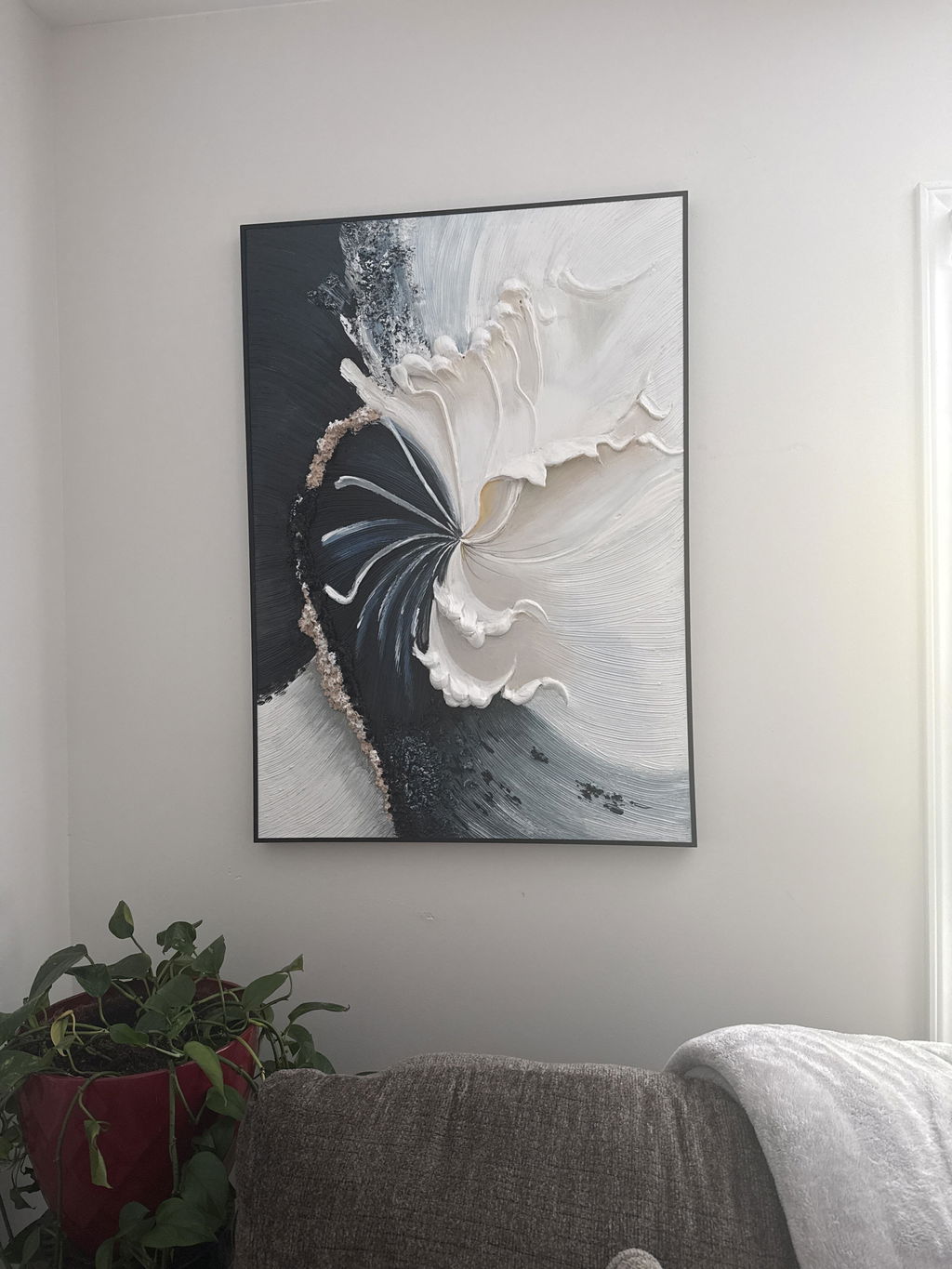
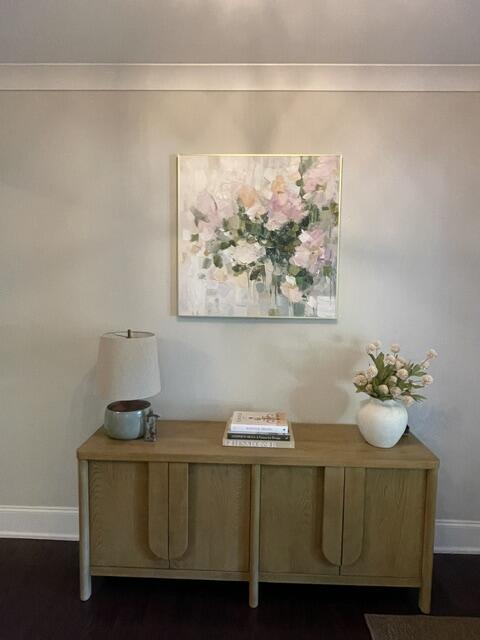
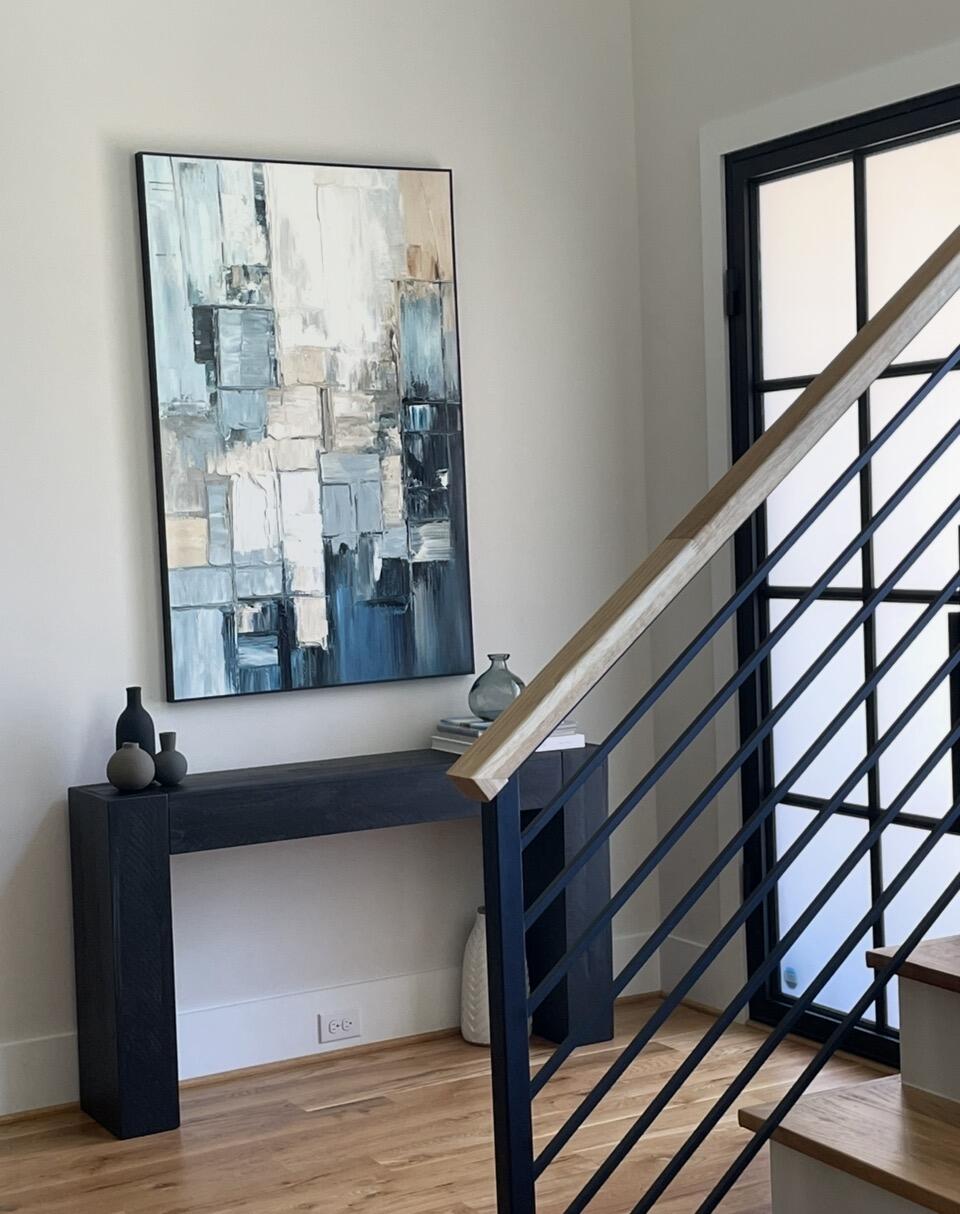
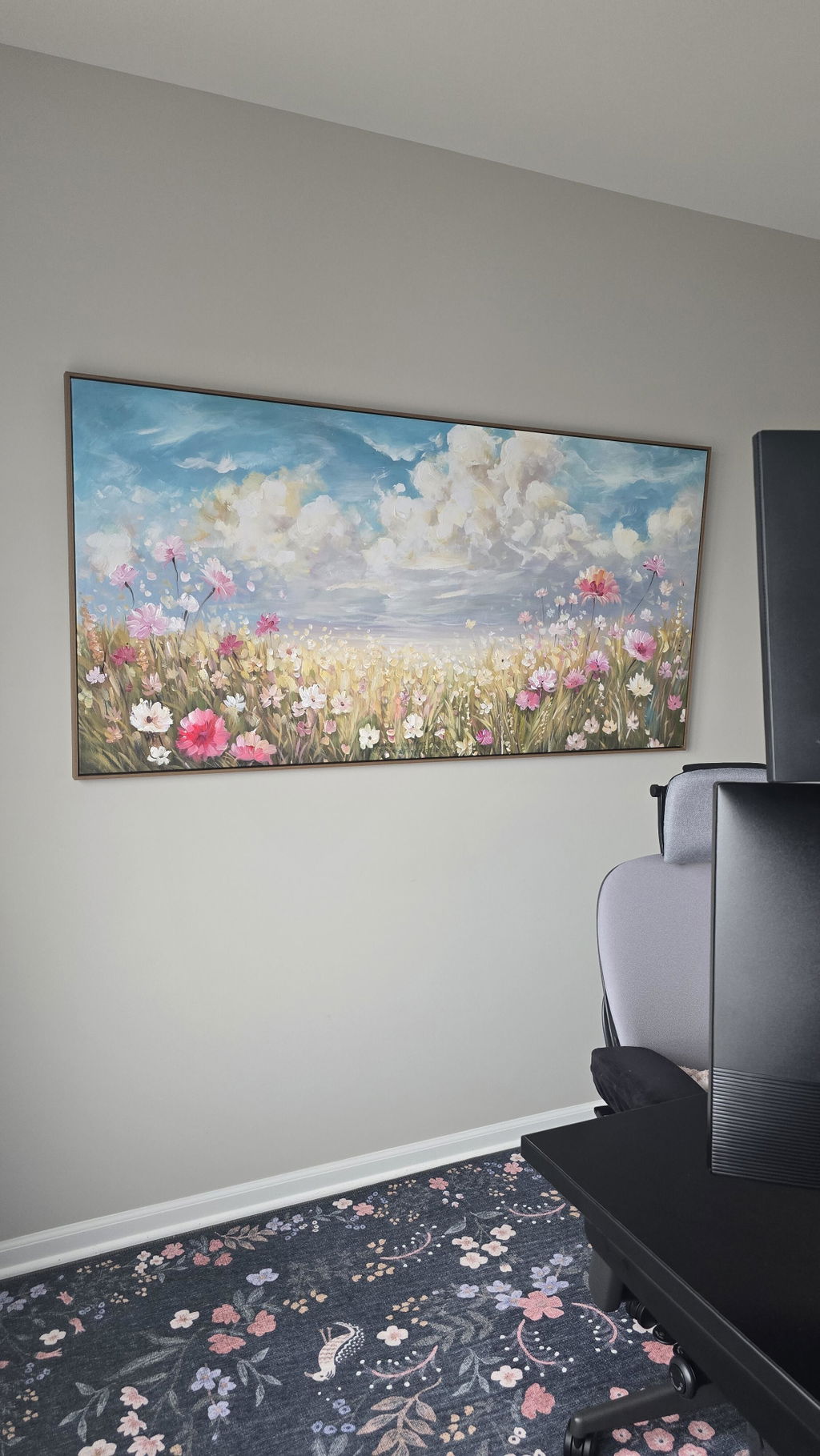
In an era where digital saturation has reached its zenith, the luxury market is witnessing a profound "retreat to reality." While high-end auction sales for purely financial art assets plummeted by 44% in 2024, according to Marketplace, a counter-trend has emerged: a return to works with tangible, emotional, and application-based value. For the modern homeowner, the "camera-ready room" is no longer about flat prints; it is about the "essential identity" found only in hand-painted works.
Research from the University of Chicago suggests that consumers perceive a collapse in value when viewing digital replicas, as they lack the artist’s "essential identity." This is further quantified by Columbia University, which found that art labeled as AI-generated is valued 62% lower than authentic human-created pieces. The reason is simple: texture. The physical relief of oil paint provides a microtopography that optical microprofilometry proves is crucial to aesthetics (Sensors MDPI).
Choosing the right "height" or impasto level for your artwork is not merely a stylistic choice—it is a technical decision that affects how a room feels, how light behaves, and even the structural requirements of your walls.

The 3:1 Rule: Calculating Optimal Texture Height
One of the most common mistakes in art selection is a mismatch between the painting's texture and the room's scale. A subtle texture in a cavernous hall becomes visually flat, while a bold impasto in a small powder room can feel claustrophobic and aggressive.
To solve this, experienced interior designers often utilize a specific heuristic: the 3:1 Viewing Distance-to-Texture Height Ratio.
Logic Summary: The 3:1 Heuristic
- Formula: Viewing Distance (feet) / Texture Height (inches) ≈ 3.
- Purpose: Ensures the three-dimensional qualities of the paint remain visible and impactful from the primary vantage point.
- Boundary Condition: This ratio is a baseline for "dramatic presence." Subtle, minimalist spaces may prefer a 6:1 ratio for understated elegance.
Scenario Modeling: Texture by Room Size
| Room Type | Typical Viewing Distance | Recommended Texture Height | Visual Effect |
|---|---|---|---|
| Large Gallery/Great Room | 12–15 Feet | 4–5 Inches (Heavy Impasto) | Maintains presence across large voids. |
| Standard Living Room | 6–9 Feet | 2–3 Inches (Medium Impasto) | Balanced relief that catches ambient light. |
| Small Office/Entryway | 3–5 Feet | 0.5–1.5 Inches (Light Texture) | Detailed, intimate tactile quality. |
| Powder Room | 1–3 Feet | Subtle/Flat (Glazing) | Focuses on color depth rather than relief. |
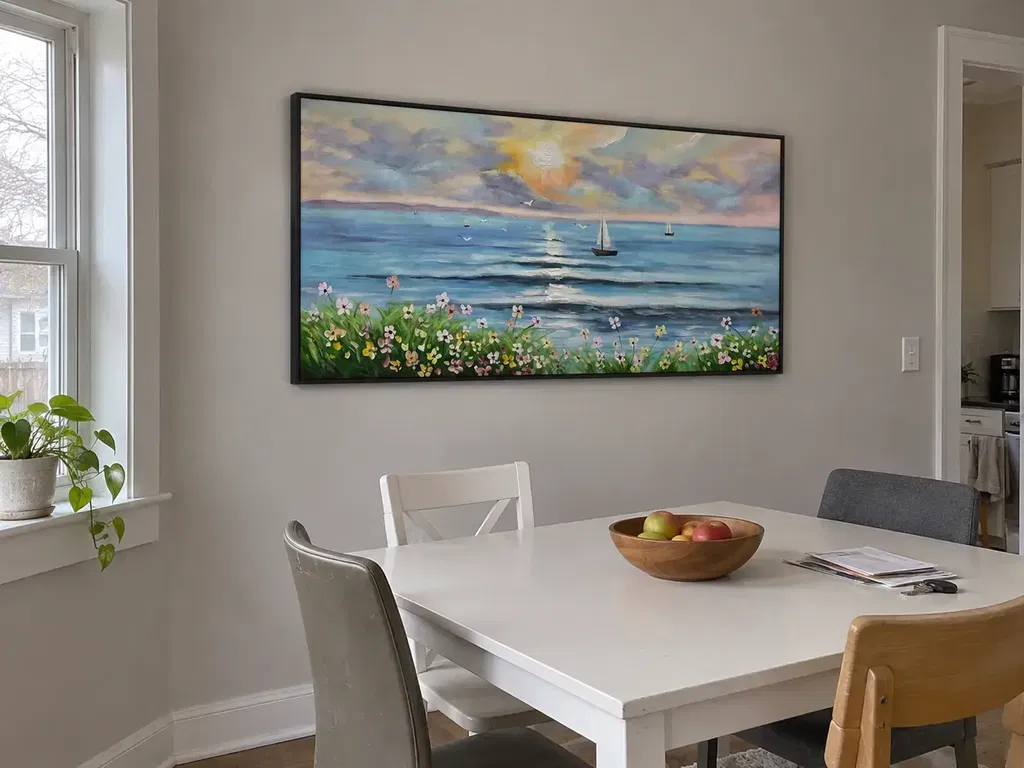
The National Kitchen & Bath Association (NKBA) 2025 Trends noted a surge in "wrapping mural wallpaper" for immersive escapism. However, for those seeking true luxury, hand-painted panoramic murals offer a level of "absolute authenticity" that digital wraps cannot replicate.
Lighting: The Invisible Sculptor of Impasto
Texture does not exist in a vacuum; it is revealed by light. The way your room is lit should dictate the impasto level you choose.
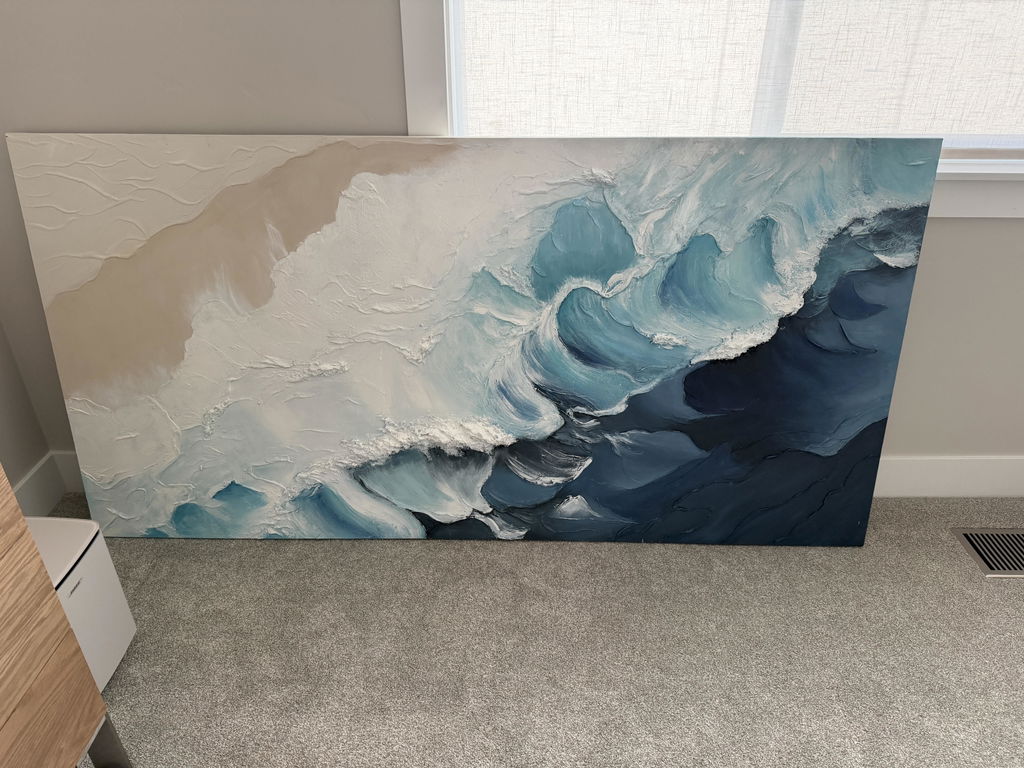
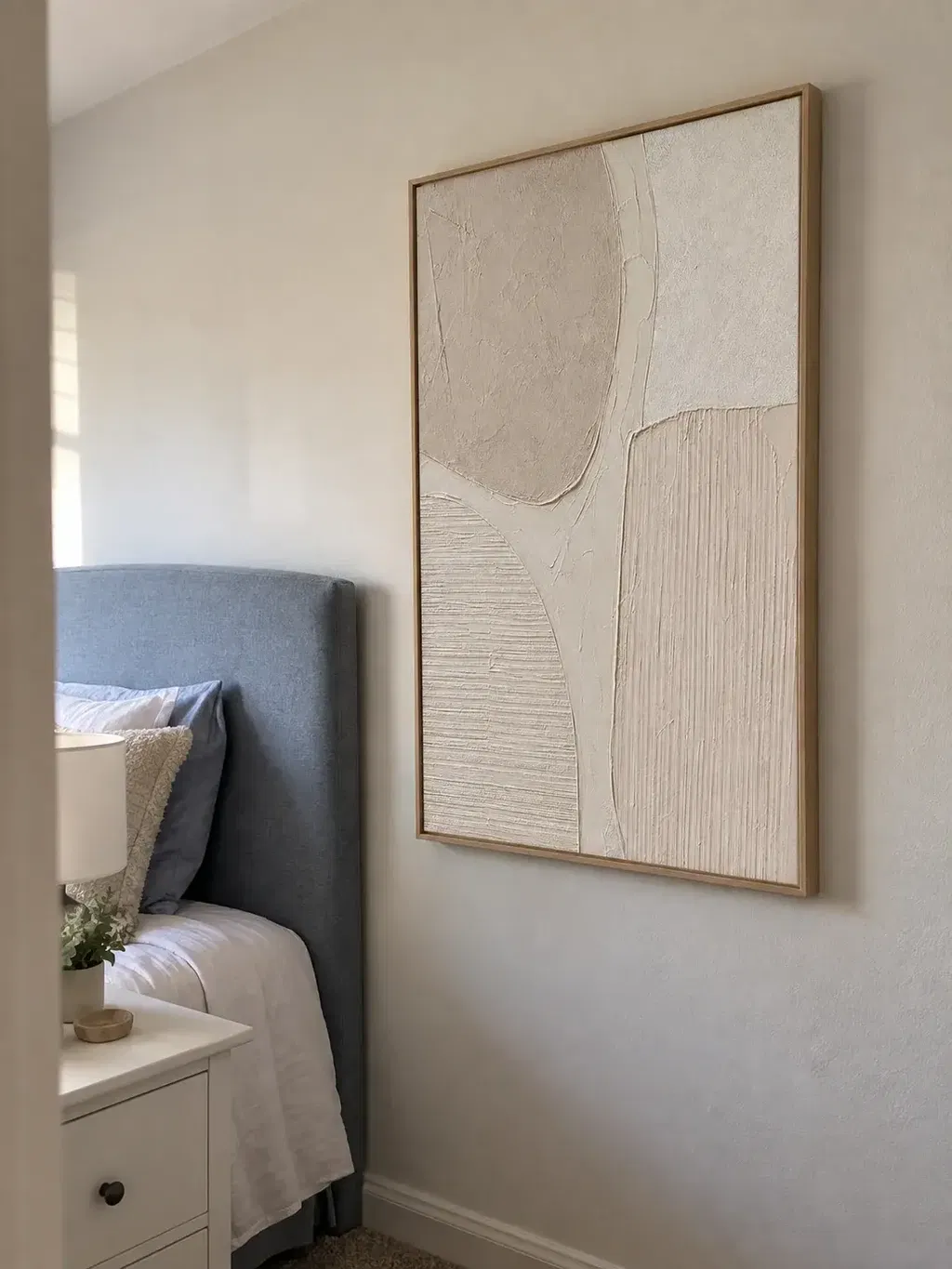
Rooms dominated by diffuse natural light tend to soften shadows. In these spaces, a more aggressive impasto is often required to prevent the artwork from looking flat during the day. Conversely, rooms with artificial directional lighting (such as recessed spotlights or track lighting) create sharp, high-contrast shadows. These shadows act as a multiplier for the paint's relief.
According to research on optical scattering in pigment suspensions, the refractive index and surface geometry are the root causes of color saturation. When directional light hits a thick ridge of paint, it creates a "shadow-side" that deepens the perceived color, while the "highlight-side" increases luminosity. This creates a dynamic viewing experience that changes as you move through the room.

The Structural Reality: When Customization Becomes Engineering
While "more is better" is a common sentiment in impasto art, there is a hard physical limit to how much paint a canvas—and a wall—can hold. This is an often-overlooked "gotcha" in the custom art world.
Every 1/4-inch layer of oil paint adds approximately 2–3 lbs per square foot of weight. For a standard 24x36 inch painting, a 1-inch thick impasto (created via multiple layers) can result in a piece weighing between 18 and 24 lbs. According to structural guidelines from Engineer Fix, standard 1/2-inch drywall typically has a safe hanging capacity of only 5–10 lbs when using standard nails or light-duty hooks.
Methodology Note: Weight & Mounting Analysis
- Assumption: Standard professional oil paint density plus heavy-duty wooden stretcher bars.
- Modeling: Deterministic weight-per-layer calculation based on palette-knife coverage rates.
- Safety Limit: We recommend hitting a wall stud for any piece exceeding 20 lbs or using toggle bolts rated for double the artwork's weight.
Furthermore, extreme impasto levels require specialized drying protocols. Each additional 1/4-inch layer can add 2–4 weeks to the "touch-dry" time and months to the full cure time. Fine Art Tutorials notes that improper layering in amateur works can lead to structural failure, such as cracking or "skinning," where the top layer dries while the interior remains liquid.
The Science of Longevity: Beyond the Surface
When you invest in a hand-painted piece, you are investing in a chemical structure. The longevity of that structure depends on the quality of the pigments and the stability of the substrate.
Support Induced Discoloration (SID)
A common technical failure in modern art is Support Induced Discoloration. As Golden Artist Colors explains, water-soluble impurities in cotton or linen canvases can be drawn into the paint film if transparent mediums are applied too thickly (specifically over 1/16th of an inch). This results in a yellow or brown tint that ruins the artwork's clarity. Professional-grade priming and sizing are essential to prevent this "wicking" effect.
Lightfastness and Pigment Quality
Not all colors are created equal. The ASTM D4303 Standard defines how paints are tested for lightfastness using xenon-arc radiation to simulate years of indoor sunlight. While many believe oil "holds color" better than acrylic, The National Gallery in London proved that certain pigments, like Prussian Blue, fade at identical rates regardless of the medium (oil, acrylic, or egg tempera). The key is the pigment's chemical stability, not just the binder.
Health, Safety, and Ethical Artistry
In today's market, "luxury" is increasingly synonymous with "responsibility." The Gallery Climate Coalition reports that 87% of cultural audiences are deeply concerned about the climate crisis. This extends to the air quality of the homes where the art resides.
Indoor Air Quality (IAQ)
Traditional oil painting often involves volatile organic compounds (VOCs) found in solvents like turpentine. However, academic research from Aalto University shows that modern coatings on wood substrates emit significantly lower VOCs once cured. For healthcare facilities or nurseries, achieving LEED certification requires low-VOC paints, making the transition to water-based acrylics or walnut-oil-based paints a functional necessity.
The Human Element
Beyond the chemistry, there is the ethics of production. A survey of artists in Cincinnati revealed that the market often undervalues the "invisible labor" of hand-painting. When purchasing custom art, 87% of consumers agree that artists should receive fair compensation (Wharton School). Choosing a brand that prioritizes fair trade and supports local artisans—including female painters who still face a significant gender pay gap in the industry (NMWA)—adds a layer of moral value to the aesthetic investment.
The Psychological and Economic ROI of Art
Art is more than decor; it is a catalyst for well-being and property value.
- Mental Health: A University of Pennsylvania review found that 73% of patients reported significant mood improvements when exposed to environmental artworks. Large-scale nature murals, in particular, activate the medial prefrontal cortex (mPFC), optimizing emotional regulation (NCBI).
- Property Value: Data from the Royal Society indicates a direct correlation between "art-rich" environments and relative house price gains. In commercial sectors, the "Millennium Park effect" in Chicago drove $1.4 billion in real estate-related growth, proving that murals and public art are powerful economic engines (NCALTORS).

Practical Steps for Selecting Your Impasto Level
If you are ready to commission or purchase a textured piece, follow this expert checklist to ensure a successful integration into your space:
- Measure Your Primary Viewing Distance: Use the 3:1 rule to determine if you need a "Presence Piece" (heavy impasto) or an "Intimate Piece" (light texture).
- Audit Your Lighting: If your room relies on overhead ambient light, consider a medium-high impasto to create depth. If you have directional cans or track lights, a medium texture will suffice as the shadows will be naturally amplified.
- Verify Wall Integrity: For any piece with texture exceeding 1/2 inch, ensure you have a stud-finder and appropriate heavy-duty mounting hardware.
- Check for "Odorless" Myths: If you are sensitive to chemicals, remember that "odorless" does not mean "non-toxic." Princeton University EHS warns that chronic inhalation of even odorless mineral spirits can cause neurological damage. Opt for water-based acrylics or solvent-free oils for superior indoor air quality.
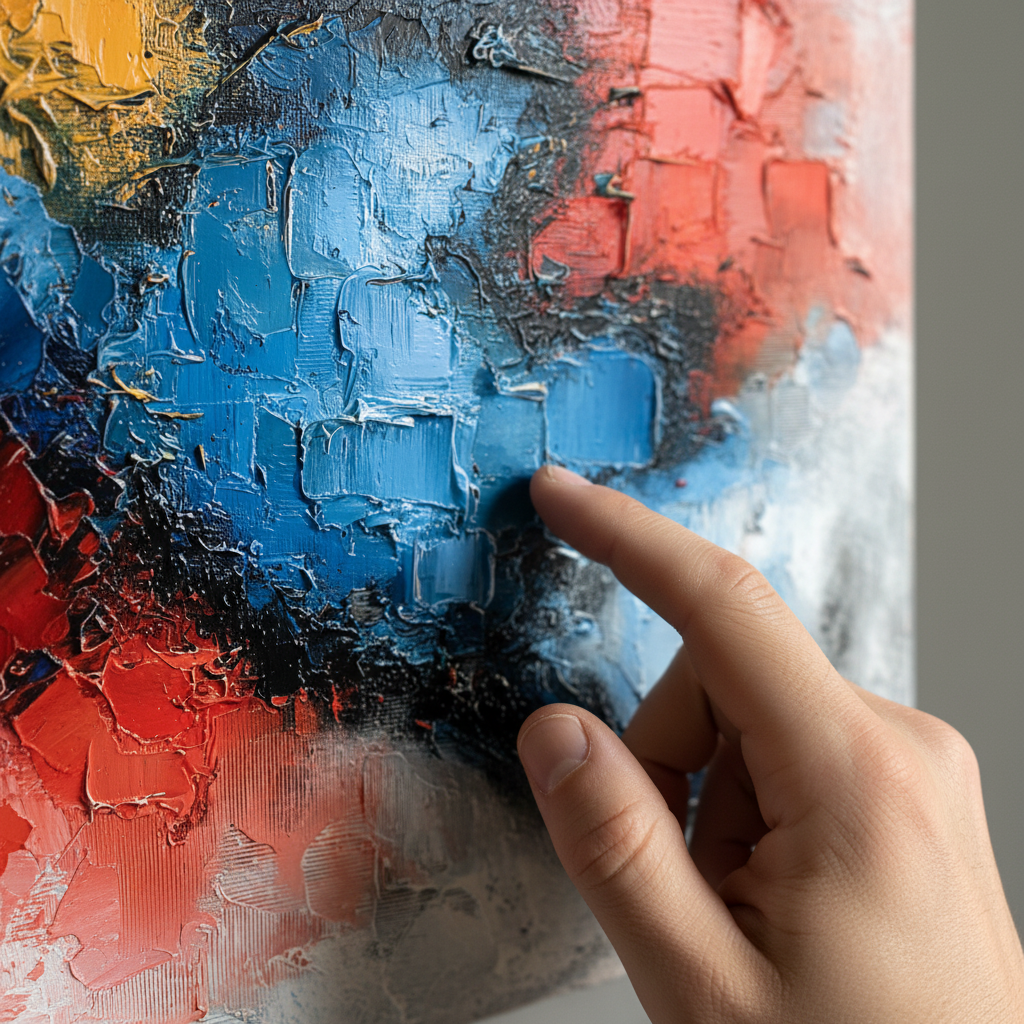
- Request a Texture Mock-up: Before committing to a large-scale custom work, ask for a small sample or a high-resolution macro photo of the intended impasto level to observe how it interacts with your specific lighting conditions.
By understanding the intersection of aesthetics, physics, and structural engineering, you can move beyond the "flatness" of digital decor and bring the irreplicable soul of hand-painted texture into your home.
Disclaimer: This article is for informational purposes only. When hanging heavy artwork or using art materials in poorly ventilated spaces, please consult with a professional installer or environmental health specialist. Structural requirements vary by building age and wall material.
Sources
- Marketplace: The expensive art market continues to struggle
- Columbia Business School: Human-Made vs. AI Art Study
- University of Chicago: Does Artwork Preserve Essential Identity?
- Royal Society: Quantifying the link between art and property prices
- ASTM International: Standard Test Methods for Lightfastness
- Golden Artist Colors: Support Induced Discoloration (SID)
- Engineer Fix: How Much Weight Can Drywall Hold?