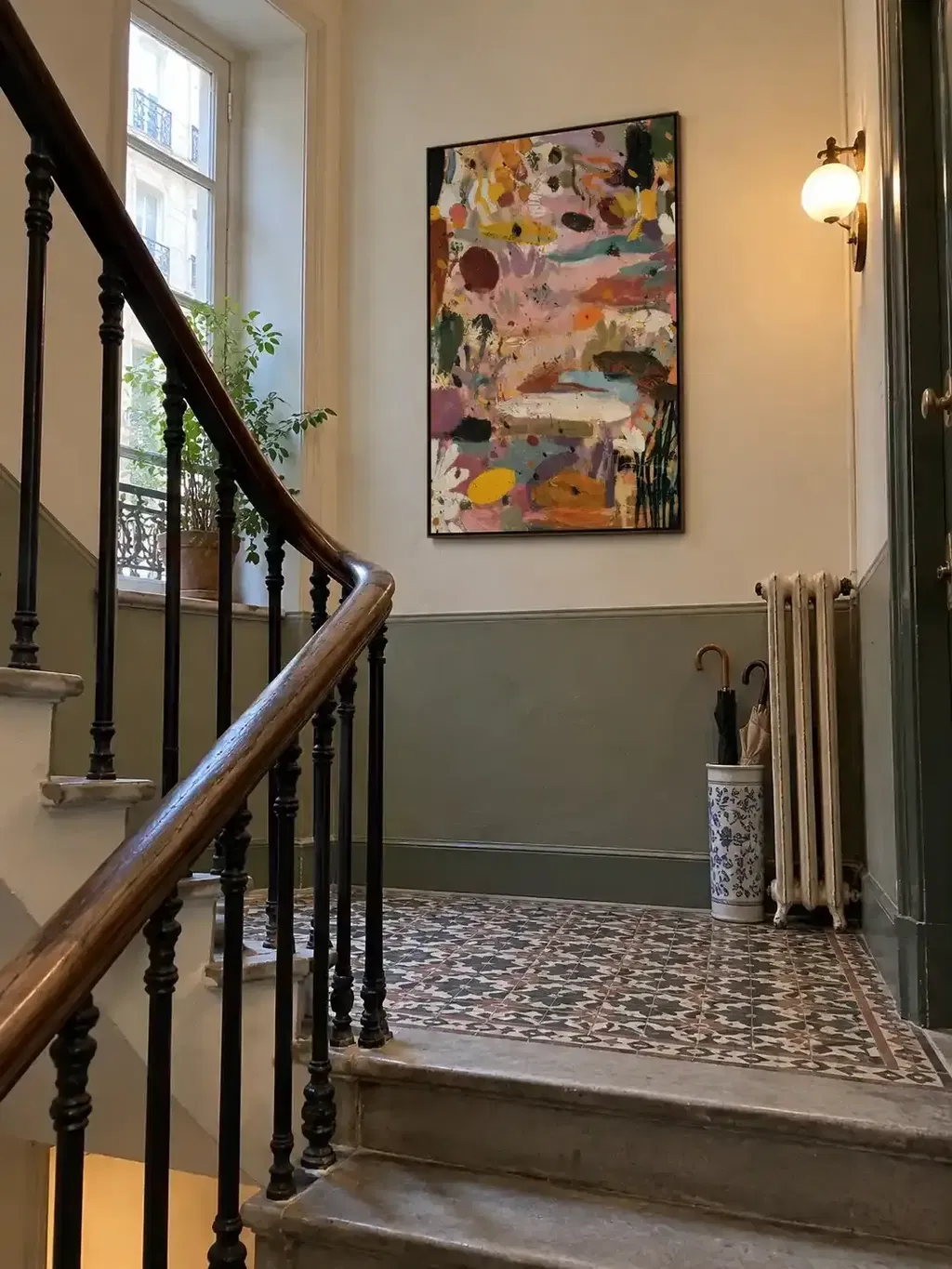
Scale defines harmony in a room. The right size avoids visual clutter and makes everything feel balanced. In the following pages, you'll find straightforward rules you can apply immediately.
Why Oversized Wall Art Changes a Room
Large pieces of artwork can make a room look in balance and provide individuals with a place to rest their eyes. It also unifies the furniture, fabrics, and lights into a cohesive narrative.
- It eliminates distractions and will serve to demarcate the sitting area.
- A large field adds perceived depth on long, flat walls that feel empty.
- Repeated hues from the piece tie together sofa fabric, rug borders, and curtain trim.
- Texture and subject set the mood without adding extra furniture or accessories.
- Big formats read well in photos and on video calls, keeping backgrounds tidy.
Use scale to create order and a quick sense of depth. A single statement piece often replaces several smaller accessories with cleaner results.

How to Choose the Right Piece for Your Space
Large pieces of wall art require the proper combination of size, color, and finish. Proper choices allow the art to blend with the room while at the same time becoming the focal point.
Set Size and Proportion for Oversized Wall Art
Start with measurements. Most disappointments occur since they are not big enough or set too high.
Fast Formulas You Can Trust
- Usable wall width (UWW): wall span minus side clearances (6–8 in each side or to nearest obstacle)
- Target artwork width: UWW × 0.66–0.75 (pick the middle 0.70 for a first pass)
- Center height: 57–60 in from finished floor to artwork center
- Above sofa clearance: 6–8 in from sofa back to artwork bottom edge
- Multi-panel gap: 1.5–3 in between panels to read as one whole
Proportion is what leads to balance. When the width is approximately 66% to 75%, it will be simpler to determine the height and the framing.
Color and Style Pairing for Large Art
Emphasize complementing rather than matching exactly. Take some of the colors in the room and introduce contrasts to achieve balance.
- Choose two anchors from the room: a main hue and an accent. Repeat each in the artwork at light doses.
- Quiet furnishings pair well with bolder pigment or graphic shapes; busy textiles prefer calmer fields.
- Contemporary rooms like clean lines and high contrast; natural textures soften hard surfaces.
- Frames guide tone: thin metal = crisp; wood grain = warm; float frames add presence without heaviness.
- Keep a single dominant temperature per wall (mostly warm or mostly cool) so light reads consistent.
Most times, two colors are sufficient. Allow the subject and texture to create the mood, and the colors to tie the room together.

Materials Finish and Framing for Real Light
Light changes everything. Select surface and glazing based on window direction and lamp placement.
| Situation | Material and finish | Why it works |
| Strong sun or glare | Matte canvas; low-reflection acrylic or museum glass | Cuts reflections and protects pigment |
| Low light or evening use | Satin or light gloss; metallic ink accents | Adds presence under lamps |
| Humid or kitchen-adjacent | Sealed canvas; acrylic face mount; tight spacers | Resists moisture and airborne oils |
| Kid or pet zones | Sturdy frame corners; shatter-resistant acrylic | Safer and easier to wipe clean |
| Dark wall color | Light mat or float gap; slim bright frame | Lifts the image off the wall |
Match finish to light, not just to style. Reduce glare first, then tune sheen so the piece reads clearly day and night.
Placement Rules for Oversized Wall Art
Layout rules remove guesswork and speed up installation.
| Wall scenario | Reliable rule | Quick tip |
| Sofa wall | Width ≈ ⅔–¾ of sofa | Bottom edge 6–8 in above back |
| Dining wall | Center at 57–60 in | Align to seated eye level |
| Bed wall | Width ≈ 60–80% of headboard | 8–10 in above headboard |
| Hallway 36–48 in wide | 18–24 in wide vertical pieces | Keep pass-by clearance comfortable |
| Stair wall | Step centers with rise | Use a string line to stage centers |
Consistent center height creates calm. A small laser level and painter's tape turn this into a 20-minute task.

Test and Fix Oversized Wall Artwork Scale and Placement
Before committing to a purchase, mockups and quick adjustments help ensure your artwork feels right in the room.
Paper Mockups to Test Scale
- Print tiled sheets or cut kraft paper to frame size; tape to wall.
- Stand at viewing distance; if edges feel cramped, add 4–6 in width.
- At night, take a photo with lamps on to check for glare.
Ten minutes of mockup saves returns and patching holes. Photos reveal glare that eyes may miss.
Common Mistakes and Fast Fixes
- Too small: pair with flanking pieces or choose 66–75% of wall span.
- Hung too high: drop to a 57–60 in center for balance.
- Color clash: echo the artwork's hue with a pillow or vase.
- Glare bands: shift lamps, use matte glazing, or lower-output bulbs.
- Frame tilt: use two hooks or a cleat with felt bumpers.
Size, height, and light are your fastest levers—adjust those first before changing the artwork.
Care and Maintenance That Actually Matters
Short, consistent habits keep surfaces clear and colors stable. Use the rules below by material and a few quick room tweaks.
- Canvas: Dry dust with microfiber; tiny smudges = dab with distilled water only; no solvents; keep RH 40–55%.
- Acrylic glazing / face mount: Blow off grit; wipe with acrylic-safe cleaner on microfiber; avoid ammonia and paper towels.
- Glass-glazed prints: Spray cleaner onto the cloth, not the glass; keep moisture away from frame edges; watch winter condensation.
- Paper originals: Do not open frames at home; no direct sun; dust the frame only; pro check every 3–5 years.
- Metal prints: Damp-wipe, then dry fully; no abrasives; handles kitchen zones well.
- Textile / relief: Low-suction vacuum through a mesh; no wet cleaning; keep away from vents.
- Situations: High UV → UV film + angled blinds;High humidity → exhaust/dehumidify;Fireplace → glazed, 12–18 in clearance;Kids/pets → shatter-resistant acrylic + anti-tip.
- Schedule: Bright rooms biweekly dust; others monthly; seasonal check for hardware, corners, and tilt.
Match care to material, then adjust for light and humidity. Dry tools and gentle pressure cover most needs.
Hang Your Oversized Wall Art Today
Small adjustments will rapidly get the room looking good. Calculate the average height and width, and the wall will stand out obviously.
- Measure UWW and set a target of roughly 70%.
- Choose subject and palette by echoing two room colors.
- Get the oil painting and confirm its weight. Secure it with two points or a hook for balance.
Hanging even one strong piece helps reveal your style, and the room immediately feels more finished.