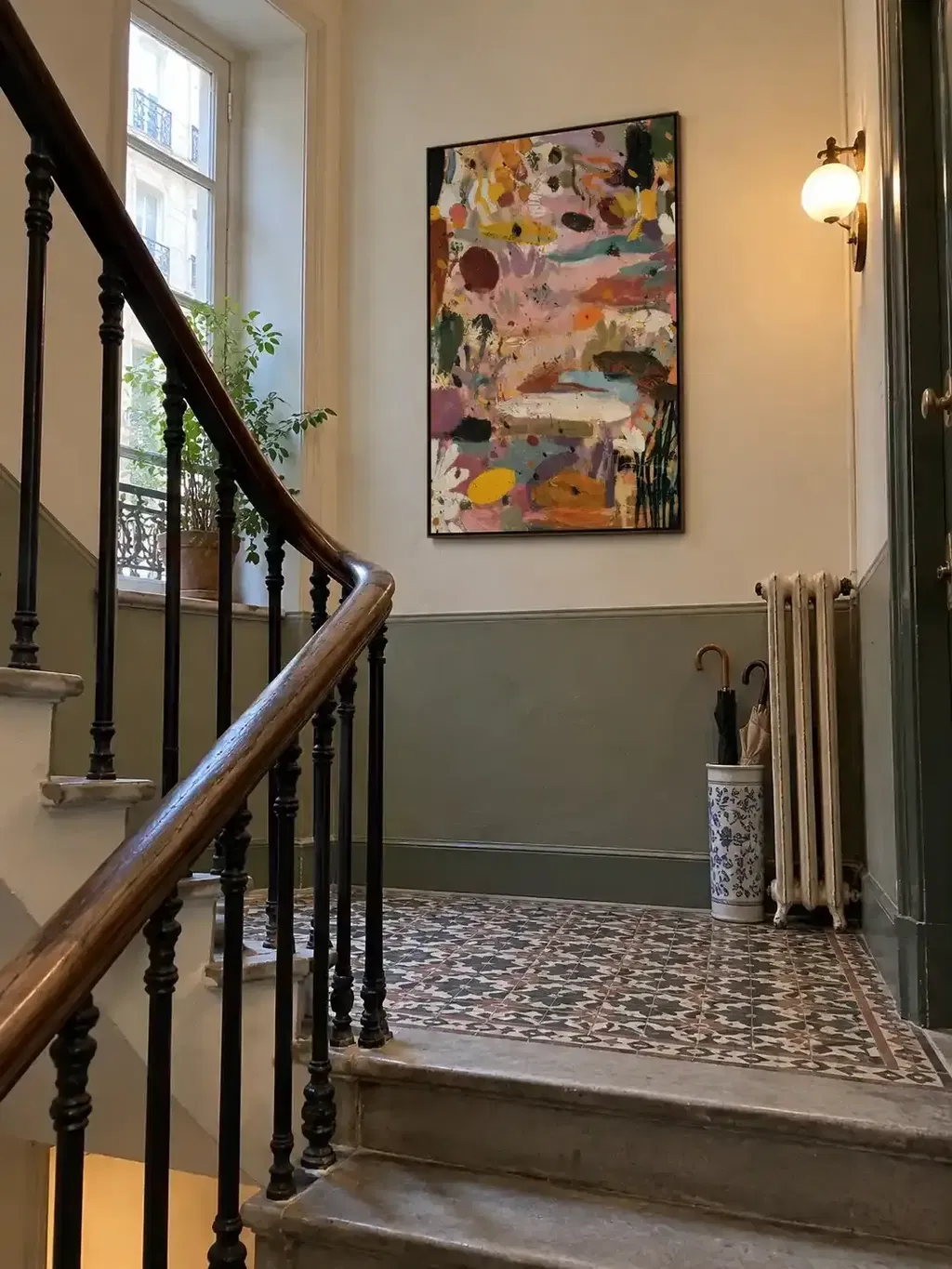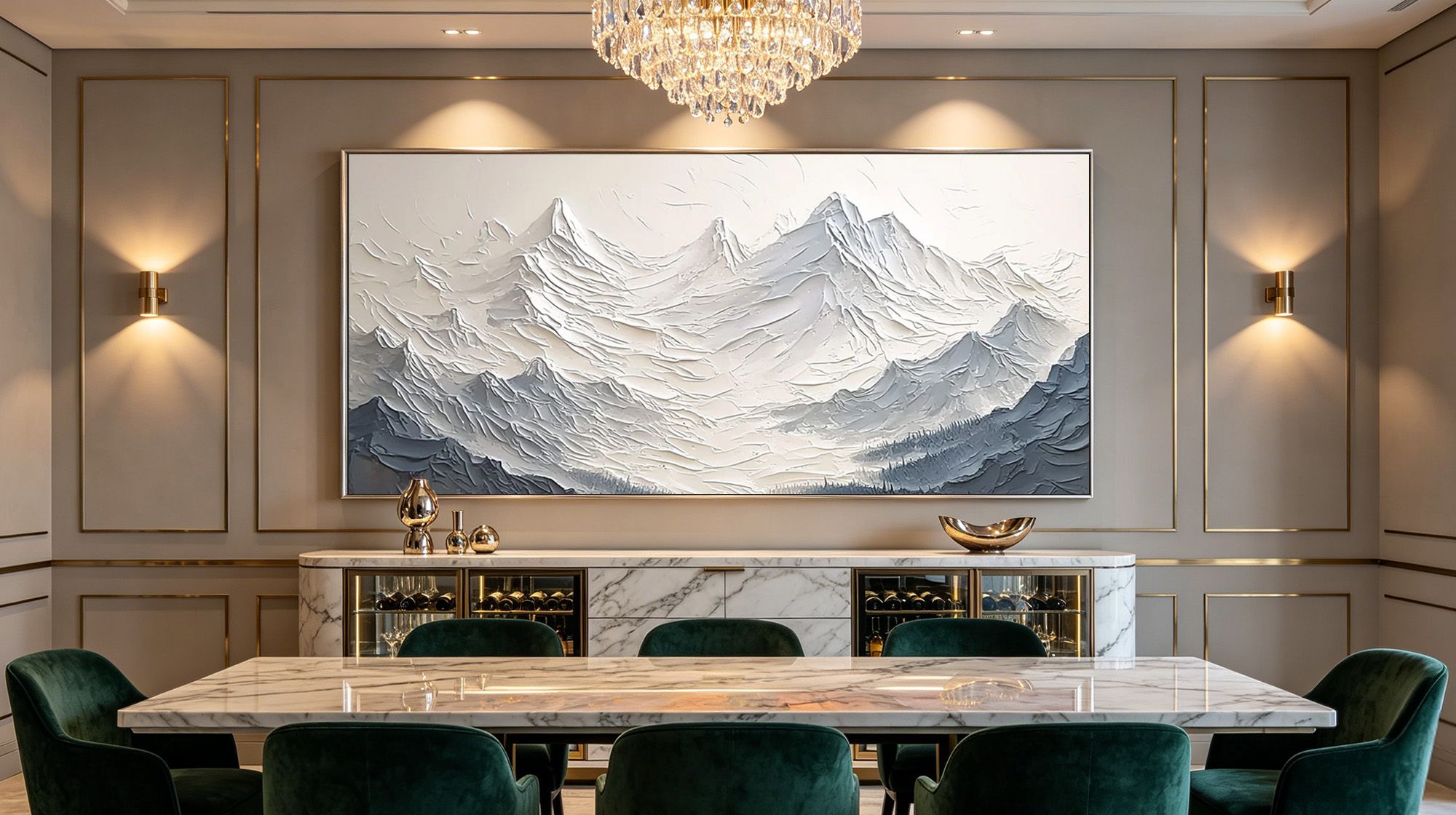
Black and white wall art works best when its contrast, scale, and visual weight suit the room around it. The right piece can give a wall focus without making the space feel cold, crowded, or disconnected from the furniture you already love.
This guide helps you assess your room’s light, materials, scale, and visual rhythm before choosing a piece. By starting with the space itself, you can compare black and white wall art with more confidence and find an option that feels naturally connected to your home.
Read the Room Before You Choose the Art
Start by deciding what the artwork needs to do in the room. It may need to create a clear focal point above a sofa, add quiet structure to an entryway, or bring contrast to a neutral bedroom without making it feel severe.
Look at the intended wall in daylight and again under the lighting you normally use in the evening. The same black-and-white composition can appear crisp, soft, reflective, or visually heavy as the light changes.
Then identify the room's most visible finishes:
- Wall paint and trim
- Sofa, bedding, or dining chairs
- Wood tones and metal finishes
- Rugs, curtains, and other large textiles
- Existing dark accents, patterns, or artwork
This gives you a more reliable starting point than trying to match the artwork to one isolated color.
Choose Contrast Based on the Room's Visual Energy
Black and white does not always mean pure black beside bright white. Many pieces include charcoal, gray, ivory, soft white, or layered tonal transitions. Those differences matter when the room already has a strong mood of its own.
| Room Condition | Useful Contrast Direction | What to Check |
|---|---|---|
| Bright and uncluttered | Clearer black-and-white separation can create a focal point | Check whether glare or sharp edges become distracting |
| Warm and layered | Softer blacks, grays, or off-white can connect more naturally | Compare the artwork with wood, cream, beige, tan, and brass |
| Dim or visually busy | Choose clear forms and restrained density | Make sure dark areas remain visible from normal viewing distance |
| Minimal with few accents | A bolder composition can add useful structure | Leave enough wall space around the artwork |
A room with pale walls and simple furniture can often hold a stronger graphic piece. A room with patterned textiles, dark cabinetry, or several hard finishes may benefit from softer transitions and more open space in the composition.
The goal is not to make every part of the room quiet. It is to decide where the eye should settle first.
Use Negative Space to Prevent Visual Clutter
The amount of open space in an artwork can be as important as its palette.
A composition with generous white, gray, or lightly marked areas gives the eye room to rest. It is often a useful choice for rooms with patterned rugs, full bookshelves, layered cushions, or multiple dark furniture pieces.
A denser black-and-white composition can work well on a large plain wall with restrained furniture. In that setting, it can create the visual center that the room is missing.
Before choosing, compare the artwork's darker forms with the visual weight already present in the room. If the space already has several large dark shapes, choose a piece with more breathing room. If the wall feels empty and disconnected from the furniture, a clearer, denser focal composition may be the better direction.
Match Undertones Instead of Matching Colors Exactly
Neutral colors still have undertones. A black can read cool and charcoal-like, or warmer and softer. A white can feel crisp, gray, ivory, or cream depending on the wall and surrounding finishes.
You do not need a perfect color match. Instead, look for one or two visual connections between the artwork and the room.
For example:
- Warm wood, linen, cream, and tan can work well with softened black and off-white areas.
- Bright white walls, charcoal accents, chrome, and blue-gray details may suit a crisper monochrome direction.
- Mixed-material rooms often benefit from an artwork that includes a middle tone, such as gray or ivory, rather than only the strongest black-and-white split.
Compare the artwork with the room's brightest surface and its dominant neutral. If the light areas look noticeably yellow, blue, gray, or unrelated beside those finishes, keep comparing before you decide.
Light and surrounding materials can shift how each undertone reads in practice. Understanding how contrast, surface detail, and visual density affect a room can make the final choice clearer.
Size the Artwork for the Wall and Furniture
Artwork that is too small can feel disconnected from the furniture beneath it. Artwork that is too large can crowd a wall or overpower nearby details.
When hanging above a sofa, bed, sideboard, or console, use the furniture as a starting point. An artwork or grouping that spans roughly two-thirds to three-quarters of the furniture width often creates a balanced relationship. Treat that range as a planning tool, not a rule. Ceiling height, wall space, and nearby objects still matter.
Before committing to a size:
- Measure the usable wall area, not just the empty section.
- Mark the planned artwork footprint with painter's tape or paper.
- Include the frame dimensions if you plan to use one.
- View the marked area from the doorway and from the place where you normally sit or stand.
- Check it in daylight and under evening lighting.
If the footprint disappears, increase the size or consider a coordinated pair of paintings. If it feels too forceful, choose a more open composition, a lighter frame, or a placement with less competing decor.
Once you have chosen the right size, placement and spacing help determine whether the artwork feels connected to the furniture and comfortable at everyday viewing distance.
Style Black and White Wall Art by Room
Living Room
In a living room, black and white wall art can anchor the seating area and give the room a clear center. A single larger piece often works better than several small objects competing above the sofa.
If the room already has dark shelving, a black fireplace surround, or a patterned rug, choose an artwork with enough light space to keep the wall from feeling heavy. If the furniture is pale and simple, stronger contrast can give the room needed definition.

Bedroom
A monochrome piece can feel calm in a bedroom when it is balanced by warm, soft materials. Linen bedding, upholstered furniture, pale wood, and layered textiles can keep the contrast from feeling stark.
Let the artwork provide the statement, then keep bedside styling restrained. In a smaller bedroom, open space and softer tonal changes can feel more restful than a tightly packed dark composition.
Dining Room
Dining rooms can support a stronger focal piece because the artwork is often viewed from farther away. A clear composition can help define the table as the visual center of the room.
Consider the relationship between the artwork and the lighting above the table. A dramatic pendant light and a dense, high-contrast painting may compete for attention. If the lighting is already expressive, choose artwork with a simpler overall rhythm.
Entryway or Hallway
In an entryway, the artwork is often seen quickly and from an angle. Choose a piece with a clear overall structure rather than relying on details that only work up close.
Vertical art can emphasize height on a narrow wall. Horizontal art can help a longer wall feel grounded. In either case, leave enough surrounding space for the composition to read clearly as people move through the area.
Use Frame and Surface Detail With Intention
A frame should support the artwork's visual weight, not add an unrelated border.
A slim black frame can reinforce a clean graphic look. Natural wood can connect the artwork to warmer furniture. A lighter or metallic frame can reduce the apparent weight of a dense composition.
If texture matters to your decision, verify it through product-level details. Look for close-up images, side-angle views, and clear material descriptions. Do not assume that a visual pattern represents a raised paint surface.
A dimensional surface may respond differently as the viewing angle and light change. A flatter piece can create a cleaner, more graphic effect. Neither approach is automatically better. Choose the one that supports the mood and visual density of your room.

Use This Final Selection Check
Before you make a final choice, ask:
- Does the artwork create the level of contrast this room can support?
- Do its light and dark areas remain readable at normal viewing distance?
- Does the composition balance existing patterns and furniture rather than compete with them?
- Does the size feel connected to the wall and nearby furniture?
- Does the frame repeat or bridge an existing finish in the room?
- Have I checked the planned footprint in the room's normal lighting?
Black and white wall art does not need to match every object in your home. It needs to create a clear relationship with the wall, the furniture, and the atmosphere you want the room to hold.
When those elements work together, monochrome art can feel focused, flexible, and considered rather than simply high contrast.
Black and White Wall Art FAQs
Can Black and White Wall Art Work in a Colorful Room?
Yes. Black and white can give a colorful room a visual pause, especially when the artwork repeats one existing dark element such as a lamp, chair leg, or frame. Keep the surrounding accents intentional so the artwork feels like an anchor, not another competing color statement.
Should I Choose One Large Piece or a Set of Two?
Choose one large piece when the wall needs a clear focal point. A set of two can work better on a wide wall, above a long sideboard, or when you want more rhythm across the space. Treat the pair as one overall composition when measuring.
Does a Glossy Wall Change Which Artwork I Should Choose?
Yes. Glossy paint, glass, mirrors, and nearby windows may create reflections that interrupt a high-contrast composition. Before deciding, stand at your normal viewing position under daylight and evening lighting to check whether glare covers important areas of the artwork.
Can a Black and White Gallery Wall Still Feel Calm?
Yes, if the collection has a shared visual rule. Keep the palette limited, repeat one or two frame finishes, and use consistent spacing. Mix subjects or sizes only when the overall arrangement still has one clear center and enough wall space around it.