
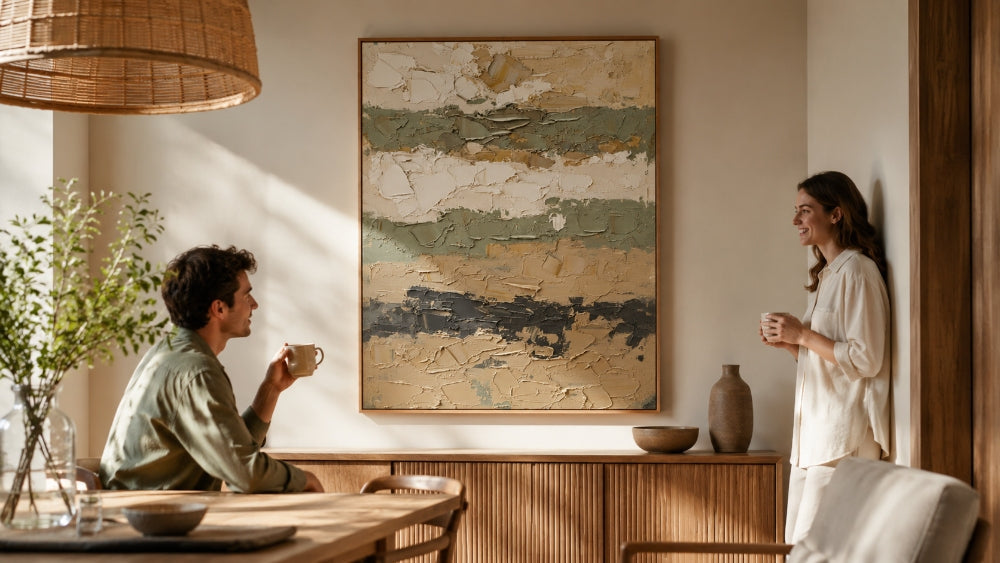
When you acquire original art paintings for sale, you are purchasing more than just a decorative object; you are investing in a delicate physical structure of pigments, binders, and supports. These materials are in a constant state of interaction with their environment. Without proper care, the very air in your home can slowly dismantle the integrity of a masterpiece.
To preserve the longevity of any significant work, collectors must understand the "big three" environmental threats: light, humidity, and dust. These factors do not act in isolation. Instead, they work together to cause chemical breakdown and physical stress. Light triggers photochemical reactions that fade colors; fluctuating humidity forces materials to expand and contract until they crack; and dust acts as both an abrasive and a magnet for moisture and pollutants.
Giving your artwork a stable environment is the single most effective way to prevent the need for costly professional restoration. By controlling these variables, you ensure that the vibrant colors of a modern abstract art piece or the delicate textures of a landscape oil paintings for sale remain exactly as the artist intended for generations.
Understanding the Primary Environmental Threats to Art
Directly put, the environment determines the lifespan of a painting. Light, humidity, and dust matter because they fundamentally change the chemistry and structure of the artwork. Most paintings are composed of hygroscopic materials—substances like wood, canvas, and paper that naturally absorb and release moisture from the air. This constant cycle of absorption and desorption causes the support to swell and shrink, leading to structural failure.
When a room’s conditions are unstable, the paint layer (which becomes more brittle with age) cannot keep up with the movement of the canvas or wood beneath it. This results in the "cupping" or flaking of paint. Simultaneously, ultraviolet (UV) radiation from sunlight or improper indoor lighting breaks down the molecular bonds in pigments, leading to permanent fading. Dust adds a final layer of risk, trapping acidic pollutants against the surface and providing a breeding ground for mold if humidity levels spike.
Light Exposure and the Science of Photochemical Breakdown

Light is a form of energy, and when it strikes a painting, that energy is absorbed by the pigments and binders. This triggers photochemical reactions that are cumulative and irreversible. Once a pigment has faded due to light exposure, no amount of restoration can "bring back" the original color; the molecules have literally been broken apart.
The Impact of UV vs. Visible Light
Ultraviolet (UV) radiation is the most energetic and damaging part of the light spectrum. According to the Library of Congress, long exposure to low light can be just as damaging as short exposure to intense light. This is why museum-grade standards often limit light levels to around 200 lux for less sensitive oil paintings.
Benefits of LED Lighting for Art
Modern LEDs are the gold standard for home galleries because they can be engineered to emit zero UV rays and generate very little heat.
| Lighting Feature | LED Bulbs | Halogen Spotlights | Incandescent Bulbs |
|---|---|---|---|
| UV Emission | Minimal to None | High (Needs Filter) | Moderate |
| Heat Output | Low | Very High | High |
Controlling Relative Humidity to Avoid Structural Damage
Relative Humidity (RH) is perhaps the most critical factor in the physical stability of oil paint on canvas. Most conservation bodies, including the Canadian Conservation Institute, recommend a stable RH between 40% and 60%.
The danger lies in rapid fluctuations. When the RH drops, the canvas and wood stretcher bars shrink. When it rises, they swell. Because the paint layer is less flexible than the canvas, this "push-and-pull" creates internal stresses known as craquelure.
Best Practices for Cleaning and Dusting Original Canvas
Dust is composed of abrasive particles that can cause microscopic scratches. Furthermore, dust attracts moisture, which can accelerate the chemical decay of the paint binder.
- Inspect the Surface: Ensure no paint is flaking or lifting.
- Use a Soft Brush: Use a clean, soft, natural-bristle brush.
- Brush Methodically: Start at the top and brush with light, gentle strokes toward the bottom.
Where to Hang and Store Paintings for Maximum Longevity

Where you choose to display your textured wall art is critical. Residential environments are full of "micro-climates" that can be hostile to art.
The Smithsonian MCI warns that soot and tobacco tar can permanently alter unvarnished paint surfaces, making kitchens and rooms with fireplaces high-risk areas.
According to the CCI, installing a backing board is one of the best ways to provide a buffer against humidity and dust.
Professional Preservation Tools and Conservation Framing
| Glazing Type | Weight | UV Protection | Best Use |
|---|---|---|---|
| Conservation Glass | Heavy | 99% UV Filter | Medium-sized works |
| Conservation Acrylic | Light | 99% UV Filter | Large-scale works |
Identifying When a Painting Needs Professional Restoration
If you notice signs of active deterioration, contact a professional conservator. Watch for:
- Flaking or lifting paint.
- Yellowed or darkened varnish.
- Mold growth (fuzzy white or black spots).
- Structural warping of wood panels.
The Long-Term Value of Protecting Original Paintings
Maintaining the environment for your original art paintings for sale is a commitment to the preservation of culture. By keeping your artwork away from direct sunlight, maintaining a stable 40-60% relative humidity, and using safe dusting techniques, you prevent irreversible decay. Whether it is an abstract art piece or landscape oil paintings for sale, proper care ensures the work retains its emotional and financial value for a lifetime.
Safety Notice
This article provides general guidance for the preventive conservation of original paintings and is for educational purposes only. Handling original artwork involves risks of physical and chemical damage. Always follow professional conservation standards and consult a qualified art conservator for restoration, cleaning of valuable works, or when dealing with mold and structural failure. Use chemical monitors and climate control equipment according to manufacturer safety instructions.
FAQs
Can I hang a painting in a bathroom if I have a fan?
No. Even with a fan, the rapid humidity spikes from a shower happen faster than a fan can mitigate, causing the canvas and wood to swell and shrink repeatedly, leading to paint flaking.
Why shouldn't I use a feather duster on art?
Feather dusters have sharp quills that can snag on delicate paint flakes or raised impasto, accidentally pulling the paint off the canvas.
What is the best lightbulb for original art?
LED bulbs are best because they do not emit UV radiation and produce very little heat, preventing photochemical fading and drying of the paint layers.
How often should I check the humidity in my art room?
Humidity should be monitored constantly using a digital hygrometer, particularly during seasonal transitions when indoor heating or cooling can cause sharp drops or rises in moisture.











