The Architectural Challenge of the Vertical Void
In the modern luxury home, the vaulted ceiling is a double-edged sword. While soaring heights and open-concept layouts offer a sense of grandeur and psychological "breathing room," they simultaneously create massive vertical voids that can feel cavernous and disconnected. Many homeowners find themselves paralyzed by "scale uncertainty"—the fear that even a large piece of art will be dwarfed by the sheer volume of a 20-foot wall.
This hesitation is often rooted in the traditional art market's focus on "financial assets" rather than "application value." However, recent shifts indicate a return to authenticity. According to Marketplace.org, sales of high-end auction art plummeted 44% in 2024 as buyers pivoted away from speculative pieces toward custom art with real emotional and spatial value. In these high-volume spaces, the goal is not merely to "hang a picture," but to curate a visual anchor that grounds the room and directs the eye with intention.
The Psychology of Proportions: Why Scale Matters
The feeling of "comfort" in a large living room is not accidental; it is a neurological response to environmental stimuli. Research published by the National Center for Biotechnology Information (NCBI) demonstrates that viewing art consistently activates the medial prefrontal cortex (mPFC) and the amygdala, which are critical for emotional regulation. When art is too small for its environment, this neural engagement is weakened, leaving the viewer with a subconscious sense of imbalance or "visual noise."
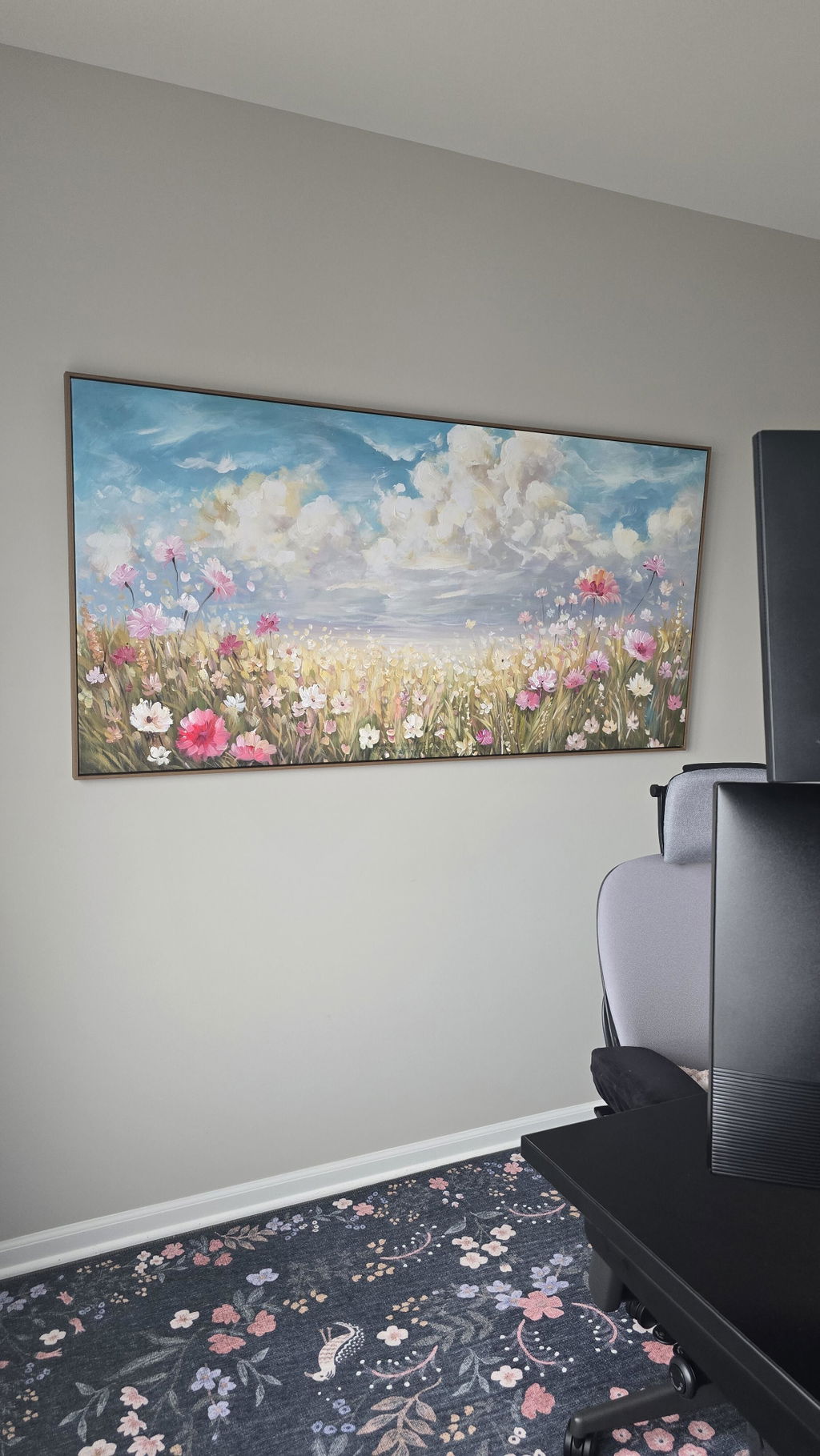
Furthermore, large-scale art often incorporates biophilic elements—natural landscapes or organic forms—that have profound health benefits. A review by the University of Pennsylvania (UPenn) noted that 73% of patients in clinical settings reported significant mood improvements when exposed to nature-themed environmental art. In a residential context, a large-scale hand-painted mural or canvas acts as a "biophilic intervention," reducing the cognitive fatigue often associated with dense, high-ceilinged urban environments.

The Sizing Framework: Moving Beyond the "60% Rule"
Interior design enthusiasts are often taught the "60% rule"—the idea that art should occupy 60% of the wall space. However, in vaulted spaces, linear scaling fails. Visual perception in tall rooms is logarithmic rather than linear.
The Logarithmic Scaling Heuristic
As ceiling height increases, the perceived size of an object diminishes faster than its actual dimensions. According to Golden Lighting, a 67% increase in ceiling height (from 12ft to 20ft) requires only a ~20% increase in the size of a fixture or focal point to maintain the same visual impact.
For wall art, we utilize a specific heuristic: for every 100% increase in wall height, increase the art dimensions by 40%. This prevents the "overwhelming" effect of a piece that is too large while ensuring it doesn't "disappear."
The 15% Visibility Threshold
Empirical data from the Museum of Modern Art Africa (MoMAA) suggests that artwork must occupy at least 15% of the vertical wall space to be visually registered from a standard viewing distance of 14 feet. On a 20-foot wall, this means a minimum height of 36 inches is required just to avoid visual irrelevance. To achieve a "designer" look, the target should be 60-70% of the available vertical space between the top of your furniture (sofa or console) and the ceiling line.
Logic Summary: Sizing Model for Vaulted Walls Our analysis assumes that visual impact is a function of "Occupancy Ratio" and "Viewing Angle."
- Primary Assumption: The viewer is seated 10–15 feet away.
- Boundary Condition: This model does not apply to gallery walls (multiple small pieces), which function as a single visual unit.
| Parameter | Value/Range | Unit | Rationale |
|---|---|---|---|
| Min. Vertical Occupancy | 15% | % | Visibility threshold at 14ft |
| Optimal Vertical Occupancy | 60–70% | % | Industry standard for "focal" impact |
| Anchor Height (Center) | 57–60 | inches | Eye-level alignment (standard) |
| Vertical Composition Bias | >1.5:1 | ratio | Height-to-width ratio for vaulted walls |
Texture vs. Digital Flatness: The "Essential Identity"
In a cavernous room, light behaves differently. Large walls often suffer from "flatness," where shadows are diffuse and colors can appear washed out. This is where the physical nature of art becomes critical.
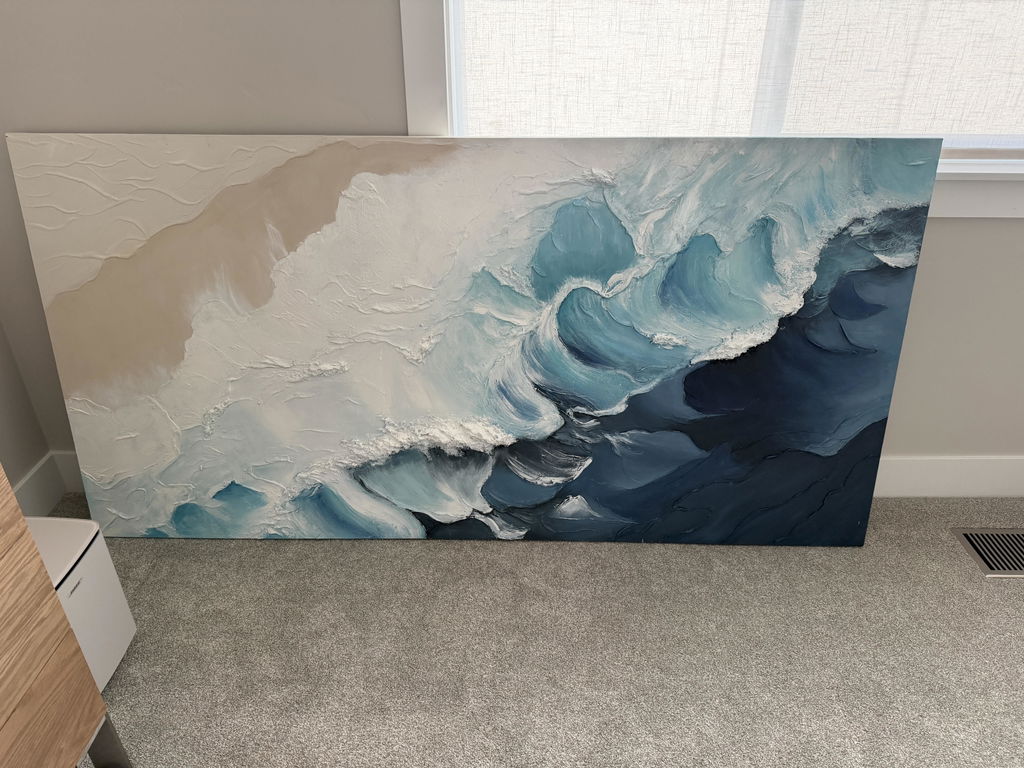
Research from University of Chicago (UChicago) shows that consumers perceive a loss of "essential identity" in digital replicas or NFTs. The human brain craves the micro-topography of real paint. Micom Laboratories and the Getty Conservation Institute have documented that the surface refractive index of hand-painted pigments creates a depth of color—geometric metamerism—that cannot be replicated by flat, CMYK printing.
Furthermore, a study by Columbia University found that consumers value art labeled as "AI-generated" 62% lower than authentic human-created art. In a large-scale installation, the "premium" of human brushstrokes is not just an aesthetic choice; it is a value-preservation strategy. The visible texture prevents a 72-inch canvas from looking like a cheap commercial poster.

Material Integrity: Safety and Longevity in the Home
When installing large-scale art in a primary living space, air quality and material safety are paramount. Many mass-produced "decorative" paints contain high levels of Volatile Organic Compounds (VOCs). The EPA warns that indoor air pollution can be significantly more concentrated than outdoor air, making low-VOC materials a necessity for large-scale indoor applications.
The Hidden Hazards of Pigments
Professional artists must navigate a complex chemical landscape. For instance, the International Agency for Research on Cancer (IARC) classifies cadmium compounds—common in bright yellows and reds—as Group 1 carcinogens. While safe when locked in a dried paint film, the use of these materials in "budget" art supplies can lead to heavy metal migration. Plymouth University research emphasizes the importance of the BS EN 71-3 standard, which monitors the leaching rates of toxic elements like lead and cadmium.
Support Induced Discoloration (SID)
A common technical failure in large-scale acrylic art is Support Induced Discoloration. As documented by Golden Artist Colors, water-soluble impurities in cotton or linen canvases can be drawn into thick layers of acrylic medium as they dry, resulting in a yellow or brown tint. High-quality studios prevent this by using specialized "Gesso" sealants and ensuring the canvas is properly cured.
Methodology Note (Material Safety): Our recommendations for non-toxic pigments are based on the CDC NIOSH guidelines for paint and coating hazards. We prioritize water-based acrylics over solvent-based oils for large indoor murals to minimize respiratory risk.
Economic and Social Dividends of Large-Scale Art
Investing in large-scale art is not just a personal aesthetic choice; it has measurable economic impacts. A study by the Royal Society found a direct correlation between "art-heavy" environments and property value appreciation. In urban centers like Chicago, public art projects have driven upwards of $1.4 billion in real estate-related growth (NC REALTORS).
On a community level, the presence of murals and large-scale art fosters social cohesion. The University of Michigan's "Busy Streets Theory" suggests that transforming unkempt or blank spaces with community-focused art can reduce violent crime by up to 40%. While a living room is private, the "catalytic effect" of supporting local artists flows back into the creative economy, which adds $1.2 trillion to the U.S. GDP annually (National Endowment for the Arts).
Implementation: Anchoring the Vertical Space
When you finally select a piece for your vaulted wall, installation is the final hurdle. A common mistake is hanging art too high in an attempt to "fill" the top of the wall.
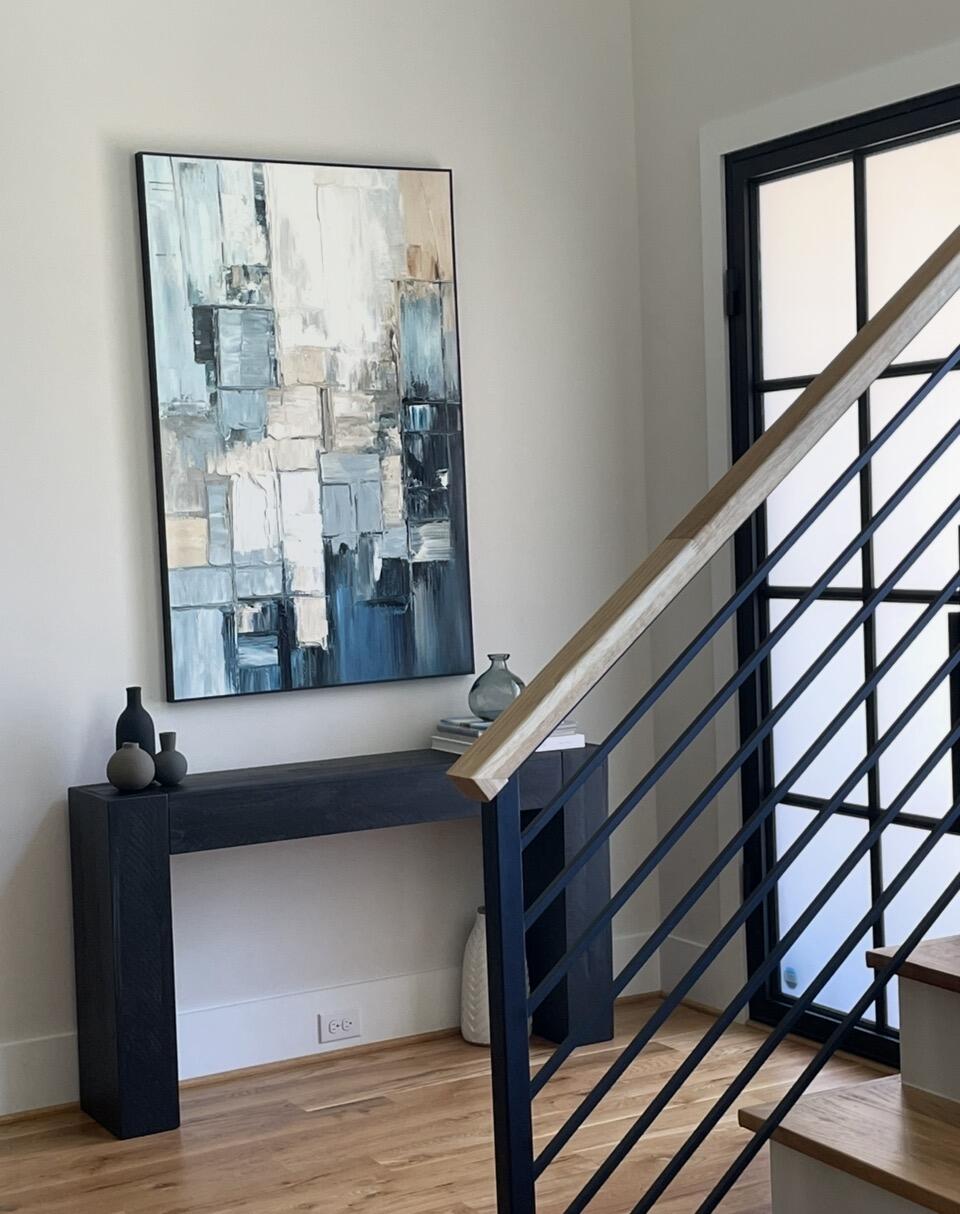
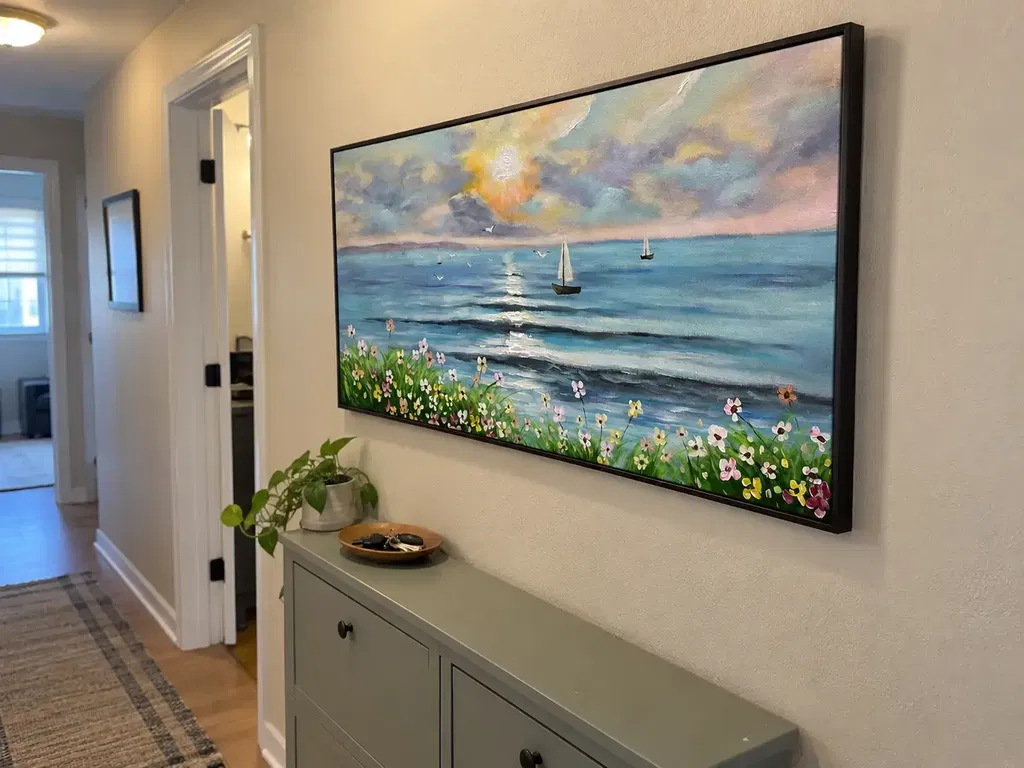
- Anchor at Eye Level: Regardless of ceiling height, the center of the piece should be roughly 57 to 60 inches from the floor. This maintains a human connection to the work.
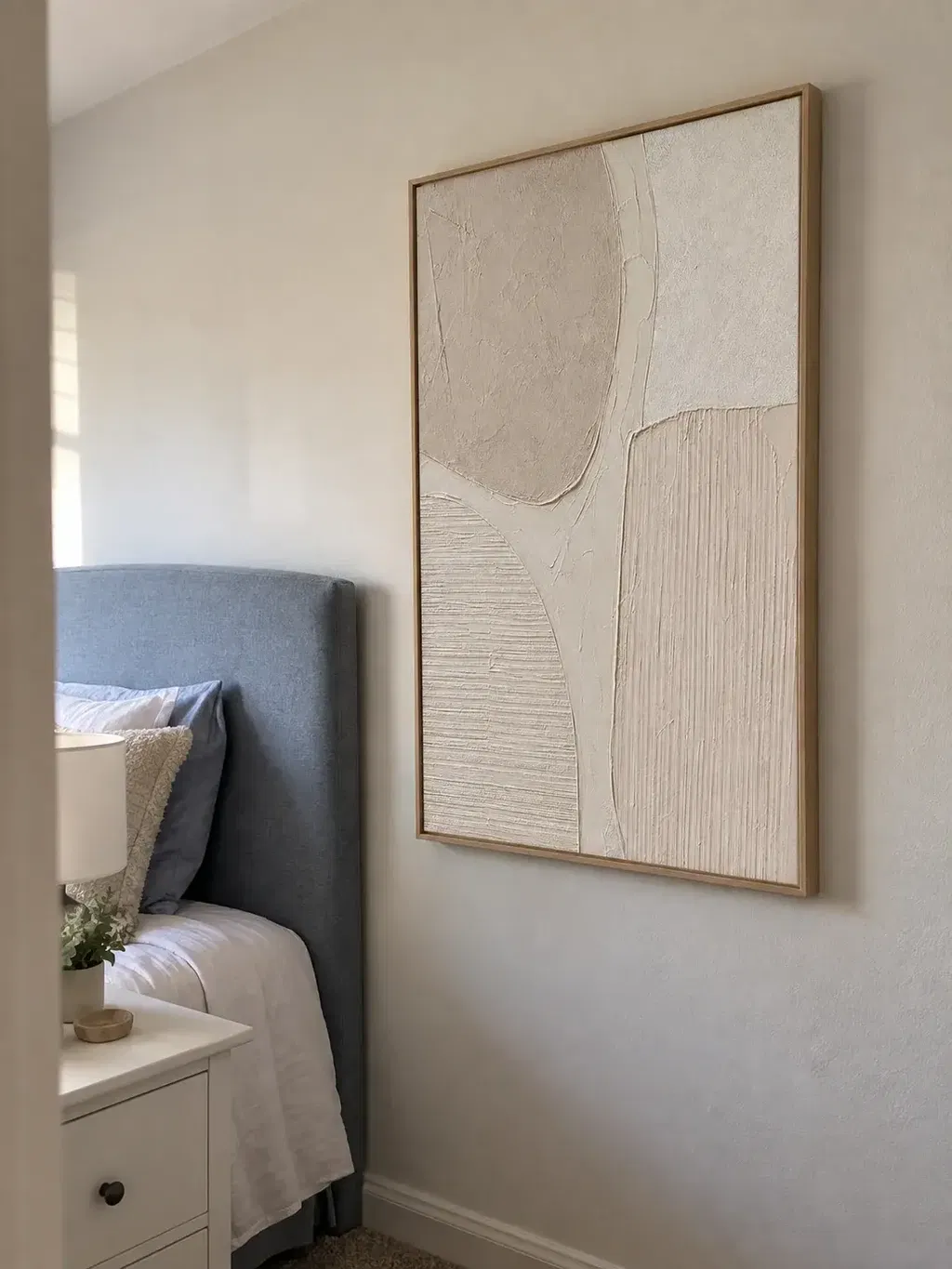
- Vertical Draw: Use art with strong vertical lines or compositions to naturally draw the eye upward toward the architectural features of the ceiling.
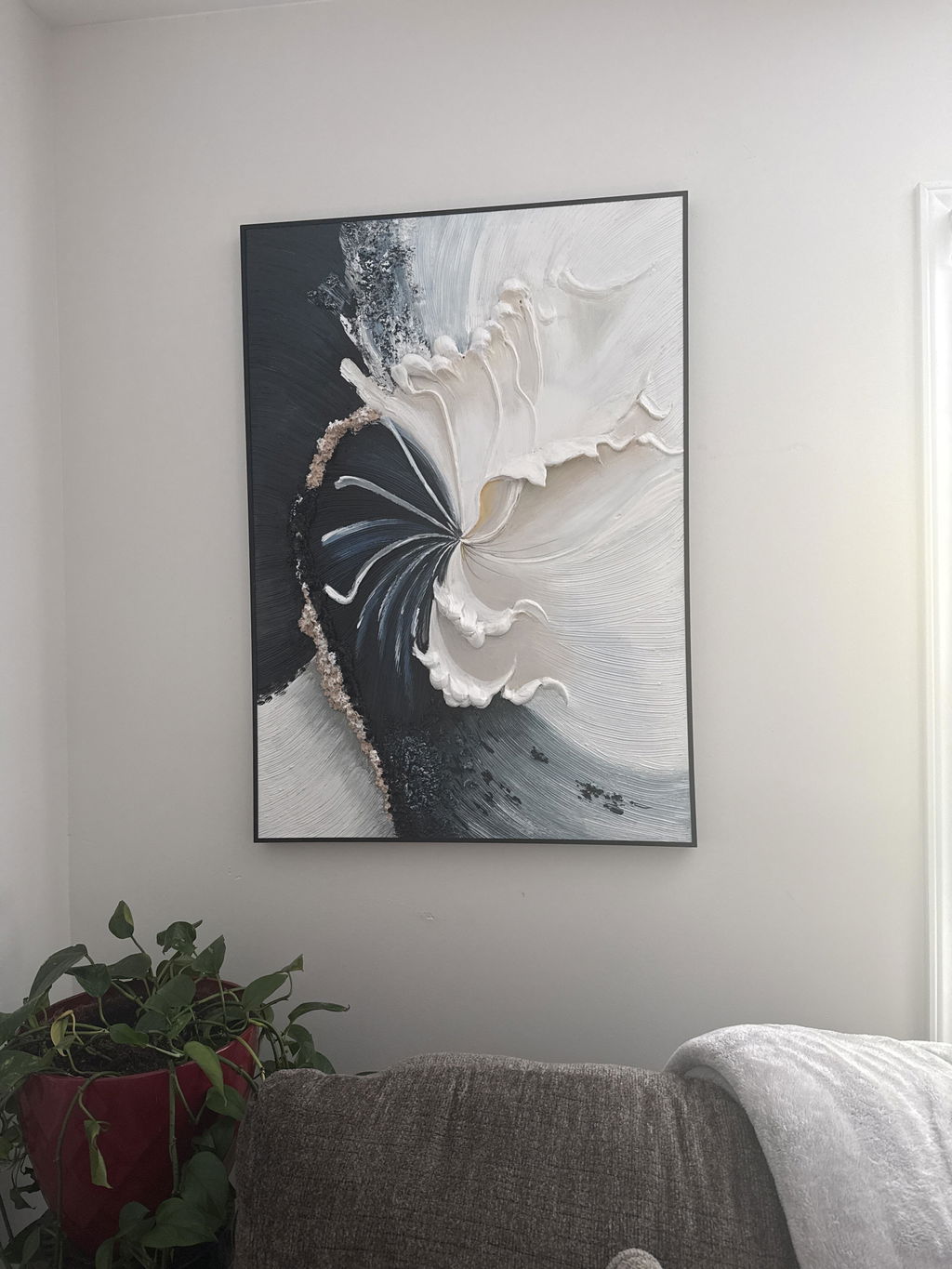
- The "Heavy" Grounding: Don't fear dark or bold colors. In a cavernous room, a piece with significant "visual weight" (darker tones and heavy texture) can ground the space better than light, airy pieces that may feel lost in the volume.

Technical Troubleshooting: Why Art "Disappears"
If a 40-inch canvas feels "invisible" on a 14-foot wall, the issue is rarely the size alone. It is often a combination of:
- Low Contrast: The art's palette is too similar to the wall color.
- Improper Lighting: High ceilings often leave walls in shadow. Proper "picture lights" or track lighting are essential for large-scale pieces.
- Viewing Distance: If the primary seating is 20 feet away, even a large piece requires high-contrast details to remain legible.
Summary of Professional Insights
Navigating the verticality of a vaulted living room requires a shift from "decorating" to "curating volume." By utilizing logarithmic scaling, prioritizing the physical "essential identity" of hand-painted pigments, and ensuring material safety through low-VOC choices, homeowners can transform a daunting vertical void into a sophisticated architectural statement.
Disclaimer: This article is for informational purposes only. When handling or installing large-scale artworks, especially those involving chemical pigments or heavy mounting hardware, consult with professional installers and material safety data sheets (MSDS). If you have pre-existing respiratory conditions, ensure proper ventilation during the installation of any fresh oil or acrylic works.
Sources
- Marketplace: The Expensive Art Market Continues to Struggle
- NCBI: Neurological Mechanisms of Creative Arts
- Columbia University: Human-Made vs. AI Art Study
- EPA: Indoor Air Quality and Low-VOC Paints
- Royal Society: Quantifying the link between art and property prices
- National Endowment for the Arts: Arts & Cultural Industries Added $1.2 Trillion
- Golden Lighting: Best Chandeliers for High Ceilings
- MoMAA: Art Scaling Calculator