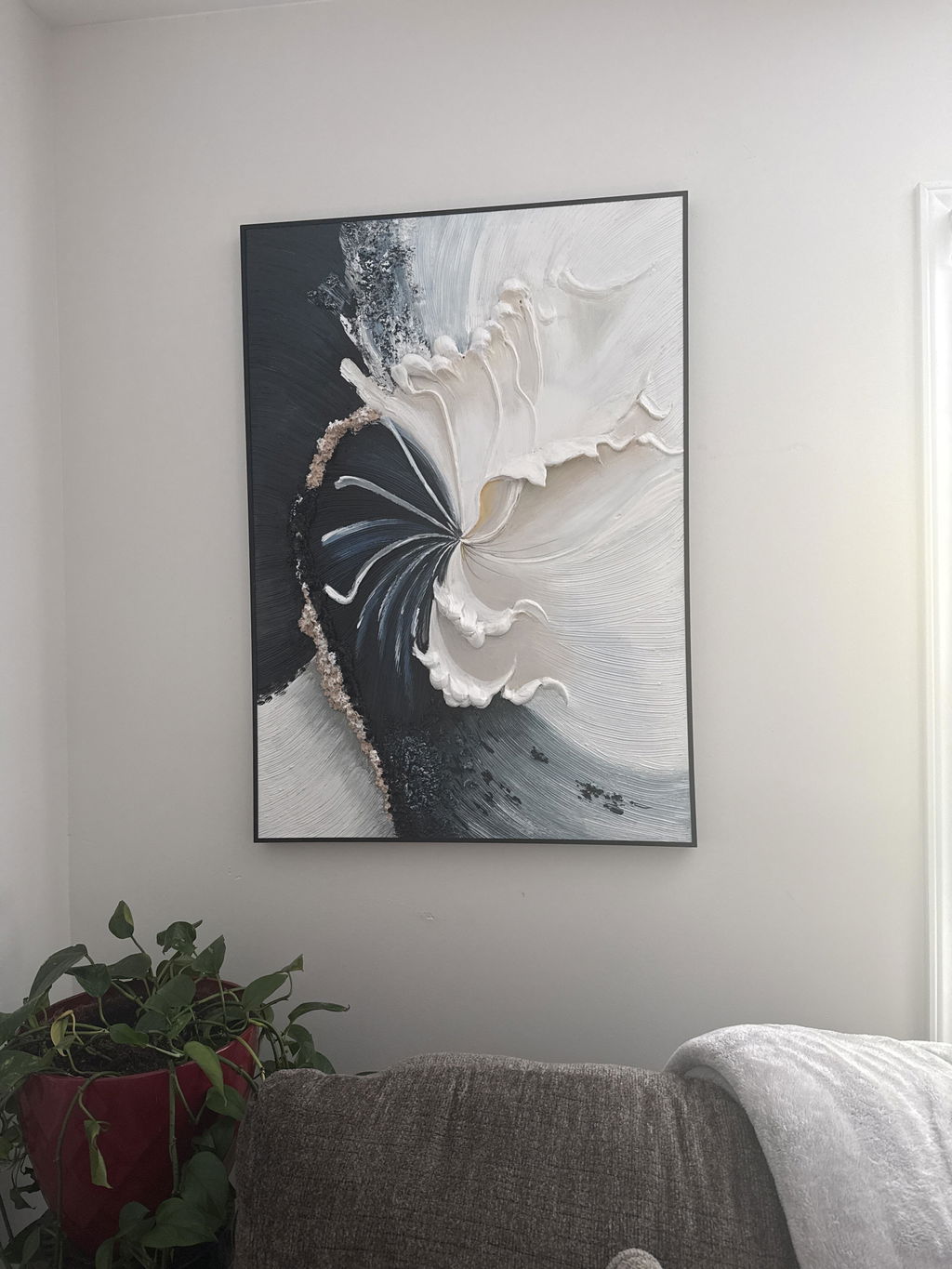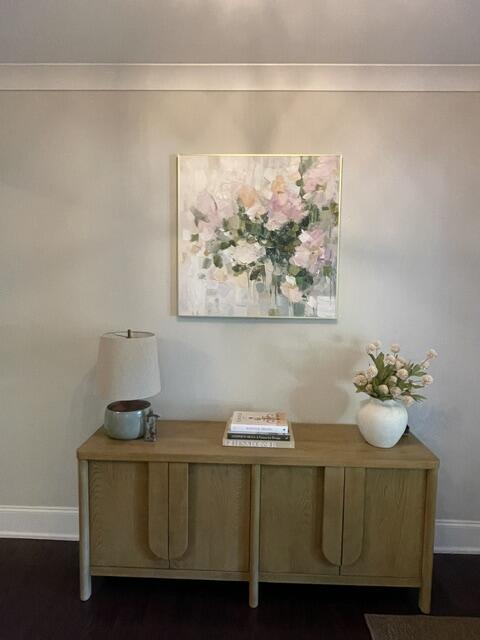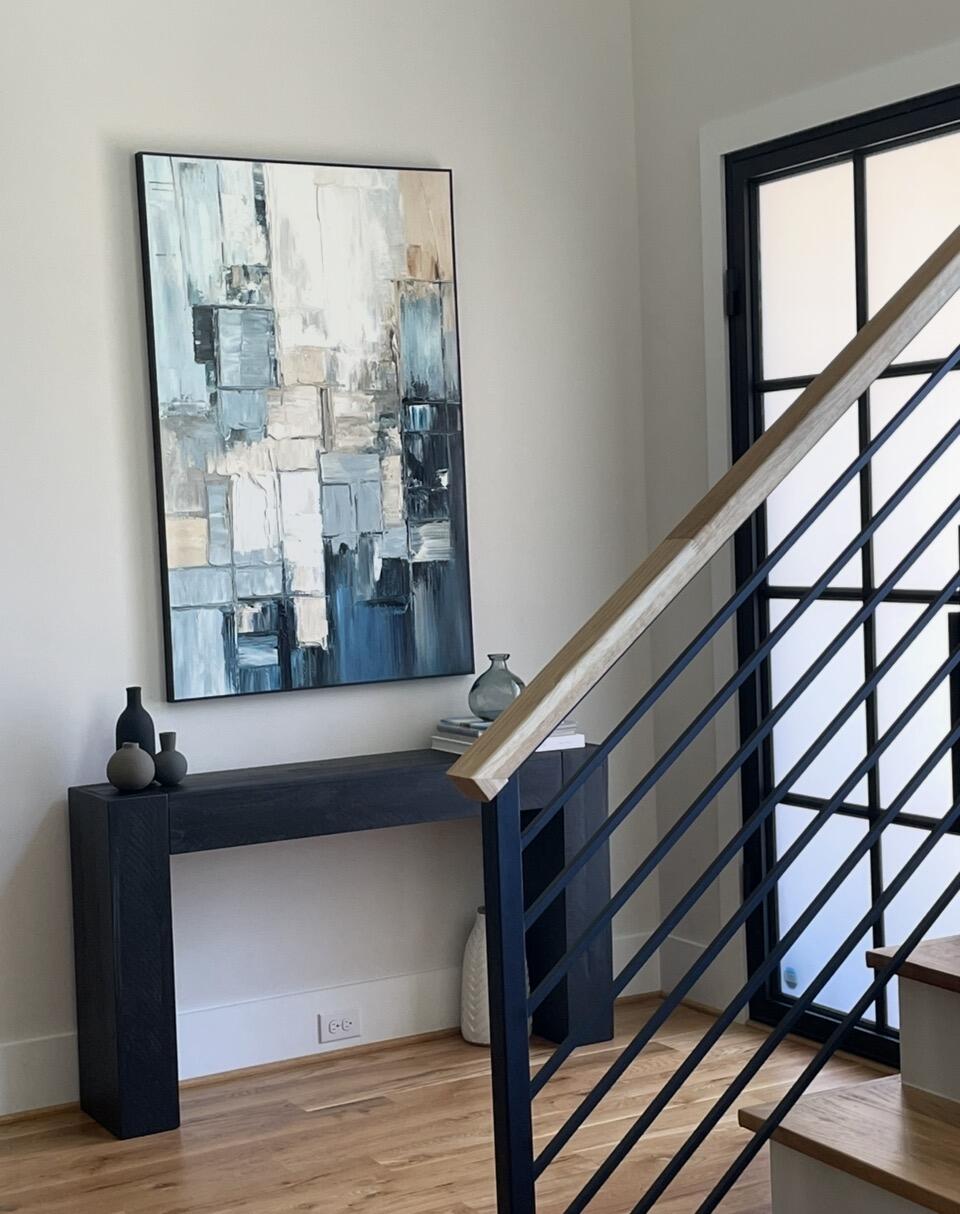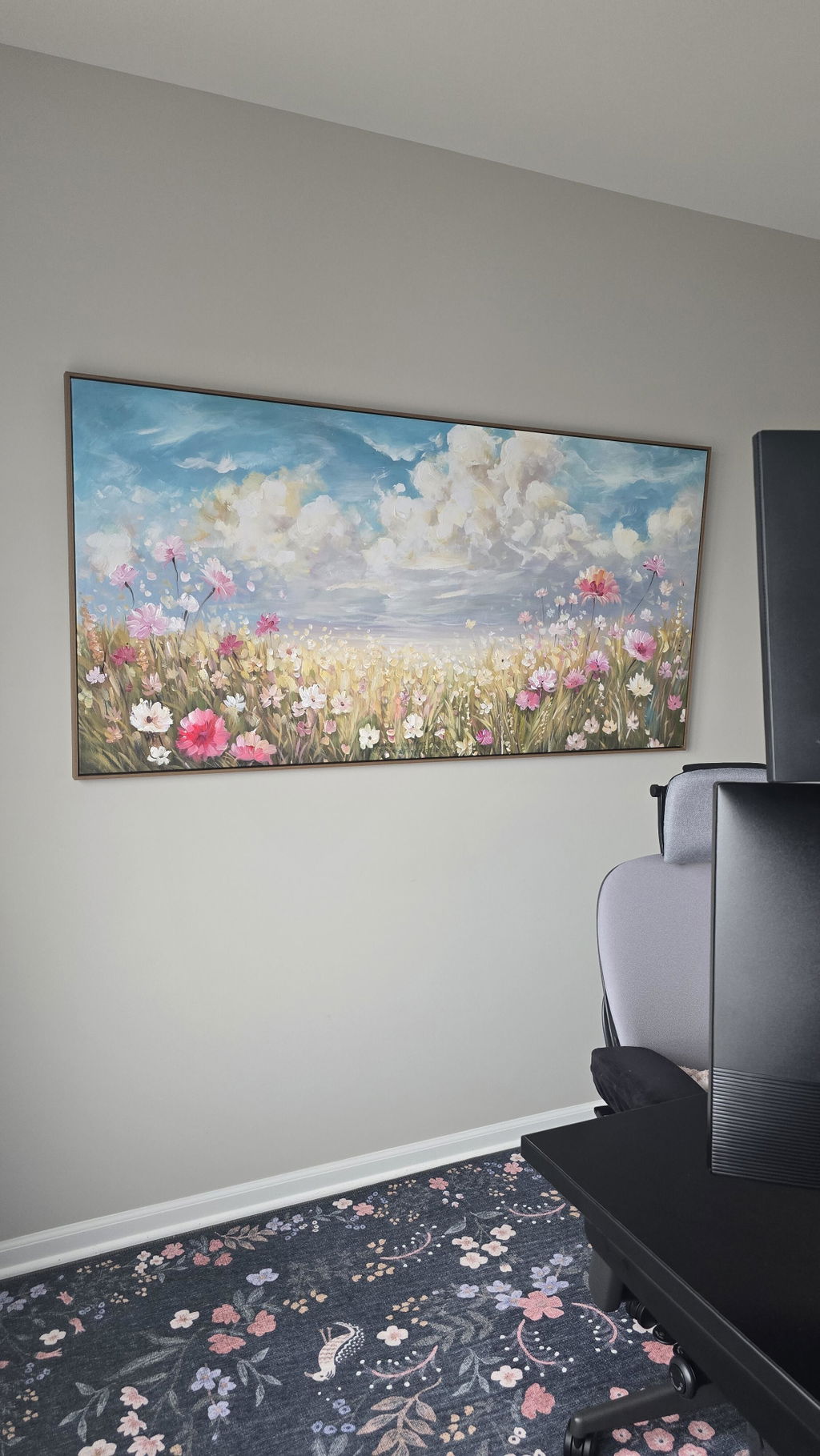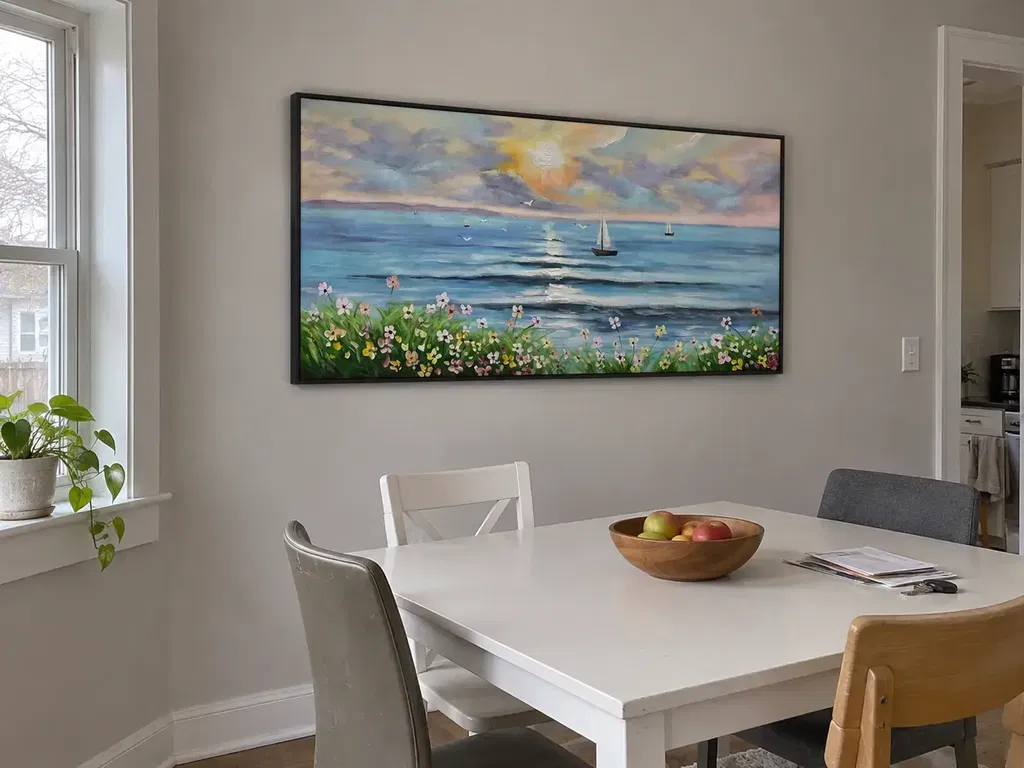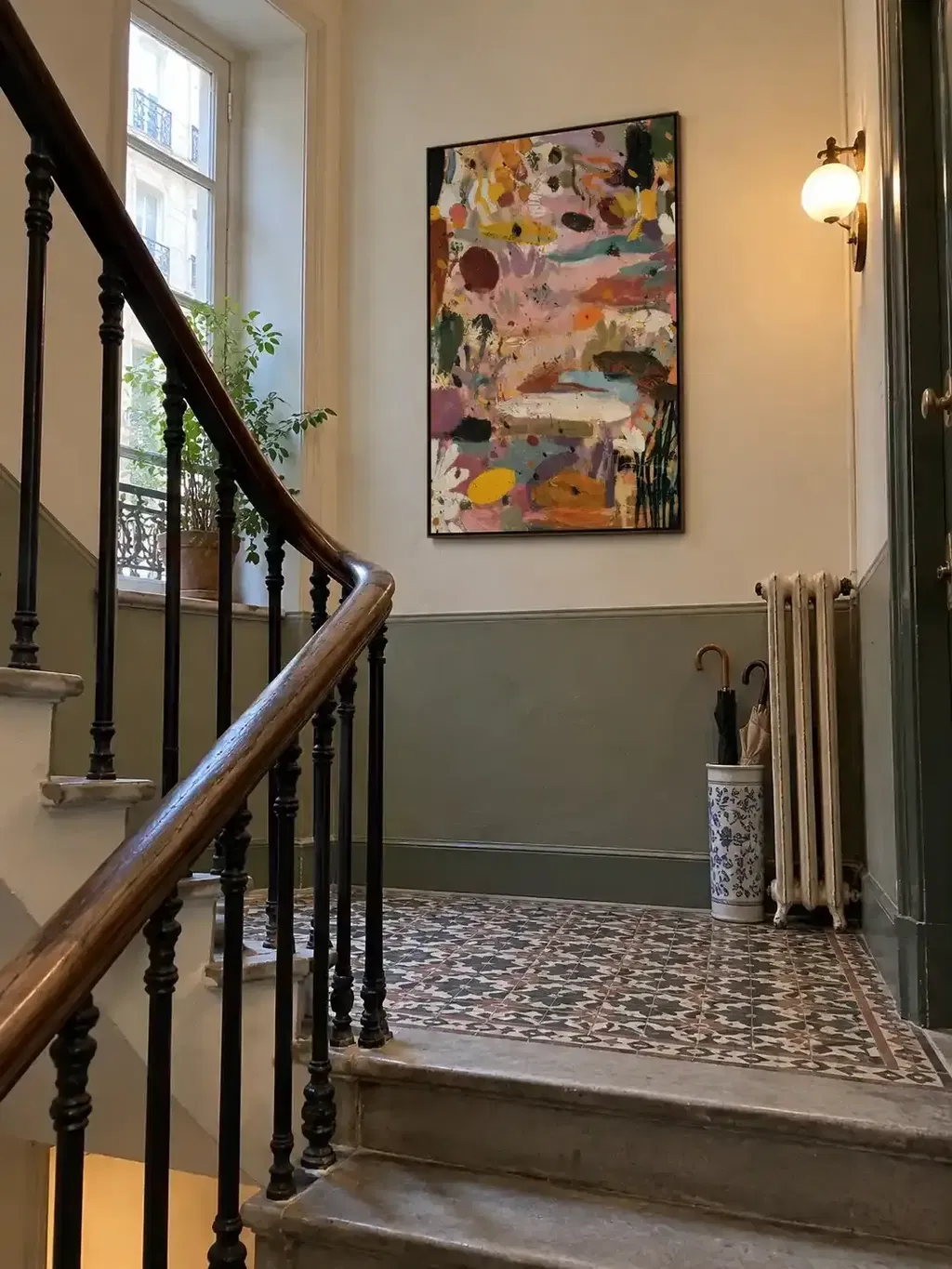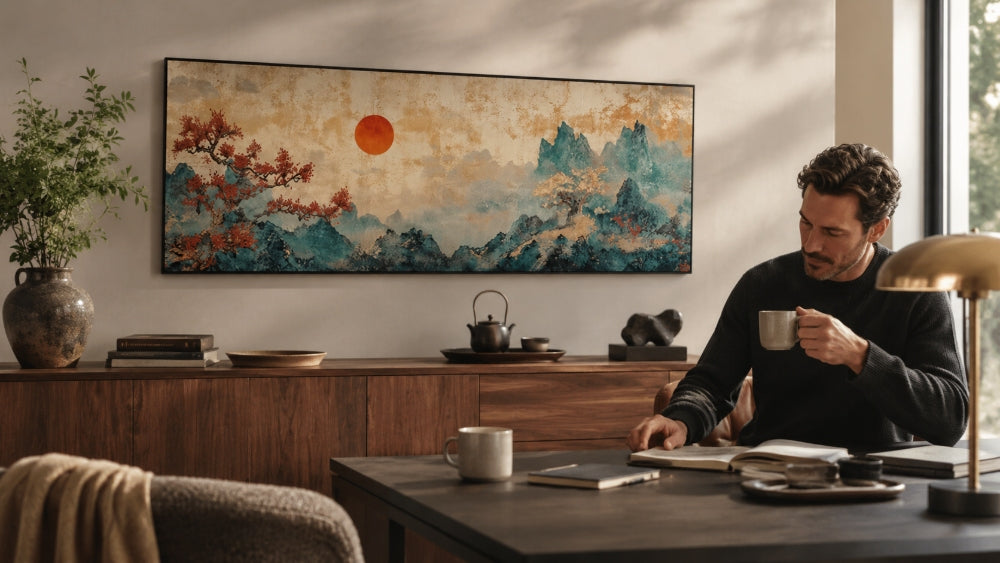
Caring for a fine art collection is not a universal process; the environmental stressors that threaten an oil painting in a sun-drenched living room are vastly different from the chemical risks found in a high-tech home office. To preserve the longevity of your investment, you must tailor your maintenance strategy to the specific microclimate of each room. While a living room requires rigorous UV shielding and heat management, a bedroom demands vigilance against moisture, and a hallway necessitates superior physical security.
Comparing Art Maintenance Across Different Rooms
The fundamental difference between public social spaces and private quarters lies in the type of "insult" the artwork receives. In the living room, threats are often external (sunlight) or architectural (fireplaces). In bedrooms and offices, the threats are frequently internal, generated by lifestyle appliances like humidifiers or laser printers.
| Room Area | Primary Risk Factor | Recommended Protection | Hardware Preference |
|---|---|---|---|
| Living Room | UV Radiation & Heat | UV-Filtering Glass / Distance from Heat | Security Hangers |
| Bedroom | Humidity & Condensation | Backing Boards / Proper Ventilation | Standard Hooks |
| Hallway | Physical Impact & Temp Swings | Insulation / Safety Mounting | French Cleats |
| Home Office | Ozone & Airborne Pollutants | Glazed Framing / Strategic Distancing | D-Rings |
Maintaining a stable environment is the most effective form of preventive conservation. Generally, experts suggest keeping residential art in a zone of 65–75°F with relative humidity (RH) between 40% and 50% to prevent the expansion and contraction of supports.
Protecting Living Room Wall Art from Sunlight and Fireplaces
The living room is typically the most prominent space for living room wall art, but it is also the most hazardous. Large windows and open floor plans invite ultraviolet (UV) radiation, which causes cumulative and irreversible damage, including fading, yellowing, and brittleness. According to the Library of Congress, long exposure to low light can be just as damaging as short exposure to intense light.
UV Protection Strategies
Windows are the primary entry point for UV rays. Even if your art is not in direct sunlight, ambient UV can still degrade pigments over a decade.
- UV-Filtering Glass vs. Acrylic: For framed pieces, use conservation-grade glazing that filters at least 97% of UV rays. UV-filtering acrylic is often preferred for larger works because it is shatterproof and lighter than glass.
- Window Treatments: Utilize solar shades or UV-blocking films on windows to reduce the overall "lumen load" in the room.
Managing Heat and Fireplace Risks
Hanging a luxury framed wall art piece above a fireplace is a classic design choice, but it comes with significant risks. Heat causes the binders in paint—especially acrylics—to soften. Smithsonian research indicates that dried acrylic paint begins to soften at approximately 60°C (140°F), making it highly susceptible to trapping dust and soot within the paint film.
Fireplace Safety Checklist:
- Measure Temperature: Use an infrared thermometer to ensure the wall surface above the mantel does not exceed 75°F when the fire is lit.
- Check for Soot: Unvarnished paintings are prone to absorbing soot and tobacco tar, which permanently alters the image.
- Warping Prevention: Heat can cause wood stretcher bars to warp. If a canvas becomes loose, do not attempt to tighten it yourself, as untrained tightening imposes mechanical stress on the paint layer.
Managing Bedroom Wall Decor and Humidifier Risks
Bedrooms are often more climate-controlled than living areas, but they introduce a specific hazard: humidity. Many people use ultrasonic humidifiers or essential oil diffusers to improve sleep quality. While good for human health, these devices can be catastrophic for bedroom wall decor.
The Impact of Moisture and Mold
Excessive moisture promotes the growth of mold on unsealed canvases and leads to the formation of sulphate crystals in certain oil paints. Furthermore, rapid shifts in humidity cause "cockling" in paper-based art—a term describing the wavy, rippled distortion that occurs when paper fibers expand unevenly. The Canadian Conservation Institute notes that incorrect or rapidly fluctuating relative humidity causes supports and paint layers to expand and contract at different rates, leading to cracking.
To protect your bedroom collection, place humidifiers at least 10 feet away from any artwork and ensure the room has adequate air circulation. Utilizing a protective backing board on every frame is essential; these boards act as a thermal and moisture buffer against the wall.
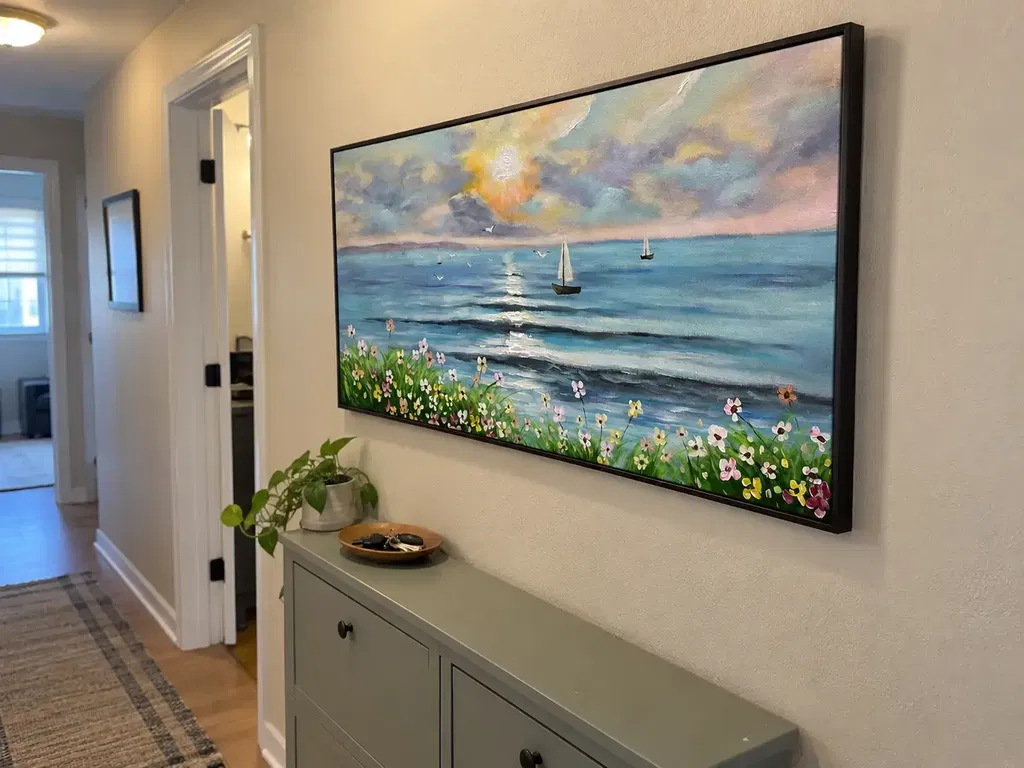
Securing Hallway Art Against Traffic and Temperature Swings

Hallways are high-traffic transition zones that present two main challenges: physical impact and thermal instability from exterior-facing walls.
Preventing Physical Damage
In narrow passages, art is frequently bumped by shoulders, vacuum cleaners, or pets. Standard wire hanging is insufficient here because the art can easily shift or fall.
How to Secure Hallway Art:
- Use French Cleats: Instead of a single hook, use a French cleat (a two-part interlocking bracket).
- Security Hangers: For homes with children or in earthquake-prone zones, security hangers that lock the frame to the wall are the gold standard.
- Corner Bumpers: Attach small silicone bumpers to the back corners of the frame.
The Exterior Wall Problem
Many hallways share a wall with the outside of the house. Hanging art directly against an uninsulated exterior wall can cause condensation to form behind the canvas, leading to rot or mold. If you must use an exterior wall, ensure there is a gap of at least half an inch between the frame and the wall surface.
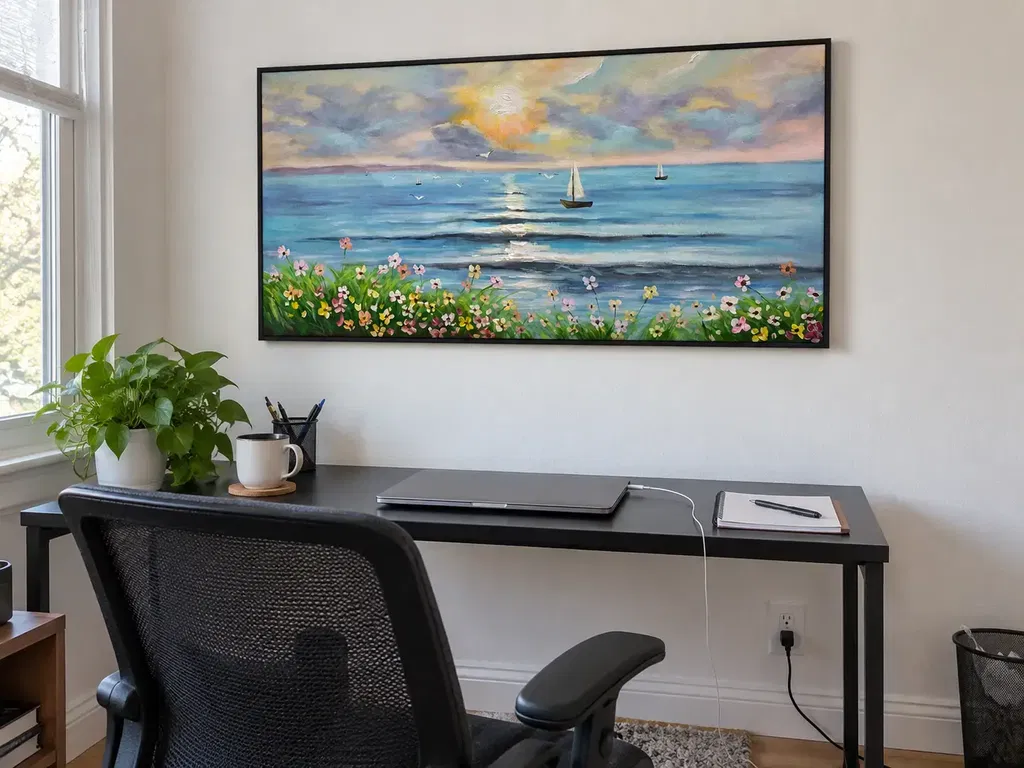
Home Office Hazards: Ozone and Placement of Office Paintings
The modern home office contains invisible threats that many collectors overlook. While we focus on light and heat, the chemical environment of an office can be quite aggressive toward office paintings.
The Danger of Laser Printers
Laser printers and photocopiers emit small amounts of ozone during the printing process. Ozone is a powerful oxidant that can degrade paper fibers and cause synthetic pigments to fade or shift in color.
Studies on the deterioration of modern materials show that pollutants like ozone can significantly shorten the life of contemporary prints. It is recommended to keep any unglazed artwork at least 6 to 8 feet away from active laser printers.
Universal Best Practices for Fine Art Maintenance
Regardless of the room, certain maintenance rules apply to all abstract art for sale or personal commissions. Following a consistent cleaning schedule will prevent the build-up of grime that eventually requires professional restoration.
Step-by-Step Safely Dusting Guide:
- Inspect the Surface: Check for any flaking or loose paint.
- Use the Right Tool: Use a high-quality, ultra-soft artist's brush.
- Technique: Work from the top down in small, circular motions.
- Avoid Chemicals: Smithsonian MCI warns that cleaning is irreversible and water can remove sensitive additives.
- Wear Gloves: Wear white cotton or nitrile gloves.
Preserving Your Living Room Wall Art and Home Collection

Preserving a diverse art collection requires an understanding of how different architectural environments interact with creative materials. By recognizing that the living room needs UV protection, the bedroom requires humidity control, and the office needs protection from ozone, you can ensure your living room wall art and other pieces remain in museum-quality condition for decades.
Safety Notice
This article provides general guidance only. Always follow the manufacturer's instructions, applicable local requirements, and appropriate safety practices. For installations involving electrical systems, structural loads, fire safety, or other significant risks, such as hanging heavy frames or placing art near heat sources, consult a qualified professional.
FAQs
Can I hang an oil painting above my fireplace?
It is generally discouraged unless the fireplace is well-insulated and the temperature on the wall does not exceed 75°F. High heat can soften binders and cause warping, while soot can permanently stain the surface.
Are bedroom humidifiers bad for art prints?
They can be if the humidity levels rise above 55-60%. Excessive moisture causes paper prints to ripple (cockling) and can promote mold growth on the back of the artwork.
Why shouldn't I use a traditional duster on my artwork?
Traditional feather or microfiber dusters can snag on the texture of the paint (impasto) and cause microscopic abrasions. An ultra-soft artist's brush is much safer for delicate surfaces.
What kind of glass is best for art in sun-drenched living rooms?
Museum-grade or conservation-grade glass/acrylic that filters at least 97-99% of UV rays is recommended to prevent pigment fading and material degradation.