

The High-Stakes Logistics of Fine Art Preservation
The global art market reached a staggering $65 billion in 2023, with the United States, China, and the UK commanding 85% of that value, according to the Art Basel and UBS Art Market Report 2024. While high-end auction sales for pieces over $10 million saw a 44% decline in 2024—as reported by Marketplace—this shift actually signals a return to "real application value." Collectors are moving away from vanity auction assets and toward custom, hand-painted works that hold deep emotional and aesthetic significance within their homes.
When a painting transitions from a gallery or a former residence to a new space, its greatest threat isn't time or light—it is the transit process itself. Moving a hand-painted oil work across long distances involves navigating mechanical vibrations, thermal shock, and the chemical risks of improper packing materials. For the serious collector, understanding the physics of "Art-Safe Transit" is the difference between preserving a multi-generational investment and facing a catastrophic loss of the work's "essential identity" (a concept explored by the University of Chicago, which notes that physical canvases retain an irreplicable soul that digital replicas lack).
This guide provides a professional-grade framework for packing oil paintings, grounded in museum-standard conservation techniques and real-world logistics data.
The Layered Defense: Materials Science in Art Packing
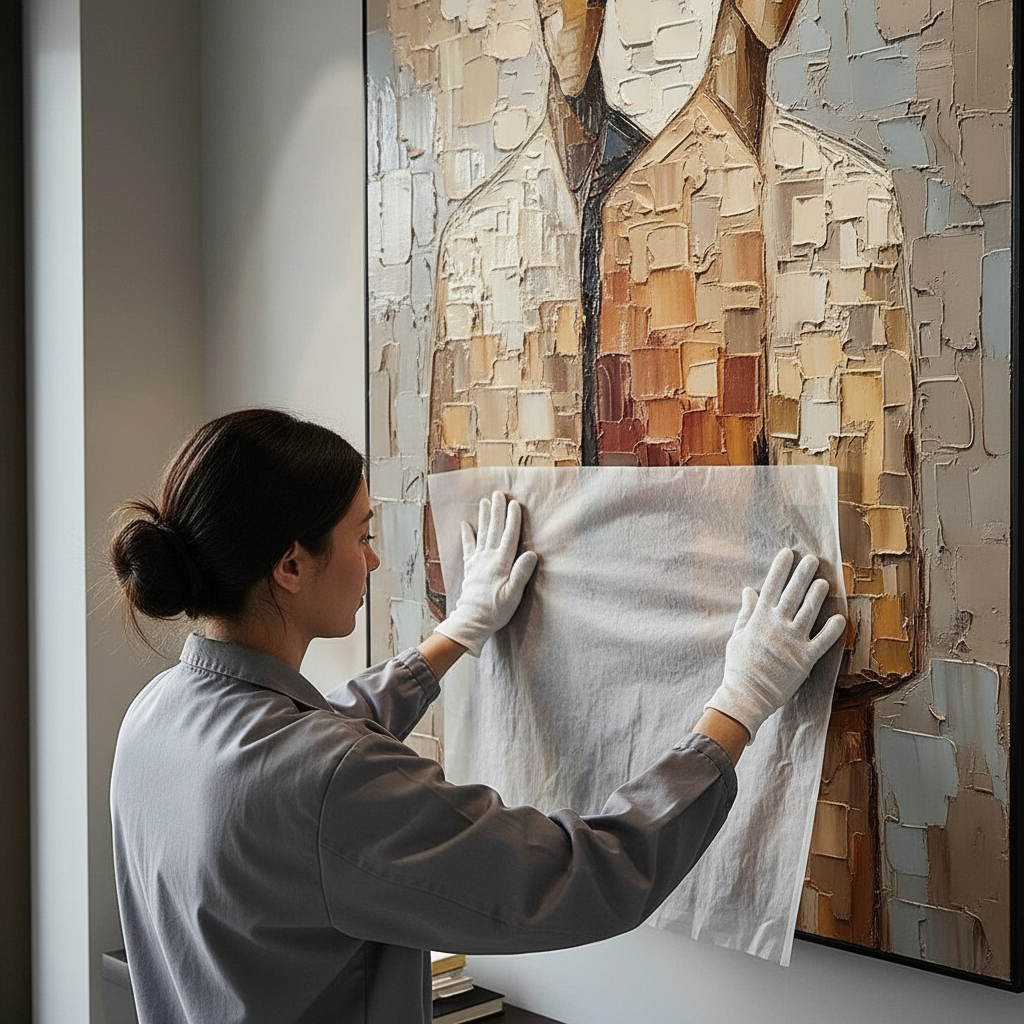
The most common mistake in DIY art packing is the over-reliance on bubble wrap. While it provides excellent shock absorption, professional art handlers warn that plastic should never directly contact a painted surface. Over time, or under pressure, the plastic can create micro-abrasions, and the air pockets can trap moisture against the canvas, leading to mold or "Support Induced Discoloration" (SID).
The "First Contact" Layer
The primary layer must be chemically inert and breathable.
- Acid-Free Tissue Paper: This is the industry standard for the first wrap. It prevents dust and light scratches without reacting with the oil binders.
-
Glassine vs. Kraft Paper: While glassine is often touted as the ideal moisture barrier, recent research suggests a more nuanced approach.
Logic Summary: Our analysis of moisture management assumes that non-permeable surfaces (like glassine) can trap condensation during temperature shifts. We recommend acid-free Kraft paper for its superior moisture permeability in non-climate-controlled environments.
- Heuristic: If the transit duration exceeds 48 hours in varying climates, prioritize breathable Kraft paper over glassine to prevent localized humidity spikes (based on museum transit studies).
The Cushioning Architecture
Once the surface is protected, you must address mechanical shock.
- Quilted Padding: Professional movers use moving blankets or quilted wraps over the initial paper layers.
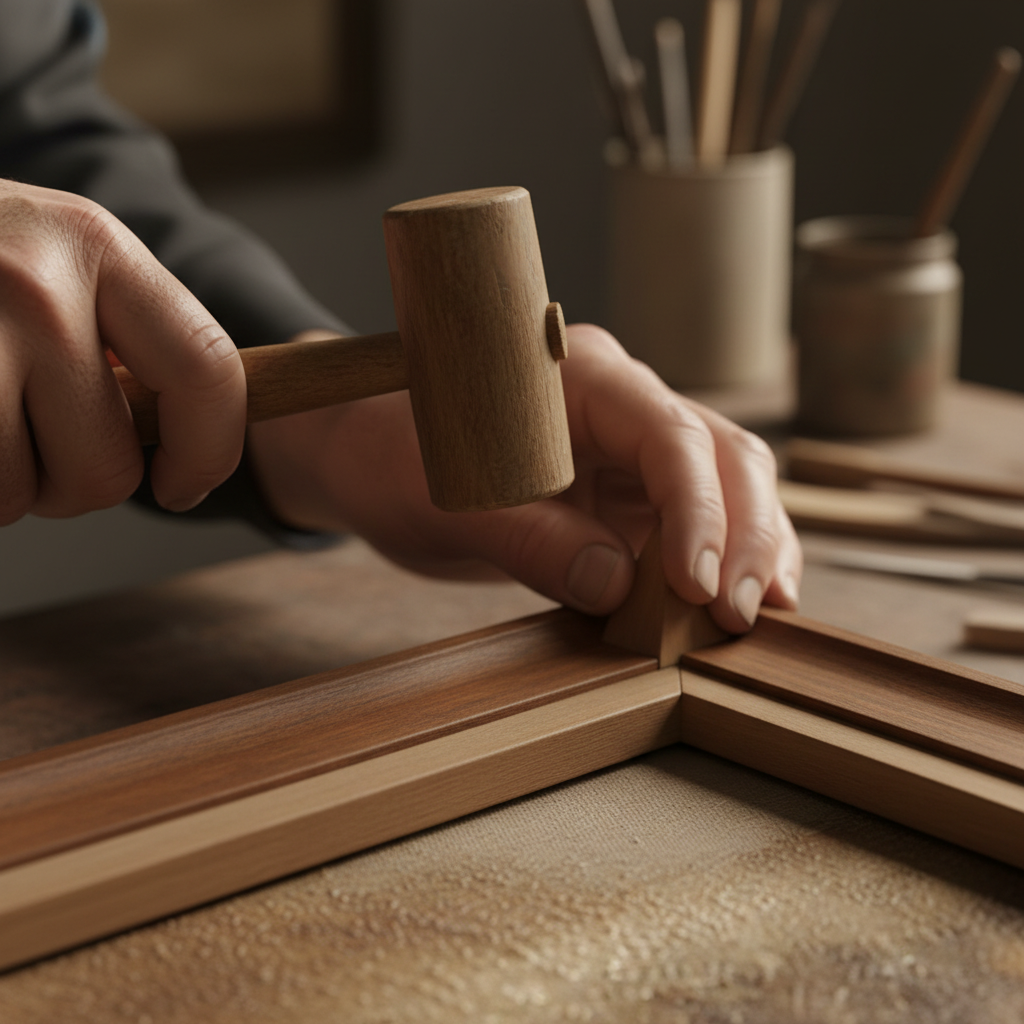
- Corner Protectors: Cardboard or foam "V" guards are essential for framed works to prevent the frame from acting as a lever that cracks the canvas stretcher during a jolt.
| Material | Primary Function | Risk Factor |
|---|---|---|
| Acid-Free Tissue | Surface protection | Non-cushioning; requires outer layers. |
| Kraft Paper | Breathable barrier | Not waterproof; requires outer sealing. |
| Glassine | Moisture/Grease barrier | Can trap condensation if sealed too tightly. |
| Rigid Foam (XPS) | Impact resistance | Can off-gas if not "museum-grade." |

Soft-Packing vs. Custom Crating: Making the Decision
The decision to use a "soft pack" (layers of wrap and cardboard) versus a "wooden crate" depends on three variables: the painting's size, its texture profile, and its financial/sentimental value.
The "Sandwich Method" for Unframed Canvases
For unframed works, we often observe that they are actually safer than framed ones if handled correctly. Frames can create pressure points that lead to 40% more transit damage in some scenarios.
- Wrap the painting in acid-free tissue.
- Sandwich the painting between two rigid foam panels (typically 1-inch thick).
- Secure the panels with non-stretch straps. Never apply tape to the painting or its immediate wrap.
The Golden Ratio of Crating
If you choose to crate, the "Golden Ratio" for safety is 2 inches of clearance on all sides between the painting and the crate's interior. This space must be filled with shock-absorbing material like polyethylene foam blocks.
- Why 2 inches? This distance allows the internal cushioning to compress and rebound without the painting hitting the rigid wooden wall of the crate during a drop or sudden stop.
Environmental Control and the 24-Hour Rule
Oil paintings are organic structures. The wood of the stretcher and the layers of pigment expand and contract at different rates. Rapid environmental changes are the leading cause of "craquelure" (fine cracking) and paint delamination.
Managing Thermal Shock
Never move a painting directly from a cold delivery vehicle into a warm, humid interior.
- The 24-Hour Acclimation Rule: Keep the painting in its crate or packing for at least 24 hours in a climate-controlled staging area. This allows the internal temperature of the package to equalize slowly, preventing condensation from forming behind the canvas.
- The Humidity Trap: Standard "climate-controlled" transit often has a fluctuation of ±5°C. This is insufficient for high-value works. True protection requires ±1°C precision systems, which can cost 3-5 times more than standard options.
Indoor Air Quality (IAQ) and VOCs
If you are moving into a newly renovated space, be aware of Volatile Organic Compounds (VOCs). Research from Aalto University shows that coatings on wood can emit toxic VOCs that may interact with the oil paint's curing process. Ensure the new environment has been properly ventilated before unmasking your art.
Navigating the "Insurance Trap"
Many collectors assume their moving company's "Full Value Protection" covers their art. In reality, standard mover coverage is often limited to $0.60 per pound—virtually useless for a $10,000 painting that weighs only 15 pounds.
Modeling Note (Financial Risk):
Parameter Standard Mover Specialized Art Insurance Coverage Basis Weight ($0.60/lb) Appraised Value Transit Fee Included $500 - $800 per trip Annual Premium N/A 1% - 2% of collection value Claims Process High friction Specialist adjusters Boundary Condition Only covers total loss/theft Covers restoration/depreciation
For works of significant value, third-party art insurance is non-negotiable. It covers not just the loss of the item, but the "loss of value" if a painting is damaged and subsequently restored.
The Human Element: Why It Matters
In an era where Columbia University research confirms consumers value "human-created" art 62% higher than AI-generated prints, the physical preservation of the artist’s hand becomes a moral and financial imperative. Hand-painted works possess a "microtopography"—the mm-scale texture of the brushstrokes—that is crucial to their aesthetic and market value.
Protecting this texture during transit is why we emphasize the Fade-Resistance Factor and Pigment Saturation. A crushed impasto peak cannot be "un-crushed." By following these rigorous packing standards, you are not just moving an object; you are safeguarding the biochemical crystallization of human attention.

Pre-Transit Checklist for Collectors
Before the truck arrives, verify the following:
- [ ] Condition Report: Take high-resolution photos of the front, back, and all four edges. Note any existing cracks or stretcher marks.
- [ ] Curing Verification: Ensure the painting is fully "dry to the touch" and has passed its initial curing timeline. Soft paint is 10x more susceptible to pressure damage.
- [ ] Labeling: Mark crates with "Fragile," "Keep Up," and "Do Not Stack." Include a "Tip-N-Tell" sensor on the crate exterior to monitor if the work was mishandled.
- [ ] Acclimation Plan: Identify a staging room in the new location that is away from HVAC vents and direct sunlight.
By treating the transit of an oil painting with the same precision as its creation, you ensure that the work continues to provide emotional and financial ROI for decades to come. Whether it's a biophilic nature mural or a textured abstract, the safety of the journey is the final step in the artist's process.
Disclaimer: This article is for informational purposes only and does not constitute professional legal, financial, or conservation advice. Always consult with a certified art conservator or specialized fine art handler for high-value collections.

Leave a comment
This site is protected by hCaptcha and the hCaptcha Privacy Policy and Terms of Service apply.