The Physics of Patience: Managing Lead Times for Thickly Painted Impasto Art
In an era of instant gratification and overnight shipping, the world of premium hand-painted art remains one of the few domains where physics dictates the schedule. For collectors seeking the sculptural depth of impasto—where paint is applied in thick, relief-like layers—the primary "friction point" isn't the artist’s speed, but the chemical reality of oxidative drying.
According to the Marketplace.org report on the art market, high-end auction sales plummeted 44% in 2024 as buyers shifted from financial speculation toward "real application value." This shift highlights a growing demand for authentic, human-made pieces that offer tactile presence. However, that presence comes with a mandatory waiting period.
This article serves as a technical guide for interior designers, developers, and homeowners to understand the science behind impasto lead times, ensuring that the pursuit of aesthetic quality is matched by logistical transparency.

The Science of the "Wait": Oxidative Drying vs. Evaporation
The most common misconception in art procurement is that oil paint "dries" like watercolor or house paint. House paints typically dry through evaporation—solvents leave the film, leaving behind a solid pigment. Oil paint, conversely, cures through a complex chemical process called oxidative cross-linking.
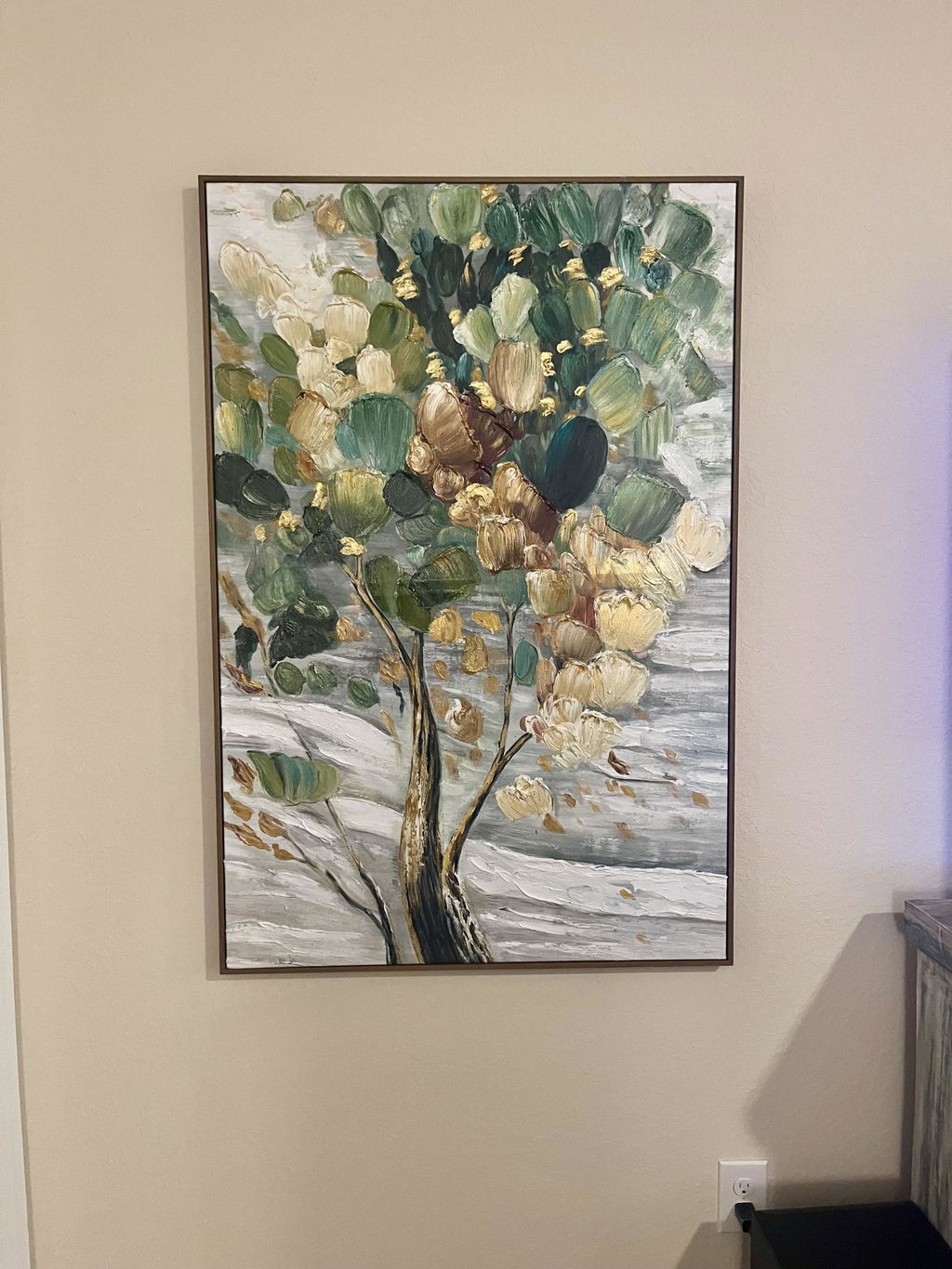
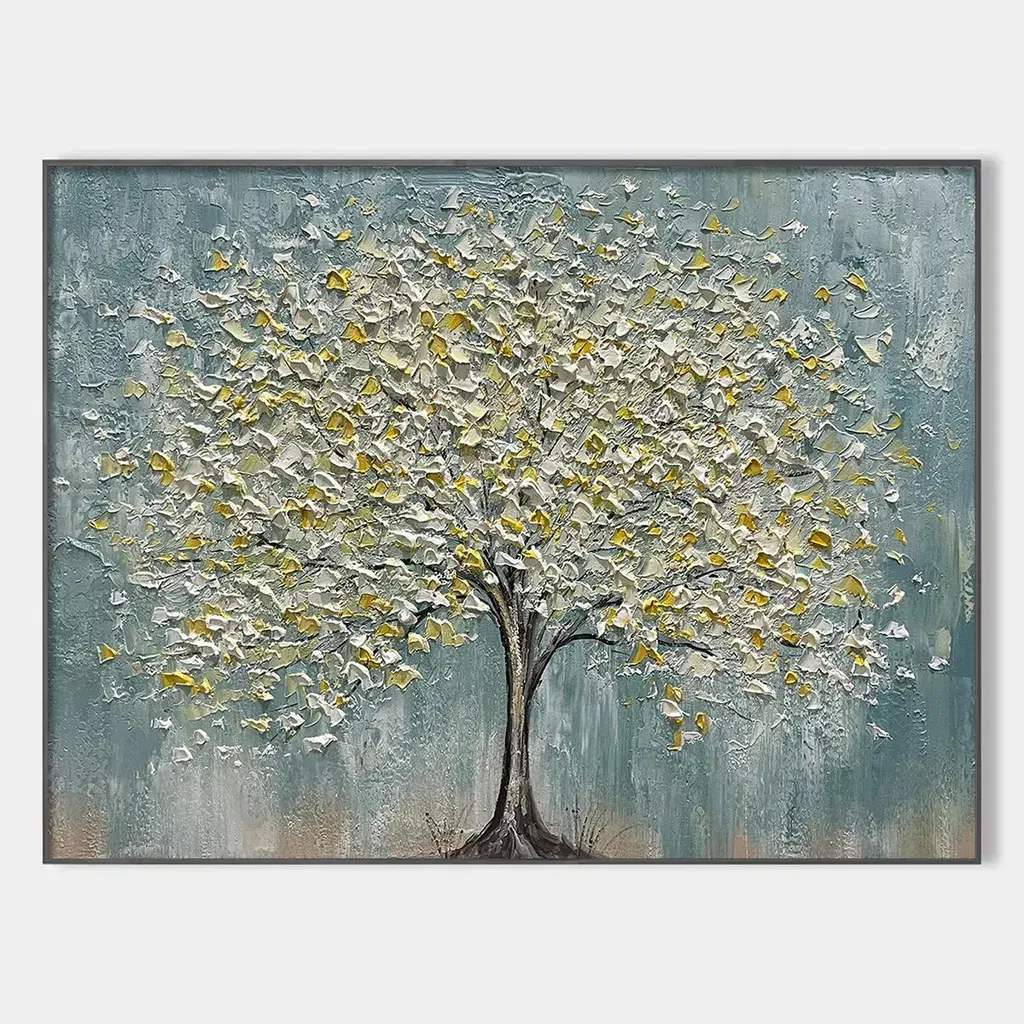
When linseed oil (the most common binder in professional oils) is exposed to air, it doesn't lose weight; it actually gains weight by absorbing oxygen. This triggers the formation of polymer chains that turn the liquid oil into a durable, leathery solid. In a standard thin layer, this happens relatively quickly. However, in impasto work, where the "peaks" of the paint can reach several millimeters in height, the surface "skins over" first. This skin creates a barrier that slows the oxygen from reaching the core of the paint layer.
Logic Summary: Our drying estimates for impasto are based on common industry heuristics and pattern recognition from professional studio handling (not a controlled lab study). We assume standard professional-grade linseed oil binders and high-density pigment loads.
The "Millimeter Rule" Heuristic
For planning purposes, we employ a baseline heuristic for thick oil applications:
- The Baseline: Each 1mm of oil paint thickness requires approximately 7 to 10 days of oxidative drying under ideal studio conditions (65-70°F, 45% humidity).
- The Non-Linear Reality: Drying time is not strictly linear. As the surface skin thickens, the rate of oxygen penetration decreases. A 5mm impasto peak may take significantly longer than five times the duration of a 1mm layer.
Material Variables: Why Some Colors Wait Longer
Not all pigments are created equal. The chemical composition of the pigment itself acts as either a catalyst or an inhibitor for the drying process.
The Heavy Hitters: Titanium and Cadmium
Titanium White—the backbone of almost every impasto landscape or portrait—is notorious for its slow drying time. Because titanium dioxide particles are exceptionally fine and require a high ratio of oil to remain workable, they can extend the curing window by 20–30%. Similarly, cadmium-based colors (Reds, Yellows, Oranges) are naturally "slow driers."
Conversely, earth tones like Raw Umber or Burnt Sienna contain manganese, a natural desiccant that accelerates the oxidative process. An impasto piece dominated by deep ochres may be ready for shipment weeks before a high-key, white-heavy abstract of the same thickness.
Lightfastness and Structural Integrity
It is vital to note that rushing this process is structurally dangerous. According to ASTM D4303 Standard Test Methods, the lightfastness and longevity of a painting are tied to the stability of the dried film. If a painting is varnished or shipped while the lower layers are still "mobile," the artwork may develop "shrinkage cracks" or "alligatoring" as the top layer dries faster than the bottom.

Environmental Constraints: The Studio "Micro-Climate"
The environment where a painting cures is just as important as the paint itself. Professional studios must manage a delicate balance of temperature and humidity.
- Humidity: High relative humidity (RH) is the enemy of oxidative drying. Excessive moisture in the air can compete with oxygen for space in the oil matrix. Scientific data from Aalto University on VOC emissions suggests that while coatings on moist wood emit fewer toxins, the curing of the paint film itself is most efficient in a stable, moderate RH environment (40-50%).
- Temperature: Cold temperatures slow the chemical reaction of cross-linking. While it might be tempting to use heat to speed things up, this is a "gotcha" for many amateur studios. Rapid heating can cause the surface to brittle and crack while the interior remains liquid.
The "Odorless" Myth
Many clients ask if "odorless" solvents make the process safer or faster. In reality, Princeton University EHS guidelines warn that even odorless mineral spirits can cause central nervous system issues if inhaled chronically. At MontCarta, we prioritize water-based acrylics for specific high-speed projects, but for the "gold standard" of oil impasto, we rely on time and natural ventilation rather than chemical shortcuts.
Modeling the Timeline: A Practical Schedule
When ordering a custom impasto piece, we provide a transparent timeline based on the following modeling parameters. This ensures that the "ecommerce predictability" our clients crave is grounded in "technical authenticity."
| Parameter | Value / Range | Unit | Rationale |
|---|---|---|---|
| Surface Dry | 3 - 5 | Days | Initial oxygen absorption creates a non-tacky skin. |
| Partial Cure | 14 - 21 | Days | Paint is firm enough for gentle handling but not pressure. |
| Shipping Ready | 28 - 45 | Days | Through-curing has reached a point where vibration won't cause delamination. |
| Full Cure | 6 - 12 | Months | The point at which the painting can be safely varnished. |
| Temp Range | 18 - 22 | °C | Optimized for chemical cross-linking without brittleness. |
Modeling Note: This table represents a deterministic model for a "Standard Impasto" piece (3-5mm peaks). Boundary conditions include extreme humidity (>70%) or the use of heavy oil-glazing techniques, which can double these estimates.
The Value of the Wait: Human vs. Machine
Why not just use a 3D printer or an AI-generated textured print? The answer lies in the "Essential Identity" of the work. A University of Chicago study found that digital replicas lack the artist's "soul" in the eyes of consumers, leading to a collapse in perceived value. Furthermore, experiments at Columbia University confirmed that consumers value art labeled "AI-generated" 62% lower than authentic human-created art.
The wait time for a hand-painted impasto mural or canvas is, in itself, a marker of quality. It proves that the piece is a physical object, built layer by layer, rather than a mass-produced plastic facsimile.
Economic Impact and Property Value
For commercial developers and homeowners, this patience pays dividends. The Royal Society has quantified the link between art and property prices, finding that neighborhoods with high "art density" see significant gains in relative house price rankings. In the B2B sector, NAIOP commercial insights show that unique public art is a "marketing trump card" used by titans to lease millions of square feet of office space in a post-pandemic market.

Health, Safety, and Ethical Production
At MontCarta, we manage lead times not just for the art's sake, but for your health. Rushing the drying process often involves high-VOC driers or synthetic additives that can compromise indoor air quality.
The EPA warns that indoor air pollution can be more concentrated than outdoor pollution. By allowing paint to cure naturally in our controlled environment, we ensure that the VOC levels have plummeted before the piece enters your home or office. This is a critical prerequisite for healthcare facilities or developers seeking LEED or WELL certification.
Furthermore, our commitment to fair artist compensation means our painters aren't forced into "sweatshop" timelines that sacrifice quality for volume. We respect the "invisible labor" of the drying phase, recognizing it as part of the artistic process.
Conclusion: Embracing the "Slow Art" Movement
Managing lead times for impasto art is a partnership between the creator and the collector. By understanding the physics of oxidative drying, the variables of pigment chemistry, and the necessity of environmental control, we can move away from the anxiety of "When will it arrive?" toward the anticipation of "What is being created?"
The result of this patience is a piece of art that possesses what the Getty Conservation Institute calls the "microtopography" of success—a surface that interacts with light in ways a flat print never can, providing biophilic benefits that reduce stress by up to 73%.
When you order a thickly painted work, you aren't just buying decor; you are investing in a physical, chemical, and emotional process. At MontCarta, we ensure that process is transparent, safe, and—above all—worth the wait.
YMYL Disclaimer: This article is for informational purposes only. When handling professional art materials or pigments, always consult the manufacturer's Safety Data Sheet (SDS). If you have pre-existing respiratory conditions or are decorating a nursery, prioritize low-VOC and non-toxic materials as certified by relevant environmental authorities.
References & Authoritative Sources
- Art Market Trends: The Art Basel and UBS Art Market Report 2024
- Consumer Perception: Columbia University Human-Made vs. AI Art Study
- Health & Safety: EPA Indoor Air Quality and Low-VOC Paint Standards
- Property Value: Royal Society: Quantifying the link between art and property prices
- Neuroaesthetics: UPenn Critical Review on Visual Art in the Built Environment
- Chemical Safety: Princeton University Painting and Drawing Safety Guidelines