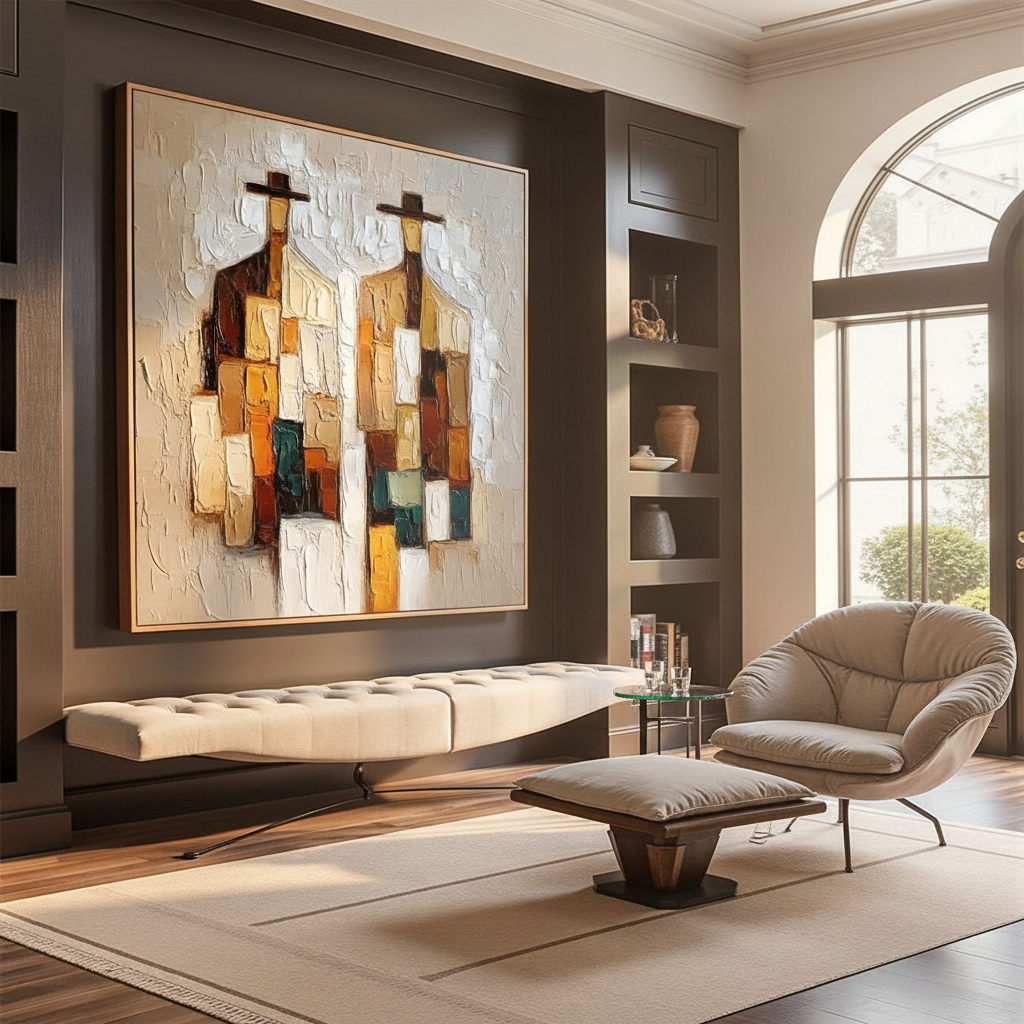
Why Humidity and Temperature Dictate Your Art’s Drying Speed
In the current interior design landscape, we are seeing a significant shift in how homeowners approach art. Recent data from Marketplace indicates that high-end auction sales for "vanity" pieces plummeted 44% in 2024, as buyers pivot toward art with real application value—specifically custom, hand-painted works that provide emotional resonance and "camera-ready" aesthetics for the home.
However, bringing a 100% human-created oil painting into your space involves more than just finding the right wall. Unlike digital prints or mass-produced acrylics, oil paint is a living, breathing medium. Its beauty lies in its "essential identity"—a psychological concept explored by University of Chicago research which suggests that the artist's soul is physically retained in the canvas. But that physical presence comes with a technical caveat: a complex, months-long curing process that is entirely at the mercy of your room's climate.
If you’ve ever wondered why your new centerpiece still feels "tacky" weeks after delivery, or why a professional framer insists on waiting six months to put it under glass, the answer lies in the delicate dance between ambient humidity and room temperature.

The Science of Curing: Why Oil Doesn't "Dry"
To manage your art properly, we must first dispel a common myth: oil paint does not "dry" through evaporation like water-based house paint. Instead, it cures through oxidation.
According to JustPaint, while acrylic polymers form films through a physical "coalescence" process, oil binders (typically linseed or safflower oil) undergo a chemical reaction with oxygen. This reaction creates a cross-linked molecular structure that eventually turns the liquid oil into a solid, durable plastic.
The Two-Stage Timeline
- Touch-Dry (Surface Oxidation): The outer layer reacts with oxygen first. This can take anywhere from 2 to 14 days.
- Full Cure (Deep Oxidation): Oxygen must penetrate the lower layers of the paint. For thick impasto work, this process typically takes 6 to 18 months.
Methodology Note: Curing Analysis Our understanding of these timelines is based on common patterns observed in studio practice and conservation standards (not a controlled lab study for every individual pigment).
- Heuristic: The "Thumb Test." Press firmly on the thickest area of paint. If there is any "give" or tackiness, the internal structure is still liquid.
- Boundary Condition: This rule of thumb may not apply to paintings using synthetic alkyd mediums, which can accelerate touch-dry times to 24 hours.
The Humidity Factor: A Delicate Balance
Humidity is perhaps the most misunderstood variable in art care. While many believe that "dry is better," extreme aridity can be just as damaging as a tropical swamp.
High Humidity (>60% RH)
When relative humidity (RH) climbs, the curing process doesn't just slow down—it changes chemically. A study published in Nature found that high humidity accelerates chemical degradation through hydrolysis. Excess moisture reacts with the ester bonds in the oil binder, leading to the formation of dicarboxylic acids. This can make the paint film permanently soft or even cause "weeping," where the paint appears to liquefy years after it was finished.
Low Humidity (<30% RH)
In arid climates or over-heated winter homes, the canvas substrate (typically cotton or linen) loses moisture and shrinks. Because the oil paint film is less flexible than the fabric, this "differential stress" leads to the dreaded "spider-web" cracking.
| Parameter | Recommended Range | Impact of Deviation |
|---|---|---|
| Relative Humidity (RH) | 40% – 60% | <30%: Cracking risk; >60% Hydrolysis/Mold |
| Temperature | 65°F – 75°F | <60°F: Curing stalls; >85°F: Premature embrittlement |
| Airflow | Low/Indirect | High/Direct: Uneven drying and surface tension |

Temperature: The Accelerator and the Interaction Effect
Temperature acts as the catalyst for oxidation. Generally, a 10°F increase in temperature can significantly accelerate the chemical reaction rate. However, we often see homeowners make the mistake of thinking "hotter is faster."
In reality, humidity and temperature interact compensatively. Based on our scenario modeling for coastal vs. desert environments, a 10°F temperature increase can often offset a 20% humidity increase in terms of the perceived "touch-dry" speed.
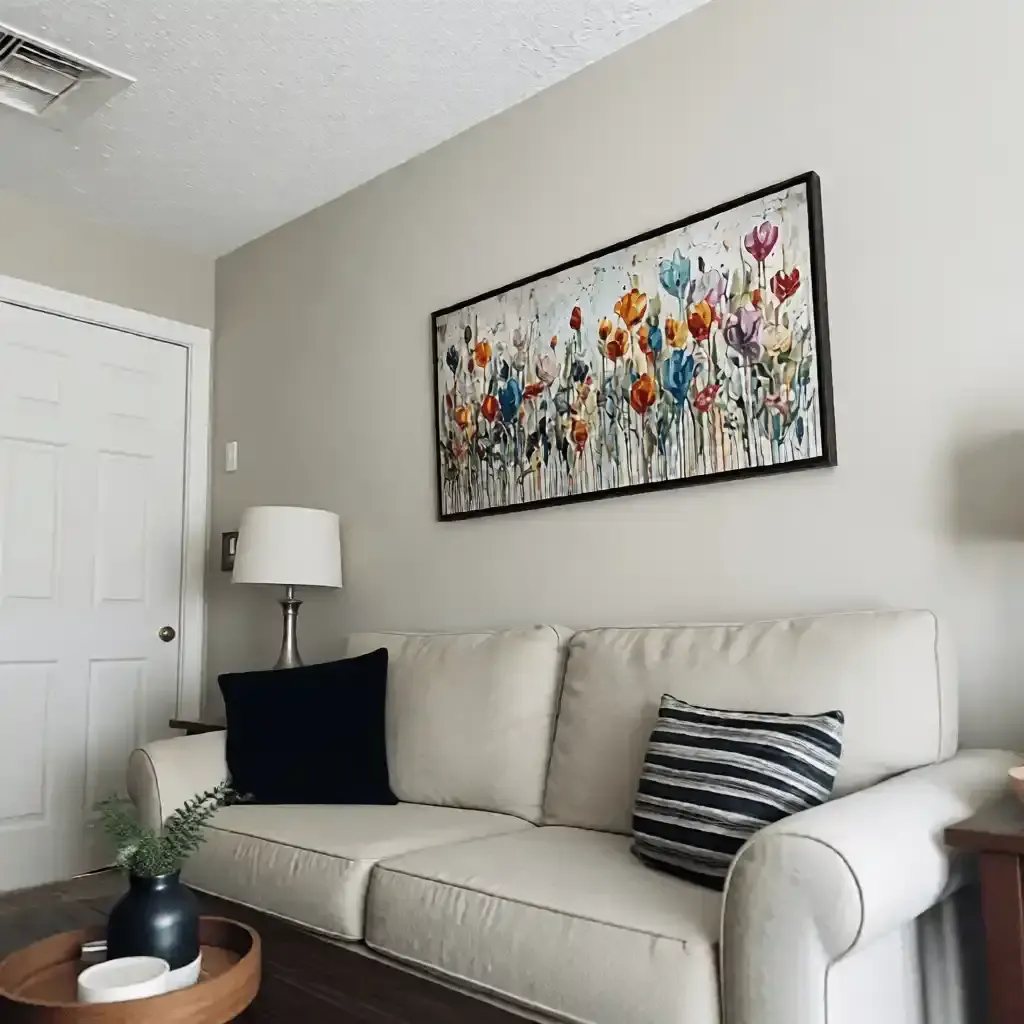
The Danger of HVAC Vents: One of the most common mistakes we see in home staging is hanging a fresh oil painting directly in the path of an HVAC vent. This creates "micro-climates" on the canvas. The side nearest the vent dries significantly faster than the rest of the piece, creating uneven surface tension. Months later, this often results in structural cracks that are nearly impossible to repair without professional conservation.
Practical Scheduling: When is it Safe?
For the aesthetic-driven homeowner, the goal is a "finished" room. But rushing the timeline can ruin the investment. Here is our recommended schedule based on standard studio heuristics:
1. Hanging (1-2 Weeks Post-Delivery)
Most custom art is shipped "touch-dry." It is generally safe to hang the painting as soon as it arrives, provided you avoid "danger zones" like bathrooms (high humidity), kitchens (grease and heat), or directly above active fireplaces.
2. Framing (2-6 Months)
If you are using a "floater frame" where the edges don't touch the paint, you can frame almost immediately. However, for traditional "lip" frames that rest on the paint surface, we recommend waiting at least two months. According to experienced framers, if you frame too early, the lip of the frame can "bond" to the semi-cured oil, tearing the paint away if the frame is ever removed.
3. Varnishing (6-12 Months)
Varnish is a protective "sacrificial" layer. If you apply it before the paint is fully cured, you effectively seal the paint off from oxygen, stopping the curing process entirely. This leaves the lower layers of paint permanently soft, which can lead to "sinking" or wrinkling of the surface.
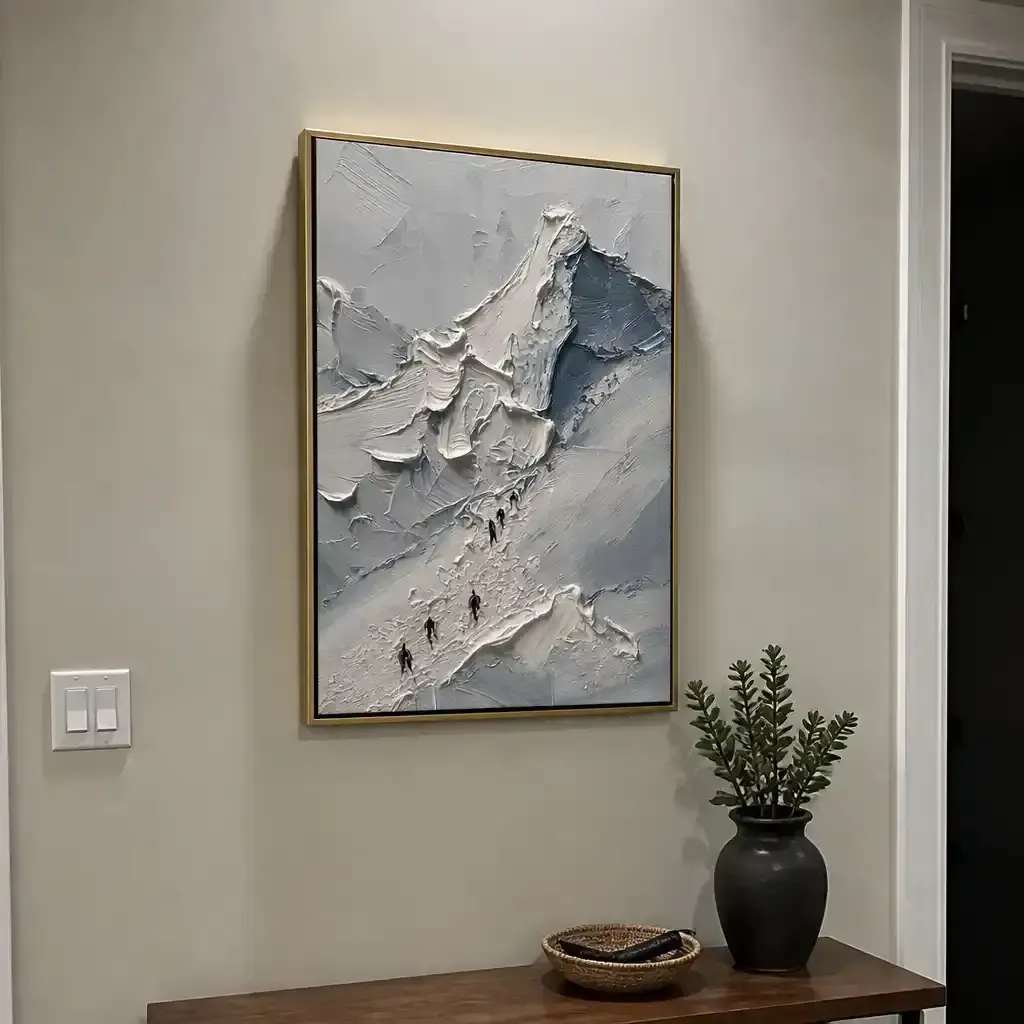
Modeling Note: The "Impasto" Variable For paintings with heavy texture (impasto), the curing time increases exponentially.
- Logic Summary: We assume a linear increase in oxygen diffusion time based on layer thickness. A 1mm layer may cure in 6 months, while a 5mm "peak" may require 18 months.
Regional Strategies for Extreme Climates
If you live in a region with extreme weather, your art requires a specific strategy.
- Coastal Regions (Florida, Carolinas, Southeast Asia): High humidity is your primary enemy. We recommend using a dehumidifier in the room where the art is kept. Professional conservators often suggest that artists in these regions use alkyd-based mediums to ensure a more robust initial "lock" on the paint film to resist hydrolysis.
- Arid/High-Altitude Regions (Arizona, Colorado, Alps): The risk here is the canvas becoming brittle. Avoid placing art on exterior-facing walls, which fluctuate in temperature more than interior walls. Maintaining a consistent 40% humidity via a whole-home humidifier is the gold standard for preservation.

Health, Safety, and the "Odorless" Trap
While our focus is on the longevity of the art, we must also address the safety of your home environment. Many homeowners worry about the "oil paint smell." This scent usually comes from Volatile Organic Compounds (VOCs) in solvents like turpentine or mineral spirits.
The CDC NIOSH warns that chronic inhalation of these compounds can lead to central nervous system issues. However, modern high-end studios are increasingly moving toward "solvent-free" or "low-VOC" environments.
The "Odorless" Misconception: A common trap is believing that "Odorless Mineral Spirits" (OMS) are non-toxic. As Princeton University EHS points out, removing the odor does not remove the chemical. While the acute narcosis risk is lower because you aren't being "overwhelmed" by the smell, the VOCs are still present.
Our Advice for Homeowners: If you are sensitive to smells or have infants in the home, look for art created with walnut oil or water-miscible oils. These pass strict Indoor Air Quality (IAQ) tests and are often LEED-compliant for commercial spaces.
The ROI of Patience
Investing in hand-painted art is a move toward sustainable, high-value home improvement. Data from the Royal Society suggests a direct correlation between high-quality art "geo-tags" and property value gains. Furthermore, a Columbia University study found that consumers value human-created art 62% higher than AI-generated prints.
By respecting the chemical needs of your oil painting—specifically the interaction between humidity and temperature—you aren't just "waiting for paint to dry." You are allowing a chemical masterpiece to stabilize, ensuring that its "essential identity" remains vibrant for decades, rather than months.
Quick Checklist for New Owners:
- Check the thickest paint: Does it pass the thumb test?
- Locate your vents: Is the painting at least 3 feet away from direct airflow?
- Monitor the RH: Is your room between 40% and 60% humidity?
- Delay the glass: If you plan to frame behind glass, wait at least 6 months to avoid trapping moisture.
Disclaimer: This article is for informational purposes only. For high-value art collections or structural damage, always consult a professional conservator certified by the American Institute for Conservation (AIC) or your local equivalent.
Sources
- Marketplace - The Expensive Art Market Struggles
- Nature - Influence of Relative Humidity on Oil Paints
- JustPaint - Longevity of Oil and Acrylic Paints
- EPA - Indoor Air Quality and Low-VOC Paints
- Royal Society - Quantifying the Link Between Art and Property Prices
- Columbia University - Human-Made vs. AI Art Perception