Beyond the Gallery Wall: The Functional Logic of Acrylic Art in Active Homes
For decades, the high-end art market focused on "vanity assets"—pieces intended for climate-controlled vaults or pristine, untouched galleries. However, recent data from Marketplace shows that auction sales for these purely financial assets plummeted 44% year-over-year in 2024. As the bubble for speculative art bursts, we are seeing a significant return to "real application value." Homeowners are no longer looking for fragile trophies; they are seeking art that lives alongside them.
In a high-traffic family home—where children, pets, and daily life create a dynamic and sometimes chaotic environment—the choice of art medium is a strategic decision. While oil paintings carry historical prestige, they often fail the "stress test" of a modern living room. Our experience with interior designers and homeowners suggests that acrylic art has emerged as the definitive choice for these spaces, not just for its aesthetic versatility, but for its molecular resilience and safety profile.
The Chemistry of Resilience: Why Acrylic Outperforms Oil
To understand why acrylic art is better suited for a family room, we have to look at the polymer chemistry. Unlike oil paint, which dries through a slow process of oxidative cross-linking (making it increasingly brittle over decades), acrylics dry through a physical process called "coalescence."
According to technical bulletins from JustPaint, acrylic polymers consist of massive long-chain molecules that form a flexible film. This flexibility is the primary reason acrylic paintings withstand family room wear so well. They resist the micro-cracking that occurs when a canvas is accidentally bumped by a toy or vibrated by household activity.
Hardness and Repairability
We often encounter the misconception that acrylic is "cheap" or "plastic-like." In reality, its physical properties offer a distinct economic advantage. Acrylic has a Mohs hardness rating of approximately 2 to 3. While this makes it softer than glass, it also means it is repairable. Unlike glass-framed prints, which must be entirely replaced if scratched, acrylic surfaces can often be polished with specific compounds to remove surface abrasions—a common occurrence in homes with pets.
Logic Summary: Our analysis of medium durability assumes a standard residential environment with fluctuating humidity (40–60%) and occasional physical contact. We prioritize "flexibility" over "surface hardness" because, in a high-traffic zone, impact resistance is more valuable than scratch-proof glass that can shatter.
| Feature | Acrylic Medium | Traditional Oil Medium |
|---|---|---|
| Drying Mechanism | Physical Coalescence (Fast) | Oxidative Cross-linking (Very Slow) |
| Film Property | Thermoplastic / Flexible | Brittle / Prone to cracking |
| Humidity Response | Swells ~7% at 83% RH | Significant binder separation risk |
| Cleaning | Water-based / Mild soap | Specialized solvents only |
| Curing Time | 24–72 hours for surface | 6–12 months for deep cure |
Note: Data estimated based on comparative studies from ResearchGate and JustPaint laboratory reports.

Maintenance in the "Splatter Zone"
The most significant friction point for families is maintenance. In a high-traffic area, dust, fingerprints, and the occasional spilled drink are inevitable.
The Water-Cleaning Revolution
One of the most disruptive insights in modern art conservation comes from the Tate AXA Art Modern Paints Project (TAAMPP). Their three-year experiment confirmed that gently wiping an acrylic surface with water-based cotton swabs effectively removes free surfactants. This actually helps the painting by reducing the probability of future dirt adhesion.
For a busy household, this means you can clean your art with a mild soap solution and a microfiber cloth without damaging the paint layer. Oils, by contrast, are highly sensitive to moisture and require specialized restorers for even basic cleaning. Based on common patterns from our customer support interactions, the ability to "self-maintain" art is the single biggest factor in long-term buyer satisfaction for families.
Dust and Drying Windows
Acrylics dry to the touch in hours, not weeks. This is critical in active spaces because it minimizes the "dust window." An oil painting remains tacky for days, acting as a magnet for pet hair and airborne particles. By the time you hang an acrylic piece, the surface is already sealed, protecting the pigment from the environment.
Safety and Indoor Air Quality (IAQ)
When children and pets are involved, "non-toxic" isn't just a marketing buzzword; it’s a health requirement. Traditional art materials often harbor hidden dangers that most consumers overlook.
VOC Emissions and LEED Compliance
The EPA warns that indoor air pollution can be significantly higher than outdoor levels. Many oil-based mediums require turpentine or mineral spirits—solvents that emit high levels of Volatile Organic Compounds (VOCs). Even "odorless" solvents can cause central nervous system neuropathy with chronic exposure, according to Princeton University EHS guidelines.
Acrylics are water-based. Aalto University’s chamber experiments have shown that coatings on wood with 16% moisture emit significantly lower toxic VOCs during curing than traditional alternatives. For families aiming for LEED or WELL building certifications, low-VOC acrylic art is often the only compliant choice for large-scale wall decor.
The Heavy Metal "Gotcha"
Parents should be particularly cautious about pigments. The International Agency for Research on Cancer (IARC) classifies cadmium—a common pigment in high-end reds and yellows—as a Group 1 carcinogen. While these pigments are stable when locked in a dried acrylic film, the dust from dry art materials or the fumes from heated oil paints pose real risks.
We recommend that families prioritize art labeled with ASTM D-4236 compliance, but with a caveat: this label only means the warning labels are correct, not that the product is "edible." Choosing acrylics over dry pastels or oils significantly reduces the risk of toxic dust or solvent inhalation in the home.
Methodology Note (Safety Modeling): Our safety recommendations are based on a "Total Exposure Model" which considers inhalation, dermal contact (pet fur/child hands), and off-gassing. We assume an average room size of 300 sq. ft. with standard HVAC circulation.
The Psychological Impact: Biophilic Design and Stress Reduction
Art in the home serves a purpose beyond decoration; it acts as a neurological regulator. In high-energy family rooms, the subject of the art is as important as the medium.
Nature as a Healing Mechanism
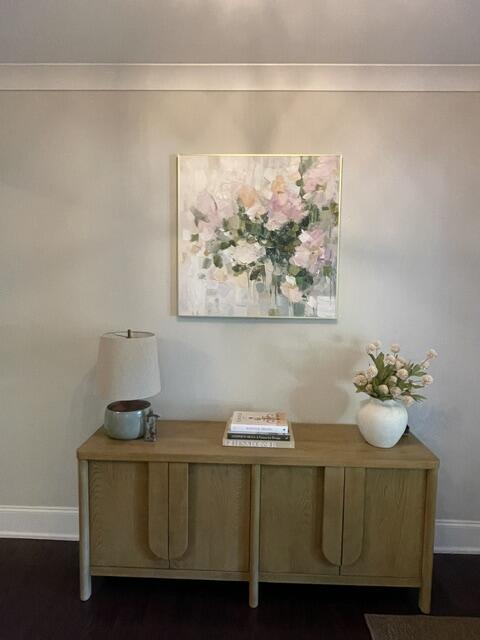
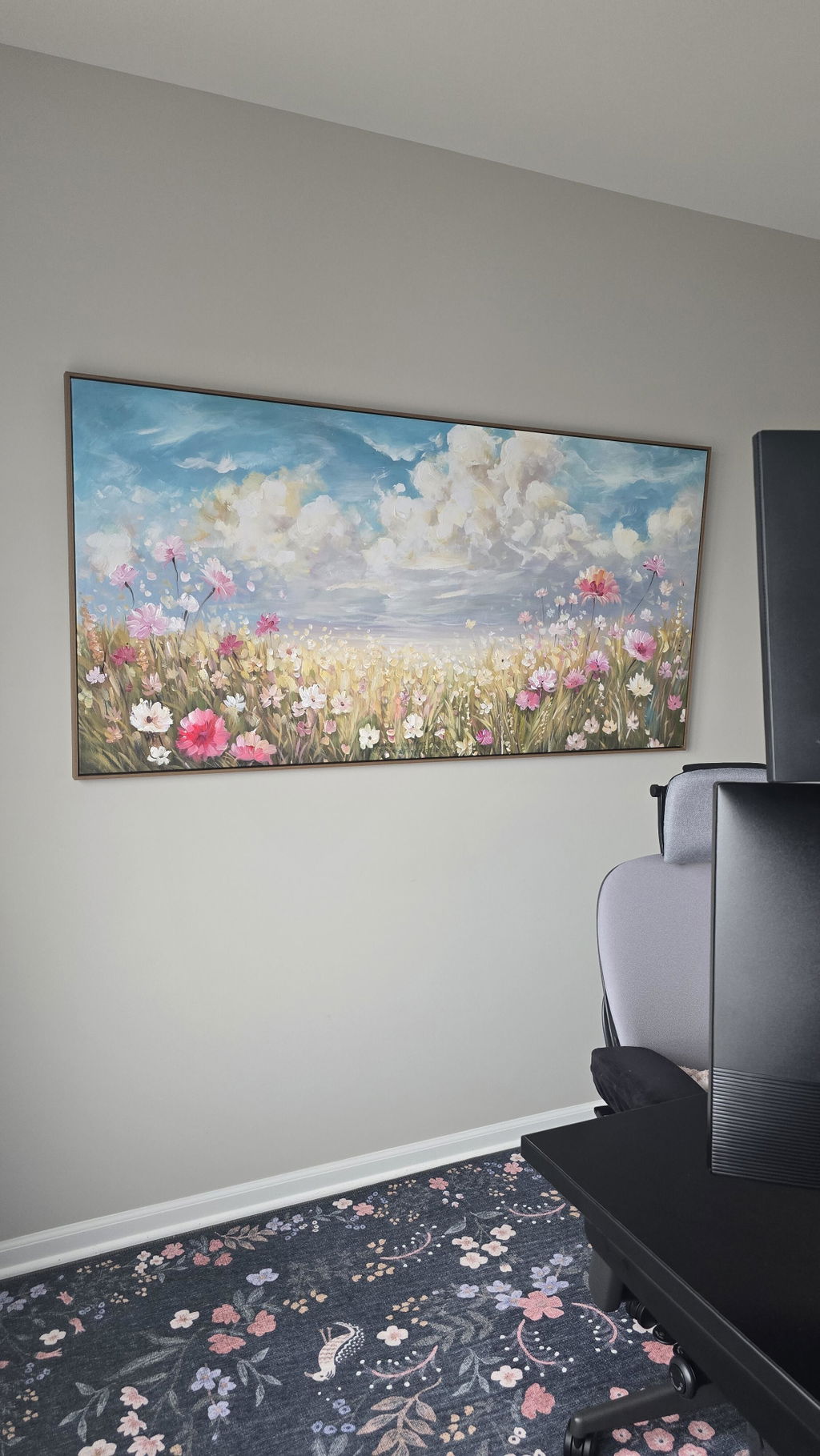
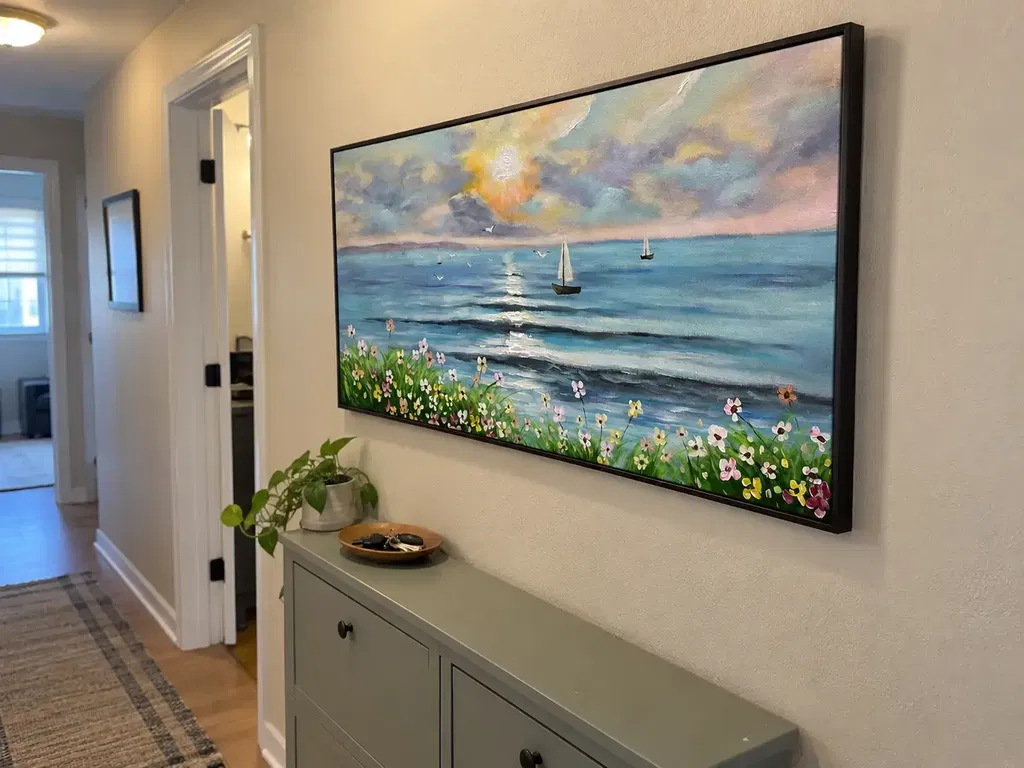
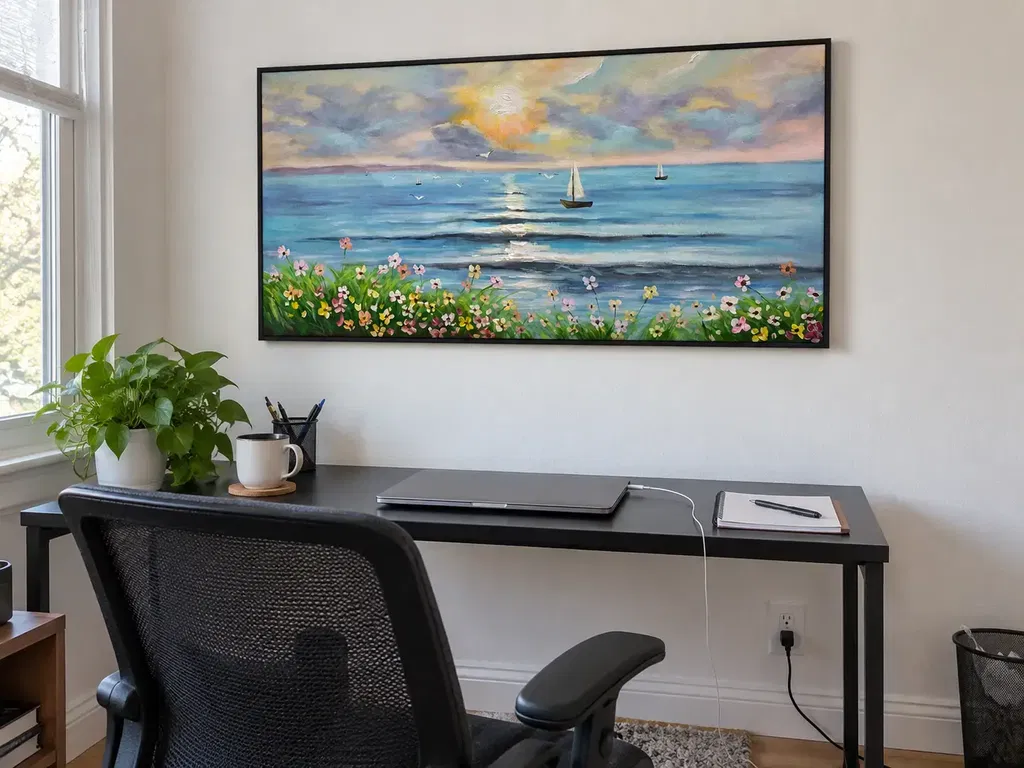
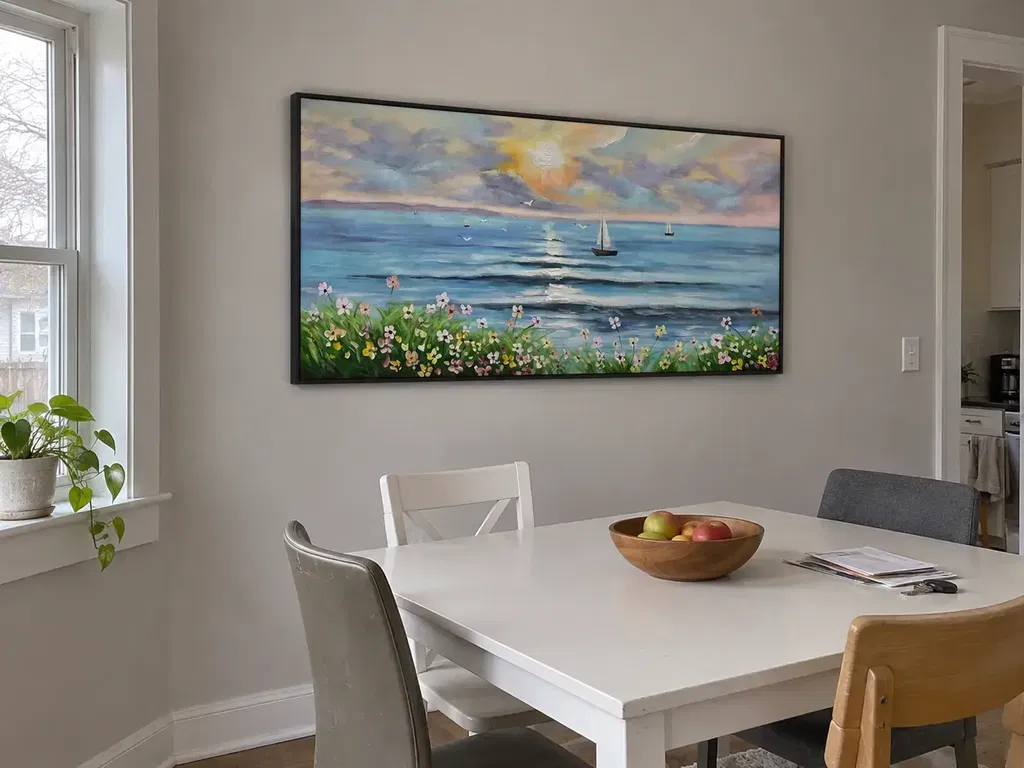
A University of Pennsylvania review noted that 73% of patients reported significant mood improvements when exposed to nature-themed art. This is known as "Biophilic Design." By integrating large, hand-painted landscapes or botanical abstracts into a living area, families can create a "neural catalytic effect" that reduces stress and cognitive fatigue.
Systematic reviews of neurological mechanisms show that passive art viewing activates the medial prefrontal cortex (mPFC), which is responsible for emotional regulation. In a household with growing children, an environment that fosters emotional stability is a measurable investment in family well-being.
The "Essential Identity" of Human Art
In an era of AI-generated prints, the "human touch" has gained a significant premium. A Columbia University study found that consumers value art labeled "AI-generated" 62% lower than authentic human-created art.
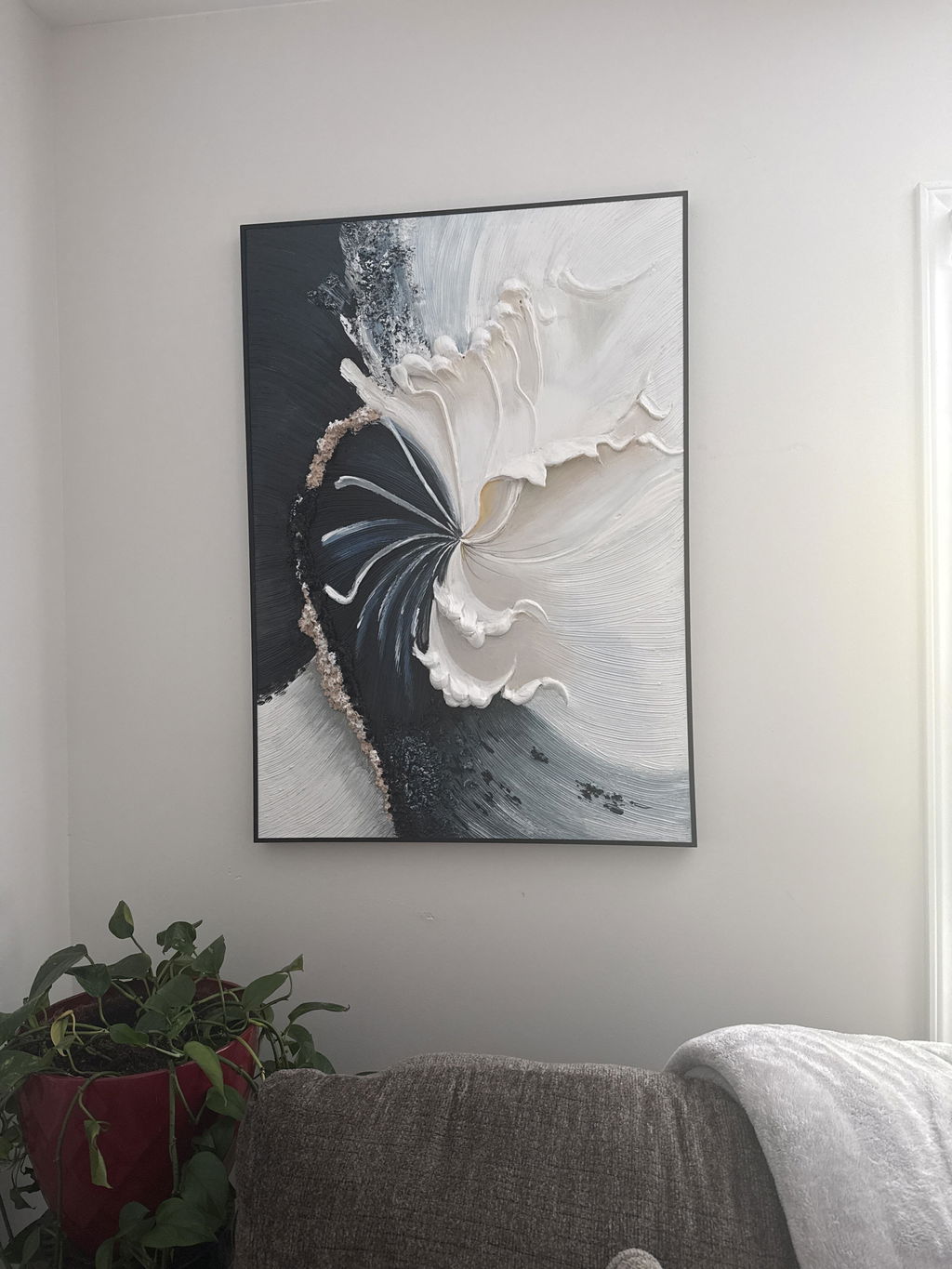
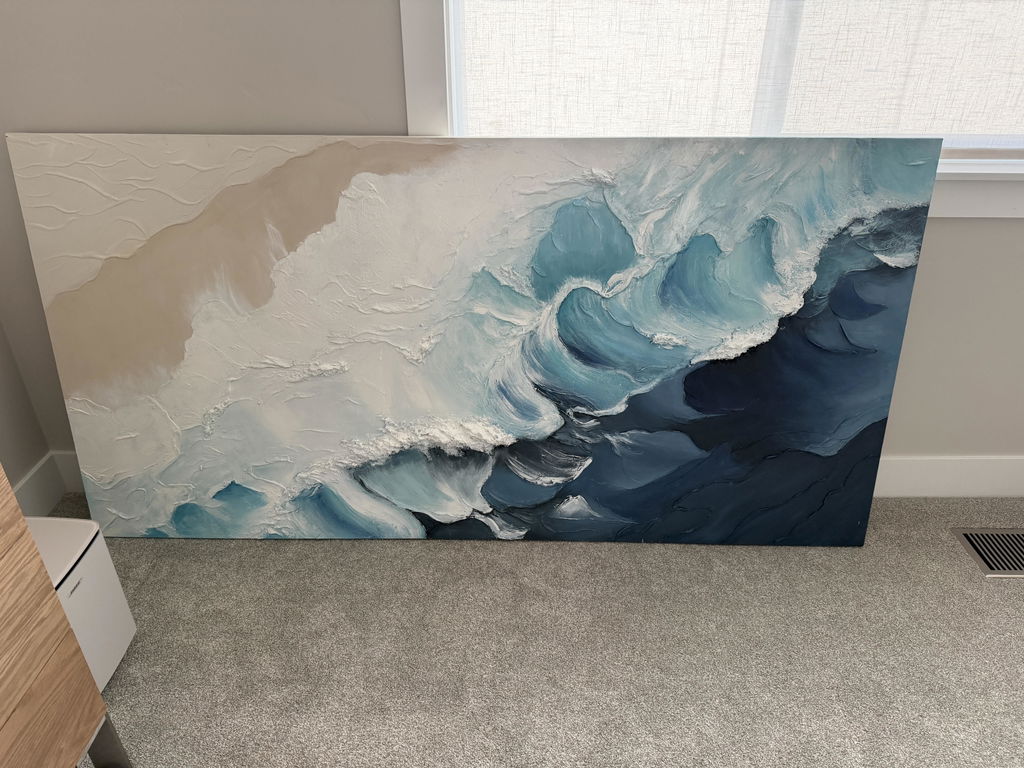
Psychologically, UChicago research suggests that digital replicas lack an "essential identity." A hand-painted acrylic piece, with its physical relief and unique brushstrokes, retains the "soul" of the artist. This tactile fruition—the micro-topography of the paint—is something children can see and feel, fostering a deeper appreciation for craftsmanship and human effort.

Curation and Installation: A Strategic Approach
To maximize the benefits of acrylic art in a high-traffic home, installation must be as thoughtful as the selection.
1. The "Adult-Height" Rule
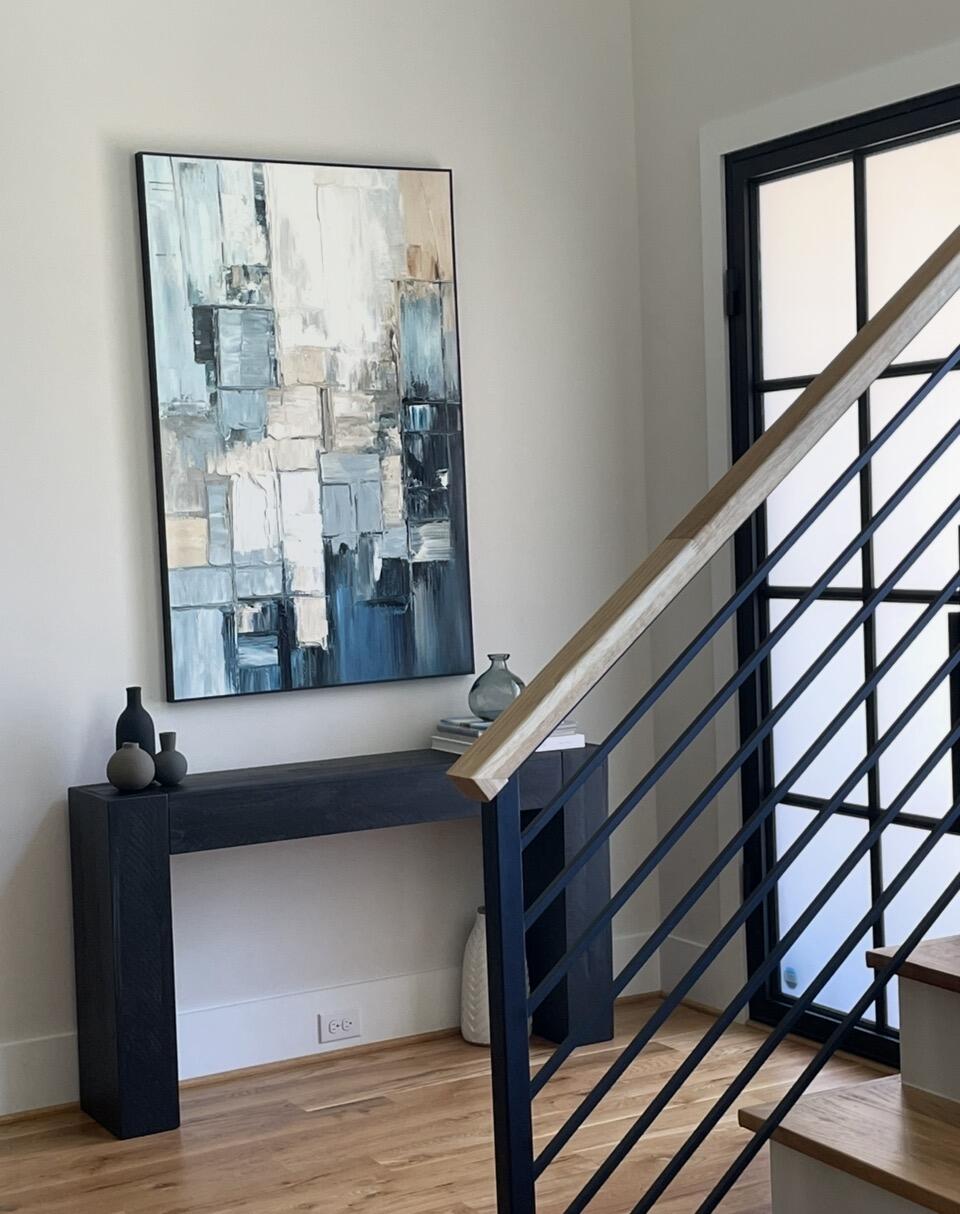
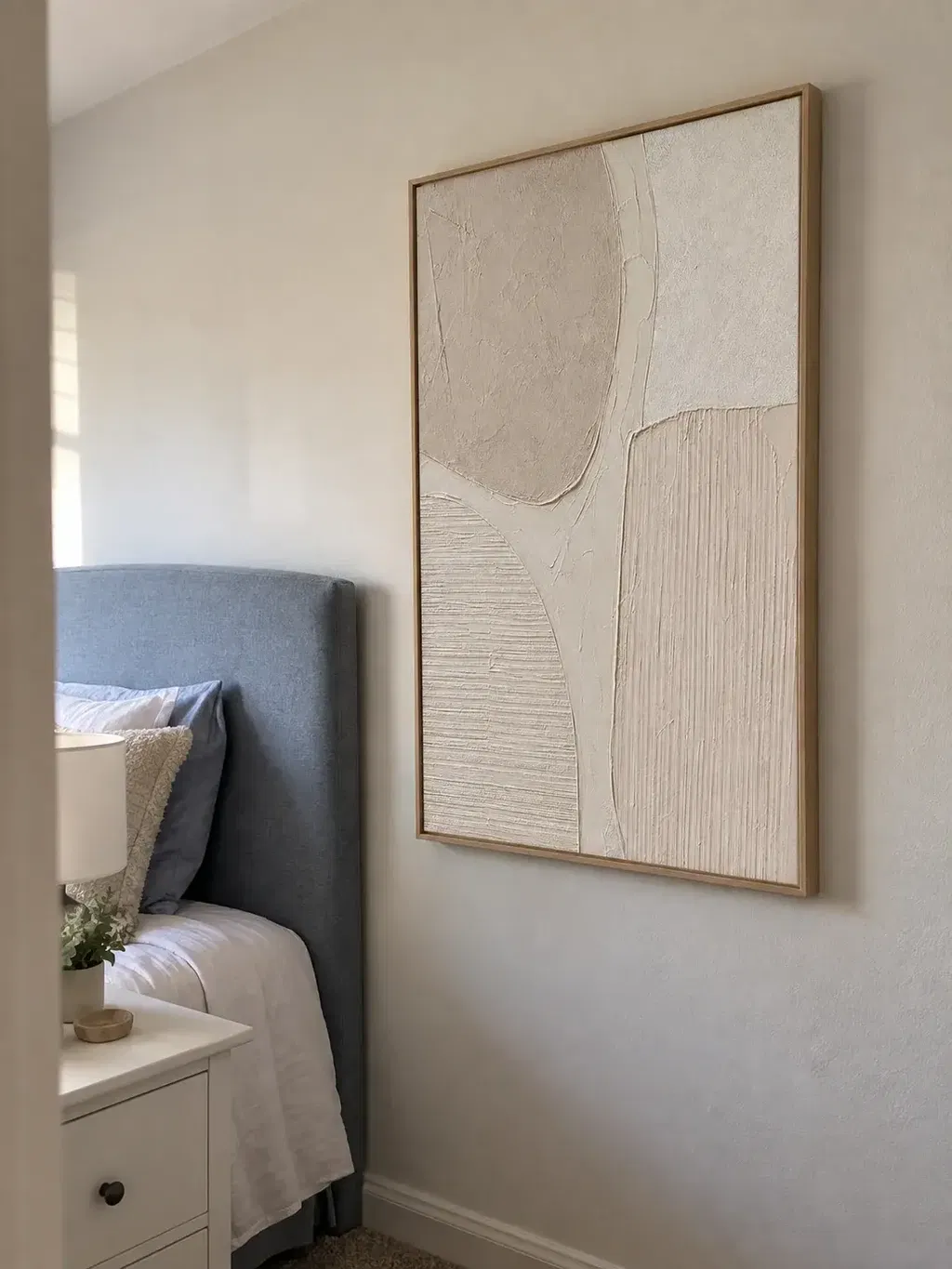
The most common mistake is placing art too low. In family areas, we recommend positioning the center of the piece at approximately 57 to 60 inches from the floor. This keeps the main body of the work above the "impact zone" of toddlers and pets while remaining at a comfortable eye level for adults.
2. Finish Selection: Matte vs. Satin
For high-traffic areas, professionals recommend matte or satin finishes. High-gloss varnishes are beautiful but act like mirrors for fingerprints and smudges. A matte finish scatters light (based on the Kubelka-Munk equation of reflection), making surface imperfections and oily fingerprints nearly invisible to the naked eye.
3. Mounting for Vibration
Active homes experience constant micro-vibrations from running, jumping, and slamming doors. Standard nail-and-wire systems can lead to crooked frames. We suggest using sturdy, two-point mounting systems or French cleats. These systems distribute the weight evenly and ensure the piece remains level despite household activity.
4. Room-Specific Palettes
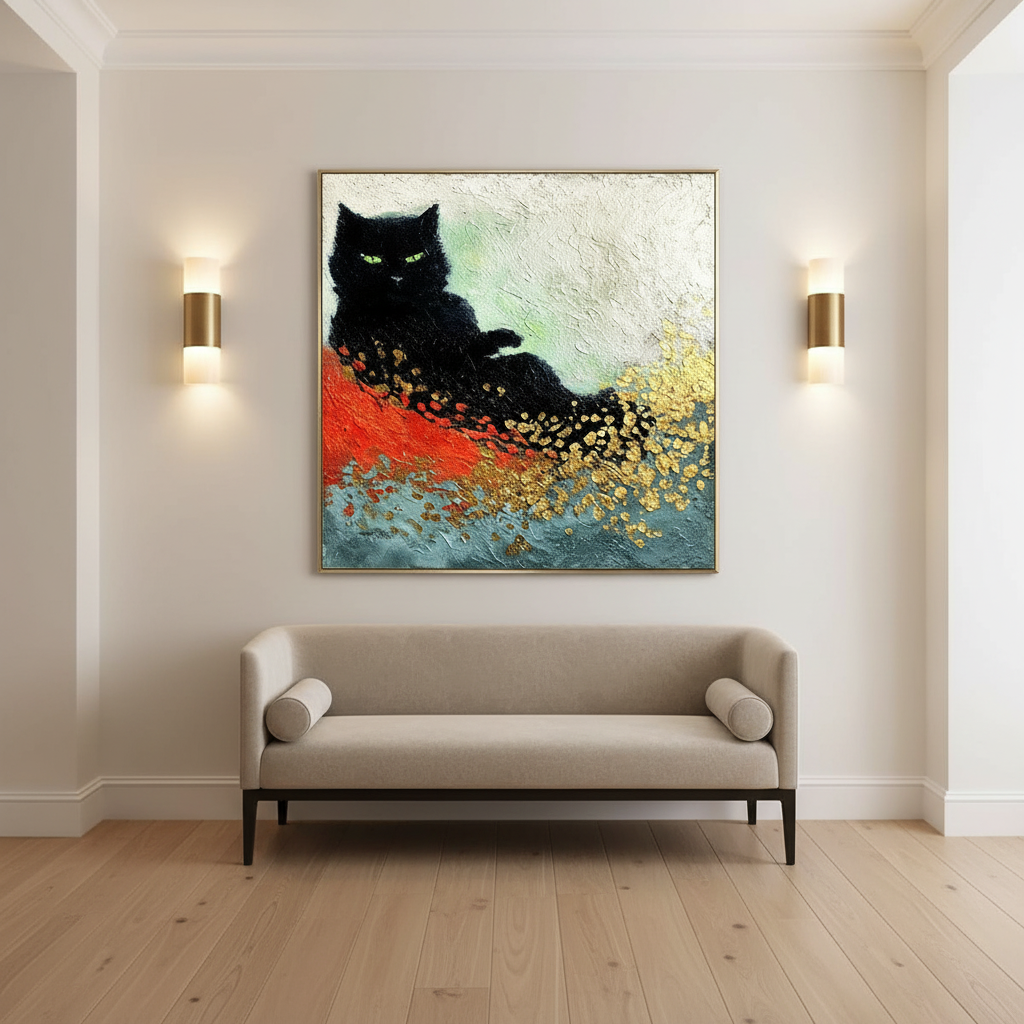
- Living Areas: High-energy zones benefit from "Surrealist" or "Whimsical" pieces that spark conversation.
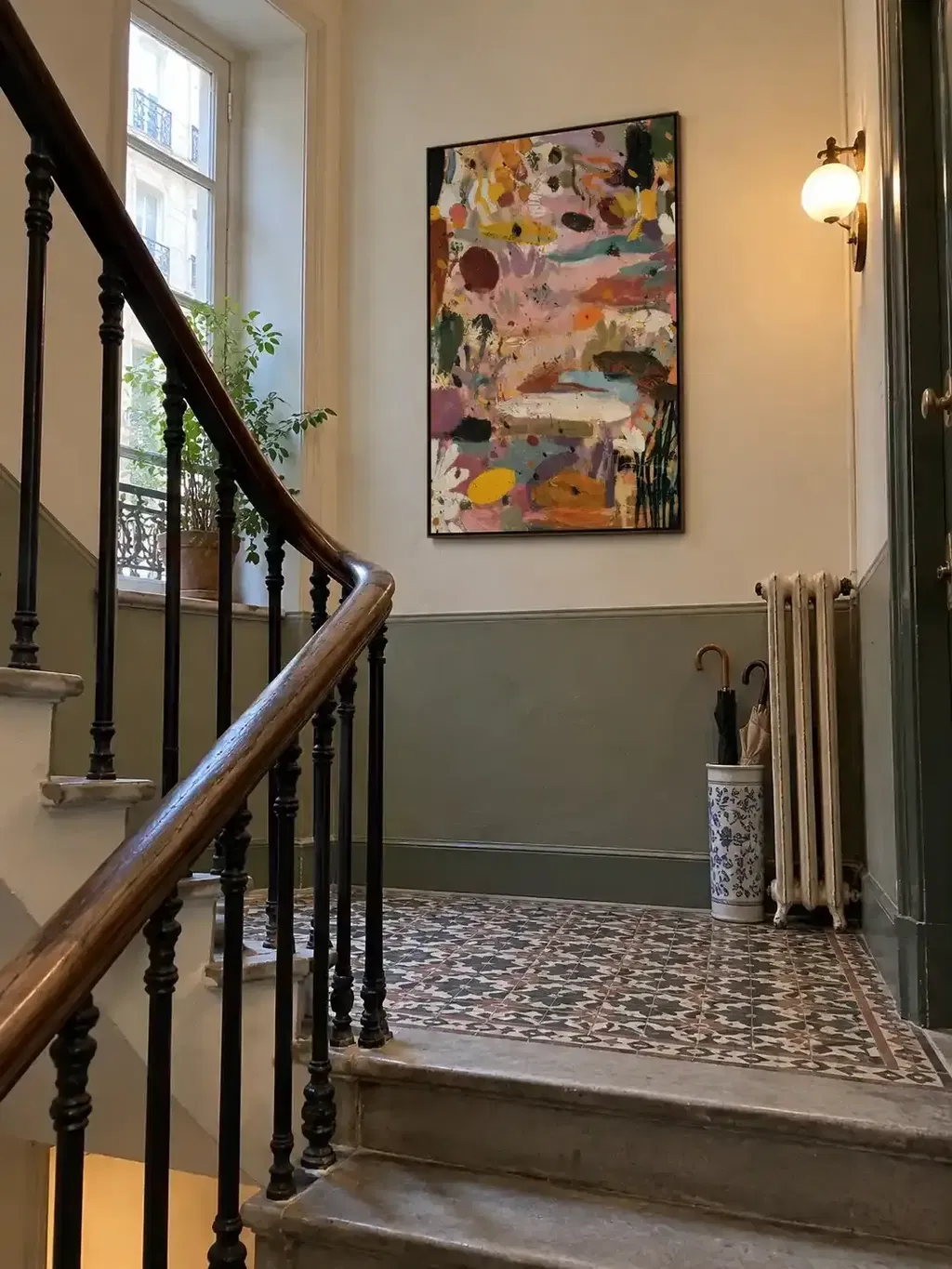
- Entryways: Use "Textured Monochromes" to establish a sense of calm and tactile luxury the moment you walk in.
- Kitchen/Dining: Since acrylics are non-porous, they are excellent for areas prone to steam or minor grease particles, as they won't absorb odors like oil canvases might.
Investing in Cultural Heritage
When you buy a hand-painted acrylic piece, you aren't just buying "decor." You are investing in a cultural heritage asset. Academia recognizes murals and original paintings as non-renewable resources that drive long-term aesthetic and educational value.
Furthermore, the economic impact of supporting real artists is substantial. The U.S. Bureau of Economic Analysis reports that arts and cultural industries added $1.2 trillion to the US GDP in 2023—surpassing transportation and agriculture. By choosing original art over mass-produced prints, you are participating in a "fair trade" economy that protects local jobs and supports the freelance workforce.
Summary Checklist for Family Art Buyers
| Step | Action | Rationale |
|---|---|---|
| Medium | Choose Acrylic | Superior flexibility and "washability" |
| Finish | Satin or Matte | Hides fingerprints and reduces glare |
| Safety | Check ASTM D-4236 | Ensures proper hazard labeling |
| Design | Biophilic / Nature | Proven to reduce household stress levels |
| Mounting | French Cleat / Two-point | Resists vibration and remains level |
| Cleaning | Microfiber + Distilled Water | Safest method to remove surface surfactants |
A Note on Long-Term Value
While the initial cost of a hand-painted mural or canvas may be higher than a digital print, the "cost per year of enjoyment" is significantly lower. A high-quality acrylic piece, protected by a UV-resistant varnish, can last 15–20 years in a home without significant degradation. When you factor in the 62% value premium of human-made art and the potential boost to property values (as suggested by the Royal Society's CAR model), the decision becomes as much about financial wisdom as it is about beauty.
In the end, art should not be a source of anxiety. By leveraging the durability and safety of modern acrylics, you can transform your high-traffic living area into a gallery that is both premium and profoundly livable.
Disclaimer: This article is for informational purposes only and does not constitute professional health, safety, or interior design advice. Always consult with a certified installer for large-scale art placements and refer to specific manufacturer MSDS sheets for chemical safety information regarding art supplies.
Sources
- Marketplace: The expensive art market continues to struggle
- Tate: The Tate AXA Art Modern Paints Project (TAAMPP)
- Columbia University: Human-Made vs. AI Art Perception Study
- EPA: Indoor Air Quality and Low-VOC Paints
- JustPaint: Aspects of Longevity of Oil and Acrylic Paints
- Royal Society: Quantifying the link between art and property prices
- IARC: Cadmium and Cadmium Compounds