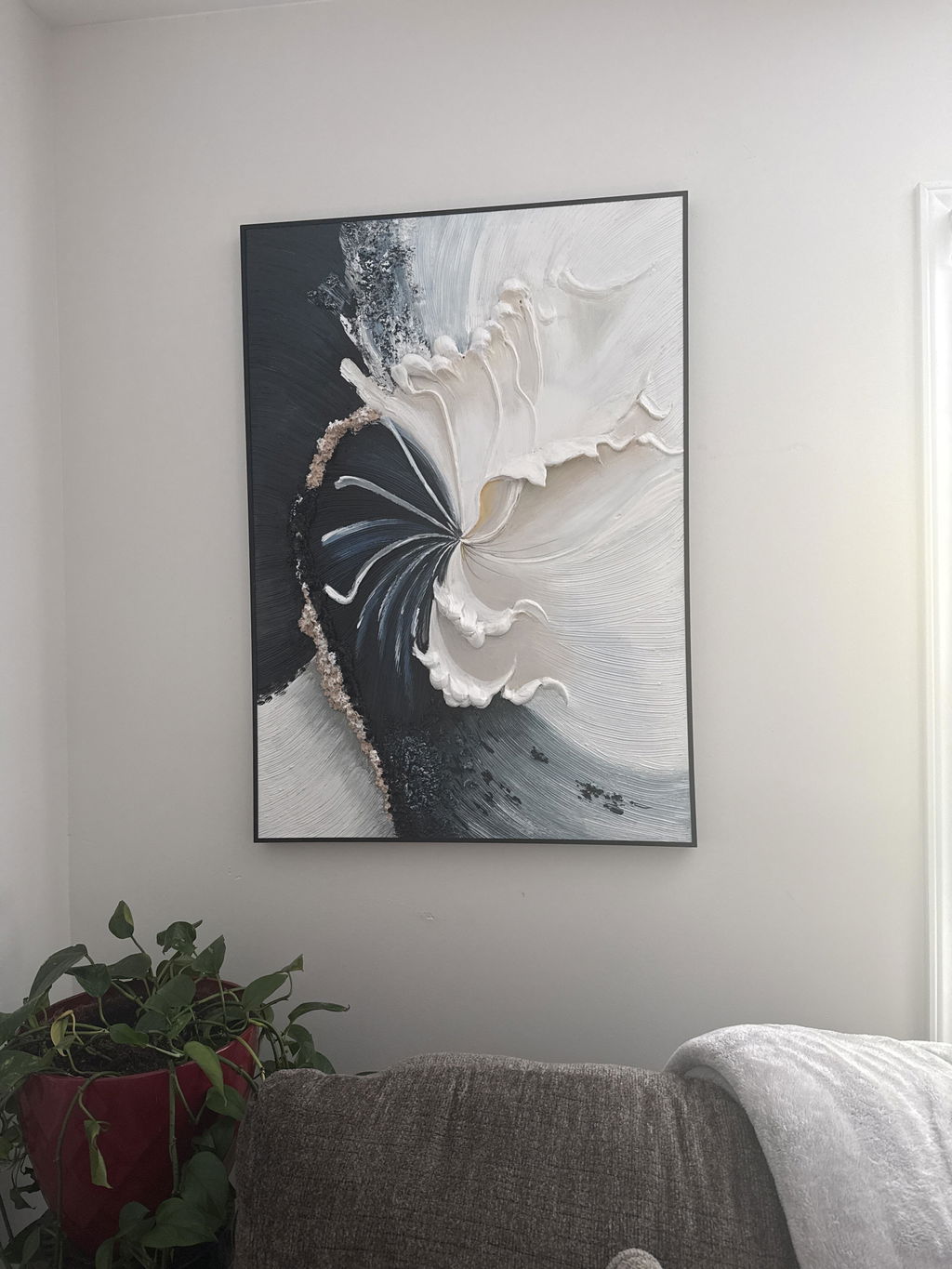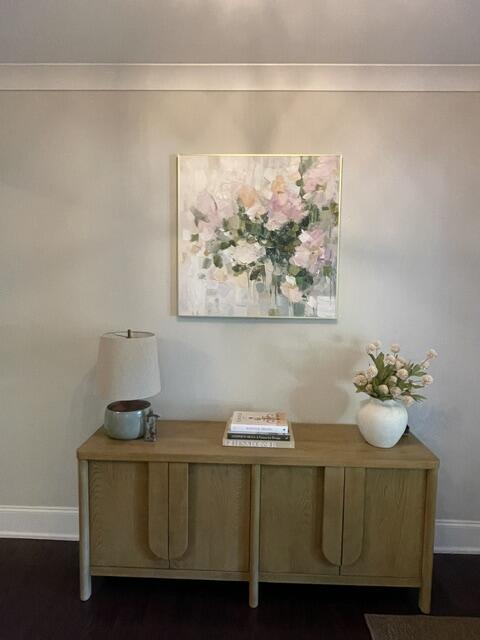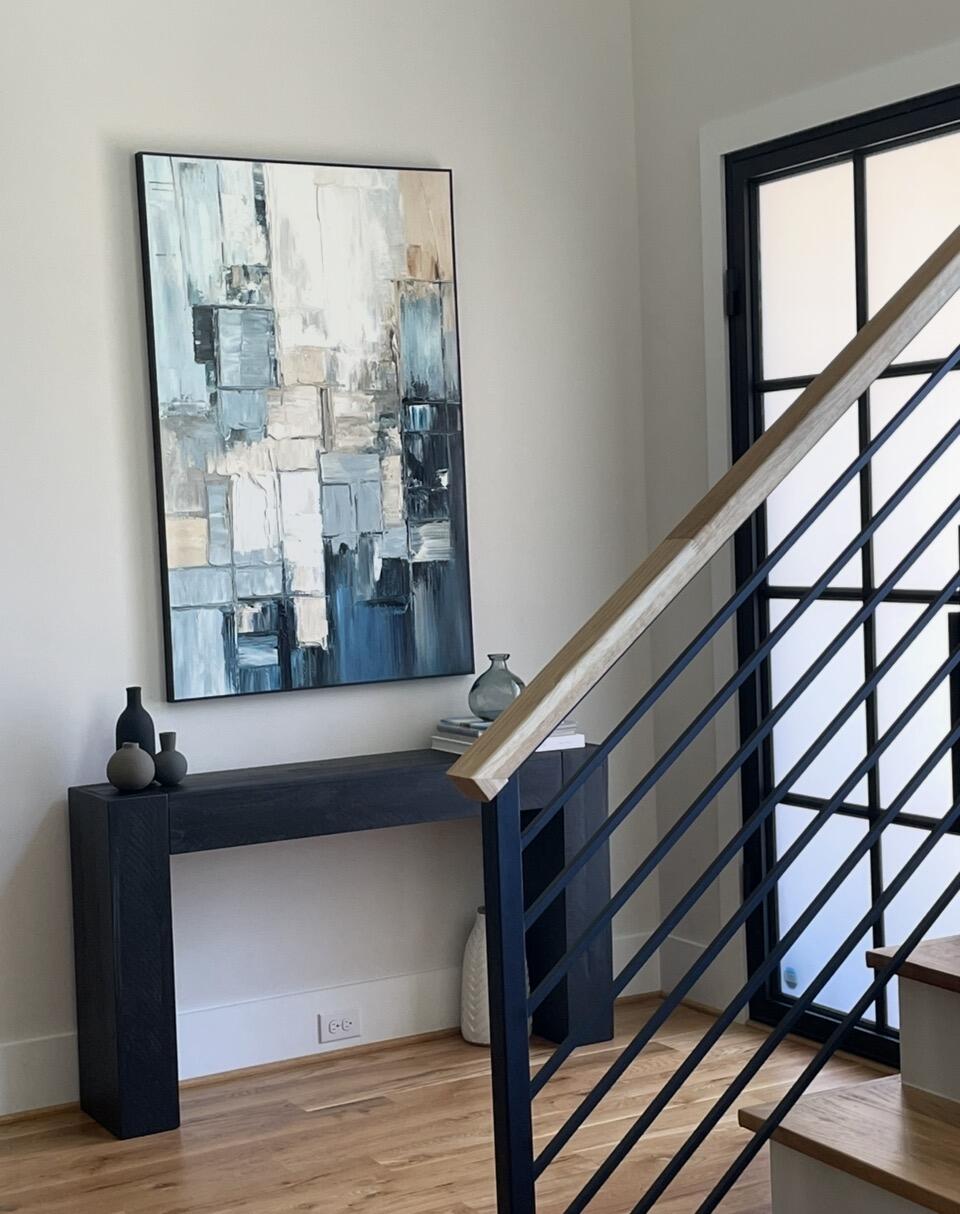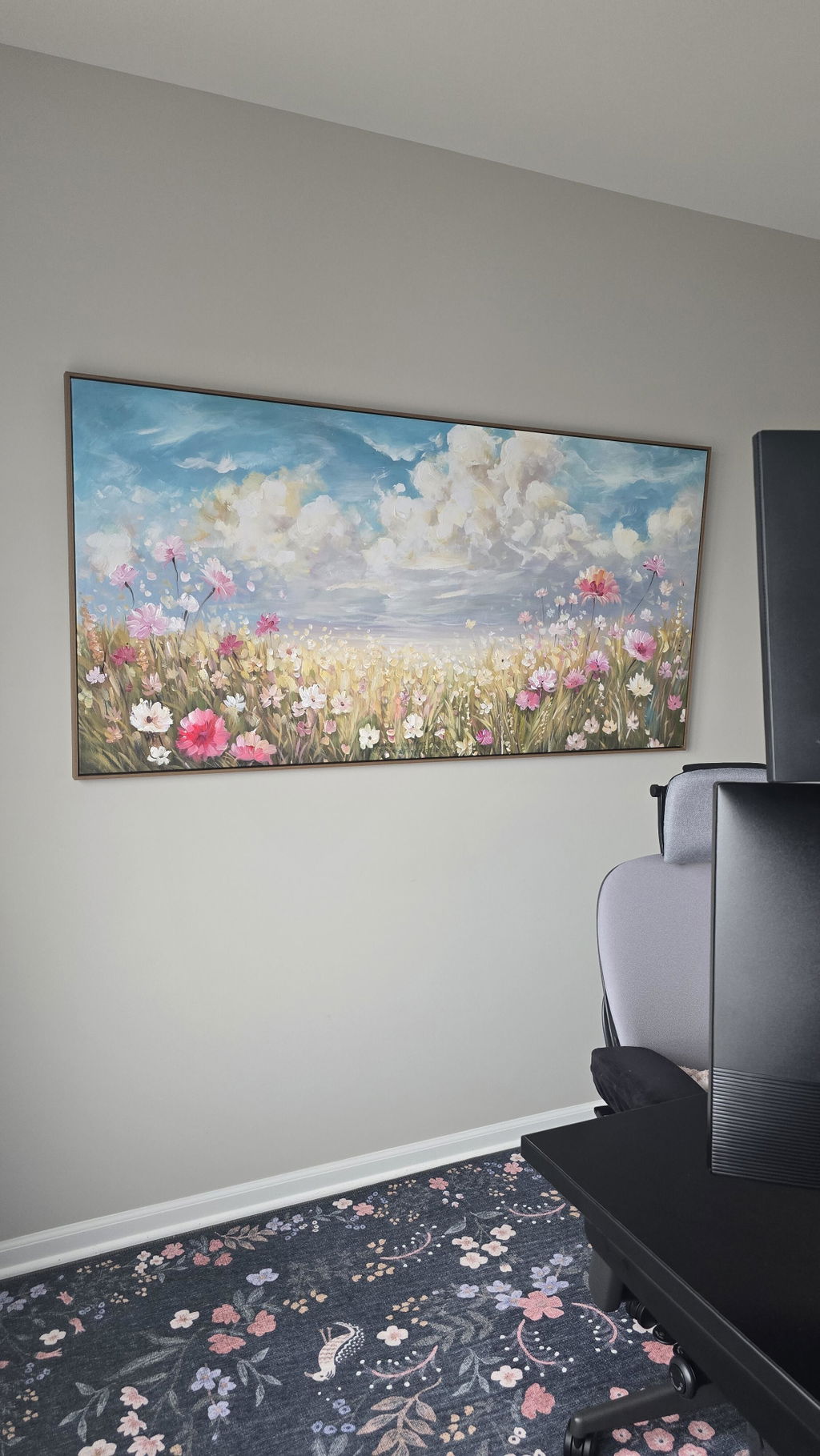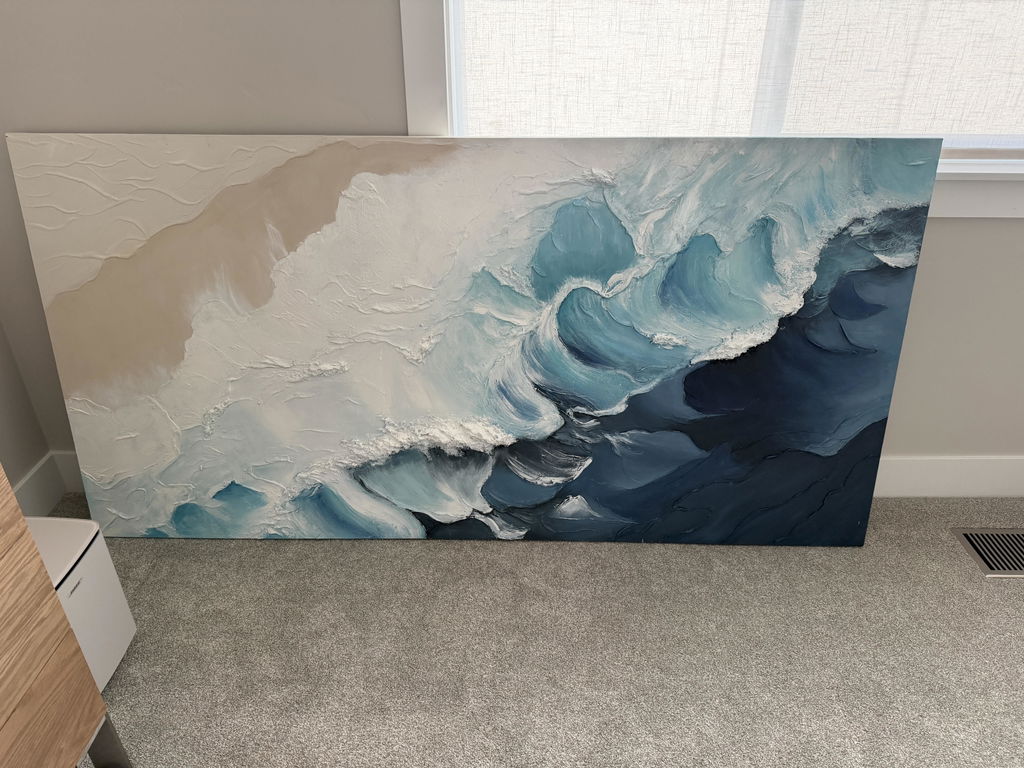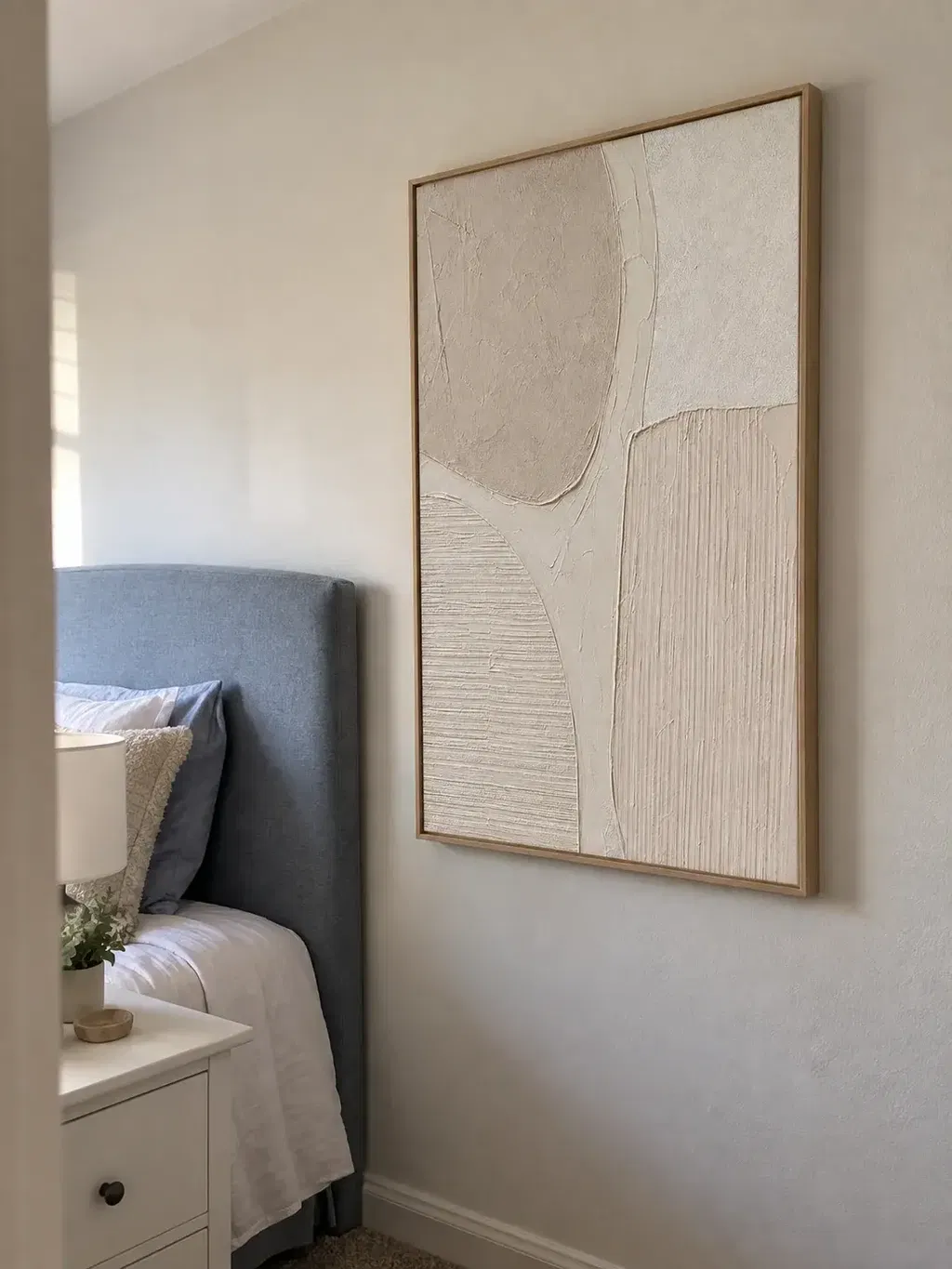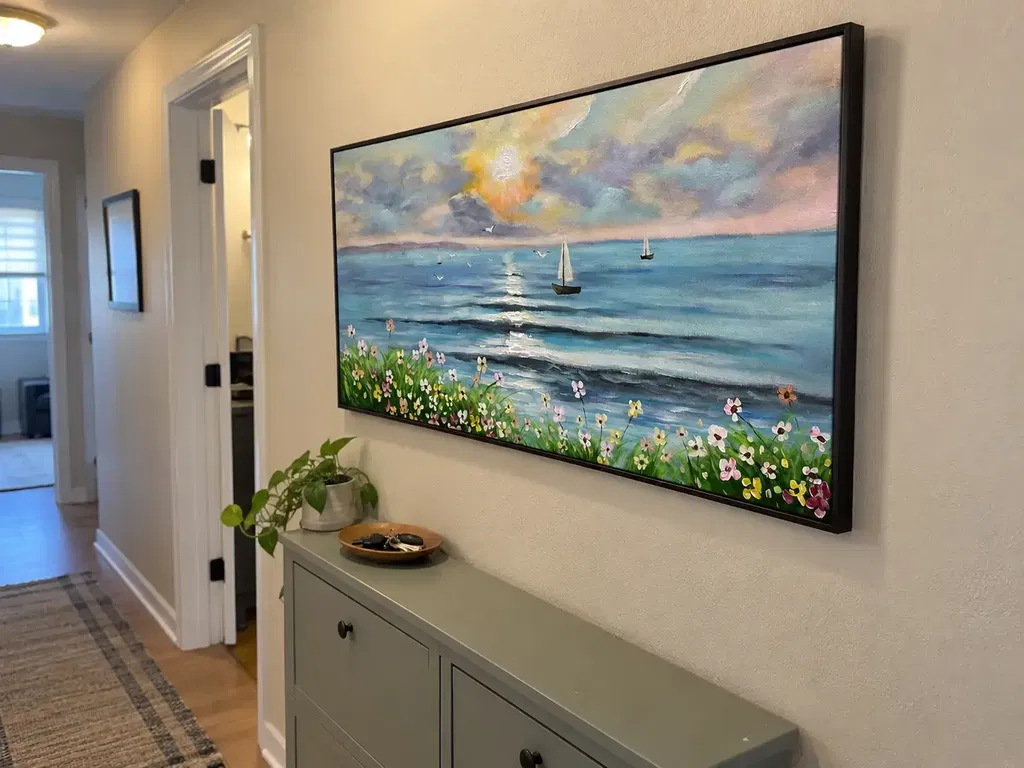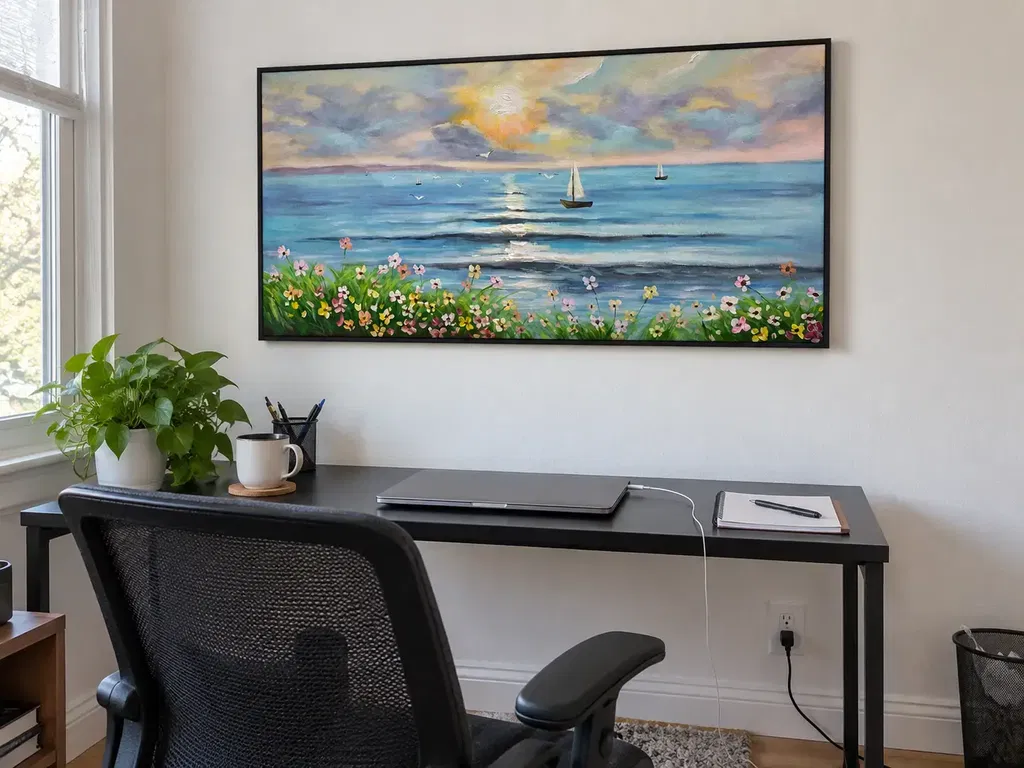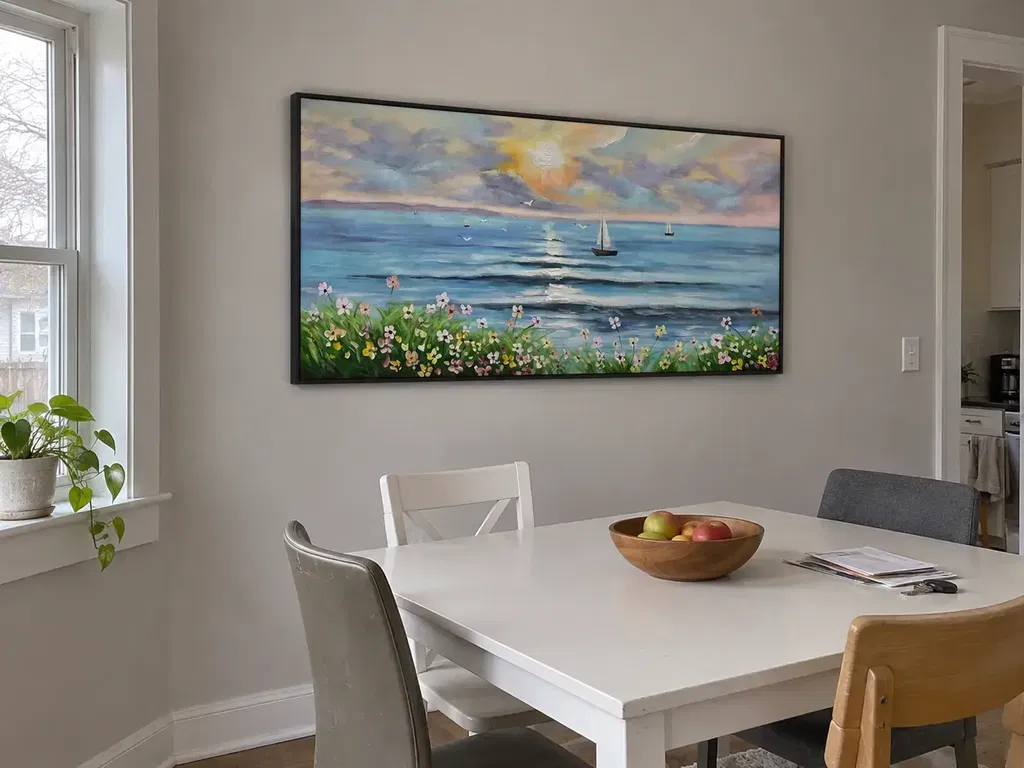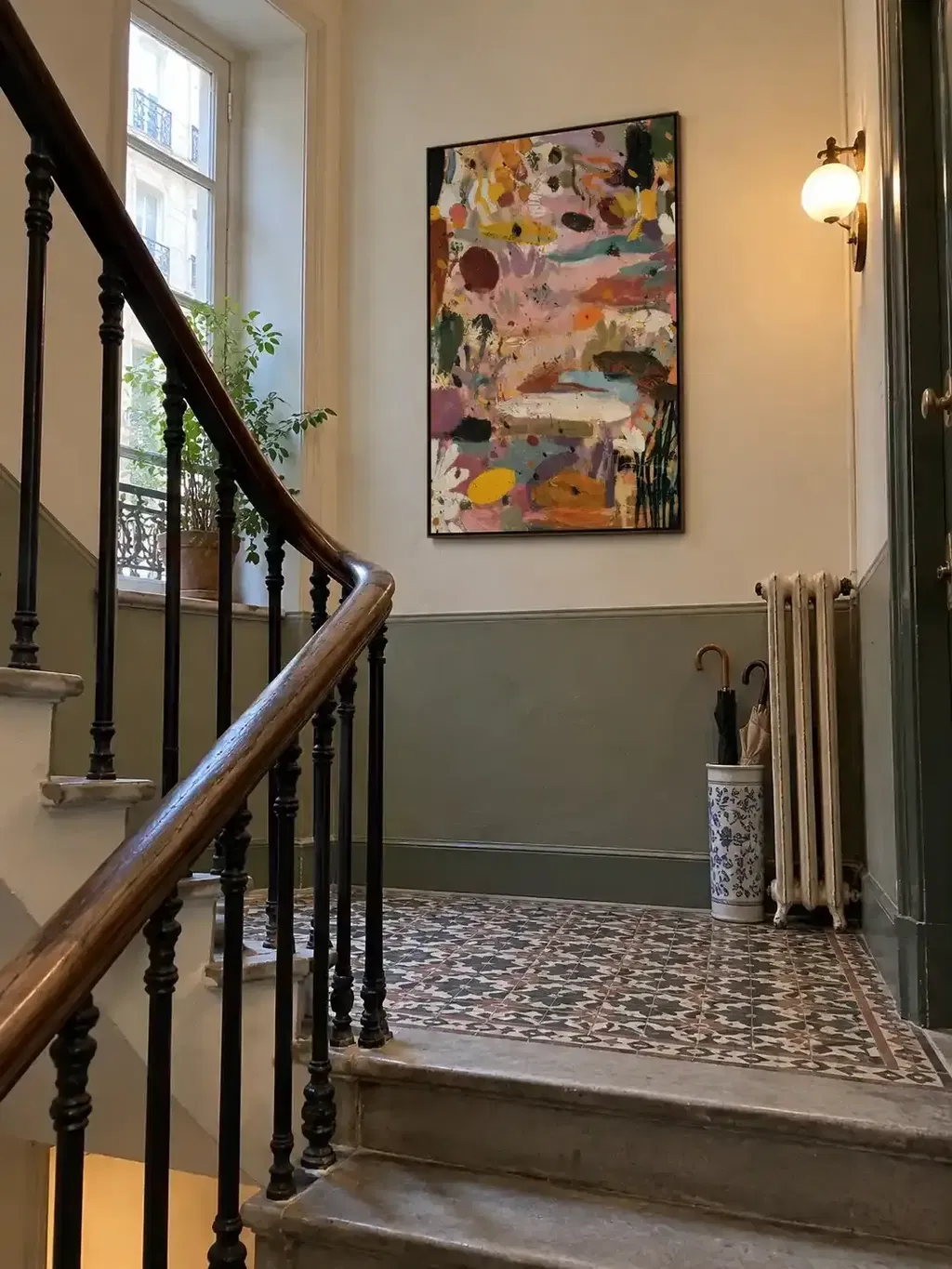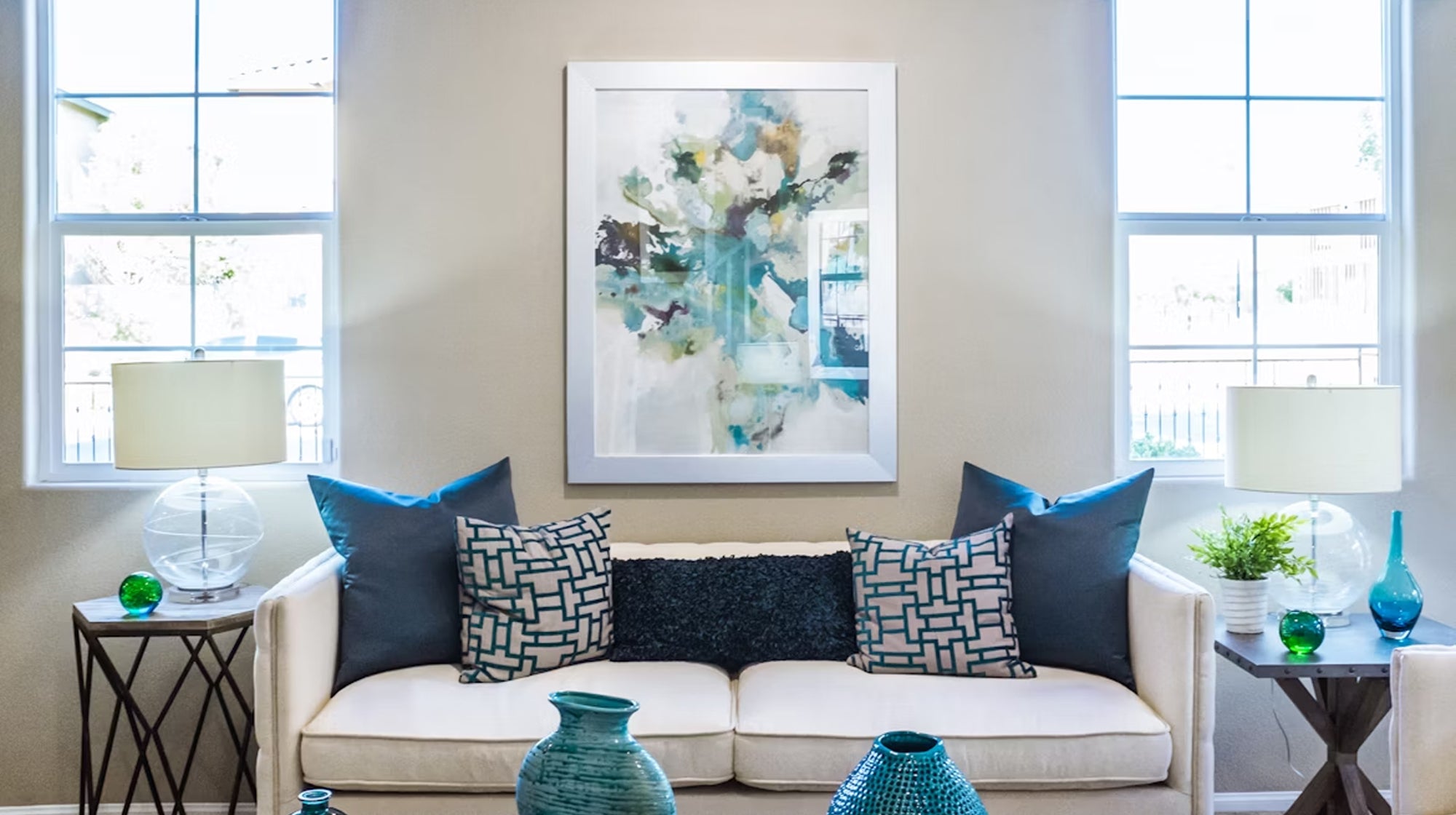
A bare white wall can make even a nicely furnished home feel unfinished. A room without a focal point often lacks character and leaves people who visit or live there with a sense that something is missing. But filling an empty wall doesn't require costly renovations or permanent changes—it's about bringing in artwork. Oil or acrylic paintings can turn a blank surface into a stylish focal point that reflects your personality and sets the mood for the entire room.
Why a Painted Accent Wall Is Your Secret Design Weapon
Accent walls follow the design principle of creating a focal point. A focal point draws the eye and anchors the rest of the room around it. Designers use this approach to avoid visual monotony and to tie together furniture, lighting, and accessories.
4 Benefits of a Painted Accent Wall
- Creates a strong focal point: A feature wall naturally draws attention and gives the room a clear visual center.
- Adds character without clutter: Instead of filling the space with accessories, it instantly brings personality.
- Refreshes the space affordably: Updating one wall costs far less than redoing the whole room, yet still transforms the mood.
- Offers flexibility over time: Unlike permanent renovations, artwork can be swapped with the seasons or as tastes evolve.
Moving Beyond Paint
While accent walls are often created with contrasting paint colors or wallpaper, decorative paintings provide the same impact with more flexibility. A large oil painting above a sofa or a symmetrical grid of acrylic works can achieve bold design statements without the commitment of rollers and brushes.
Accent walls focus attention and bring cohesion to a room. Using oil or acrylic paintings provides the same benefits while keeping design choices flexible and reversible—making your accent wall both striking and adaptable.

Start by Choosing the Right Medium for Your Accent Wall
Choosing the right medium matters as much as selecting the wall itself. Oil and acrylic paintings differ in texture, durability, care, and cost. Understanding these factors ensures the investment suits both your lifestyle and your design goals, especially when the goal is to build a memorable accent wall.
Oil Paintings
- Texture and depth: Oil paints dry slowly, allowing layers to build up. This creates rich textures and luminous color depth.
- Timeless appearance: Oil works have a classic, luxurious aura that enhances traditional and transitional interiors.
- Care requirements: Oils are sensitive to humidity and sunlight. They should be placed away from direct windows or vents and may need occasional professional cleaning.
- Cost range: Original oil works often cost more due to labor-intensive techniques. Even reproductions tend to carry higher prices compared to acrylics.
Acrylic Paintings
- Vibrancy and versatility: Acrylic paints dry quickly and retain bright, bold hues. They adapt easily to modern or eclectic design styles.
- Durability: Acrylics resist fading and are less vulnerable to moisture, making them practical for kitchens, hallways, or children's rooms.
- Affordability: Acrylic paintings are usually more budget-friendly, with many options available in large formats.
- Maintenance: Easy to clean with a soft, damp cloth, acrylics require minimal upkeep compared to oils.
Matching Mediums to Interiors
- Classic wood furniture + neutral palettes → Oil paintings for a sense of refinement.
- Minimalist or loft interiors → Acrylic works that bring energy and color without heaviness.
Oil paintings emphasize luxury and tradition, while acrylics offer vibrancy and low maintenance. Choosing the right medium first ensures your accent wall works in harmony with the rest of your home.

Find Artwork That Matches Your Interior Design Style and Accent Wall
The medium sets the foundation, but the style of artwork ensures harmony with the rest of the space. A mismatch between art and interior design can create visual tension, making the wall feel disconnected. When planning an accent wall, this harmony becomes even more important, as the chosen art will dominate the room. Well-selected painting for interior design works not only as decoration but also as a bridge between the accent wall and the rest of the space.
| Interior Style | Artwork Recommendations | Common Mistakes to Avoid |
| Modern & Minimalist | Abstract forms, geometric shapes, monochrome palettes | Avoid overly ornate frames or crowded gallery walls |
| Classic & Traditional | Landscapes, portraits, still life, richly layered oils | Avoid neon colors or experimental mixed media |
| Eclectic & Bohemian | Bold color contrasts, mixed media, unconventional pairings | Avoid being too uniform—embrace variety, but keep a unifying theme |
| Industrial or Loft | Large abstract acrylics, black-and-white photography, textured works | Avoid small artworks that get lost on tall walls |
Practical Tips
- Use the room's existing palette as guidance. Echo two or three dominant colors from furniture or textiles in the artwork.
- Consider subject matter symbolism: landscapes evoke calm, while abstract pieces energize.
- For open-concept spaces, ensure consistency by choosing works that tie multiple rooms together visually.
Align artwork with your interior's identity to strengthen, not fight, the overall mood. On an accent wall, this alignment ensures the statement piece feels integrated rather than isolated, which is especially important in modern home decor where clean lines and cohesive visuals define the style.
Easy Rules for Getting Accent Wall Painting Size Right
Even the perfect painting falls flat if its size is wrong. Scale determines whether art feels proportional or awkward. For an accent wall, the correct scale is critical—too small and the focal point disappears, too large and it overwhelms the room. Determining the right art dimensions for a living room involves specific considerations to complement the space.
Sizing Guidelines
- Eye-level placement: Position the painting so the center sits between 57–60 inches from the floor. This aligns with museum standards.
- Proportion above furniture: Artwork above sofas, beds, or consoles should measure roughly two-thirds the furniture's width. For example, a 90-inch sofa suits a painting about 60 inches wide.
- Large wall rule: Expansive blank walls benefit from oversized works or multi-panel sets. Small art pieces may look lost without surrounding elements.
Reference Size Table
| Wall Width | Recommended Artwork Size | Notes |
| 1.5–2m (5–6.5 ft) | 60–90 cm (24–36 in) wide | Ideal for small bedrooms or entryways |
| 2–3m (6.5–10 ft) | 100–150 cm (40–60 in) wide | Works above sofas or dining tables |
| 3m+ (10 ft+) | 160–200 cm (65–80 in) wide or multi-panel | Suitable for lofts or feature walls |
3 Common Mistakes
- Choosing pieces too small, leaving vast blank spaces.
- Ignoring the furniture scale, which causes an imbalance.
- Filling a large wall with too many small pieces, making the accent wall look cluttered and lacking cohesion.
Proper scale ensures your accent wall looks intentional and powerful, with art that feels like it belongs rather than floating awkwardly.

Master the Hang Layouts That Transform an Accent Wall
Once you've chosen the right size, the arrangement determines the overall mood. For an accent wall, layout choices can make the difference between polished sophistication and visual chaos.
Layout Options
- Symmetrical grids: Best for formal spaces like dining rooms. Equal-sized works arranged in neat rows provide balance and order.
- Gallery walls: A curated mix of sizes and frames. Works well in hallways or eclectic living rooms, where a thoughtful gallery wall layout can highlight personality while keeping the display organized. Maintain consistent spacing for cohesion.
- Oversized centerpiece: A single large painting creates drama in living rooms, bedrooms, or entryways.
Room-Specific Guidance
- Living room: Center art over the sofa, leaving 6–8 inches of clearance above.
- Dining room: Align art with the center of the dining table for balanced sight lines.
- Bedroom: Hang lower above the headboard, so artwork feels connected to the bed rather than floating too high.
Practical Hanging Tips
- Use painter's tape or paper cutouts to test placements before hammering nails.
- Keep spacing between multiple works at 2–6 inches for neat alignment.
- Use proper wall anchors for heavier oil paintings to prevent accidents.
Layout shapes your accent wall's personality—structured, eclectic, or dramatic—and ensures the final impression feels intentional rather than improvised.
Elevate Your Space with a Bold Accent Wall
An accent wall is more than decoration—it's a showcase of personality and an anchor of design. By carefully choosing medium, style, scale, and layout, you turn an empty surface into a feature that enhances mood and sparks conversation. With thoughtful planning, your accent wall becomes a highlight of the home and a reflection of your unique taste.