Beyond the Auction: The Shift Toward Functional Serenity
The high-end art market is undergoing a structural transformation. In 2024, sales of vanity auction pieces—those exceeding $10 million—plummeted by 44% year-over-year, as reported by Marketplace. This retreat from purely financial art assets signals a profound return to "real application value." Homeowners are no longer seeking art that merely signals status; they are investing in pieces that provide emotional utility and psychological comfort.
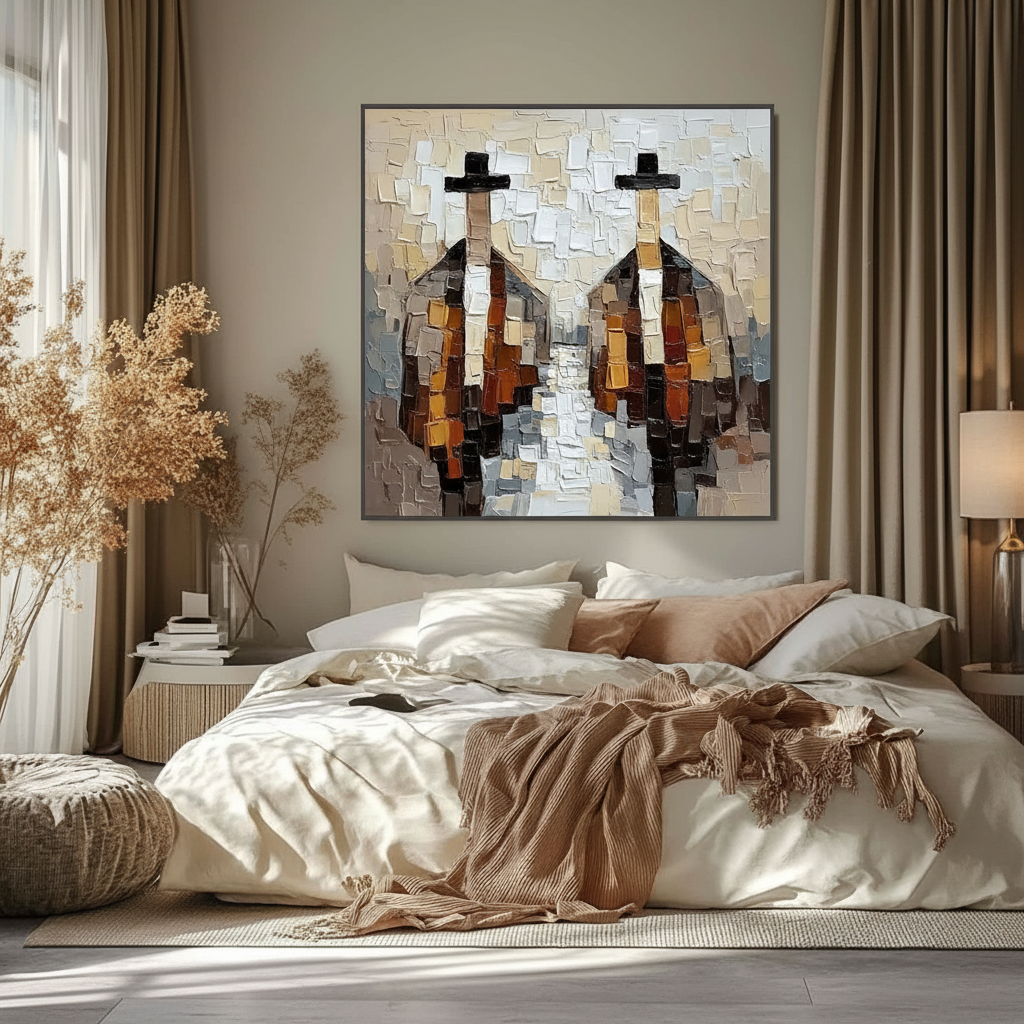
In the master bedroom, the most private sanctuary of the home, this shift manifests as a preference for "Mirrored Serenity." While not a formal academic term, we use this philosophy to describe a curation approach rooted in symmetrical balance—a design principle that leverages the brain's innate preference for order to facilitate rest.
This guide explores how symmetrical art pairings and curated layouts can transform a bedroom from a mere sleeping area into a neurologically optimized environment for recovery.
The Neuroscience of Symmetrical Rest
Why does symmetry feel so inherently "right" in a bedroom? The answer lies in how our brains process visual stimuli. According to a systematic review published in PubMed Central (PMC11480958), passive art viewing consistently activates the medial prefrontal cortex (mPFC) and the amygdala. These regions are critical for emotional regulation and the suppression of the "fight or flight" response.
Symmetry provides a sense of stability, control, and predictability. When you enter a room where the visual weight is balanced, your brain requires less cognitive energy to "map" the space. This reduction in cognitive load directly facilitates the transition into a parasympathetic state, which is essential for high-quality sleep.
Logic Summary: Our analysis of the "Symmetry-Sleep Link" assumes that reducing environmental visual noise lowers cortisol levels, based on standard neuroaesthetics heuristics and clinical observations of patient environments.
The Biophilic Connection
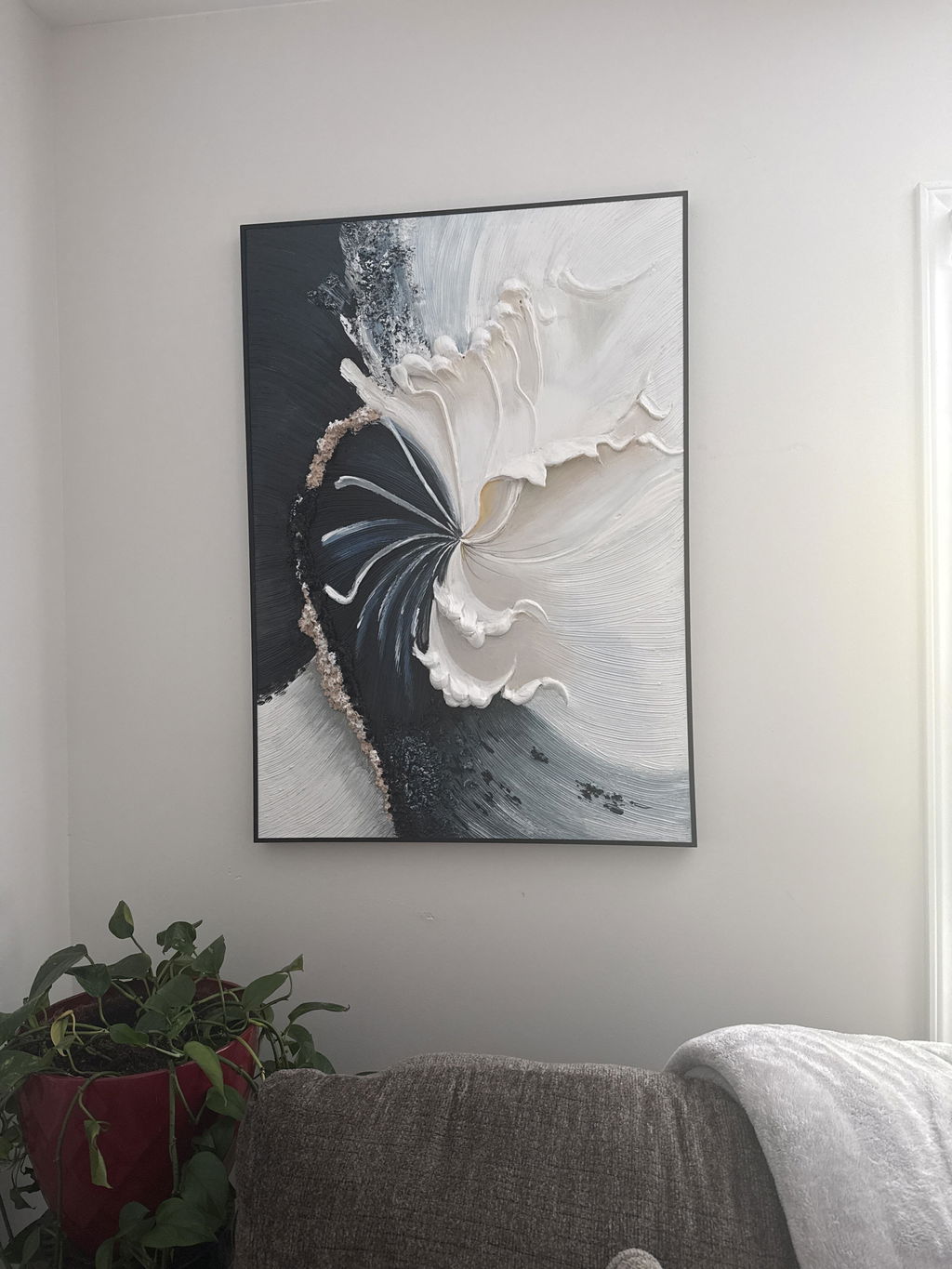
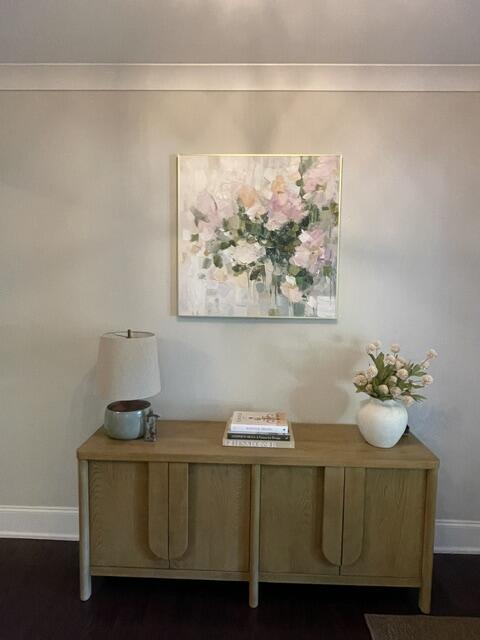
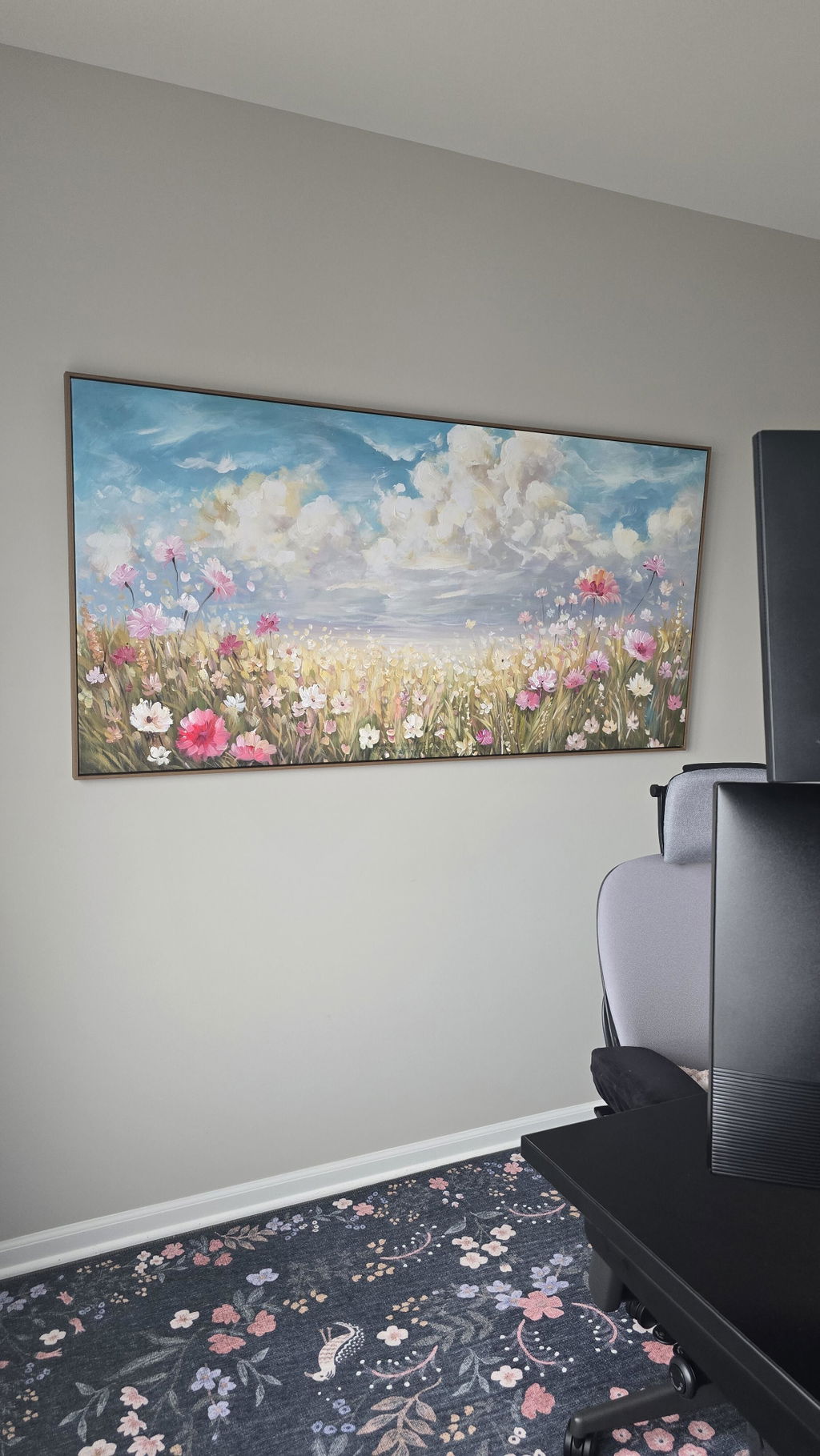
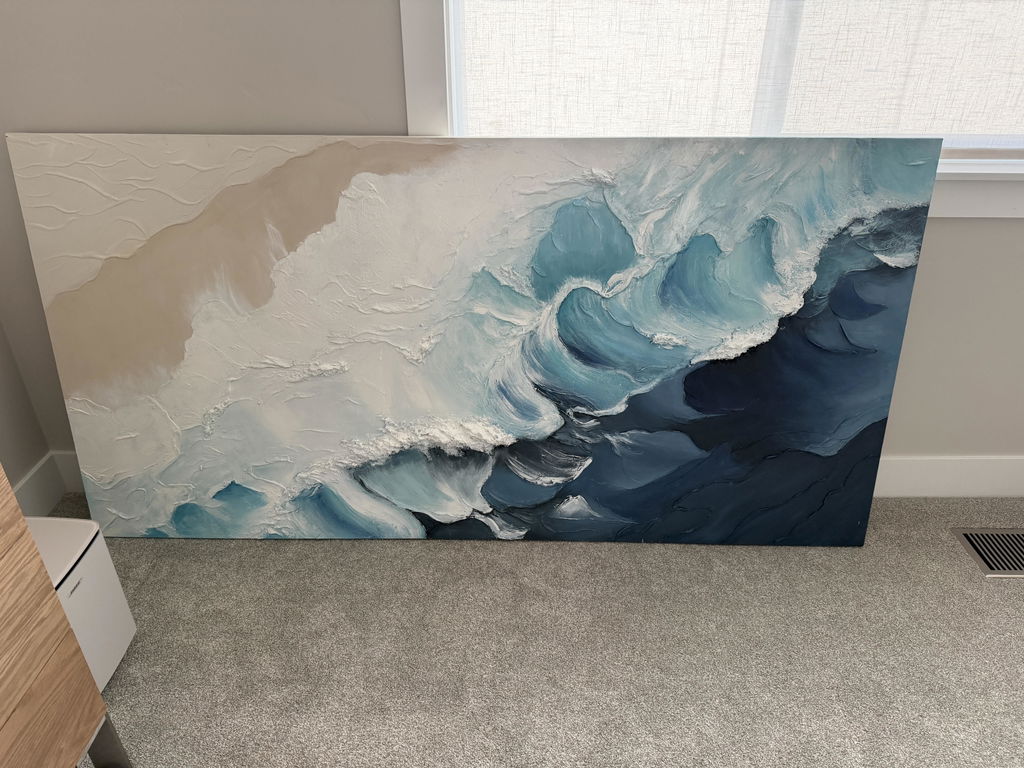
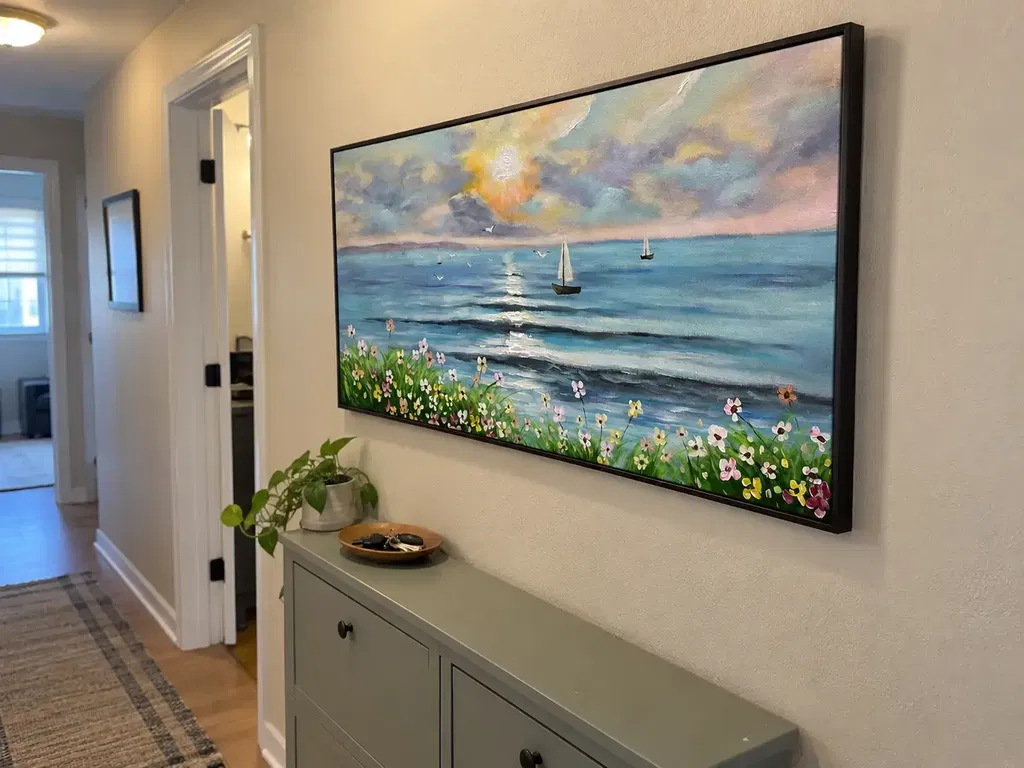
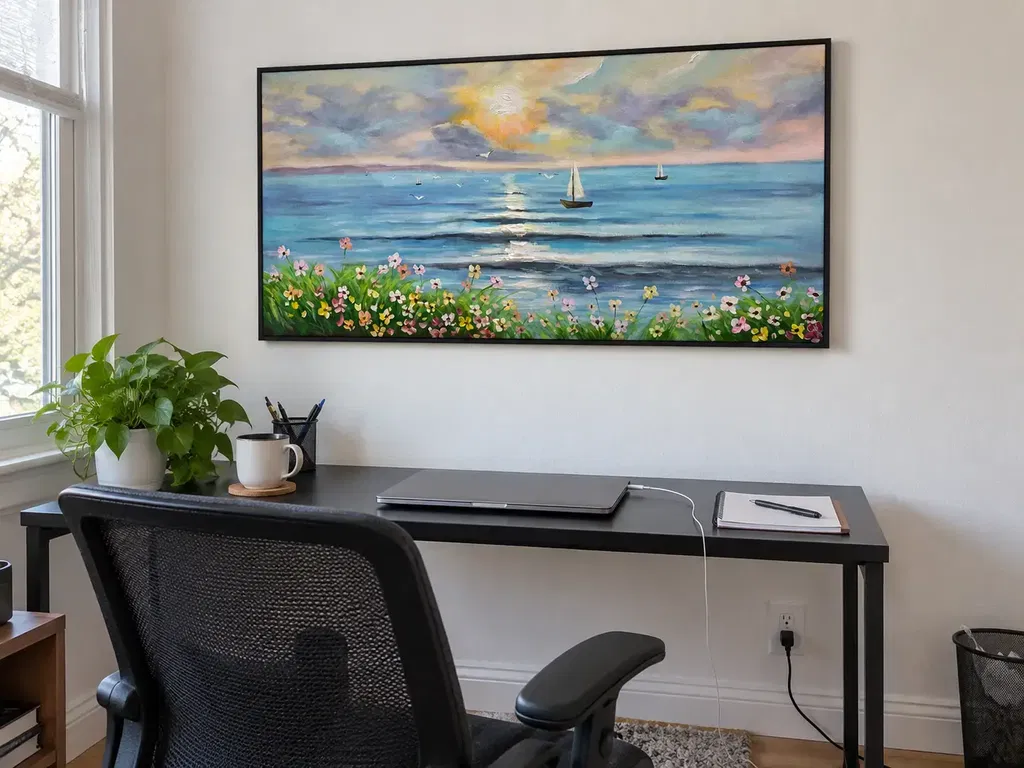
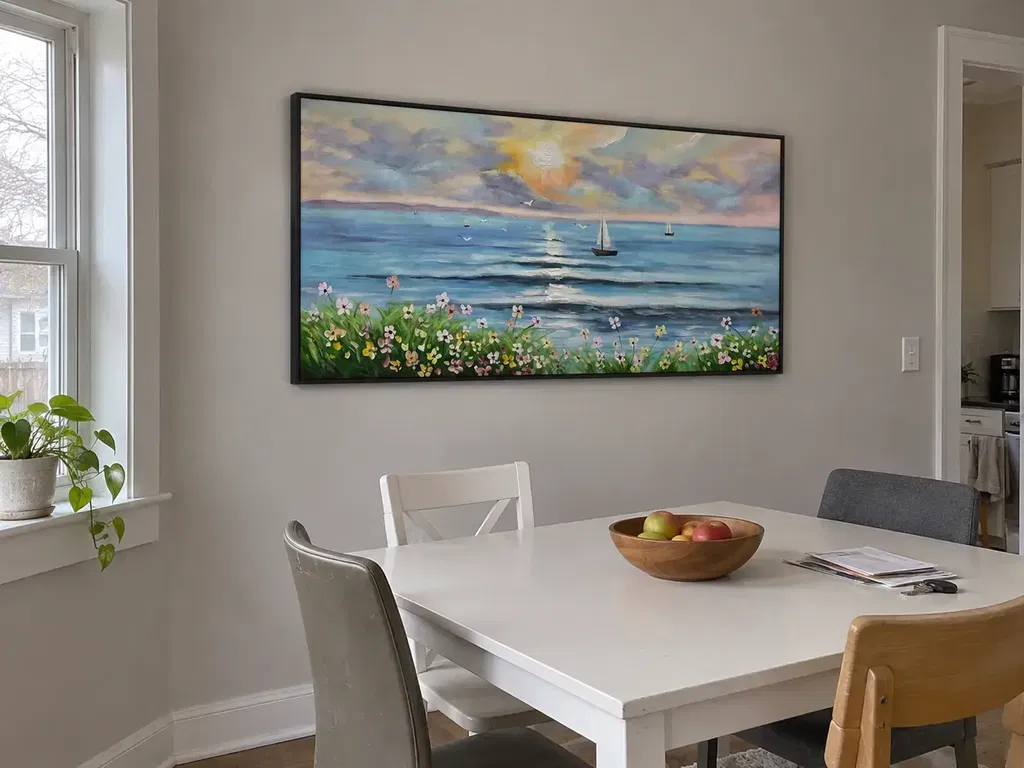
Integrating nature-themed, hand-painted art into this symmetrical framework further amplifies the healing effect. A University of Central Arkansas study confirms that biophilic design—featuring natural landscapes—produces stress-reduction effects in the brain nearly identical to being outdoors. In our experience, pairing two related botanical or landscape works above a headboard creates a "window effect" that grounds the room in organic tranquility.

Curation Logic: Symmetry vs. Asymmetry
While symmetry is the baseline for serenity, it is not the only tool. Understanding when to employ formal balance versus dynamic asymmetry is key to a sophisticated master suite.
| Feature | Symmetrical Curation | Asymmetrical Curation |
|---|---|---|
| Primary Impact | Stability, Calm, Formal Harmony | Energy, Movement, Modernity |
| Best For | Above the Headboard, Main Focal Wall | Corner Vignettes, Gallery Walls |
| Psychological Goal | Predictability & Security | Creativity & Visual Interest |
| Risk Factor | Can feel "sterile" or "hotel-like" | Can feel "cluttered" or "chaotic" |
The 60/40 Rule for Master Suites
In our design practice, the most successful bedrooms avoid the "perfect mirror" trap by following a 60/40 ratio. We recommend that 60% of the room's major elements (the bed, nightstands, and the primary art pairing) remain strictly symmetrical. The remaining 40% should incorporate asymmetrical touches—such as varying textures, organic shapes, or personal items—to prevent the space from feeling rigid.
This is supported by research from Neurotectura (2025), which notes that while symmetry is calming, "perfect" mirroring can trigger anxiety in roughly 15-20% of individuals who prefer dynamic, organic spaces. The 60/40 rule provides the safety of symmetry without the sterility of a showroom.
Practical Implementation: The "MontCarta" Placement Heuristics
Achieving "Mirrored Serenity" requires more than just buying two identical frames. It requires precise spatial execution.
The Headboard Alignment
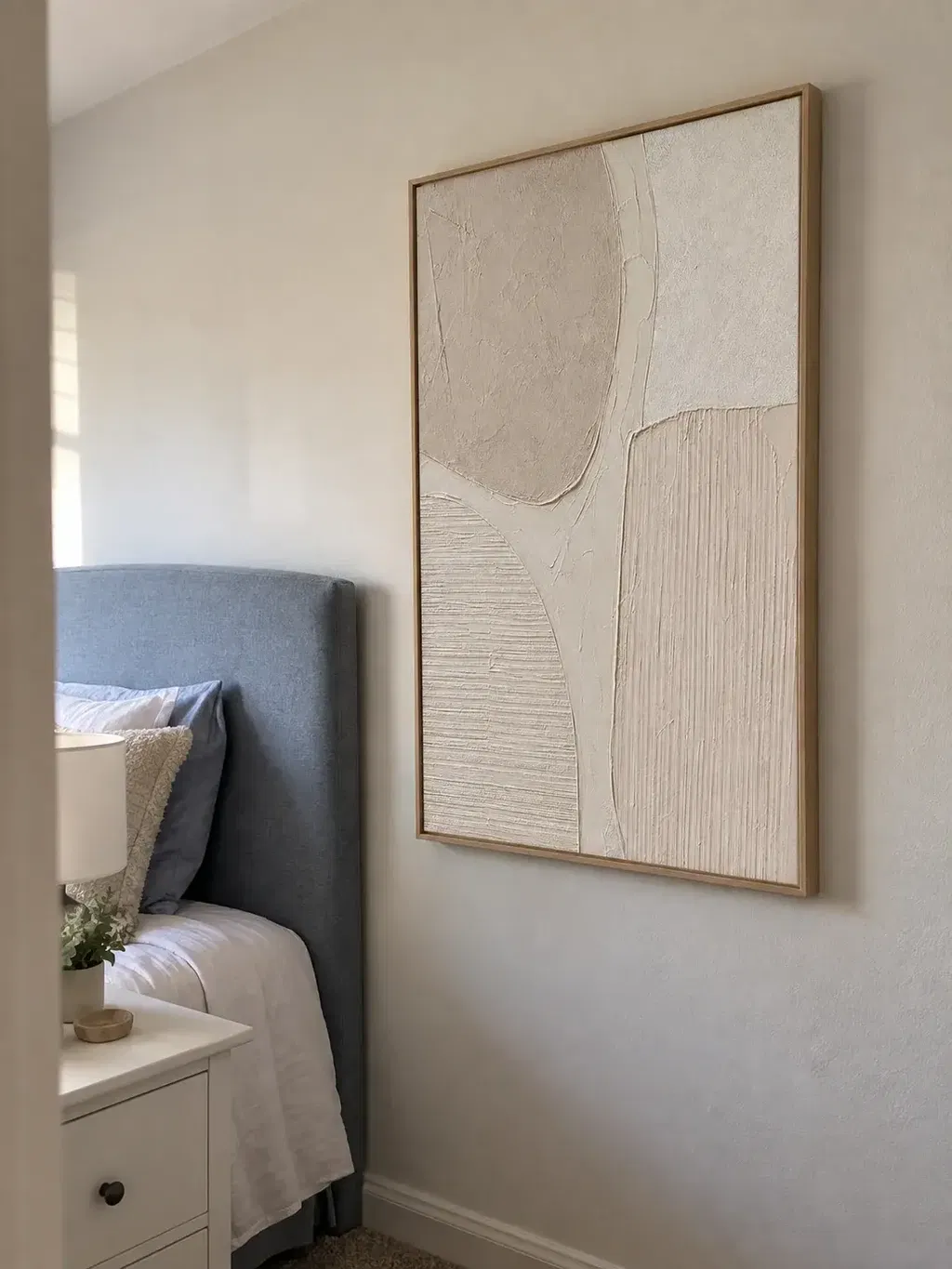
For art placed above the headboard, the optimal centerline should be 6-8 inches above the headboard crest. A common mistake is hanging art at "eye level" (usually 57-60 inches from the floor), which works for hallways but fails in the bedroom. When you are standing, art hung at 60 inches often feels disconnected from the bed. By lowering it to the 6-8 inch range, you create a cohesive visual unit that "anchors" the furniture.
Subtle Variations within Pairs
To maintain a high-end, "human" feel, we often introduce subtle variations within symmetrical pairs. This might involve:
- Color Temperature Shifts: Using two paintings from the same series where one has slightly warmer undertones.
- Matting Variations: Adjusting the matting width by a mere 0.5 inches between the two pieces.
- Lighting Alignment: Positioning bedside lamps so the bottom of the shade aligns perfectly with the top of the headboard. This creates a strong horizontal line that reinforces the symmetry of the art above.

Material Integrity: Why Hand-Painted Beats Digital
In a space dedicated to rest, the "soul" of the object matters. Columbia University experiments confirm that consumers value art labeled "human-created" 62% higher than AI-generated alternatives (Columbia Business School). Furthermore, research from the University of Chicago suggests that digital replicas lack an "essential identity" that consumers crave.
The Physics of Texture
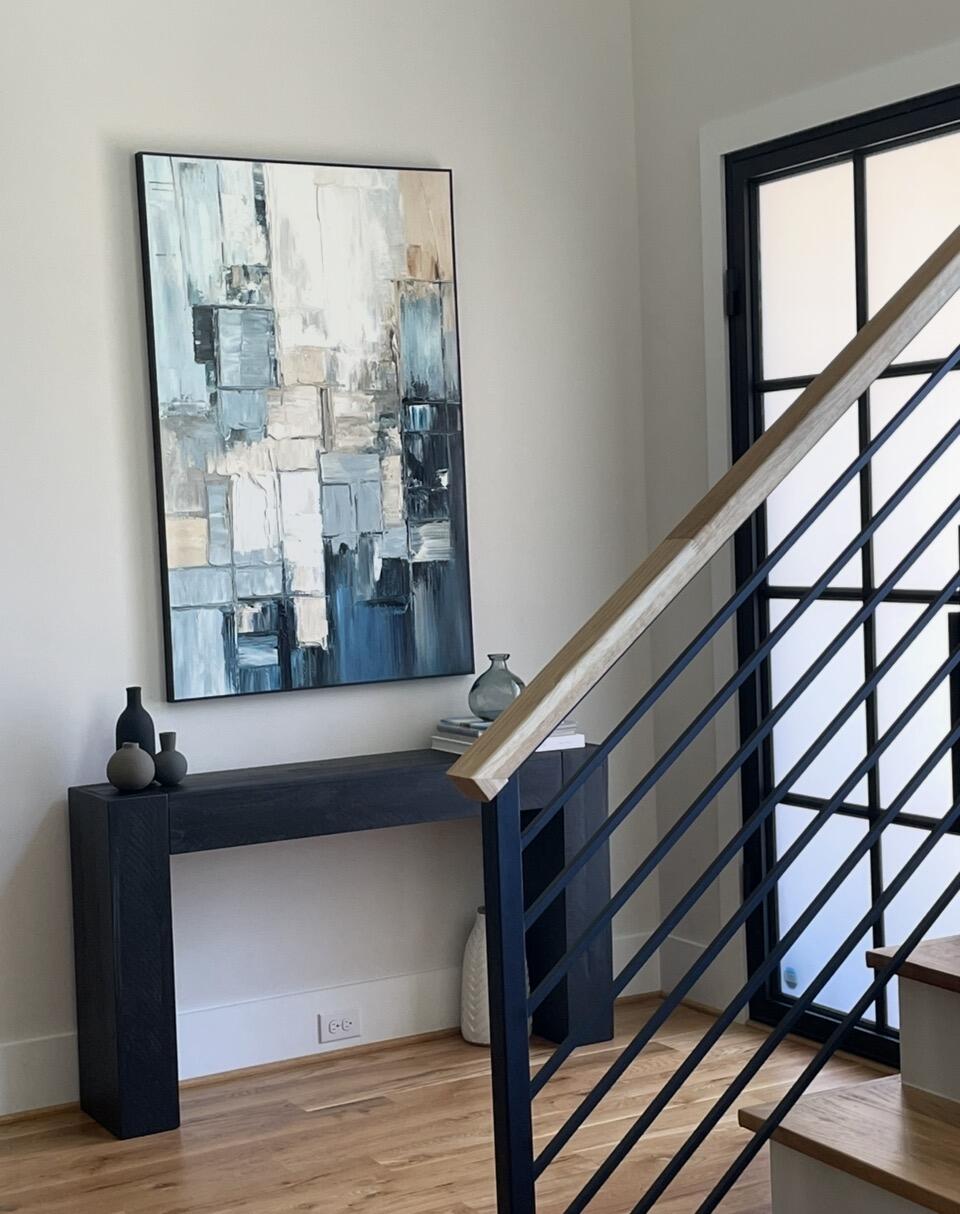
Hand-painted art offers a tactile micro-topography that prints cannot replicate. Optical microprofilometry proves that the millimeter-scale texture of oil and acrylic pigments is crucial to their aesthetic appeal (Sensors, 2021). This physical relief interacts with your bedroom's lighting throughout the day, creating a living, breathing focal point rather than a flat, static image.
Safety and Air Quality (YMYL)
For a master bedroom, indoor air quality (IAQ) is non-negotiable. Many mass-produced prints use industrial inks that can emit Volatile Organic Compounds (VOCs). The EPA warns that indoor air pollution is often more concentrated than outdoor air.
At MontCarta, we prioritize health-conscious materials. Our artists use low-VOC acrylics and natural binders. We strictly avoid pigments containing heavy metals like Cadmium—a Group 1 carcinogen according to the International Agency for Research on Cancer (IARC)—and Lead.
Methodology Note: Our IAQ safety standards are modeled based on LEED and WELL building certification prerequisites for healthcare facilities, ensuring that the art you sleep under is as safe as it is beautiful.
Longevity and The "Investment" Mindset
Investing in original, hand-painted murals or canvases is not just an aesthetic choice; it is a value-add for your property. A Royal Society analysis found that neighborhoods and homes with higher "art" engagement saw significant relative gains in property value ranking (Royal Society, 2016).
Technical Durability: Acrylic vs. Oil
When selecting pieces for a sun-drenched master suite, understanding the chemistry of your medium is vital.
| Parameter | Acrylic Emulsion | Traditional Oil |
|---|---|---|
| Drying Mechanism | Physical Coalescence | Oxidative Cross-linking |
| Flexibility | High (Resists embrittlement) | Low (May crack over decades) |
| Heat Resistance | High | Low (Subject to melting/binder separation) |
| Humidity Response | May swell ~7% in 83% humidity | Catastrophic failure in extreme heat |
Data based on accelerated aging studies by ResearchGate.
For most modern homes, high-quality acrylics offer superior longevity. They are solvent-resistant and, according to Tate Modern research, can be gently cleaned with water-based methods to remove dust without damaging the paint film.

Creating Your Sanctuary
Mastering the art of symmetry is about more than just alignment; it is about intention. By selecting hand-painted works that honor human craftsmanship and prioritizing non-toxic materials, you create a space that supports your neurological and physical well-being.
Whether you are implementing a panoramic mural—a trend identified by the National Kitchen & Bath Association (NKBA) for 2025—or a pair of curated canvases, remember the 60/40 rule. Let symmetry provide the foundation of calm, but let the "essential identity" of the artist's hand provide the soul.
Disclaimer: This article is for informational purposes only and does not constitute professional medical, health, or financial advice. While we discuss the psychological benefits of art and the safety of specific materials, individuals with respiratory conditions or specific psychological needs should consult with a qualified professional.