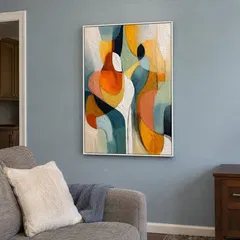
Square wall art brings symmetry and modern balance, creating a striking focal point with bold, versatile designs that fit beautifully in any space.









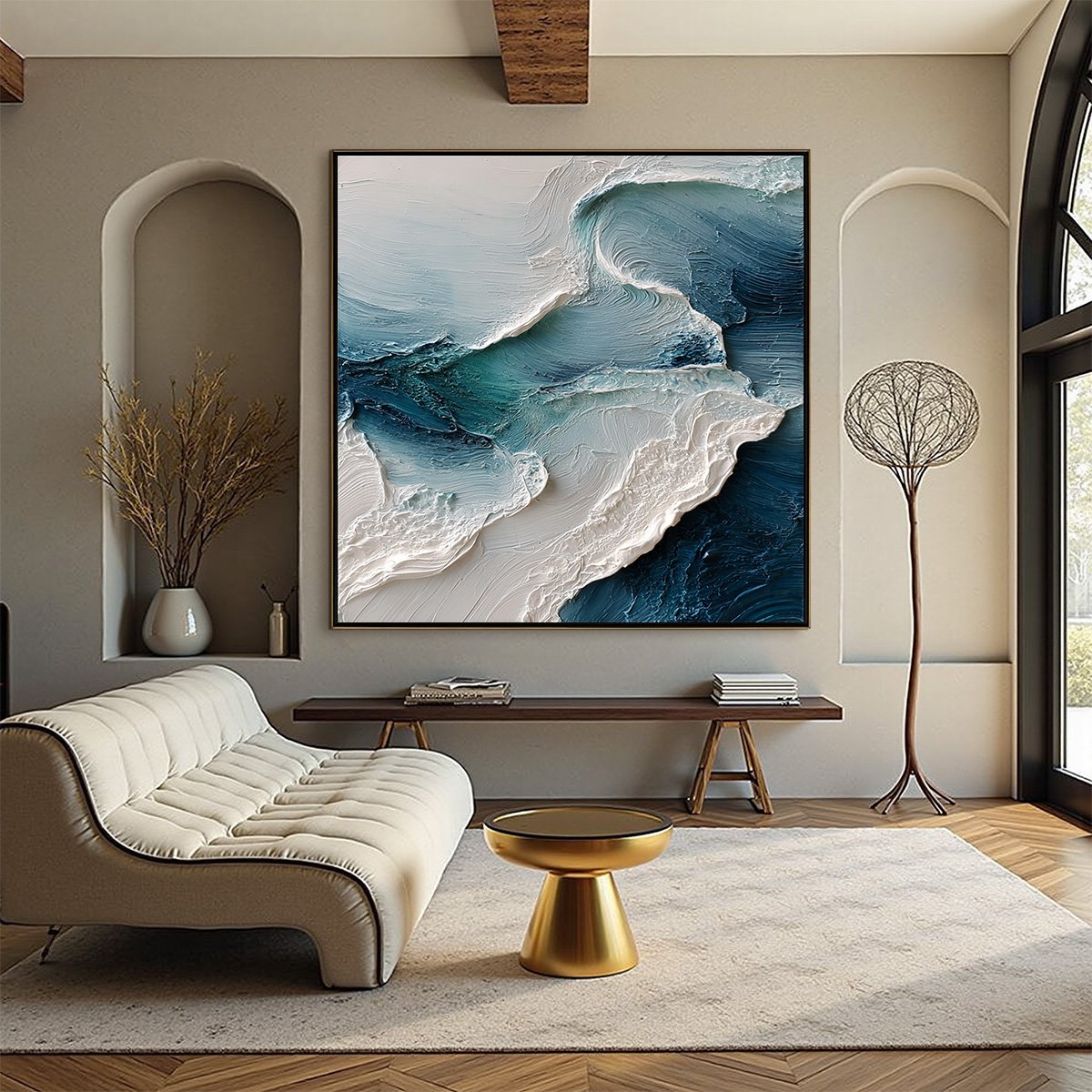
Square Wall Art for Balanced Walls and Grids
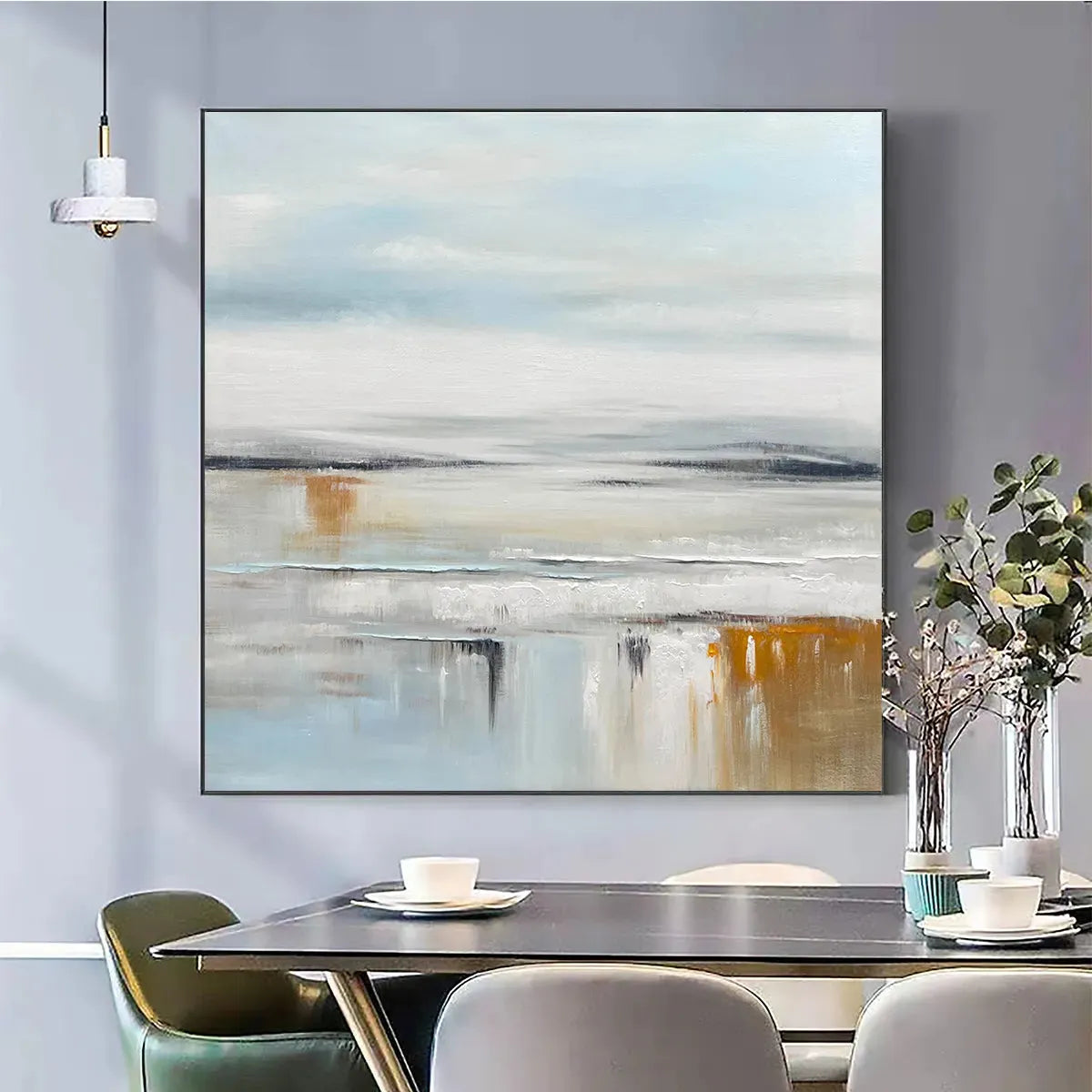
A square painting gives width and height equal weight. That simple balance makes square wall art one of the most adaptable formats in a home: it can sit above a compact cabinet, anchor a reading corner, fill the wall between two openings or form part of a grid. The choice is less about finding a gap to fill and more about deciding where the eye should rest.
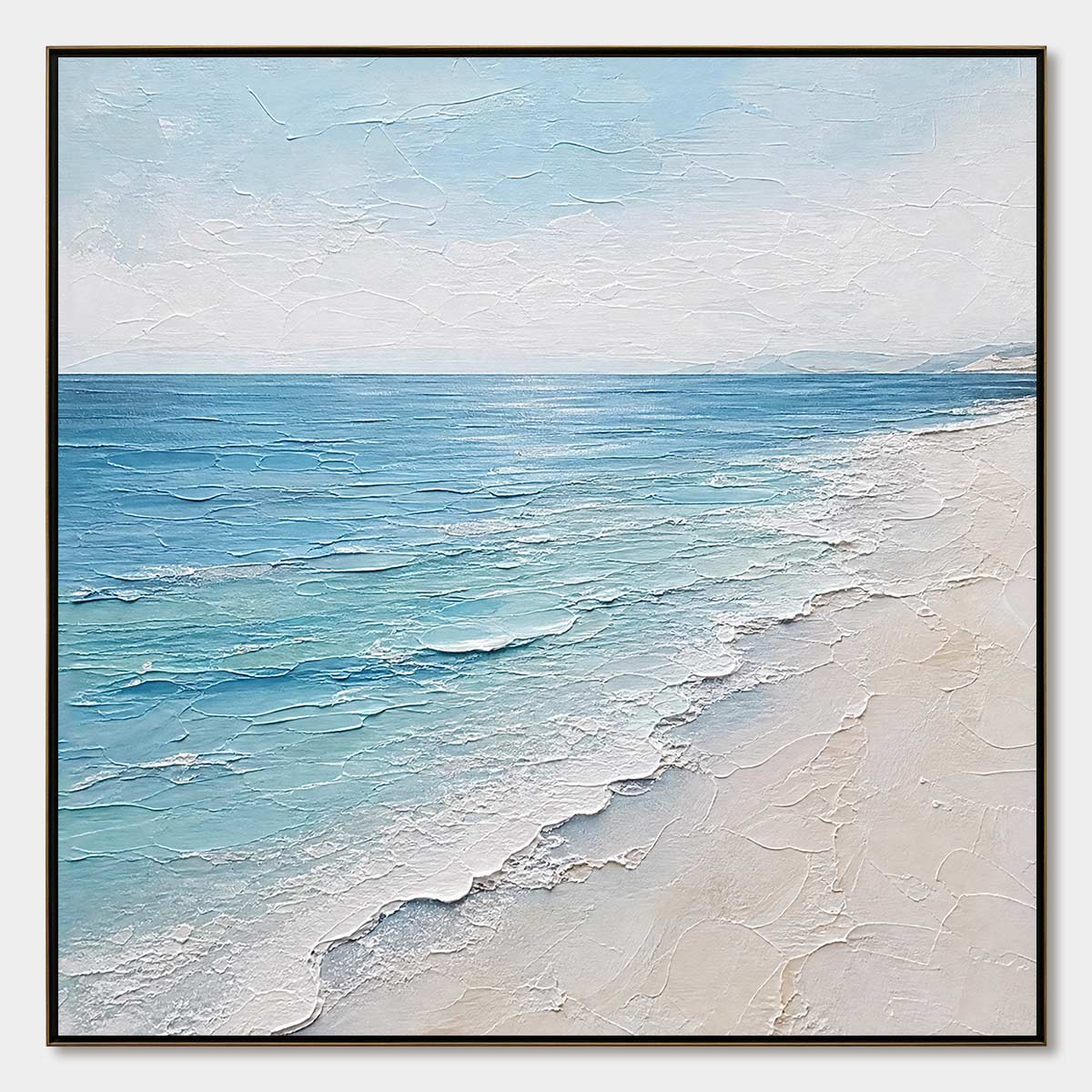
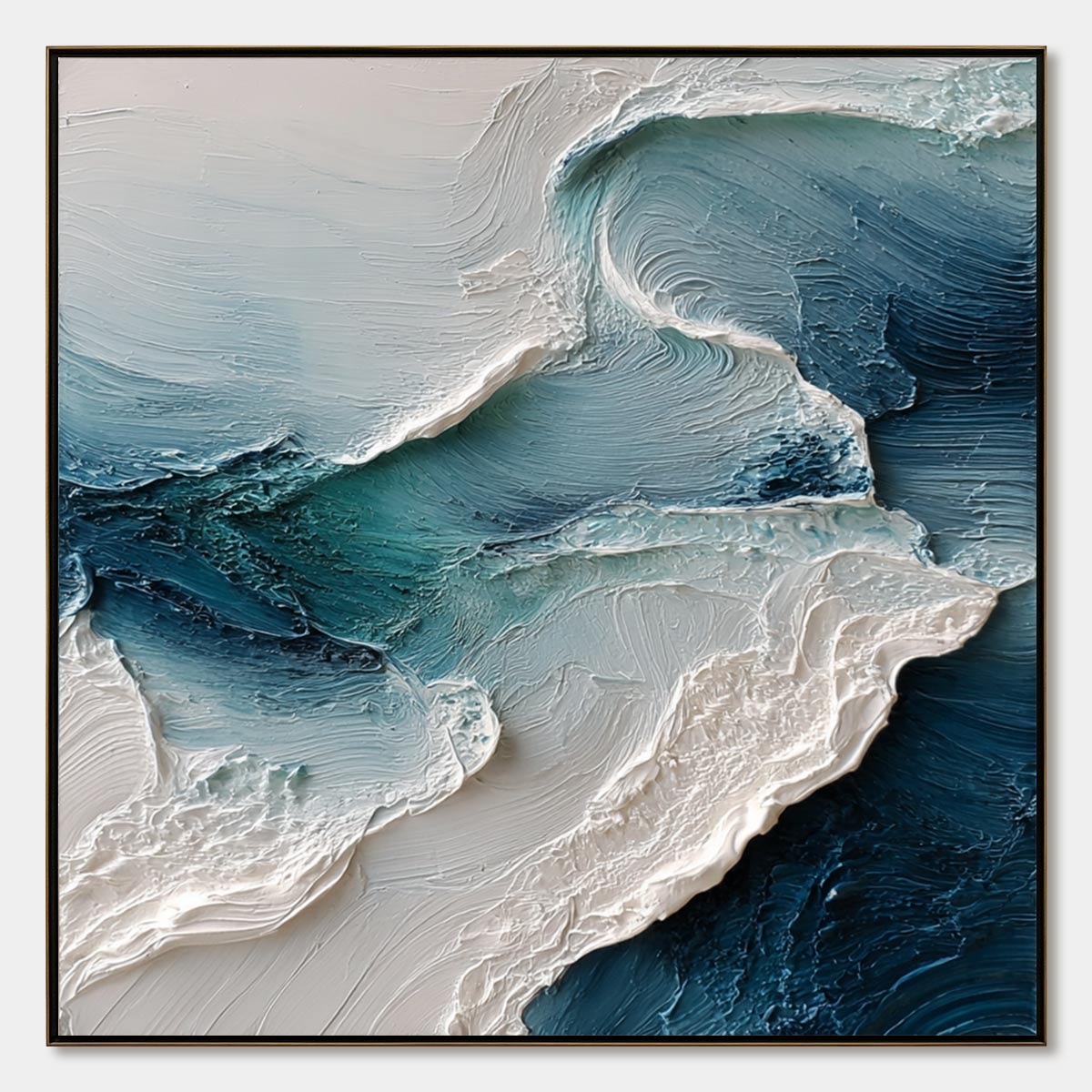
MontCarta's square collection brings together florals, seascapes, figurative scenes, landscapes and abstract paintings in an even-sided format. Use the subject, style, room and artist filters to narrow the selection, then open each painting to compare its available sizes and frame finishes.
Find the right position for a square
Because a square needs as much vertical space as horizontal space, start by measuring the clear area in both directions. Account for the furniture below, wall lights, switches and the ceiling line. A square that fits the width of a cabinet may still feel cramped if there is little height above it.
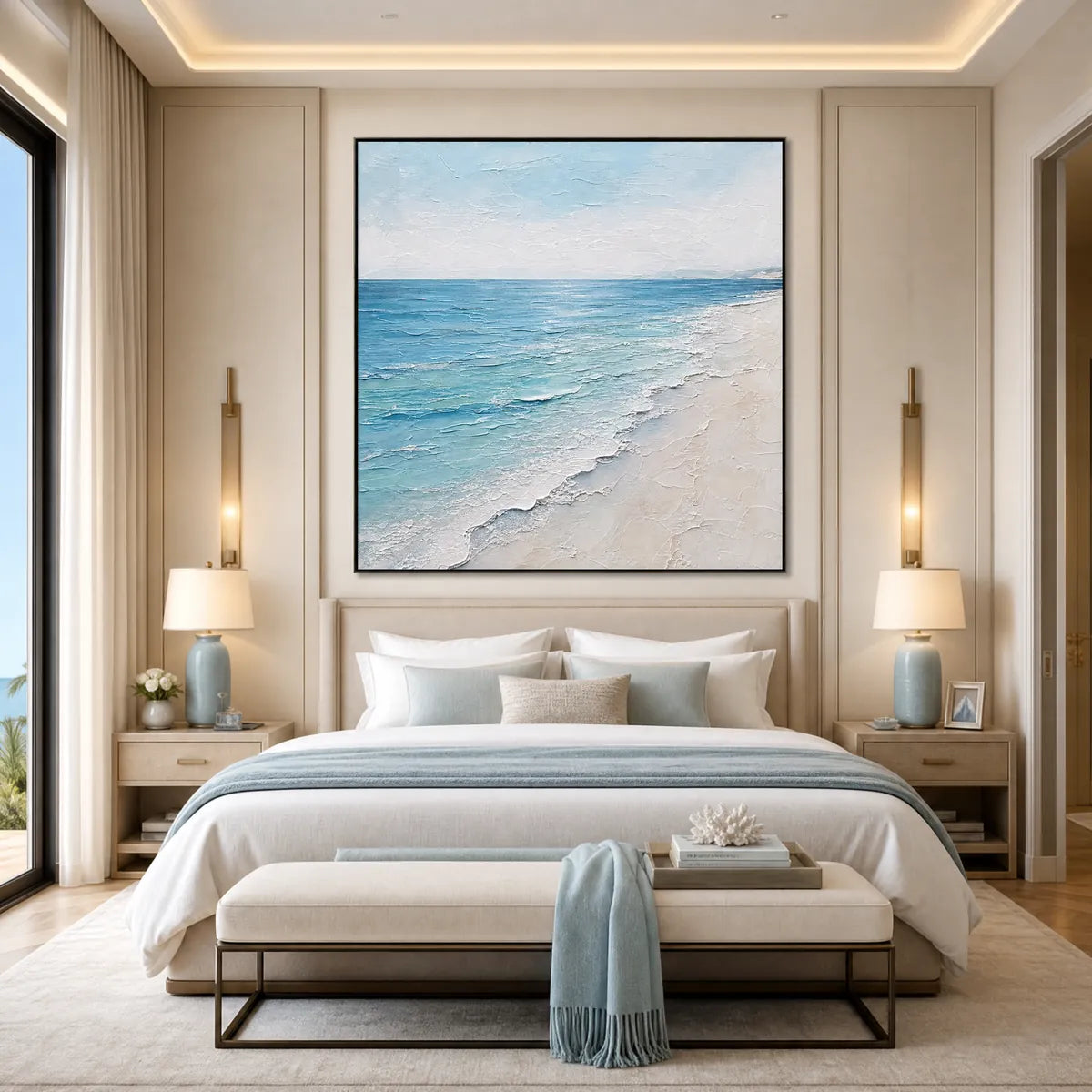
Square paintings work well where the wall itself is close to square: between a door and a window, above a narrow chest, on a chimney breast or at the end of a hallway. They also suit places where you look at the wall straight on, such as the wall facing an armchair or bed.
Choose the subject within the frame
In a square format, the composition tends to gather towards the center. That makes the subject especially important, because there is no long horizon or tall vertical line to lead the eye away.
Blooming Burst by Willow Davies captures a flower in full bloom with thick, textured impasto paint. The central bloom fills the square with energy, making it a good choice for a wall that needs a lively focal point in a living room, bedroom or dining room.
Afternoon Stroll by Yan Nan Li takes a quieter approach. A lone figure carries a bouquet while a small dachshund trots alongside, set against a textured beige ground with muted greens and deep navy. The simple shapes leave plenty of breathing room, so it can sit comfortably in a hallway or bedroom where a calmer image is preferred.
Golden Sunset Over Water by Liam O'Connell shows a sunset over the ocean, with textured palette knife strokes catching warm golden light on blue water. It offers a coastal subject for rooms where a wide seascape would not fit.
The three featured paintings are each offered in square sizes from 20''x20'' to 48''x48''. That range lets you use the same subject as a small accent or as the main piece on a wall.
Use a square to balance other shapes
Many rooms are full of rectangles: doors, windows, sofas, beds and rugs. A square painting can interrupt that repetition and give the wall a steadier, more centered point of focus. It is also useful beside strongly horizontal or vertical features. Next to a tall bookcase, a square adds weight without competing for height; beside a long sideboard, it provides a pause rather than another long line.
Square works also combine well with round and curved forms such as mirrors, pendant lights and arched furniture. When the rest of the room is busy, choose a square with a simple composition and a limited palette. When the room is plain, a square with more texture or stronger color can bring it to life.
Decide between one square and a group
A single square creates a clear point of focus without needing a wide wall. It suits a smaller sofa, a narrow console or a bedside wall. A pair or a grid of squares can cover a larger area while keeping each image easy to read.
When planning a group, sketch the complete arrangement, including the gaps between works. Two squares side by side make a wide rectangle overall; four squares in a grid make a larger square. Keep the spacing consistent, and give the paintings something in common, such as a palette, a frame finish or a subject. If a group of related works appeals, browse the sets of 2 and 3. If one wide piece would suit the space better, compare horizontal wall art.
Let the frame finish the outline
With equal sides, a frame becomes a clear part of the overall shape. The featured paintings list rolled canvas, frameless stretched canvas and gold, silver, white, black and wood frame options. Compare the finish with nearby woodwork, handles and light fittings, and check the finished dimensions of the option you select.
| Where it will hang | Start with | Confirm before ordering |
|---|---|---|
| Above a compact cabinet or chest | Width of the furniture | Clear height above it |
| Between a door and a window | Clear wall in both directions | Handles, switches and trim |
| Reading corner or bedside wall | Seated or lying viewing height | Lamps and headboard position |
| Grid or pair | Full outline including gaps | Matching sizes and frame finish |
Questions about square wall art
What makes a painting square?
Its height and width are equal. Check the size you select on the product page and allow for any frame when planning the space it will occupy.
Can a square painting go above a sofa?
Yes. A single square can suit a smaller sofa or loveseat, while a pair of squares can span a wider one. Mark the outline on the wall before deciding.
Do paintings in a grid need to match?
They do not need the same subject. Matching sizes, even spacing and a shared frame finish or palette can make different paintings feel like one arrangement.
Is square art suitable for a small room?
Often, yes. A square concentrates attention without needing a long stretch of wall. Choose a size that leaves some clear space around it so the room does not feel crowded.