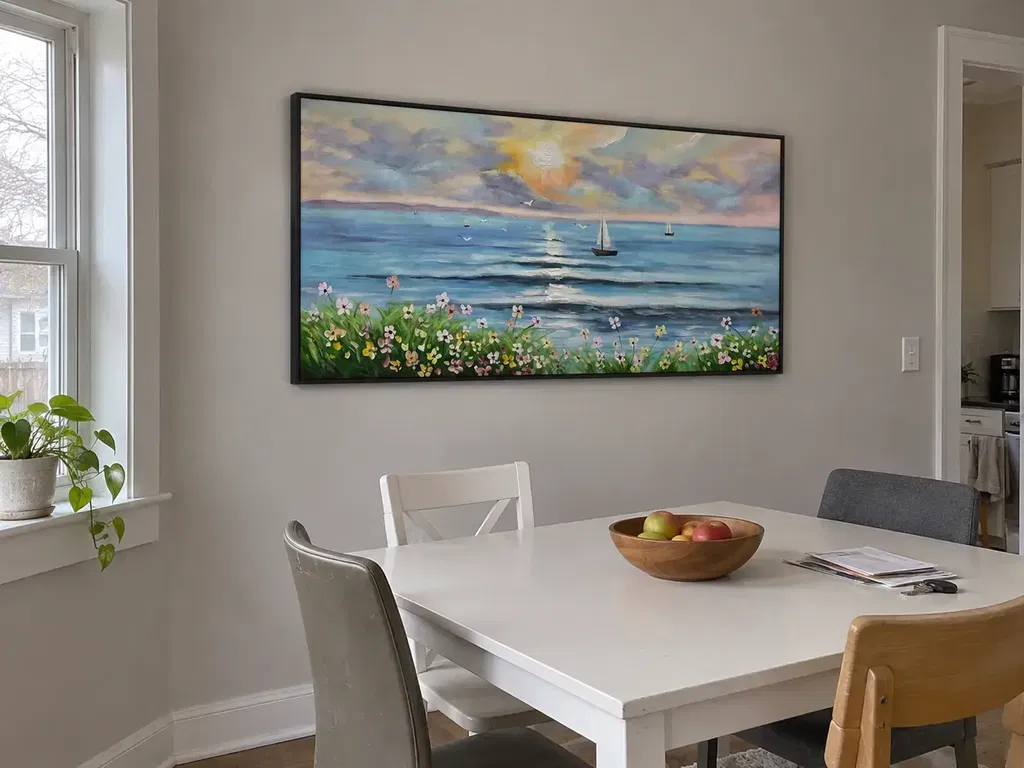
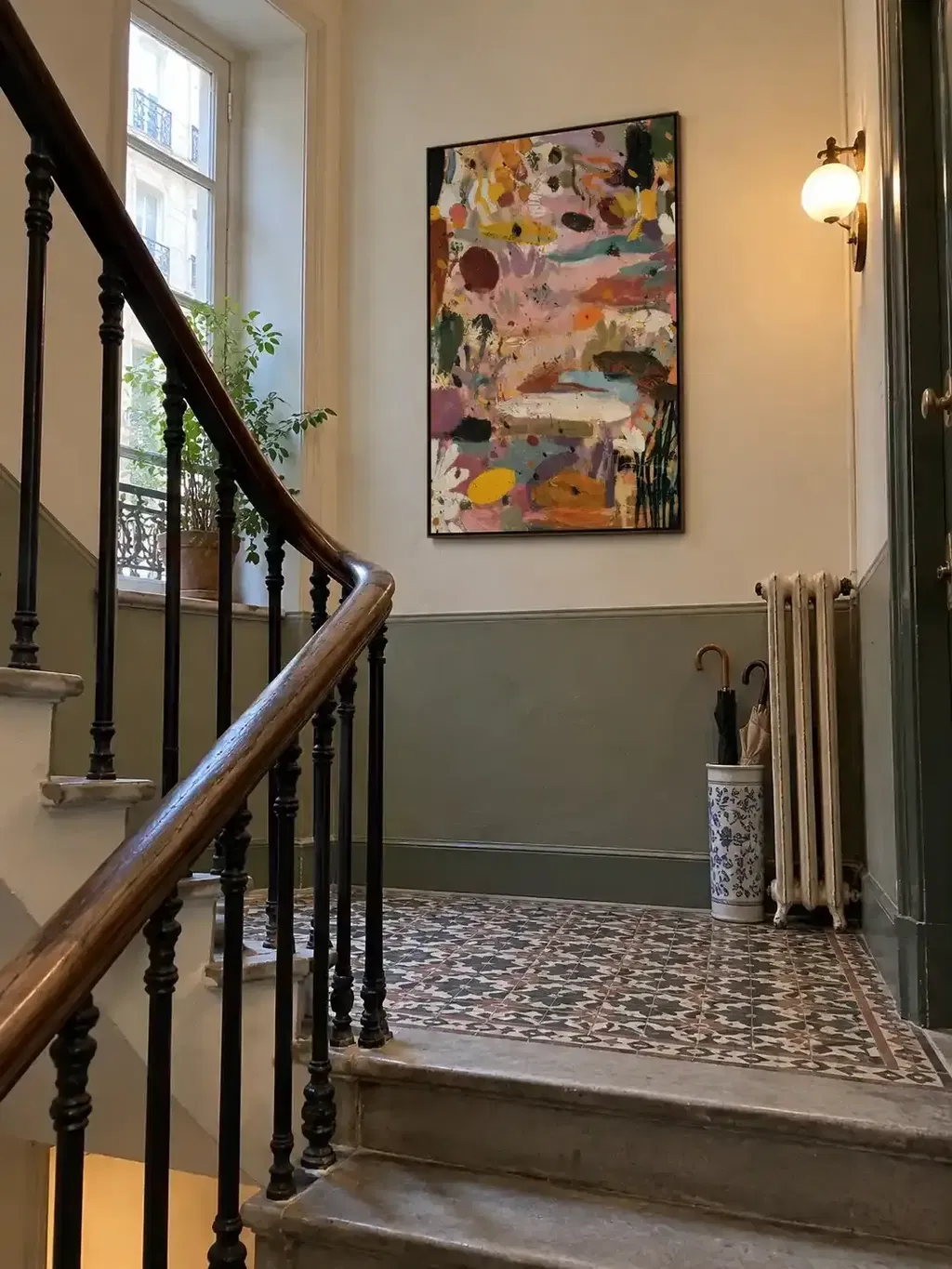
Hang a painting too far away and the detail disappears. Too close and the composition breaks apart. Painting viewing distance shapes how a piece looks and feels in a real room. Get it right and even a mid-sized canvas can command a wall.
Why Does Viewing Distance Matter When You Pick a Painting?
Up close, your eye lands on brushstroke texture, color layering, and surface detail. Step back and that resolves into mood and overall composition. Neither view is wrong, but the right canvas size depends on how far away you actually stand when you look at it.
A small canvas viewed from 12 feet reads as a dot on the wall. A large canvas viewed from 3 feet becomes hard to take in as a whole.
How Far Should You Stand From a Painting?
Ideal viewing distance = canvas diagonal x 1.5 to 2
Use 1.5x for a closer, more immersive view. Use 2x for a comfortable full-composition view.
Quick Example
A 24"x36" canvas has a diagonal of approximately 43 inches (about 3.6 feet).
- 1.5x = 5.4 feet
- 2x = 7.2 feet
Ideal viewing distance: 5–7 feet. That matches a typical sofa-to-wall distance, which is why 24"x36" ranks as a top size for above-sofa placement.
Viewing Distance Chart by Canvas Size
| Canvas Size | Ideal Viewing Distance | Typical Room Context |
|---|---|---|
| 11"x14" / 28x36cm | 2.5–3.5 ft / 0.8–1.1m | Desk area, nightstand wall, small bathroom |
| 20"x28" / 50x70cm | 3.5–4.5 ft / 1.1–1.4m | Hallway, reading nook, beside a bed |
| 24"x36" / 60x90cm | 6–8 ft / 1.8–2.4m | Above sofa, dining room feature wall |
| 36"x56" / 90x140cm | 8–11 ft / 2.4–3.4m | Living room, open-plan kitchen, bedroom |
| 48"x80" / 120x200cm | 12–16 ft / 3.7–4.9m | Large living room, foyer, hotel lobby |
| 60"x90" / 152x229cm | 16–20 ft / 4.9–6m | Grand foyer, commercial space, open loft |
How to Read This Chart
If your sofa sits 9 feet from the wall, a 36"x56" painting lands in the sweet spot. A 24"x36" piece at the same distance feels slightly undersized. A 20"x28" will feel lost.

Does Painting Orientation Change the Viewing Distance?
The diagonal formula stays the same. But orientation changes how the composition reads at a given distance, and that affects where furniture should sit.
Horizontal: Use the Far End of the Range
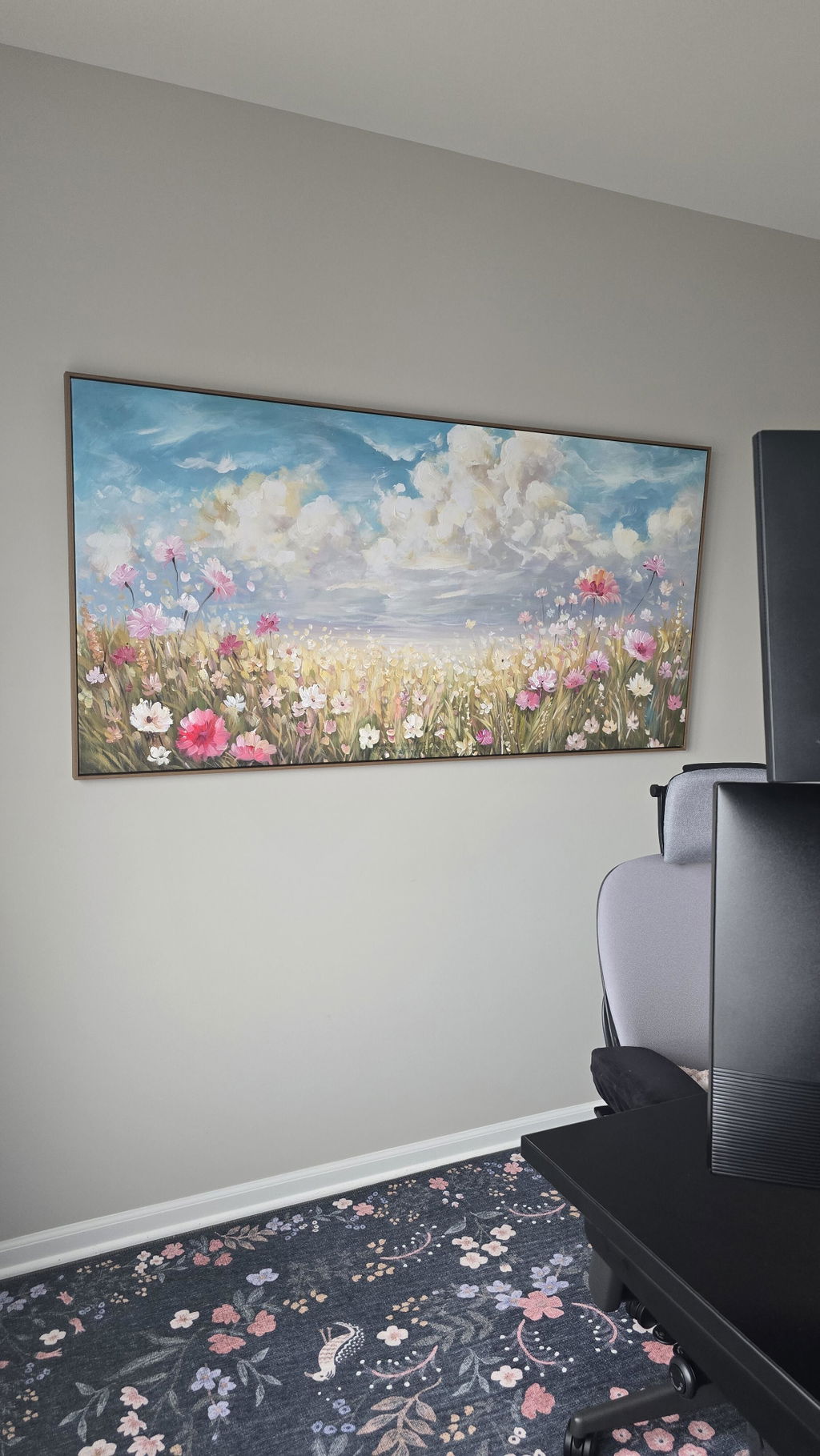
Wide canvases require side-to-side eye movement. Too close and the composition breaks apart. Aim for 2x the diagonal on horizontal paintings, not 1.5x.
Vertical: Works Well Up Close
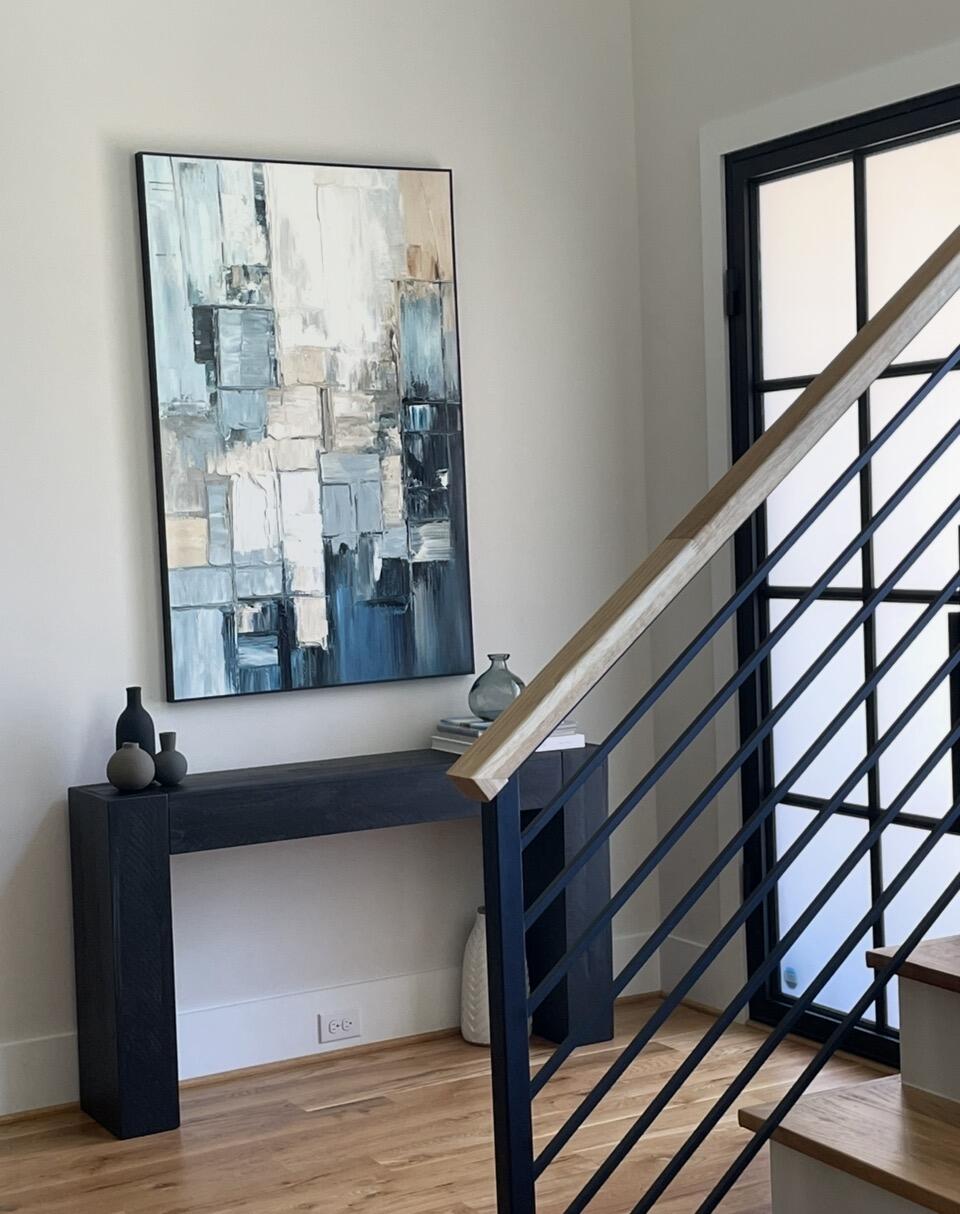
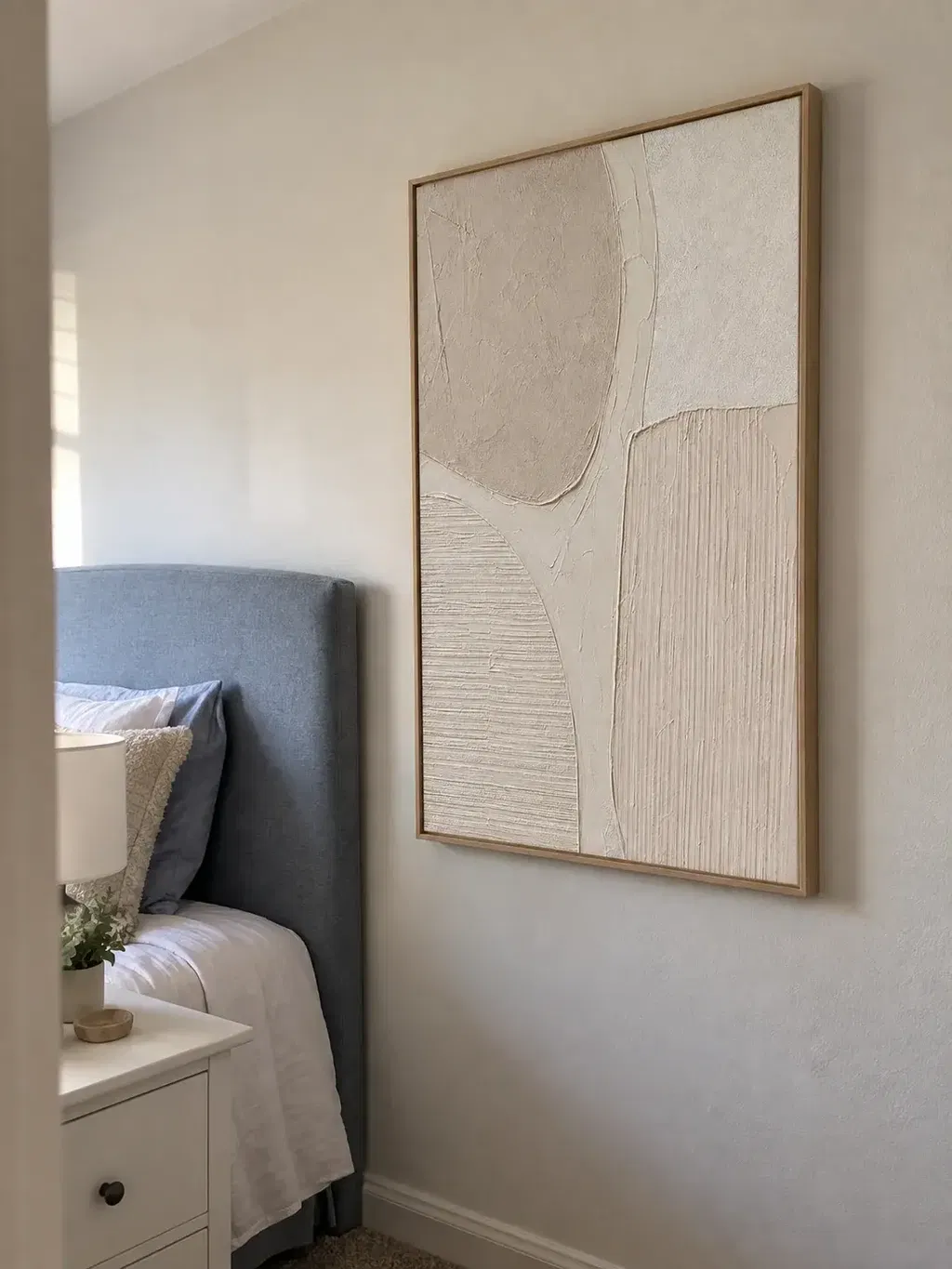
Tall canvases resolve comfortably at shorter distances. Use 1.5x the diagonal for vertical paintings. Best for hallways, studies, and beside-bed walls.
Square: Most Flexible
Works across a wider range of distances for square paintings. Good for spaces where viewing position varies.
How This Affects Furniture Placement
| Orientation | Best Spaces | Viewing Distance | Furniture Note |
|---|---|---|---|
| Horizontal | Living room, above sofa, dining room | Closer to 2x diagonal | Sofa needs room to sit at the right distance |
| Vertical | Hallway, study, beside bed, staircase | Closer to 1.5x diagonal | Works in narrow spaces |
| Square | Open-plan, bedroom | 1.5–2x diagonal | Adaptable to most room depths |
How Big Should a Painting Be for My Room?
Measure your actual viewing distance first, then work backward.
Step 1: Measure Where You Sit or Stand
Measure the distance from your eyes to the wall in the spot where you most often view it.
Step 2: Calculate the Canvas Diagonal You Need
- Divide viewing distance by 2 for a comfortable view (minimum diagonal)
- Divide by 1.5 for a closer, more immersive canvas
Step 3: Match to a Canvas Size
Use the chart above as a lookup. A 40-inch diagonal works out to roughly 24"x32".
Typical Viewing Distances by Room
| Room | Typical Viewing Distance | Recommended Canvas Size |
|---|---|---|
| Living room (sofa to wall) | 8–12 ft | 36"x56" to 48"x80" |
| Bedroom (bed to wall) | 6–10 ft | 24"x36" to 36"x56" |
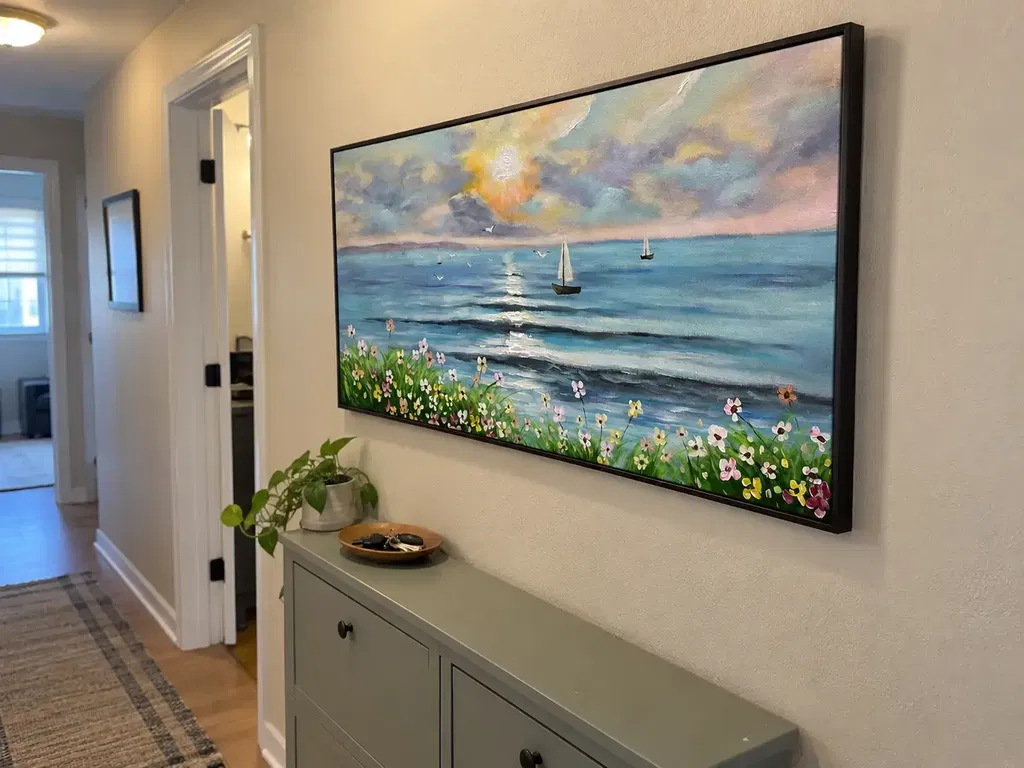
| Hallway | 3–5 ft | 20"x28" to 24"x36" |
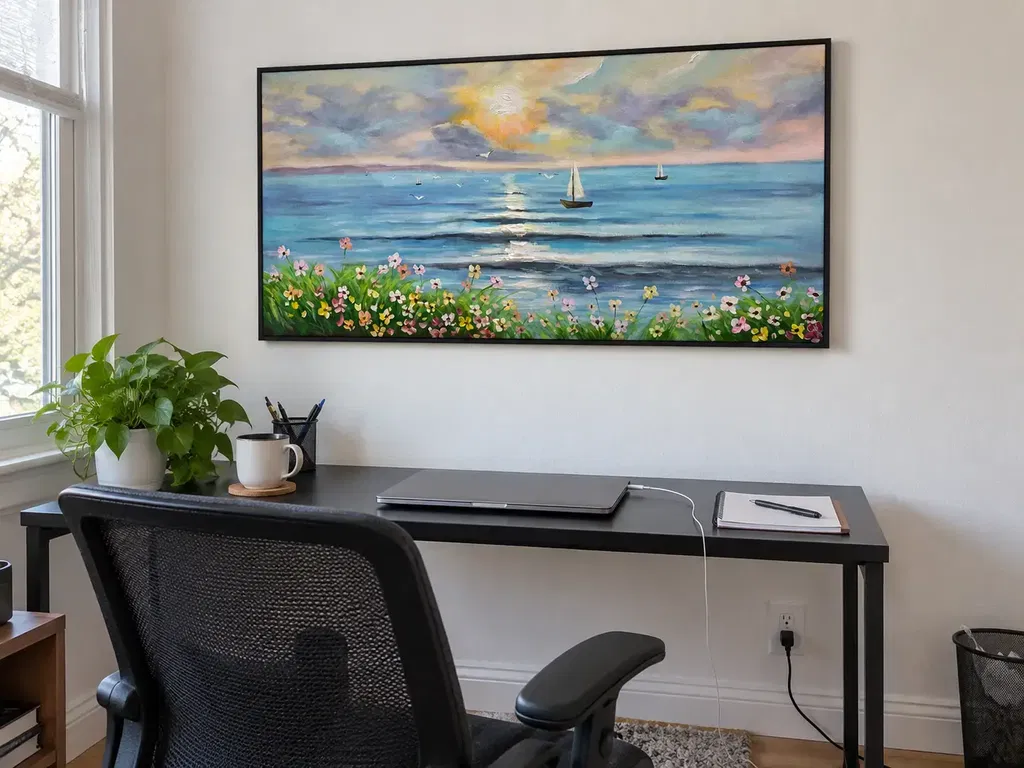
| Home office (desk to wall) | 4–6 ft | 20"x28" to 24"x36" |
| Dining room | 6–10 ft | 24"x36" to 36"x56" |
Does Texture Show From Across the Room?
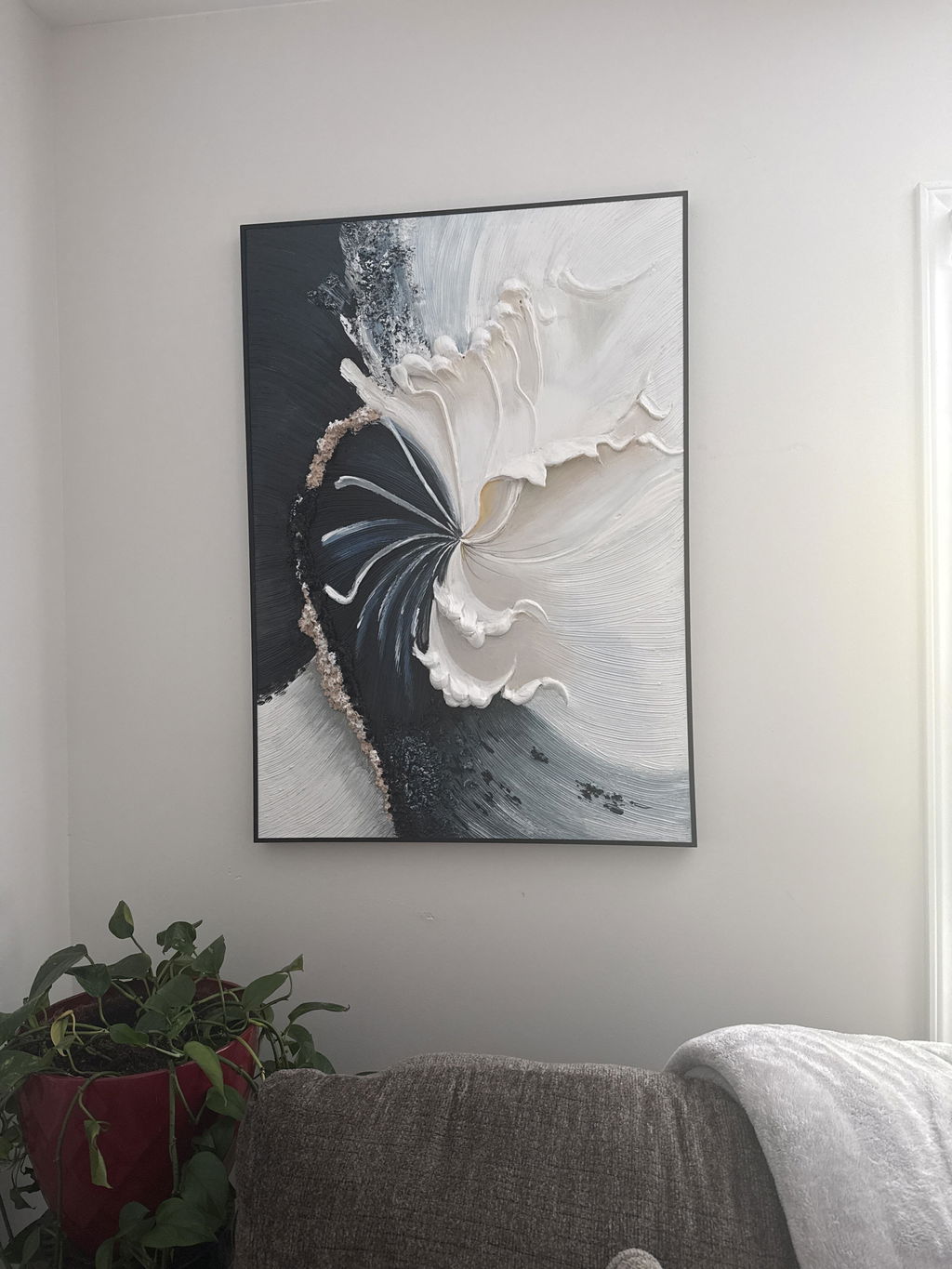
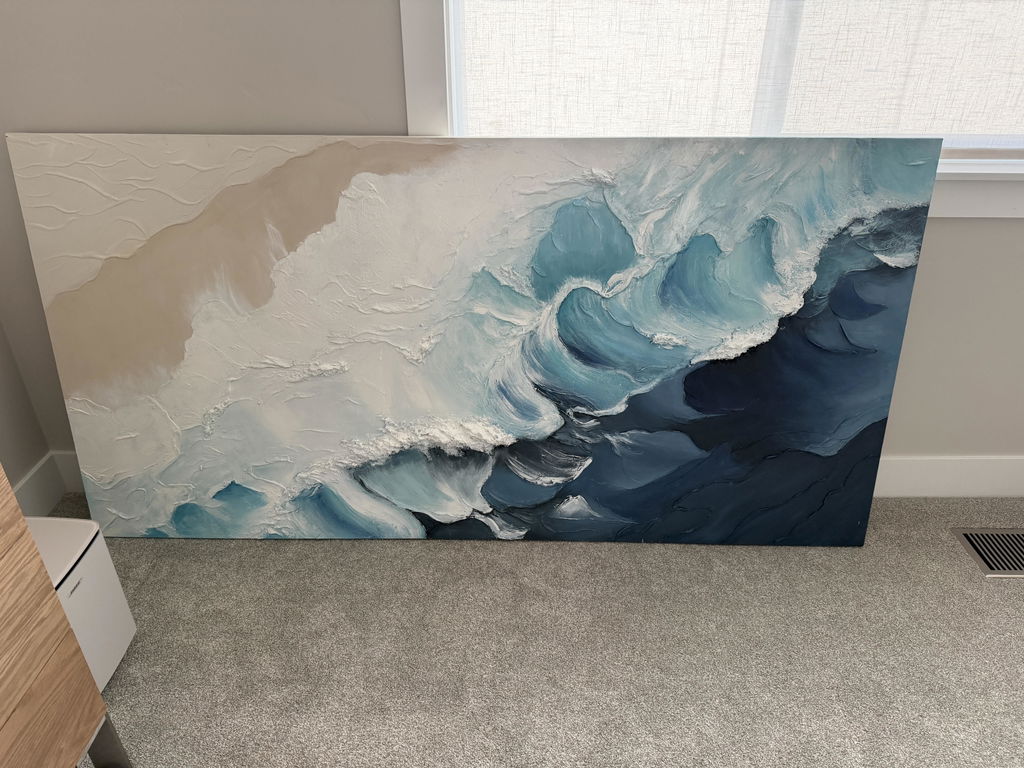
Impasto texture and raised brushwork are visible up to around 5–6 feet. At 12 feet or more, surface detail flattens and what reads is color and composition.
- Close-viewing spaces (hallways, studies, beside a bed): textured paintings work best here. The brushwork and layering are fully visible at 3–6 feet.
- Large open rooms (living rooms, open-plan spaces): color-field and abstract paintings carry better across 10+ feet. Fine texture becomes invisible at that distance.
Why Does a Small Painting Look Lost on a Big Wall?
A small canvas on a large wall creates the postage stamp effect: a painting floating in a sea of empty drywall that raises a question instead of drawing the eye.
A wall viewed from 12 feet needs art with a diagonal of at least 60–80 inches. A 20"x28" piece has a diagonal of 34 inches. At 12 feet, it does not register as a focal point.
When a Small Painting Can Work on a Large Wall
- Surrounded by intentional negative space as a deliberate design choice
- Part of a gallery wall where multiple pieces fill the total visual field
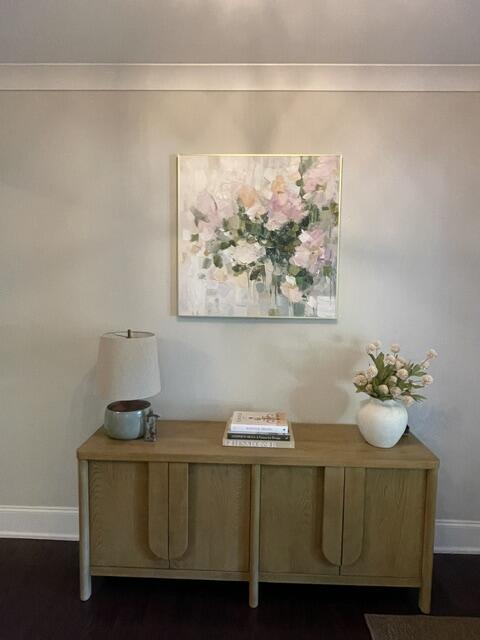
- Above a console table where viewers walk directly up to it
How Do You Test the Size Before You Buy?
What you need: painter's tape and a tape measure.
- Stand in your normal viewing position and measure the distance to the wall.
- Use the chart to find the right canvas size range.
- Cut painter's tape to the exact width and height of the canvas.
- Stick the outline on the wall at hanging height.
- Return to your viewing position and assess.
If the outline feels too small, go up one size. If it dominates the wall, scale down.
What to Check
- Does the shape feel proportionate to the furniture below it?
- Is there enough wall space around the outline?
- Does the size read clearly from your normal position, or does it disappear?
Buy for the Distance You Will Actually Look From
Canvas size is a decision about how a painting performs at your specific viewing distance. Measure first, then choose.
For close-range spaces, hand-painted textured originals reward the distance. The brushwork, layering, and physical depth of impasto paint are visible up close in a way no print can replicate.
MontCarta's hand-painted originals are made to be seen at that range, with thick texture that catches light and changes through the day. Every piece ships in a custom wooden crate with a preview photo sent for your approval prior to leaving the studio.

Frequently Asked Questions
Q1: How Far Away Should You Hang a Large Painting?
A 48"x80" canvas has a diagonal of about 92 inches. Multiply by 1.5 to 2 and the ideal viewing distance lands at 11–15 feet. For grand foyers where viewers stand 15–20 feet back, a 60"x90" or larger holds better visual weight.
Q2: What Size Canvas Is Best for a Big Room?
Measure the distance from your seating position to the wall. A room where you typically stand 10–12 feet from the art calls for a canvas in the 36"x56" to 48"x80" range. For viewing distances beyond 15 feet, go larger. Use the chart as your starting point.
Q3: Does Texture Show From Across the Room?
Not at long distances. Impasto texture is visible up to around 5–6 feet. Beyond that, color and composition take over. Place textured paintings in close-range spaces: hallways, home offices, reading nooks, and bedrooms.
Q4: How Far Should a Sofa Be From the Art Behind It?
The relevant viewing distance is from the sofa to the art you face while seated, typically 8–12 feet in a standard living room.
For art hung above the sofa, viewers see it from the other side of the room, usually 10–14 feet. That puts a 36"x56" to 48"x80" painting in the right range.