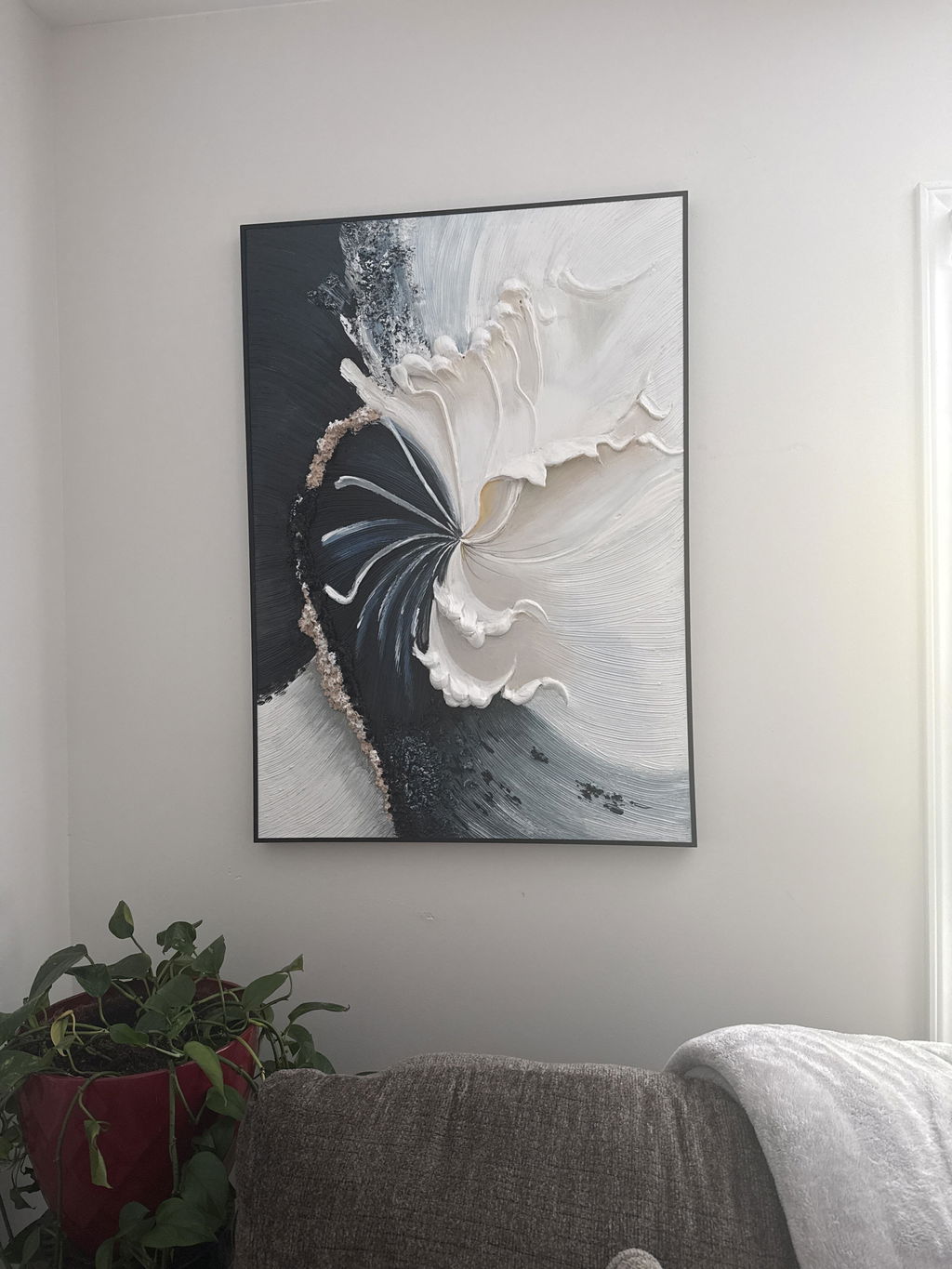
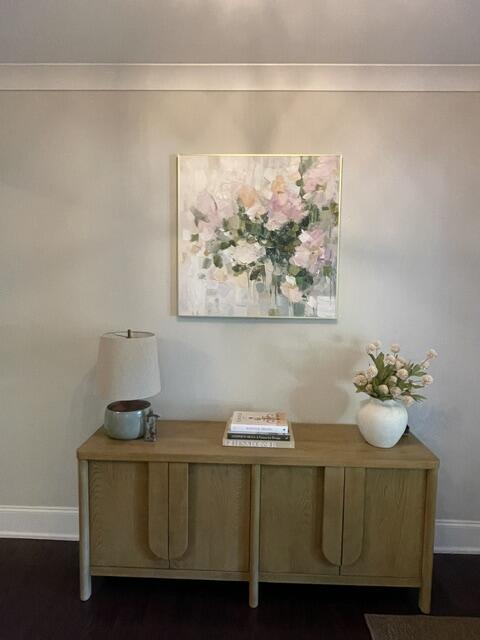
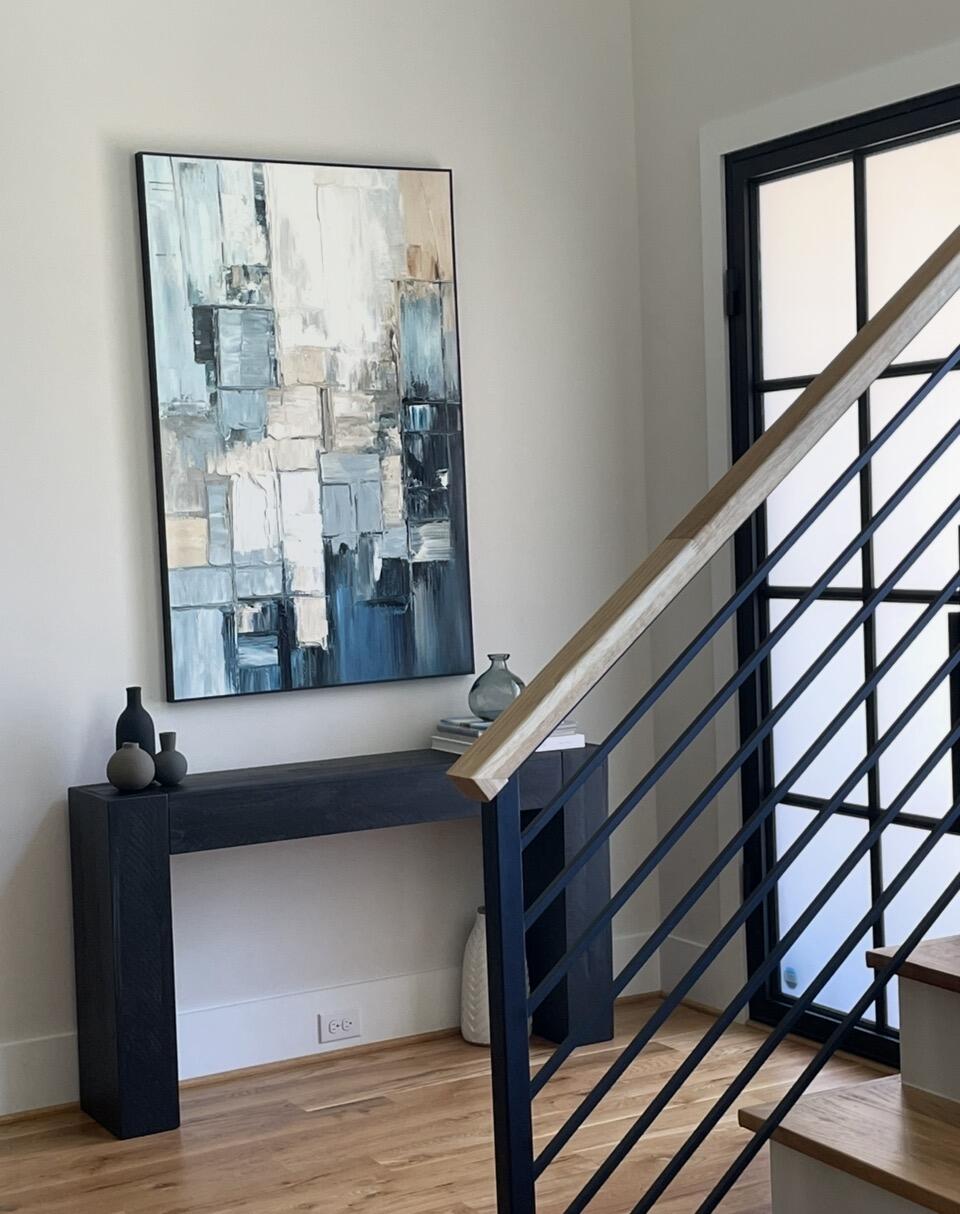
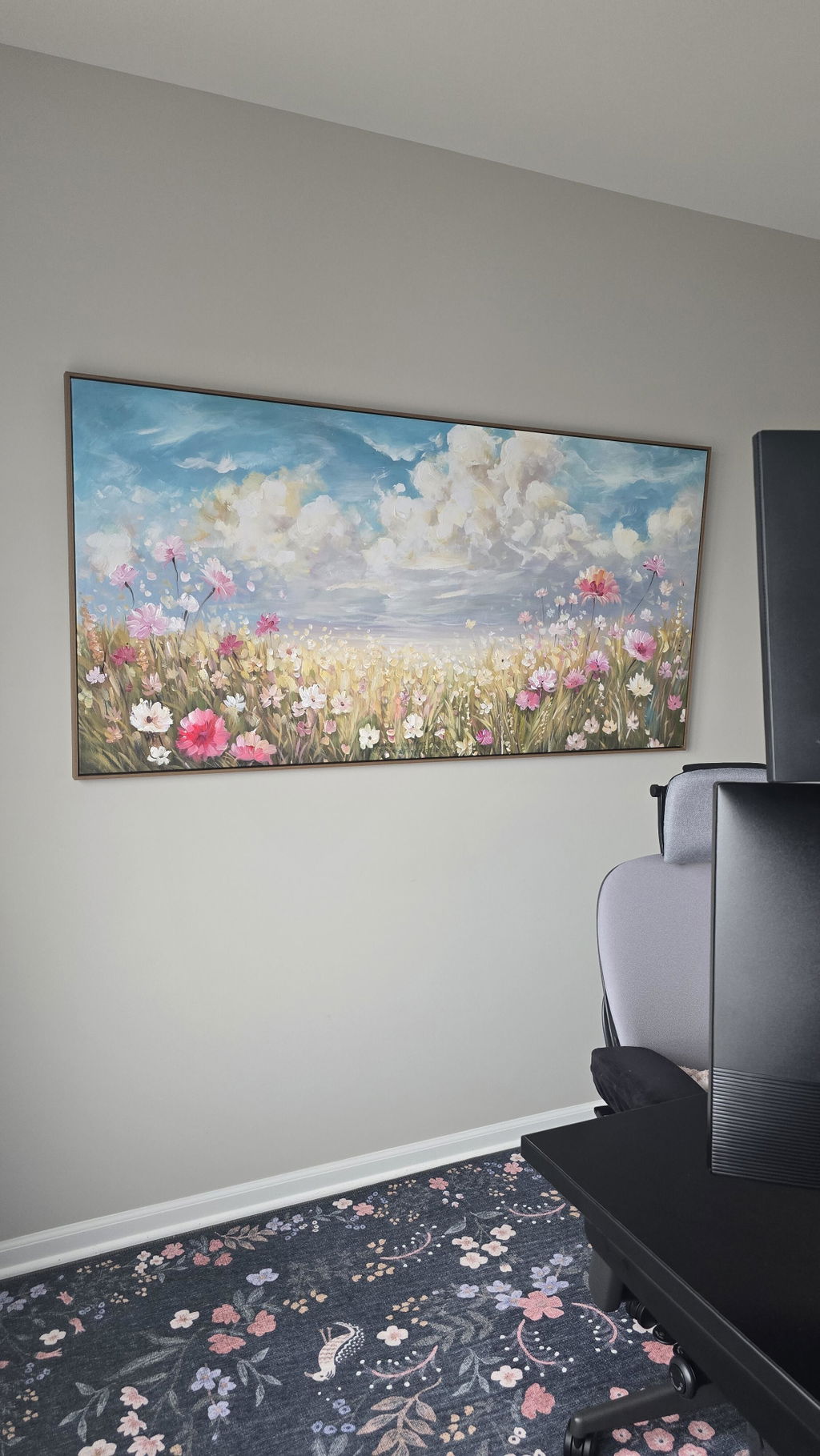
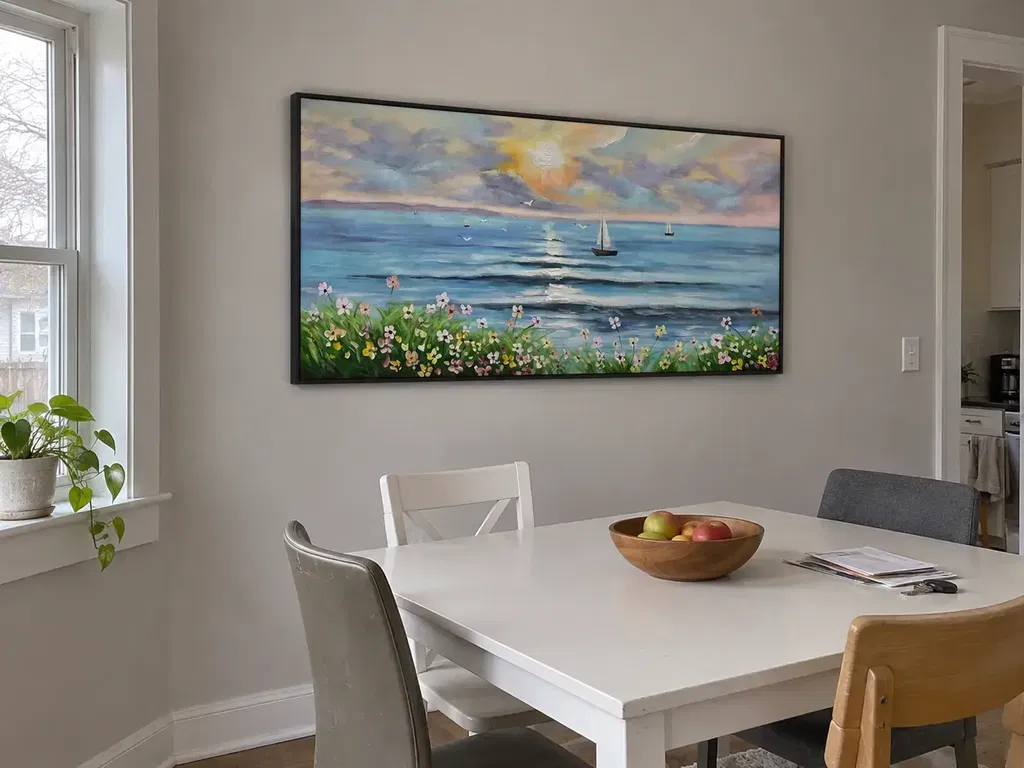
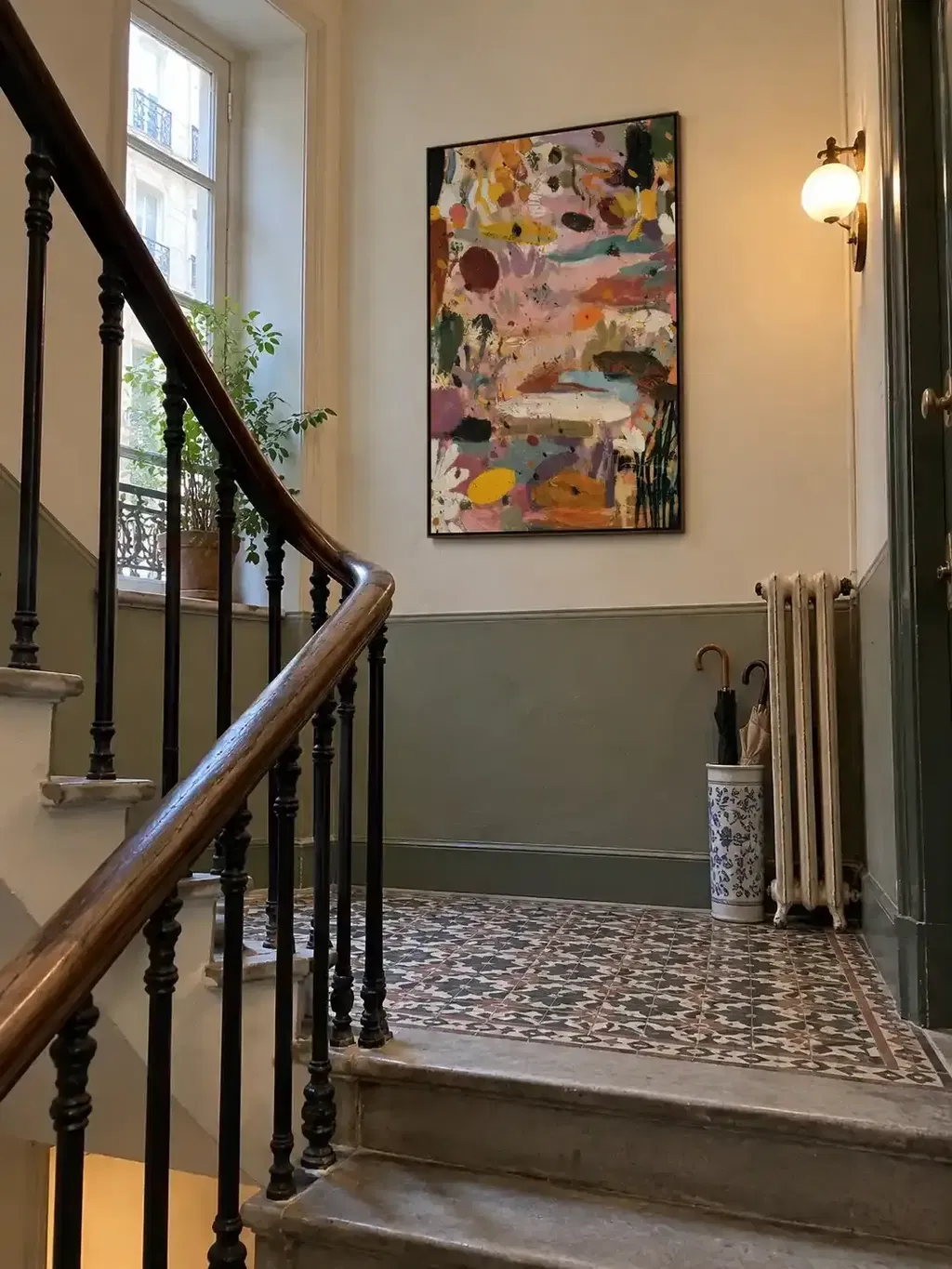
A blank wall asks a quiet question every morning. Fill it with too much color and the room feels loud. So what is minimalist art, and why do so many calm, well-designed homes return to it again and again? At its core, minimalist art strips a piece down to a few honest shapes, a tight color range, and open space. The result reads as quiet, confident, and surprisingly hard to get tired of.
Quick answer:
Minimalist art uses few shapes, a narrow color range, and open space to create calm, focused pieces. It grew out of 1960s New York as artists moved away from emotional, busy painting styles. At home, it works well because it pairs with nearly any room without competing for attention.
What Is Minimalist Art?
Minimalist art is a style built on reduction. Painters and sculptors working this way pull a piece down to its basic parts: a line, a square, a single color field, a stretch of open canvas. Nothing extra stays on the surface. No story, no symbol, no busy brushwork competing for attention.
The idea behind it is simple to say and harder to pull off: less is more. A minimalist piece does not try to show everything it can do. It shows only what needs to stay, and trims away the rest.
That restraint is intentional, not lazy or empty. Stripping a canvas down to a few shapes and a tight palette takes real planning around proportion, balance, and weight. An empty corner of canvas carries as much purpose as a painted one.
Where Did Minimalist Art Come From?
Minimalist art took shape in New York during the early 1960s. A group of young artists grew tired of Abstract Expressionism, the loose, emotional painting style made famous by names like Jackson Pollock. Those big, gestural canvases put the artist's feelings front and center. The next generation wanted the opposite: cool, impersonal work that left personal expression out of the frame.
Painters and sculptors such as Donald Judd, Agnes Martin, and Frank Stella led this shift. Judd built simple box-like structures from industrial materials. Martin painted soft, quiet grids. Stella worked in flat stripes that refused to suggest any deeper story. By the mid-1960s, critics had a name for this approach: Minimalism. It went on to shape design, architecture, and even music well past its first decade.
What Makes a Piece of Art "Minimalist"?
A few clues make minimalist work easy to spot at a glance:
- Limited color palette: often black, white, gray, or a single primary color, with flat, even surfaces.
- Simple geometric or organic shapes: squares, rectangles, lines, or soft curves, frequently repeated.
- Open, empty space: large areas left untouched, giving the eye room to rest.
- No story or symbol: the piece points back to itself, not to a hidden message.
- A calm, steady surface: smooth, flat, and free of dramatic texture or movement.
Spot two or three of these traits together and a piece almost always falls into the minimalist camp.
What's the Difference Between Minimalist and Abstract Art?
Abstract art and minimalist art get mixed up often, yet they are not the same thing.
Abstract art steps away from real-world subjects, but it can still be loud, layered, and full of color and gesture. Consider Wassily Kandinsky's swirling compositions or Pollock's tangled drip paintings: both abstract, neither minimal.
Minimalist art goes a step further. It cuts a piece down on purpose, trimming color, shape, and texture to the smallest set that still works. Nearly every minimalist piece counts as abstract, but plenty of abstract art stays far from minimal.
Quick Comparison
| Abstract Art | Minimalist Art | |
|---|---|---|
| Subject | Non-representational | Non-representational |
| Color | Can be bold or layered | Narrow, restrained palette |
| Shapes | Free-form, gestural | Geometric or simple |
| Surface | Often textured, expressive | Flat, calm |
| Goal | Express emotion or movement | Reduce to core elements |
Is Minimalist Art the Same as Wabi-Sabi or Scandinavian Style?
Minimalist art often gets lumped in with wabi-sabi and Scandinavian style, but each one points in a different direction.
Minimalist art chases purity and precision: hard edges, flat color, exact proportion.
Wabi-sabi runs the opposite way. It welcomes flaws, rough texture, and uneven surfaces as part of the beauty, not as a problem to fix.
Scandinavian style sits in a different category altogether. It is an interior design approach, not an art movement, built around light wood, neutral color, and clean function. Minimalist art often fits naturally into Scandinavian rooms, yet the two terms describe different things: one is a way to decorate a home, the other is a way to make a piece of art.
Why Does Minimalist Art Work So Well at Home?
A few reasons explain why minimalist pieces show up in so many calm, well-designed rooms.
It does not compete with color.
A narrow palette sits quietly next to furniture, rugs, and wall paint instead of fighting them for attention.
It gives a room room to breathe.
Open space inside the piece echoes open space in the room around it, so the whole area feels less packed.
It stays interesting over time.
Because the surface holds back from loud detail, a minimalist piece rarely gets tiring to look at year after year. Small shifts in light change how it reads from morning to evening.
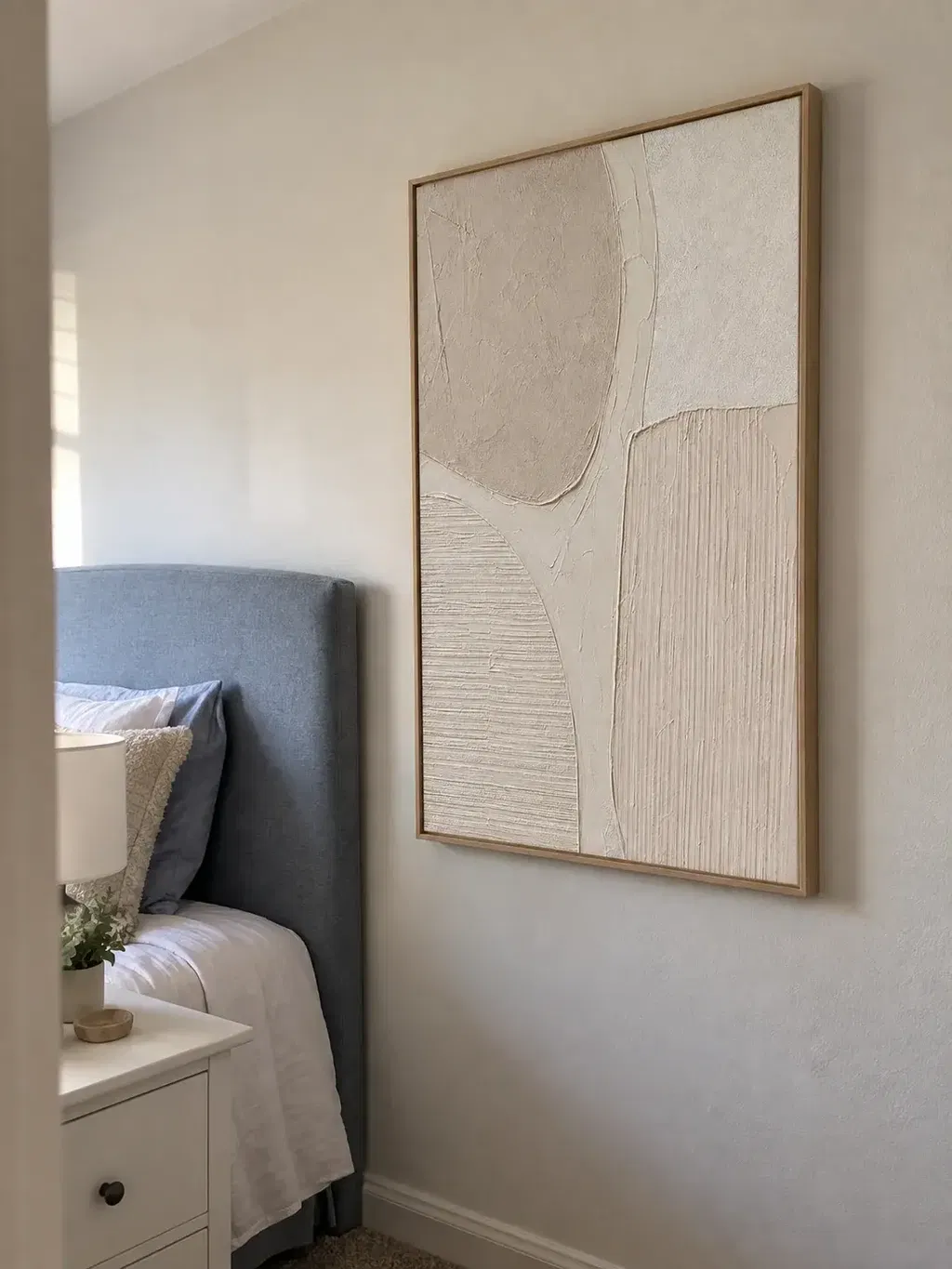
Neutral tones and soft, plaster-like textures, the kind found across calm, grounded interiors, pair naturally with this style. The art and the room end up speaking the same quiet language.

Which Rooms Suit Minimalist Art Best?
Some rooms call for quiet art better than others.
Bedrooms, home offices, and entryways tend to work best. Each one benefits from a calmer, slower mood, and a minimalist piece sets that tone without adding noise.
Rooms built around strong contrast or pattern ask for something different. A space already packed with bold prints, busy textiles, or several competing colors can swallow a quiet piece whole, leaving it unnoticed. In those rooms, a bolder, more graphic work tends to read better.
How to Choose a Minimalist Painting (Without It Looking Boring)
A flat color field can read as dull if it stops at color alone. A few choices keep a minimalist piece full of interest instead.
Texture carries weight here. Hand-painted surfaces pick up brush marks, ridges, and subtle shifts in plaster or paint that catch light differently across the day. A flat print cannot do that.
Proportion matters too. The ratio of open space to painted area shapes how a piece feels: tighter ratios read as bold, looser ratios read as airy and soft.
Size changes the read as well. A large-scale minimalist piece can anchor an entire wall, while a smaller one works better grouped or set against a quieter backdrop.
Montcarta's hand-painted minimalist and wabi-sabi pieces lean on texture and proportion for exactly this reason, so a simple composition still holds attention close up and from across the room.

Bring Calm Home With Minimalist Art
A minimalist piece never shouts for attention, yet it changes how a whole room feels: calmer, clearer, more put together. Pick one piece, give it open wall space, and let the rest of the room settle around it. Montcarta's hand-painted minimalist pieces and wabi-sabi pieces bring this quiet, textured style home. Find the piece that fits your space at Montcarta.
FAQ about Minimalist Art
Q1: Who is the father of minimalist art?
No single person holds that title, but Donald Judd is often named as the artist who shaped the movement's direction, especially through his early writing and box-like structures.
Q2: Is minimalist art still popular?
Yes. Minimalist art keeps steady demand because it pairs with so many interior styles and stays calm and current rather than tied to a single design trend.
Q3: What colors are used in minimalist art?
Pieces usually stick to black, white, gray, or a single primary color, kept flat and even across the surface.
Q4: What's the difference between minimalism and abstract art?
Abstract art skips real-world subjects but can stay busy and colorful. Minimalist art goes further, cutting color, shape, and texture down to a small, deliberate set.
Q5: Is minimalist art easy to make?
The look reads as simple, but getting the proportion, balance, and color right takes a fair bit of skill and planning.