

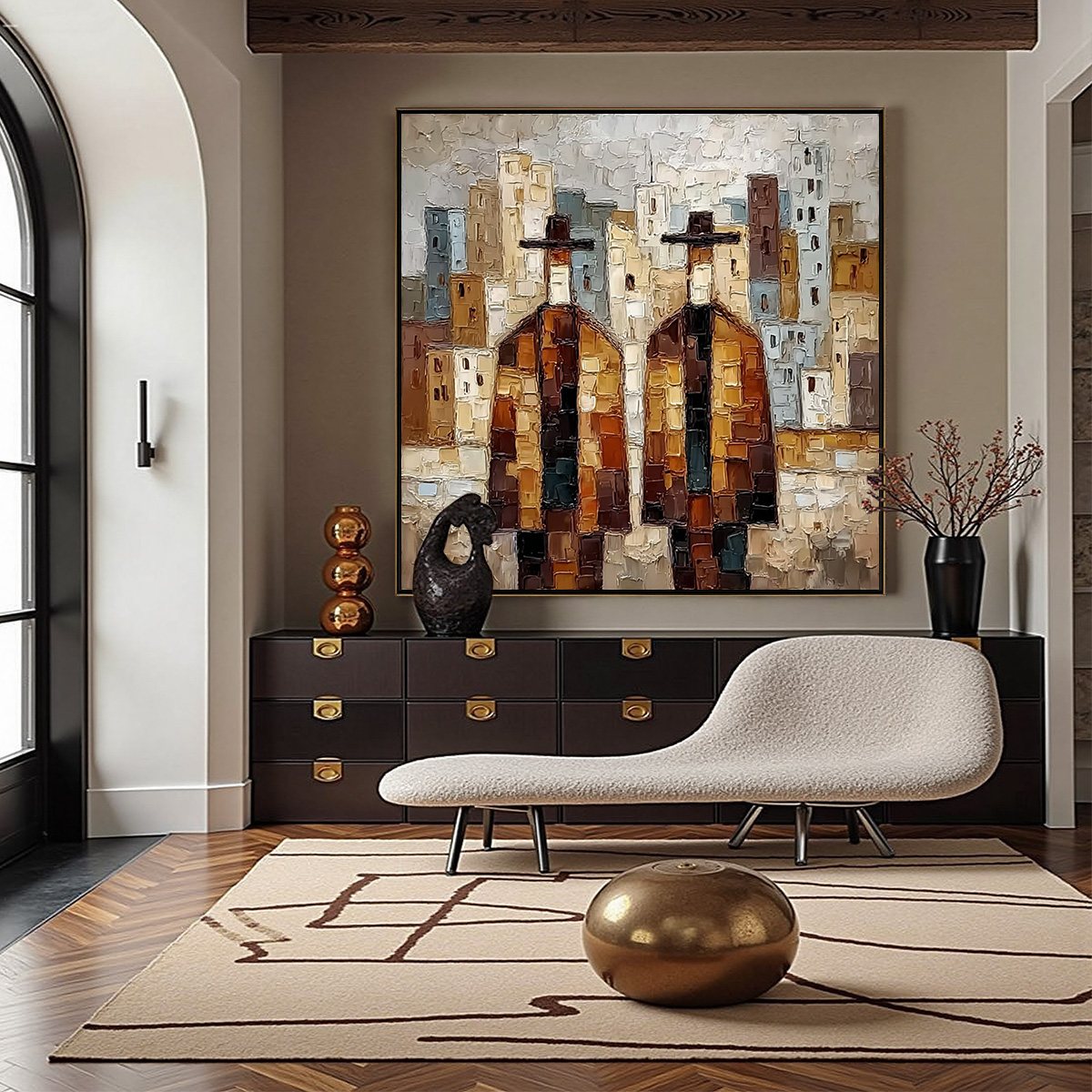
The Role of Mineral Pigments in Traditional Oil Artistry: A Technical and Aesthetic Benchmark
In a shifting global art market where high-end auction sales (pieces over $10 million) plummeted 44% year-over-year in 2024, a significant trend has emerged: a return to "real application value." According to the Marketplace.org report, collectors are moving away from purely financial art assets toward pieces that offer tangible emotional and aesthetic benefits. This shift places a renewed spotlight on the foundational elements of fine art, specifically the use of traditional mineral pigments in oil painting.
While the global art market remains a massive economic baseline—reaching $65 billion in 2023 per the Art Basel and UBS Art Market Report 2024—the discerning buyer is no longer satisfied with mass-produced prints or digital replicas. As UChicago research indicates, digital replicas lack the "essential identity" of the artist, leading to a collapse in perceived value. Authentic artistry, grounded in the physical science of mineral pigments and hand-applied brushwork, provides the "performative authenticity" that modern interiors demand.

The Material Science: Why Mineral Pigments Outperform Synthetics
The distinction between professional-grade oil art and student-level decor often comes down to the pigment load and source. Mineral pigments—derived from earth, stones, and metallic oxides—possess unique physical properties that synthetic organic alternatives struggle to replicate.
1. Refractive Index and Light Scattering
The luminosity of a painting is a function of optical physics. According to classical optical theory established in Optica, opacity and "glow" reach their theoretical extremes when the pigment particle diameter approaches half the wavelength of visible light and the refractive index difference between the medium and the particle is maximized.
Mineral pigments like Titanium Dioxide (NCBI data) dominate 90% of the white pigment market because of their extreme chemical inertness and hiding power. When these minerals are milled to precise distributions, they create a depth of color that "HD prints" cannot achieve.
2. The Impasto Texture (The 1:2 Ratio)
Experienced studio artists observe a critical mechanical difference in how mineral pigments behave. Traditional mineral pigments, such as cobalt blues and cadmium reds, typically require a 1:2 pigment-to-binder ratio to achieve smooth application, whereas synthetic alternatives often function at a 1:1 ratio.
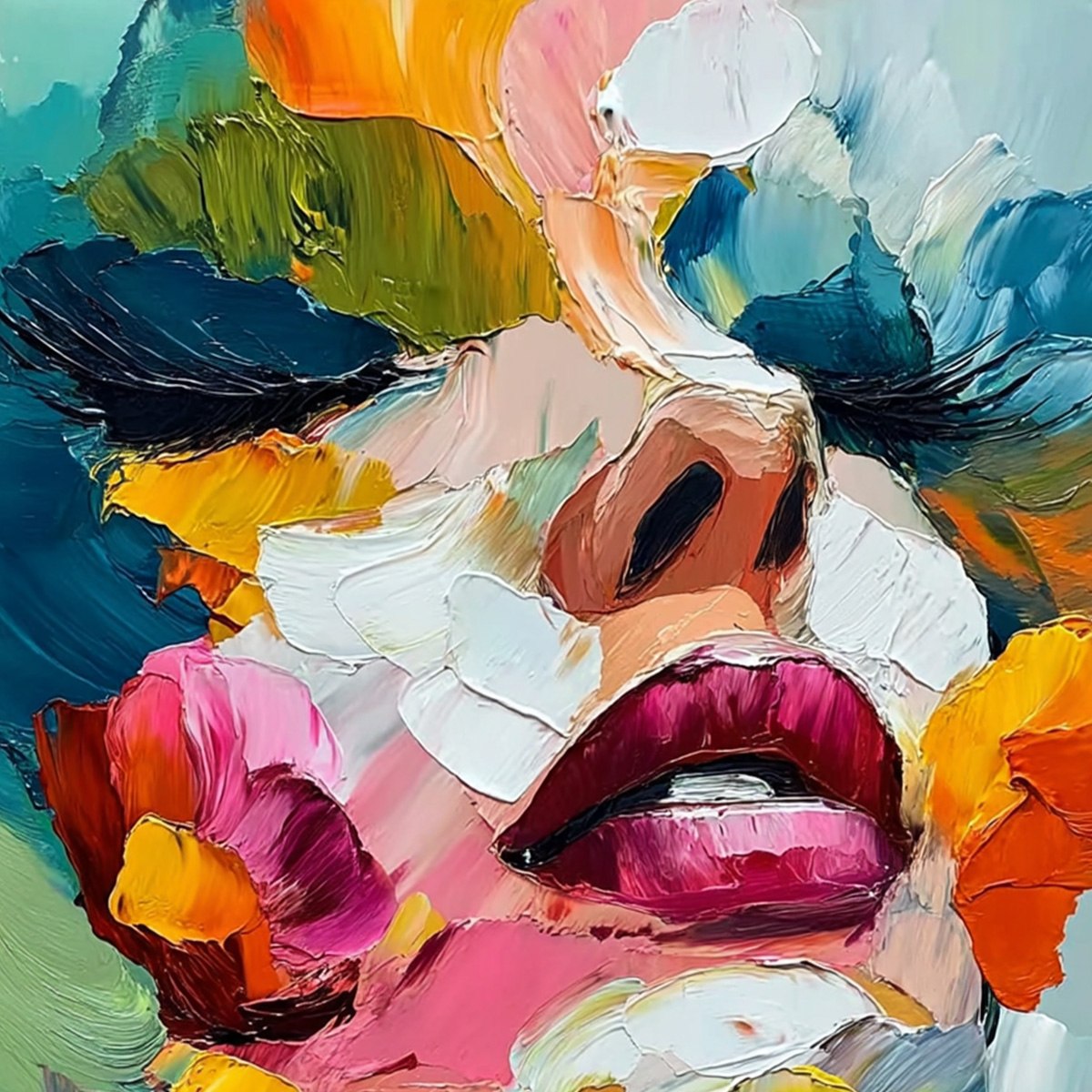
This higher density is what creates the characteristic "impasto" texture—the visible, physical ridges of paint that catch the light and provide a sense of three-dimensional depth. This tactile quality is not just an aesthetic choice; MUNCH Museum tests confirm that physical relief textures exponentially stimulate viewer satisfaction and intrinsic motivation compared to flat surfaces.
Logic Summary: Our material analysis assumes a standard linseed oil binder. The 1:2 ratio is a studio-derived heuristic for mineral pigments to ensure film stability and prevent "chalking" while maintaining the structural integrity of heavy impasto layers.

Longevity and the Archival Promise
For homeowners and designers, a primary concern is the "commitment risk" of expensive art. Will the piece look the same in fifty years?
The Lightfastness Standard
The longevity of oil art is governed by ASTM D4303, which uses the CIE 1976 Lab* color difference equation to quantify fading. While synthetic organic pigments (like bright yellows and oranges) may show noticeable fading within 50 to 80 years, high-quality mineral pigments—especially earth tones like ochres and umbers—maintain their integrity for centuries under normal lighting.
However, it is a common misconception that all "natural" pigments are superior. Research in ScienceDirect suggests that some mineral pigments can degrade if improperly prepared or exposed to environmental pollutants like acetic acid. This highlights the importance of professional-grade sourcing and modern stabilization techniques.
| Pigment Category | Typical Lightfastness (Years) | Recommended Use | Source Logic |
|---|---|---|---|
| Earth Minerals (Ochres) | 200+ | Focal wall pieces | High chemical stability |
| Metallic Oxides (Cobalt) | 100-150 | Permanent installations | High UV resistance |
| Synthetic Organics | 50-80 | Temporary/Trend pieces | Cost-efficiency focus |
| Modern Hybrid Pigments | 80-120 | General decorative art | Engineered stability |
The Psychological and Health Benefits of Hand-Painted Art
The value of hand-painted murals and canvases extends beyond the visual. There is a profound neurological and environmental impact associated with authentic art.
1. Neurological Comfort
A systematic review published in PMC shows that viewing art activates the medial prefrontal cortex (mPFC) and the amygdala, optimizing emotional regulation circuits. For high-density environments, such as those in Tokyo office spaces, biophilic design featuring natural landscapes has been shown to reduce cognitive fatigue and burnout.
2. Air Quality and Safety (VOCs)
A common fear among homeowners is the "smell" of fresh paint. However, modern professional oil artistry focuses on Low-VOC (Volatile Organic Compound) standards. Aalto University experiments prove that coatings on wood with specific moisture levels emit significantly lower VOCs during curing.
Furthermore, the EPA notes that low-VOC paints are prerequisites for healthcare facilities seeking LEED certification. Using water-based acrylics or stabilized oils ensures that a large-scale mural does not compromise indoor air quality, making it safe even for nurseries or medical clinics.

Economic Impact: Art as a Property Value Driver
For commercial developers and B2B clients, the role of hand-painted art is often a strategic investment.
- Property Premiums: A Royal Society analysis found that neighborhoods with higher "art" geo-tags experienced greater relative house price ranking gains.
- Commercial Growth: The Chicago Millennium Park public art projects drove an estimated $1.4 billion in real estate-related growth, as cited by NC Realtors.
- Safety and Community: In a surprising finding by the Urban Institute, "asphalt art" and intersection murals caused a 50% drop in pedestrian-involved traffic accidents.
These data points transform art from a "luxury line item" to "critical infrastructure" for urban development and commercial branding.
The Collector’s Guide: Avoiding Common Pitfalls
When selecting a piece of decorative art, most buyers assume all "hand-painted" works are equal. To ensure a long-term investment, interior designers and collectors should look for specific technical markers.
Beware of Support Induced Discoloration (SID)
A common technical failure in modern painting is Support Induced Discoloration. As detailed by Golden Artist Colors, water-soluble impurities in cotton or linen canvases can be drawn into the paint film if transparent mediums are applied too thickly, causing the artwork to turn yellow or brown over time. Professional artists prevent this by using high-quality primers and barrier coats.
The "Human-Made" Premium
In an era of generative AI, the value of the human hand has never been higher. Columbia University research suggests consumers value art labeled as "AI-generated" 62% lower than authentic human-created art. This is why MontCarta emphasizes "performative authenticity"—where every brushstroke is a record of human visual attention and neural control.

Scenario Analysis: Choosing the Right Art for Your Space
Scenario A: The High-Traffic Commercial Lobby
In large-scale hospitality or office environments, the goal is "scarcity" and "authenticity." * **Recommendation:** Large-scale hand-painted murals using mineral pigments for high lightfastness. * **Mechanism:** The physical relief of the paint stimulates viewer satisfaction ([MUNCH Museum](https://www.frontiersin.org/journals/computer-science/articles/10.3389/fcomp.2025.1597880/full)), while the mineral base ensures the colors don't fade under constant lobby lighting.Scenario B: The Private Residential Gallery
For homeowners seeking an heirloom piece. * **Recommendation:** Canvas works utilizing earth minerals (ochres, umbers) and stabilized oils. * **Mechanism:** These materials offer the highest archival stability ([Extra Information]), ensuring the piece remains a family legacy for generations without color shift.Ethics and the Future of Artistry
The sustainability of the art industry relies on fair practices. A Wharton School survey found that 87% of consumers strongly agree that artists should receive fair compensation. Furthermore, the NYC Comptroller warns that the freelance workforce at the base of the creative economy remains vulnerable. Choosing brands that prioritize fair artist pay and eco-friendly materials (like walnut oil over toxic turpentine, per Cincinnati Art Museum) aligns your collection with modern ESG (Environmental, Social, and Governance) values.

The Enduring Value of the Mineral Palette
The role of mineral pigments in traditional oil artistry is a bridge between the ancient world and modern luxury. From the chemical stability of Titanium White to the psychological comfort provided by biophilic landscapes, the materials used in a painting define its soul. By understanding the science of light scattering, the necessity of proper pigment-to-binder ratios, and the importance of archival standards like ASTM D4303, collectors can confidently invest in pieces that offer both immediate beauty and long-term value.
Ultimately, as the world becomes increasingly digital, the "essential identity" found in a hand-painted, mineral-based work of art becomes a rare and necessary anchor for our physical spaces.
YMYL Disclaimer: This article is for informational purposes only and does not constitute professional health, legal, or financial advice. When installing large-scale art or using art materials, always follow manufacturer safety guidelines and local building codes.
References
- Marketplace: The expensive art market continues to struggle
- Art Basel and UBS Art Market Report 2024
- UChicago: Does Artwork Preserve Essential Identity?
- Columbia University: Human-Made vs. AI Art Study
- Royal Society: Quantifying the link between art and property prices
- NCBI: Titanium Dioxide Pigment Toxicity & Market
- ASTM D4303 Standard Test Methods for Lightfastness
- Golden Artist Colors: Gels and Mediums Technical Bulletin
- EPA: Indoor Air Quality and Low-VOC Paints
- WHO Scoping Review on Arts and Health

Leave a comment
This site is protected by hCaptcha and the hCaptcha Privacy Policy and Terms of Service apply.