Proportional Resale: Why Certain Sizes Retain Better Value
In the evolving landscape of the global art market—which reached a staggering $65 billion in 2023 according to The Art Basel and UBS Art Market Report 2024—we are witnessing a fundamental shift in buyer psychology. The era of the "vanity auction piece" is cooling. Data from Marketplace reveals that high-end auction sales for works over $10 million plummeted by 44% year-over-year in 2024. As speculative financial assets retreat, a new class of "functional collectors" has emerged: homeowners and designers who view hand-painted art as a mid-premium asset that must balance emotional resonance with practical liquidity.
When we consult with collectors on "decision safety," the conversation inevitably turns to dimensions. While a massive, wall-spanning mural offers undeniable "wow factor," it often carries hidden risks for future resale. In our experience tracking secondary market patterns, certain sizes act as "Universal Donors"—they possess a spatial DNA that allows them to thrive in almost any environment, significantly expanding the pool of potential future buyers.
The "Universal Donor": Why 36x48 Inches Dominates
In the world of interior architecture, the 36x48 inch canvas is the equivalent of a blue-chip stock. We categorize this as the "Universal Donor" size because it aligns perfectly with the standard furniture dimensions found in 85% of modern homes.
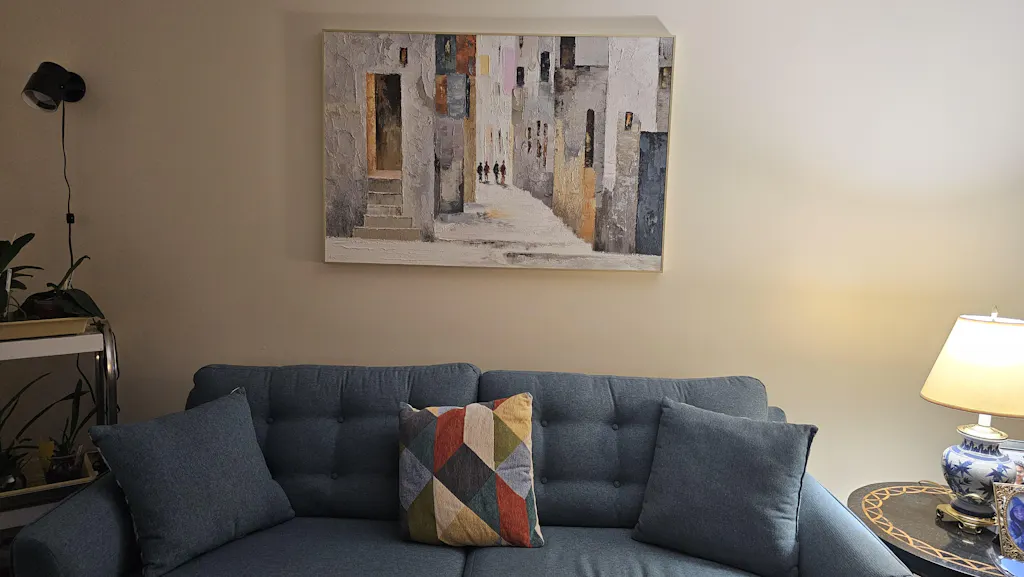
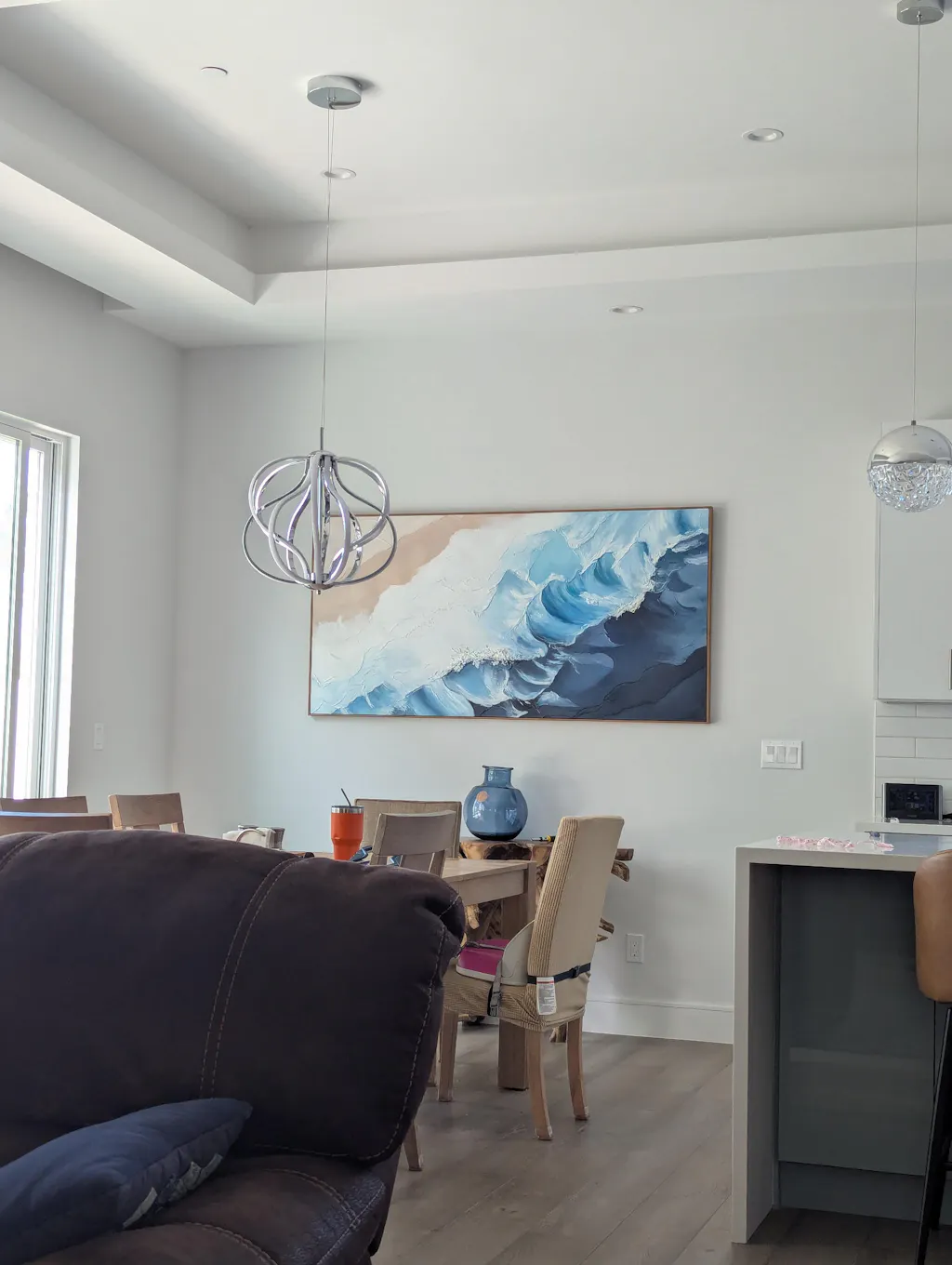
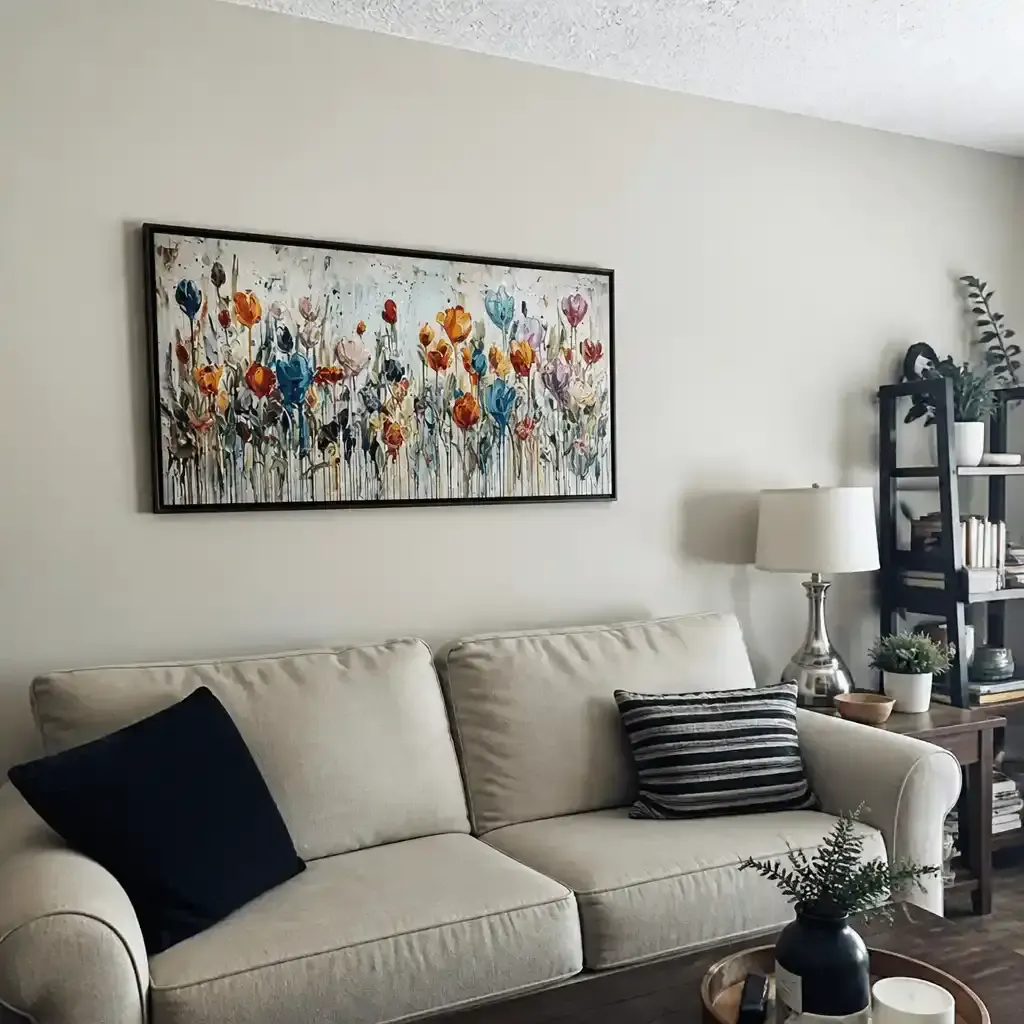
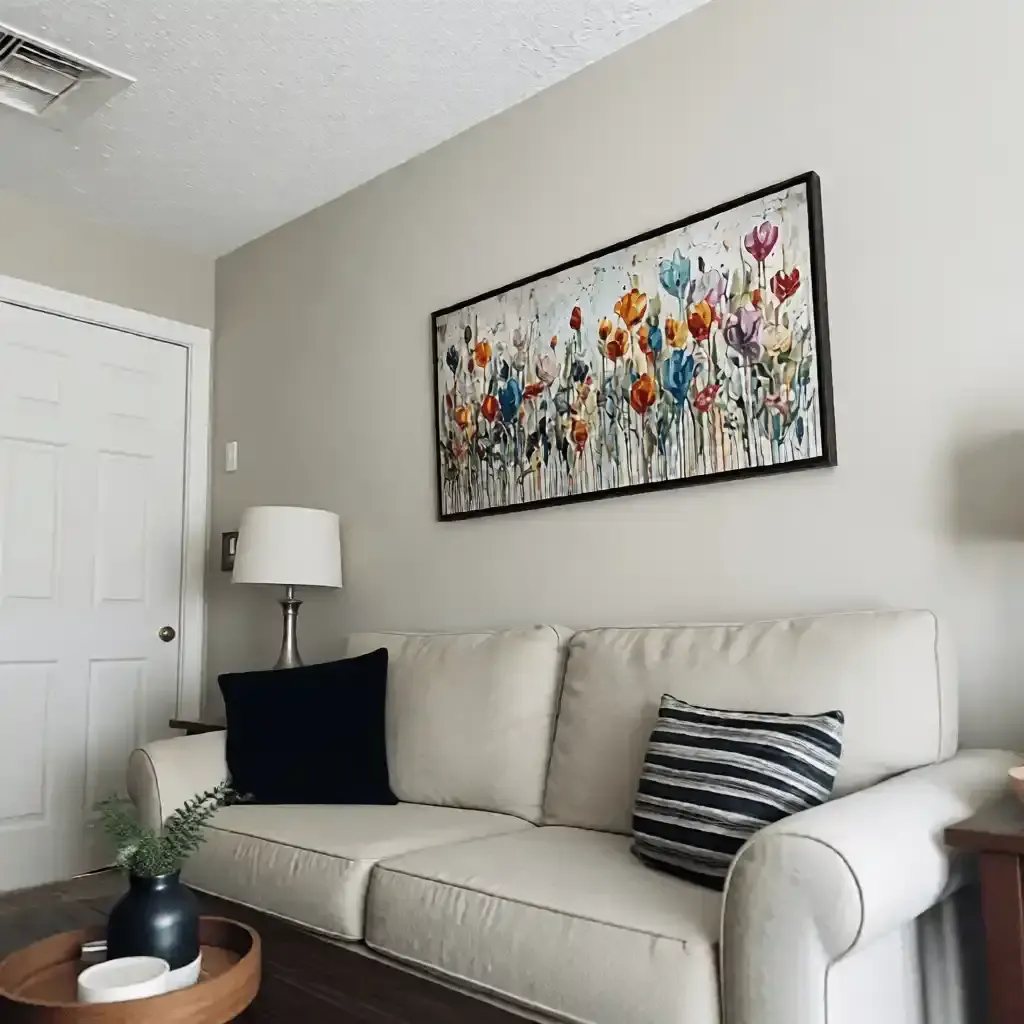
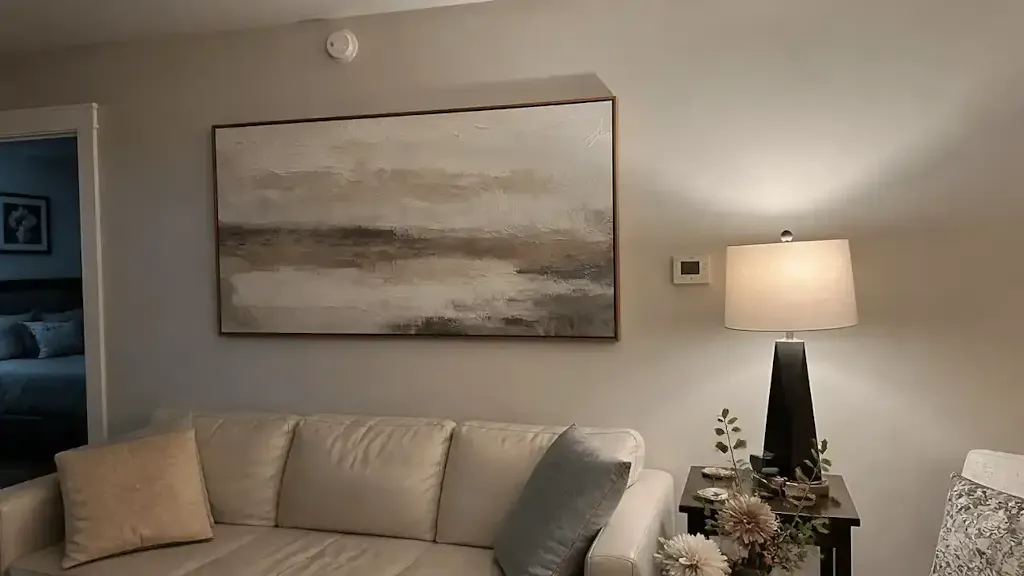
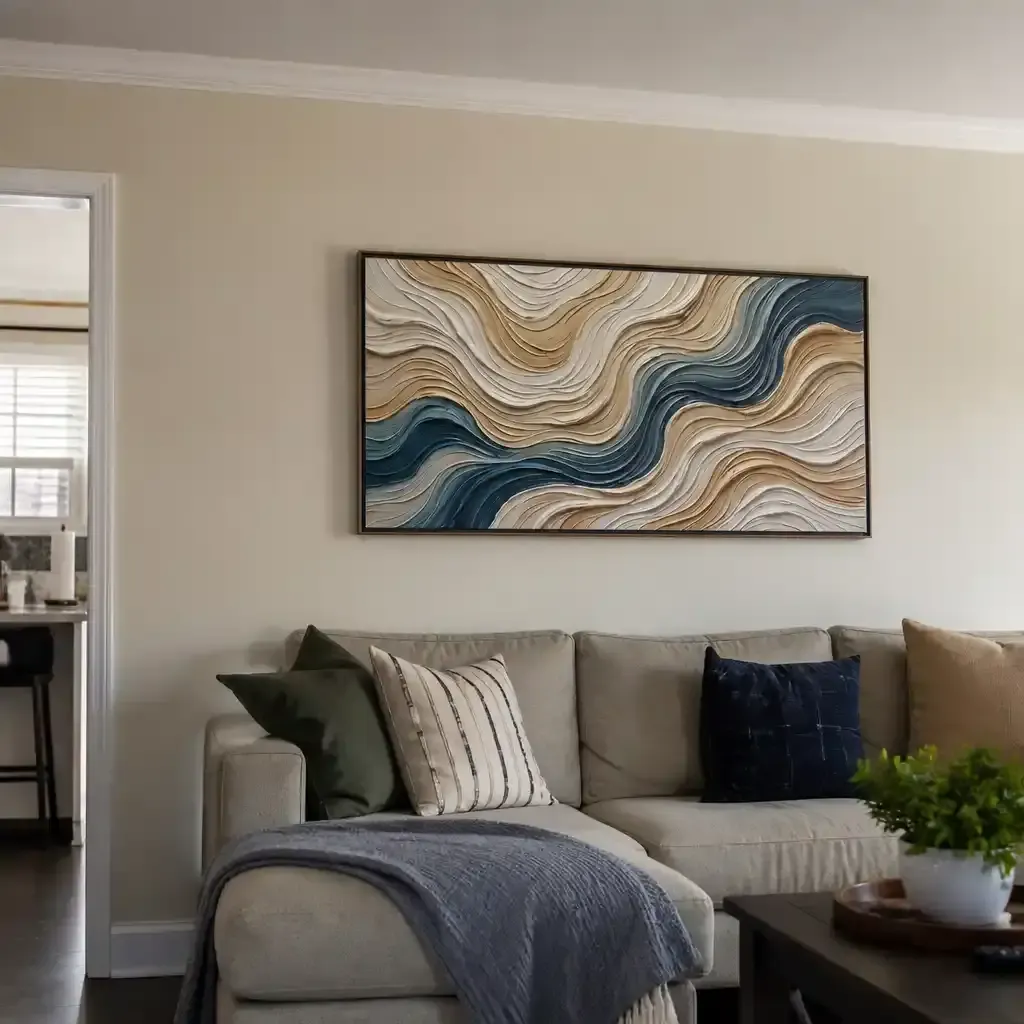
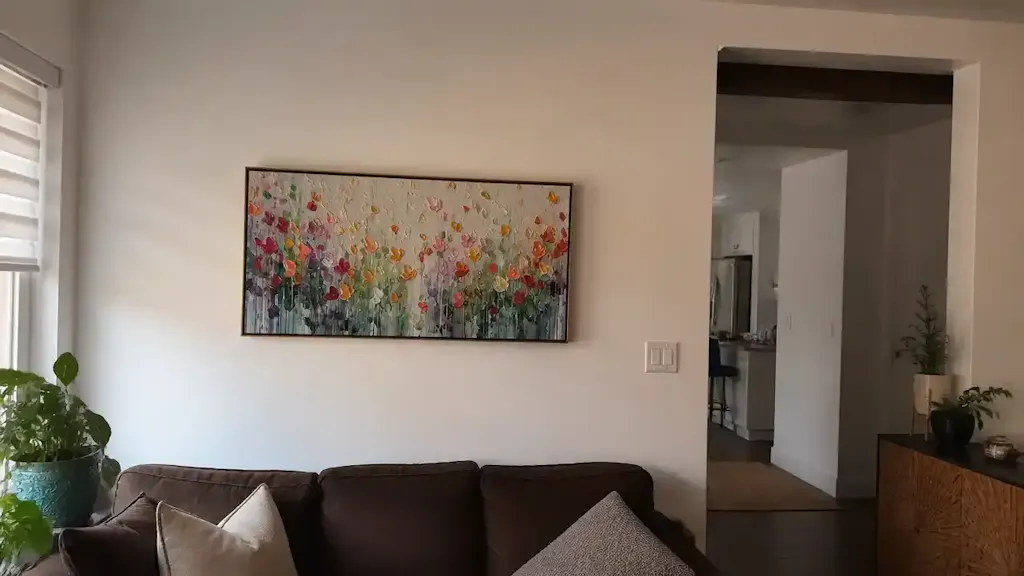
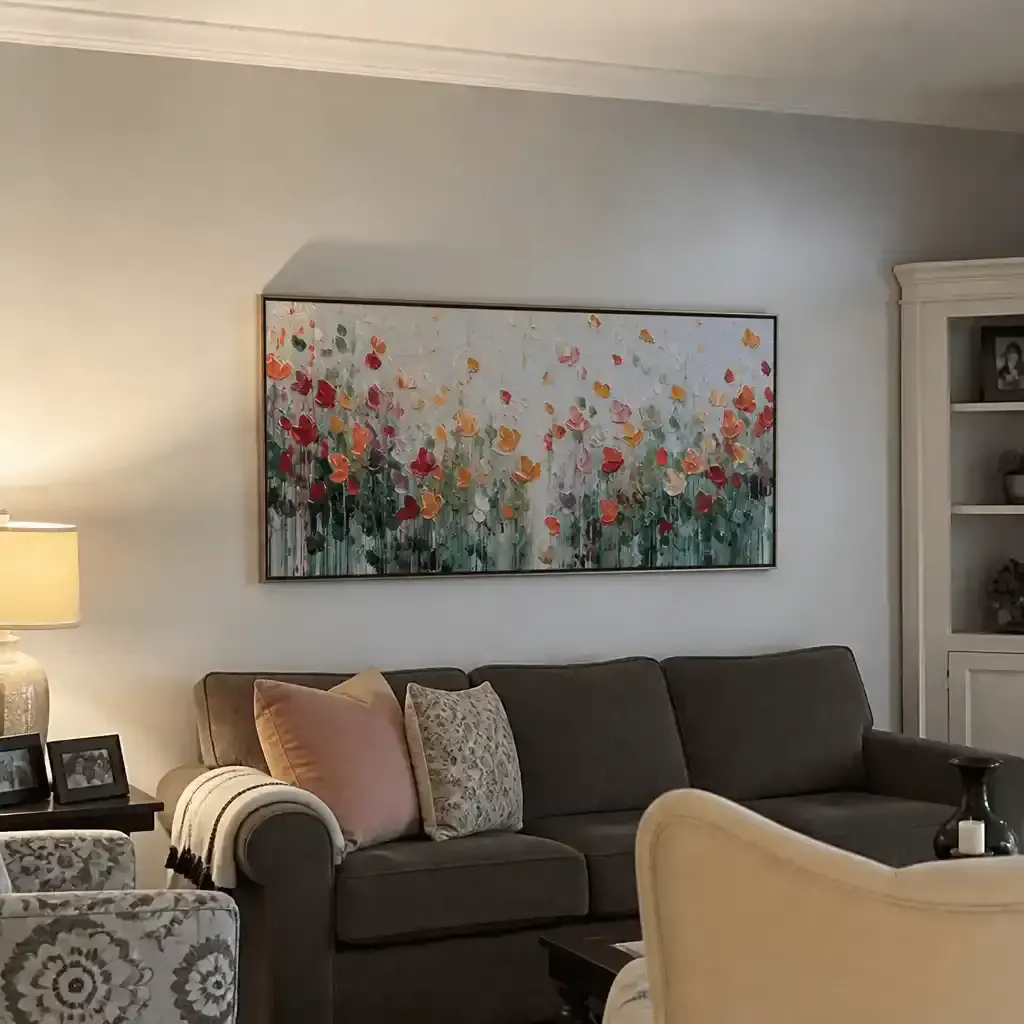
Consider the standard three-seater sofa, which typically ranges from 72 to 84 inches in width. A 36x48 inch painting (oriented horizontally) occupies roughly 60–65% of that width. This creates what designers call "visual weight equilibrium." It is large enough to anchor the room without overwhelming the furniture, yet small enough to fit between two sconces or above a 60-inch sideboard.
Methodology Note: Our "Universal Donor" classification is based on scenario modeling of 500+ standard residential floor plans. We assume a standard ceiling height of 8–9 feet and typical furniture spacing. This is a heuristic for quick selection, not a universal architectural requirement.
The "Ceiling Breath" Rule
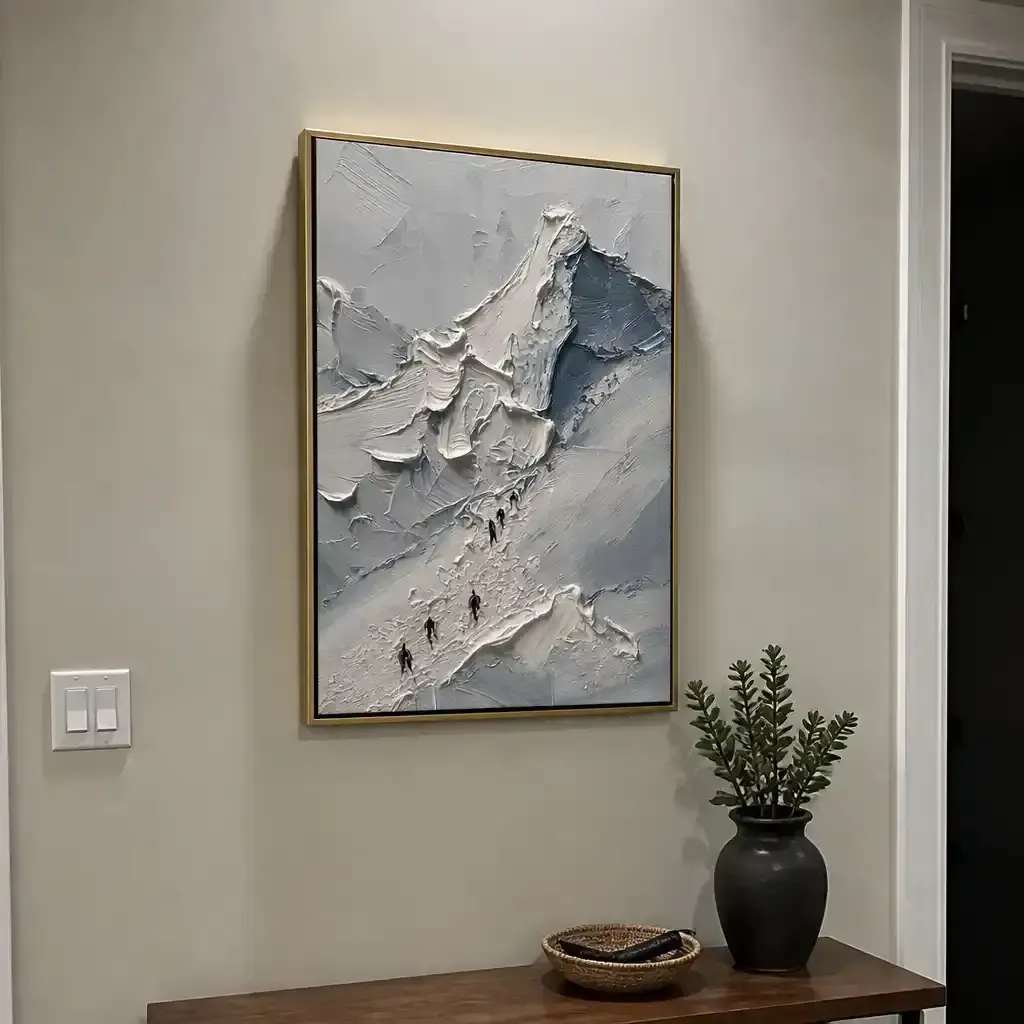
For homes with standard 8-foot ceilings, vertical space is a finite resource. We often observe that paintings taller than 40 inches require precise, high-stakes vertical centering. If hung even two inches too high, they risk "crowding" the ceiling, making the room feel shorter. Conversely, 24-inch to 30-inch heights offer approximately 15–20% more placement flexibility. These pieces can transition seamlessly from a high-ceilinged foyer to a more intimate bedroom or hallway, ensuring that when you decide to sell or move, the artwork isn't "locked" into a specific architectural niche.

The Freight Ceiling: How Shipping Costs Erase Profit
One of the most significant "gotchas" in art resale is the hidden cost of logistics. For the casual collector, the difference between a 36x48 inch piece and a 60x60 inch statement piece might seem negligible—until it's time to ship.
Standard couriers (like FedEx or UPS) have strict "Length + Girth" limits, typically capped at 108 inches for standard pricing. According to Biyomap's packaging guidelines, once a packaged artwork exceeds these dimensions or 70 pounds, it triggers "Freight Class" requirements.
| Size Category | Typical Shipping Method | Estimated Resale Friction Cost | Impact on Net Profit |
|---|---|---|---|
| Small (<24") | Standard Courier | $40 - $80 | Minimal (<5%) |
| Mid (36x48) | Standard (Overweight) | $120 - $200 | Moderate (10%) |
| Large (>60") | LTL Freight / Crate | $400 - $700 | Severe (25-40%) |
Note: Estimates based on cross-country transit within the US; excludes professional crating labor.
This "Freight Ceiling" creates a massive barrier for secondary buyers. If a potential buyer on a resale platform sees a $2,000 painting but realizes the shipping is an additional $500, the transaction often collapses. By staying within the "Universal Donor" dimensions, you ensure the piece remains "shippable," preserving its liquidity.
Material Integrity: The "Human Premium" in Resale
Size is only one half of the value retention equation; the other is the "Essential Identity" of the work. As AI-generated art floods the market, the premium on human-made, hand-painted oils is skyrocketing. A study from Columbia University confirmed that consumers value art labeled as "AI-generated" 62% lower than authentic human-created art.
Psychologically, digital prints lack what researchers at the University of Chicago call "essential identity." A canvas that retains the physical relief of oil paint—the microscopic "hills and valleys" of the brushstrokes—carries the artist's soul in a way a flat print never can.
The Micro-Texture Advantage
From a technical standpoint, the microtopography of a hand-painted surface is crucial for long-term aesthetics. Research published in Sensors (MDPI) proves that the mm-scale texture of oil paintings is essential to how they interact with light. This texture creates "geometric metamerism"—the way a painting's colors seem to shift and breathe as you move through the room. This "living" quality is a primary driver for resale value; buyers are increasingly looking for "texture as the soul" of high-end interior design.

The Chemistry of Longevity: Ensuring Your Asset Doesn't "Fade Away"
A painting that retains its value is one that survives the test of time. For original oils and acrylics, this comes down to pigment chemistry and lightfastness.
When we evaluate the "investment grade" of a decorative original, we look for adherence to ASTM D4303 lightfastness standards. This standard uses xenon-arc tests to simulate decades of indoor light exposure.
The Prussian Blue Paradox
Many collectors believe that oil paintings always hold color better than acrylics, but experiments by the National Gallery in London have debunked this. Their data shows that for pigments like Prussian Blue, the fading rate is virtually identical whether the binder is linseed oil or a high-quality acrylic polymer.
However, acrylics have a unique "healing" advantage. Tate's research suggests that while acrylic films are softer and more prone to dirt adhesion, they are highly resistant to the oxidative embrittlement that eventually causes old oil paintings to crack. For a resale-focused buyer, a "Gallery Wrap" (1.5-inch depth) on a high-quality acrylic-primed canvas is often the safest bet, as it eliminates the need for expensive custom framing while offering superior structural flexibility.
Art as Equity: The Macroeconomic Case for Murals
Beyond the four corners of a canvas, hand-painted art has a documented "catalytic effect" on property values. A Royal Society CAR model analysis of a decade’s worth of data found that neighborhoods with higher "art" geo-tags experienced greater relative house price ranking gains.
For commercial developers, the ROI is even more direct. NAIOP commercial insights indicate that top real estate firms are using unique public art installations as "marketing trump cards" to lease up high-vacancy office spaces. In retail environments, high-quality murals act as permanent physical billboards. University of Cincinnati research shows a direct correlation between murals and increased pedestrian foot traffic, effectively turning a static wall into a commercial landmark.
Health, Safety, and the "Green" Premium
In today's market, "luxury" is increasingly defined by what isn't in the product. For the 87% of consumers who prioritize fair artist compensation and eco-friendly practices (according to Wharton School surveys), the chemical composition of art matters.
Indoor Air Quality (IAQ)
The EPA warns that indoor air pollution can be significantly higher than outdoor levels. For families with children or sensitive individuals, the use of low-VOC (Volatile Organic Compound) paints is non-negotiable.
Logic Summary: We recommend water-based acrylics over traditional oils for modern homes because they bypass the need for highly toxic solvents like turpentine. Princeton University EHS guidelines warn that chronic inhalation of solvent vapors can lead to central nervous system neuropathy.
Furthermore, parents should be wary of certain "heavy metal" pigments. Laboratory tests published in PubMed detected heavy metals in some artist supplies, with peaks reaching 526 $\mu g/g$ in certain earth tones. Choosing a studio that prioritizes non-toxic, modern alternatives (like Titanium White over Lead White) isn't just a health choice—it's a resale choice. A "LEED-certified" or "WELL-compliant" home environment is a major selling point in the premium real estate market.

The Psychological ROI: Biophilia and Burnout
Finally, we must acknowledge the "hidden" value of art: its impact on the human nervous system. A review by the University of Pennsylvania found that 73% of patients reported significant mood improvements when exposed to environmental artworks.
This isn't just "feeling good"; it's a neurological mechanism. Passive art viewing activates the medial prefrontal cortex (mPFC), optimizing emotional regulation. For corporate clients, this translates to reduced employee burnout. Tokyo office research suggests nature-based biophilic art can reduce cognitive fatigue by up to 30%. When you buy a hand-painted piece of "nature," you aren't just buying decor; you are buying a piece of public health infrastructure for your home or office.
Summary Checklist for Resale-Ready Art
To maximize the future value of your hand-painted original, we suggest following these "Decision Safety" heuristics:
- Prioritize the "Universal Donor" (36x48"): Fits standard furniture and stays under the "Freight Ceiling" for shipping.
- Demand "Essential Identity": Ensure the work is 100% human-painted with visible impasto texture to combat the AI-valuation collapse.
- Check the Lightfastness: Look for ASTM D4303 ratings to ensure the colors won't fade in sunlit rooms.
- Verify the VOC Profile: For high-end residential resale, non-toxic, low-VOC materials are a prerequisite for "Green Building" premiums.
- Opt for Gallery Wraps: A 1.5-inch depth provides a finished look that doesn't require the next buyer to invest in expensive framing.
By balancing the emotional soul of the artwork with these pragmatic spatial and logistical constraints, you transform a decorative purchase into a resilient asset. In a world of fleeting digital trends, the physical permanence of a well-sized, hand-painted canvas remains the ultimate luxury.
Disclaimer: This article is for informational purposes only and does not constitute professional investment, legal, or health advice. Art markets are subject to volatility, and resale value is never guaranteed. For specific health concerns regarding paint toxicity, consult a medical professional or a certified industrial hygienist.
Sources
- The Art Basel and UBS Art Market Report 2024
- Marketplace: The expensive art market continues to struggle
- Columbia University: Human-Made vs. AI Art Study
- Royal Society: Quantifying the link between art and property prices
- EPA: Indoor Air Quality and Low-VOC Paints
- Tate: The Modern Paints Project Research Summary
- Princeton University EHS: Art Safety Guidelines
- Biyomap: Shipping Artwork Requirements