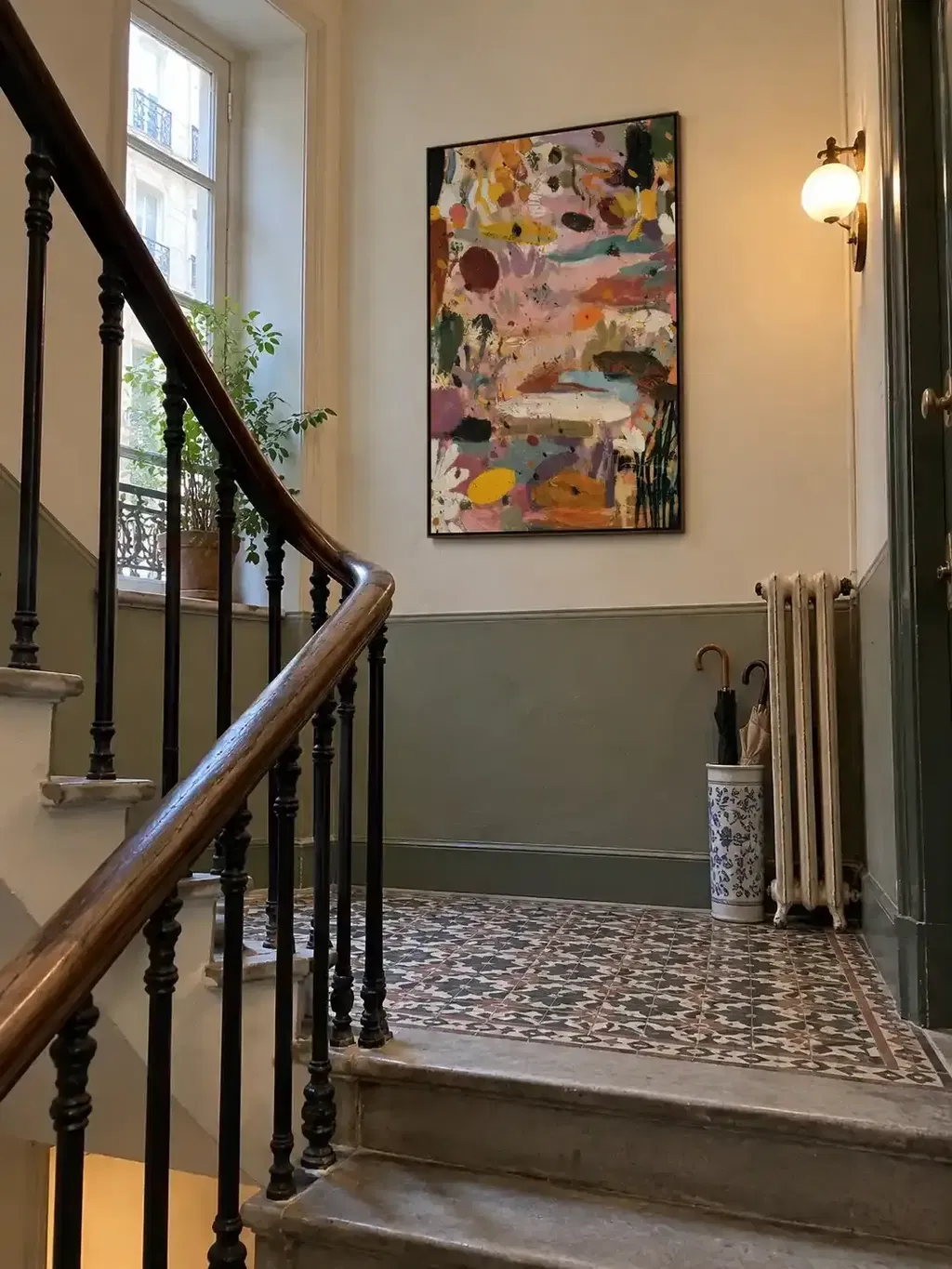
Hotel & hospitality wall art creates memorable first impressions, elevating guest experiences with curated style, comfort, and a unique sense of place.










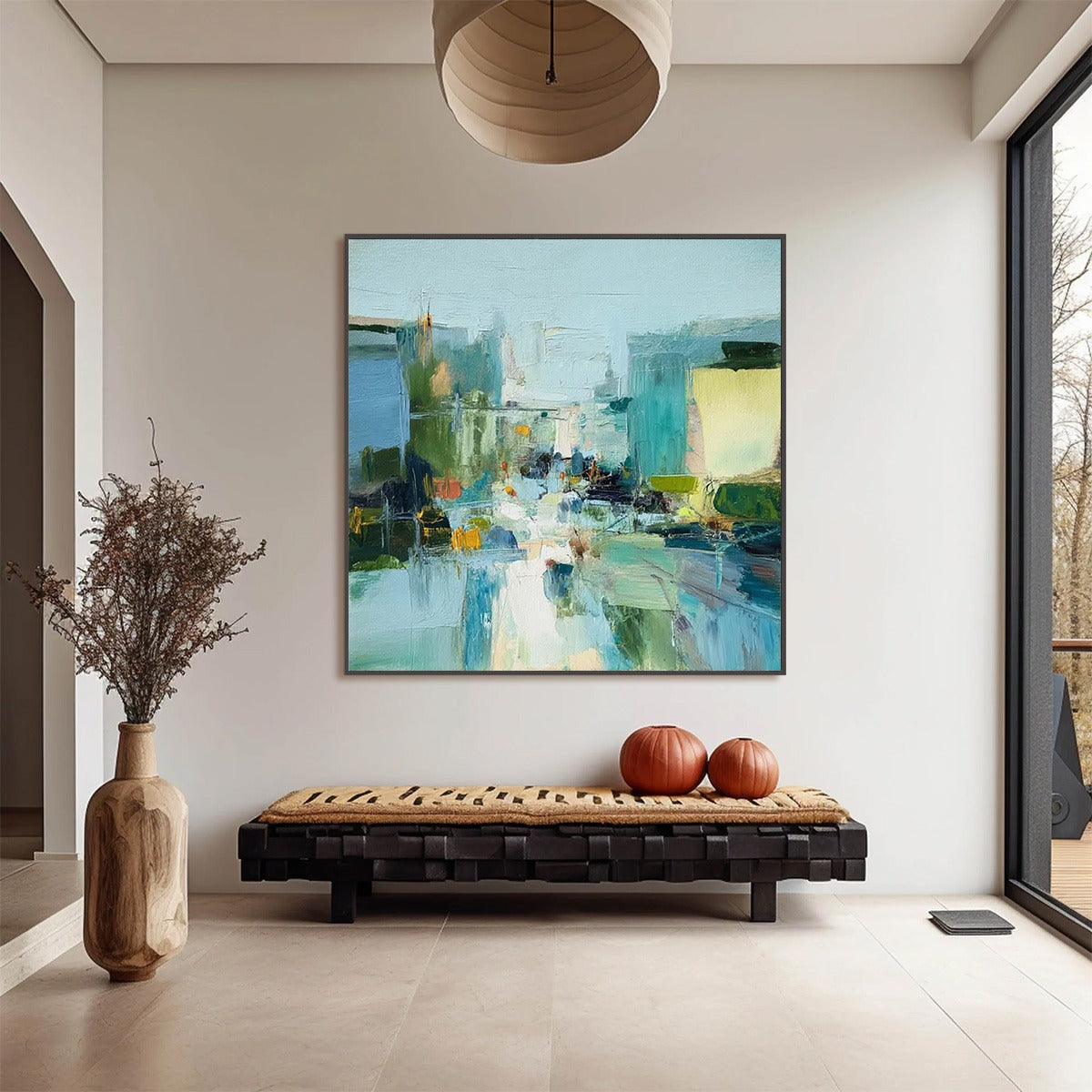





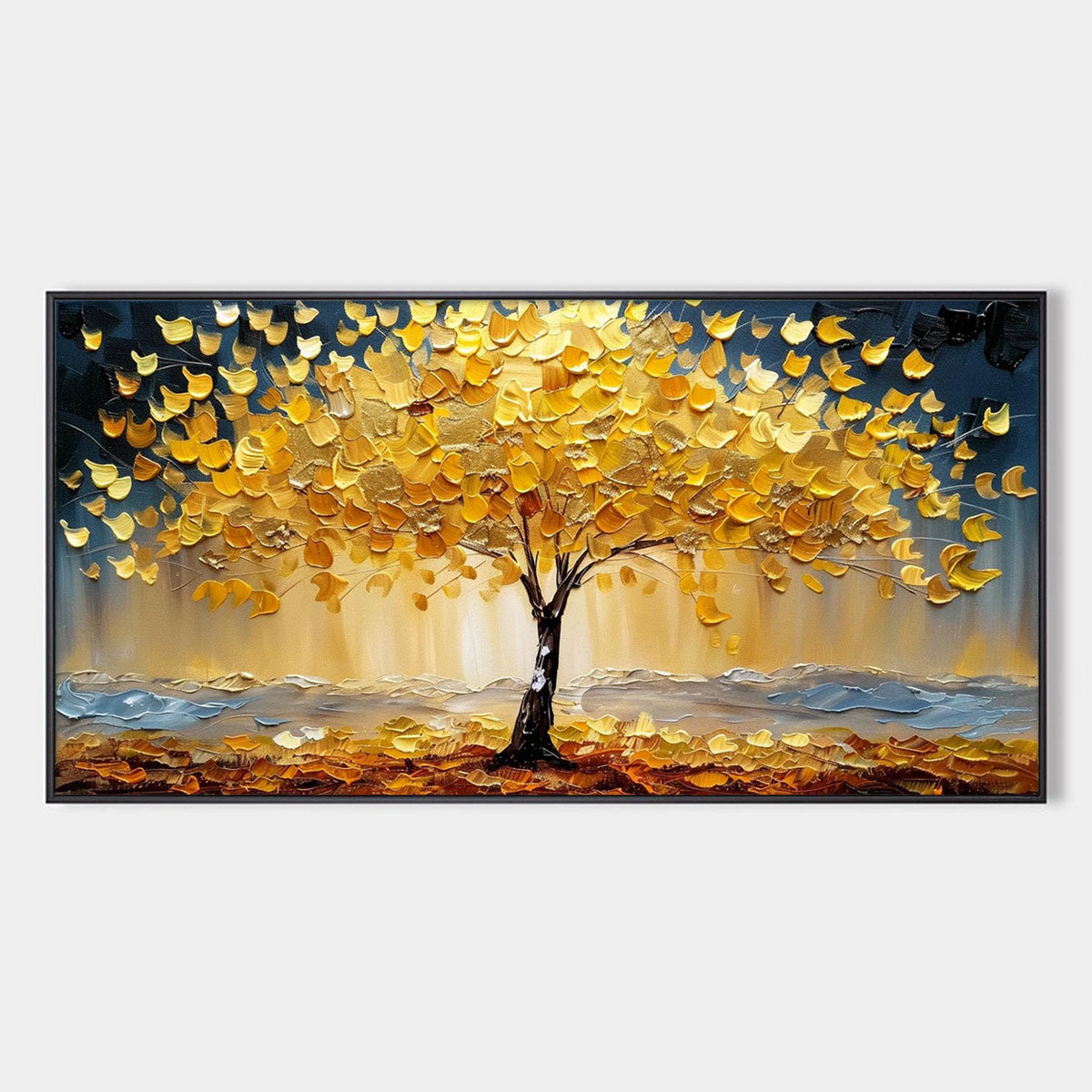













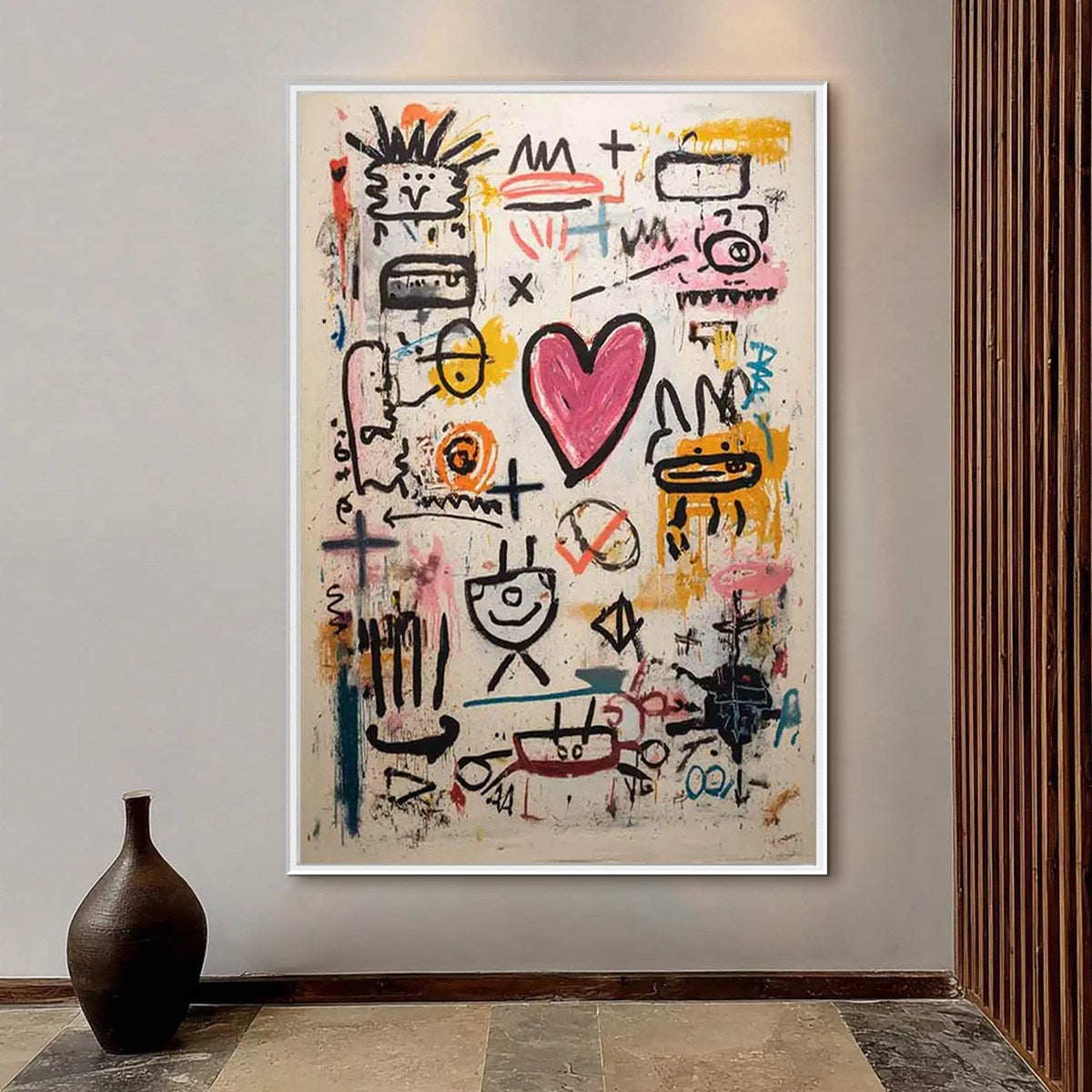
Hotel Wall Art for Lobbies, Guest Rooms and Shared Spaces
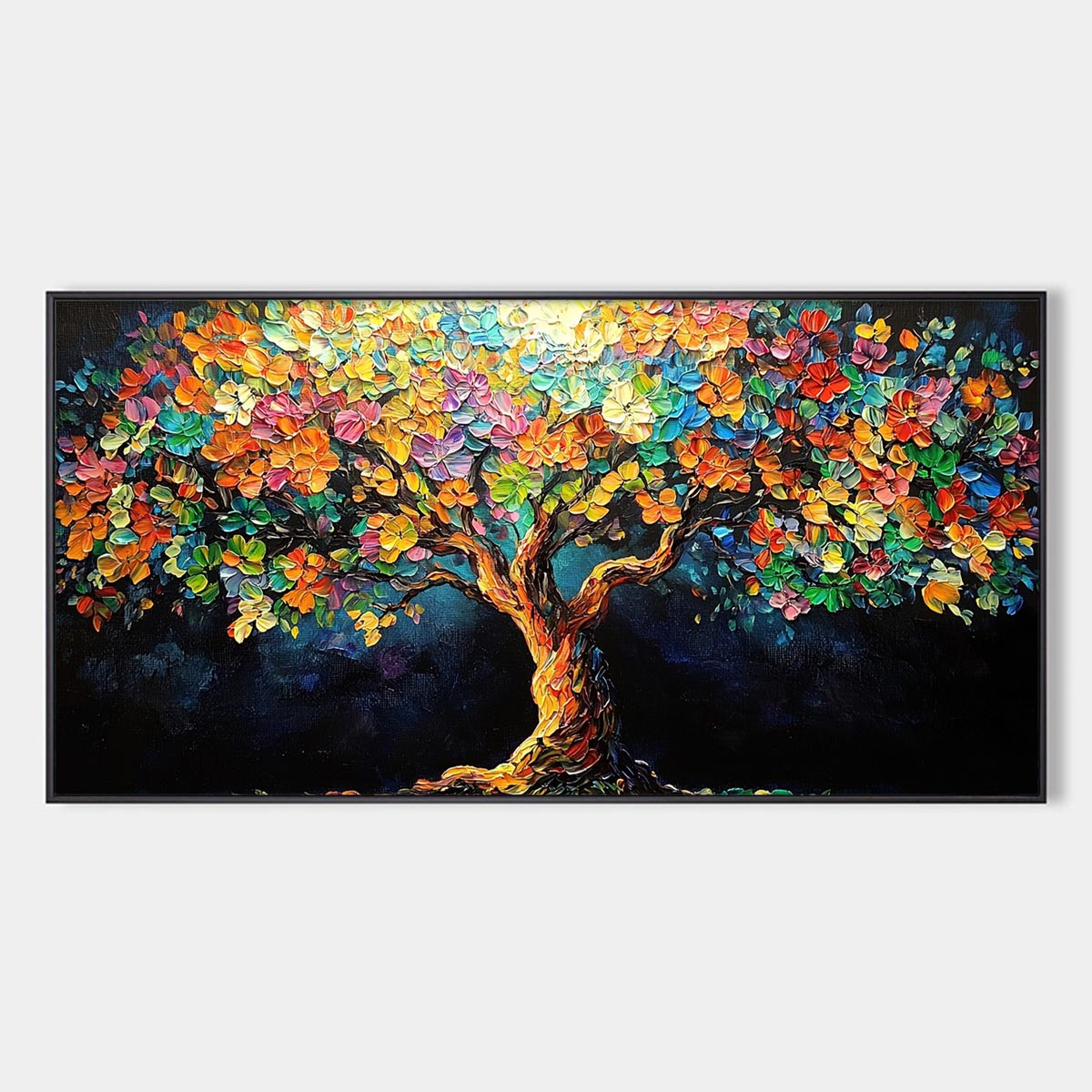
A hotel asks one art collection to work at several distances. Guests see a reception wall across the lobby, pass corridor paintings at arm's length, and spend longer with the piece beside their bed. Start with those different encounters when choosing hotel wall art. The same color palette can connect the building while scale, subject and composition give each space its own character.
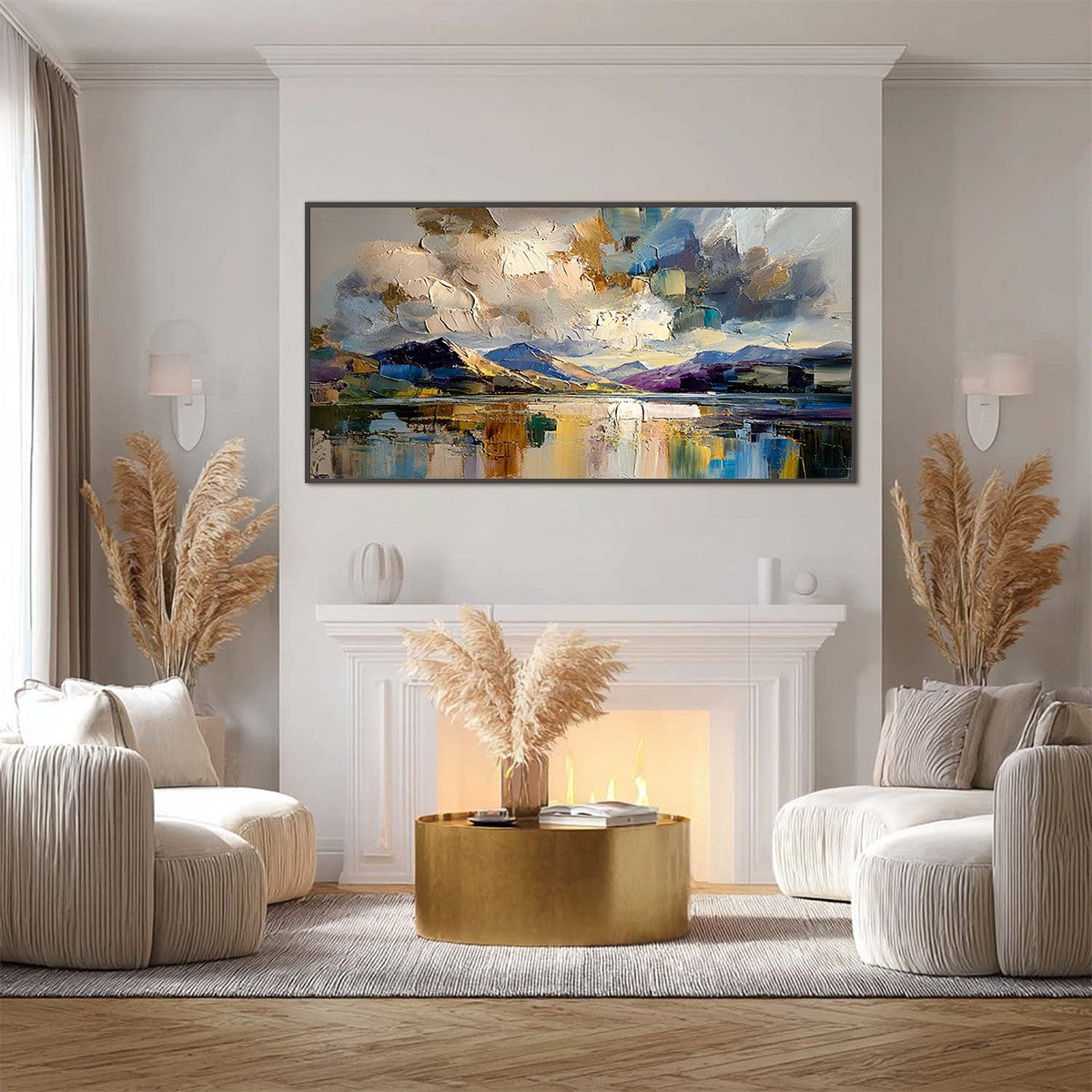
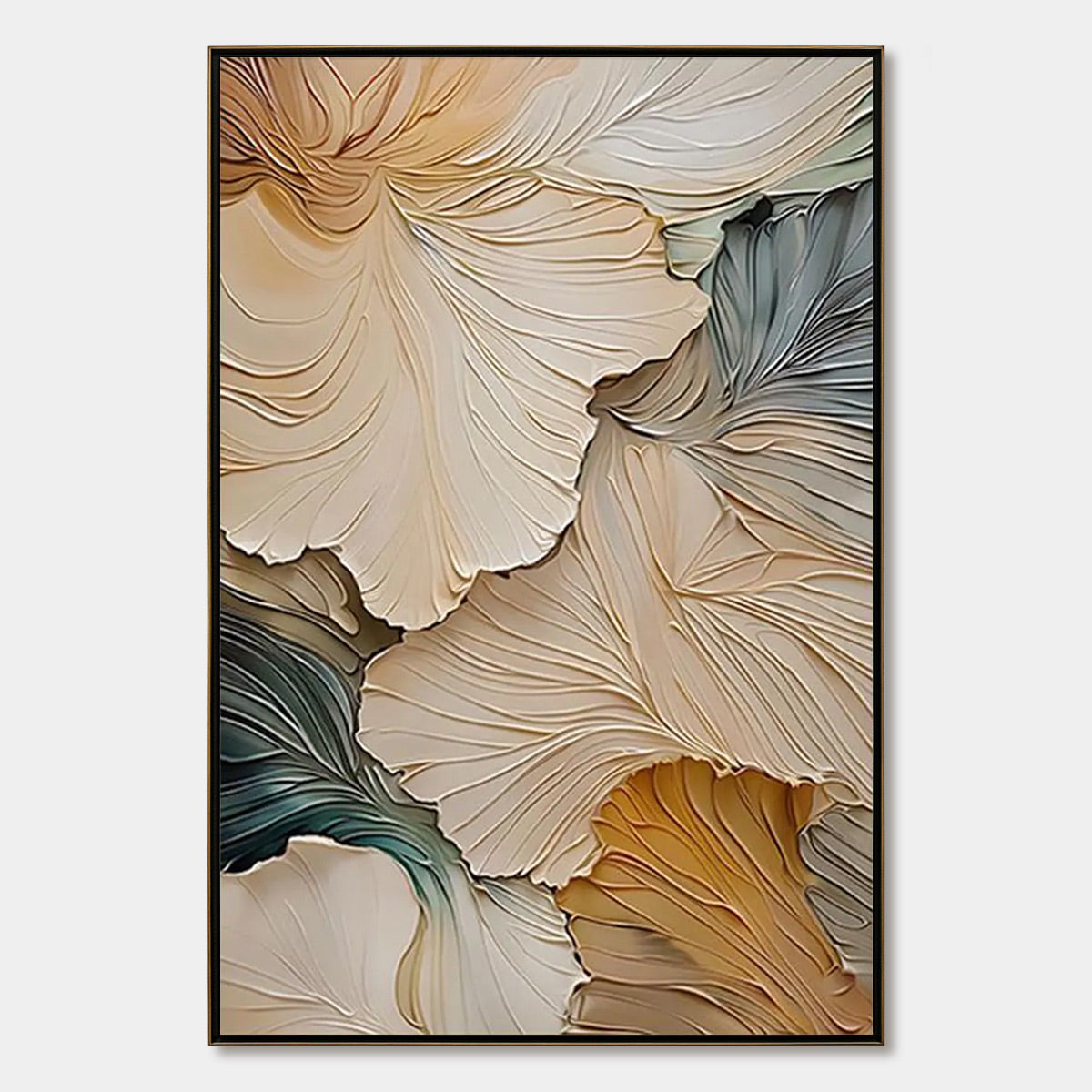
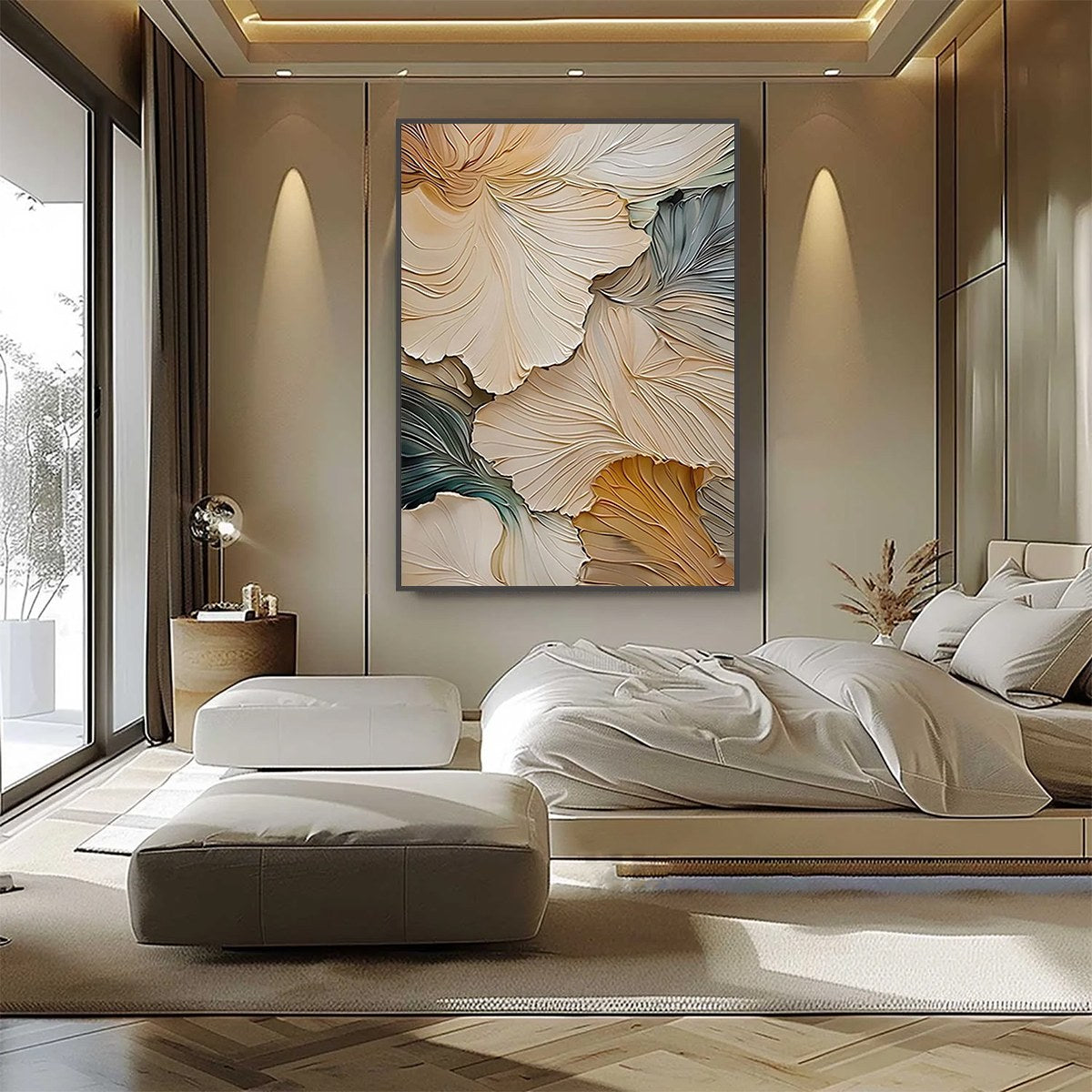
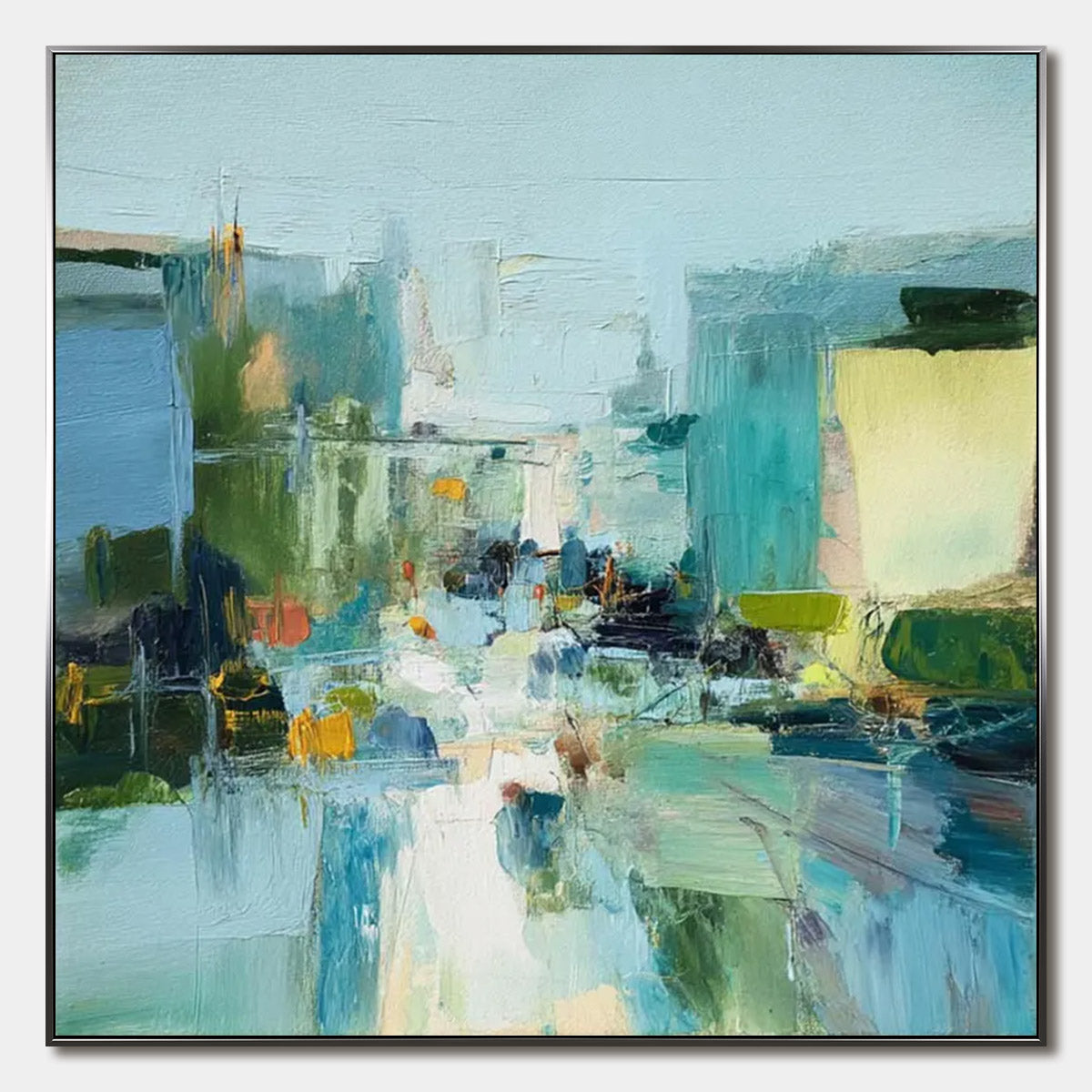
MontCarta's hotel and hospitality collection brings together landscapes, florals and abstract paintings in several formats. Use the room and orientation filters to narrow the selection, then compare individual works against the wall, furnishings and lighting in your project.
Give the reception wall a clear focal point
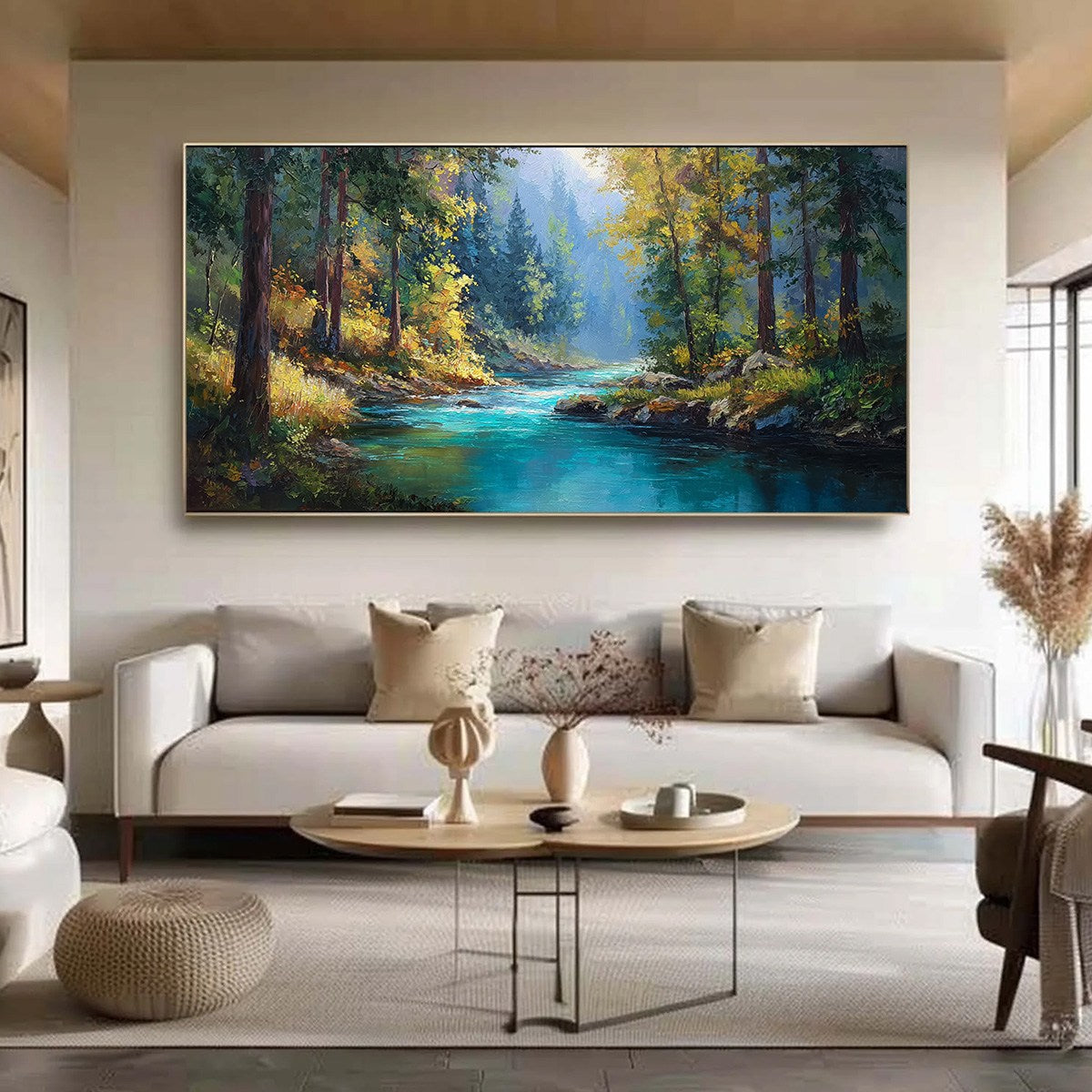
At reception, judge the composition from the entrance first. A painting with a readable horizon or a distinct area of contrast is easier to assess at that distance than a work whose appeal depends entirely on small details. Leave enough surrounding wall for the image to stand apart from signs, lighting and the reception desk.
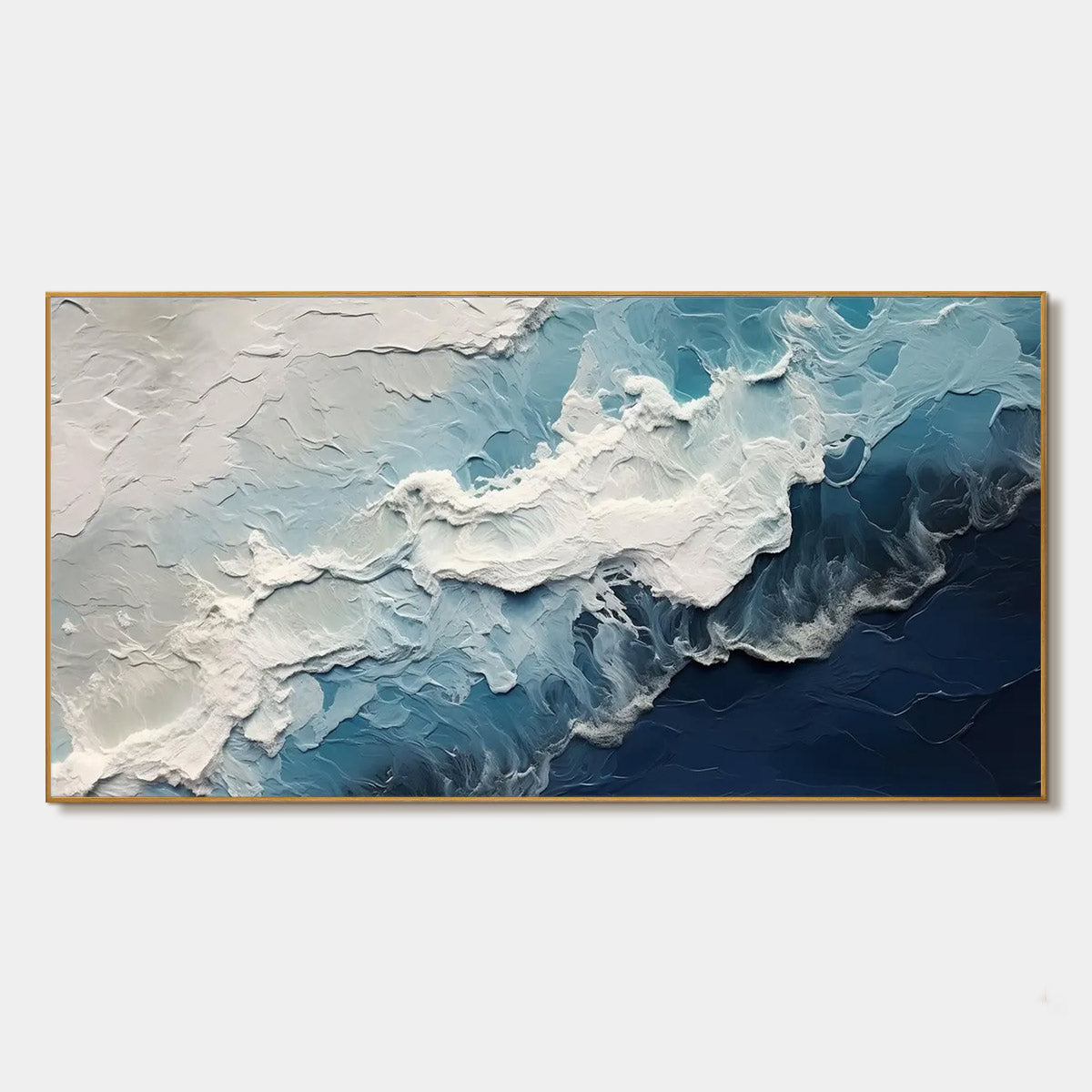
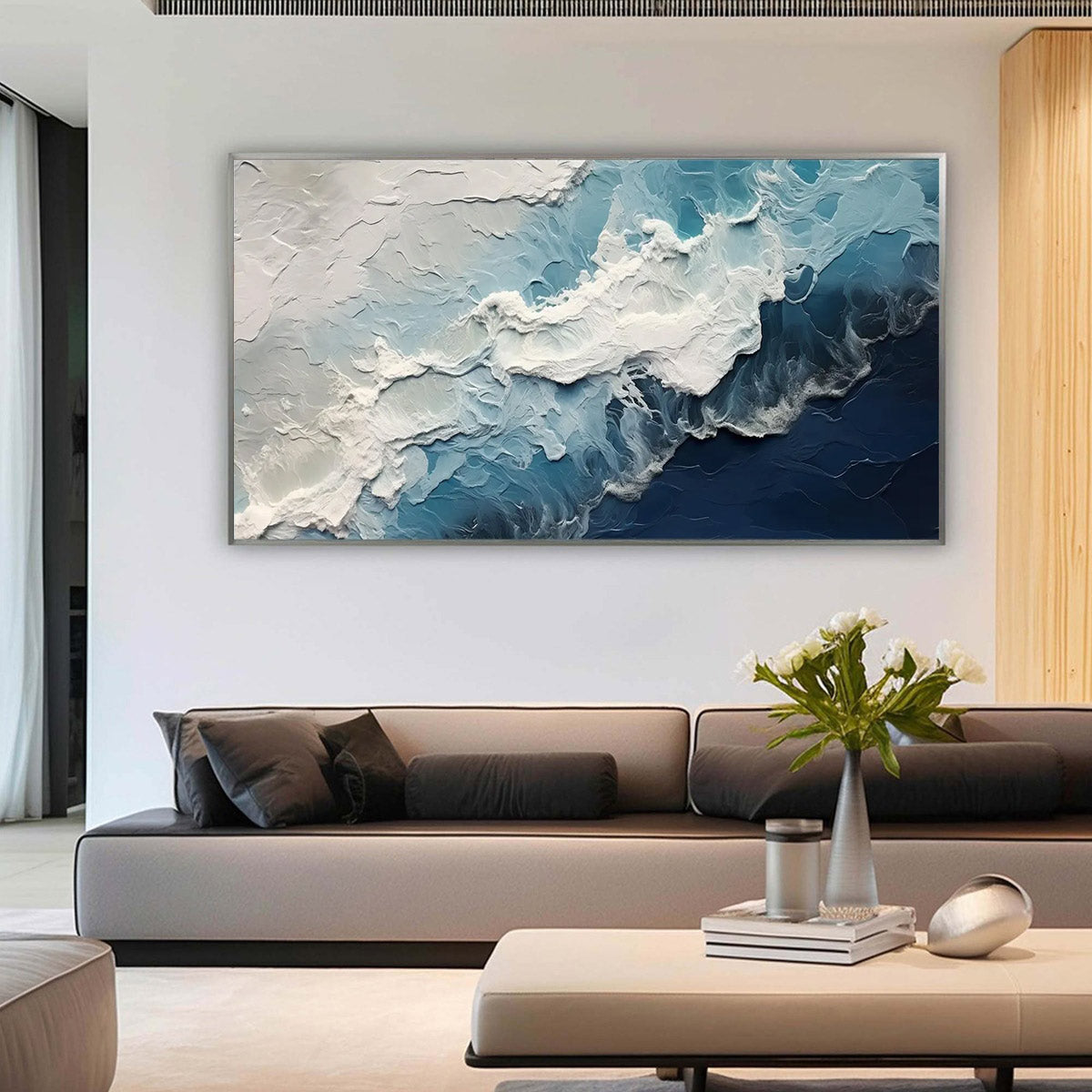
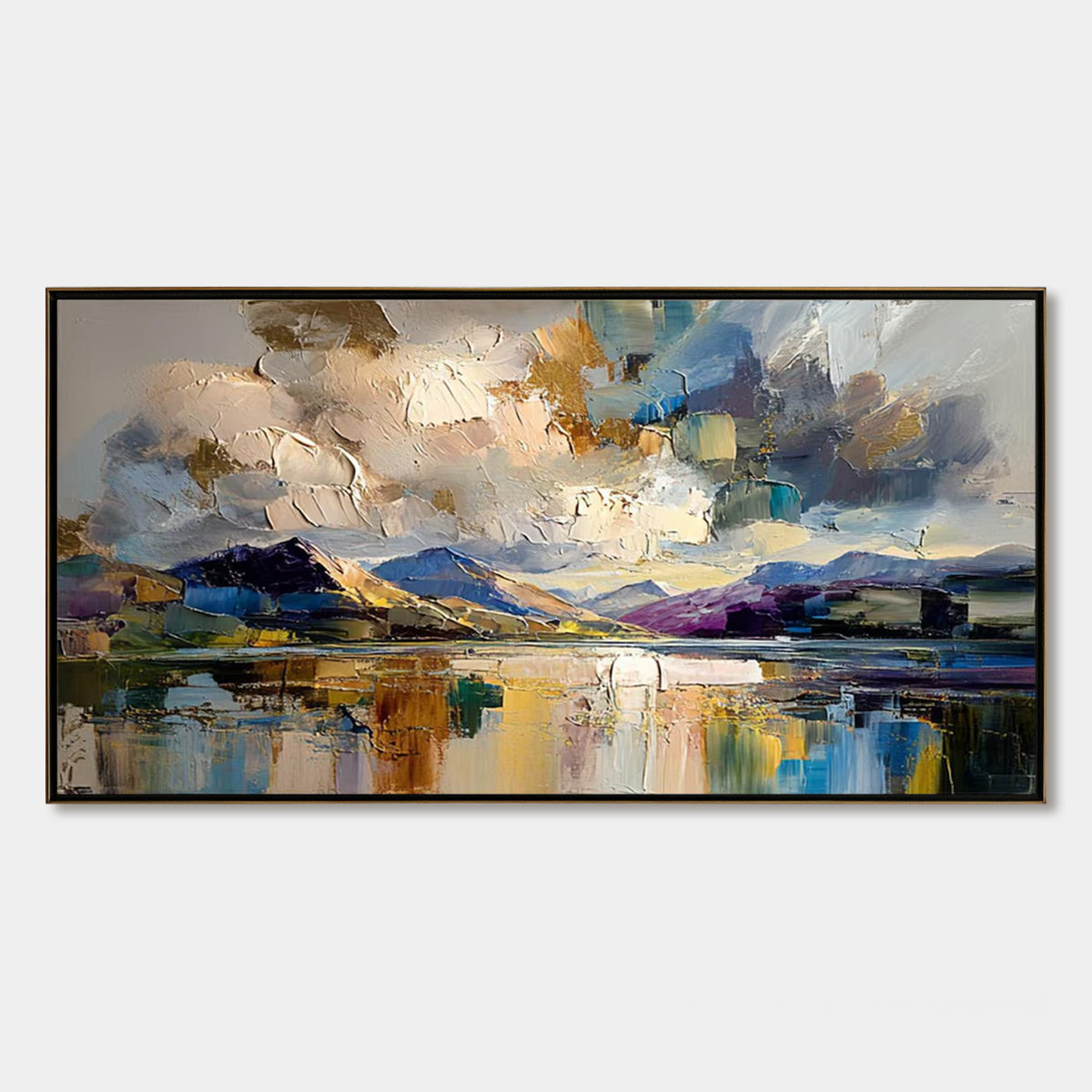
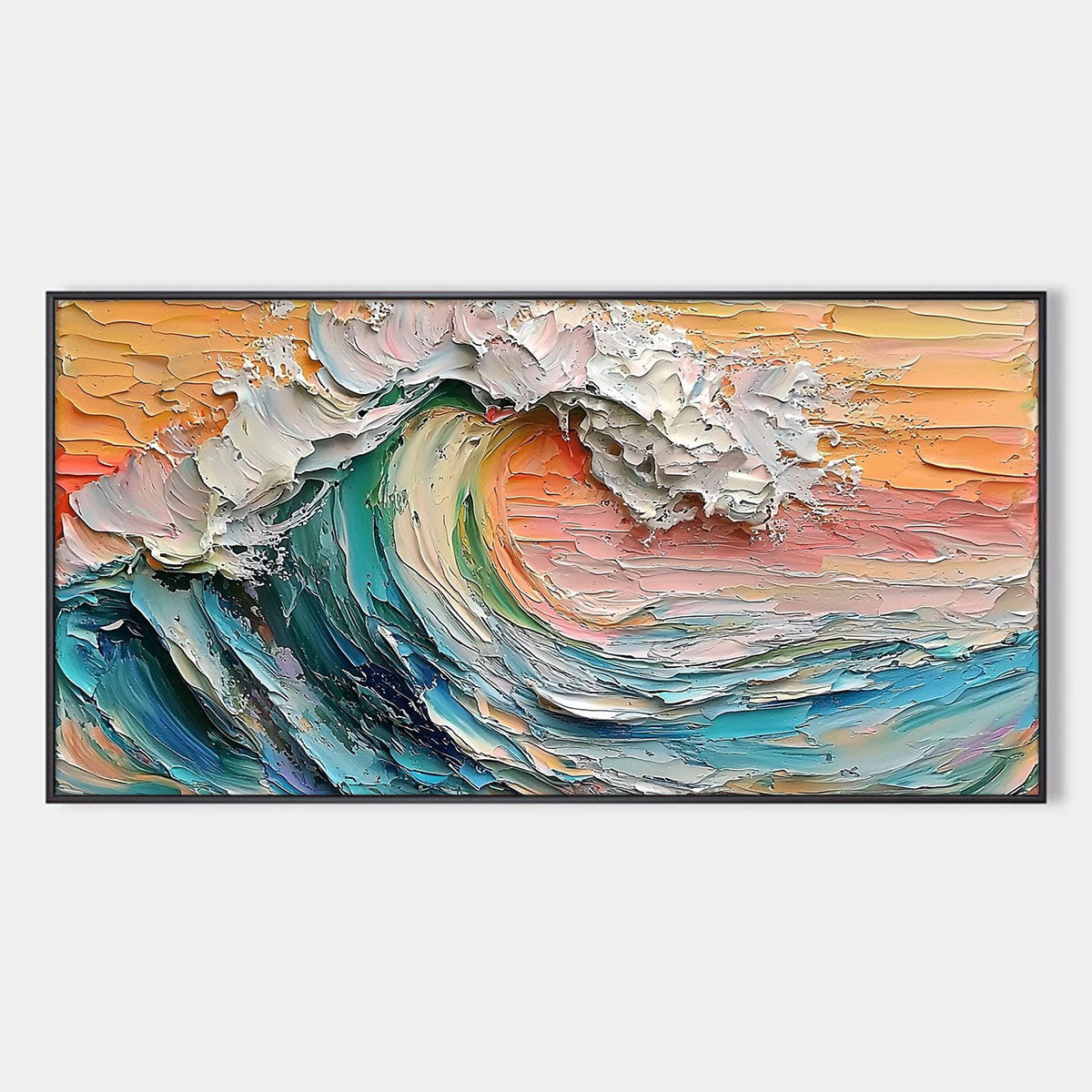
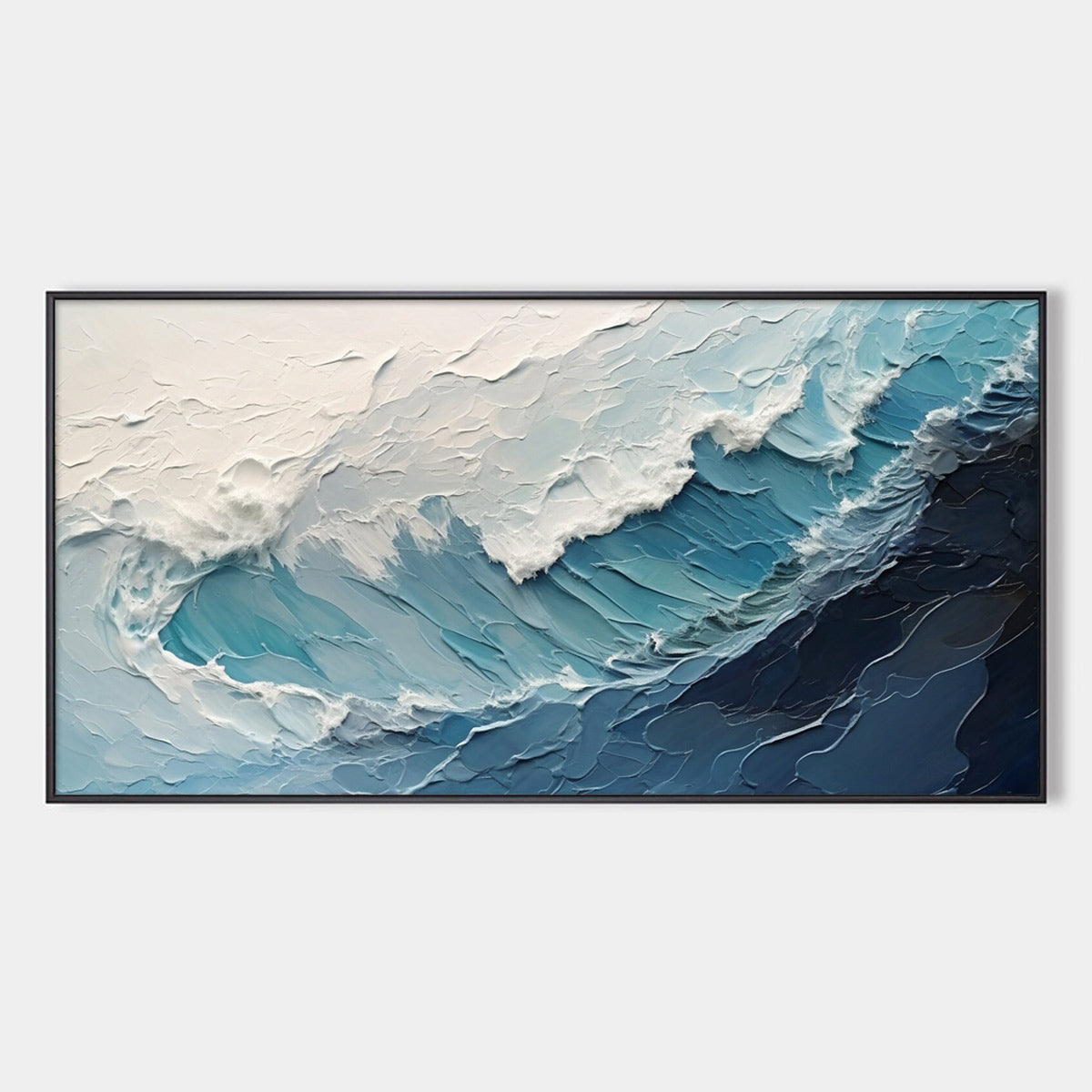
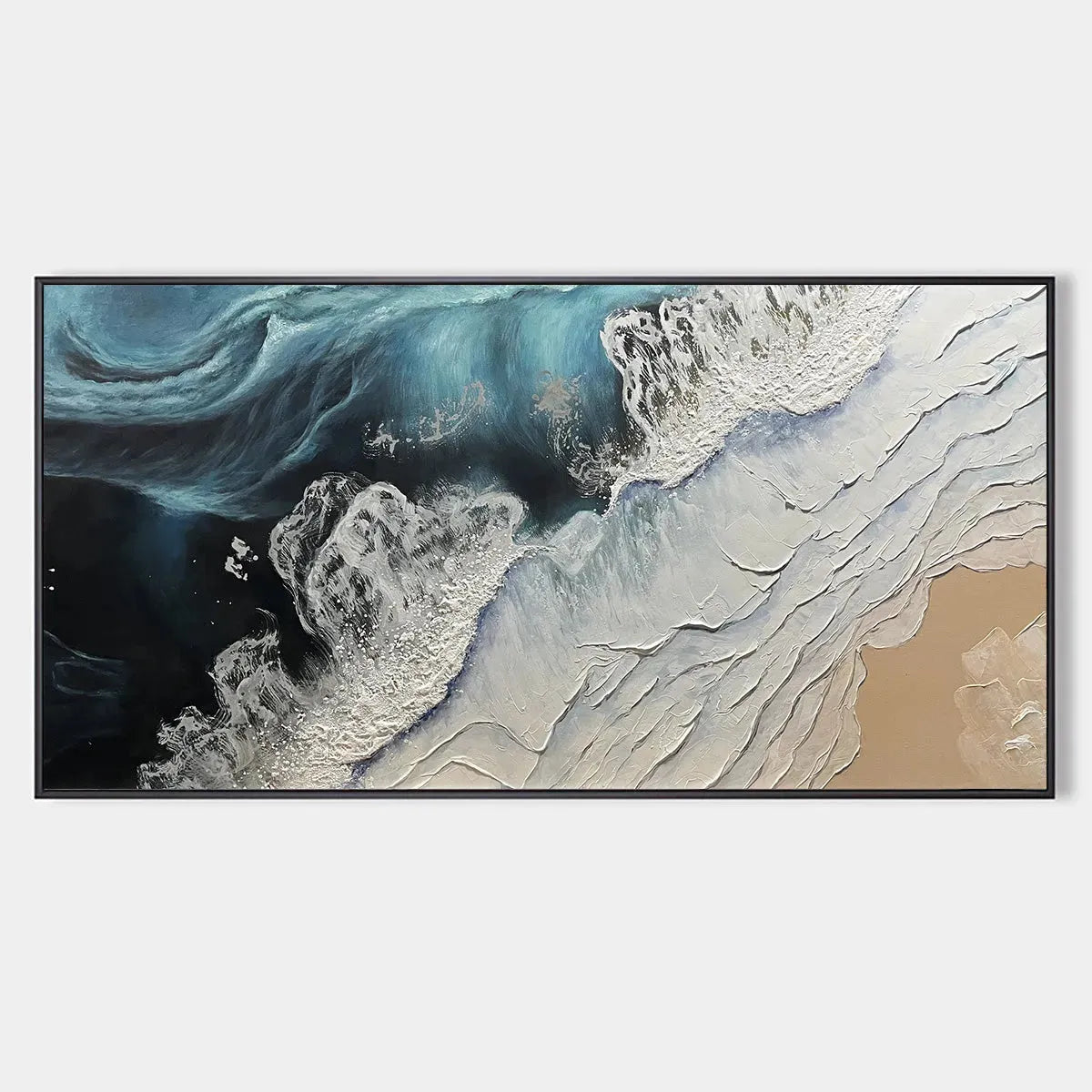
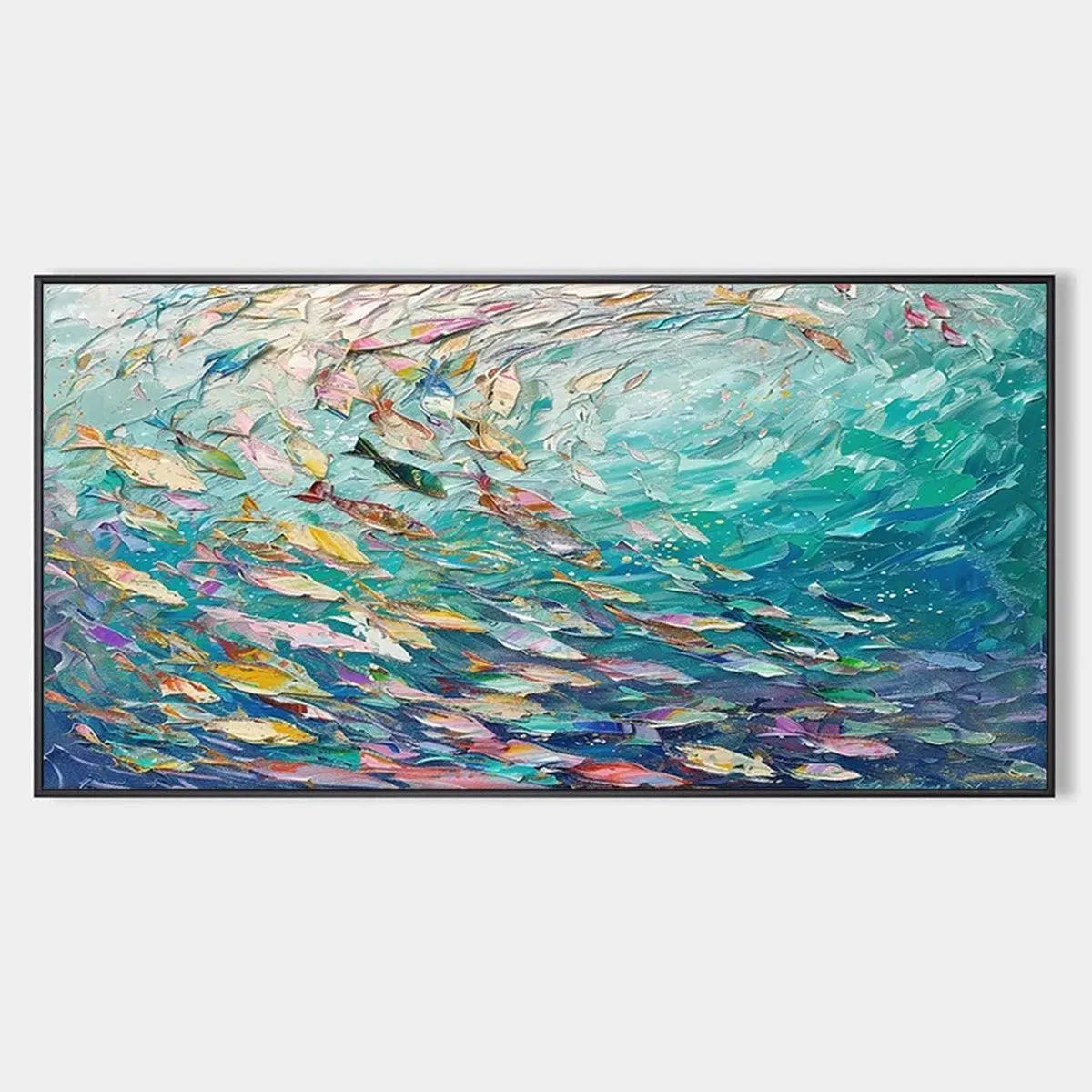
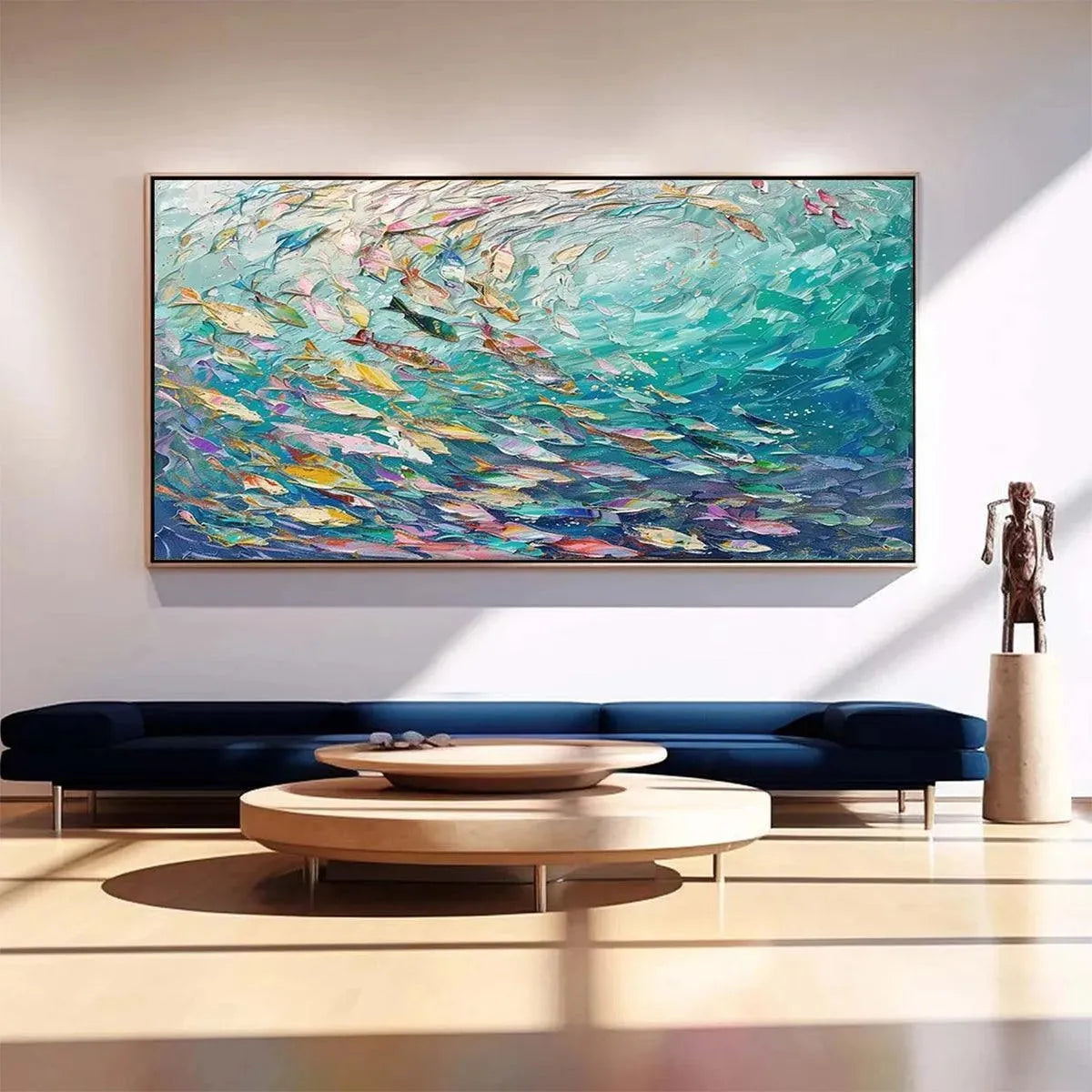
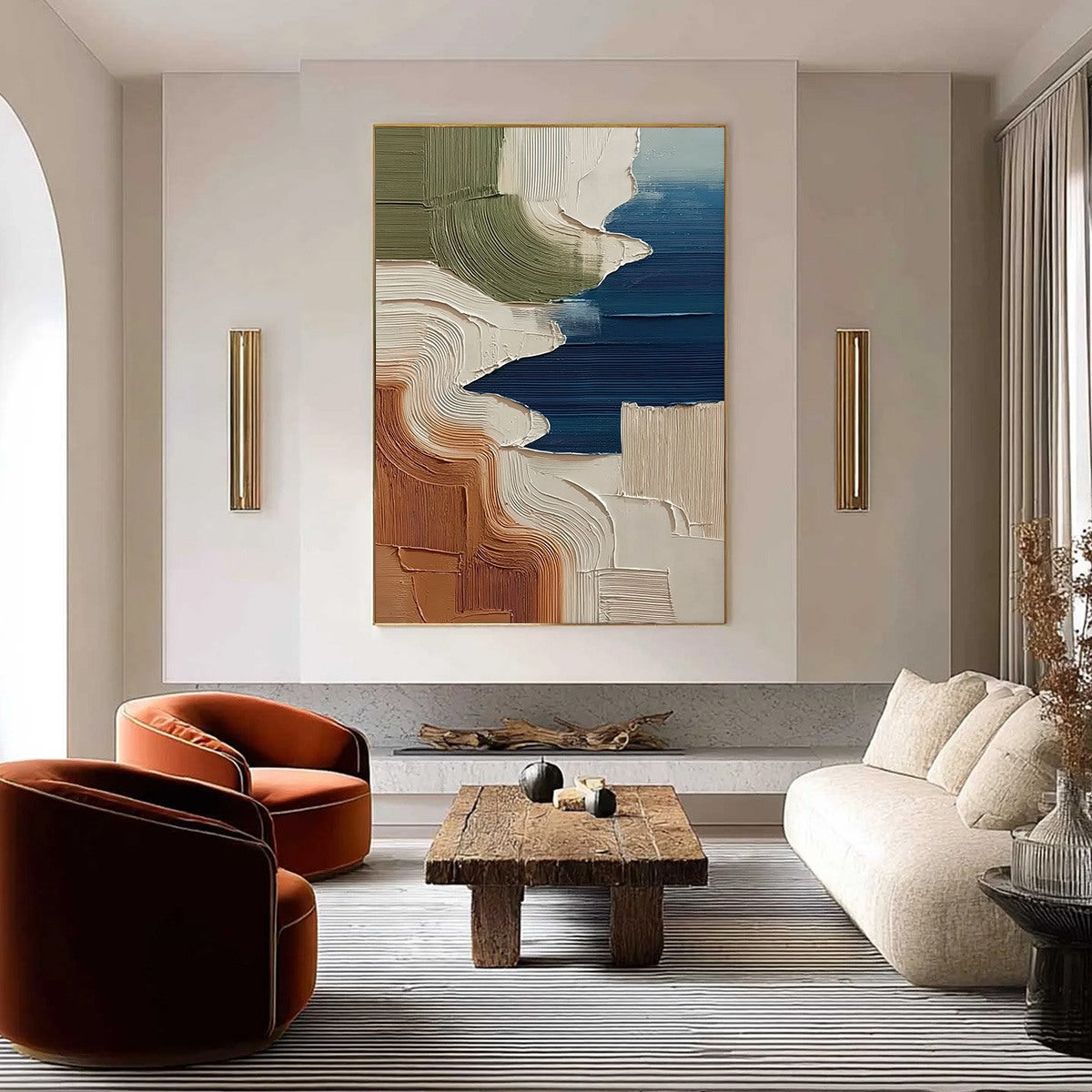
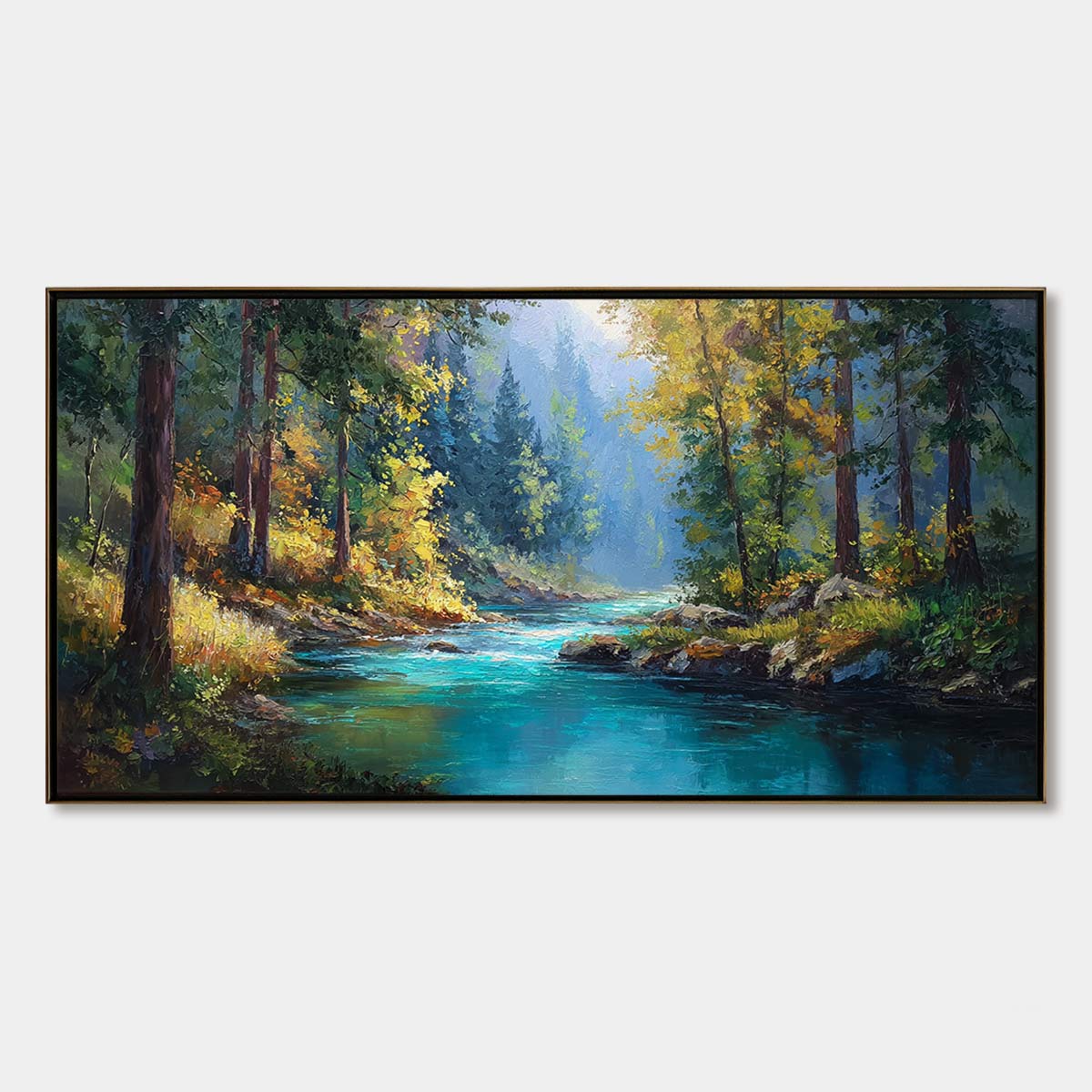
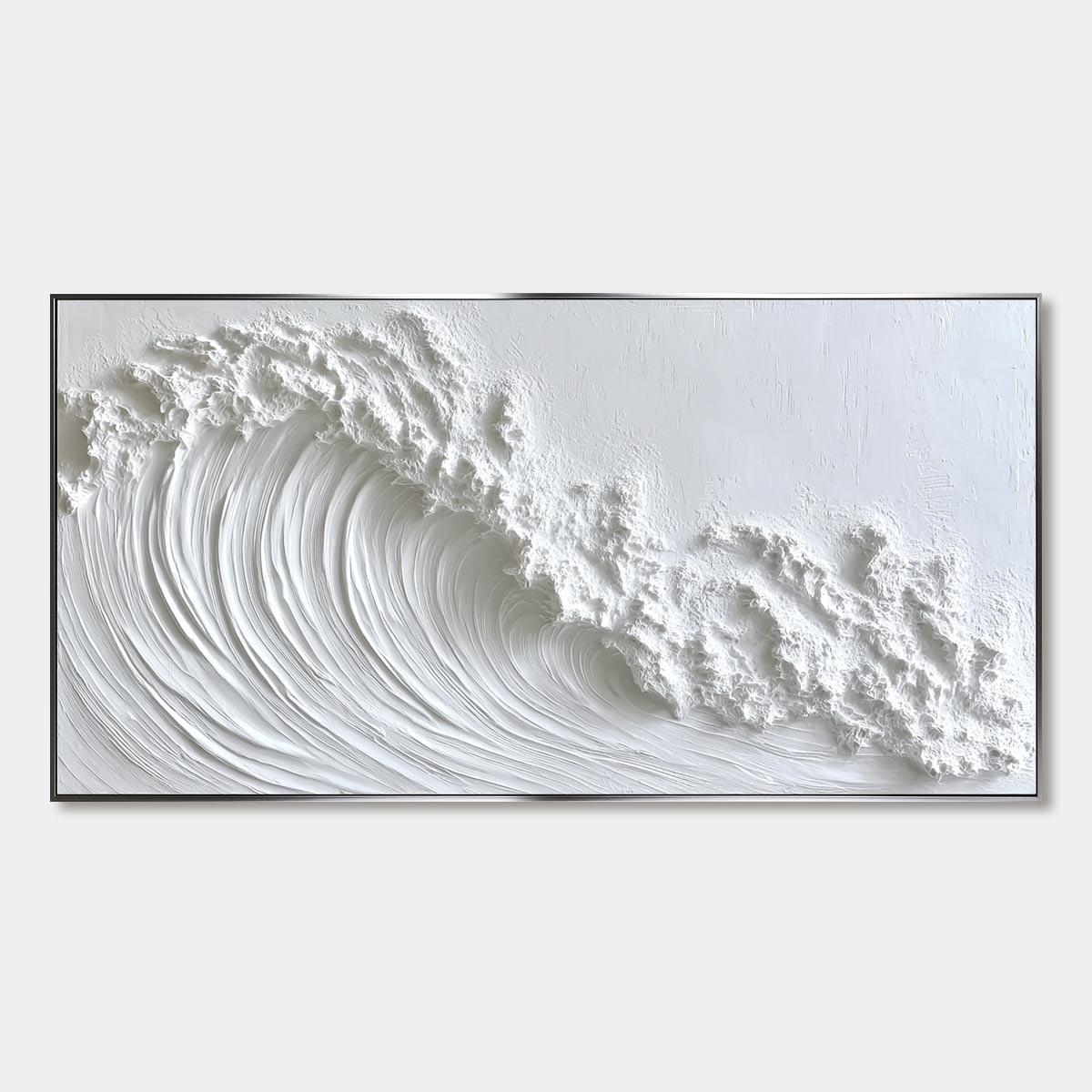
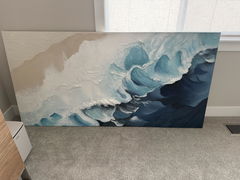
Ocean Whispers by Liam O'Connell uses blue and white waves with visible texture. It offers a coastal direction for a lobby palette, especially when you want movement in the artwork alongside simpler upholstery. Compare its horizontal shape with the desk beneath it, and check the selected dimensions before deciding how much wall it should occupy.
A reception painting does not need to carry the entire design concept. Repeating one of its colors in a smaller detail elsewhere can create continuity without filling every wall with similar images.
Let guest rooms have a quieter visual rhythm
A guest room painting is often viewed from the bed or an armchair. Sit at that height when considering the image, particularly if it will face the pillow. Low contrast can suit a restrained room scheme; a more active composition can work when the rest of the room has broad, plain surfaces.
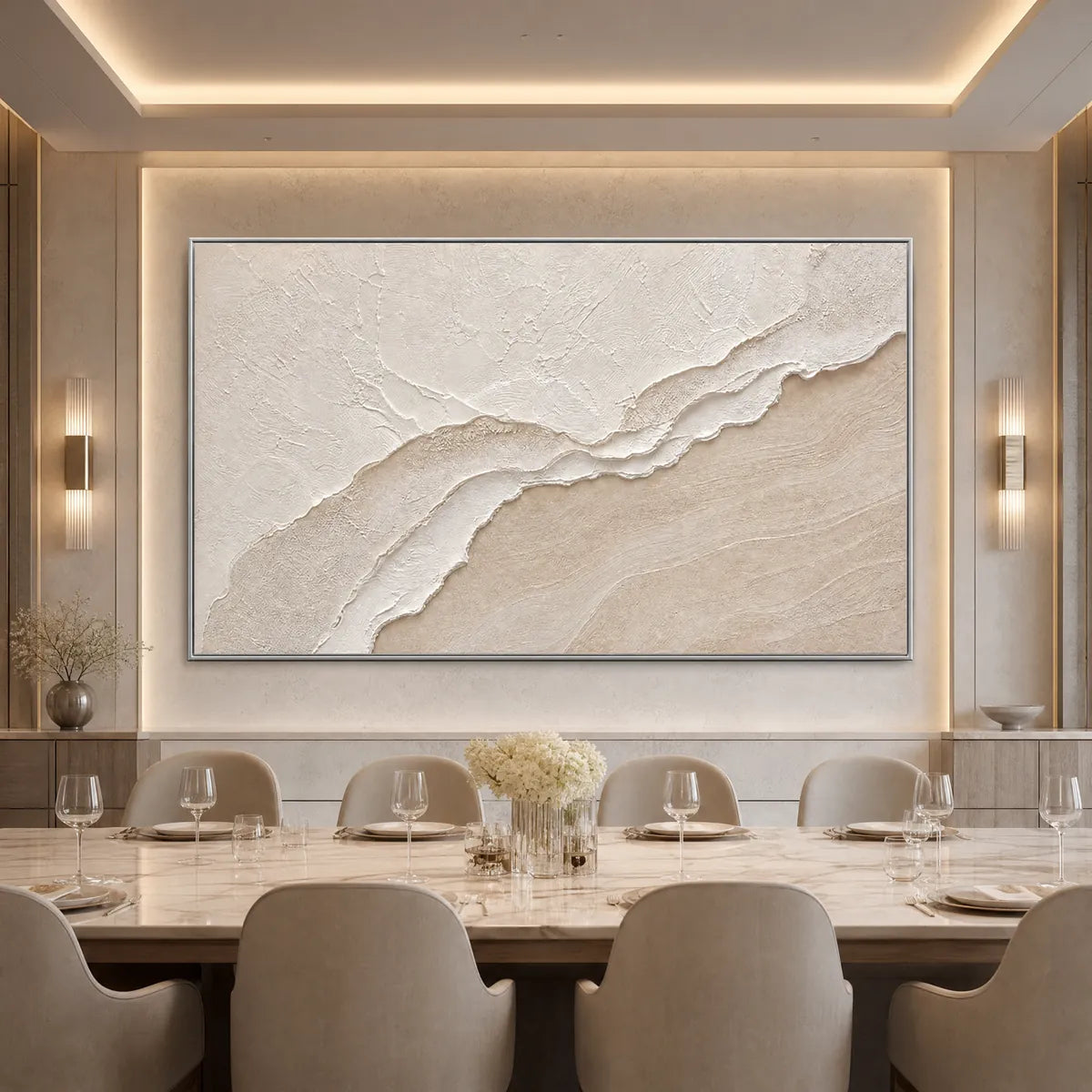
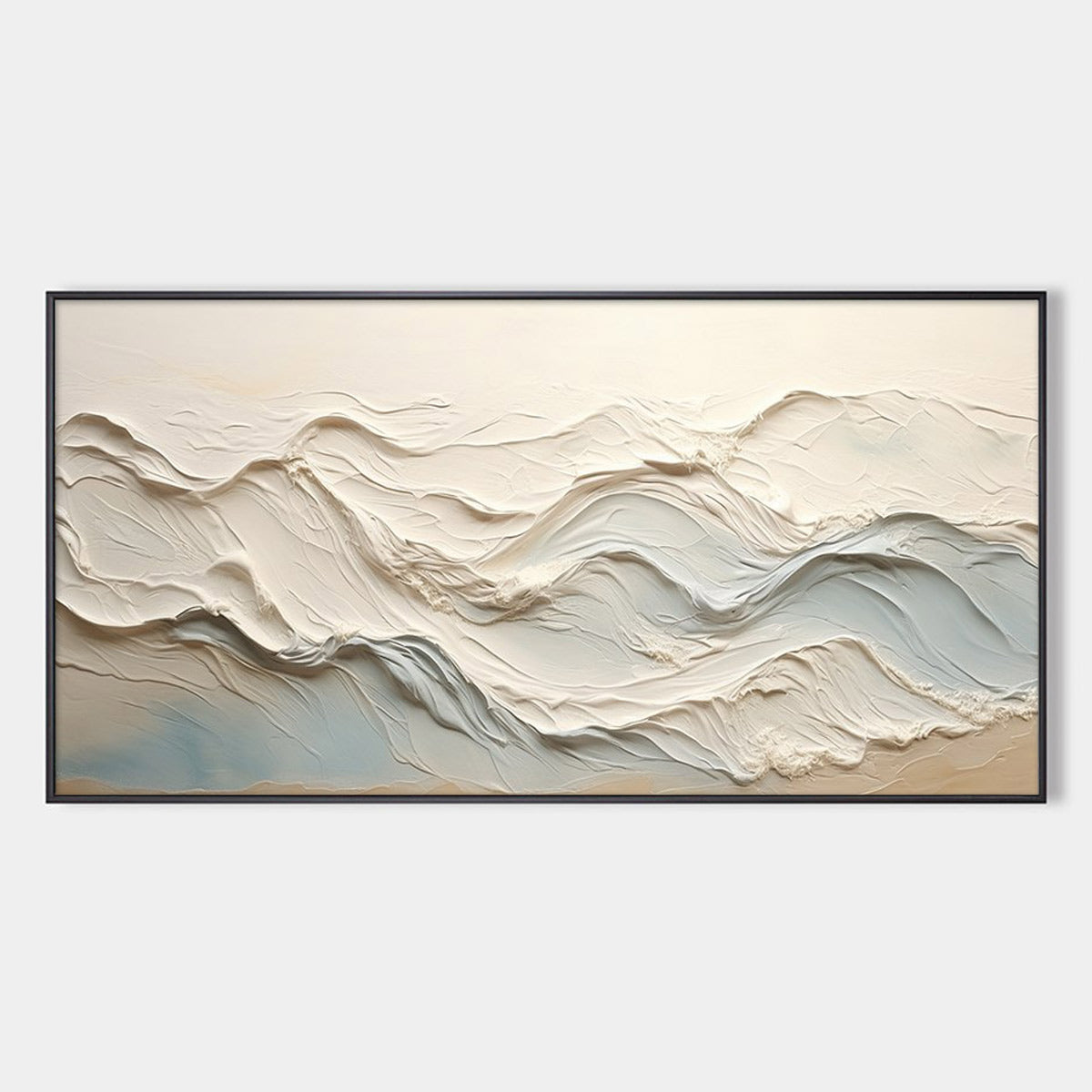
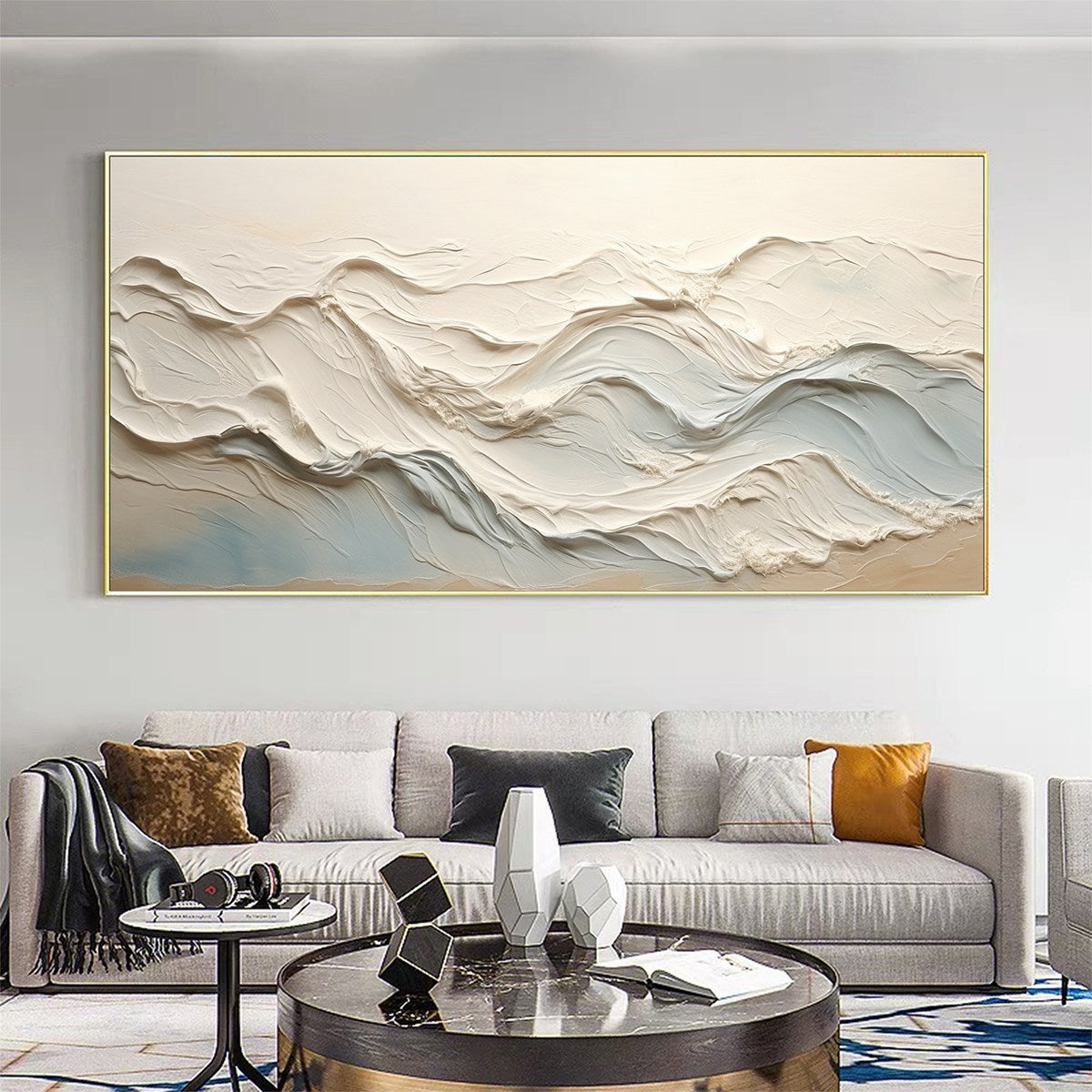
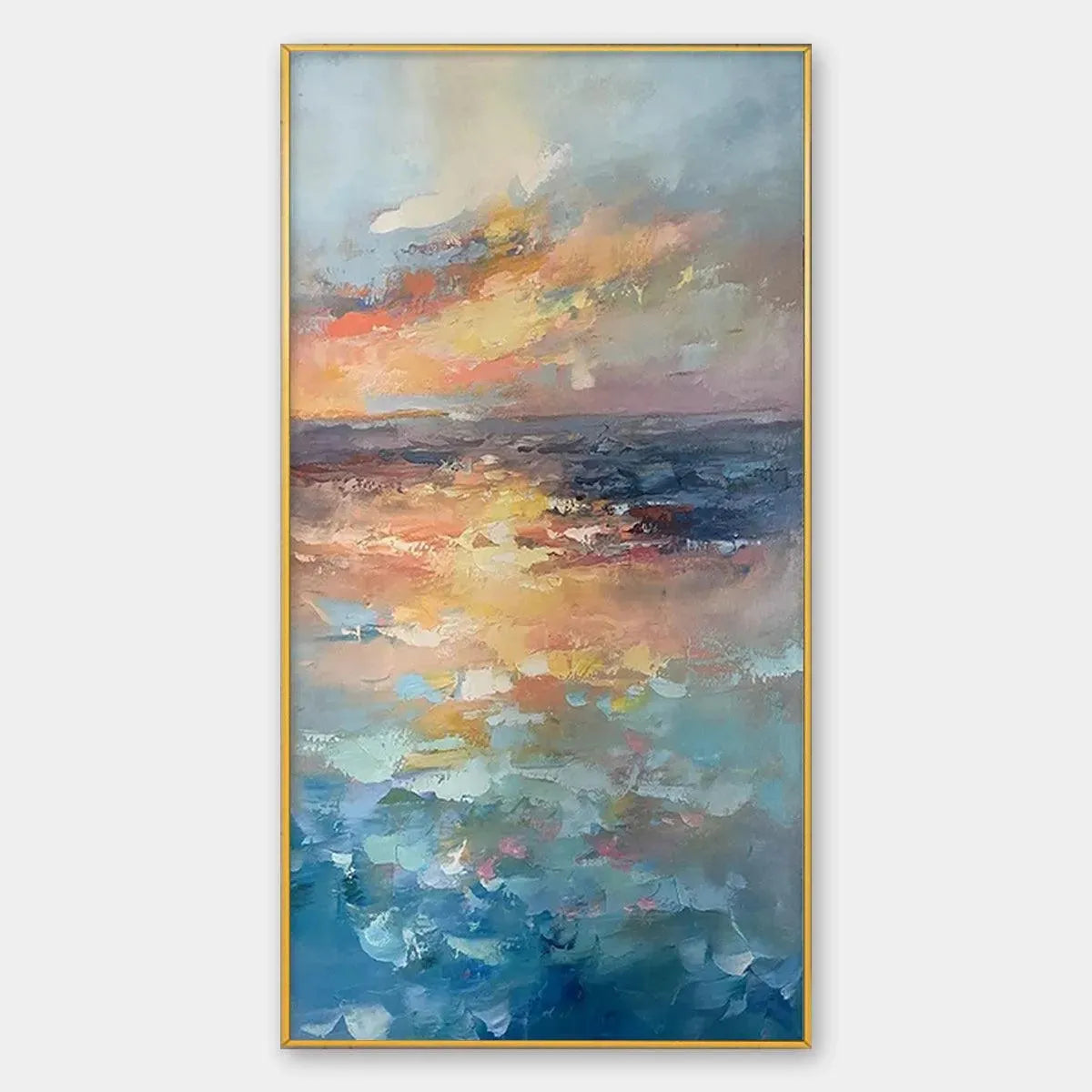
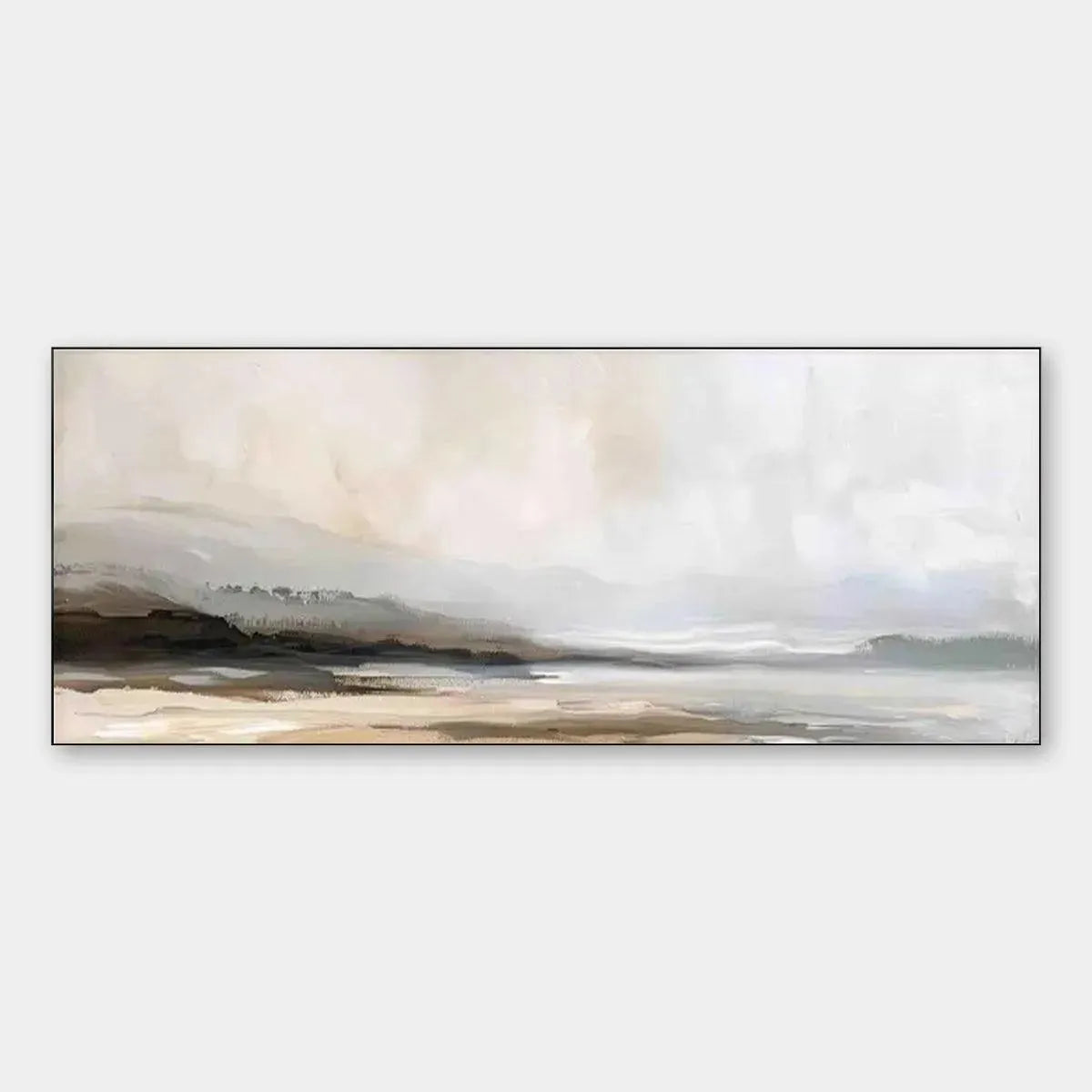
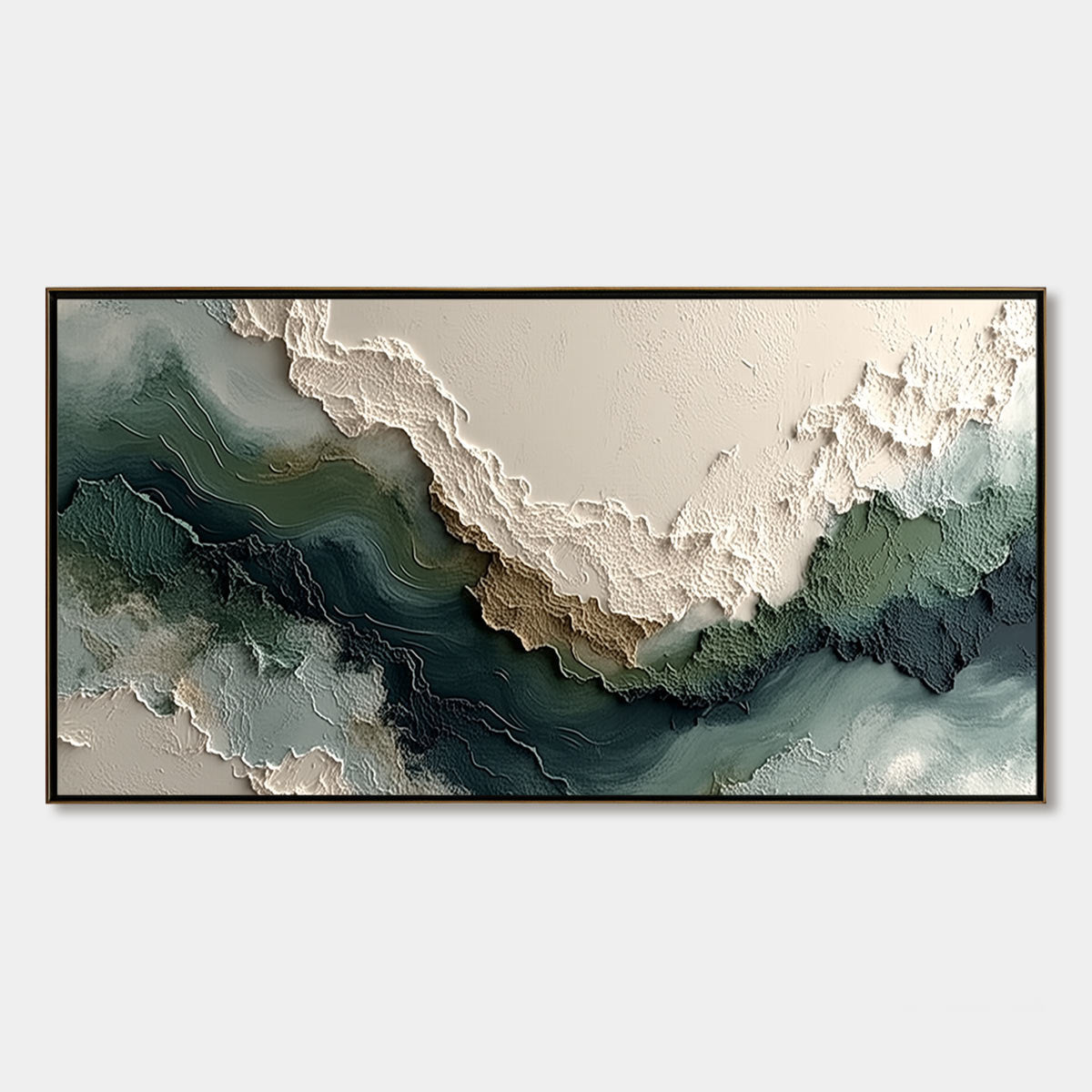
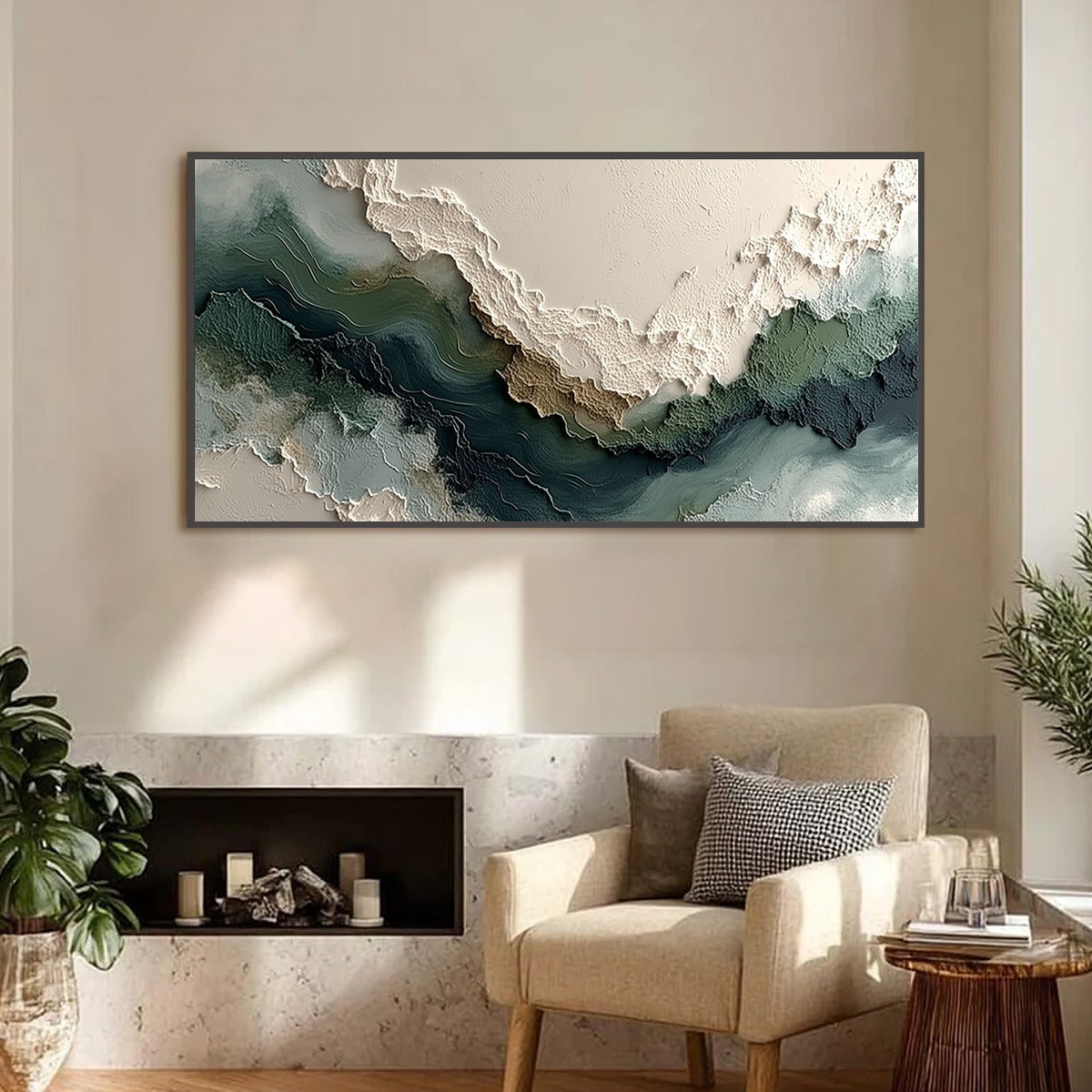
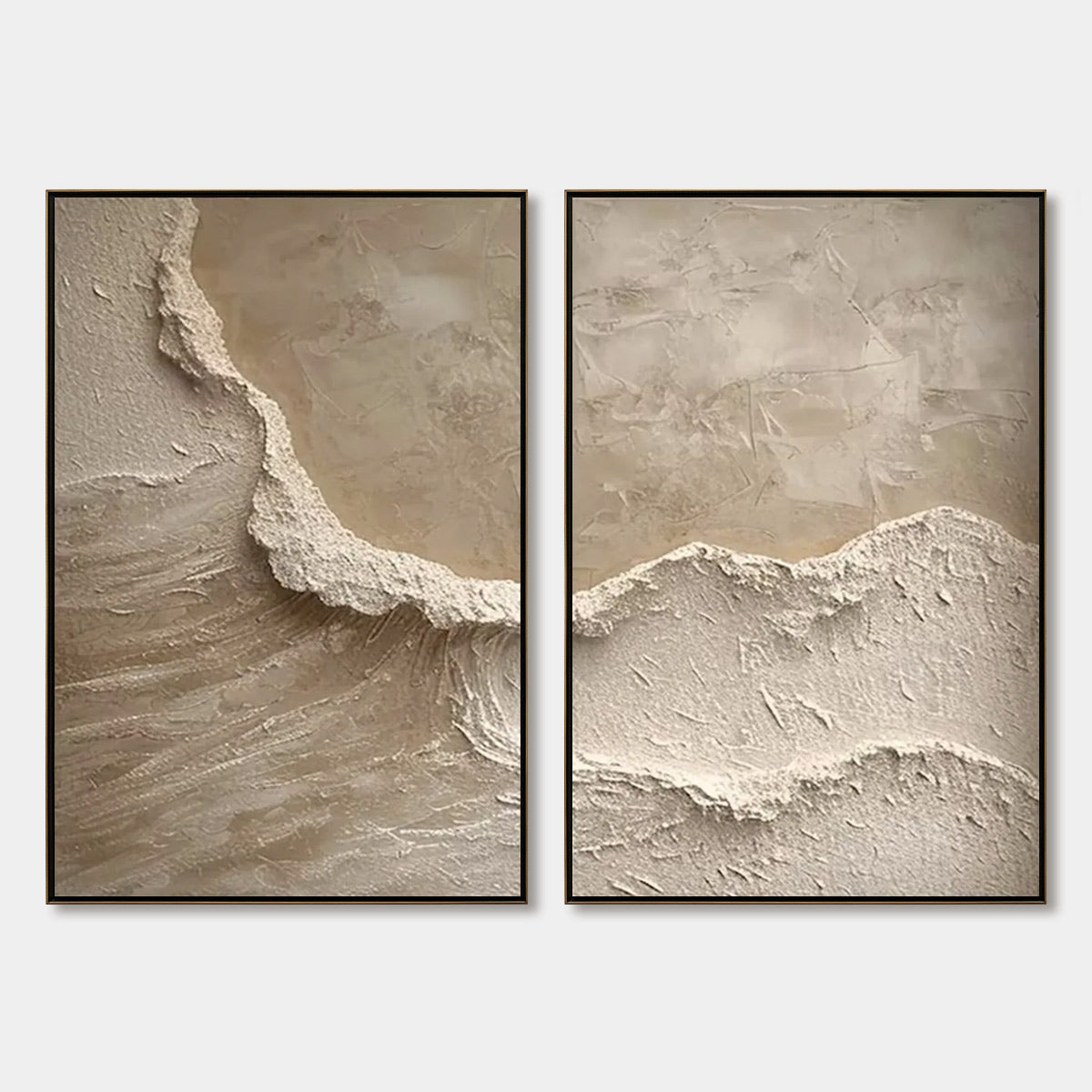
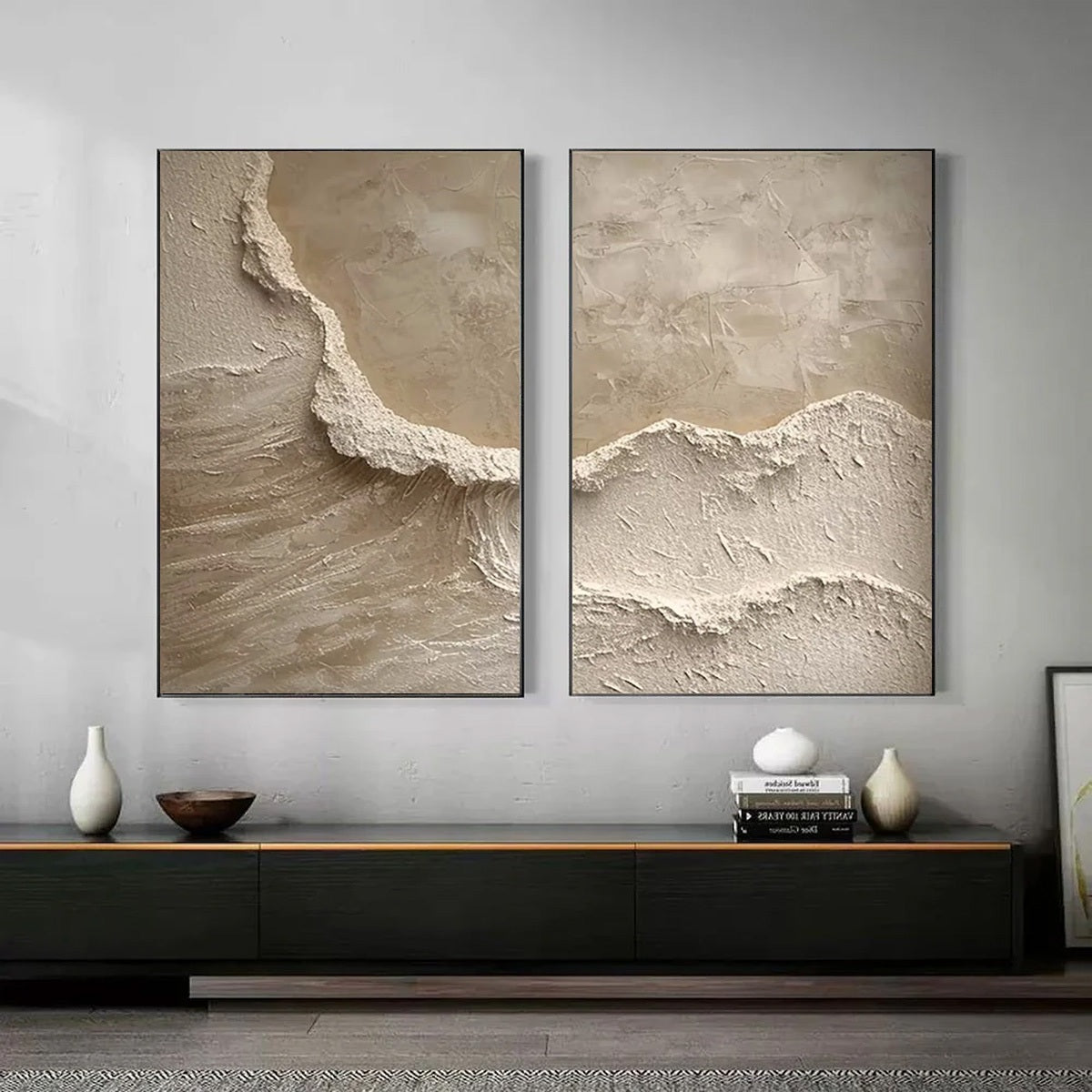
Misty Shores by Liam O'Connell depicts a coastal landscape in muted colors with subtle texture. Its soft treatment provides a useful starting point for rooms with pale bedding or natural wood tones. Compare the wall color with the painting's lightest areas so the image still has definition.
Plan around bedside lights, headboards and switches before choosing a size. A smaller clear area may suit a different format from the one shown in an inspiration photograph. For a longer wall, browse horizontal wall art and compare actual dimensions across the shortlist.
Use dining and lounge areas for closer looking
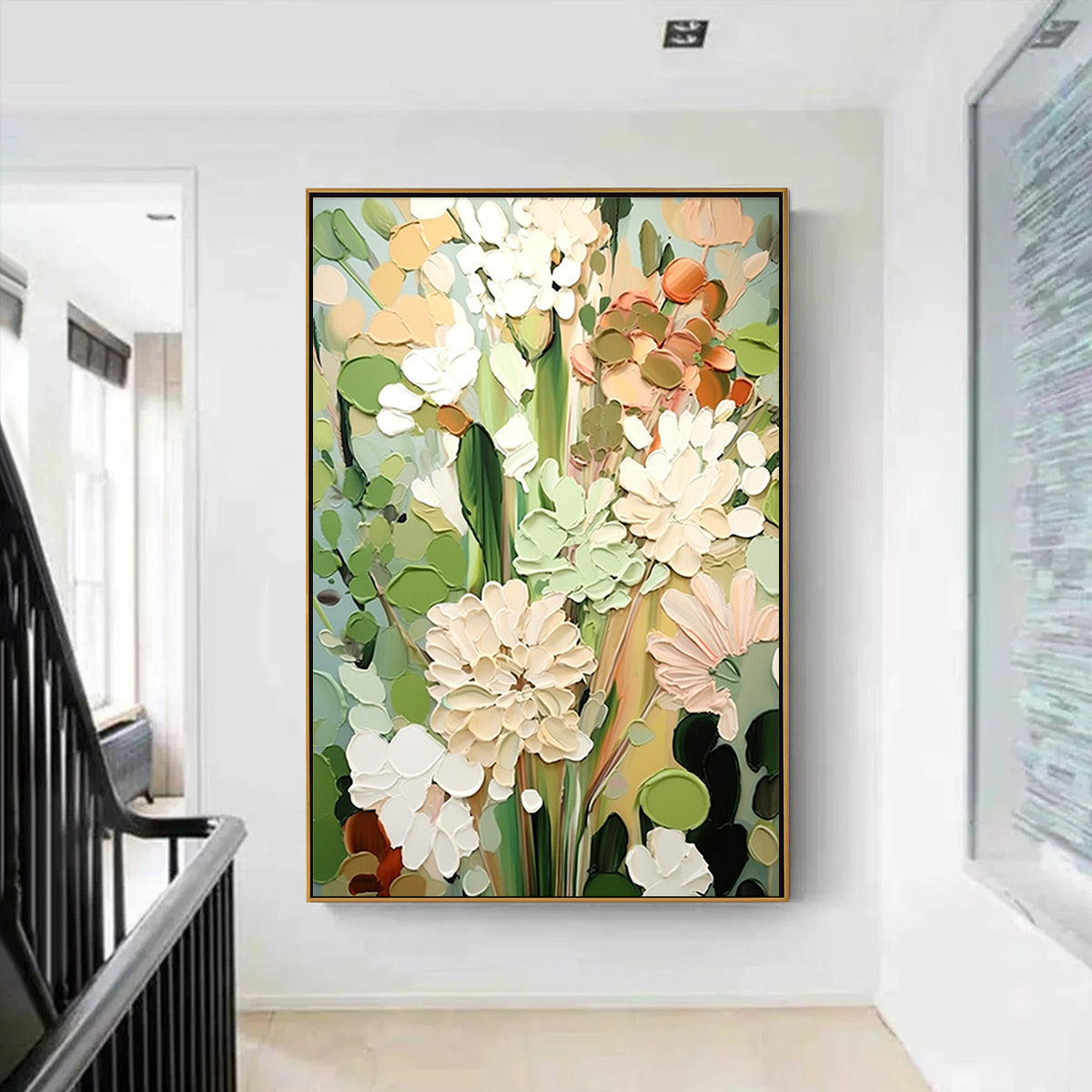
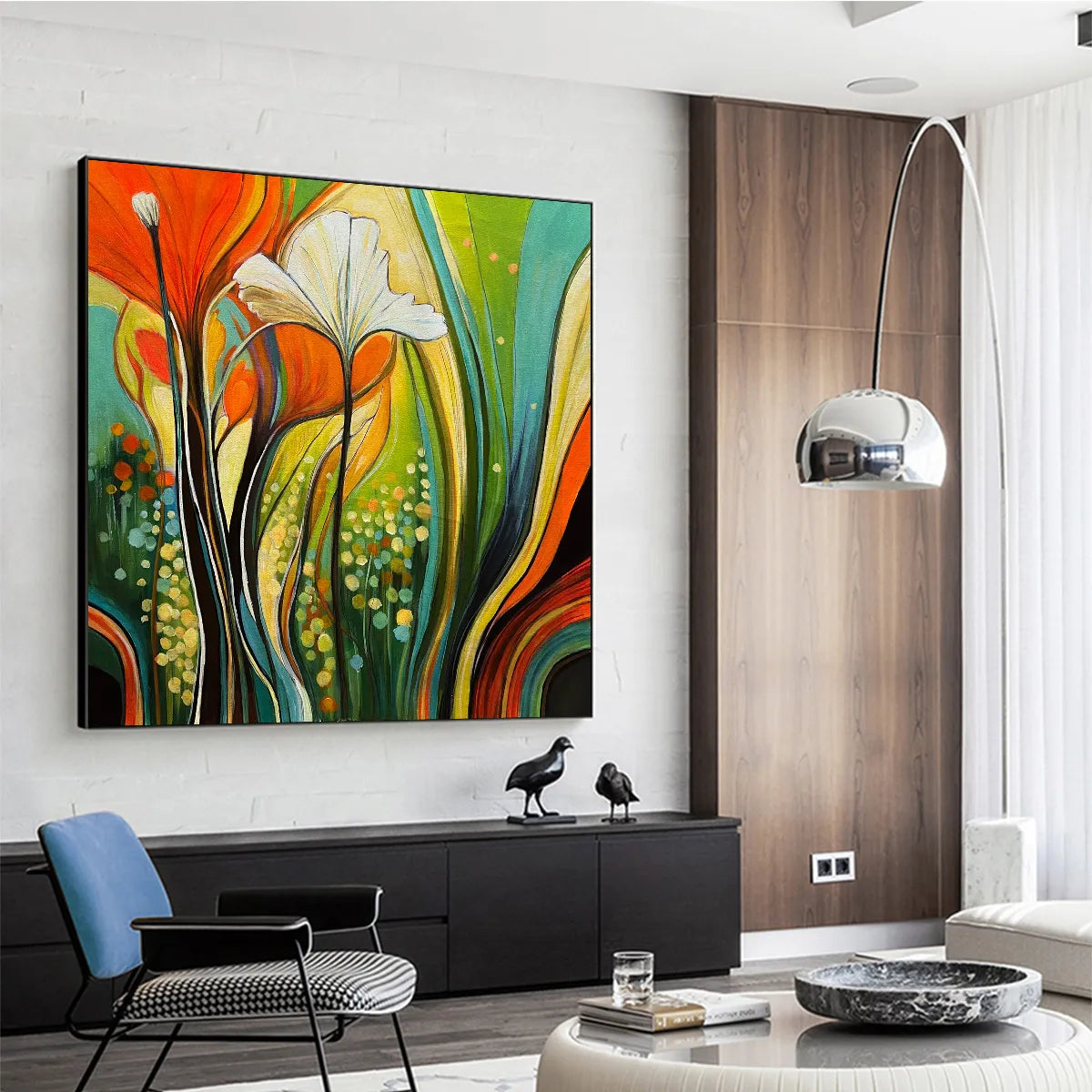
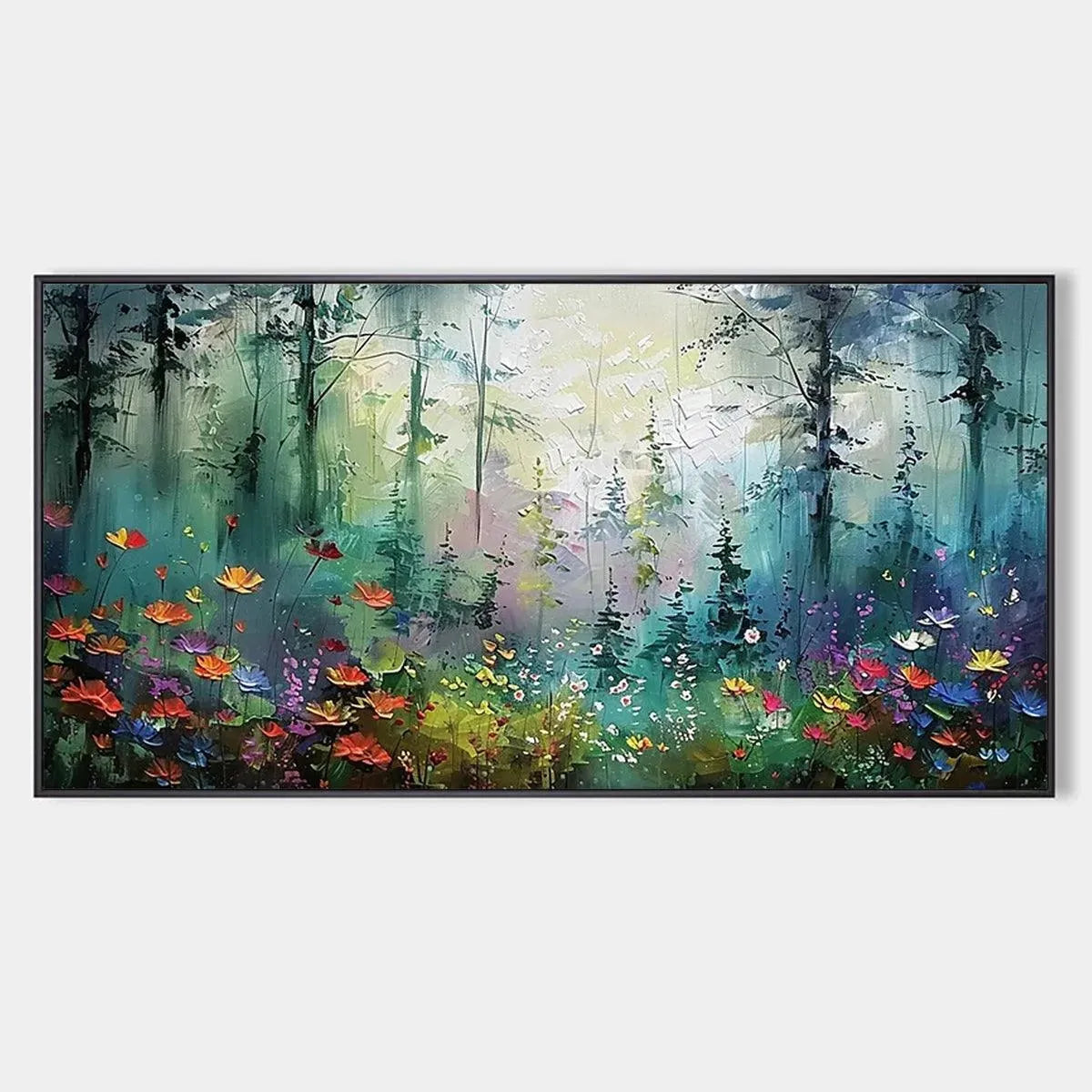
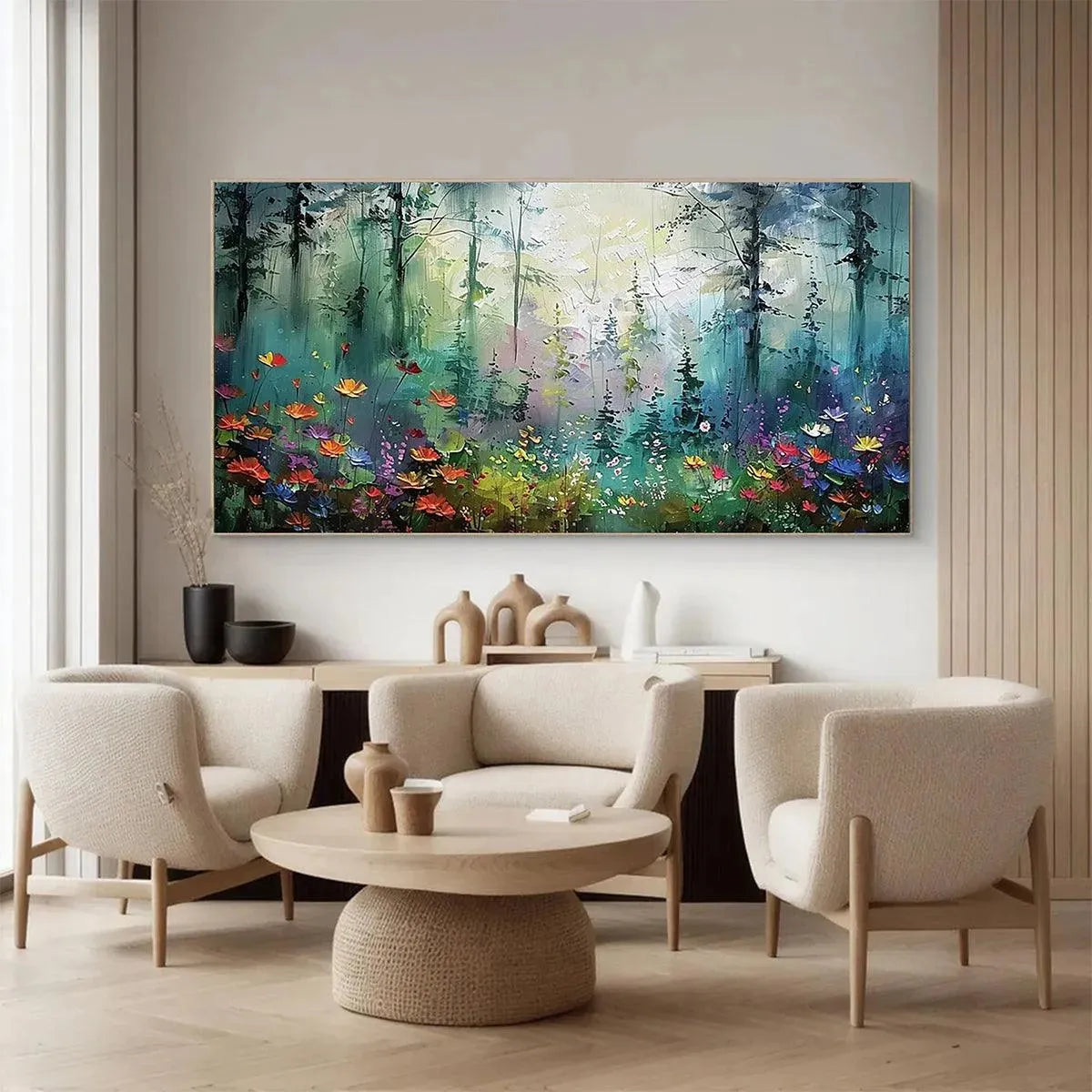
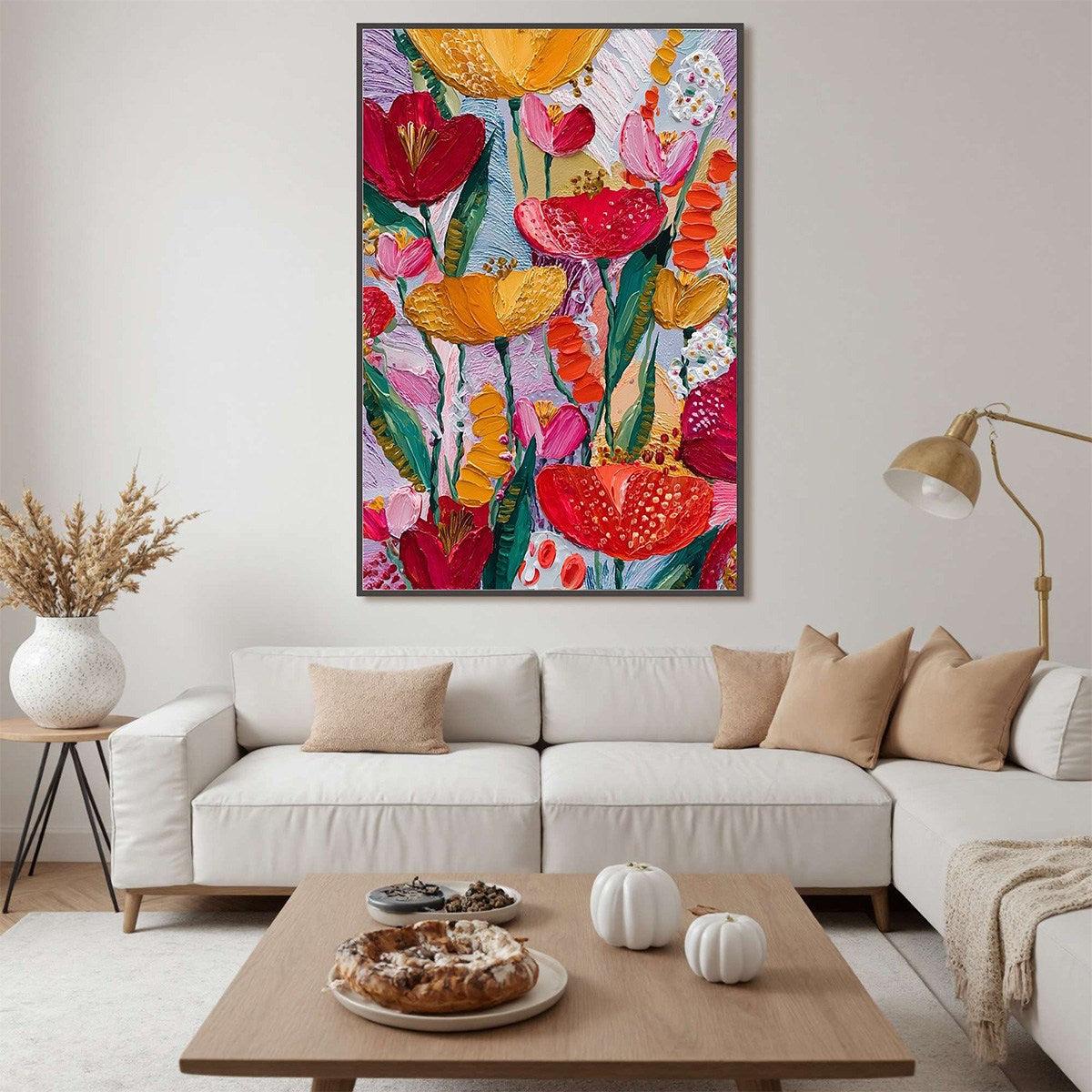
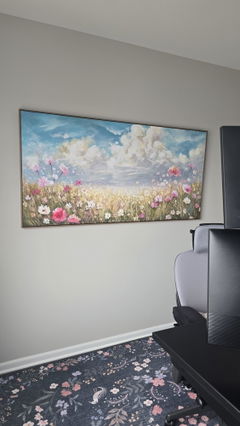
Shared seating areas allow guests to notice color and surface detail over time. A floral work can bring a recognizable subject into a scheme dominated by straight furniture lines, while textured paint adds visual variation to a plain wall.
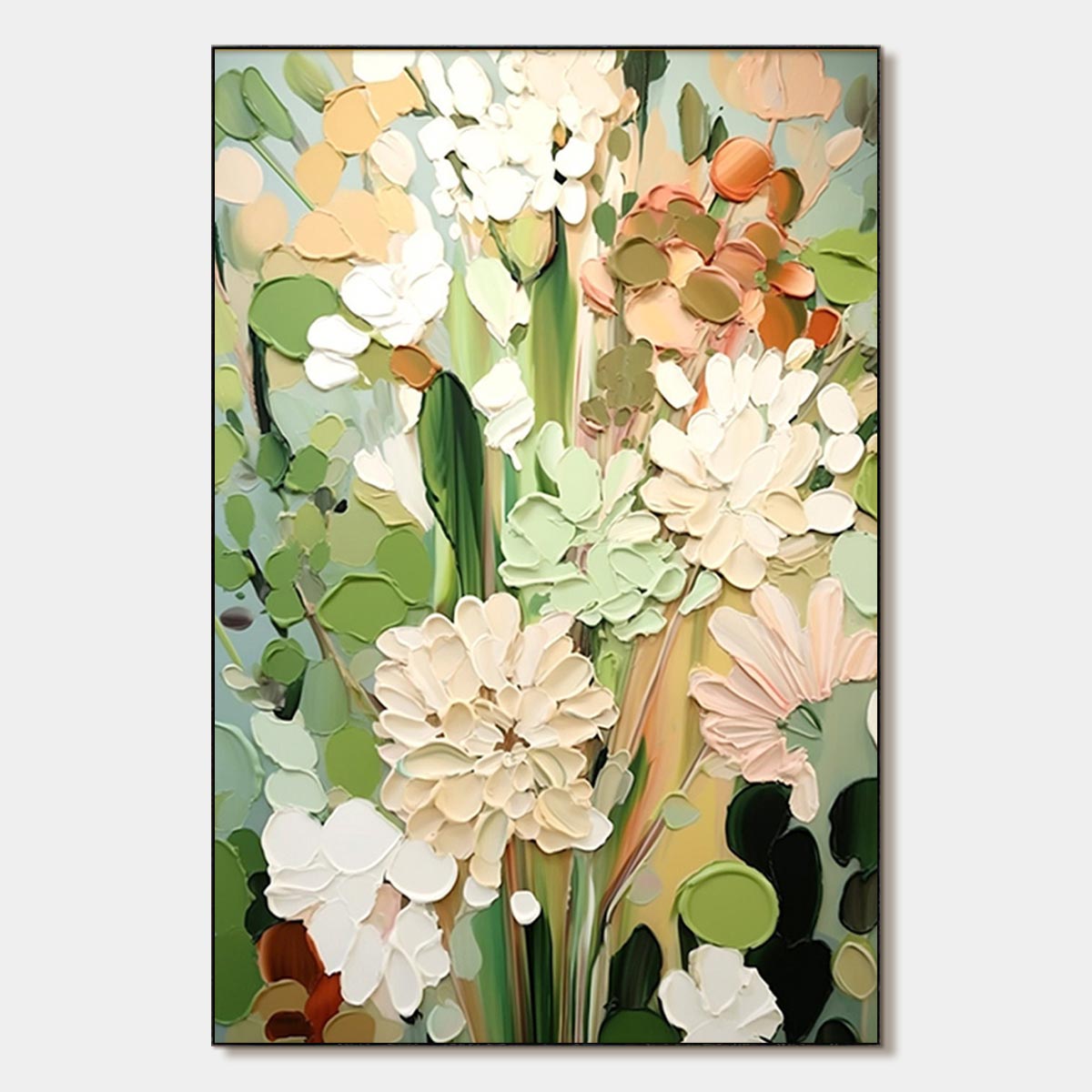
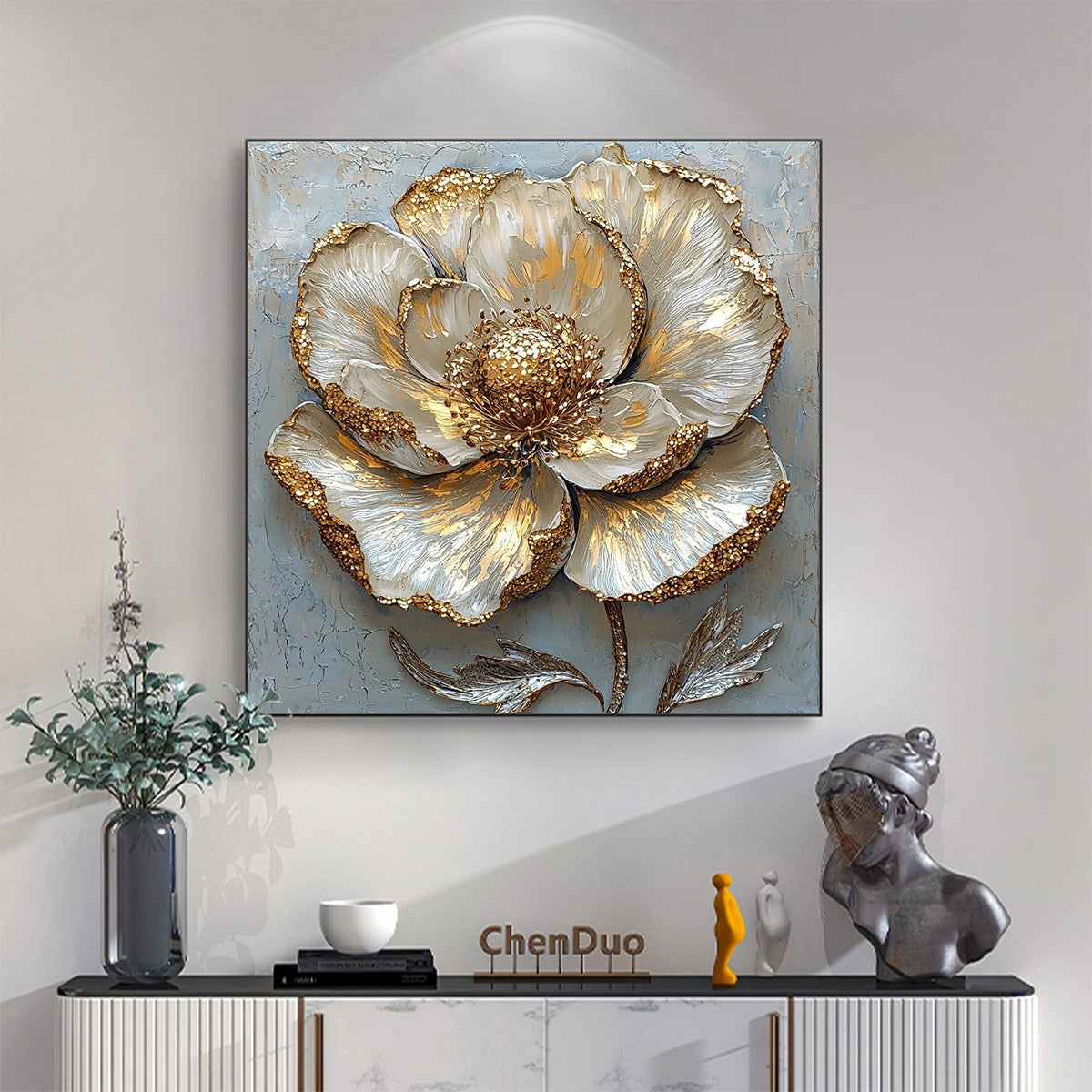
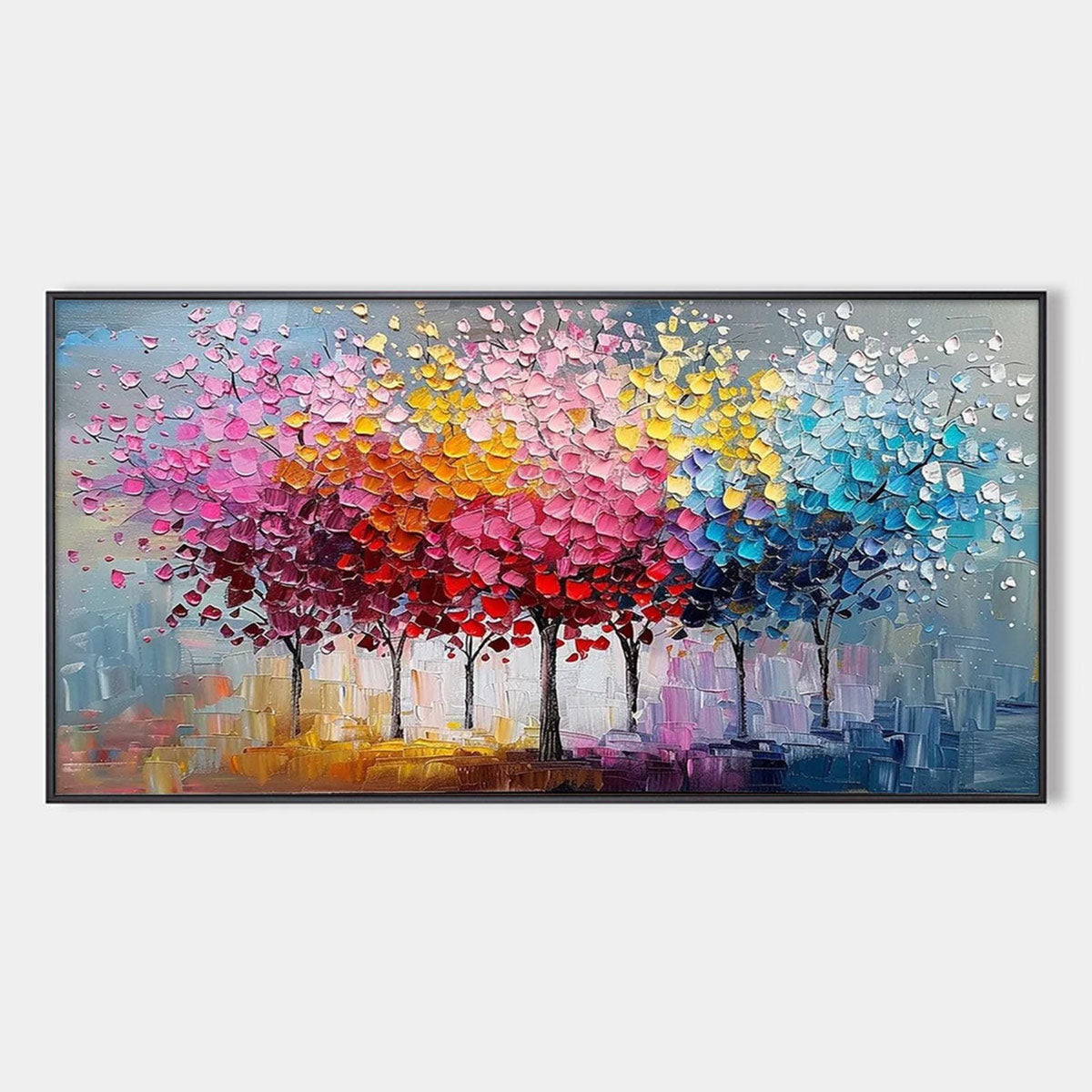
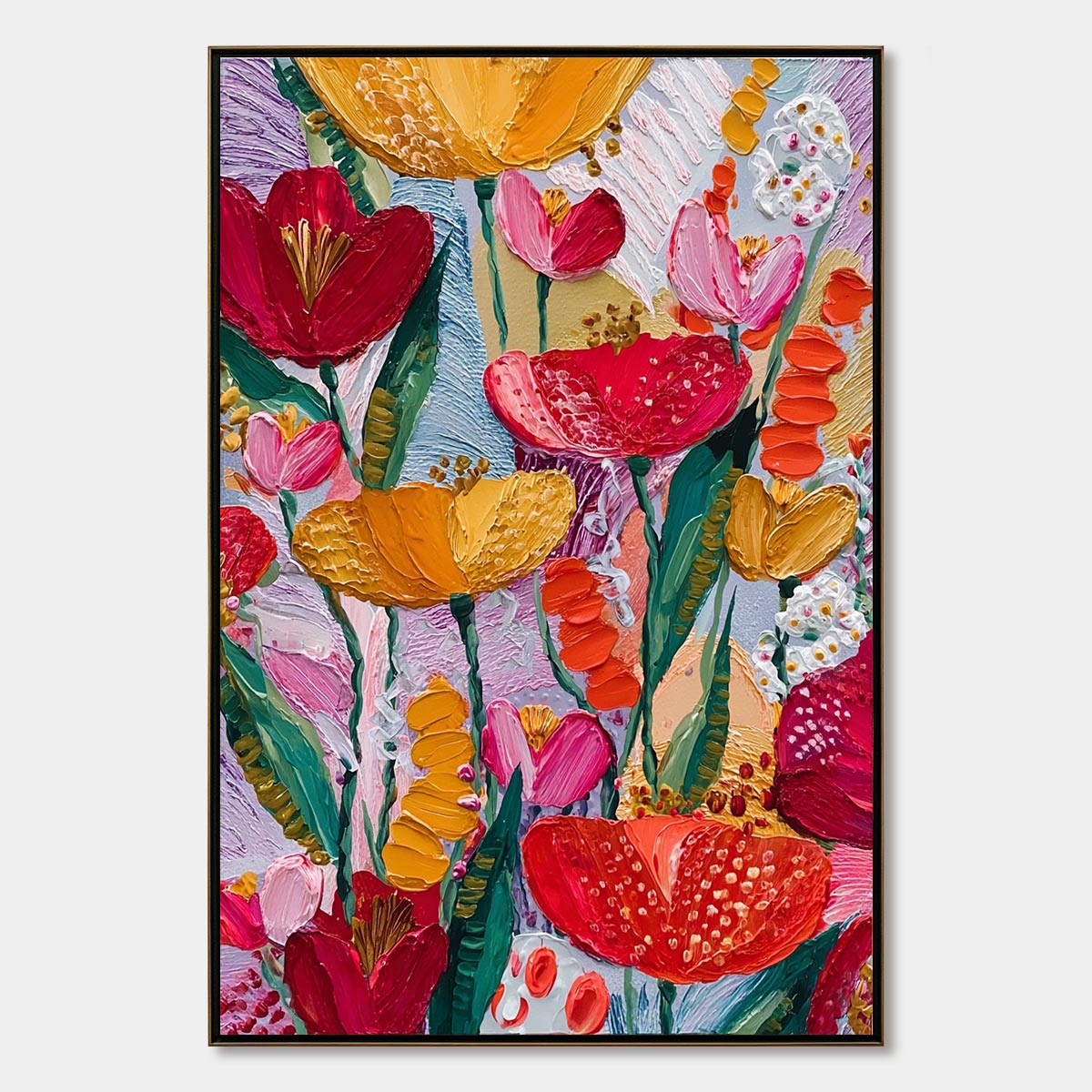
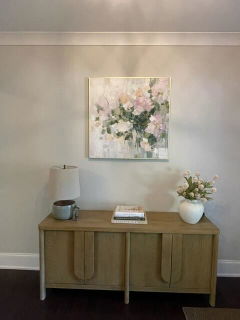
Blooming Burst by Willow Davies is a square impasto floral oil painting. Its concentrated flower composition gives it a different role from a long landscape: consider it above a small console, beside a lounge seating group, or on a wall where width and height are more evenly balanced. Check it against the view from the nearest table, where diners may be much closer to the surface than they would be in a lobby.
The dining room art collection offers another route for comparing works around tables and sideboards. Keep the furniture arrangement in view as you browse.
Connect corridors without repeating every image
For a corridor, choose a shared element before selecting individual paintings. That might be a limited palette, a consistent frame finish, or a recurring landscape subject. Keep placement deliberate around room doors and directional signs; equal spacing on a drawing may need adjusting to the architecture.
Check the corridor from both ends and at the nearest passing distance. Deeply textured work needs a different lighting assessment from a flatter-looking composition. A group of related paintings can form a sequence, but there is no need to use the same size where wall openings differ.
Build a shortlist that can be specified
Keep each candidate tied to an exact room and wall. A simple schedule helps avoid ordering a frame or size from the wrong product listing.
| Space | Start with | Confirm before ordering |
| Reception | Entrance sightline and desk width | Artwork dimensions, surrounding signs and lighting |
| Guest room | View from bed and chair | Headboard, lamps and clear wall area |
| Dining or lounge | Seated viewing distance | Nearby furniture and color under evening light |
| Corridor | Repeated palette or frame finish | Door positions and installation requirements |
The featured products list rolled canvas, frameless stretched canvas and several framed options. Choose the finish on each product page, then confirm the requirements for your property with the installation team. Project quantities, delivery dates and any site-specific requirements should be agreed before an order is finalized. Browse the wider painting collection if a room calls for a different subject.
Questions about choosing hospitality artwork
Should every guest room use the same painting?
That depends on the room scheme. Repeating a palette or frame can provide consistency while different subjects distinguish room types. Compare the available wall area in each layout before assuming one size works throughout.
How do I choose art for a lobby with a high ceiling?
Begin with the main viewing position and the furniture below the art. Mark the proposed outline on the wall to test its scale. Ceiling height alone does not determine the right painting dimensions.
Can I use a residential artwork selection in a hotel?
Use the collection to choose the visual direction, then verify the specification for the intended location. A product's appearance does not establish suitability for moisture, cleaning routines or a particular mounting system.
What information should I prepare for a multi-room selection?
Gather wall dimensions, room photographs, finish preferences, quantities and your required installation date. Keep the chosen product and variant linked to each location so the final selection can be checked accurately.
★ Reviews